Breakfast of champions (and busy moms everywhere): cereal muffins

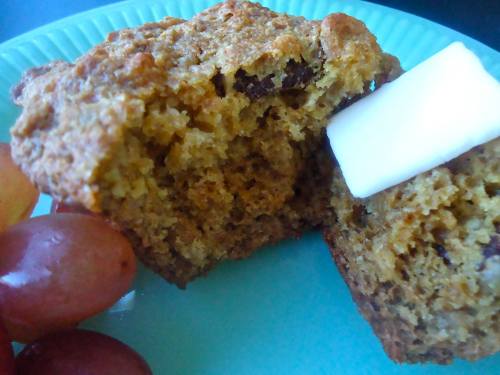
on the plate

So I’m calling this week: “comfort and joy”, rolling into mid week with this recipe for simple cereal muffins. Not counting the prepackaged ‘masterpieces’ I created in my Easy Bake Oven, making muffins from cereal was most likely the first actual edible food I ever baked (or roasted, sauteed or what have you). Being I am, ahem o-l-d, we had two kinds of cereal in my childhood home – either Raisin Bran and some super sugary preservative laden stuff. Back then, anything considered ‘healthy’ was also considered ‘hippy’ so not to be found in my parent’s house, that’s for sure…

The latter type cereal surely came with a highly touted  (and cheap!) prize of some kind, which my brother most certainly had already fished out as soon as he spied the box in the pantry. For me, it was usually Raisin Bran all the way – it tasted delicious even to an 8-year-old me, but I had no thought that bran might actually be good for me too. These days I sometimes still enjoy a bowl of Raisin Bran – no other  bran with cereal will do, mind you! And if I feel like making muffins, I can always make easy, tasty ones with just a few additional ingredients. Oh, and I hope this recipe isn’t too “Sandra-esque” in it’s semi-homemade fashion…I figured since this recipe goes back way before the Food Channel, it’s ‘grandfathered in’…safely ensconced from any Bourdain-like criticism. Okay? Have a good day, my friends.

Probably have all these items in your frig. Well, maybe not the preschool sized cup of applesauce but hey, just use 1/2 cup from the big boy jar.

Probably have all these items in your frig. Well, maybe not the preschool sized cup of applesauce but hey, just use 1/2 cup from the big boy jar.

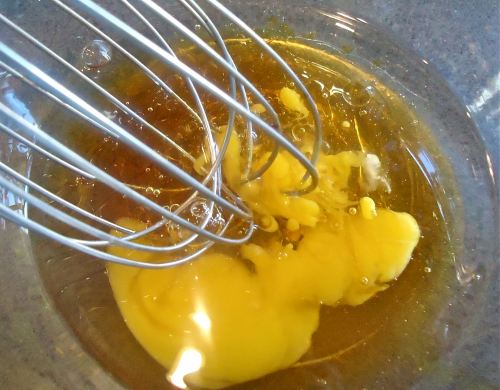
Mix the wet ingredients, well everything but that applesauce.

Mix the wet ingredients, well everything but that applesauce.

Add that egg mixture to the cereal, stir and allow to sit a few minutes.

Add that egg mixture to the cereal, stir and allow to sit a few minutes.

I find when making muffins its best to mix everything together at once. Here is the cereal mixture, applesauce and dry ingredients ready for a few stirs.

I find when making muffins its best to mix everything together at once. Here is the cereal mixture, applesauce and dry ingredients ready for a few stirs.

Whoaaaa there, don't overmix. That will make the muffins heavy and 'tough". And nobody wants tough muffins - tee hee hee...

Whoaaaa there, don’t over mix. That makes muffins heavy and ‘tough’. And nobody wants tough muffins…tee-hee-hee.

Fill the muffin tin. I use paper liners -no muss, no fuss!

Fill the muffin tin. I use paper liners -no muss, no fuss!

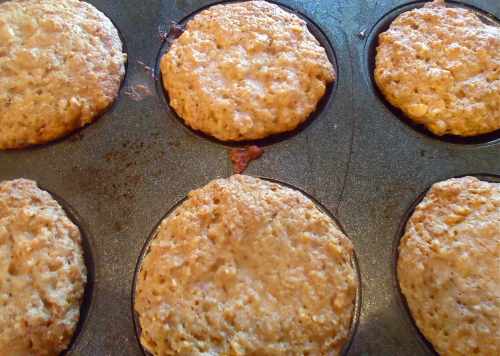
Here they are, hot from the oven. This recipe will make about 8 or 9 regular sized muffins.

Here they are, hot from the oven. This recipe will make about 8 or 9 regular sized muffins.

Cereal Muffins

  • 2 cups cereal with flakes – I used Great Grains, crunchy pecan, but Raisin Bran is great too
  • 1 cup all purpose or white wheat flour
  • 1 cup buttermilk (low fat or whole)
  • 1 egg
  • 2 tsp. baking powder
  • 1 tsp baking soda
  • 1 4-oz cup apple sauce with cinnamon (about ½ a cup)
  • 2 tbl Demera or white sugar
  • ¼ cup agave nectar
  • ¼ cup vegetable oil
  • ½ tsp salt

In a large bowl pour the buttermilk over the cereal and stir just to combine. In a separate bowl whisk the egg, agave nectar, and the oil. Add this to the cereal/buttermilk mixture. Stir and allow to sit for 5 minutes.

Preheat oven to 375 degrees. In another bowl mix the flour, sugar, baking powder, salt, and baking soda. Add the cereal/liquid mixture and the apple sauce to dry ingredients and mix just until combined. Do not over mix! Fill prepared muffins cups (use liners, I do!) and bake for 15 minutes. Makes about 8 to 9 medium/large muffins.

Down home goodness with braised chicken with leeks

Braised chicken with leeks on the plate

Now that almost two weeks has passed since the big turkey feast, it seems that poultry may be back on the menu for some. While I enjoyed our turkey (brined to perfection I may add!) and I will surely be grateful for the stock I made over 8 hours out of the carcass, the bird, of the genus Meleagris, will be the last served at our house for a while. I am not one to roast a turkey other than for Thanksgiving mainly because the inevitable overload of leftovers allow us all to get our fill, tackling any possible “craving” for roasted turkey for a good six months, if not until next November. However, we are back to partaking in a bird of a different feather – chicken.

Personally I like to buy and prepare whole chicken for the most part. I have some decent knives, I know the technique required to properly cut up a whole bird so there’s no reason not to. I also prefer organic or “natural” (hormone and antibiotic free) chicken so buying whole birds and preparing them myself is less expensive too.

Since the time change, and as cooler weather approaches here in the Lowcountry, its time for comfort foods like soups, stews, and all manner of slow cooked goodness. There are several Southern specialties that fall into this category. Maybe you’re heard of some of these and wondered, what the ??? Here are four of which I am familiar:

  • Bog: Typically a chicken bog that includes smoked sausage and rice in its ingredient list. This is a “South Carolina thing” for sure. Similar to a “pilau” but well, more “boggy”, and less “highfalutin”. Usually made for a crowd this pairs well with an oyster roast (and beer) on a cold night.
  • Pilau: Also called ‘purloo’ and pronounced PER-low. Specifically associated with Charleston, (also in South Carolina) with rice as a central ingredient and incorporating chicken or shrimp as the protein, the typical celery and onion duet and perhaps, okra and tomatoes. Basically fancy ‘chicken and rice’. The main difference in this and a bog is that the rice is fluffier (drier?).
  • Burgoo: My experience with this is at Derby parties as it is typically a Kentucky dish or in the least folks from that state have taken ownership of this concoction made from “whatever the good Lord provided” – venison, squirrel, game birds, raccoon or opossum. This is a thick stew and it is said a good burgoo should be able to have a spoon stand up in it. The ones I’ve tasted included lima or butter beans and corn plus a good kick of heat.
  • Brunswick Stew: Tomato based and includes chicken, but historically rabbit and/or squirrel were utilized in this stew. Includes lots of veggies like corn, okra and lima or butter beans as well. Versions and bragging rights for formulating this stew run the Southern gamut from Brunswick, Georgia into North Carolina up to Virginia. I see this served quite often these days as a side to barbeque in NC and Virginia. But not in SC – sacrilege!

In my home state we serve another distinctively South Carolina dish called ‘hash’ with our barbeque (along with coleslaw, potato salad and brown or red rice, perhaps). But hash deserves its own post so I’ll leave that for another day…

While my recipe for braised chicken with leeks is neither a bog nor a burgoo nor a pilau, it is quite tasty nevertheless and relatively simple. The good Carolina girl I am serves this with fluffy rice – and lots of sauce spooned over the top.

Be sure to wash the leeks well as sand gets stuck between the stalk/leaves. No one likes gritty braised chicken!

Be sure to wash the leeks well as sand gets stuck between the stalk/leaves. No one likes gritty braised chicken!

Fresh pork sides or better known as "belly". Yum.

Fresh pork sides or better known as “belly”. Yum.

I really like that Montreal Seasoning - both the chicken and the steak varieties  are very good.

I really like that Montreal Seasoning – both the chicken and the steak varieties are very good.

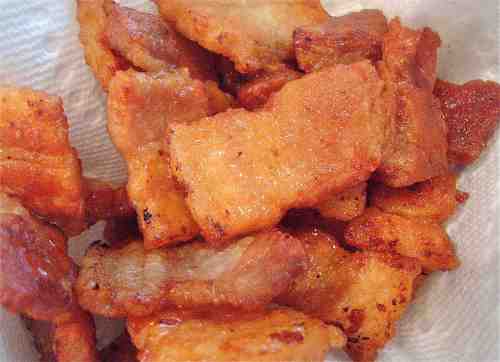
Drain the cooked pork belly on paper towels. You can top each serving with a few of these or use them in crackin' cornbread or... if you're like me just sneak a few as a cook's treat.

Drain the cooked pork belly on paper towels. You can top each serving with a few of these or use them in crackin’ cornbread or… if you’re like me just sneak a few as a cook’s treat.

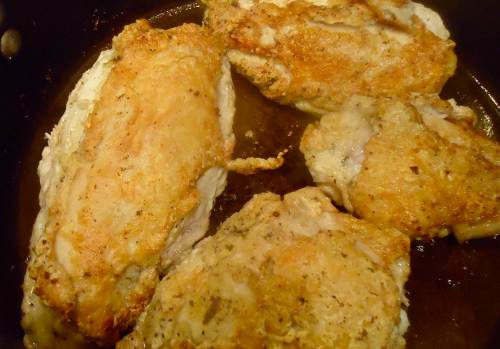
Brown the dredged chicken in the pork belly drippings. It took two batches for me as I have a very large Dutch oven.

Brown the dredged chicken in the pork belly drippings. It took two batches for me as I have a very large Dutch oven.

After browning the chicken and removing it to a hlding plate or platter, wipe out the Dutch oven. Then melt the butter in the pan and add the leeks and the whole garlic cloves. Sprinkle with flour.

After browning the chicken and removing it to a hlding plate or platter, wipe out the Dutch oven. Then melt the butter in the pan and add the leeks and the whole garlic cloves. Sprinkle with flour.

Add the stock and heat to a simmer or low boil stirring constantly.

Add the stock and heat to a simmer or low boil stirring constantly.

Add the browned chicken back to the Dutch Oven in one layer.

Add the browned chicken back to the Dutch Oven in one layer.

After braising in the oven, looks and smells so delicious.  Remove the chicken carefully to a warmed platter. The platter should also be somewhat deep to hold all the delectable sauce!

After braising in the oven, looks and smells so delicious. Remove the chicken carefully to a warmed platter. The platter should also be somewhat deep to hold all the delectable sauce!

Here the sherry goes into the sauce on the stove top. Boil a few minutes, turn down (or off) the heat and add the cream.

Here the sherry goes into the sauce on the stove top. Boil a few minutes, turn down (or off) the heat and add the cream.

Pour the sauce over the warm chicken (you did keep it warm, right?). Serve at once with biscuits or crusty bread to sop up the sauce.

Pour the sauce over the warm chicken (you did keep it warm, right?). Serve at once with biscuits or crusty bread to sop up the sauce.

Braised Chicken with Leeks

  • 2 leeks, washed thoroughly and sliced into 1 inch pieces
  • 6 cloves of garlic
  • 1 cut-up chicken (or a combination of breast, thighs and wings and legs) extra skin removed
  • 2 slices pork belly (or side), chopped into pieces
  • 1 tsp Montreal chicken seasoning
  • ½ tsp dried tarragon
  • 1 tsp dried sage
  • ¼ tsp ground thyme
  • 1 ½ tsp salt
  • 1/3 cup plus 1 tbl all-purpose flour
  • 1/3 cup cream sherry
  • 1 1/2 tbl butter
  • 3 cups vegetable or chicken stock or broth
  • ½ cup light cream (half & half)
  • fresh cracked pepper

In a small bowl mix the Montreal chicken seasoning, tarragon, thyme, sage and ½ tsp salt with the flour. Set aside. In a large, heavy pan or Dutch oven cook the pork belly until crisp. Remove and drain the cracklings on paper towels.

Heat pork drippings remaining in the pan. Dredge chicken pieces in seasoned flour mixture. Brown chicken well in two or three batches in the drippings. Remove chicken to a platter. Preheat oven to 375 degrees.

Wipe out the Dutch oven and melt the butter in the pan. Sauté the leeks and garlic in the butter until soft, about 3 minutes. Sprinkle with 1 tbl of flour and cook another minute, stirring often. Add 3 cups stock, stirring or whisking to combine. Bring up to a low boil and carefully add chicken pieces back into the pan so the chicken is in one layer. Sprinkle with 1 tsp salt and several cracks of black pepper (or about 1 tsp ground pepper).

Cover and place in the preheated oven for 30 minutes. Remove cover, turn chicken pieces, and reduce oven heat to 325 degrees and place back in oven for another 25-30 minutes. Remove chicken to a large, deep platter and cover to keep warm. Place Dutch oven back on the stove top and heat remaining pan sauce, adding sherry and stirring to combine. Allow to bubble and simmer about 5 minutes. Turn off heat and add the cream, stirring to combine. Pour sauce over chicken and add more cracked fresh pepper over the top if you like. Serve immediately with fluffy brown or white rice or broad noodles. If your cholesterol is in check, top each serving with a few of the leftover pork belly cracklings’ if you like. Serves 4-6.

Down But Not Out: Nutella Cake with Dark Chocolate Baileys Irish Cream Glaze

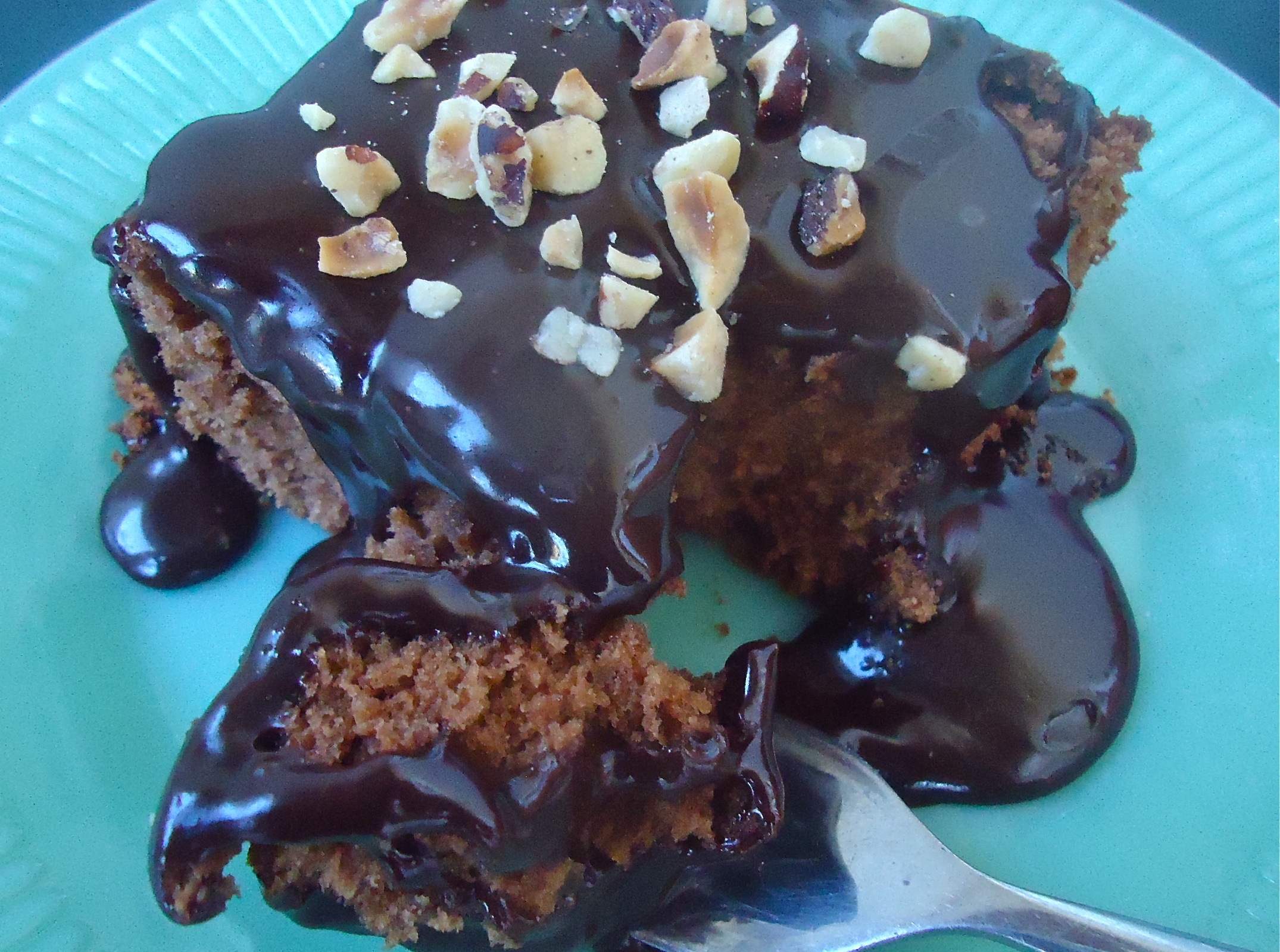
Nutella cake with dark chocolate Irish cream glaze

Hi Ya’ll. Projects have kept me away from southbyse.com for a while but now I am ready to get back to the blogosphere. Thanks for hanging with me! Since my last post there has been a “super storm”, election mania, and a bizarre scandal unfolding within the CIA, FBI and military.

It’s all enough to make me want to sit down and eat a huge hunk of chocolate cake! Add a tall glass of cold milk and ahhhh….now then, that’s better.

While Nutella is not a Southern concoction, it does produce a wonderfully moist and fine textured cake – both hallmarks of traditionally “southern-style” cakes. I made this one in a sheet pan keeping it all casual, but this recipe could easily be baked in 2 layers. Spread half a cup of raspberry jam in between the layers, pour the glaze over top, and sprinkle on some toasted hazelnuts for a fabulously impressive holiday dessert. Or eat it plain, sans the glaze. It’s all good.

This cake batter comes together quickly once you get your ingredients out and measured.

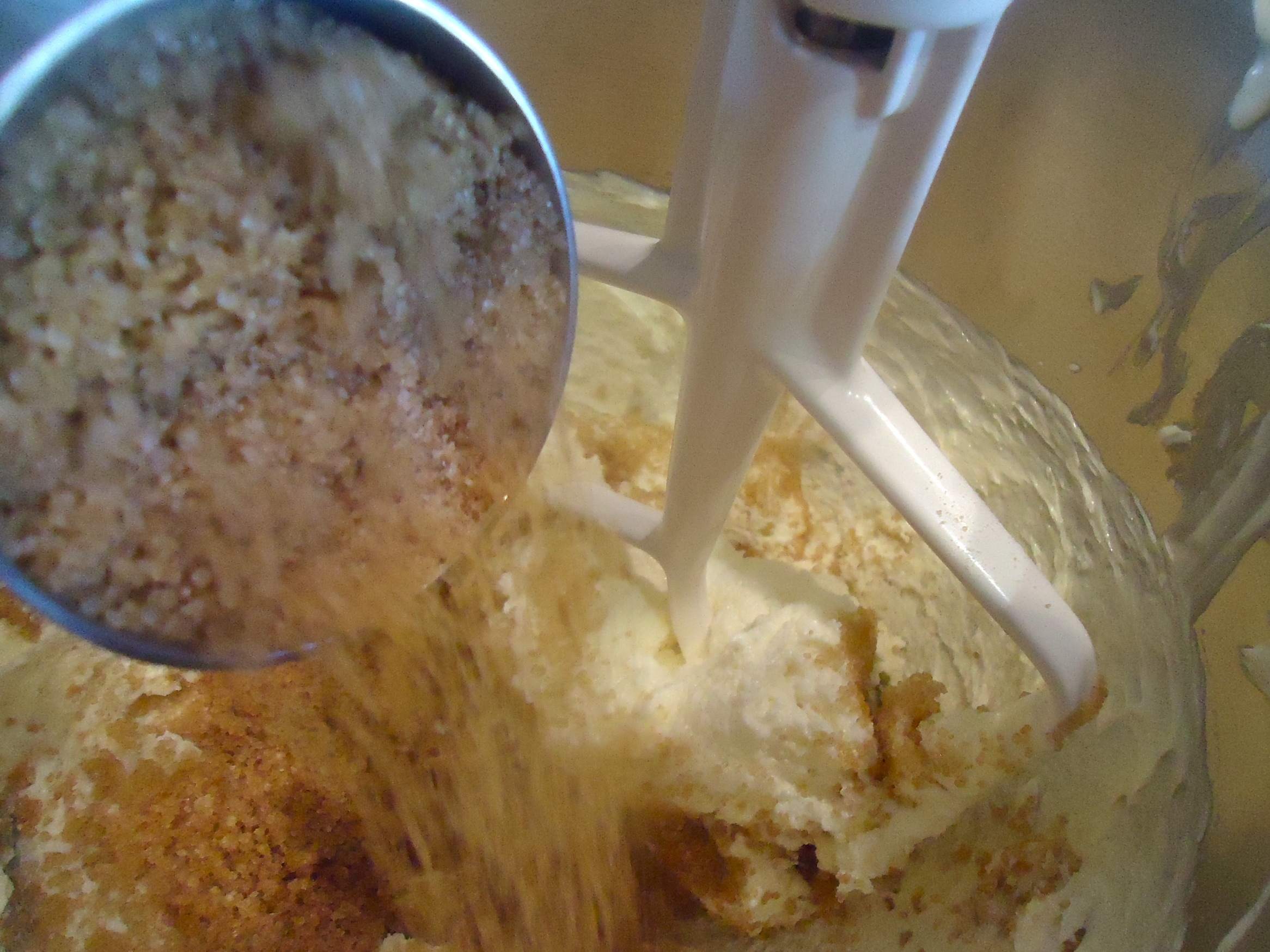
Add the Nutella to the batter. Nutella is made with hazelnuts and chocolate.

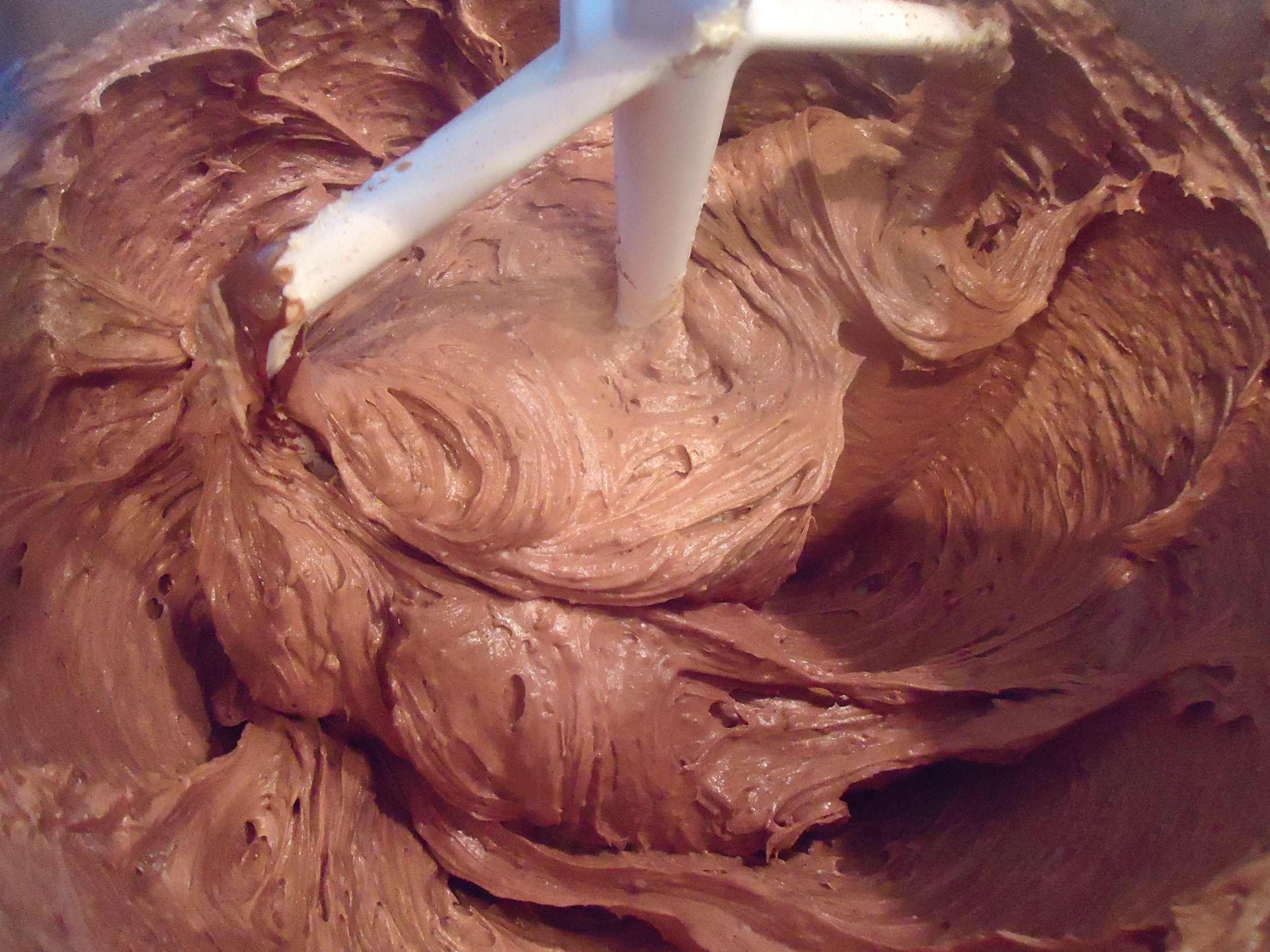
The batter is ready. It will be light and fluffy but thick.

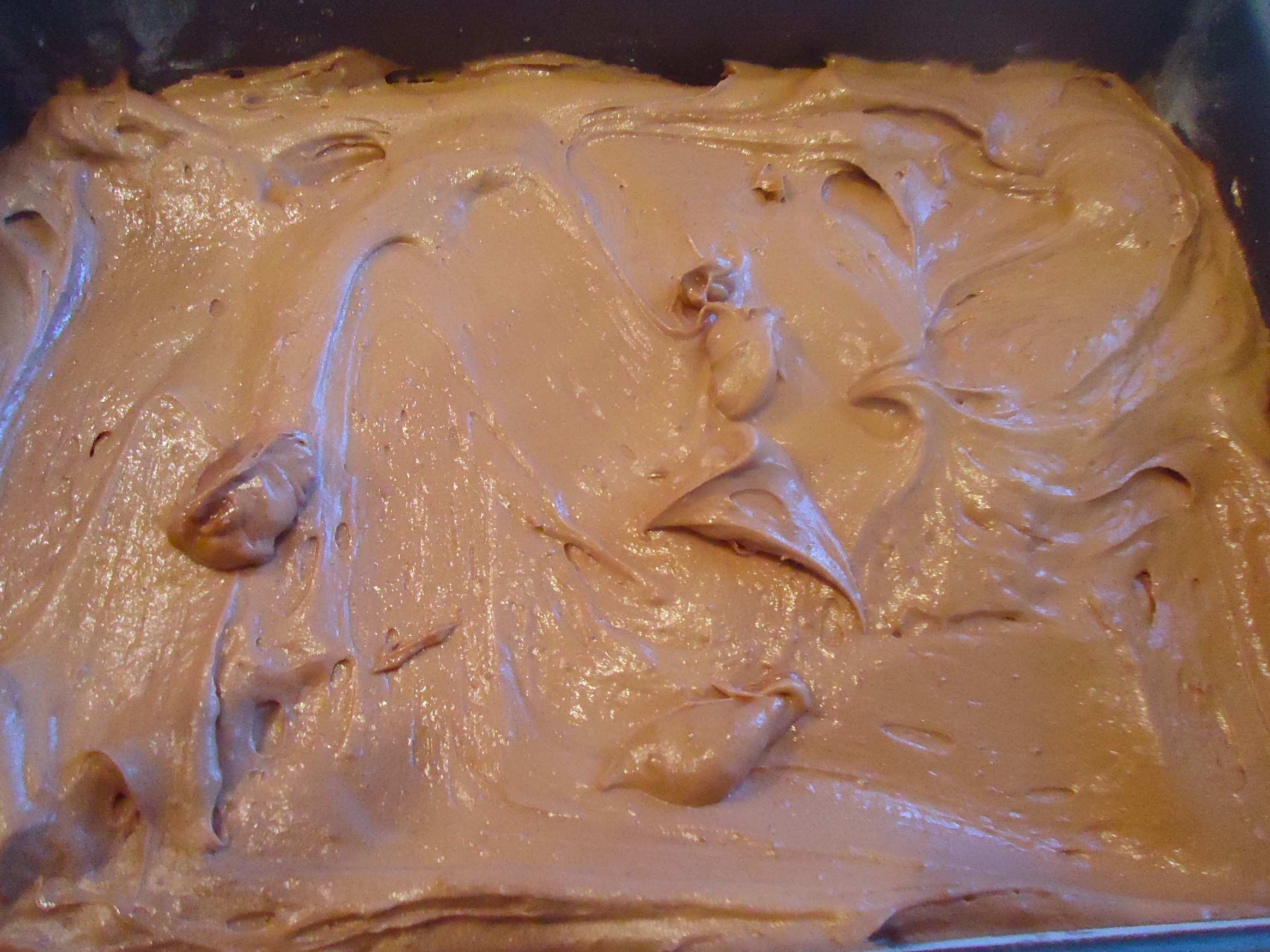
Spread the batter into a prepared 9″ x 13″ pan. I butter and flour the pan and also line with parchment – better safe than have the cake stuck to the bottom of the pan!

Here is the baked cake, cooling a bit. Now make the glaze…

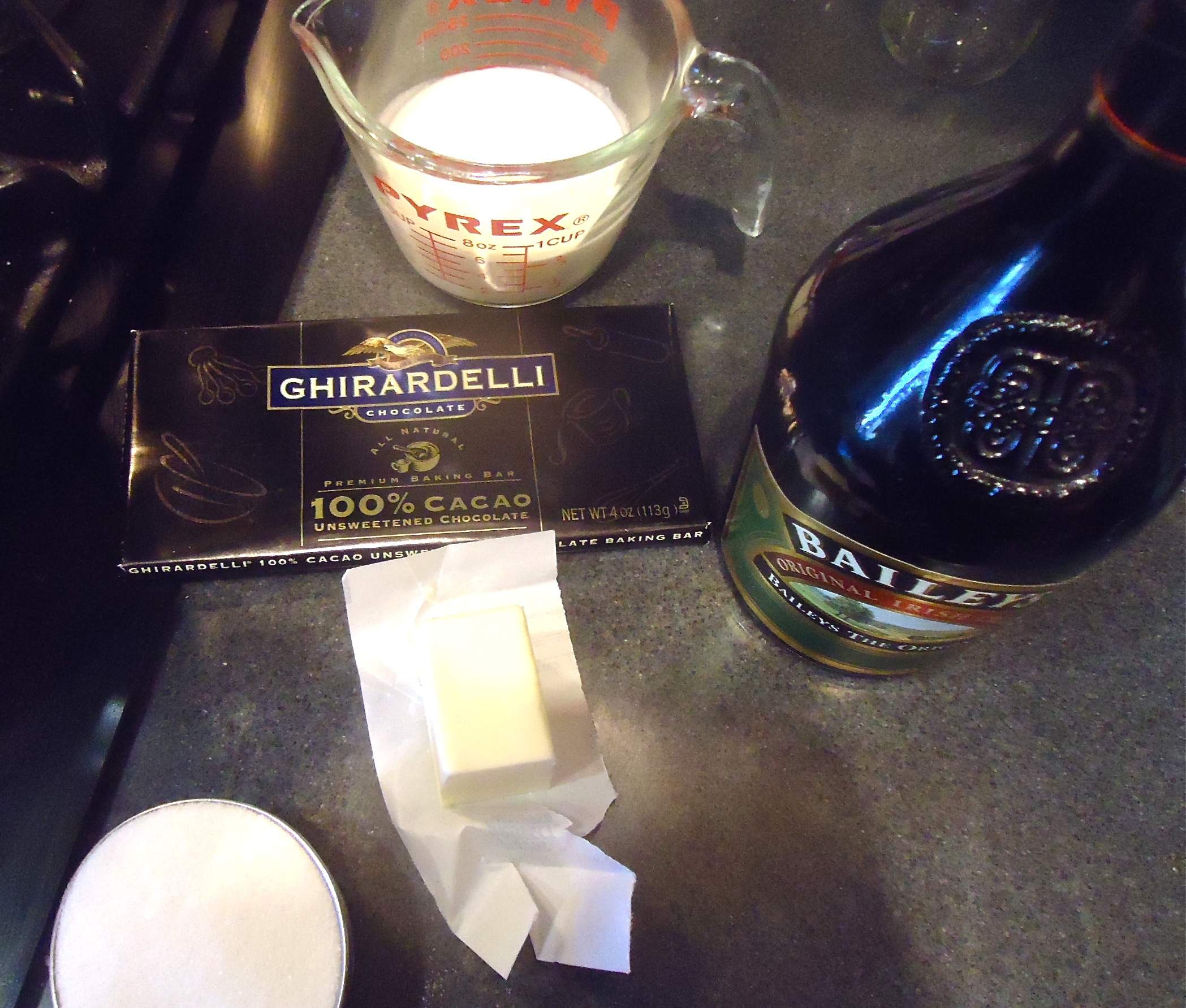
Simple ingredients for the glaze. This is so easy and so awesome you will not buy pre-made chocolate glaze again.

This is the chocolate I used – very rich and “chocolate-y”. Use whatever brad you prefer. I also like Scharffen Berger and Callebaut, which is sold in big hunks at Whole Foods if you’re lucky to have one close by.

Slowly melt the chocolate with the cream. Use a double boiler, or a very heavy saucepan. If you have never melted chocolate before I recommend using a double boiler and remember to go s-l-o-w!

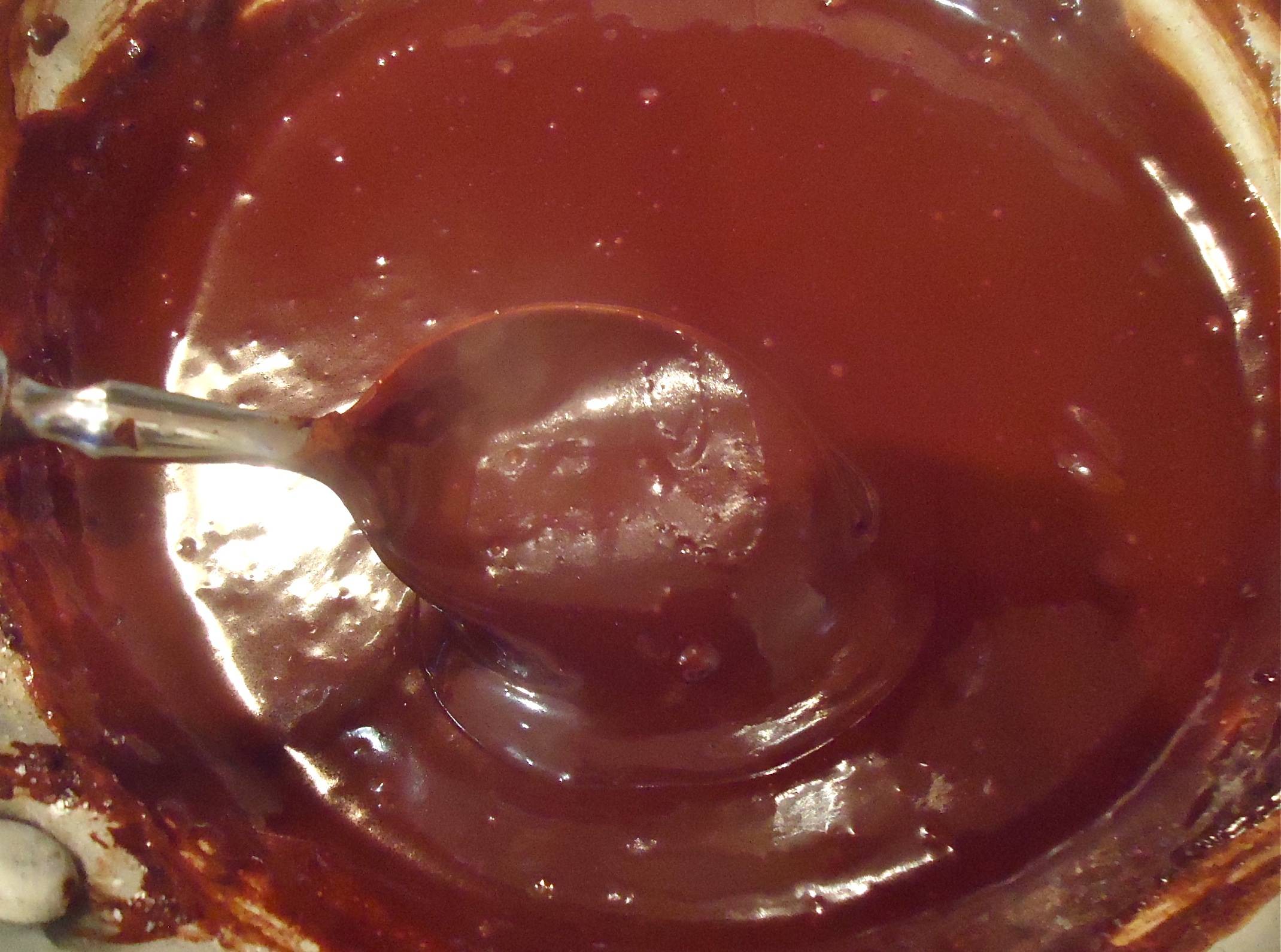
Okay, the chocolate has melted, the sugar was added and there was a lot of stirring (or whisking).

Once the sugar has dissolved, stir in the butter and the Irish Cream.

Poke holes in the cake in a regular pattern (a metal or bamboo skewer works well for this) and then pour about half of the warm glaze over the top of the cake.

Allow the cake to sit a little bit, then cut into squares and serve with a spoonful more warm glaze over the top. Add a sprinkle of hazelnuts – or not – and enjoy!

Nutella Cake with Dark Chocolate Baileys Irish Cream Glaze

  • 2 1/2 cups all purpose flour
  • 1 ½ tsp baking powder
  • 1 tsp salt
  • 2/3 cup unsalted butter
  • 1 cup sugar
  • 2/3 cup Demera sugar
  • 4 eggs
  • 1 cup Nutella
  • 1 cup of milk (at least 2%)
  • 1 tsp. vanilla extract
  • ½ cup Hazelnuts, chopped

Preheat oven to 350 degrees. Mix the flour, baking powder and salt in a bowl or on parchment. Beat the sugars and butter until light and fluffy. Add eggs (one at a time) followed by the Nutella. Gradually add the dry ingredients alternately the milk. Mix in the vanilla extract.
Spread the mixture into a greased and parchment lined baking pan. I used a 9” x 12”. Bake for 45 – 50 minutes. The cake is done when a skewer inserted into the center comes out clean. Cool on a rack while you make the glaze

Glaze

  • 4 oz chopped unsweetened chocolate, good quality
  • 1 cup plus 2 tbl sugar
  • 2 tbl unsalted butter
  • 2/3 cup heavy cream
  • 1 1/2 tablespoon Bailey’s Irish Cream

In a very heavy saucepan or double boiler. Melt the chocolate with the cream over very low heat. Stir until the chocolate is melted – this may take 10 minutes. Stir in the sugar. Keep stirring (or use a whisk) the mixture over low heat until the sugar is completely dissolved. This is very important! This may take another 10 minutes. Do not allow the mixture to boil or come near boiling. It should be very warm but not super hot. Once you are positive the sugar has dissolved, add the butter 1 tablespoon at a time stirring and whisking. Remove from heat and stir in the Bailey’s.

To assemble:
Using a skewer, poke holes into the warm cake in intervals – not too many – about every inch and a half. Pour about half the warm glaze over the cake.

Slice into serving sized squares and top with more a few chopped hazelnuts and more glaze if desired.

Note: leftover glaze should be covered in an air tight container and refrigerated. Makes a great ice cream topping too!

Pumpkin bread revved up with pecan rum streusal

pumpkin bread with pecan rum streusal

Hey, it’s Fall so that means apples and cinnamon and pumpkin. This recipe features two of those ingredients plus that Southern favorite, pecans, and a touch of rum. You could punch up the “ya’ll” factor by switching out the rum for bourbon if you like. Of course the alcohol evaporates out of the pecan streusal, so the residual flavor is what’s important here, thus use a good quality bourbon like Woodford Reserve, Maker’s Mark or your favorite small batch whiskey.

This pumpkin bread utilizes canned pumpkin too so it’s easy-peasy, but feel free to prepare fresh pumpkin if you like. I am not sure what the outcome may be using fresh due to the varying water content of pumpkin – but I’d love to know how it works out if you do try it. So please let me know!

I hope you enjoy this “bread” that is more like a coffee cake – it’s especially nice with a cup of hot coffee or tea for breakfast or a big cold cup of milk at snack time.

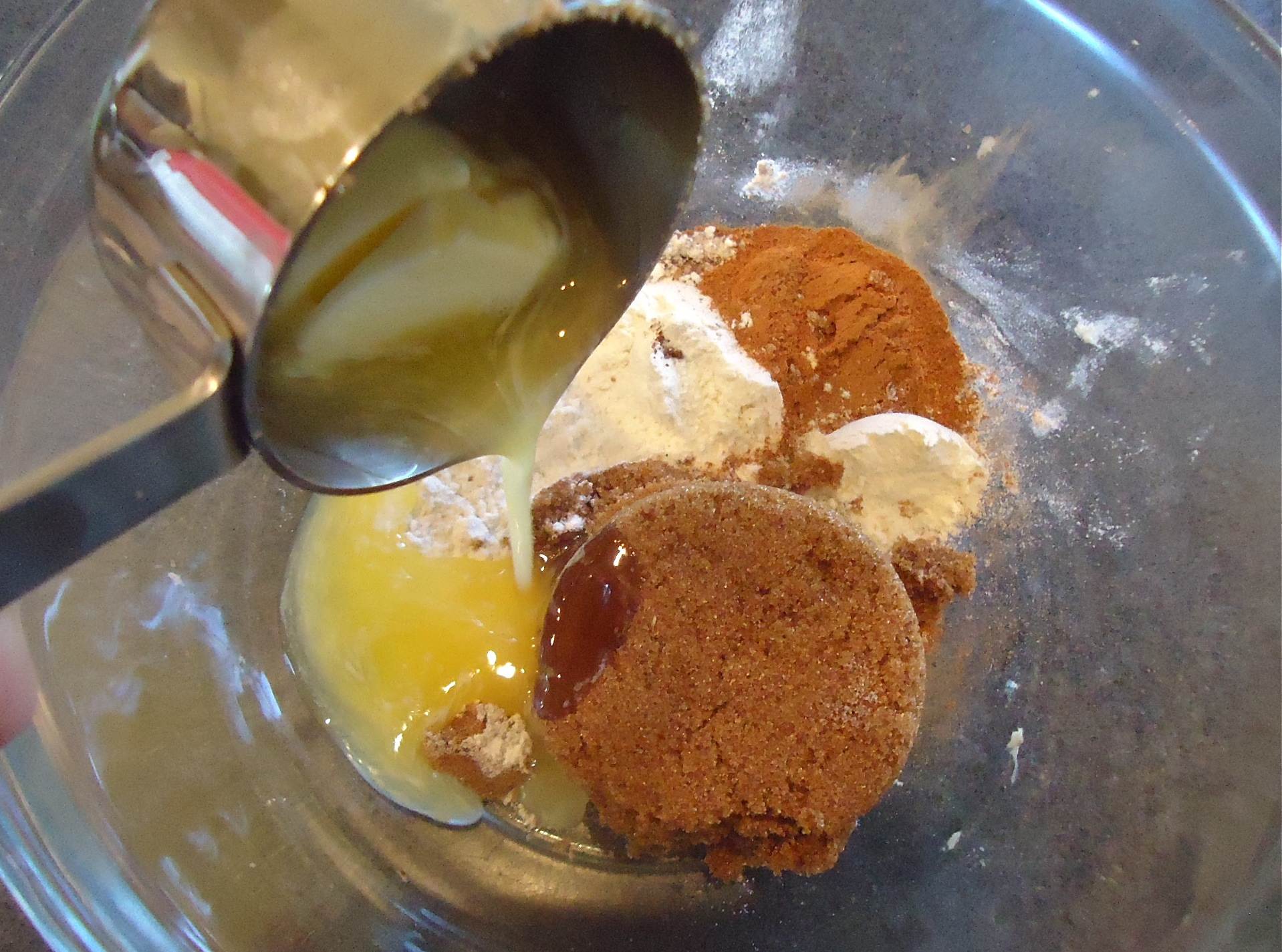
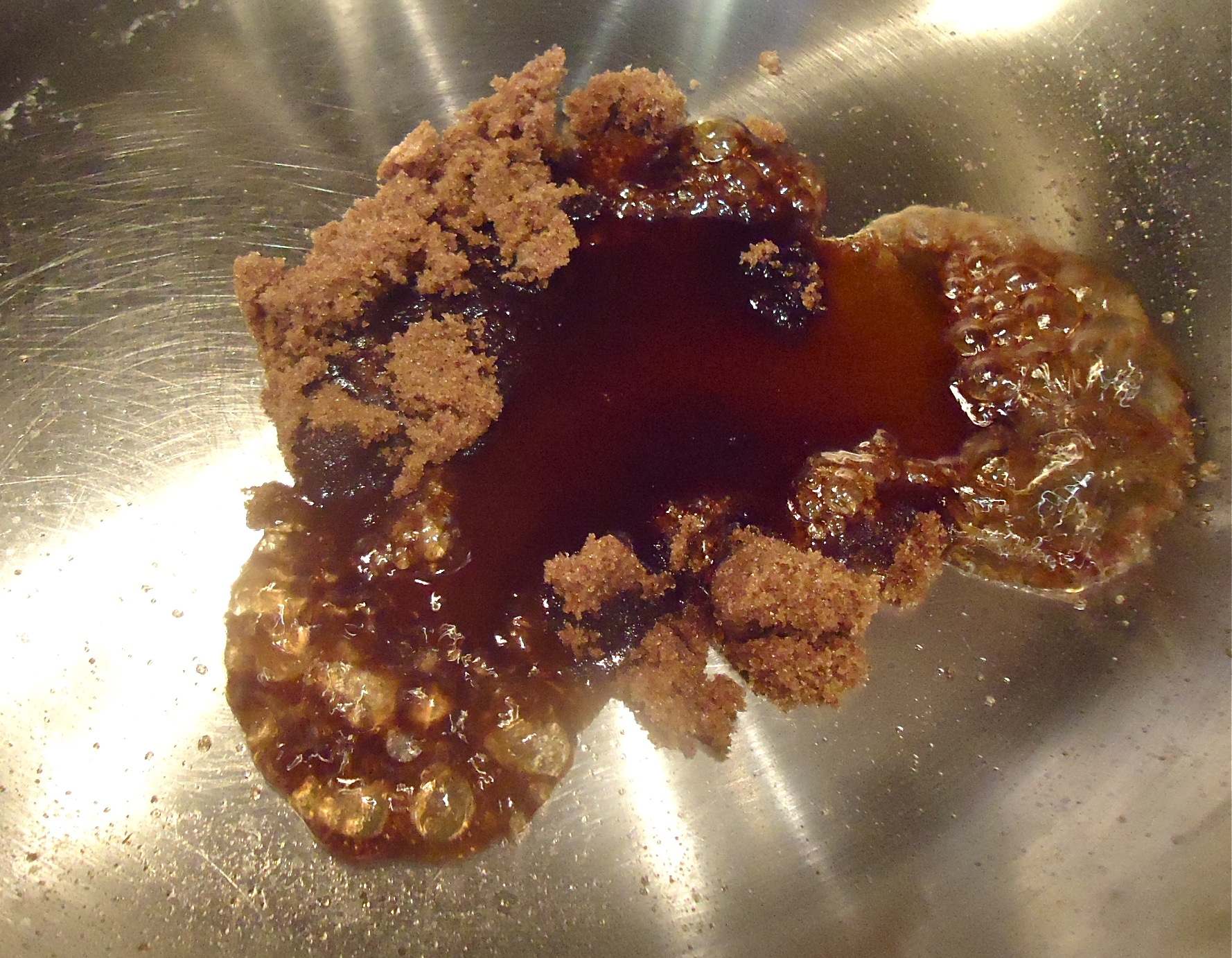
To start the streusal filling melt the brown sugar and water in a saucepan.

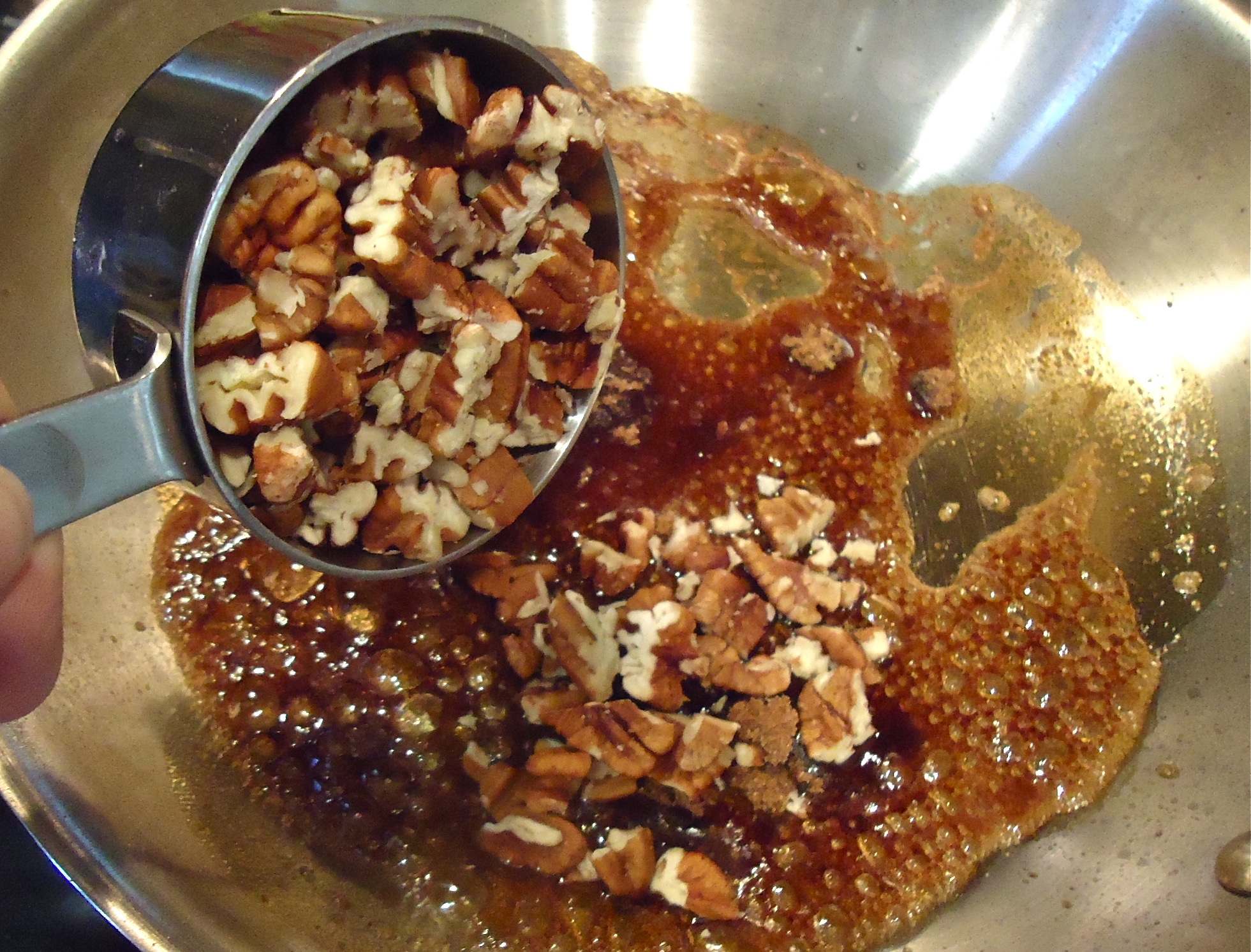
Once the sugar dissolves, add the chopped pecans and stir.

Add in the rum (or bourbon) and stir again.

This is ready so remove from the heat and allow to cool while you mix…

Mix the other streusal ingredients together in a small bowl.

Add in the ‘revved’ up pecans, stir and set aside while you make the pumpkin cake batter.

First though, let me introduce you to my new tube pan. It has been buttered and lightly floured. So pretty!

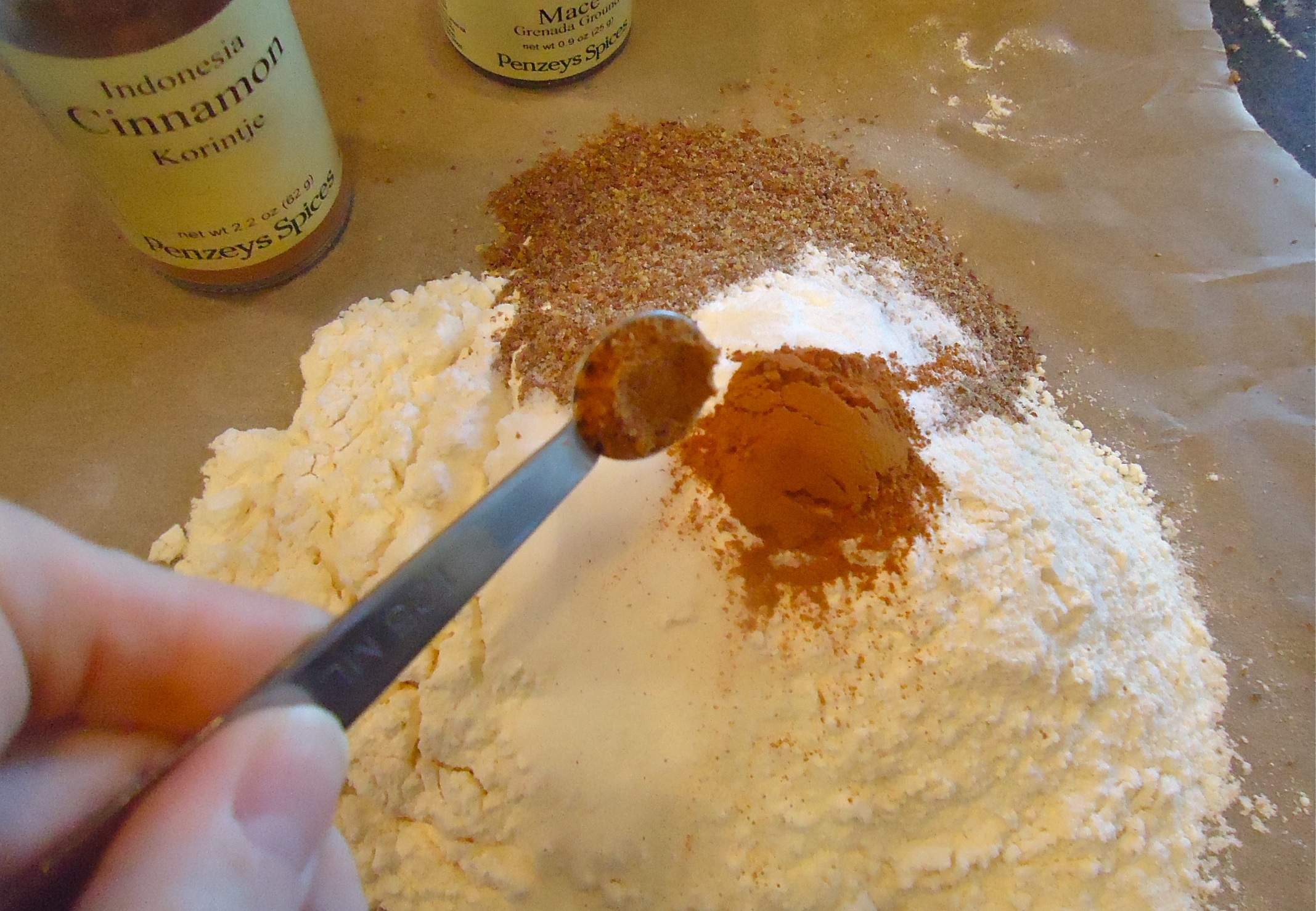
In a bowl or on a piece of parchment paper mix the dry ingredients.

In a large bowl mix the oil and sugar and then add in the eggs, one at time. Beat well.

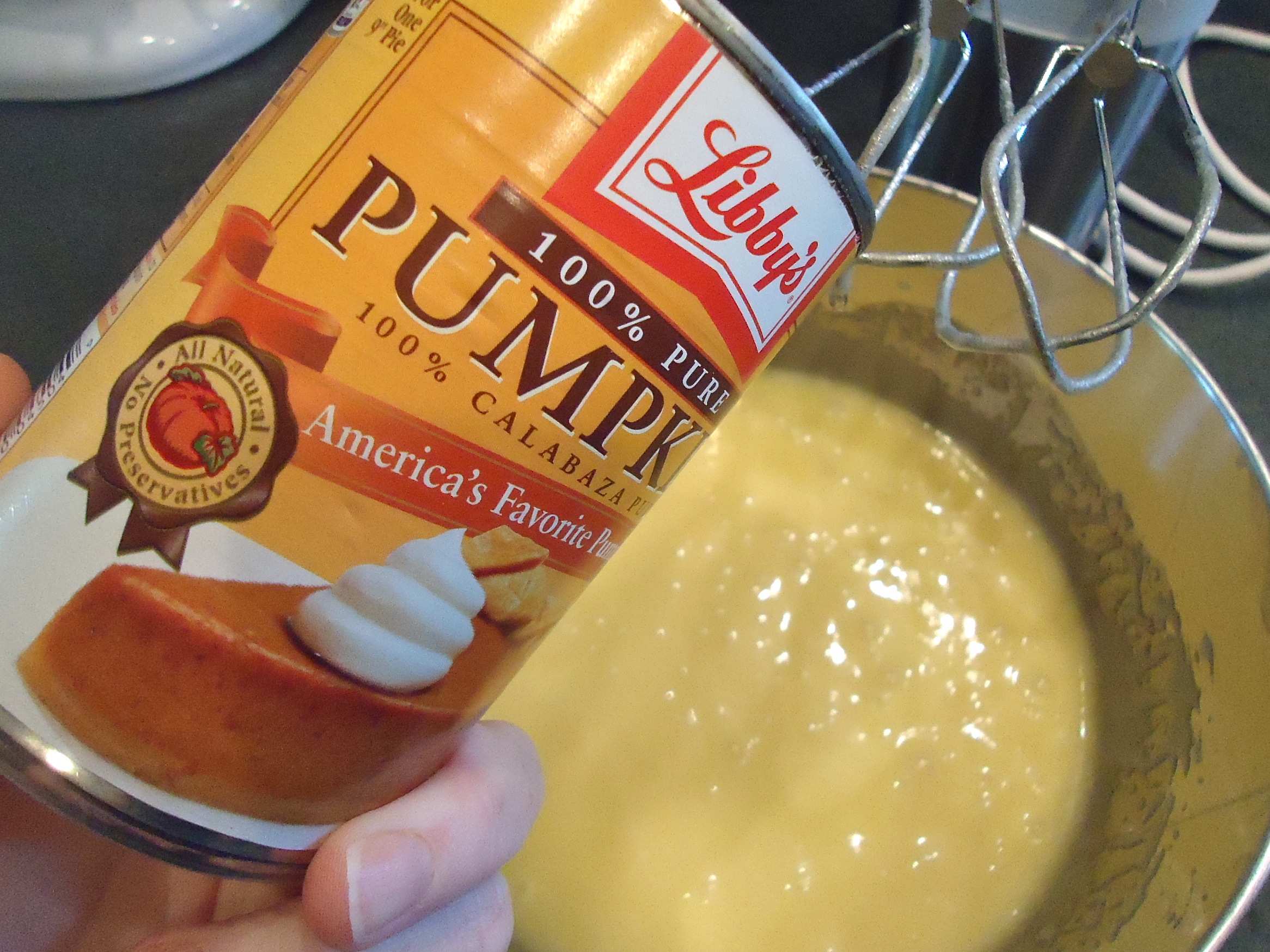
Here’s the pumpkin, use whatever brand you like. I wondered exactly how much was in this can so…

I measured it and it was just under 2 cups. So if you use fresh pumpkin you have a better gauge than guessing the ounces needed.

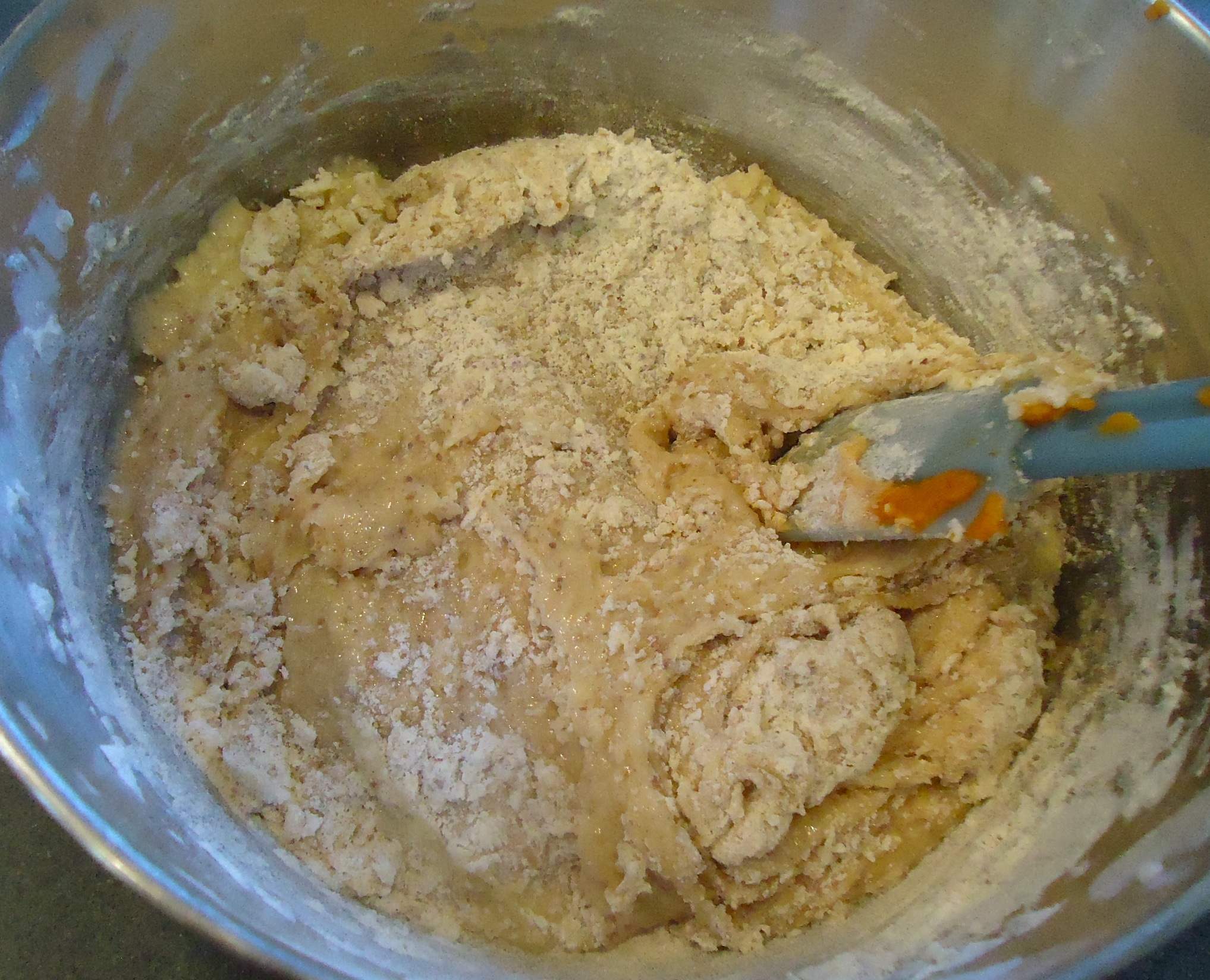
Back to the cake…add the dry ingredients into the oil/sugar/egg mixture.

Then stir in the pumpkin.

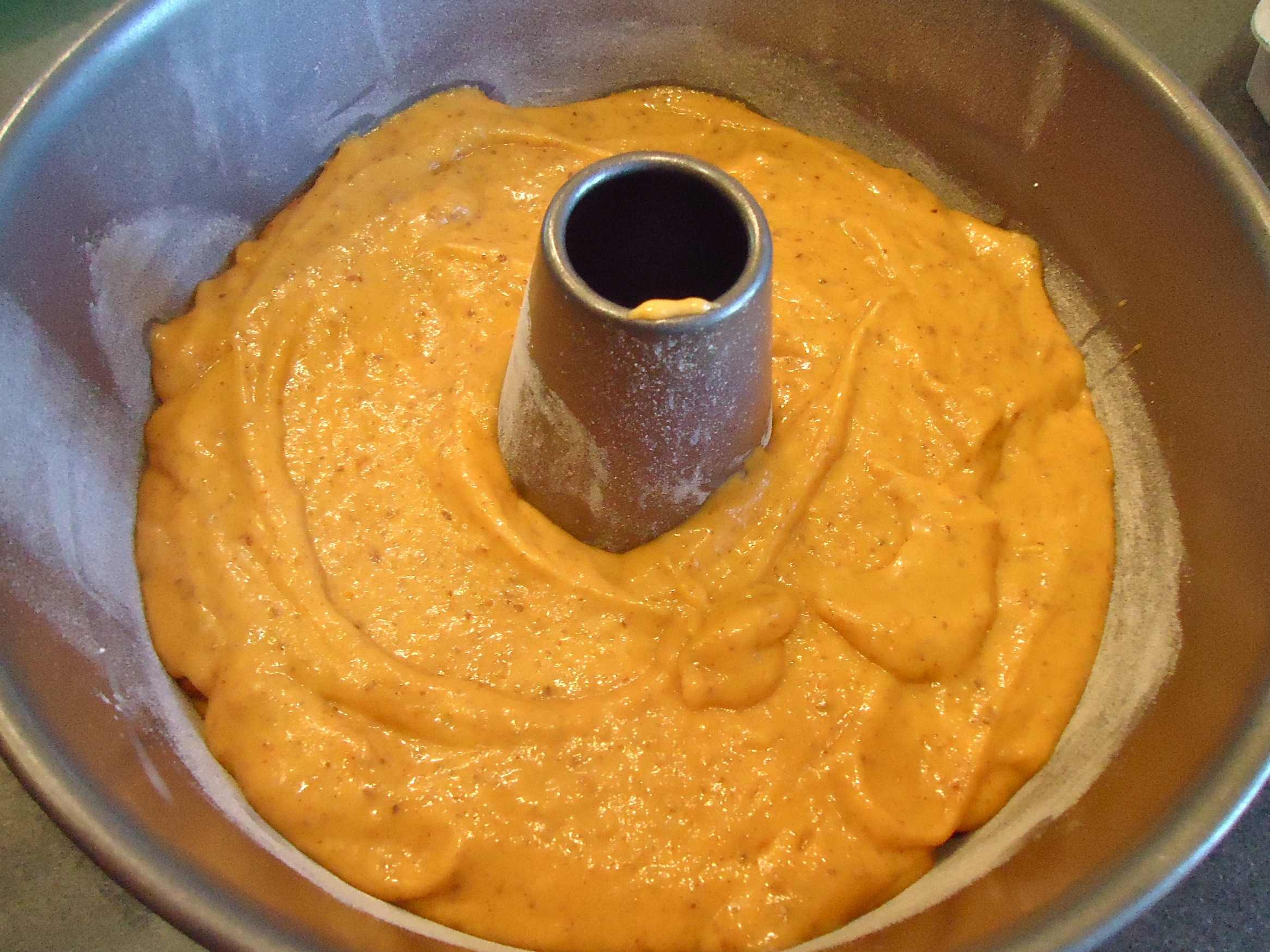
Pour half the batter into the prepared pan and the top with the streusal.

Pour the rest of the batter on top and pop the pan into the preheated oven.

After about 50 minutes the bread comes out the oven looking great – smells great too!

Remove the bread from the pan and cool on a rack.

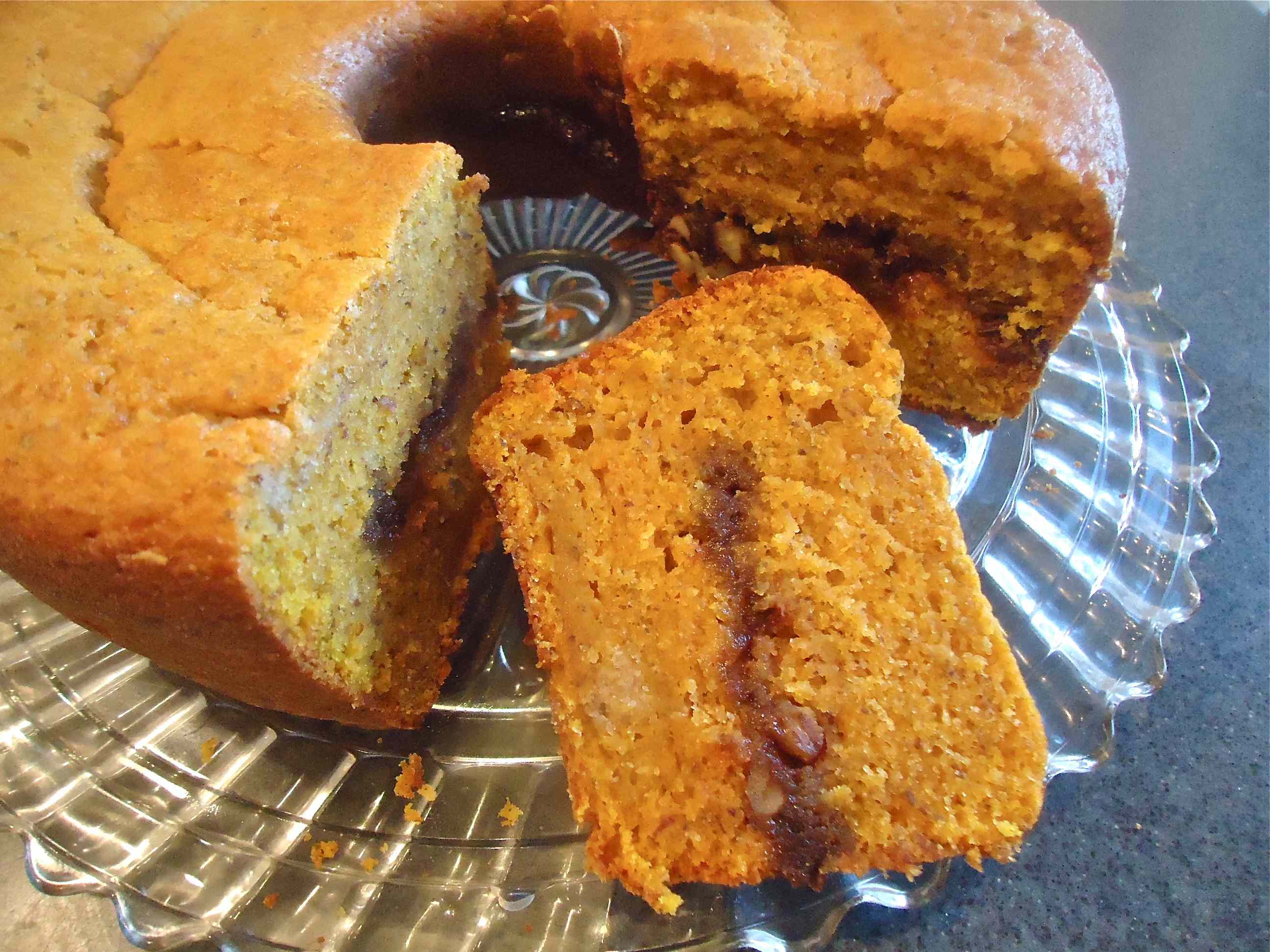
yummy pumpkin bread with pecan rum streusal

This is a moist ‘bread’ with a sweet, crunchy streusal surprise inside.

Pumpkin Bread with pecan rum streusal

Streusal filling

  • 1/3 cup brown sugar, packed plus 1 tbl. brown sugar
  • ½ heaping cup chopped pecans
  • 1 tsp cinnamon
  • 2 tbl flour
  • 2 tbl butter
  • 2 tbl water
  • 1 ½ tbl dark rum (or good quality bourbon)

Cake

  • 2 cups all purpose flour (or 1 cup whole wheat and 1 cup all purpose)
  • ¼ cup ground flax seed
  • 2 tsp. baking powder
  • 1 tsp. salt
  • 1 tsp cinnamon
  • ¼ tsp. mace or nutmeg
  • 2 cup sugar
  • 2/3 cup vegetable or canola oil
  • 1 can pumpkin ( or 1 2/3 cup cooked  fresh pumpkin puree) Do not use pumpkin pie filling!
  • 3 eggs

In a skillet melt 1 tbl. brown sugar and whisk in 2 tbl. water. When sugar is dissolved add in the pecans. Stir, turn up the heat slightly and add in the rum. Cook on medium heat about 1 minute or so. Keep stirring, do not allow to burn. Remove from heat and set aside while making the streusal. In a medium bowl mix all other streusal ingredients, adding in pecan mixture last. Set aside.

Preheat oven to 375 degrees. Sift the flour and then measure. Mix the flour, flax, spices, salt and baking powder together. Set aside. In a large mixing bowl beat the oil and sugar then add the eggs in one at a time, beating well after each. Add in the flour mixture and then the pumpkin.

Grease and lightly flour a tube or bundt pan*. Pour approximately ½ the batter into the pan, spreading if necessary so it is even. Sprinkle or spoon the streusal mixture evenly on the batter, avoiding getting too close to the outside edges. Pour the rest of the batter over the streusal, covering it completely. Bake for approximately 60 minutes or until a toothpick or skewer inserted into the cake comes out clean. Cool on a rack and invert onto a serving platter.

* Use 2 traditional prepared loaf pans if you like. Pouring ¼ of the batter in each pan, ad the streusal and top each loaf with the remaining batter. Cooking time would be reduced to approximately 45 minutes.

The food nerd strikes again with classic apple pie.

Once a food nerd always a food nerd. I am making this statement with this particular apple pie recipe because with it I won two blue ribbons at the South Carolina State Fair…in the junior category when I was 16 and then in the adult division when I was 17.

Needless to say, I was very proud of this accomplishment, but not enough to EVER tell any of my friends at the time, lest it get out into the general population of my high school. In those days, and actually to this day in my soul, I was what would be considered a wallflower. If I could blend into the background I was comfortable, which became tricky as I grew to a height of 5 foot 10, towered over all the boys, and sported the typecast Irish/Welsh look of ultra pale skin, freckles and thick red hair.

Even as I got older I tucked my ribbons away, dreading any mention of “the blue ribbon winning apple pie” that would surely be revealed to every boy I dared bring home. In my family of cooks it did give me a boost in confidence especially around my mother, who is a very fine baker in her own right.

We tried for years to get her to enter her superb caramel cake (my favorite) or her billowy, 4-layer coconut cake in the State Fair. But she never would, she’d just say, “It would be wasteful. You know they take one slice and then the rest of the cake just sits there… and rots.” If there’s one thing my mother is NOT, its wasteful. Long before being green was hip (like 30 years ago!), we (lovingly) called her the “original recycler” as she insisted we rinse out and reuse every plastic Ziploc bag and save all the aluminum cans to take to the local metals salvager.

Nothing was safe from the ‘original recycler’. I can still see my dad rummaging through a waste basket at the insistence of my mom, searching for pantyhose (women, even girls wore pantyhose back in the 70’s and 80’s, people) and then seeing all manner of lady’s unmentionables propping up row upon row of tomato plants and runner bean trellis in our garden. Ugh.

But in all truthfulness I do now use old tights to prop up my own tomato and pepper plants, so for that Mom and Dad, I salute you. But I still don’t ante up to the blue ribbons – well at least until now, I suppose. They reside somewhere at the family homestead – dusty and disintegrating in an old metal frame. Next time I’m there, maybe I’ll look for them and show them off to Girly Girl, who now proudly proclaims herself to be my “little sous chef”. Good girl, good girl.

I do have a “secret” ingredient to this pie, proclaimed to the world here for the first time ever, and it is… molasses. Actually when I won the blue ribbons all those years ago I had 3 secret ingredients…one was the molasses, one was the apples I used which were hand picked from a family-owned orchard in Easley, South Carolina and the last, the pièce de résistance was…

my Father. Dressed in his work suit and tie, he hand delivered the pie first thing in the morning, fresh baked and toasty from the oven. It was the first pie tasted. I’m not saying that this necessarily had any influence what so ever, and I do like to think this recipe is “award-winning”, but that pie was delivered warm and my Dad, well, he was a very charming man…

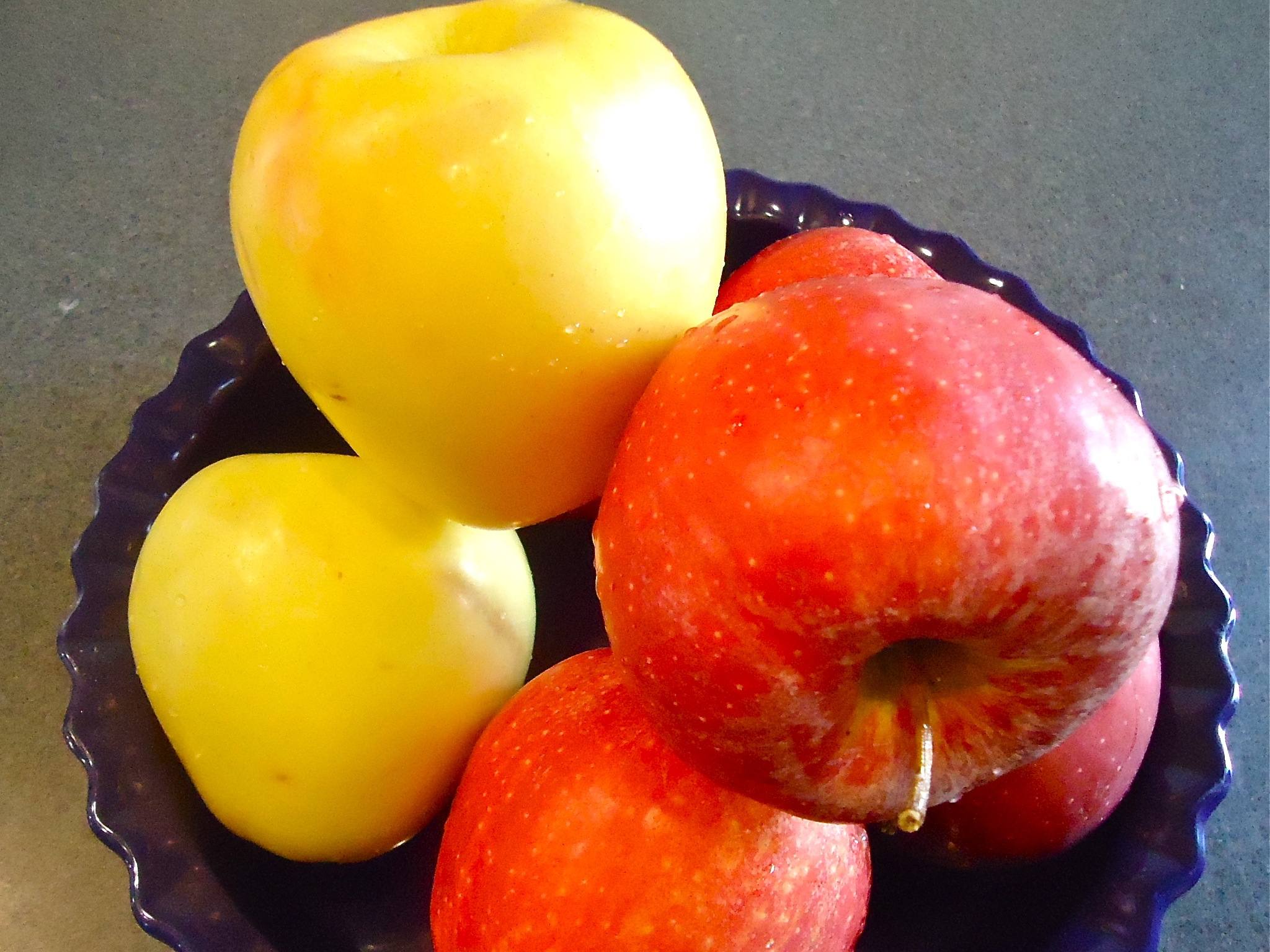
Obviously the apples are very important in this pie. I like to use a combination of McIntosh and maybe Granny Smith, but this year Michigan lost 90% of its apple crop so no McIntosh… these were organic Fugi and Yellow Delicious, the latter not usually a pie-making apple but I added a couple for their great apple-y flavor.
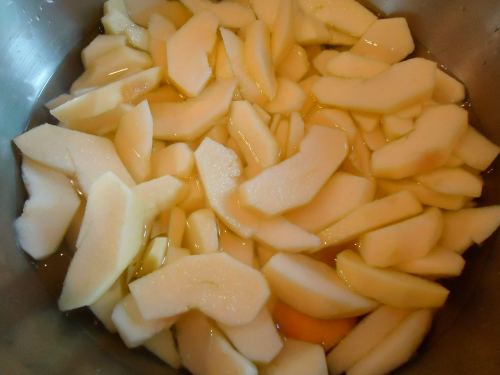
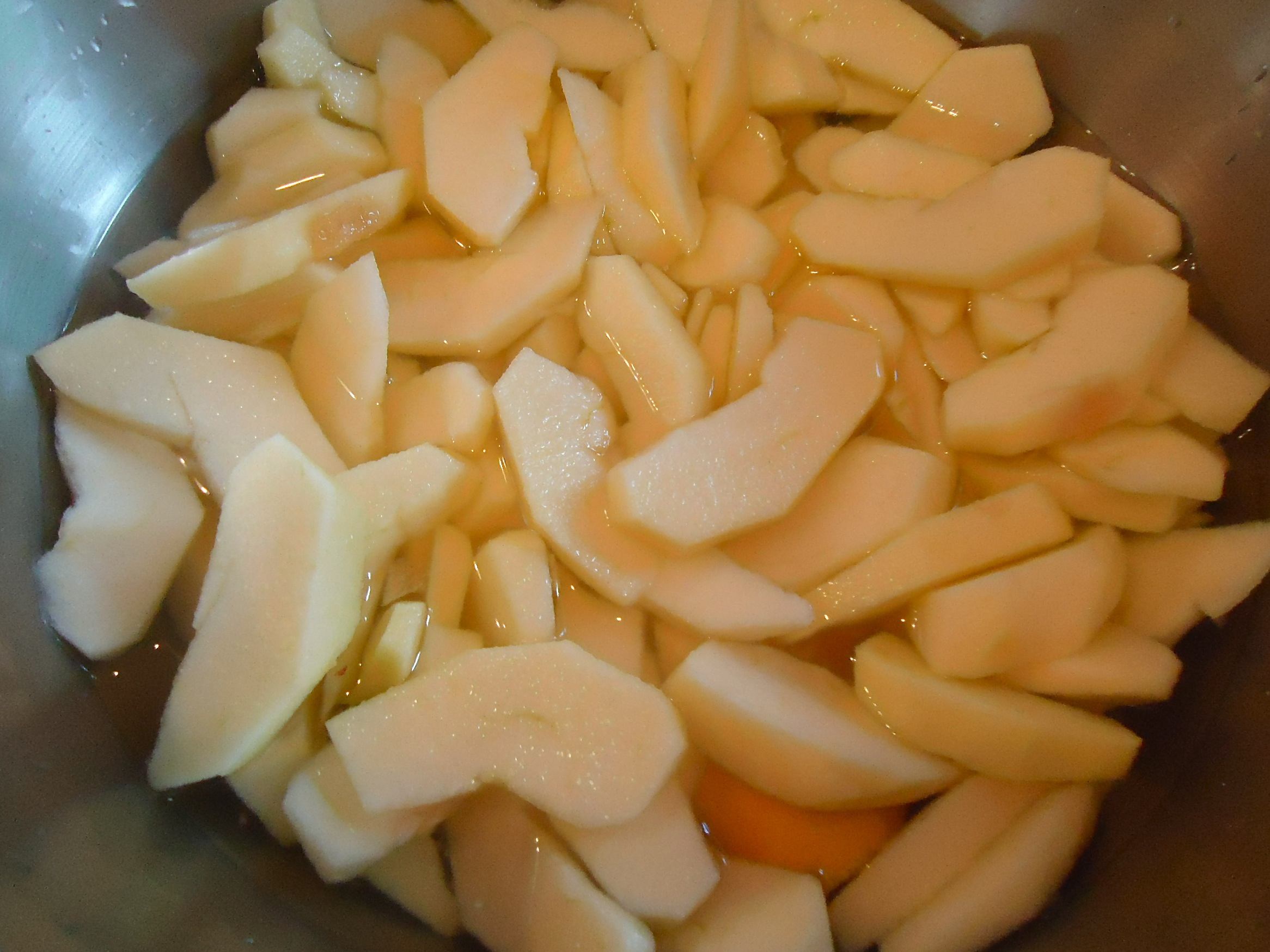
Sliced apples soaking in the lemon water.

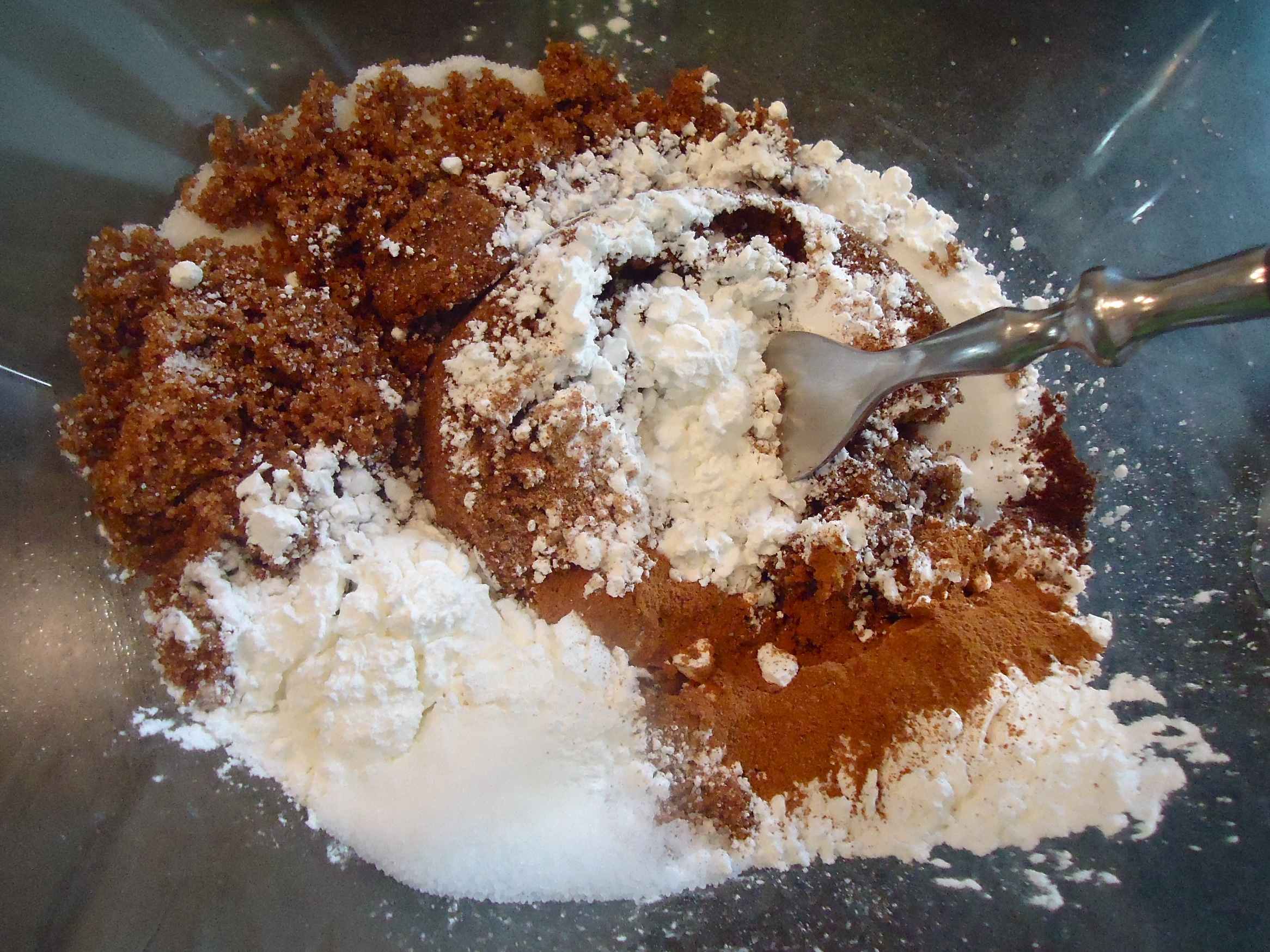
Mix the sugars, the spices and the cornstarch (2 tablespoons).
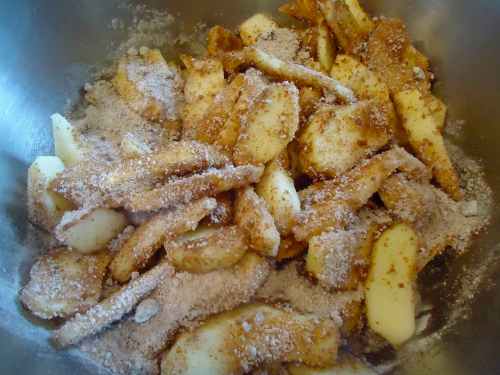
Toss the sugar mixture with the drained apples.

The apples sit for awhile. Feel free to stir them, gently, a couple of times. After awhile you’ll get a sort of syrup in the bottom. This is a good thing!

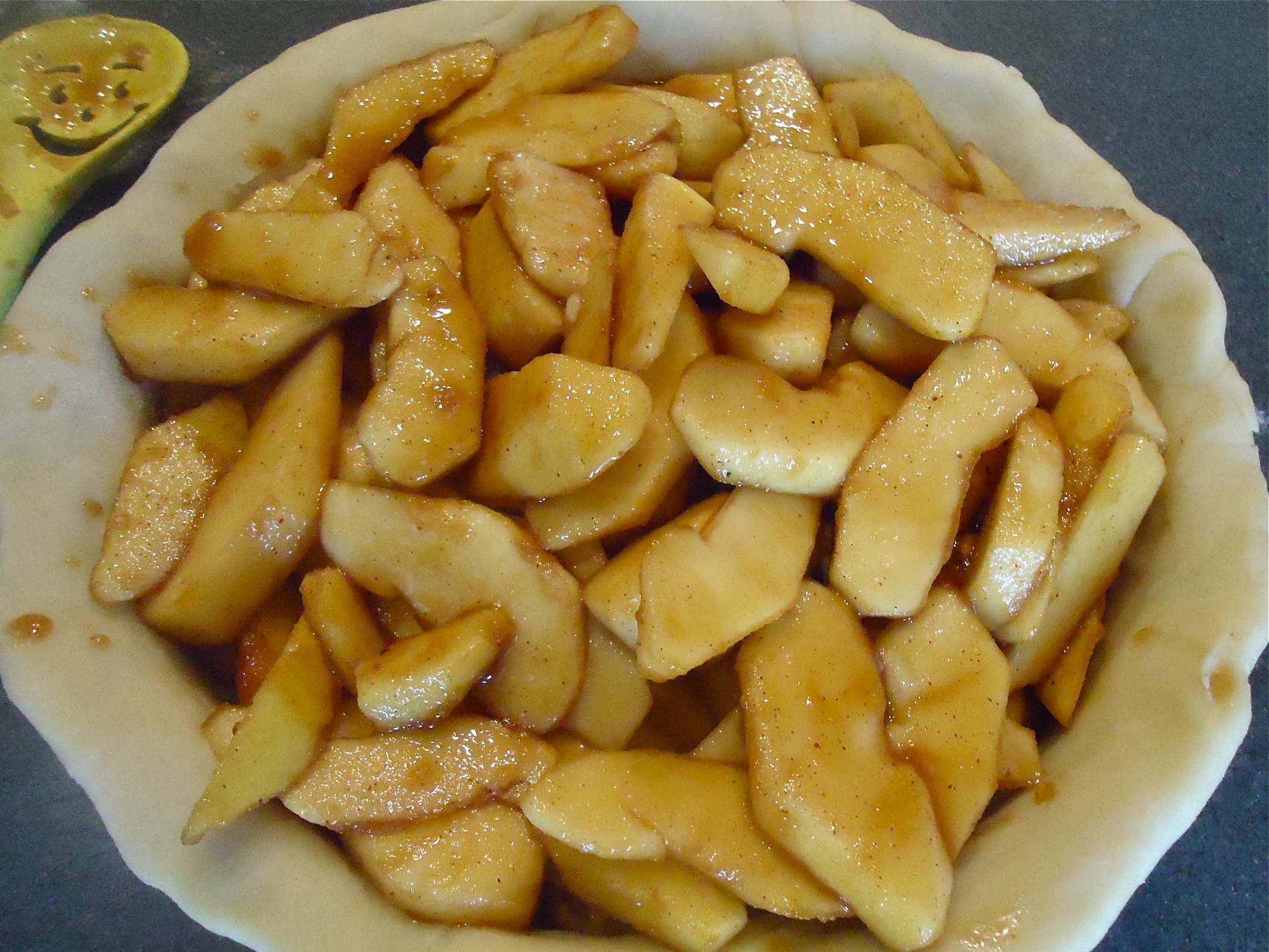
Spoon the apples into the prepare crust – but NOT the syrup. How do you like the smiley face spoon? Borrowed from Girly Girl…
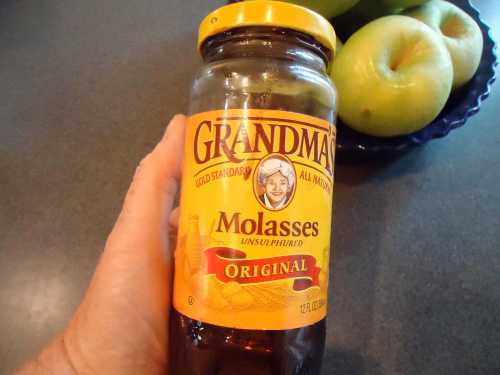
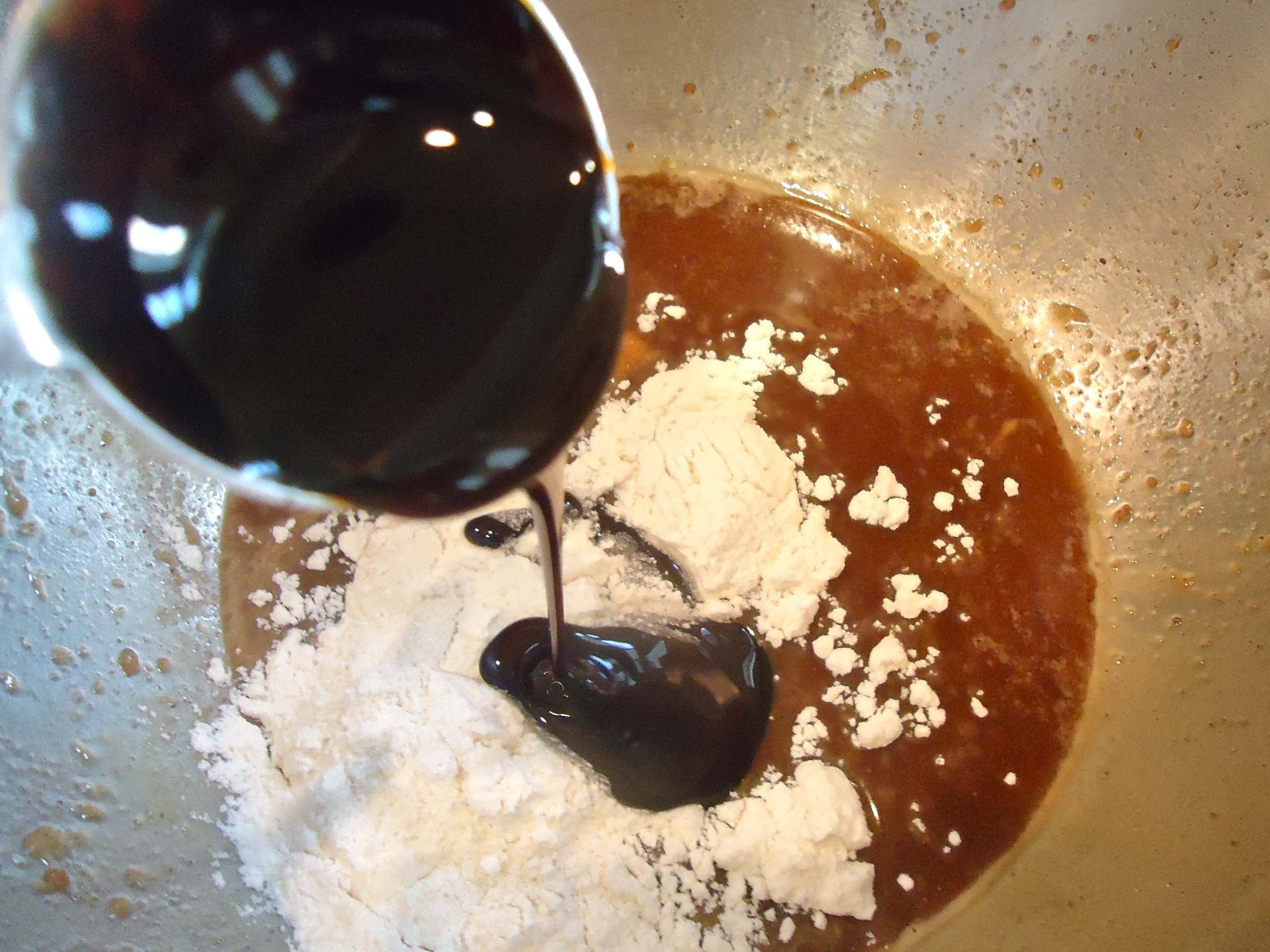
Time for the ‘secret’ ingredient – molasses. Use whatever brand you like, but get the unsulphured kind.

Add the molasses, flour and cornstarch to the ‘syrup’. Stir well or use a whisk.
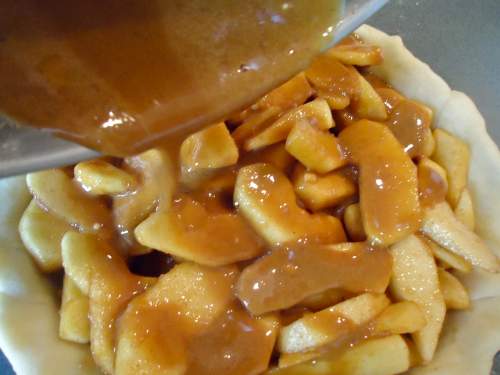
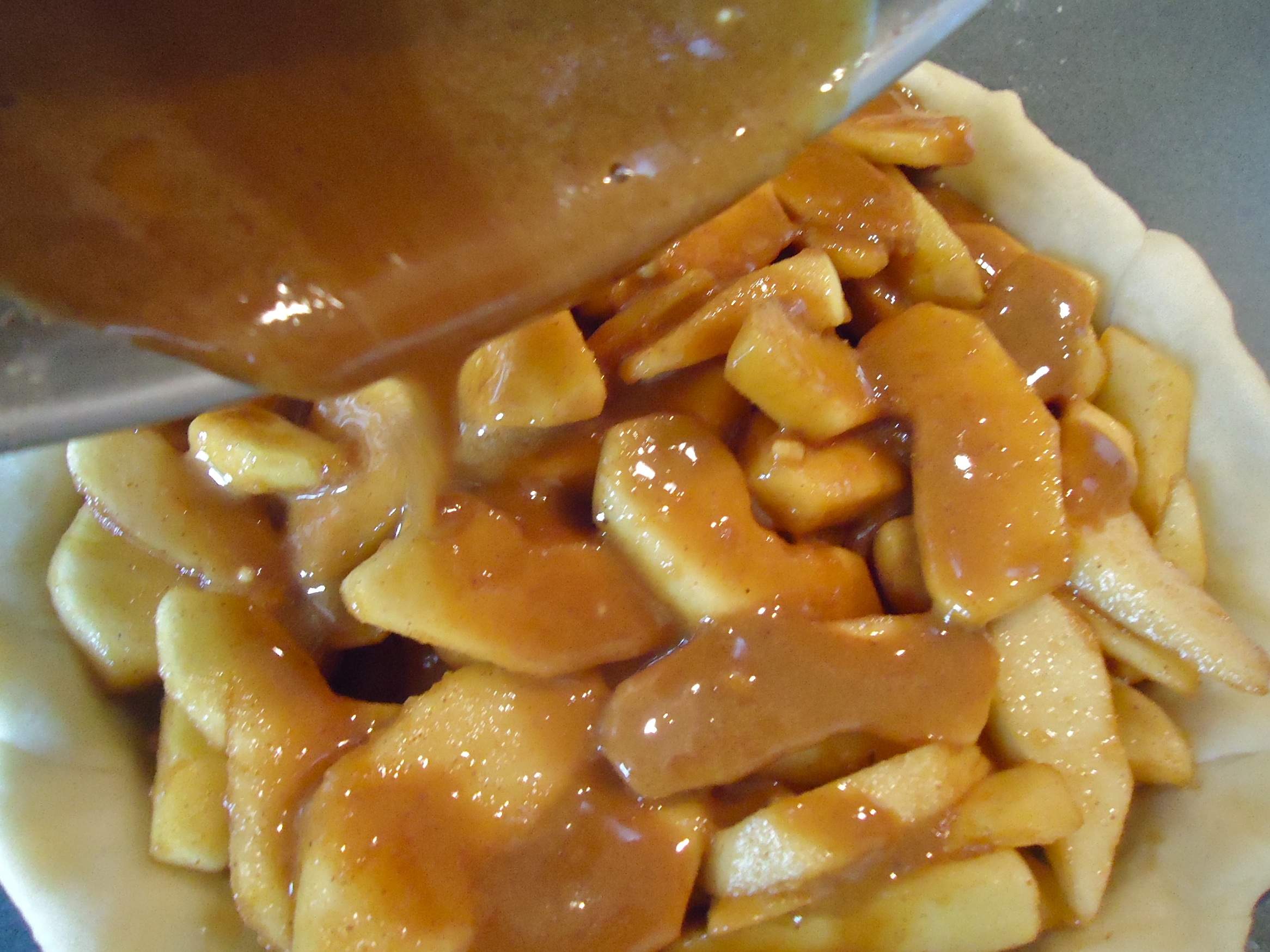
Pour the molasses mixture over the apple slices as evenly has you can. When it heats up it will all come together in the crust so don’t stress about this!

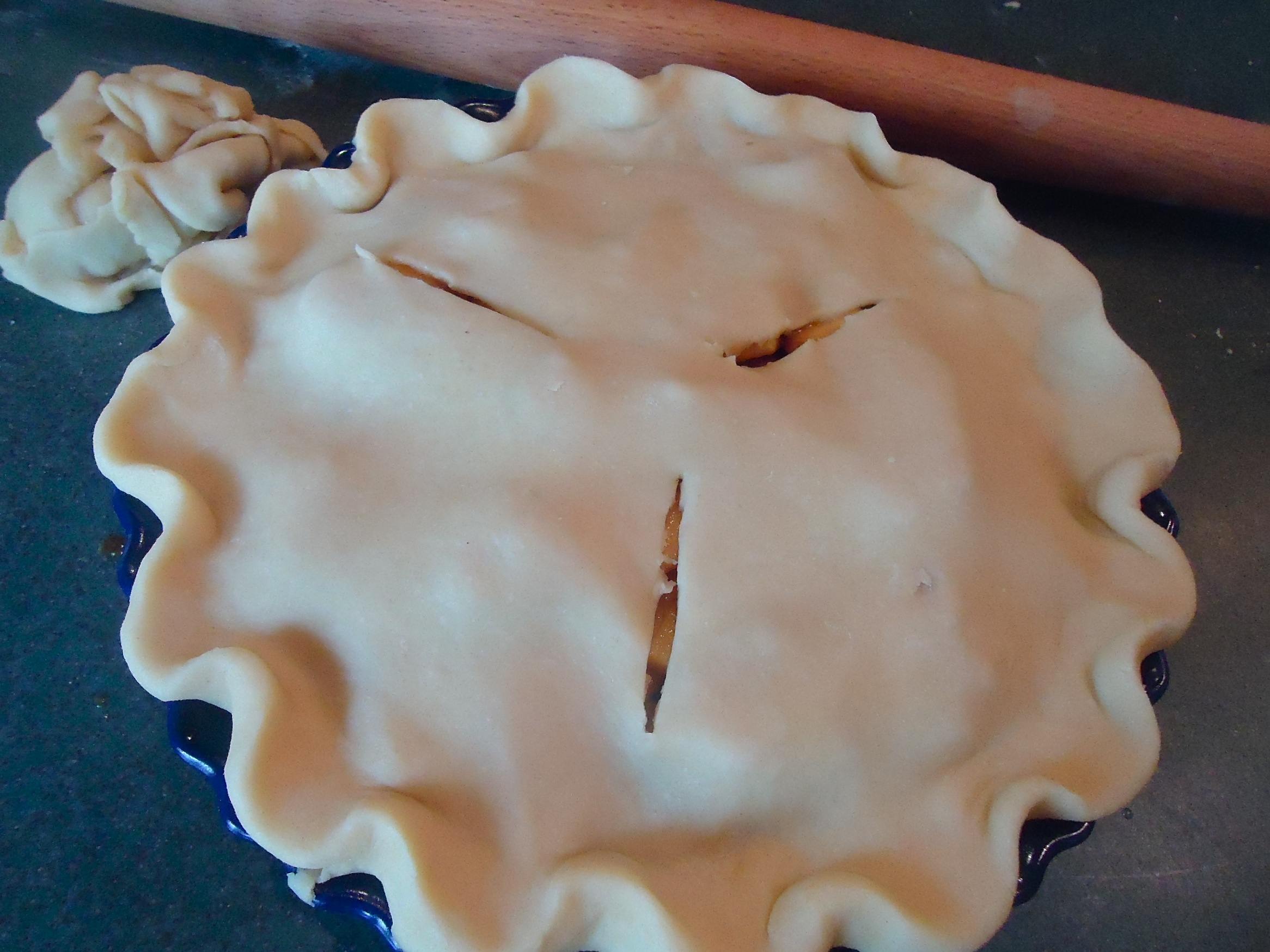
Top with a full crust, like I did here, or use a pretty lattice crust, whatever you like. You can also brush on an egg wash and sprinkle with Demera sugar for a fancy bakery look.

Out of the oven and lookin’ good. Allow the pie to cool some for easier slicing.

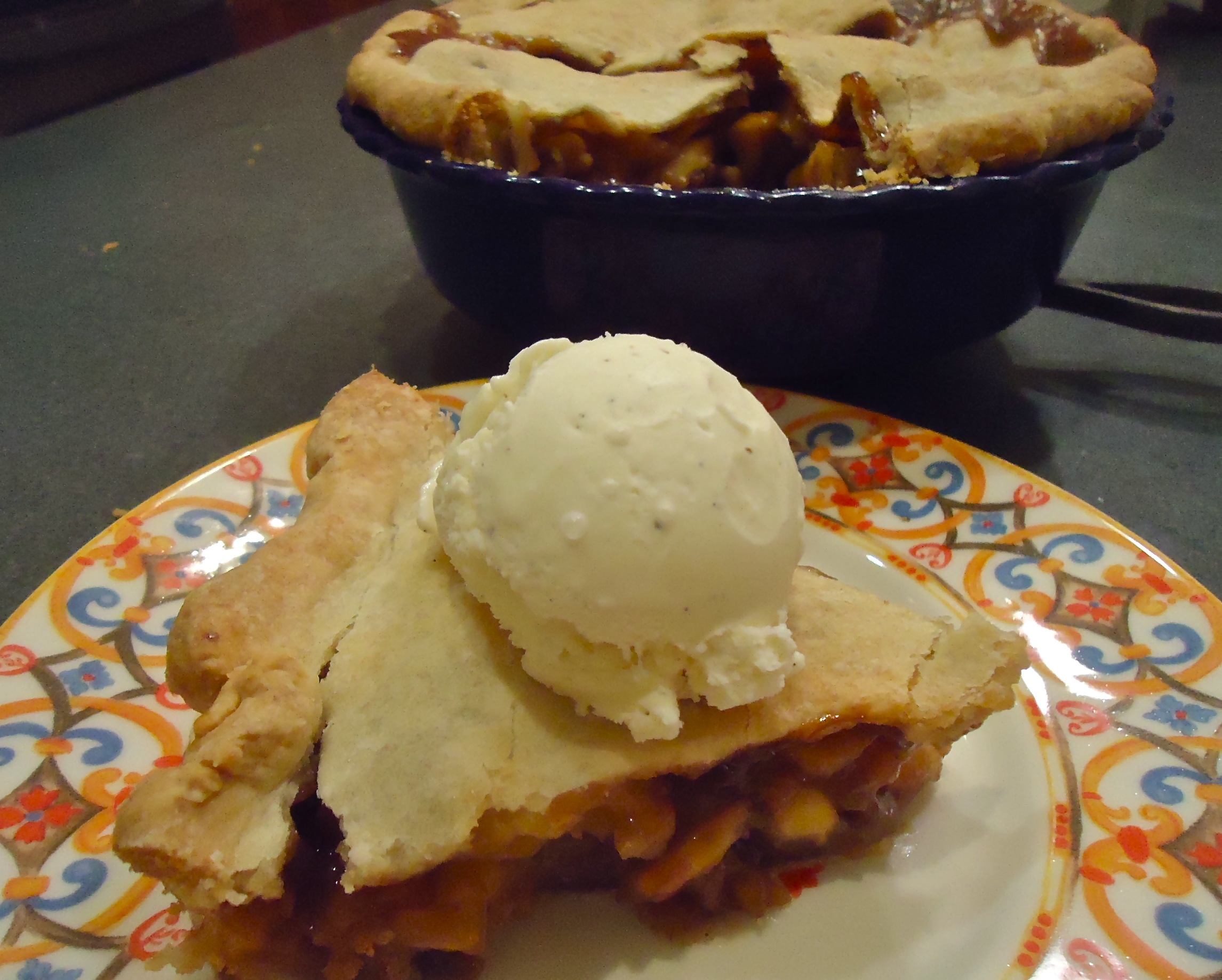
Here’s another shot of a slice on the plate. So perfect with vanilla ice cream – good homemade apple pie tastes like Fall to me!

Apple Pie

  • 6-8 large apples (about 3 lbs), washed, peeled, and cored
  • ½ lemon
  • Ice water
  • 2/3 cup sugar
  • 2/3 cup brown sugar, packed
  • 2 tbl flour
  • 2-3 tbl cornstarch*
  • 1 tsp cinnamon
  • ¼ tsp nutmeg
  • 1/8 tsp cloves
  • ½ tsp salt
  • 2 tbl molasses
  • egg wash, if desired

In a large bowl squeeze the lemon into several cups of ice water. Slice your apples and place in the water. Stir the mixture around as you continue to more apple slices. This will help the apple from turning brown. When finished, stir once more and drain the apple slices in a colander. Pat dry if necessary.

In a small bowl mix the sugars, spices, 2 tbl. cornstarch and salt. Pour the drained apple slices back into the large bowl and sprinkle the sugar/cornstarch mixture over them, stir gently to coat. Allow the apples to sit at room temperature at least 30 minutes and up to an hour.

If I have pastry crust to make this is when I make it.  Preheat oven to 425 degrees ahrenheit . After the allotted time, stir the apples and see that the juice from the apples and the sugar mixture has created a ‘syrup’. Stir the apples again and spoon them, but not the ‘syrup’, into the prepared pie crust.

Add the remaining tablespoon of cornstarch*, the flour and the molasses into the ‘syrup’. Stir or whisk. Pour this mixture over the apples evenly. Cover the pie with the top or lattice crust and crimp the edges. If you like, brush the crust with an egg wash.

Bake the pie for 15 minutes at 425 degrees and then reduce the heat to 350 degrees and bake another 45-55 minutes or until the apples are cooked through and the filling is bubbly. Remove to a rack to cool. Slice and serve warm with ice cream or whipped cream.

Makes 8 deep-dish slices or 10 regular size portions.

* I added in 1 extra tablespoon cornstarch to compensate for the using the Yellow Delicious apples, which tend to contain more moisture than classic pie making apples.

It’s a busy, busy, busy, busy world so slow down… with snapper glazed with ginger and tangerine.

Ahhh, it’s finally Friday and I am happy for a weekend with only a couple (or three) prescheduled events. Here in the Lowcountry, October and November tend to get filled with all the festivals, open houses, and community events that would never fly in the humidity soaked months of May-September. The weekends can get sort of crazy running from one thing to another, sometimes being disappointed not to make it to every simultaneously occurring event.

The weather here is now what others across the US might consider “perfect summer” weather. The cool, dry air hits a high in the mid seventies (degrees Fahrenheit) and the evening temps are in the high 50’s, making oyster roasts, carnivals, barbeques and pumpkin patch visits downright pleasurable, well, unless the no-see-ums (also known as sand gnats) show up to spoil the party. Forget Palmetto bugs, fire ants, or even mosquitoes, I consider these critters the plague of the Lowcountry with absolutely no redeeming qualities. If someone could invent an environmentally responsible, yet surefire way to get rid of them, billionaires they would surely become. Let me know if you have any ideas…

So enough about that scourge, lets talk about food and something sweet and special…ginger spread. My friend, Greta from over our local organic grocery, Herban Marketplace, kindly gave me a jar of this luscious concoction to try. It is made by a company called Ginger People and while I possess no personal nor professional affiliation with them what so ever, I do love this stuff. So far I have created two recipes using it – fish with an Asian-inspired tangerine ginger glaze that is not traditionally Southern at all – and sweet potatoes, a vegetable that is clearly and historically as Southern as grits or butter beans.

After testing the glaze/marinade a few times on different fish and even shrimp, I got the proportions just right. And while purchasing these beautiful, first of the season sweet potatoes, it dawned on me that they could be my ginger’s ‘Fred’.

I grew up with sweet potato side dishes served up at holiday time, in particular, loaded with added sugar and even marshmallows – which I always scooped off. Sorry, but that is gross. As I got older I’ve found new ways to prepare sweet potatoes, mostly without using much in the way of sweeteners. Now this ginger spread is sweet, so before I sound like a phony, I will warn to use it sparingly as a little goes a long way both in sweetness and in the ‘gingerfication’ of whatever food you’re preparing.

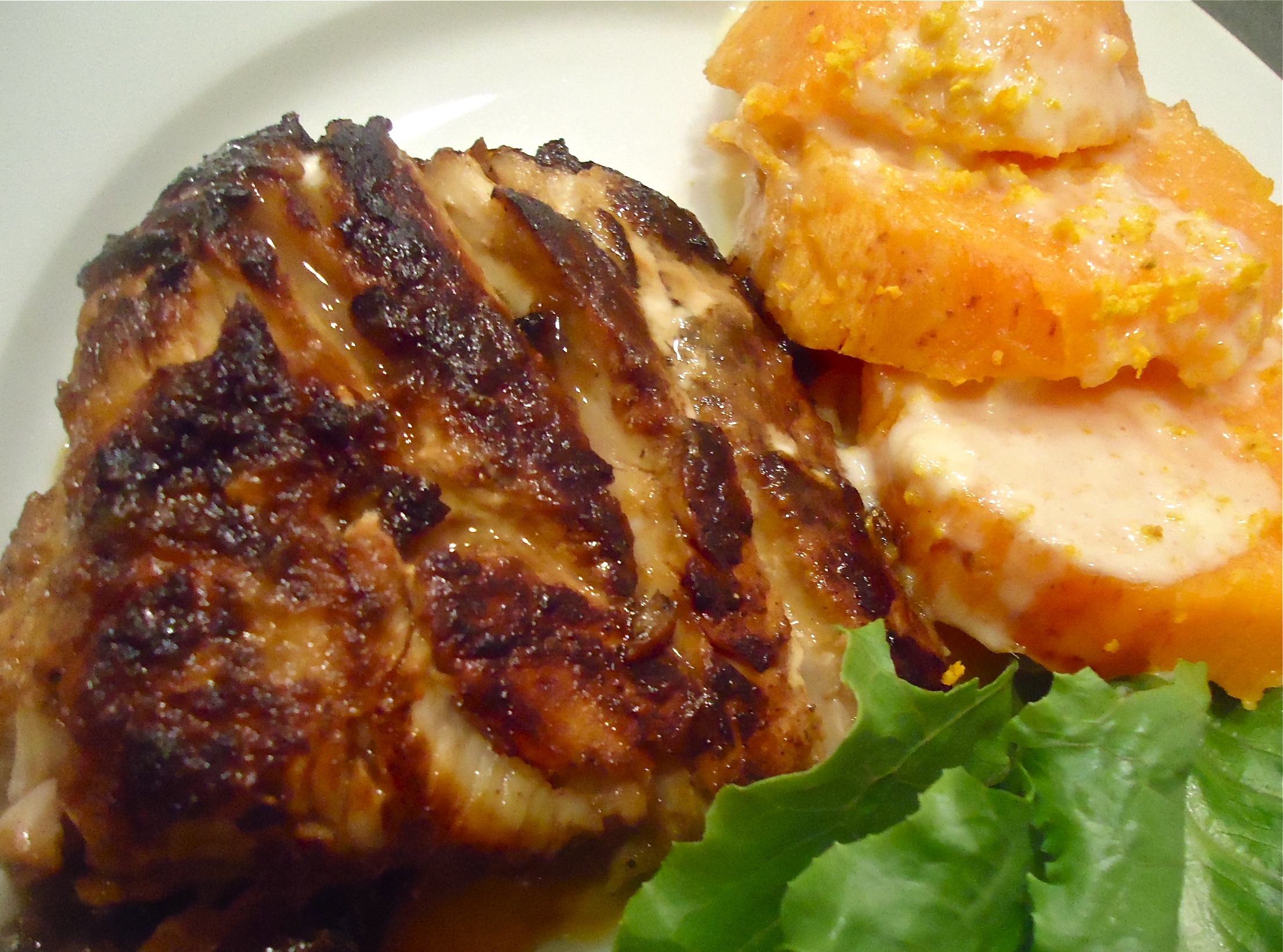
This being said, the ginger cream spiked sweet potatoes and the fresh snapper bathed in the tangerine-ginger glaze could not go together any better. And as a feather in my cap, my non-sweet potato eating Dear Hubby even tried (and liked) them, so after a concerted 6-plus year effort, a sweet potato epiphany has finally cracked that nut! Yeah for me.

Ingredients for the snapper with ginger and tangerine glaze.

Making the marinade/glaze is a snap – just mix everything in a small bowl.

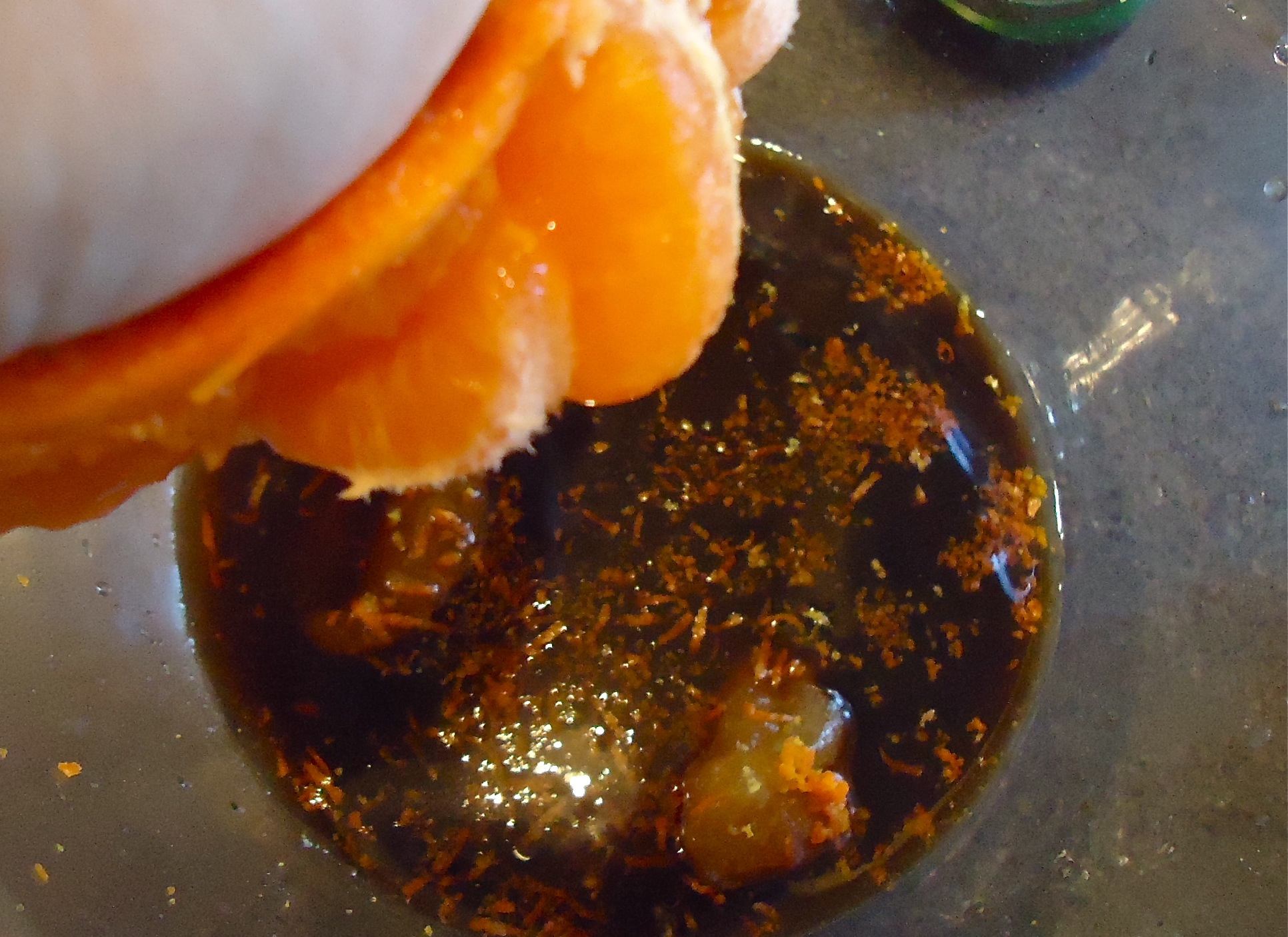
Don’t forget to squeeze in the tangerine juice. You could also use fresh orange juice…

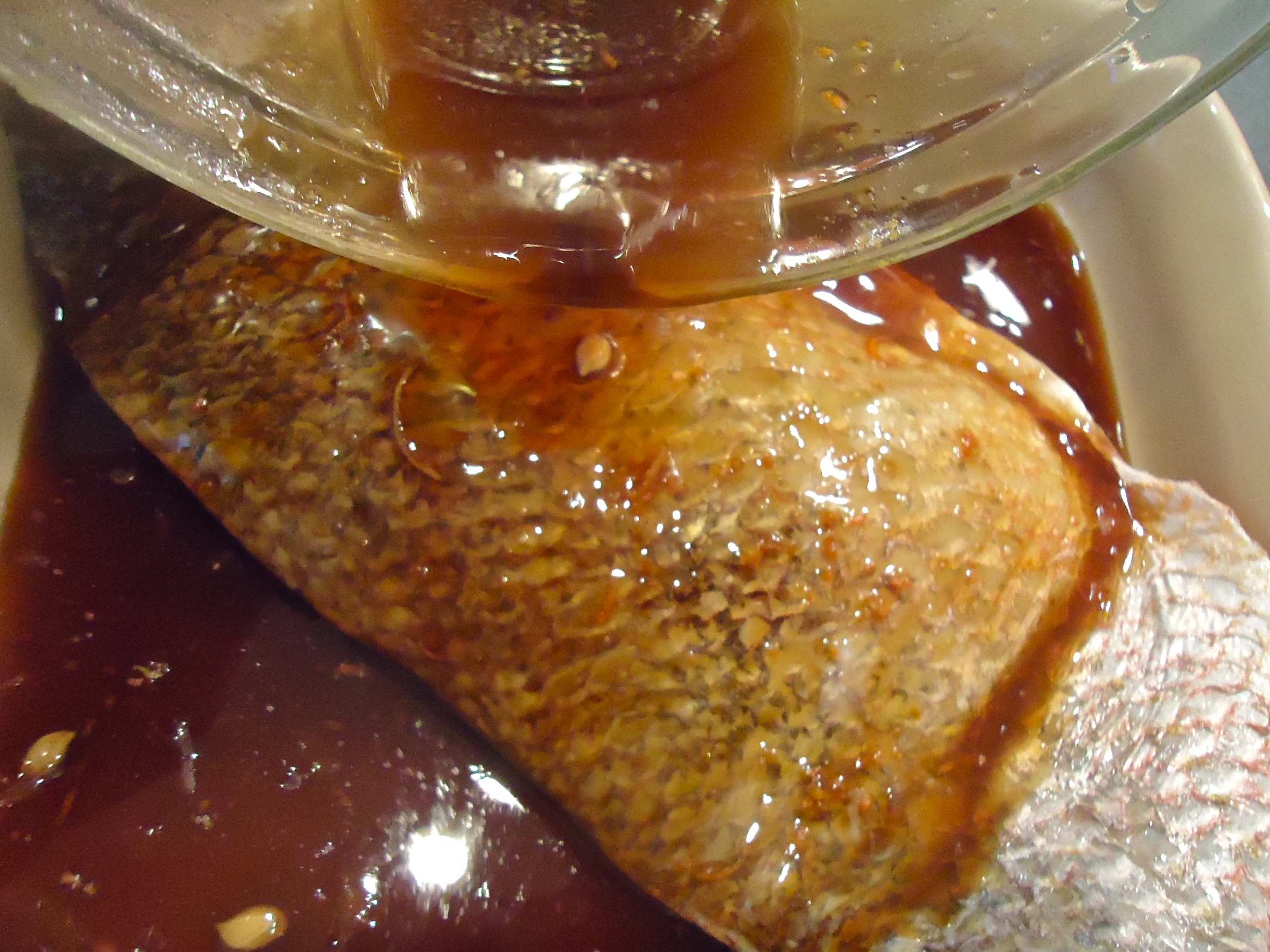
Pour the marinade over the fish, cover and refrigerate.

Here’s the fish fillet after an hour in the frig. Time to cook!

After heating the pan, place the fillet skin side up so it gets a good sear…

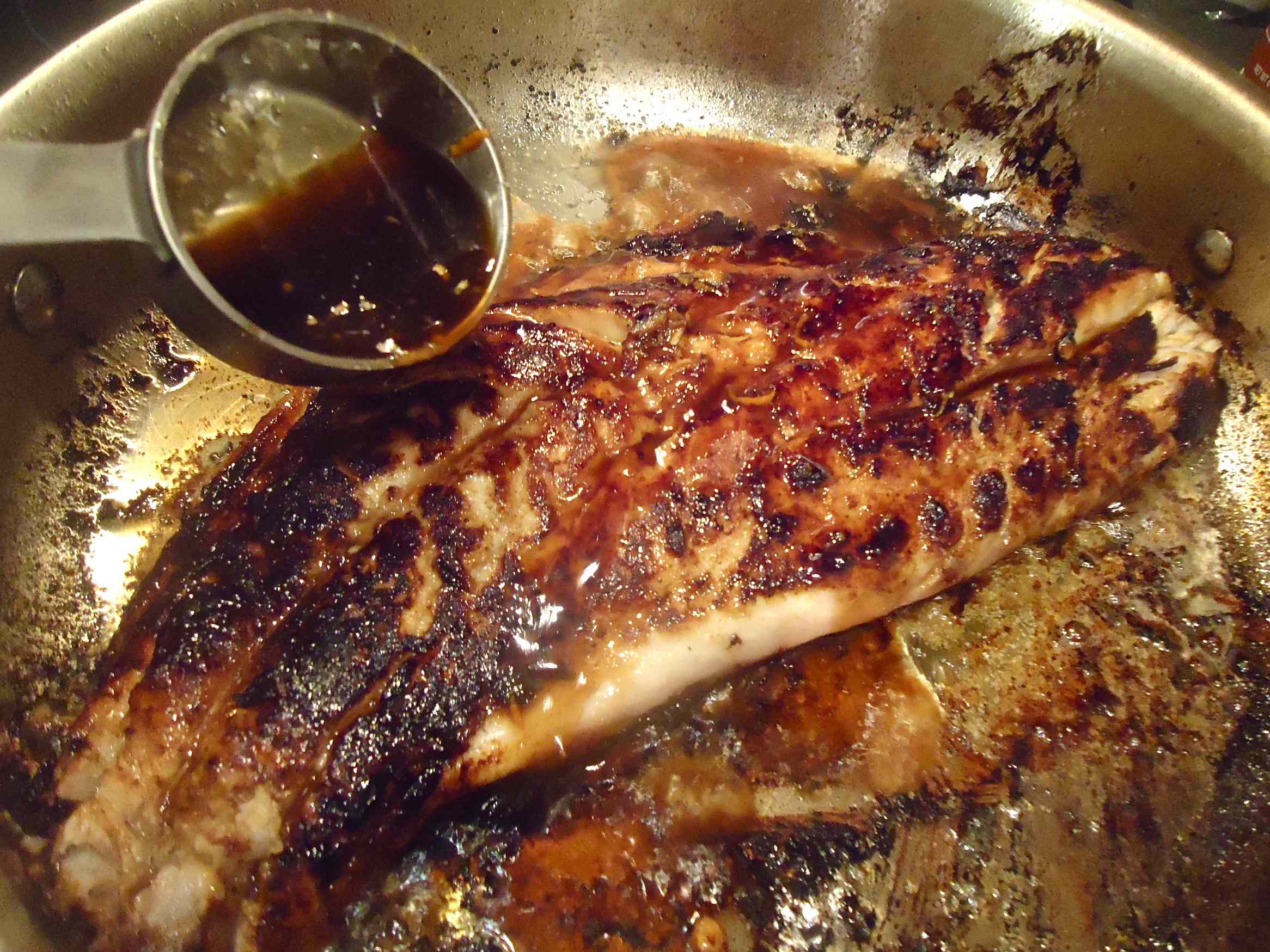
After cooking a couple of minutes, flip the fillet over, pour on the reserved marinade/glaze, cover and cook until the fillet is cooked through. Depending on the thickness of the fillet and the type of fish this can vary. This fillet took a total of about 12 minutes to cook.

For the gingered sweet potatoes, start with raw sweet potatoes (or yams) that have been washed and dried. I oiled the bottom of this bake pan but not the potatoes themselves.

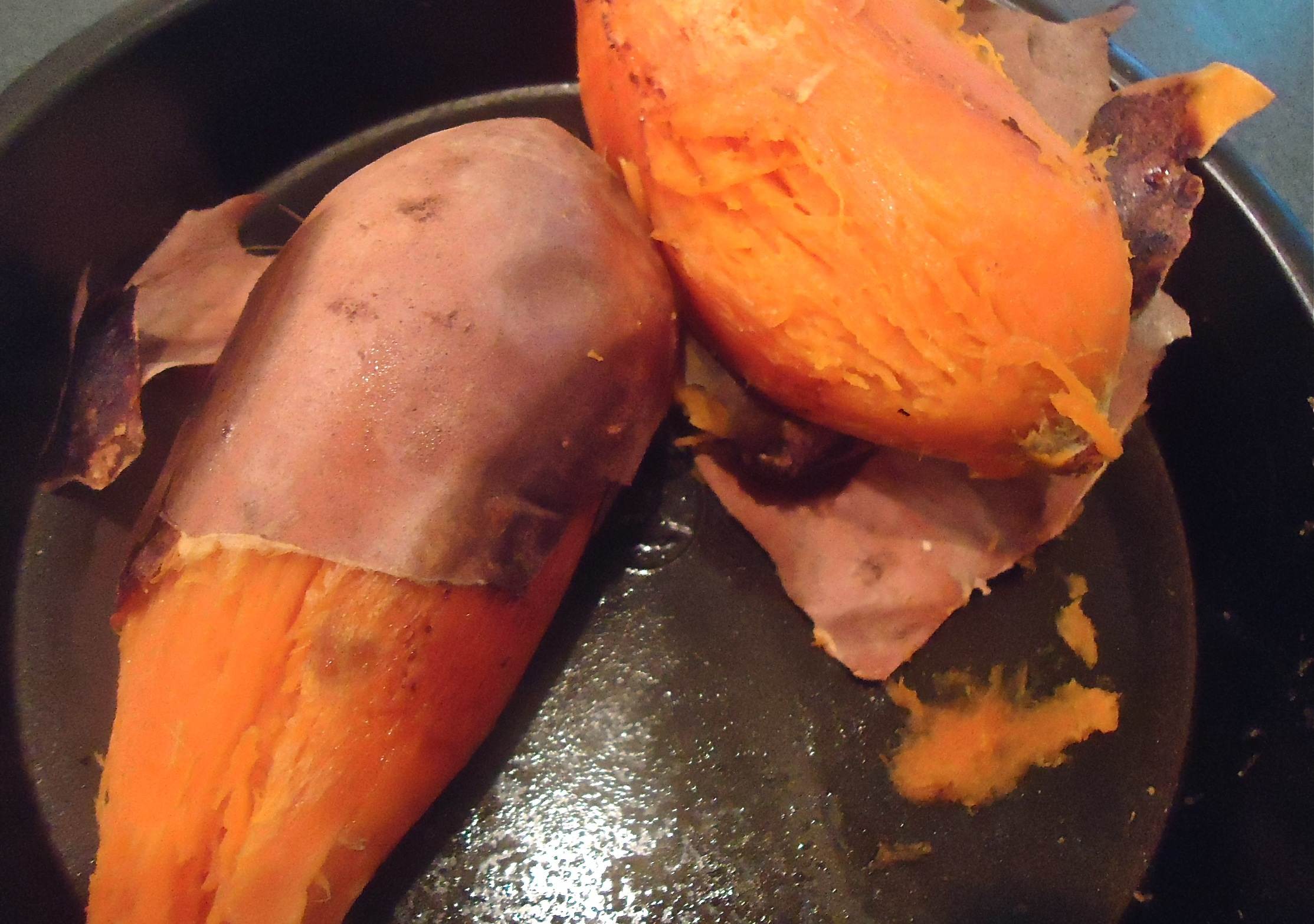
Here are those same potatoes, after being roasted in the oven for about 40 minutes. I poked my finger into one so you can see their jackets are ready to come off.

These will be hot potatoes so allow to cool a little – or a lot – before moving the skin (the jackets). They will slip right off.

With ingredients as great as sweet potatoes, cream and this awesome ginger spread there’s no need in complicating things. Mix up those ingredients with a dash of salt and squeeze of lemon – I used a fork!

After slicing the potatoes, fan them a bit and sprinkle with 1/4 teaspoon of salt. then pour the ginger cream over top. Cover the baking pan and cook for about 20 minutes.

After baking, sprinkle with the tangerine zest. I spooned some of the cream over the top of each serving as well. For a dinner party, I think this would be pretty great baked in individual ramekins too

Snapper Glazed with Ginger and Tangerine

  • 1 lb. fillet snapper (or salmon, grouper, or mahi mahi)
  • ¼ cup Mirin
  • ¼ cup soy sauce (I use low sodium)
  • 2 tbl. Ginger People ginger spread
  • 1 tbl. rice wine vinegar
  • Juice of a 1 juicy tangerine and zest of 1/2 a tangerine
  • Juice and zest of ½ lemon
  • Salt and pepper to taste

In a small bowl mix the Mirin, soy sauce, rice wine vinegar and whisk in the ginger spread, juices and zest. Reserve ¼ cup in a small bowl and set aside.

In a large flat dish place the clean fish fillet and pour the Mirin marinade (not the reserved ¼ cup) over the fillet. Cover and refrigerate for 45 minutes to an hour

Stovetop: In a large skillet heat 1 tbl oil (grape or vegetable) and 1 tbl butter until very hot – but not smoking. Place fish in skillet skin side up and sear for 1-2 minutes, lowering temperature if necessary. Flip fish over, pour the remaining ginger/Mirin/juice mixture over the fish and continue to cook over medium high heat 3-4 minutes. Turn heat down, cover pan and continue to cook another 5-6 minutes or until the fillet is cooked through.

Grill: Fire up your grill and get it hot. Grill skin side up like above and then flip over once, using a brush to slather the fillet in the reserved marinade/glaze. Turn the heat down (gas grill), put the top down and allow to grill until the fillet is cooked through. If using a charcoal grill, after the initial sear I suggest flipping the fish onto an oiled piece of aluminum foil, to finish cooking.

Remove to a warm platter or plate and serve with the gingered sweet potatoes.

Gingered Sweet Potatoes 

  • 2-3 sweet potatoes in their jackets, washed and dried
  • 2 tbl. Ginger People ginger spread
  • ½ cup cream
  • Juice of half a lemon
  • ¼ tsp. salt plus extra
  • Optional: orange or tangerine zest, about 1 teaspoon

Preheat oven to 450 degrees. Place whole sweet potatoes on a lightly greased baking dish or pan. Bake about 40 minutes or until the potatoes are cooked through and their jackets are separating from the interior. Allow to cool enough to slip the jackets off (use paper towels or potholder if necessary to hold the warm potato). Oil or butter a glass or ceramic baking dish.

Preheat oven to 350 degrees. Cut each potato into thick (3/8” slices) and place in the baking dish, fanning slightly. Sprinkle with ¼ tsp. salt. In a separate small bowl, whisk the cream with the ginger spread, add in the lemon juice, and a dash of salt. Pour this mixture over the sweet potatoes, cover the baking dish and bake about 20 minutes. Remove from the oven and serve with a spoonful of the ginger cream on top and sprinkled with zest, if desired. Serves 4-6.

Holidays were made for caramel cinnamon rolls.


Since Santa arrives in less than 2 weeks I thought it appropriate to repost my favorite holiday breakfast recipe: Caramel Cinnamon Rolls.  Although I’ll make these for any gathering where breakfast is served to a crowd, there is nothing I enjoy more to nibble on while gathered ’round the tree on Christmas morning than one of these beauties, drizzled with warm caramel. They also make a good hostess gift as they freeze well too. Just remember to include  some of the caramel sauce, as that sauce truly makes this recipe shine. Happy 14 days ’til Christmas!


Honestly I can’t remember when I began making these cinnamon rolls. It’s been a long time, though. I fooled around with different recipes for years before perfecting this recipe. Well, I think it’s perfect, although some may have suggestions for improvement. Being a southerner, I love pecans so there’s plenty of those nestled throughout the cinnamon swirl, but feel free to leave them out or switch to walnuts or hazelnuts or what have you.

The true ‘secret’ of these cinnamon rolls is the caramel sauce. This sauce lifts the cinnamon bun above the ordinary breakfast roll… in my opinion it leaves the ones that are crowned with white icing in the proverbial dust. I like gooey and I like caramel and that combination soaked into every morsel of buttery cinnamon-laced sweet bread… this is my idea of heaven on a plate.

I’ve saved this recipe all summer waiting for fall to arrive. And while it’s still somewhat balmy here in the Lowcountry, we have been able to shut off the air conditioning and open the windows for the most part. With the scent of cinnamon and bread baking I deem it officially fall.

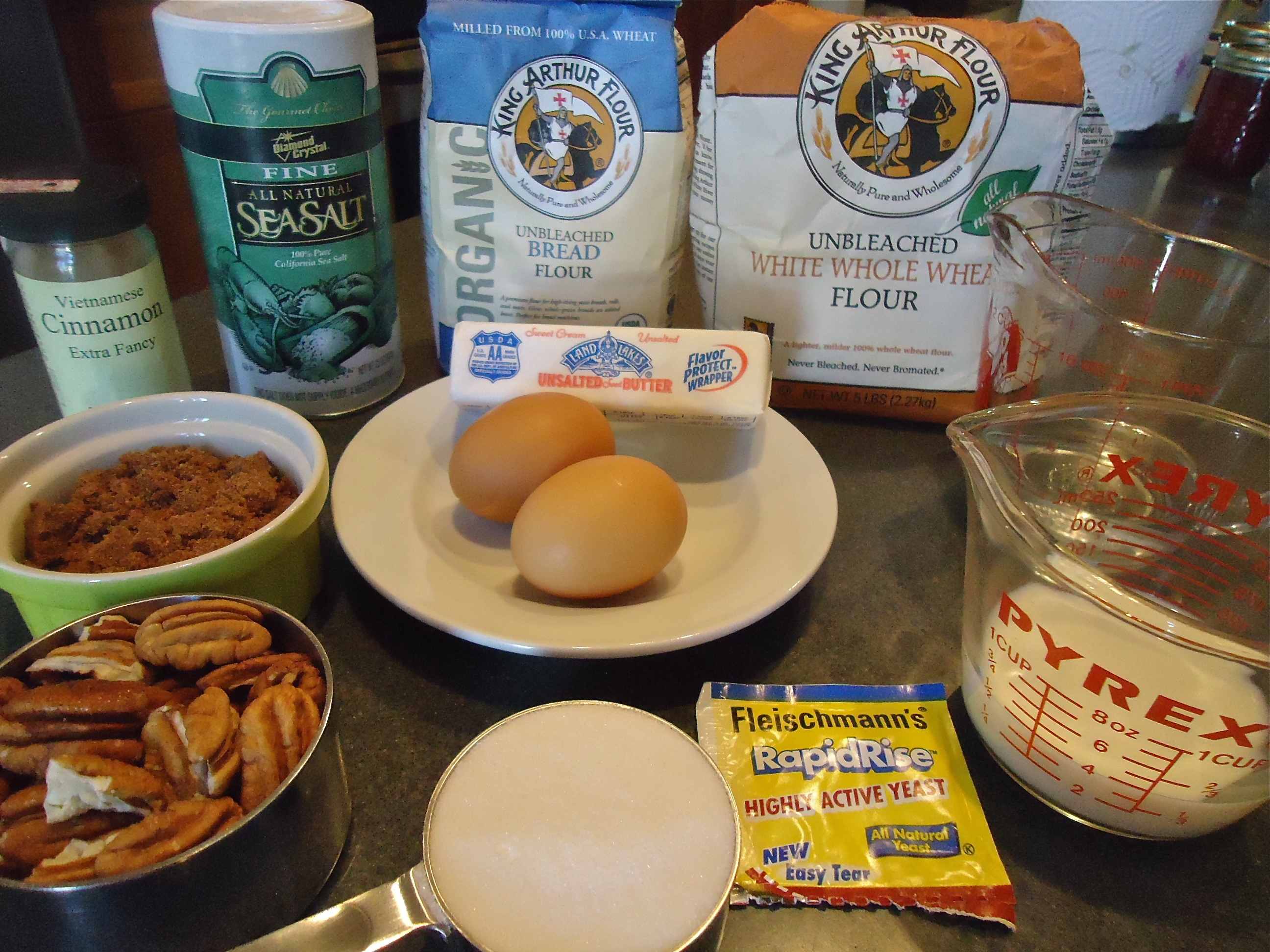
Ingredients include good quality cinnamon, a couple of eggs and my favorite, King Arthur Flour.

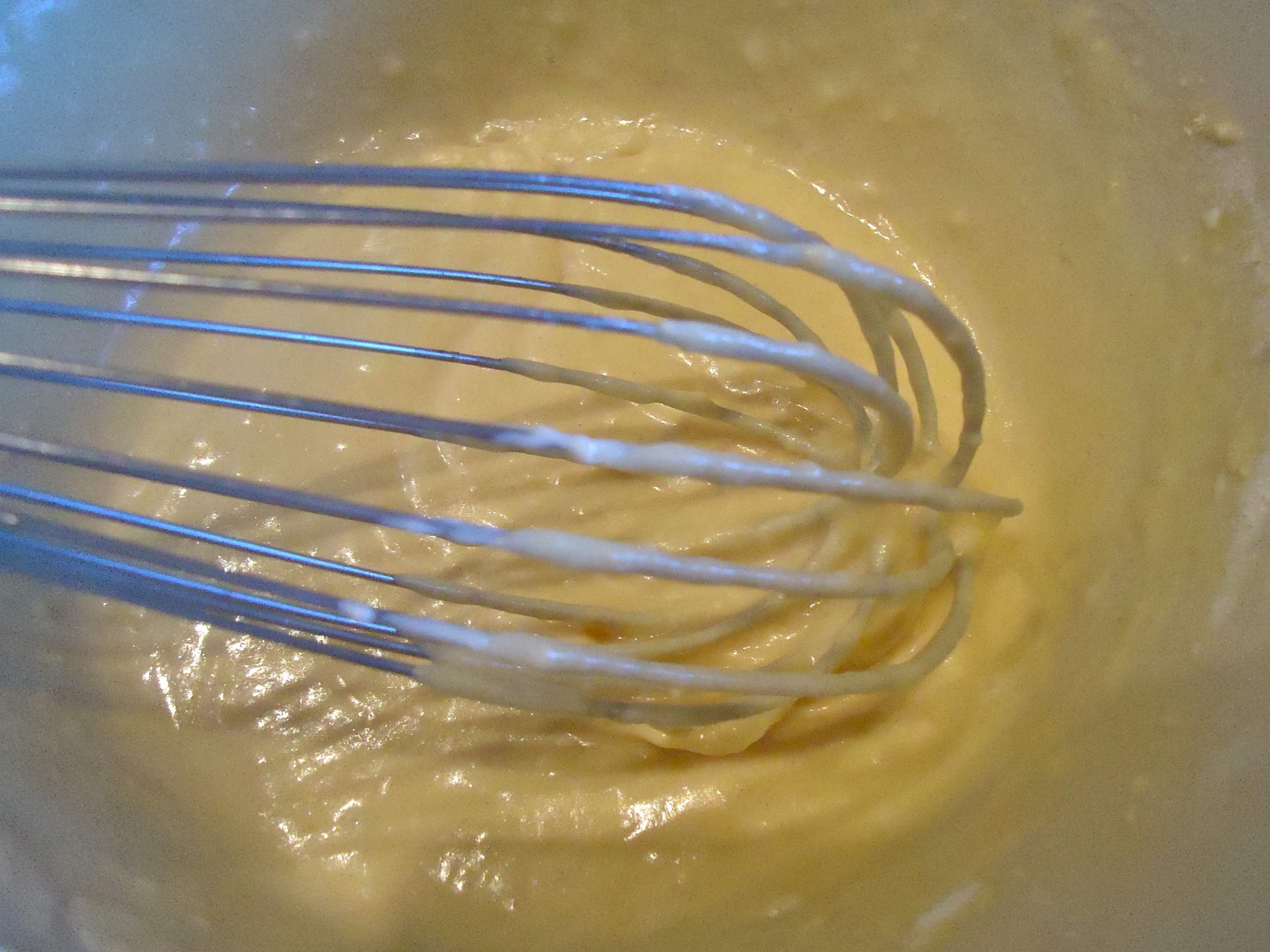
After dissolving the yeast, add a little sugar and then the eggs.

After whisking in the eggs, add the milk and softened butter.

Begin adding in the flour first with the whisk and then…

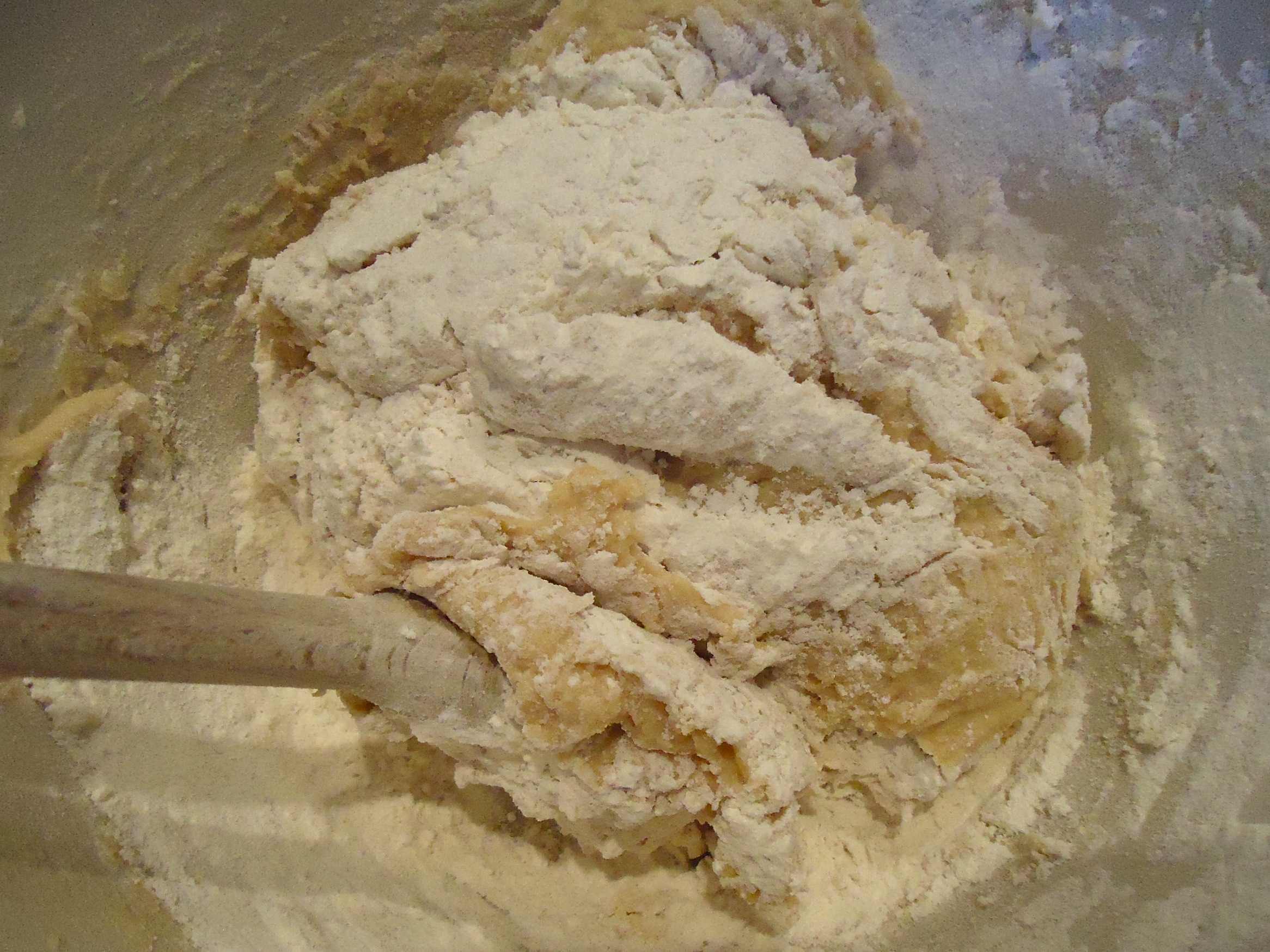
a wooden spoon. Continue adding in the flour to create a soft dough.

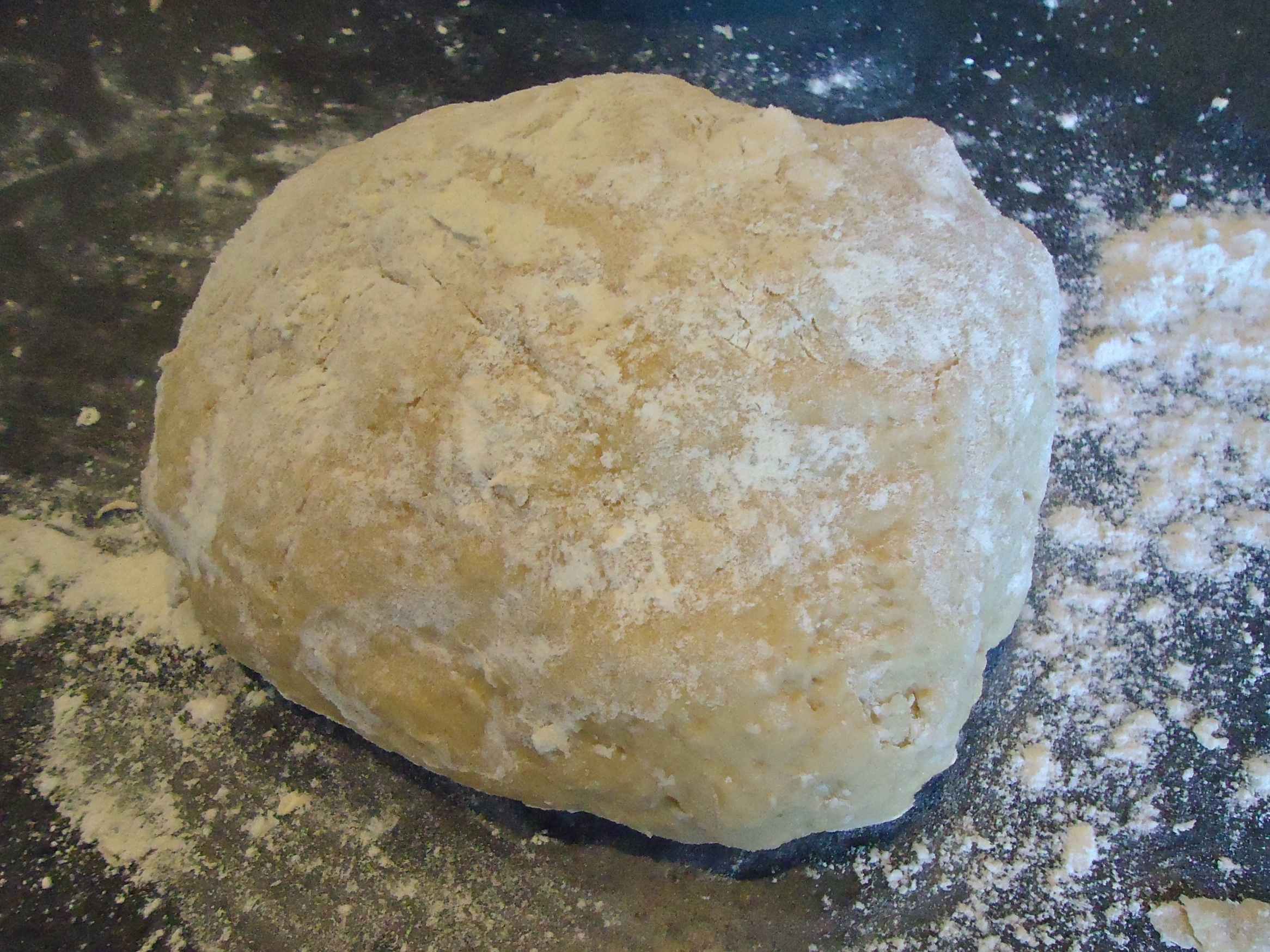
Here’s the dough ready to knead. Turn onto a clean, lightly floured surface and knead 6-8 minutes. Then place in a bowl, loosely cover and allow to rise in a warm place (NOT hot ) until doubled in bulk.

Meanwhile you can make the caramel sauce. In a heavy saucepan heat the water and sugar.

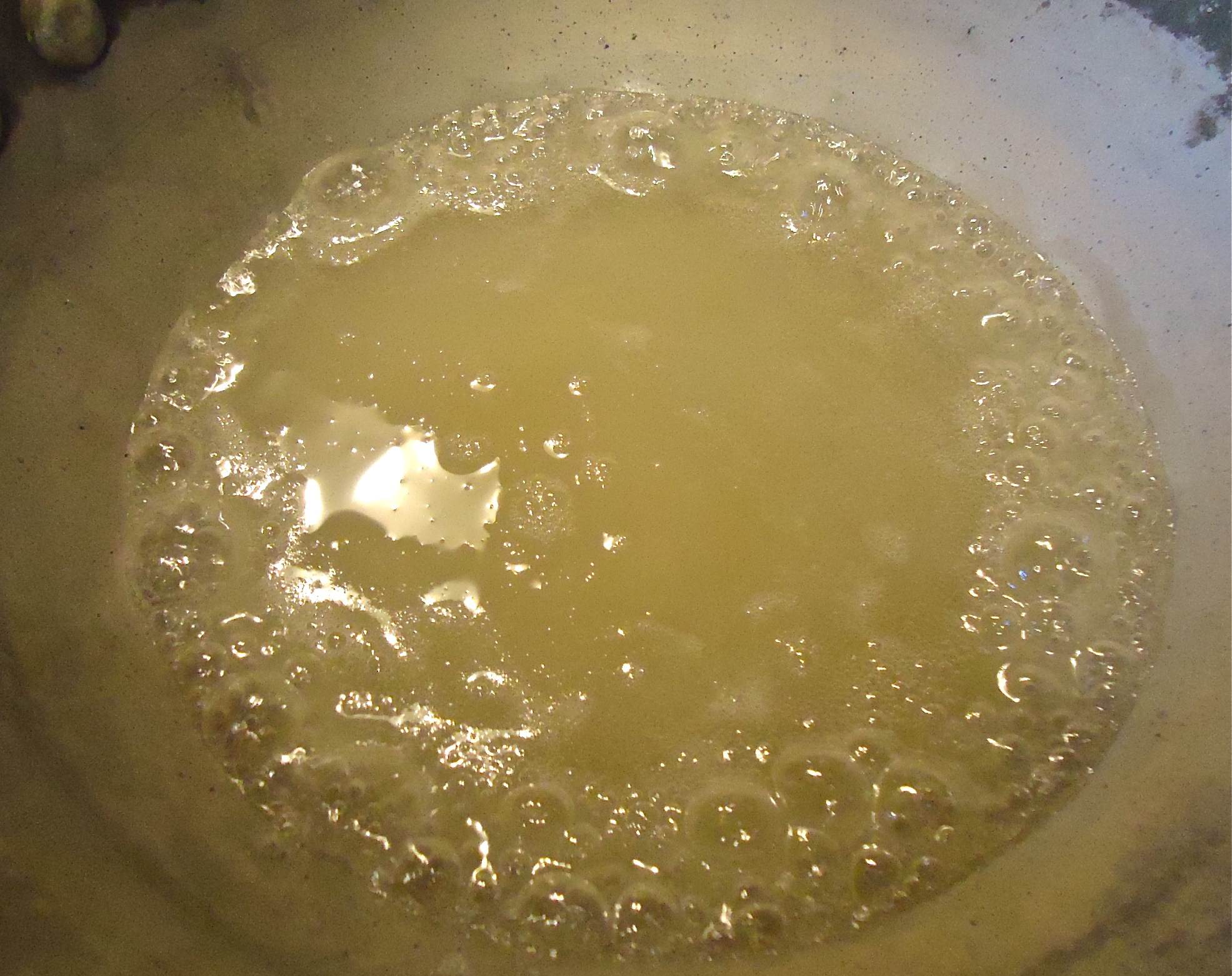
Allow the mixture to come to a boil but do not stir once it gets going. You can use a brush with a little water around the outside edges of the saucepan to brush down (melt) any crystalized sugar that forms.

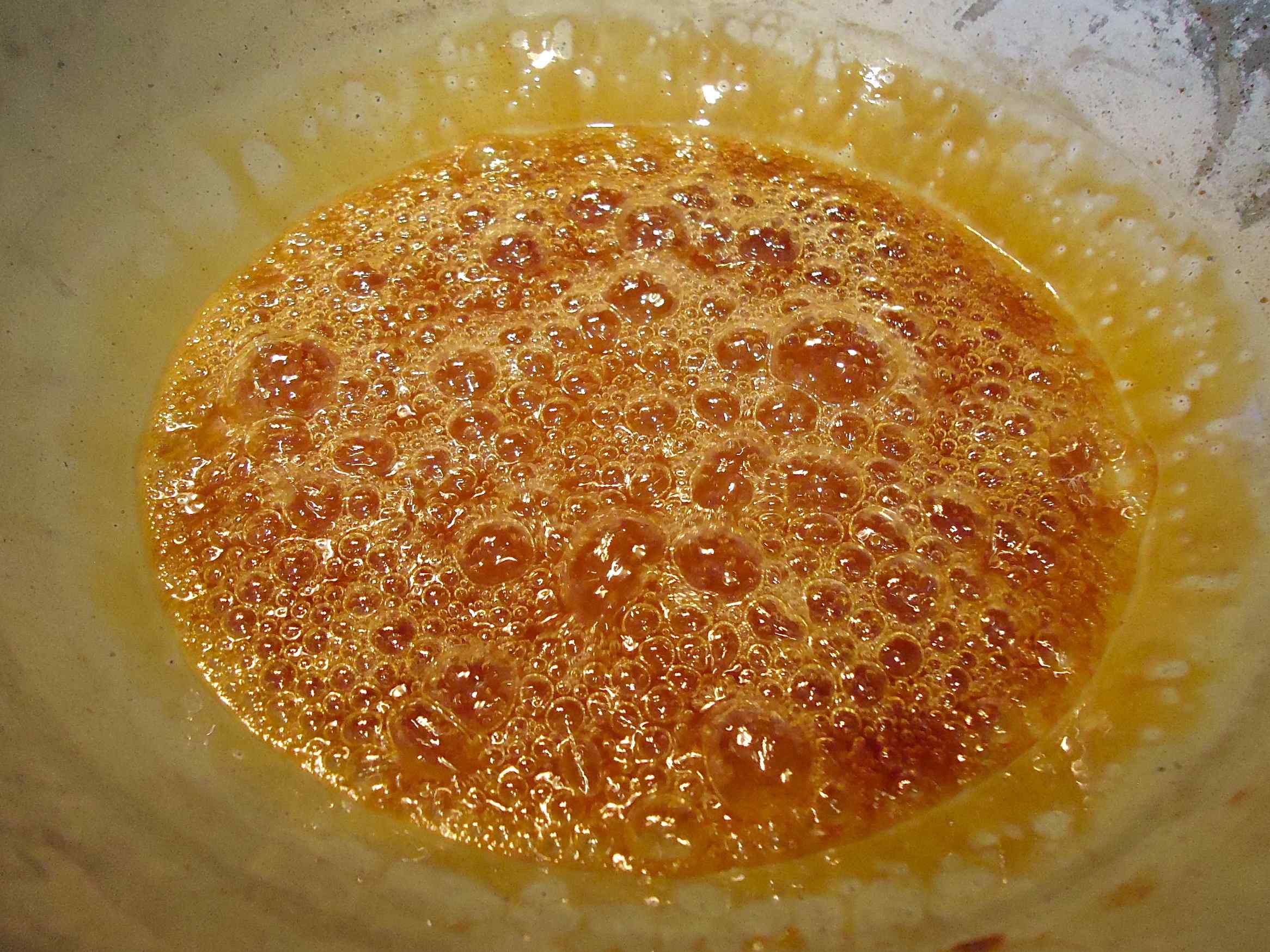
Watch the caramelizing sugar carefully – don’t walk away. It can burn very quickly. In this image the caramel is almost ready, not quite, but almost…

Hey, it’s ready. Turn off the heat and time to add the butter…

The mixture will foam after adding the butter – keep whisking and…

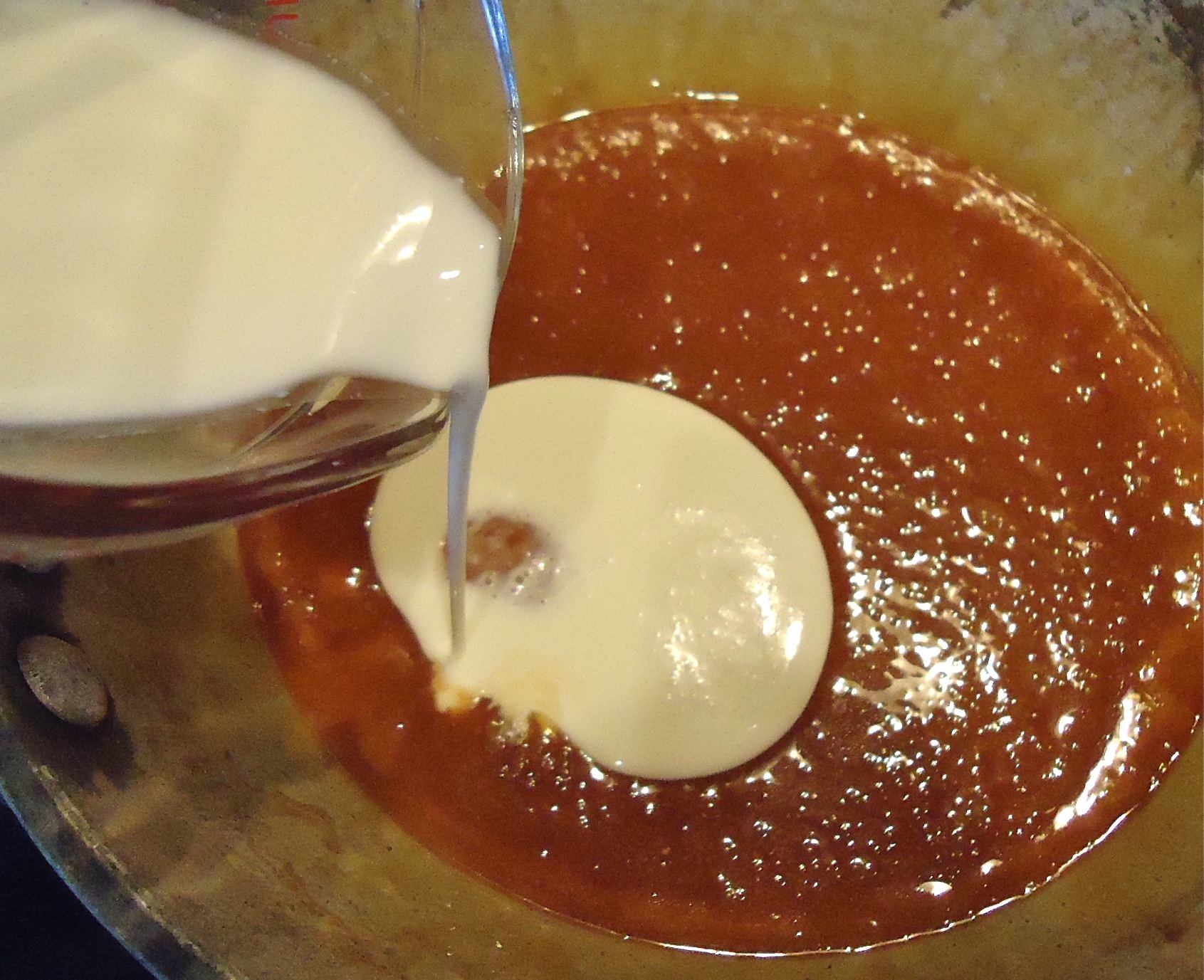
Add the cream and the vanilla extract. Whisk some more and allow to cool before pouring into a covered container.

Now back to that dough…punch it down and…

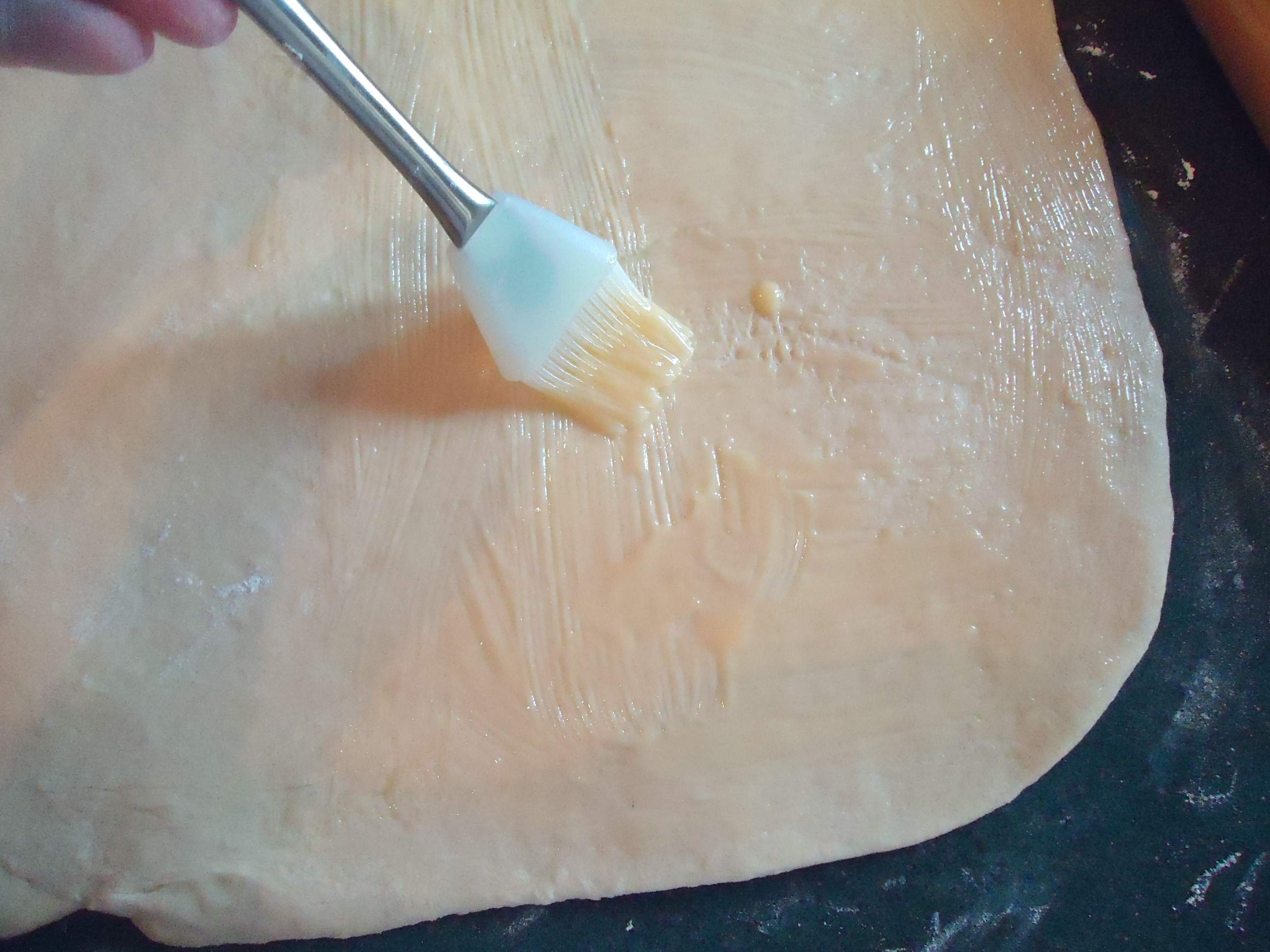
Roll out the dough into a large rectangle. Brush with melted butter.

This part goes quick…sprinkle with the cinnamon sugar.

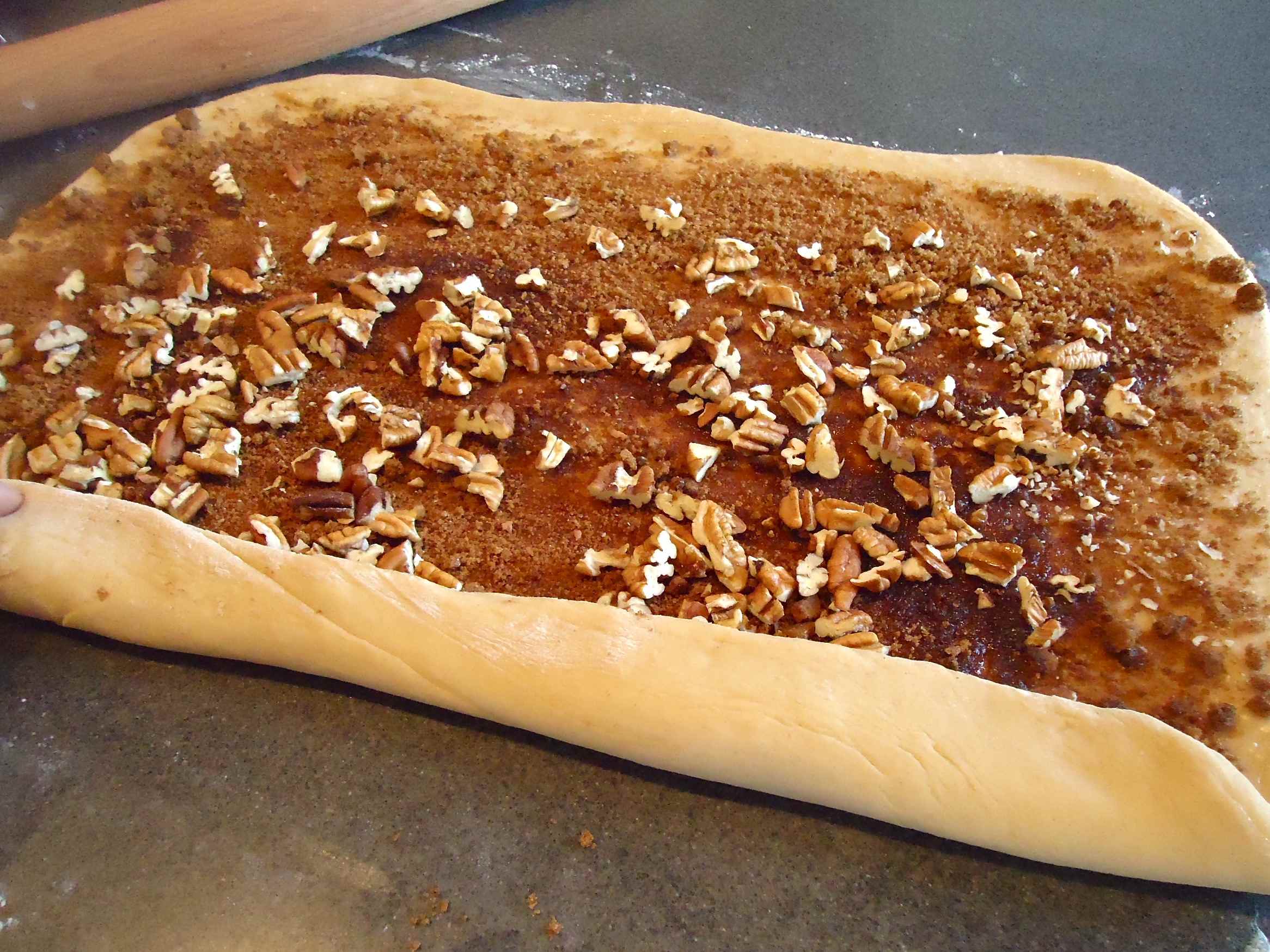
Then add the pecans (if you like) and begin rolling up – along the long dimension.

When rolled you can use a touch of water to help “seal” the dough.

Slice the roll into relatively equal pieces. I find the easiest way to accomplish this is to slice in the center first, and then slice each piece in the center after that, until you have the size and number of slices you like. This recipe will make 12 nice sized buns.

After rising in a warm spot for about an hour, bake the rolls in a preheated 325 degree oven.

Remove the rolls from the oven and pour about half the carmel sauce over the top. Reserve the rest of the sauce for individual portions , or to top a bowl of ice cream! If only serving a few of the cinnamon rolls, I remove the rolls from the pan individually and then top each one with the sauce. But it’s a personal preference!

Caramel Cinnamon Rolls

  • 1 pkg. plus 1 tsp dry yeast
  • ½ cup scalded and cooled milk (no less than 2%!)
  • ½ cup barely warm water (NOT hot)
  • ½ cup sugar
  • 2 eggs
  • 2 ½ cups (plus extra for kneading) bread flour (or regular unbleached, all-purpose will work)
  • 1 cup unbleached white whole wheat flour
  • 8 Tablespoons unsalted butter, divided and softened
  • 1 tsp. salt
  • 2/3 cup dark brown sugar
  • 1 ½ tsp. cinnamon
  • 1 cup chopped pecans

In a large mixing bowl pour the water over the yeast, swirl to mix and let stand 5 minutes. Whisk in the sugar and then add each egg, whisking after each. Pour in the milk and then 5 Tbl. of the softened butter. Whisk together – it will not be completely smooth. Mix the salt with the flour and add 1 cup of this flour mixture to the yeast mixture. Whisk to dissipate the lumps of butter. Keep adding the flour about a cup at the time and stir with a wooden spoon or spatula.

When almost all of the flour is incorporated turn the dough out onto a lightly floured surface and knead for about 6-8 minutes adding small amounts of flour (1-2 teaspoons) as needed. I use about 1/3 cup of additional flour. The dough should not be sticky but smooth and elastic.

Place the dough in a lightly buttered bowl and allow to sit in a warm place (NOT hot) for about 1 hour or until doubled in size. If you like, you can store in the refrigerator at this point (prior to rising) overnight. Just be sure the dough is in an airtight container with room for expansion as it will rise some overnight, even in a refrigerator.

Once the dough has risen, roll out into a large rectangle on a flat, lightly floured surface. Approximately 18” x 13”. Brush 3 Tbl. of melted butter on the dough. Mix the brown sugar with the cinnamon and sprinkle over the buttered dough. Then sprinkle on the chopped pecans. Brush one of the long edges of the dough lightly with cool water. Starting along the opposite long edge roll up the dough. Crimp the edge that has been brushed with water to seal as best you can.

With a sharp knife, cut 1” slices of the roll and place in a lightly oiled or buttered baking pan. Leave some space between the individual rolls. At this point you can cover the pan tightly with foil and freeze for up to 1 week. Or continue with preparing now. Place the bowl in a warm spot and allow to rise for 45 minutes to an hour. They should double in size.

Preheat oven to 325 degrees. Bake the rolls for about 25-30 minutes until browned. Cool slightly and serve with warmed caramel poured over the entire pan of rolls OR pour over each individually after you remove them from the baking pan. Makes 12  cinnamon rolls.

Note: For frozen cinnamon rolls, allow to defrost over night in the refrigerator. Then allow the pans of rolls to rise in a warm place and follow the instructions above.

Vanilla Caramel Sauce

  • 1 cup white sugar
  • 4 Tbl. unsalted butter, room temperature
  • ¼ cup water
  • ½ cup whipping cream
  • 1 tsp. vanilla extra

Have all measured ingredients assembled close by your stove. In a heavy bottomed saucepan, melt the sugar with the water over high heat. Watch continuously – do not walk away. When the mixture boils do not stir but swirl carefully. You can also use a pastry brush dipped in water to wash the sugar crystals from the sides of the pan if necessary.

The sugar water will begin to turn brown. When to your liking turn off the heat (remove from the heat) and add the butter. Stir and whisk in the cream. It will bubble a lot. Allow to cool and stir in the vanilla. This can be poured immediately over the baked caramel rolls or into a container, covered and stored in the refrigerator until ready to use. Makes 1 cup. Can be kept in the refrigerator in an airtight container up to 5 days

Warm the Soul with Crab and Corn Chowder Vindaloo

If you have been following my blog, you may have gotten the impression that my family likes crab and on this you would be correct. But there’s more to it than just the eating crab, or even the fun of catching them and preparing a meal with our haul.

For me, it is just a part of summer and has been since my youth. For my husband, who grew up for the most part in land-locked Tennessee, crabbing was a new experience but one which he has really come to love, apparently. Several years ago, prior to parenthood, I was invited to crab with a friend on the Moon River, near Savannah. (Yes, it’s the Moon River of Breakfast at Tiffany’s fame). Dear Hubby was off in the Lone Star state for work so I sent him a picture of a huge male crab I had just caught. He thought it was bizarre that my friend and I would go crabbing of our own volition, instead of shopping or getting a pedicure I suppose, and even more strange that I would send him a picture of a ‘scary crab’. From then on out, he humorously referred to me as “crab master” or the “crab whisperer”.

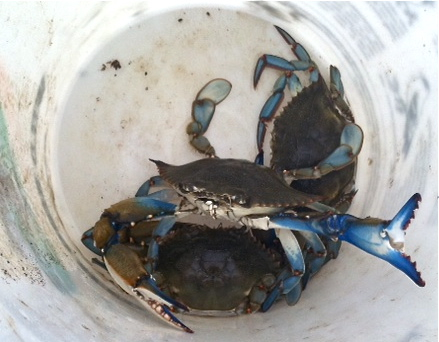
My family is “mad” for blue crabs, and well this fella is just plain mad! Obviously, you can see why our indigenous crab is called a “blue crab”.

I find this ironic now, since over the summer Dear Hubby has been like a man obsessed with catching those blue crabs. Being our first full summer back in the Lowcountry, I took the plunge back in the spring and purchased the necessary tools for crabbing. We gave it a try at the community dock in our neighborhood and caught a few. Apparently that is all it took to get Dear Hubby’s competitive crabbing juices flowing and it’s been like a regular crab-fest at our house all summer. Just two weeks ago during our stay at Edisto Beach, he (and we) crabbed just about every day, both at a marsh-side dock and off the beach. We had gorgeous weather and saw many dolphin and other local wildlife on our crabbing jaunts.

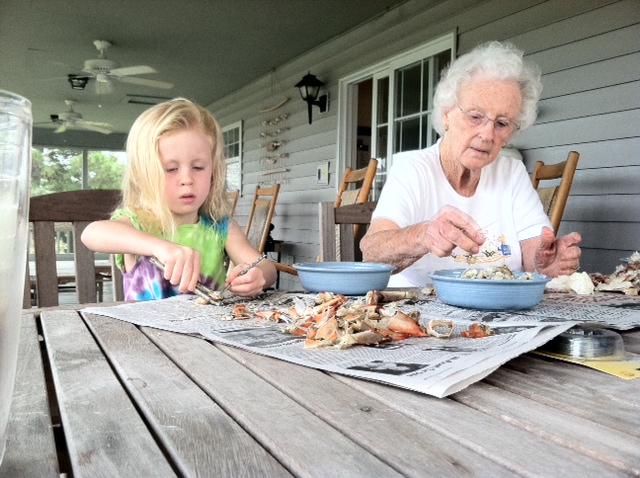
Girly Girl and my mother hard at work picking the crabs out so we can make something delicious.

With a bevy of blues caught throughout the week, we were able to bring some of that luxurious crab goodness home. My mother, daughter and I spent all morning picking out the crabs on the back porch of the beach house on our last day. This was Girly Girls’ first time participating in this exercise, but she took to it like a duck takes to water. So sitting at that table were three generations of my family doing the same thing that I did myself as a child, with the youngest learning a skill not many people these days know about, much less value. Once you pick out 3 or 4-dozen crabs you’ll appreciate that next crab cake, believe me.

Later I made some hot crab dip to celebrate our hard work. It was probably the best I’ve ever made – that acknowledgment is due to way more than just its taste. That bowl of creamy seafood deliciousness equaled more than just a good snack on a cracker, it illustrated why I love to cook, to write about food and adore the South.

Coming back home with a couple of pounds of crab, the second recipe I made is a fall favorite for me. When the humidity drops and temperatures fall into the 60’s in the evening, it is soup time in the Lowcountry. Its also chowder, chili, stew, and bisque time, so hurray for fall! After fishing the next-to-last package of “put up” corn off the cob out of my freezer and remembering I had a little smoked hog jowl in the meat drawer, I grabbed my old 8-quart Caphalon stock pot for Corn and Crab Chowder, with the added kick of Vindaloo seasoning. Vindaloo is a curry-based dish popular in eastern India often considered fiery hot although the Vindaloo seasoning from Penzy’s is not nearly so hot as it is flavorful. It reminds me of the traditional Lowcountry (via the seaport of Charleston) Indian-influenced dishes like Country Captain and Mulligatawny soup. Add a hunk of cornbread and there you go – a seasonal chowder to warm the belly, and the soul.

Ingredients are pretty straightforward and include potatoes, broth or stock and light cream (half and half).

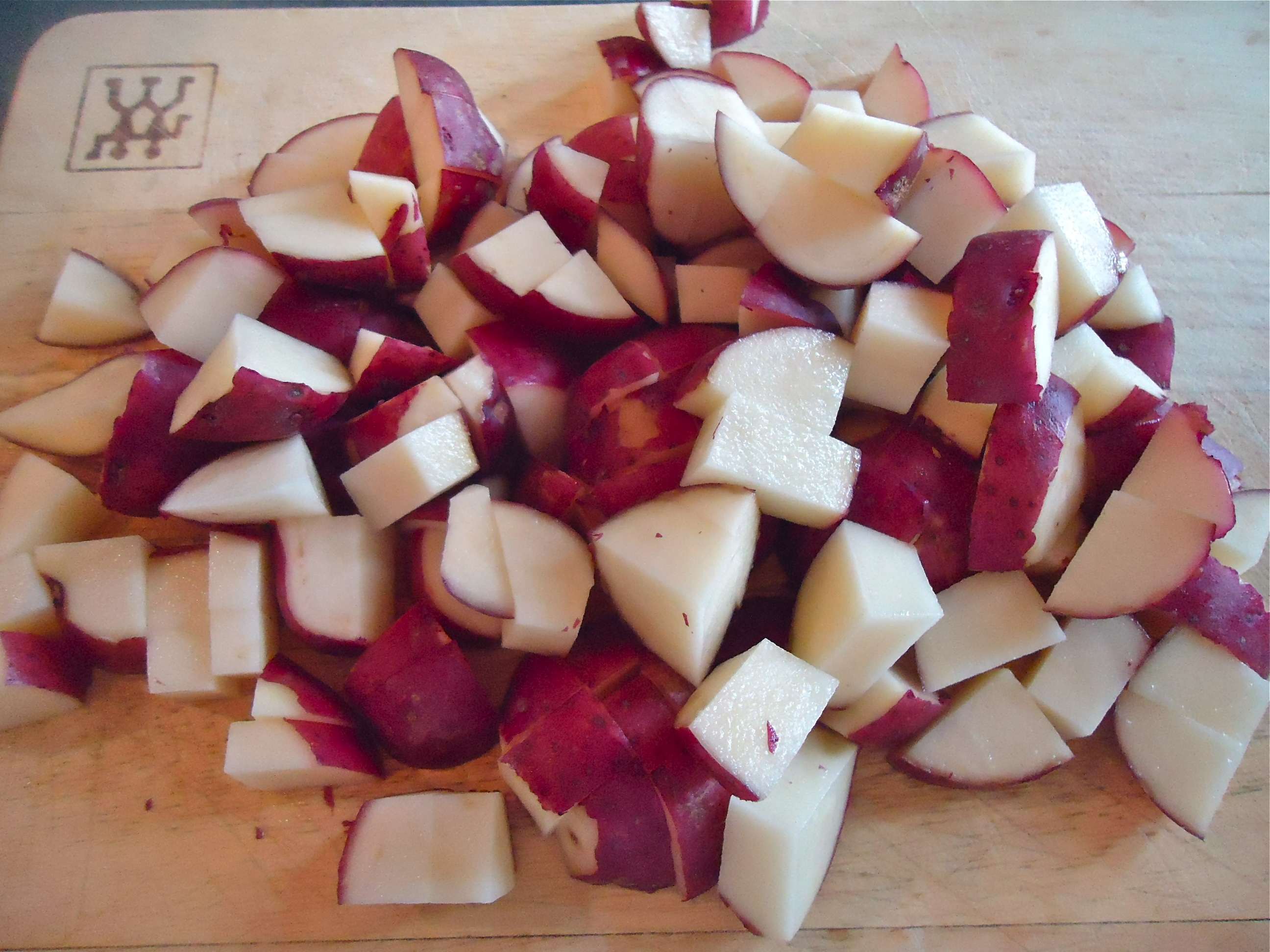
I like to use small red potatoes, any eyes or blemishes removed and cut into a small-ish dice.You can leave the peel on – it’s prettier if you have red potatoes. But you can also use white potatoes instead of the red.

After you fry up the jowls, remove them to drain and cool. Then add the butter into the pot with fat from the hog jowls. You can also streaky bacon if you don’t have jowls. Saute the onion for about 5 minutes before adding the flour mixture and then…

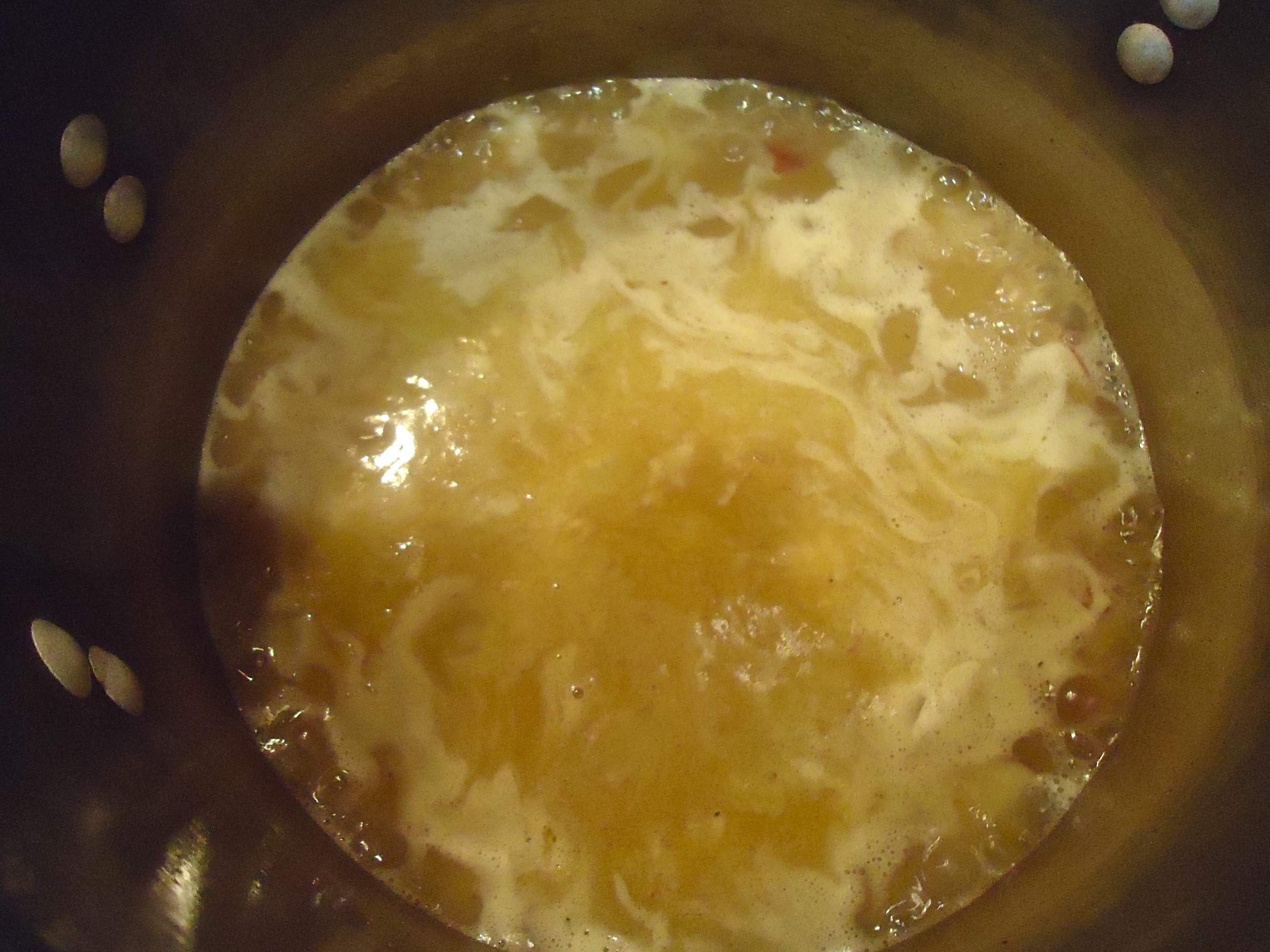
adding in the broth/stock and the potatoes. Stir and bring up a low (not rolling) boil.

Pour in the half and half but do not bring to a boil. Just simmer on a low heat from now on.

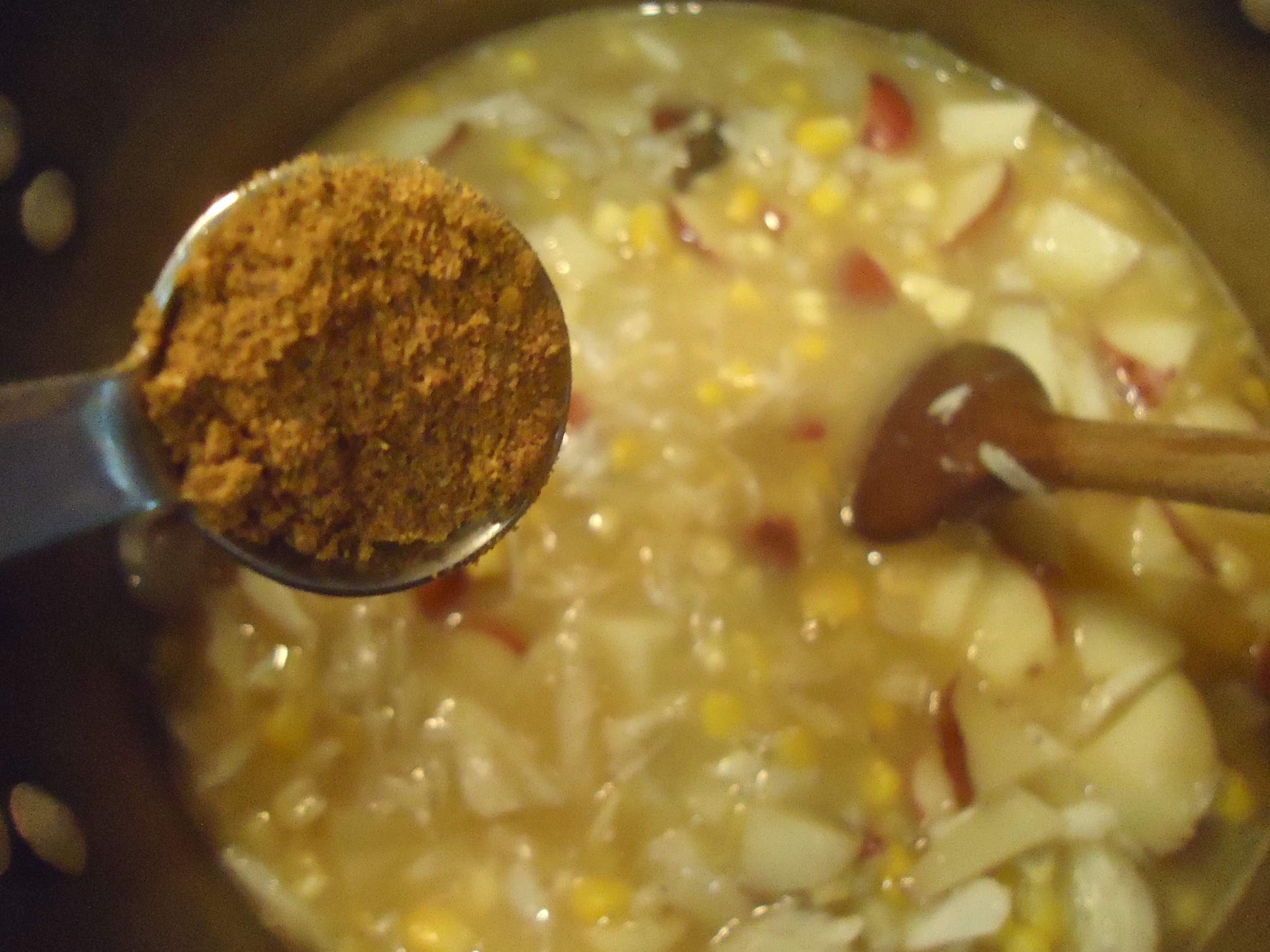
Lastly stir in the crab and the Vindaloo seasoning. Cook over low heat for another 10 minutes or so with the lid off.

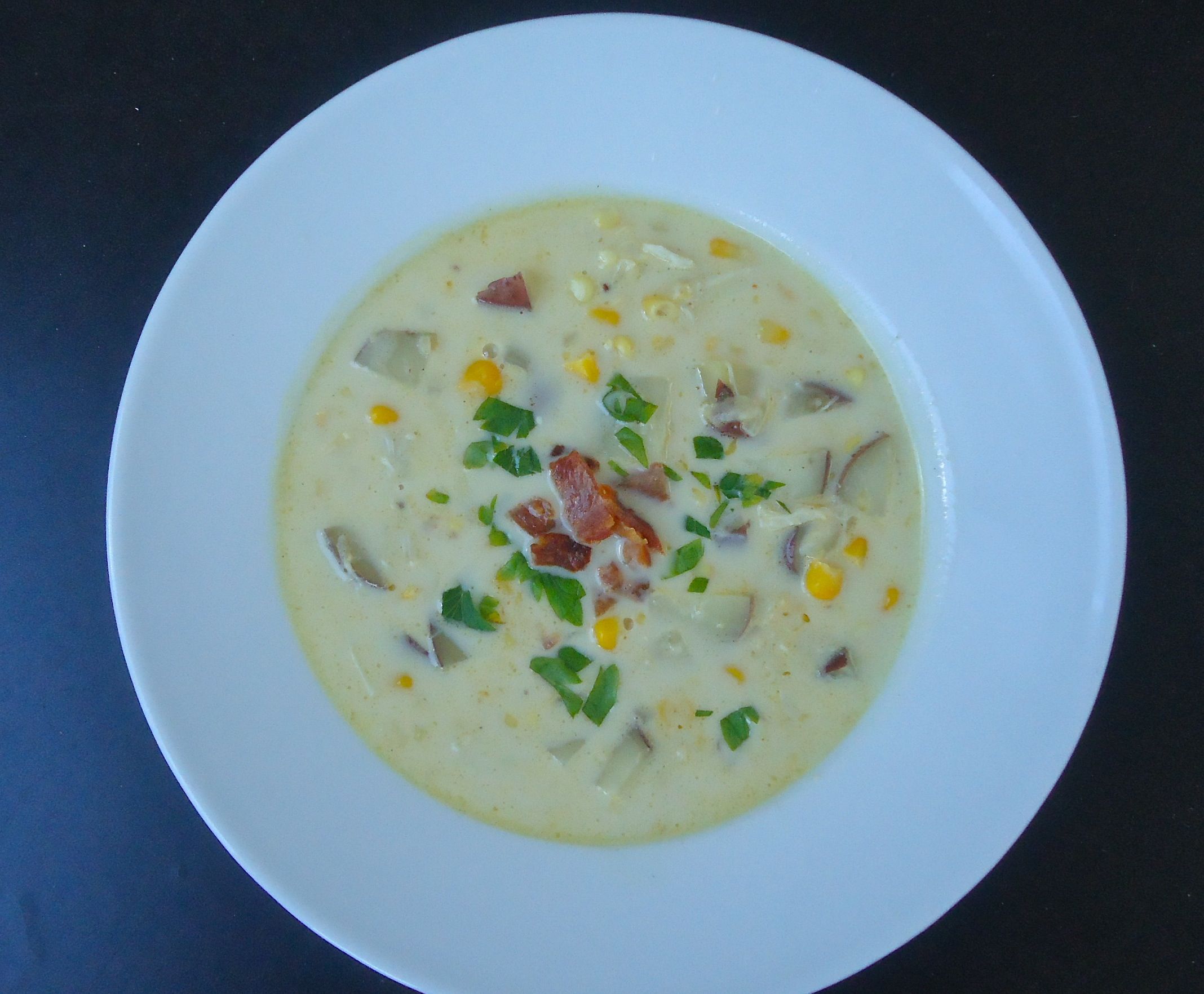
Just before serving adjust salt and pepper to your liking and ladle the chowder into warm bowls. Top with minced parsley and the diced hog jowls, if you like. To accommodate those who prefer a spicy chowder, serve with your favorite hot sauce like Tabasco, Crystal or Texas Pete on the side.

Corn and Crab Chowder Vindaloo

  • 2 cups fresh crab, picked over for shells
  • 3-4 pieces smoked hog jowl
  • 1 lb. red or white potatoes, washed and diced
  • 2 cups corn, fresh or frozen or combination
  • 2/3 cup diced onion
  • 3 cups, chicken or vegetable stock or broth or combination at room temperature
  • 2 cups half and half
  • 2 tbl flour
  • 1 tbl butter
  • 1 ½ tsp. salt
  • ½ tsp black pepper
  • ½ tsp Vindaloo seasoning
  • additional salt and pepper to taste
  • parsley, minced, for garnish
  • hot sauce, optional

In a small bowl mix the flour, salt and black pepper. Set aside. In a heavy pot cook the hog jowls until crisp. Remove from pan and set aside to cool. Dice the hog jowls and set aside. Add the butter to the remaining hog jowl fat and sauté the onion in this mixture until just translucent, about 5 minutes.

Add the flour mixture to the sautéed onions and then stir in the stock/broth. Bring to a low boil and stir in the potatoes. Bring back up just to a low boil and allow to simmer about 8-10 minutes. Next add in the corn and bring back up to a low boil. Turn heat down and simmer (low heat) 5 more minutes. Add in the half and half and the crab. The heat should be on low. Add the Vindaloo seasoning and stir gently to combine. On low heat continue to cook for another 10 minutes with the lid off.

Taste the chowder and adjust salt and pepper as to your liking. Serve topped with minced parsley, a little chopped hog jowl and hot sauce, if you like. Serves 4-6.

A taste of home that’s as light as a feather: angel biscuits

Here’s a great recipe passed down from my mother – yeast biscuits. Here in the South (and the US) biscuits are not ‘cookies’. They are small, soft leavened bread more similar to a scone than a sugary treat like a cookie. Biscuits can be leavened with baking powder, baking soda or yeast and are not usually sweet, although with a thick slather of honey or jam, they leave nothing for want in that department.

My mother usually made baking powder leavened biscuits that were buttery and rich but not as light as the yeast variety. We would have this variety of biscuit for breakfast with something sweet like preserves or more often in winter, covered in a cream based gravy with sausage or perhaps in red eye gravy and served with quail, dove breast or some other game.

This yeast biscuit (we call them angel biscuits), while lighter, does not sacrifice flavor and remains incredibly moist keeping that “just out the oven” texture for many hours after baking -they travel well. These biscuits make tasty vessels for fillings both savory and sweet with the most popular in my neck of woods being the ham biscuit. Nothing says college football tailgate or baby shower here in the South like ham biscuits!

I like this recipe because while it makes a bunch of biscuits, the dough keeps well for 3 days, when covered and refrigerated, and the cut biscuits can be frozen too. I freeze the biscuits on cookie sheets and then place them in airtight bags or containers by the dozen, where they will keep well for a few weeks. Simply defrost the biscuits in the refrigerator overnight and then allow them to rise in a warm place for a half hour or so, and bake.

With Fall upon us and the holidays approaching sooner rather than later, I’ll be making a few batches for football watching parties and holiday gatherings. Whether plain or filled with a slice of delicious Virginia ham, these biscuits and their familiar taste of “home” will always be at the top of my recipe box.

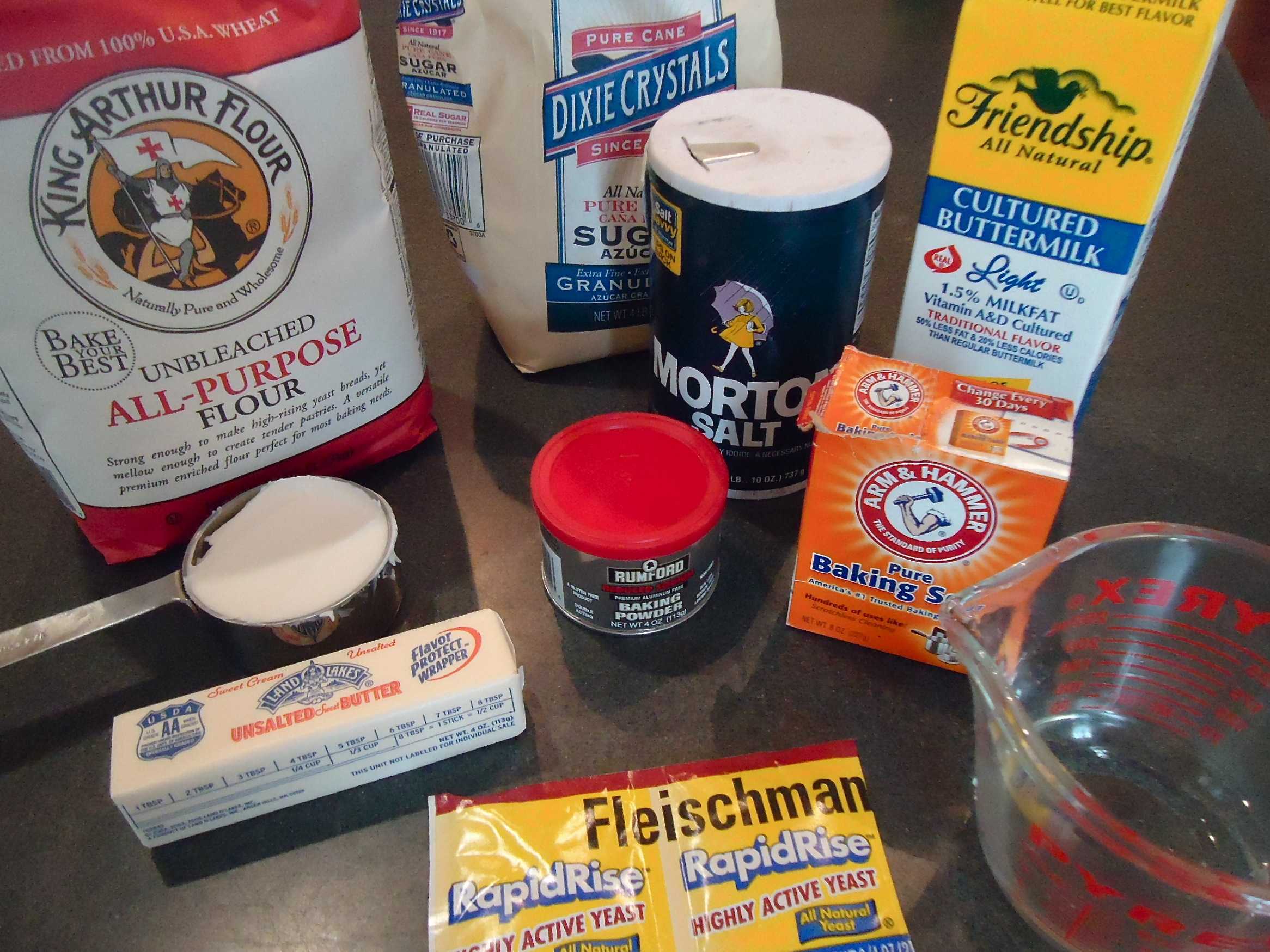
Ingredients are pretty basic and good quality flour ensures a good biscuit.

Add the buttermilk to the dissolved yeast mixture.

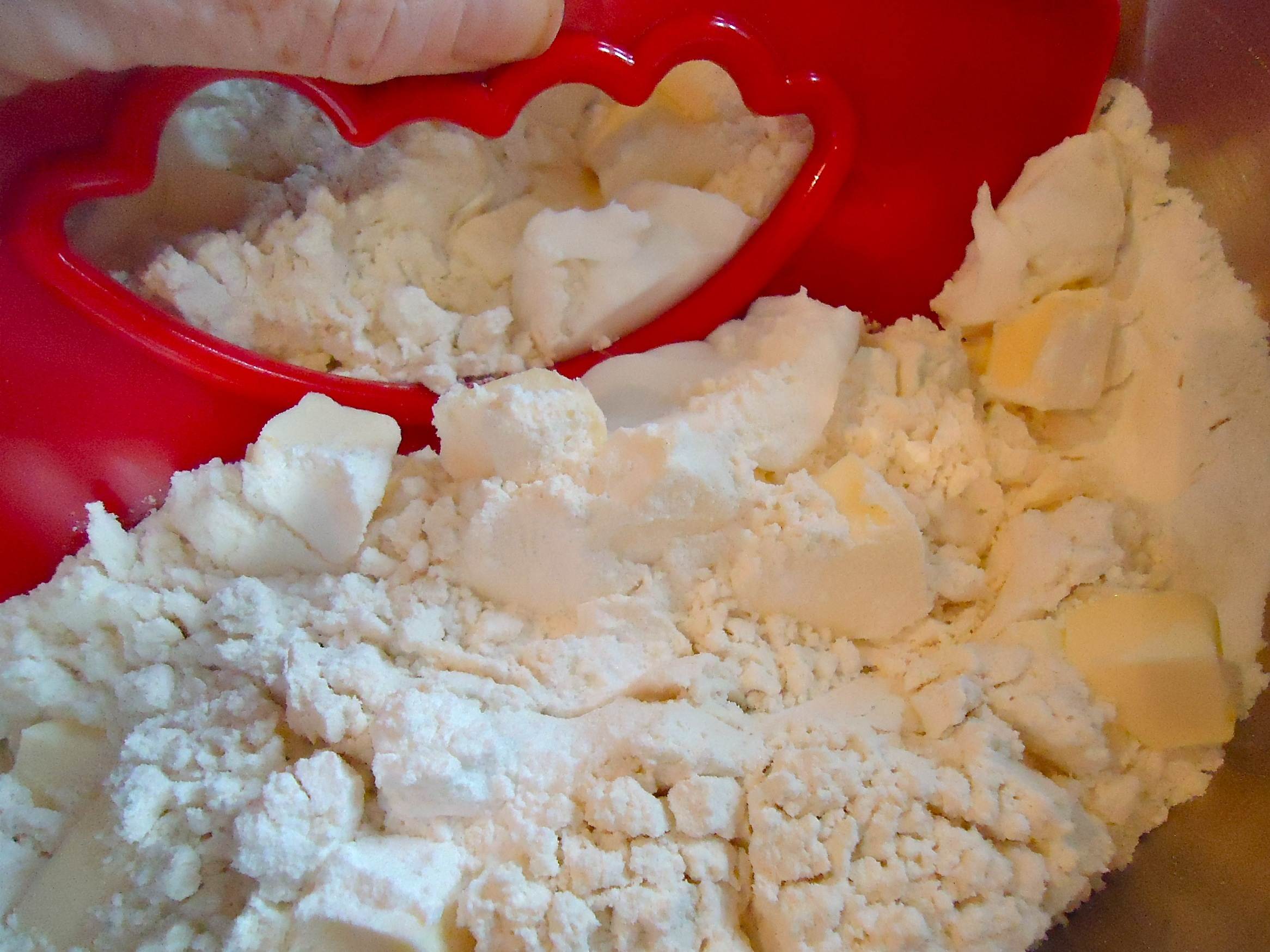
Cut the butter and shortening into the flour mixture.

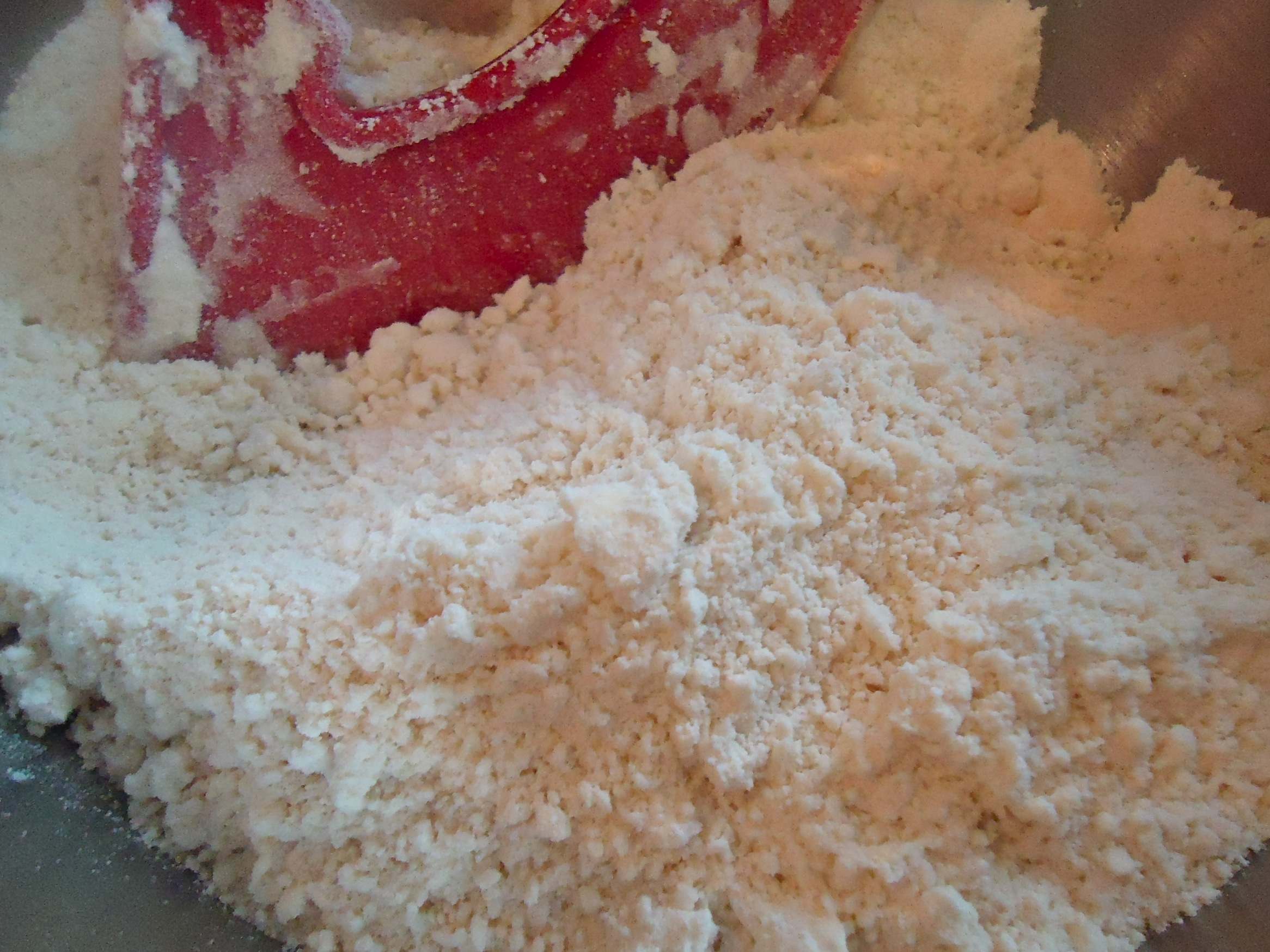
After cutting in the shortening and butter, the mixture resembles bead crumbs, well sort of.

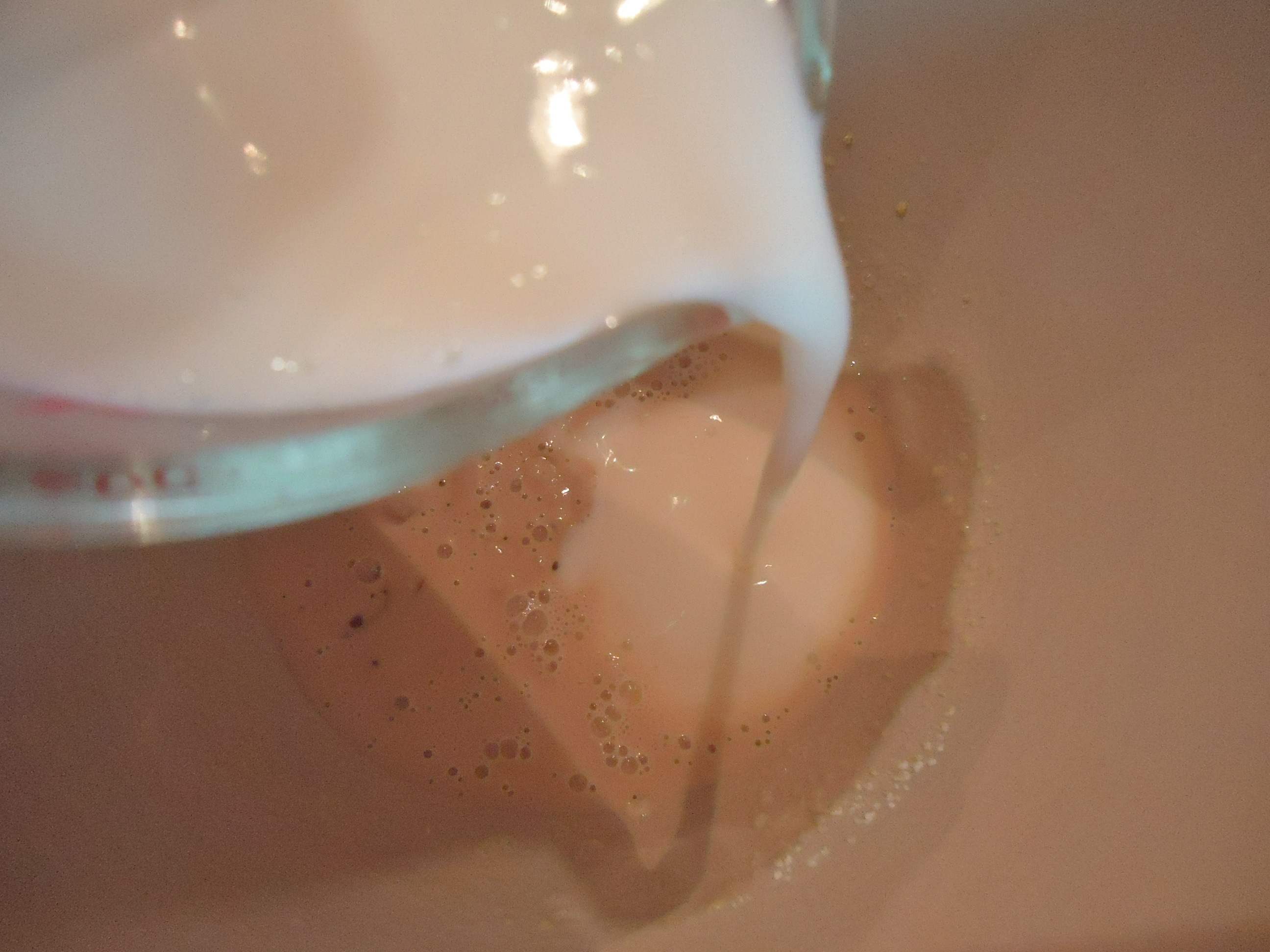
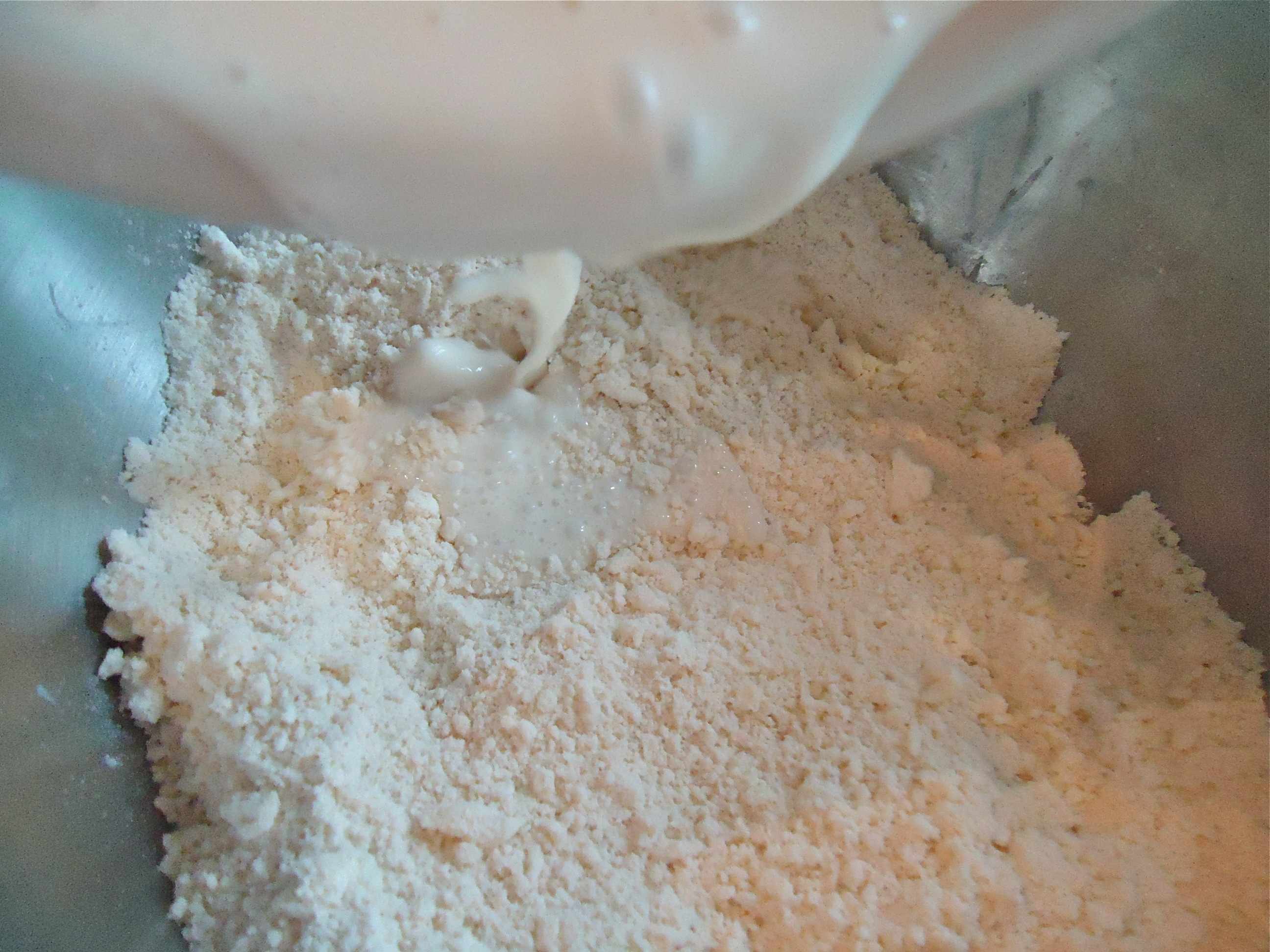
Add the liquid to the flour/butter mixture.

The dough will come together – use a spatula, a wooden spoon or your hands to gather up the dough.

The dough will be soft but not really sticky.

After refrigerating a couple of hours, covered, the dough looks like this. Ready to be rolled into shape! Even in the frig the dough will expand due to all the leavening power.

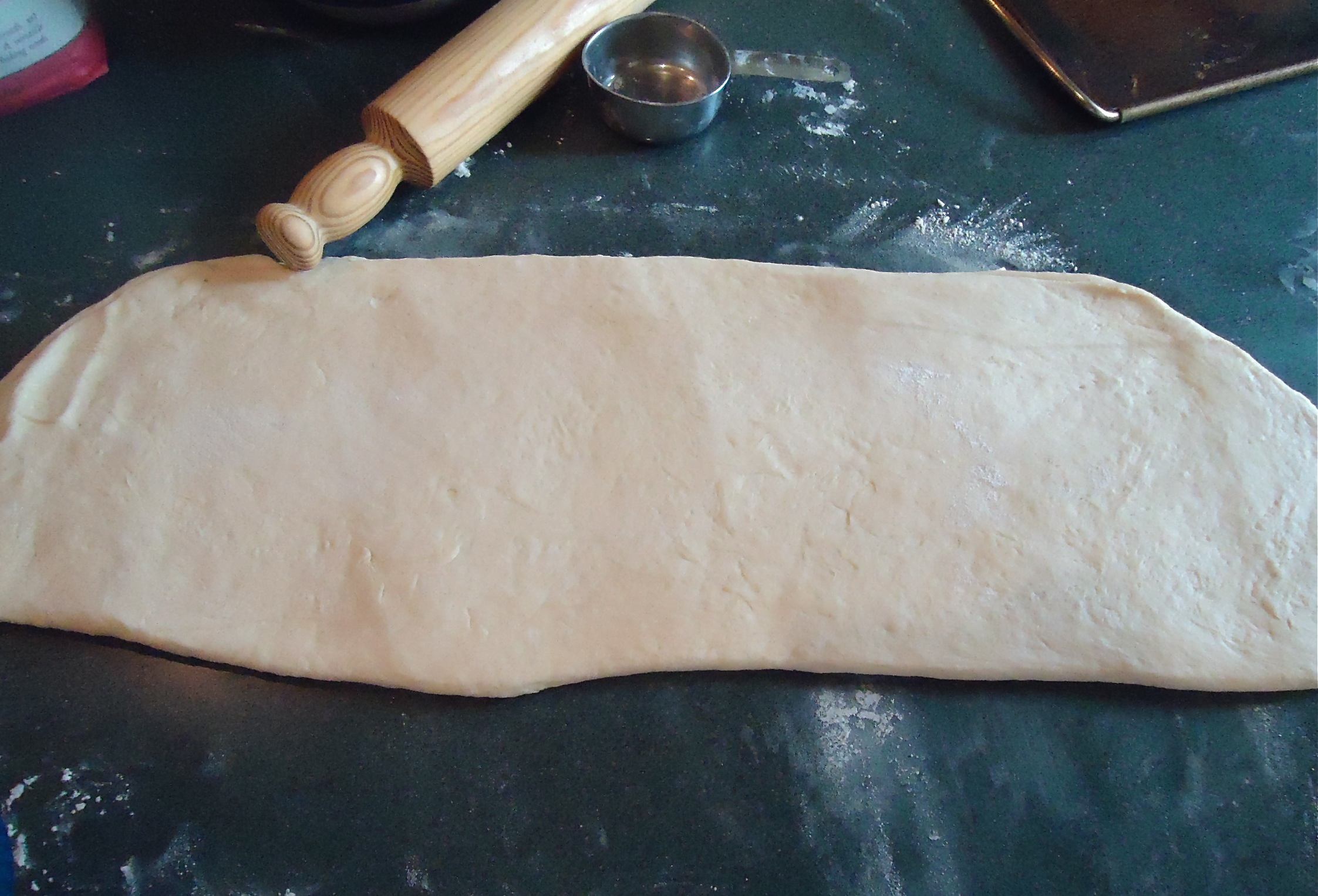
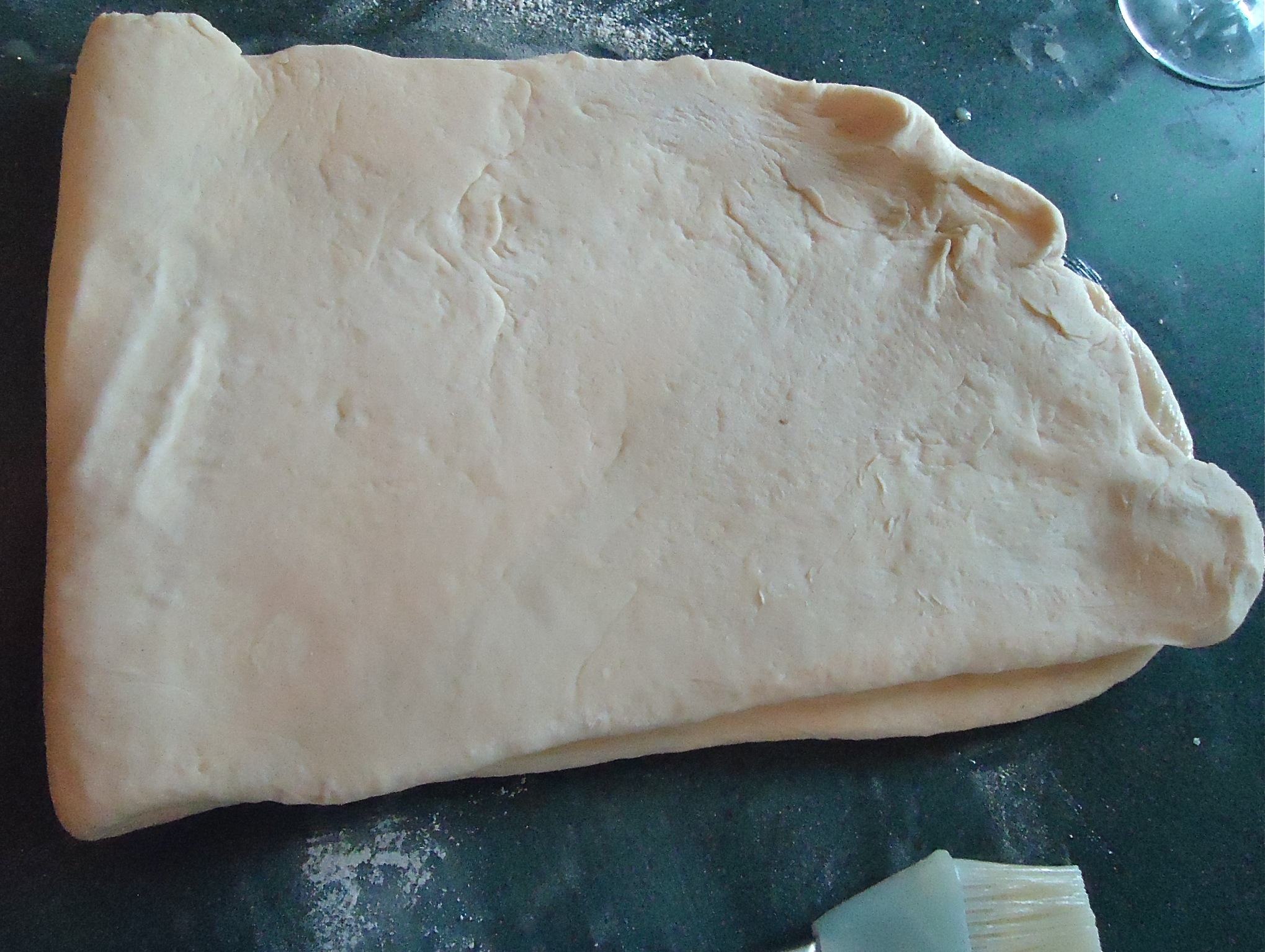
When you are ready, roll out the dough into a rectangular shape.

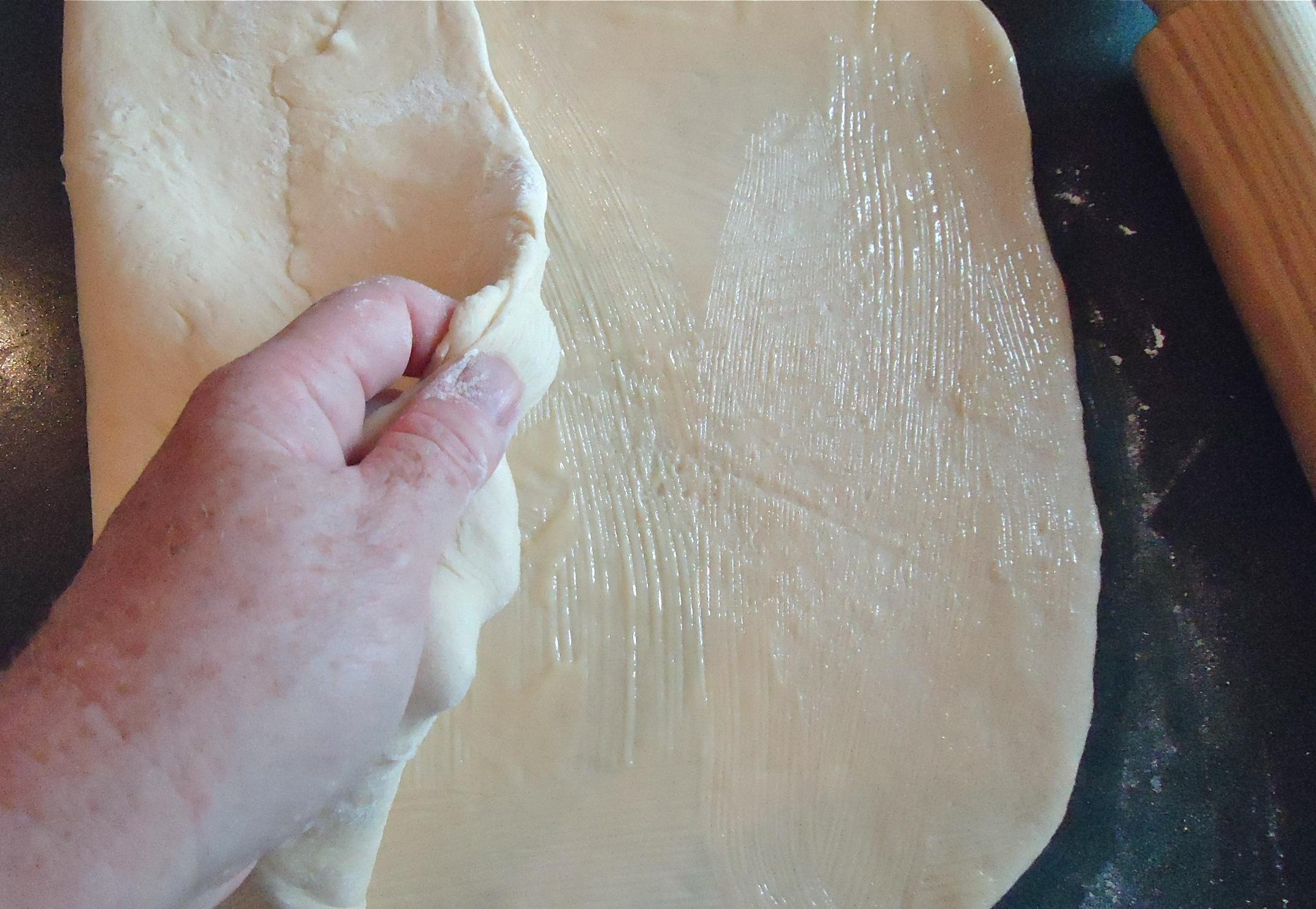
Brush one side of the dough with melted butter…

and fold dough over onto itself, then…

turn the dough 90 degrees and sprinkle with a little more flour.

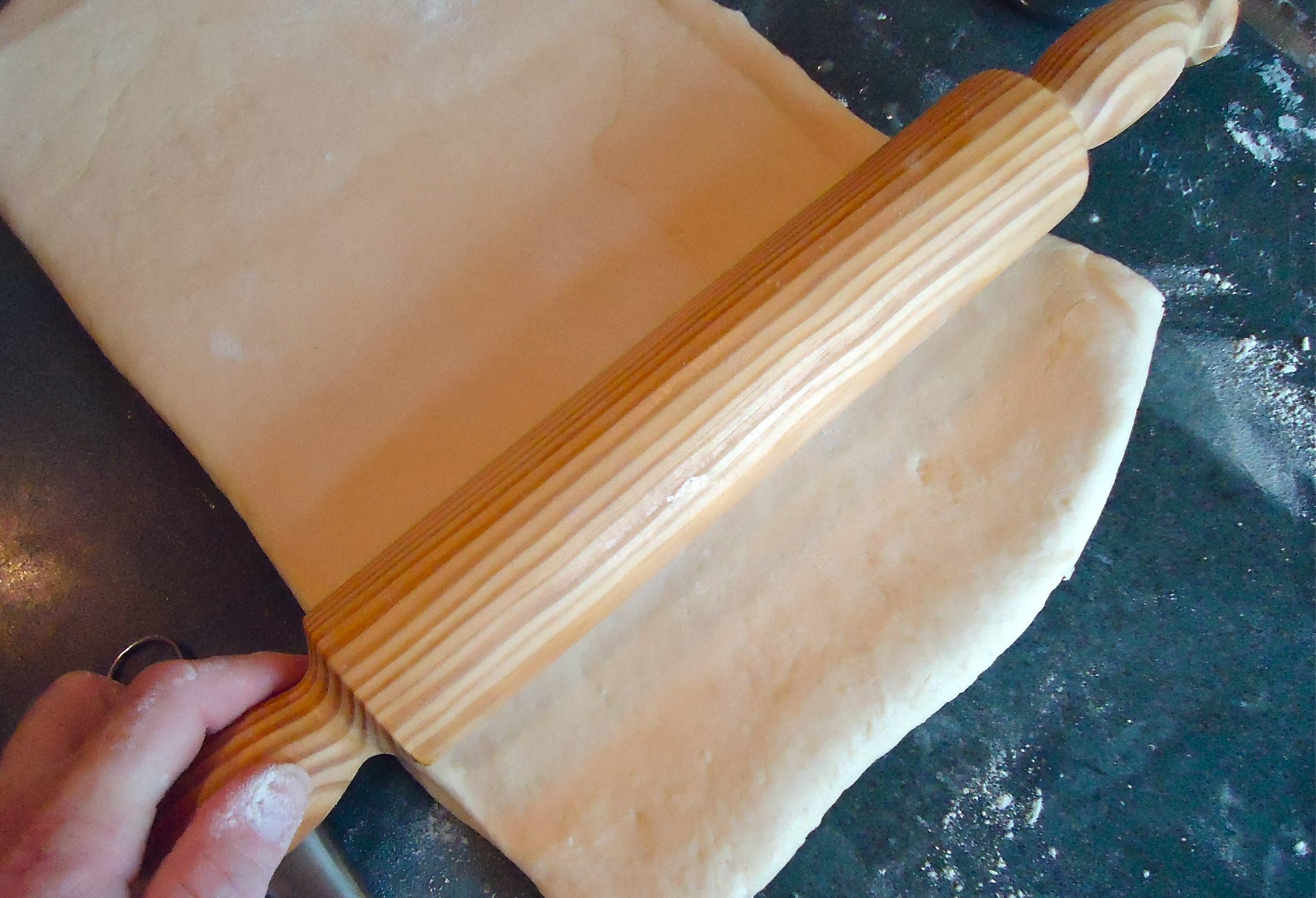
Roll out from the seam. Brush half of the dough with butter again, fold over the dough, and roll out again from the seam.

Brush with more butter and fold over one last time. Roll seam side out to your desired thickness.

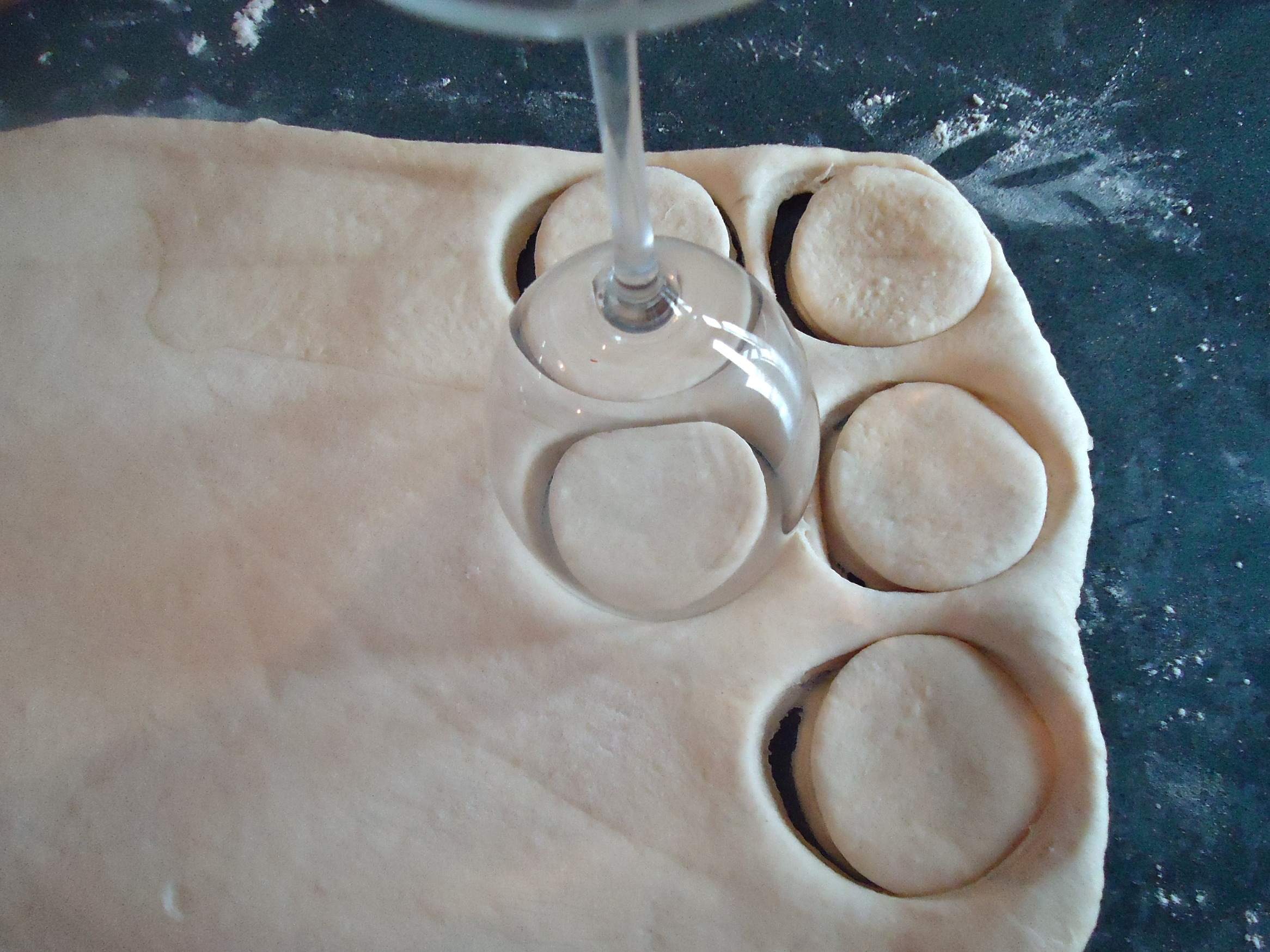
Using a biscuit cutter, glass or my favorite, a wine glass dipped in flour cut out the biscuits.

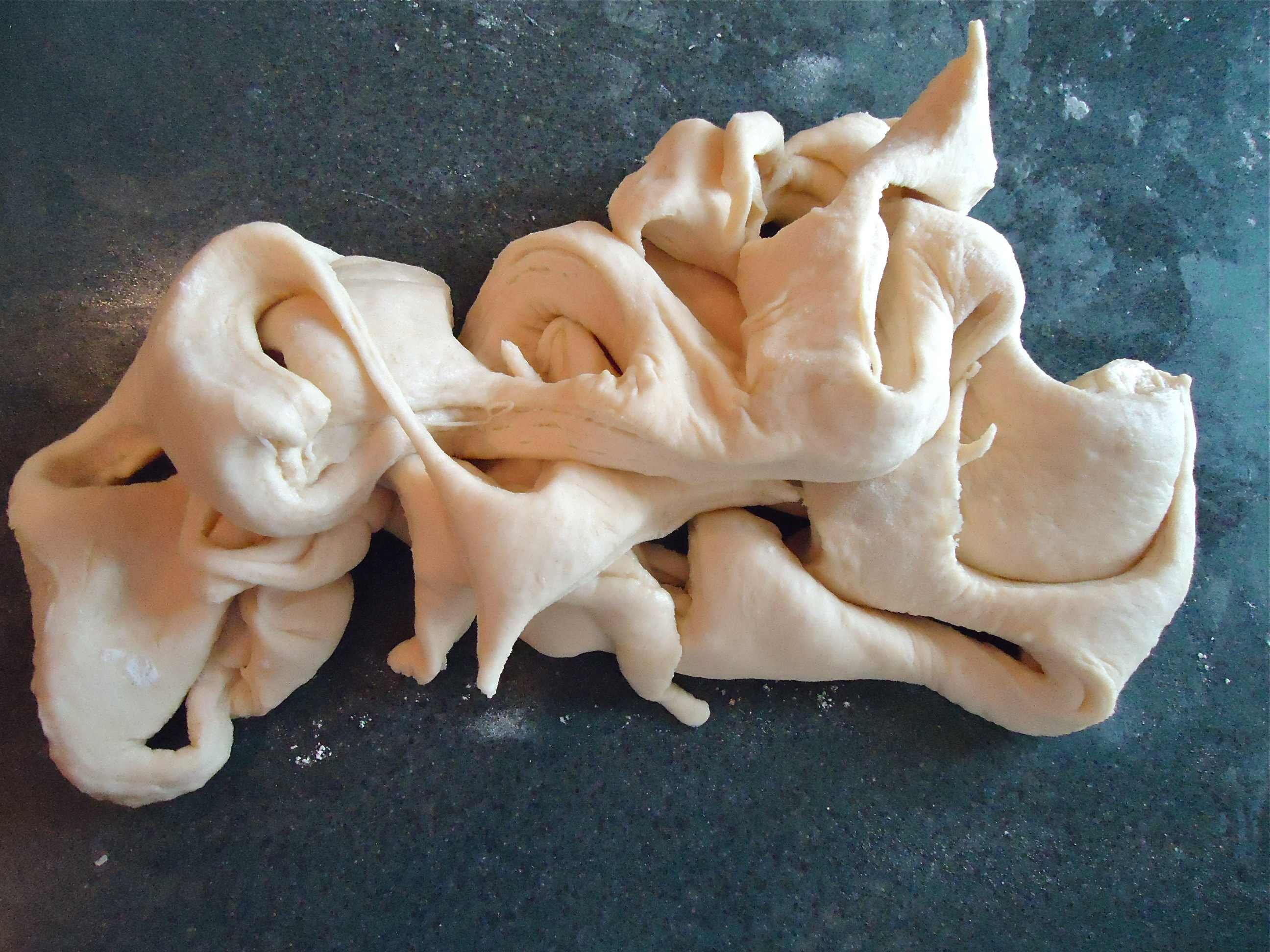
Scraps from the first round of cutting. Bring them together but avoid handling too much.

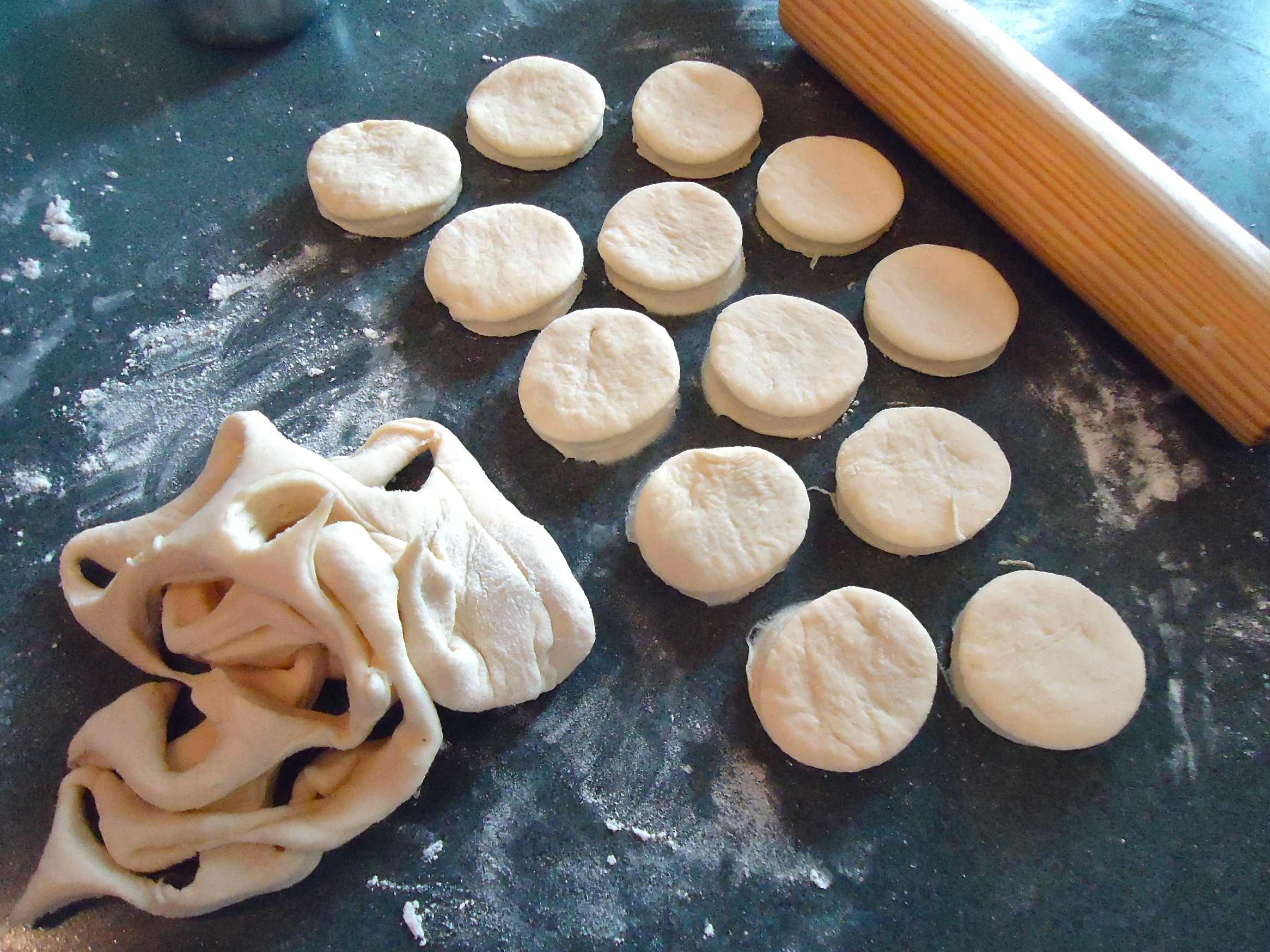
Roll the scraps out to a rectangle and butter one side of the dough. Fold over, roll lightly (seam side out) and cut your biscuits. Only one process of butter, folding and rolling is needed since the scraps have lots of butter incorporated into them already.

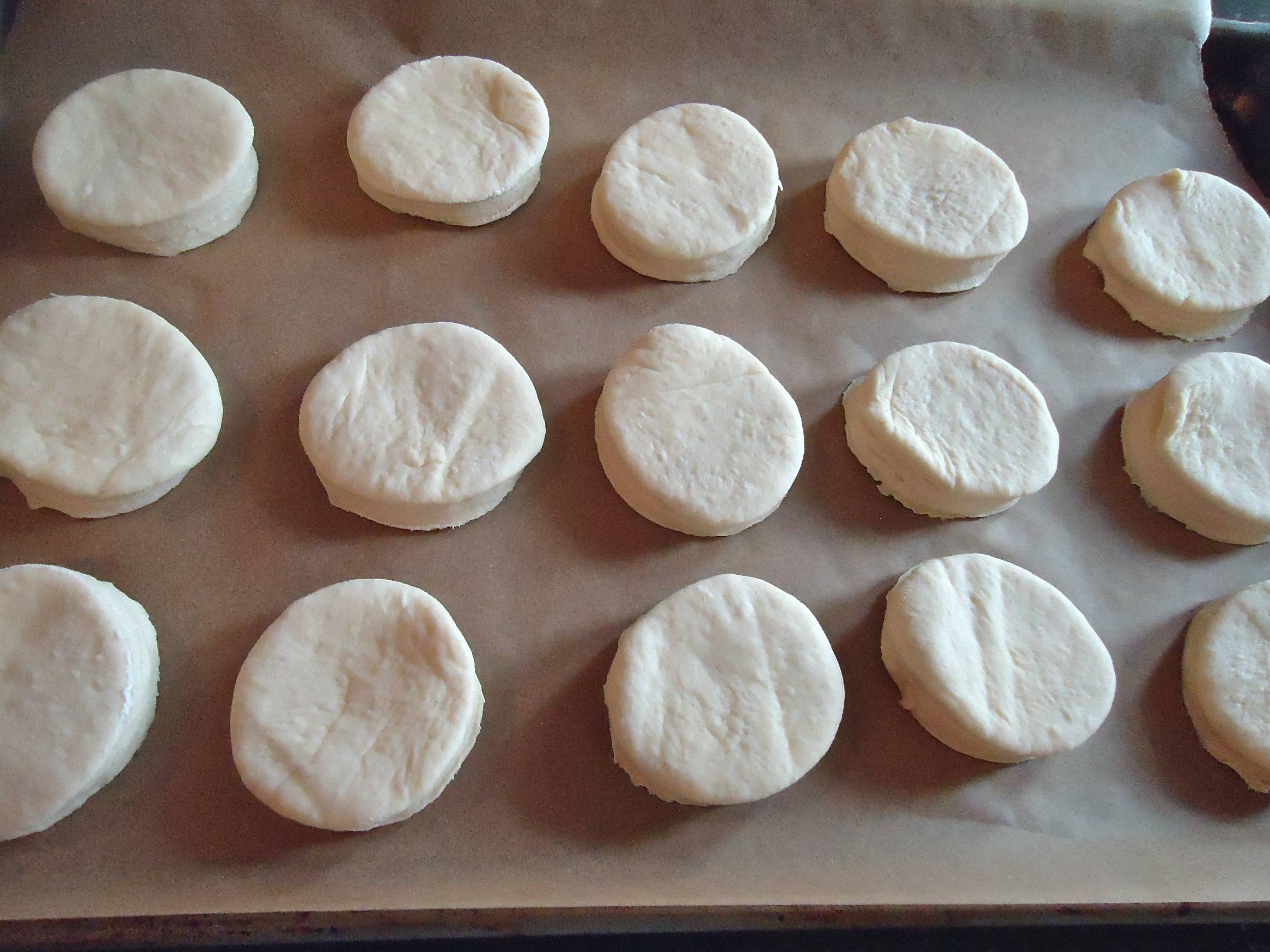
Biscuits lined up on parchment ready for rising… or the freezer.

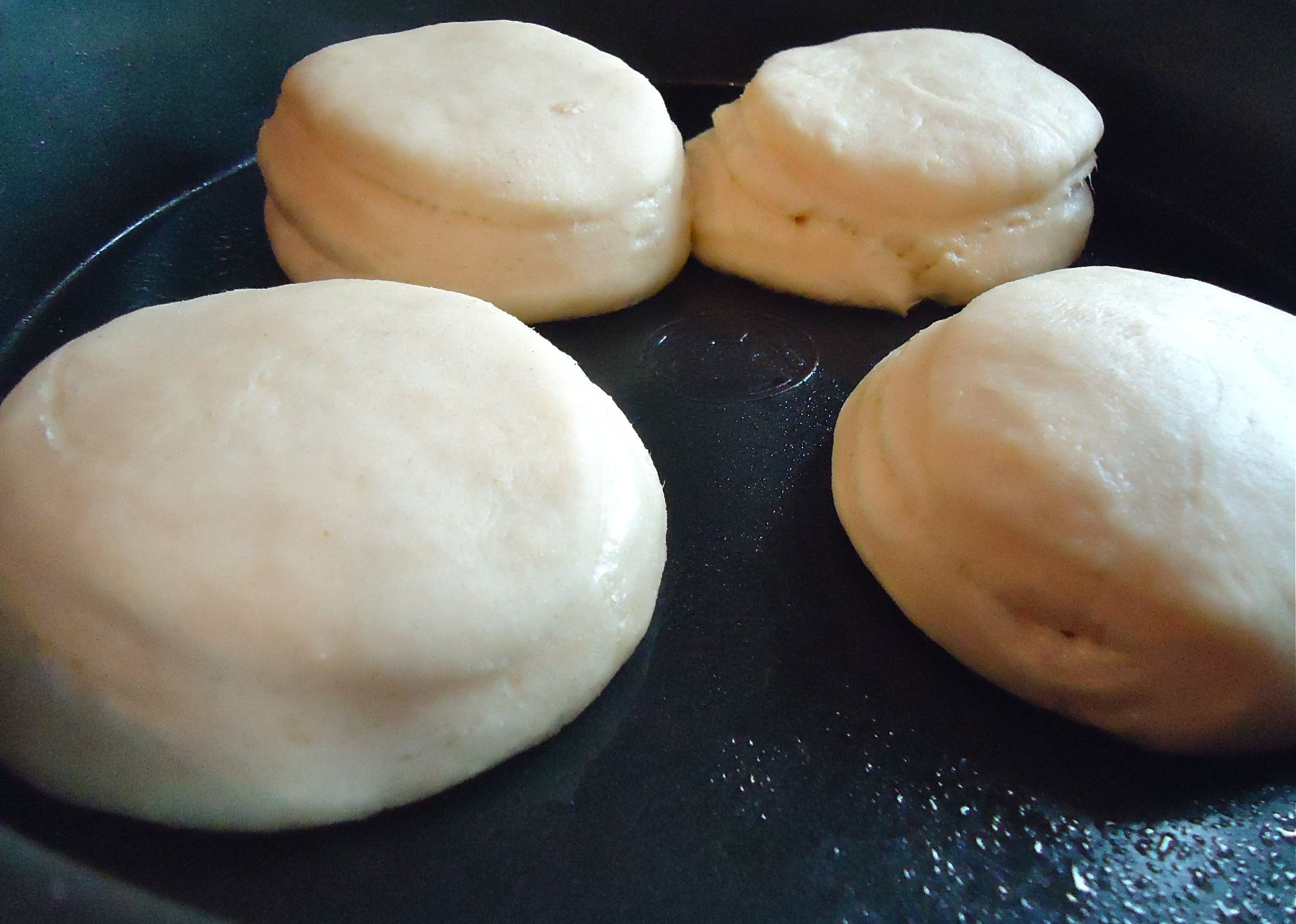
After rising in a warm place (not hot!) for 30-60 minutes.

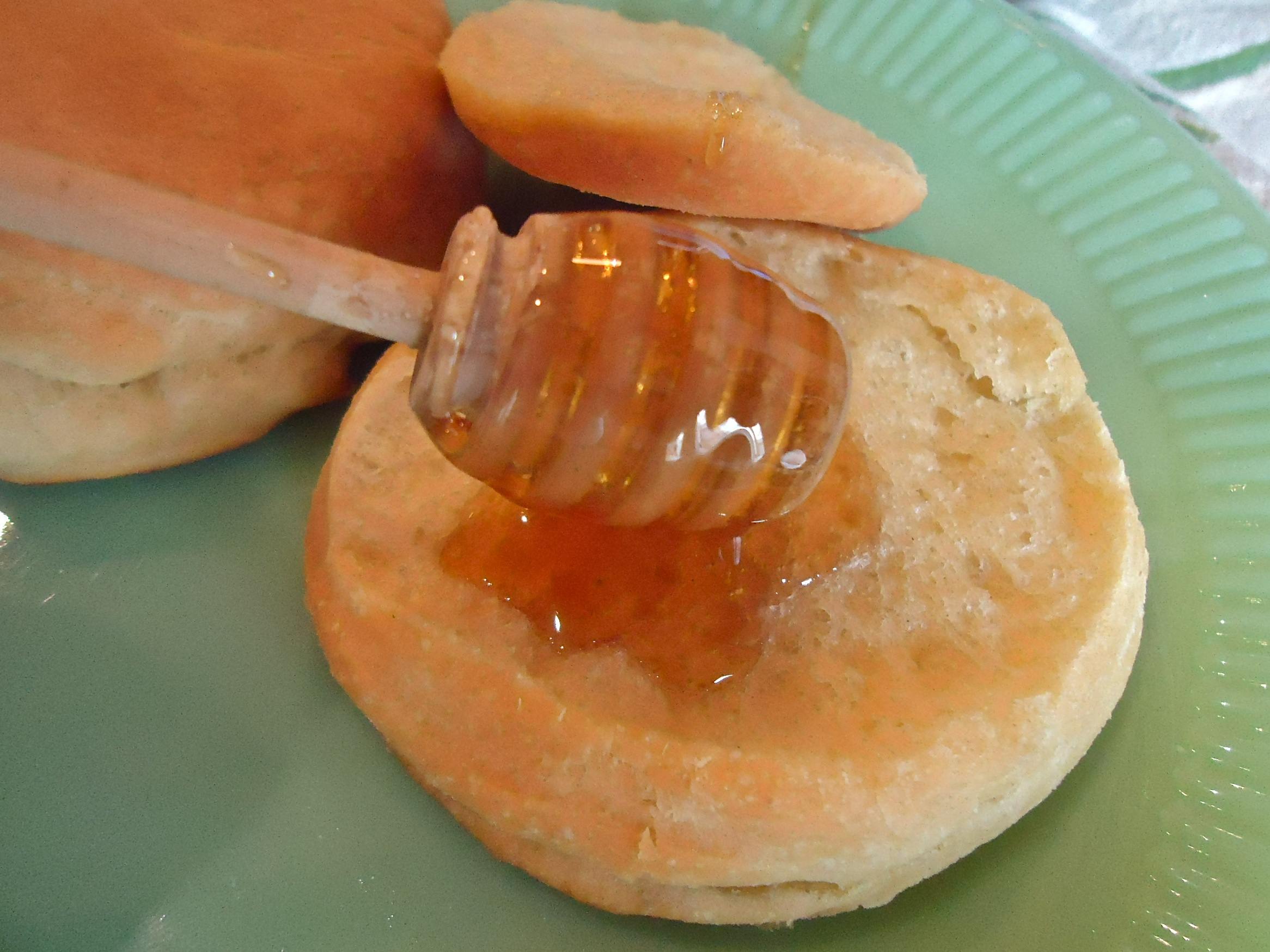
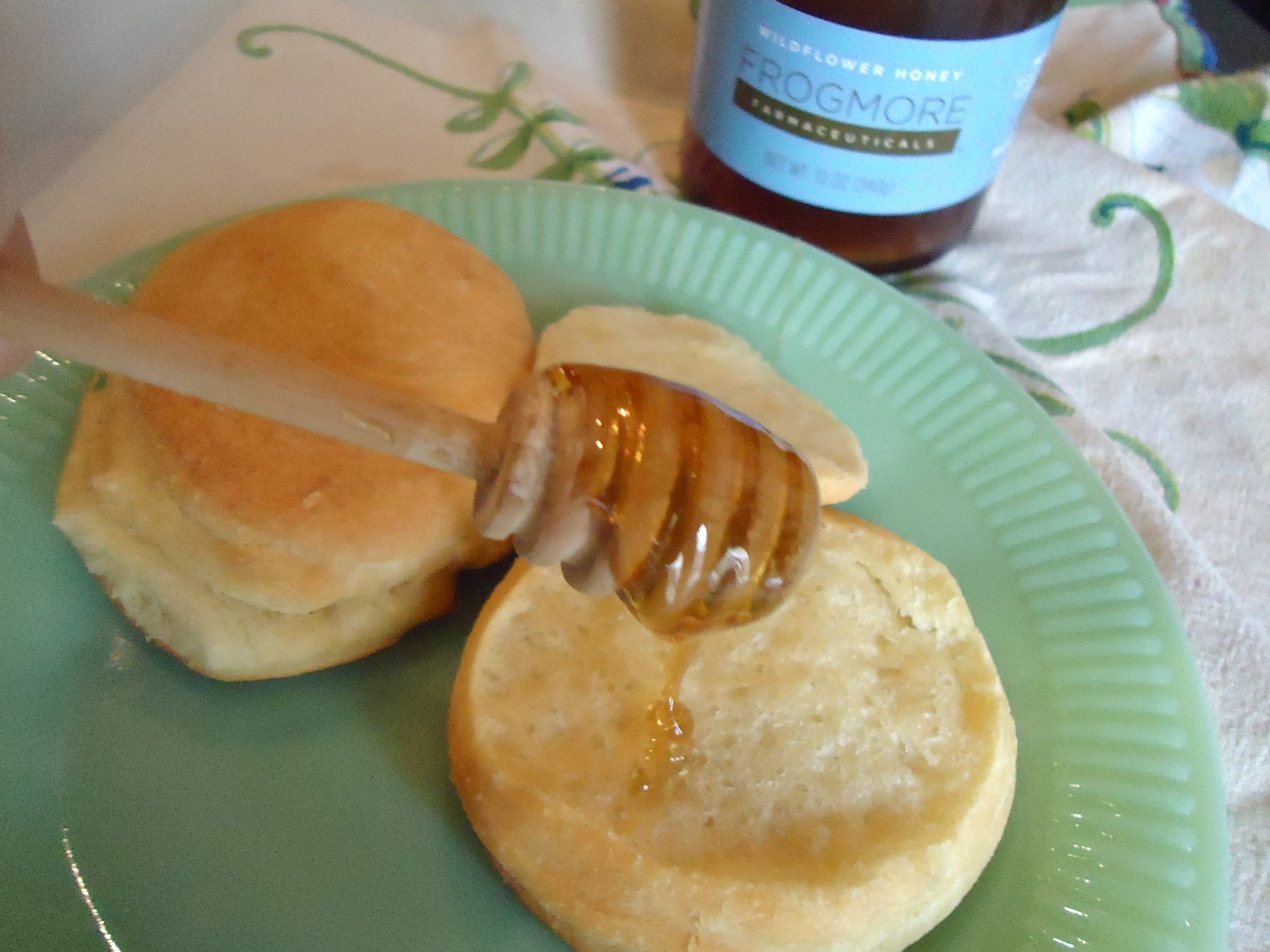
I love these angel biscuits with local honey – they do taste heavenly!

Angel Biscuits

  • 2 pkg. dry yeast
  • ¼ cup tepid water (NOT hot)
  • 2 cups buttermilk, light or regular
  • ¼ cup sugar
  • 1 tsp baking soda
  • 1 tbl baking powder (yes, a tablespoon)
  • 1 tsp. salt
  • ½ cup butter
  • ½ cup shortening
  • 5 cups all-purpose flour, sifted and then measured plus extra for rolling out the dough
  • 2 tbl melted butter

In a bowl combine yeast and water. Allow to dissolve for 5 minutes. Add buttermilk to the yeast mixture and whisk to combine.

In a very large bowl combine all dry ingredients and cut in the butter and shortening with a pastry blender, fork or your hands (your clean hands). When the mixture resembles cornmeal you’re good. Pour in the buttermilk mixture and stir to combine for a soft dough.

Using a little extra flour knead the soft dough for 4 or 5 minutes. At this point you can store the dough, well covered but it will expand, in the refrigerator for up to 24 hours. Or you can roll out the dough into biscuits.

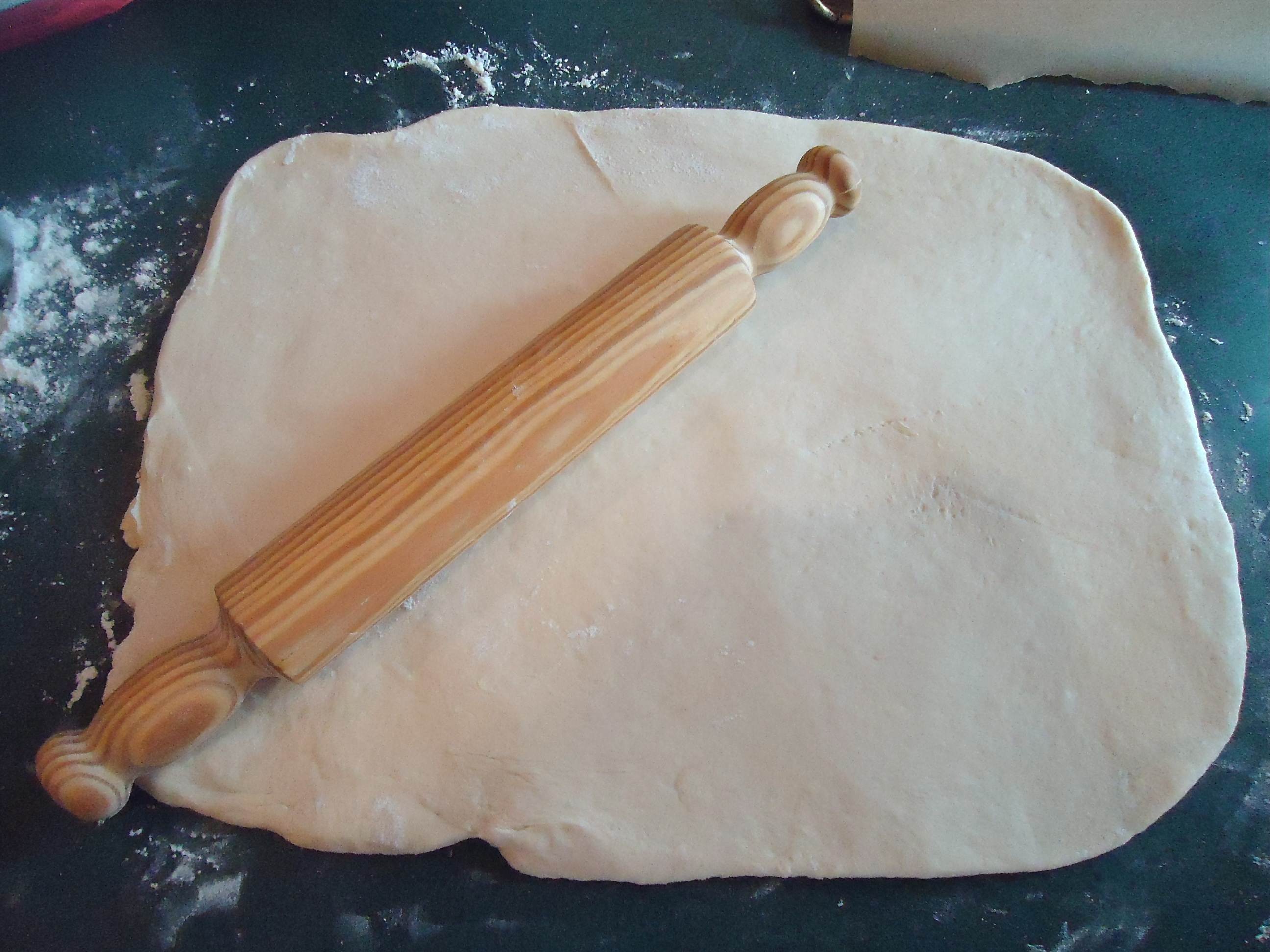
Here is my technique for rolling out dough: Flour the rolling surface and using a rolling pin roll the dough into a large rectangle. Brush one side of the top of the dough and then fold over. Roll lightly back and forth a couple of times, rolling from the solid (seam) side out. Adjust the dough if necessary (turn it 90 degrees) and sprinkle with a little more flour. Roll a couple more times and brush one side with more butter, fold over and roll out one more time. With a biscuit cutter, jelly jar or wine glass dipped in flour, cut your biscuits out. Arrange on a cookie sheet or baking pan lined with parchment paper. Gather up leftover dough and gently form a ball and roll it out again, butter one side of the rectangle, fold over and cut out your biscuits. Continue until you have used all the dough.

At this point you can allow the biscuits to rise in a warm place for about 1 hour and the bake in a preheated 425 degree oven for about 10 minutes or until lightly browned. OR you can freeze the biscuits on cookie sheets, remove them to a zippered bag or airtight container. To bake, place frozen biscuits on a parchment lined cookie sheet and allow to sit several hours or over-night in the refrigerator. Remove from the refrigerator and to rise in a warm place for 1 hour. Bake in a preheated 425 degree oven as per above.

Beef Short Ribs “Delicious”

Over the last few years I have noticed how prevalent beef short ribs have become in restaurants, even high end ones. And I have been on the eating end of this circumstance, mostly recently in Cleveland, Ohio. I like to see how other cooks and chefs prepare short ribs and compare to my technique. For instance during that trip I enjoyed beef short ribs as the filling in a pierogi first course and at another restaurant as the main event – a little surprised that it was served off the bone.

Note to restaurant, I like the bone on my plate – that way I know for sure what cut I’m eating. I realize that some people don’t want to see a bone, but obviously those folks are apparently not very discerning regarding their dinner, and they can ask to have the bone removed.

It reminds me of a local restaurant-owner friend of mine who a few years back served the most delicious and beautiful whole scored local flounder with a piquant sweet and sour-type sauce. So many of the patrons asked to have the head removed that they gave up serving it “whole” and just removed the head to start with. Too bad because it was quite impressive and like I said, a thing of beauty on the plate. (Plus the fish around the head is superbly delicious – just ask Tony Bourdain) Anyway, I digress…

I began grilling short ribs just as an “add-on” to my cheat’in pork ribs, especially if I could find a few pounds of bone-in fat-layered beef shorties at a good price at the market. I prepare a second ‘rub’ (bourbon infused, perhaps) for these beef ribs and allow them to macerate in the refrigerator over-night or for several hours prior to picking up the same technique as I use with the pork ribs. Beef short ribs prepared this way tasted good to me, but they never quite reached the magnitude of short rib perfection I imagined.

Over the past couple of years I have played around with seasonings and technique and have finally found the beef short rib recipe and technique that hits all the high notes. Hope you like it.

Ingredients for the rub.

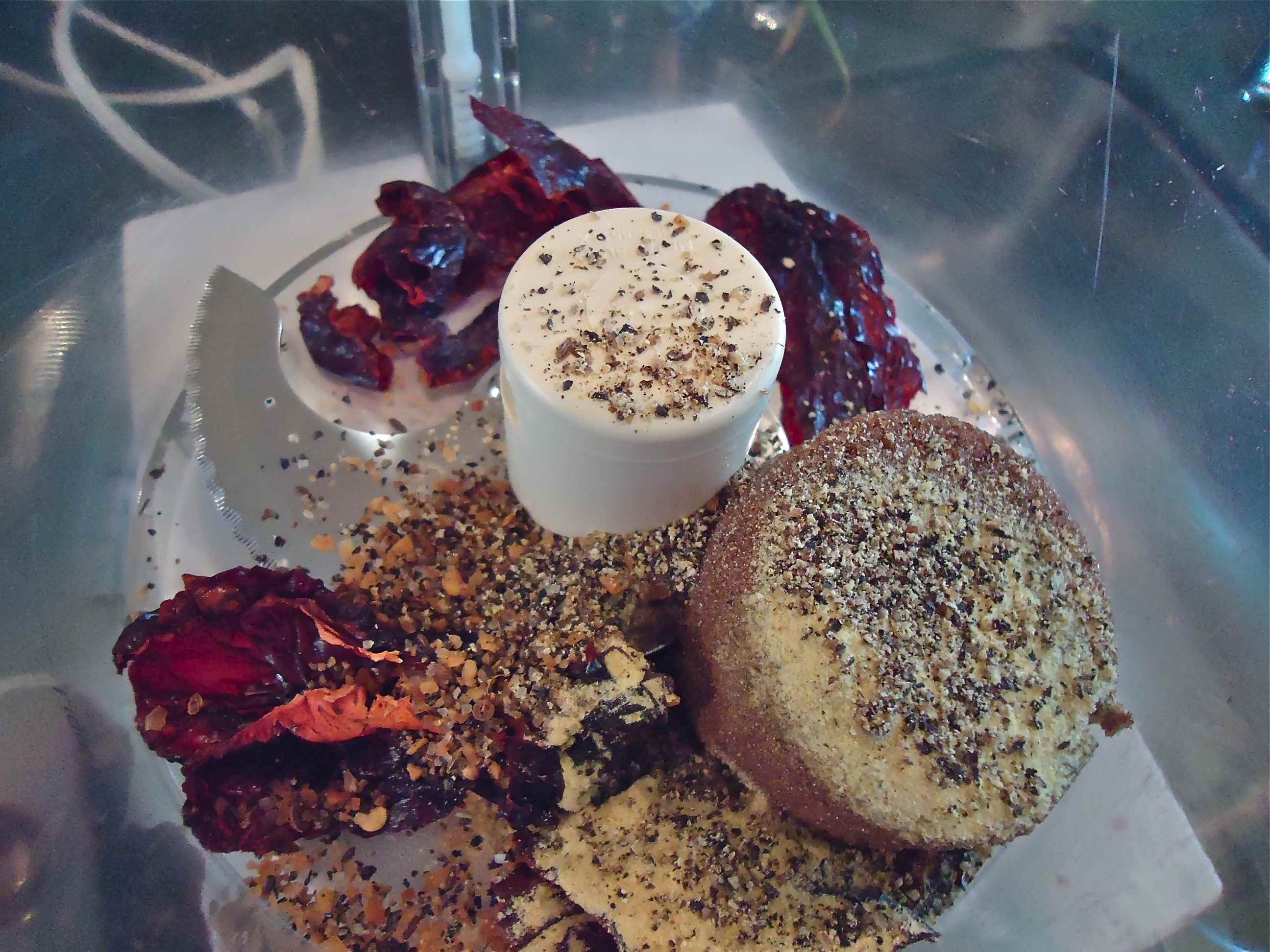
Grind the rub ingredients in a food processor or blender.

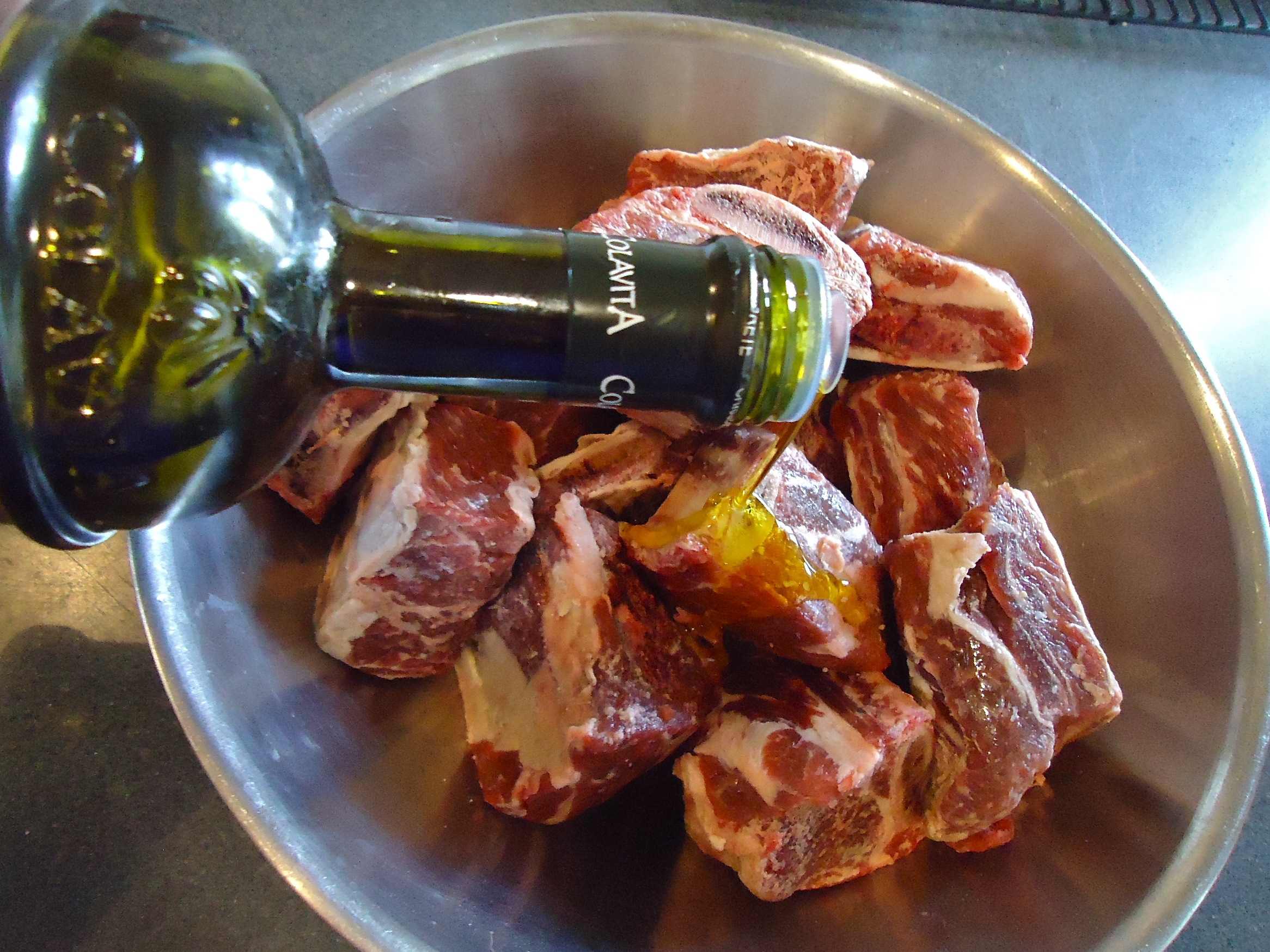
Coat the ribs with some oil – I prefer grape oil but olive oil is good too.

Sprinkle the rub on the ribs and mix to coat them all well. Cover and refrigerate for at least 2 hours.

In a large braiser, Dutch oven or the like, heat more oil and saute the sliced garlic cloves, stirring a few times.

After the ribs marinate in the refrigerator, remove and allow to come close to room temperature. Sprinkle with flour.

Brown the short ribs well on all sides. Smells great!

I love fire-roasted tomatoes, and the brand doesn’t really matter. Puree the whole can.

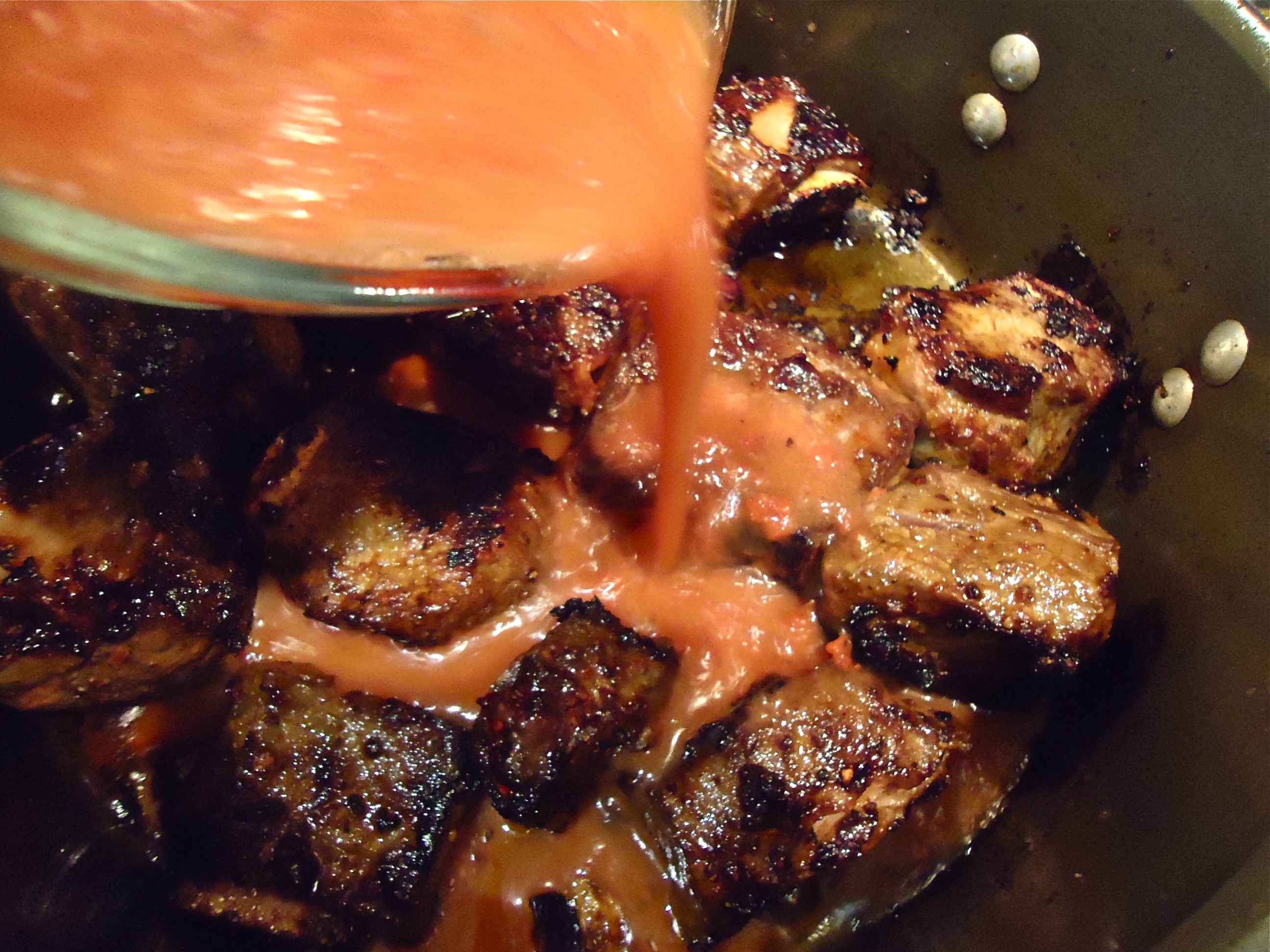
Add the puree, cover and roast in a 250 degree oven.

And drum roll please… here they are.

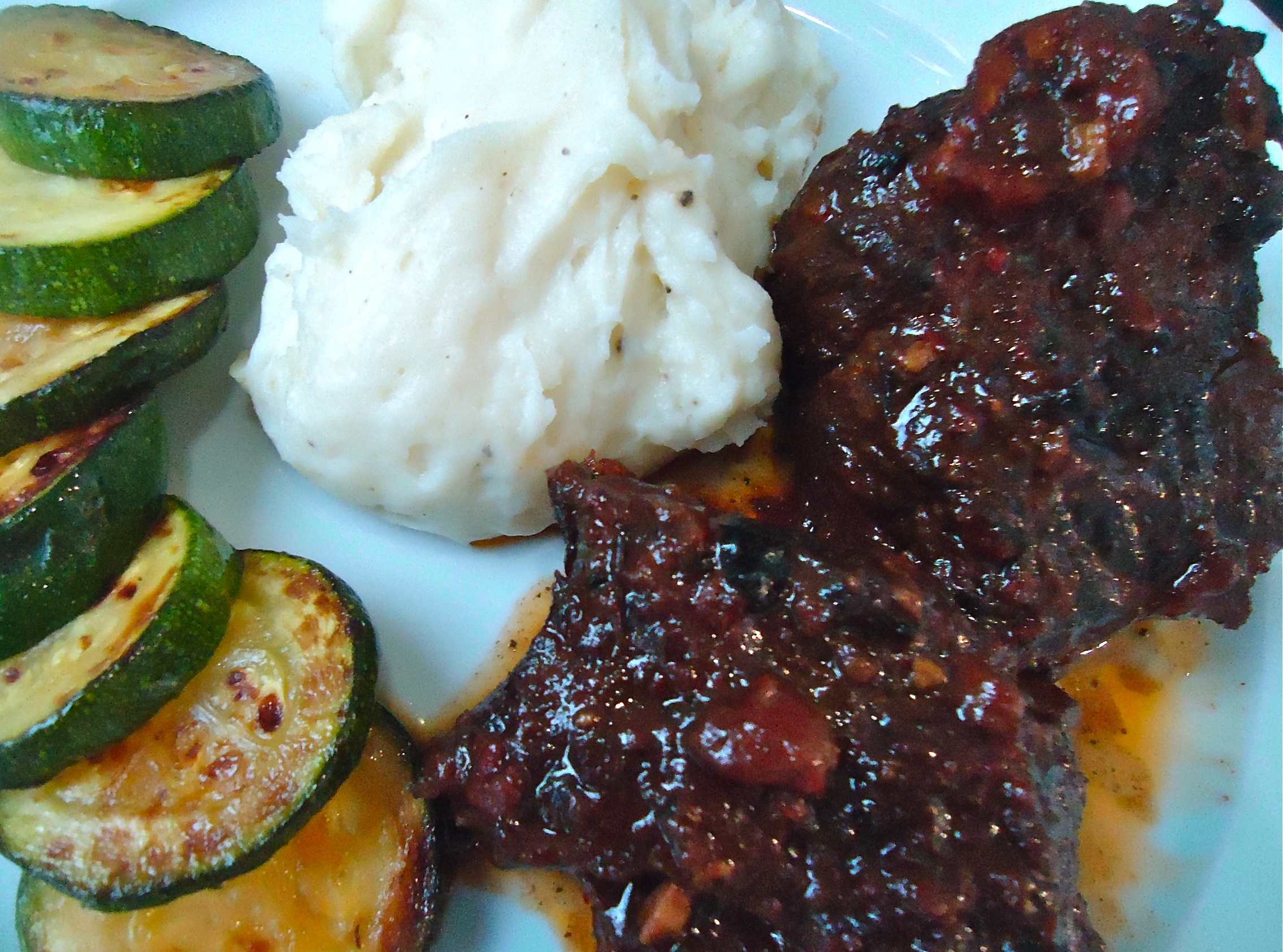
Here is today’s “blue, or rather white, plate special”. Broad egg noodles slathered in the pan sauce are also great with this!

Beef short ribs ‘delicious’

  • 3 dried ancho chili peppers, seeds and stems removed
  • 1 tsp fresh cracked pepper
  • 2 tsp Adobe seasoning
  • 2 tsp Montreal Steak seasoning
  • 1/3 cup dark brown sugar
  • 3 ½ – 4 ½ lb. beef short ribs, rinsed and dried
  • 2 tbl. olive oil or grape oil
  • 1 heaping tbl all-purpose flour
  • 2 large cloves garlic (or 3 medium size cloves), sliced in half
  • 1 tsp. salt
  • 1 can fire-roasted tomatoes
  • 1 cup vegetable, beef, or chicken stock

In a food processor or blender grind the first 5 ingredients. Set aside. Place beef short ribs in a large bowl and drizzle with 1 tablespoon oil and stir to coat the ribs. Sprinkle with approximately half the pepper/seasoning* and stir to coat. Cover and chill the ribs in the refrigerator at least 2 hours and up to 6 hours.

Remove short ribs from the refrigerator and allow to come up to room temperature (or close enough) – about 30 minutes. Stir the ribs and sprinkle with the flour. Heat 1 tablespoon oil with the sliced garlic in a very large heavy bottom pot (or Dutch oven) that has a good-fitting lid. The pot should be large enough to hold all the short ribs in one layer. Remove the garlic and set aside.

Brown the short ribs on all sides, turning with tongs as needed. Preheat oven to 250 degrees. In a food processor or blender puree the tomatoes and mix together with the stock. Sprinkle the browned short ribs with the salt, add the garlic back in, and pour the tomato/stock mixture over the short ribs. Cover and braise in the preheated oven about 60 minutes. Remove the lid and stir the ribs. Continue to roast the ribs with the lid removed for 60-90 more minutes, gently stirring occasionally (thrice, maybe) until the short ribs are tender and almost falling off the bone.

Serve immediately topped with the pan sauce spooned over mashed potatoes or wide egg noodles. Serves 4 or 6 – depending on how hungry you and your guests are!
* Store the leftover Ancho seasoning in a sealed baggie or air tight container for up to a month, or so.

Groov’in with crab and chutney triangles.
My first encounter with Phyllo dough was probably way back at the Elite Epicurean Restaurant when we ended our meal with that now common Greek specialty, Baklava. Being about 12 or 13, I remember thinking Baklava was the bomb not just because it was loaded with walnuts and honey, two of my favorite things, but because of those impossibly thin layers of Phyllo pastry.

Being the budding baker that I was, I had to find out how it is made. I think I looked it up in the Encyclopedia Britannica (yes, a set of real books) and found out that Greek ladies passed the technique down “through the ages” rolling out that dough by hand to the point of translucency. I set about trying to make Phyllo on more than one occasion but like my attempts at homemade puff pastry, fell short on technique, arm strength and table space. I do remember my older sister Jeannie making baklava herself though, informing me that she just bought the frozen Phyllo dough sheets at the grocery store. What!?!

On the humanity! I wanted to be like the old Greek ladies and make everything from scratch, pulling and stretching dough. Of course there were aspects involved in making Phyllo at home that my young mind had not taken into account. Like the humidity – Greece is, well, dry and arid for the most part, and Columbia, SC is most definitely, NOT. The Greek ladies not only had years of experience – passed down since the time of Aristotle, for goodness sake – but their process was also a group effort with lots of hands put to work, not just two.

Needless to say, I gave up on making Phyllo dough myself and buy the commercially made kind like everyone else in the world – including those old Greek ladies – who mostly likely stopped making their own Phyllo years ago, too.

Working with Phyllo dough still requires a deft touch and some patience, as it can tear if you look at it the wrong way, and as stated above, it can dry out and crack within seconds. It is worth it to buy extra if you are new to  working with Phyllo, and also prepare your work area including the damp towels, the filling and any oil or melted butter, basically have your ‘mise en place’ – in place – prior to even opening the Phyllo package.

This recipe uses fresh crab (blue crab that is native to the Lowcountry) and the peach chutney with cherry, which I posted several weeks ago. It can be easily doubled and the finished triangles freeze well. Once you start making the triangles, the process goes quickly – might as well make a bunch while you’re in the Phyllo “groove”.

Ingredients for the triangles, including fresh crab, peach chutney, Gouda cheese and yes, Phyllo dough sheets.

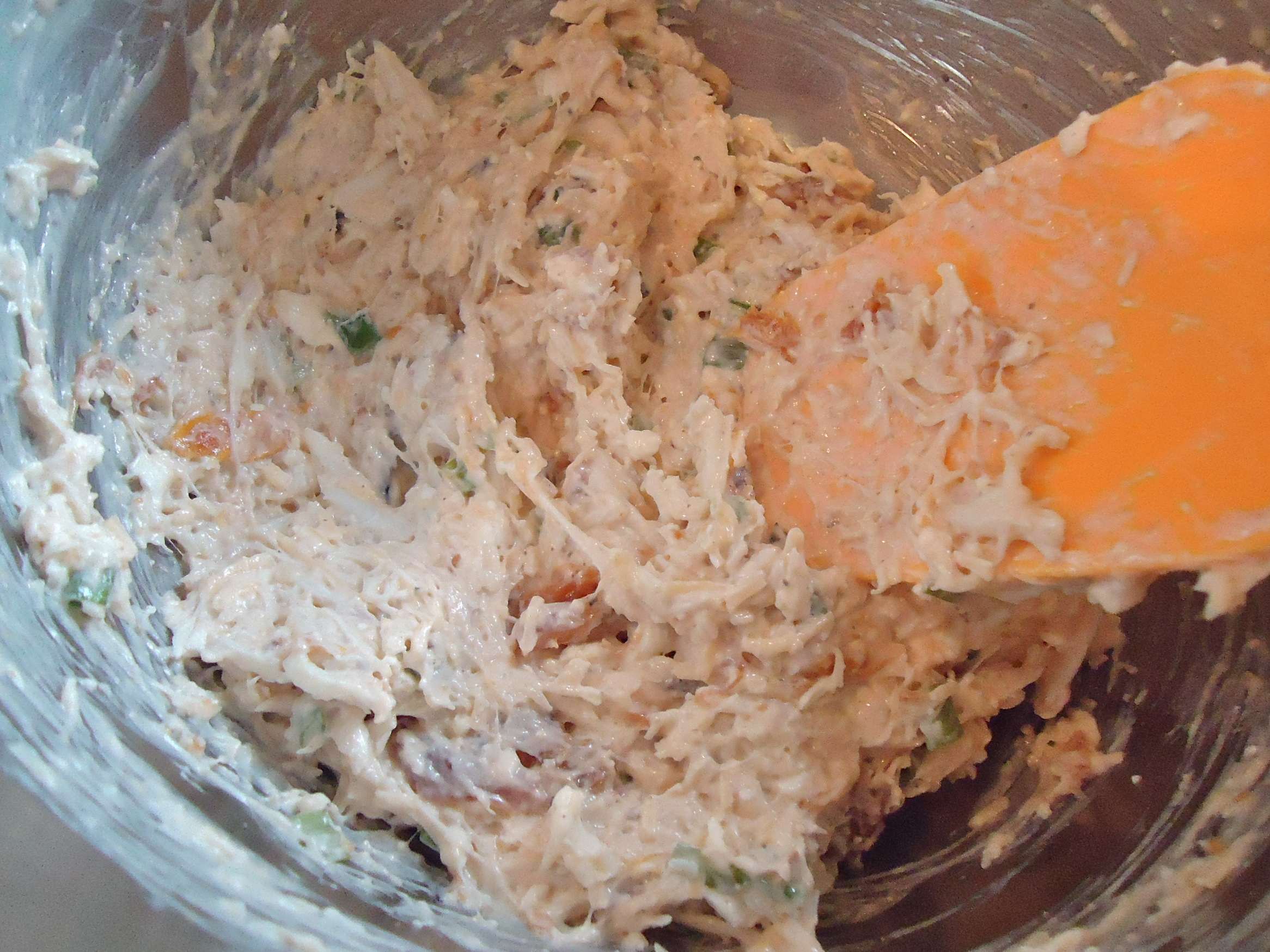
Mix all the filling ingredients together.

The filling will look like this. The chutney is chunky so make sure it is distributed throughout the batch of filling.

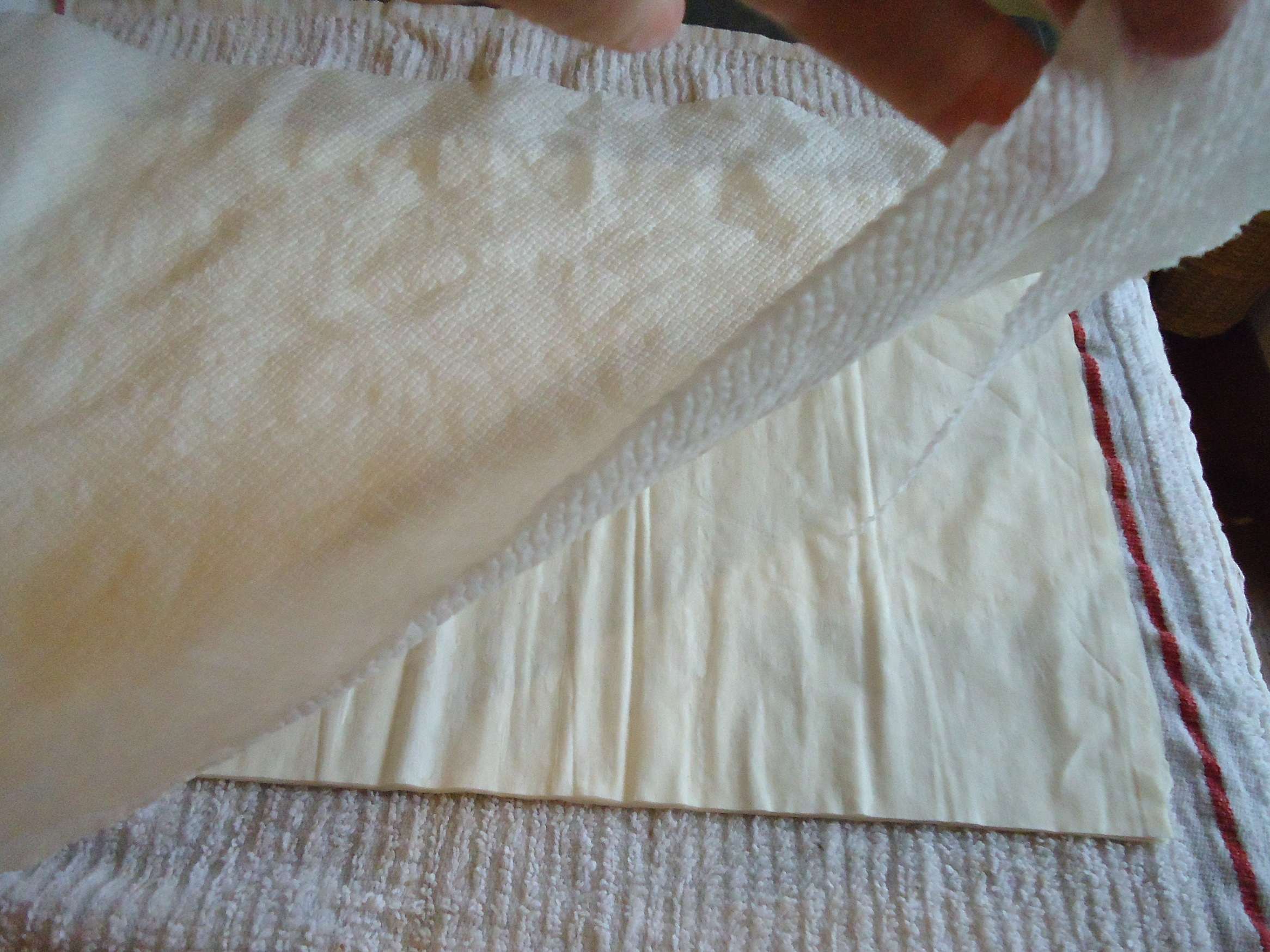
Keep the Phyllo from drying out. I lay it on a damp kitchen towel and another one (or a paper towel) on top. The towels should be damp but not soaking wet – otherwise the Phyllo will become mush.

Butter the layers that you are working with. Be gentle as the Phyllo can tear easily.

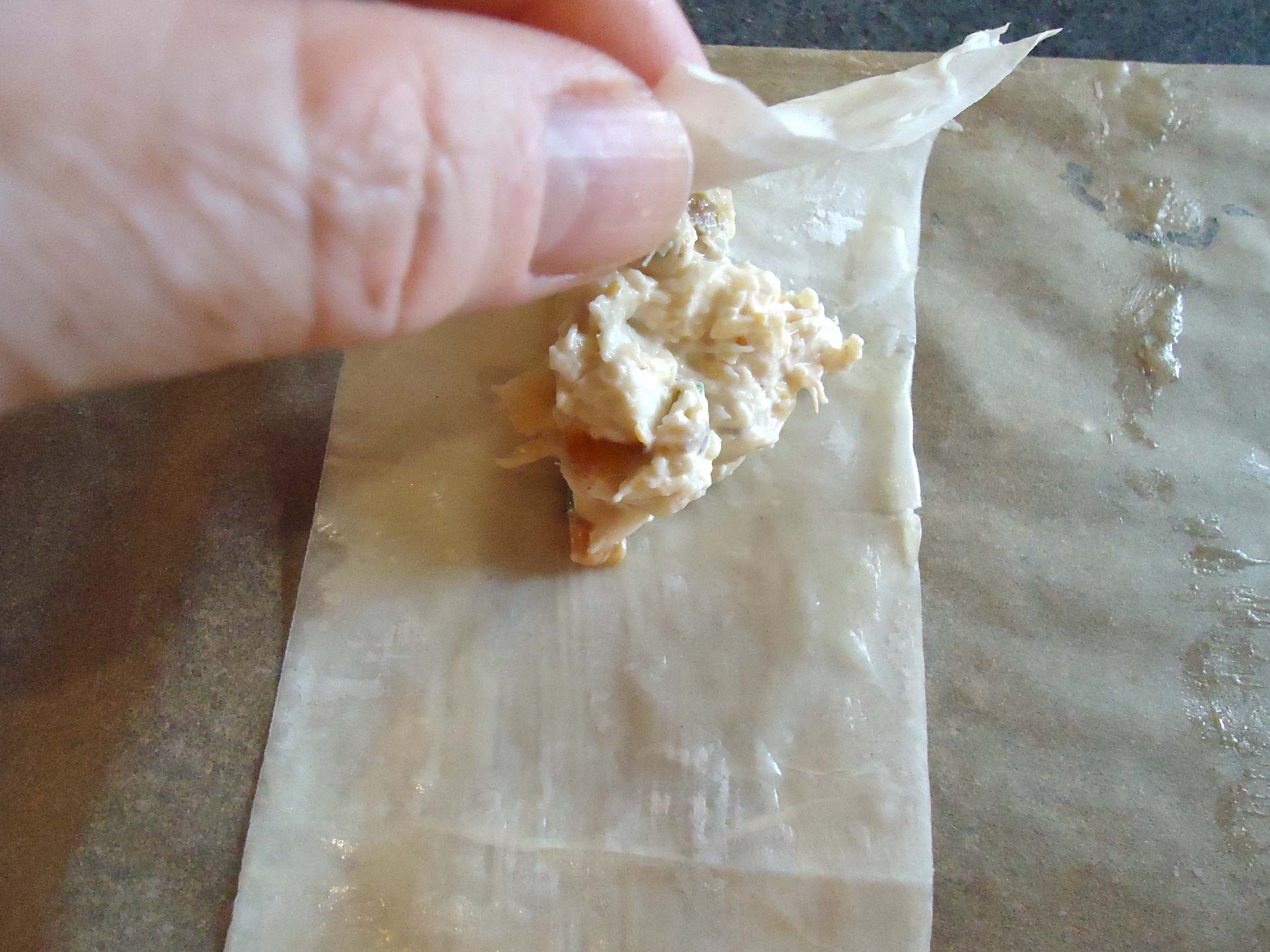
Cut the buttered Phyllo sheets into 3 long strips and place a small dollop of filling on one end.

Start by folding one corner down and over the filling to make a triangle shape.

The triangle shape coming together…

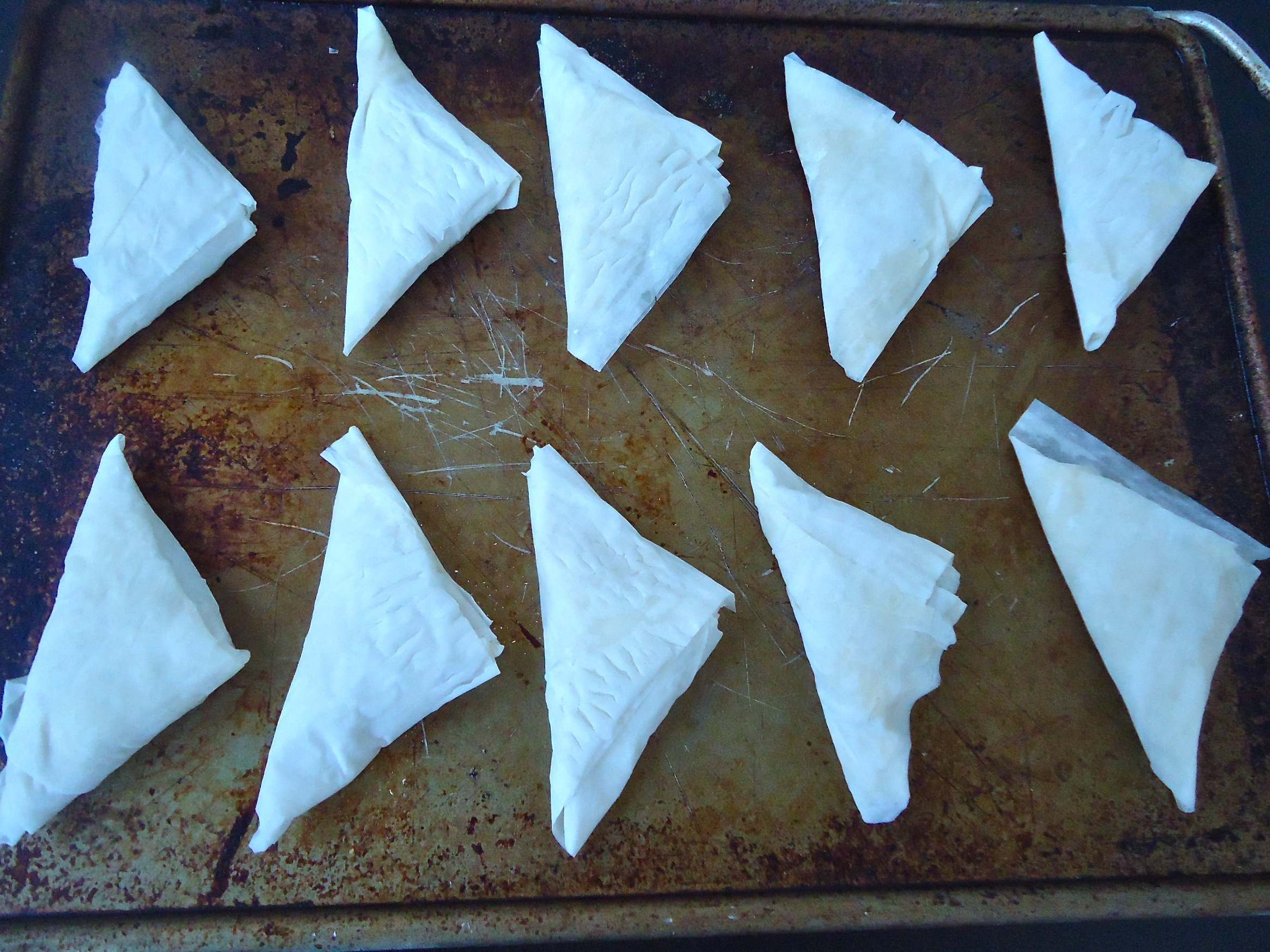
Lined up triangles ready to either bake or freeze.

Crispy, warm and umhhh good.

Crab and chutney triangles

  • 1 cup fresh crab, picked over
  • ½ cup Gouda cheese, finely shredded
  • 4 oz. cream cheese, softened
  • 2 Tbl green onion tops, minced
  • ½ cup mayonnaise
  • 2 heaping Tbl chutney, preferably homemade
  • juice of ½ lime (approx. 1 tsp.)
  • 2-3 cracks of fresh pepper (approx. ½ tsp)
  • 1/8 tsp salt
  • ½ package Phyllo dough sheets
  • 2-3 Tbl butter, melted

Mix first 9 ingredients together; making sure the chutney is well distributed throughout.

Preheat oven to 425 degrees if you want to bake the triangles now. Line 2 cookie sheets with parchment paper.

Remove 1 package of Phyllo dough from the wrappings and lay flat on a clean, damp (but NOT soaking wet) dishtowel. Also have another slightly damp dishcloth or large paper towel ready to place over the top of the Phyllo dough sheets. The Phyllo dough sheets will dry out very quickly so they must be covered at all times.

Lay one Phyllo sheet out in front of you and quickly brush lightly with butter. Lay another sheet on top of this one and brush with butter. Using a sharp knife make evenly two spaced cuts down the long side of the dough sheets. You will have 3 long strips of Phyllo dough. Be sure to cover up the remaining full sheets of Phyllo as you work.

Place 1 heaping teaspoon of filling at the top of each dough strip. Fold the corner above the filling down to make a triangle shape. Proceed with turning the dough down in this triangle shape until you reach the end of the dough strip. If necessary, use a tad of melted butter to “seal” the last bit of dough on each triangle.

Proceed with this technique using all the filling. You can either bake these now – about 10-12 minutes in a preheated 425 degree oven or  freeze the triangles on trays for an hour or so, then remove to a sealed plastic bag or container. I have kept these frozen for up to two weeks. When ready, simple bake the frozen triangles on parchment or oiled baking sheets in a preheated 425-degree oven for 15-18 minutes – no need to thaw. Can be easily doubled if you need triangles for a crowd.

Serve hot. Makes about 2 dozen triangles.

Parting is such sweet sorrow: Peach Upside-Down Cake

Not to brag too much but I have a farmer’s market in my neighborhood on Friday afternoons. And even though it is sometimes difficult to find a real farmer at this “farmers market” (it is very small and tends to have more resellers of produce and/or ‘artisans’ selling non-food wares), I did come across some of the last local peaches of the season here. They were plump SC grown peaches and I could not pass them up even though they cost, ‘gulp’, about twice what they did a couple of weeks before.

Not that my waistline needs it, but I felt like these fresh peaches, most likely my last of 2012, deserved to be eaten with some pomp and circumstance. I’ve been itching to make something “upside down” too, thus peach upside-down cake was birthed. Inspired by a recipe in my Fannie Farmer Cookbook, I set about testing this cake recipe and lo and behold it came out great on the first try. This never happens for me, I must confess. Usually it’s at least twice before I get it just right and deem worthy to share on southbyse.com

I would imagine that this basic technique and cake (adjust the spices) would work with any firm or semi-firm fruit like apple, apricot, pear and maybe even fig (if you can get them). Apples and pears may also require pre-cooking … perhaps on the grill? That would add an interesting twist.

This cake was also fun to make with the assistance of Girly Girl and she was astonished when I told her we would be flipping the cake upside down to get it out of the pan. I think she was even more surprised when she tasted it and decided that it was indeed ‘good’.

The last of the summer peaches got a fitting send off nestled in this rum and brown sugar infused butter-cake, served warm and topped with a dollop of real, homemade whipped cream. Farewell sweet, delicious South Carolina peaches…until we meet once again… next July.

Sift the dry ingredients together and set aside, while creaming the butter and sugar in the mixer and preparing the butter/rum/sugar topping.

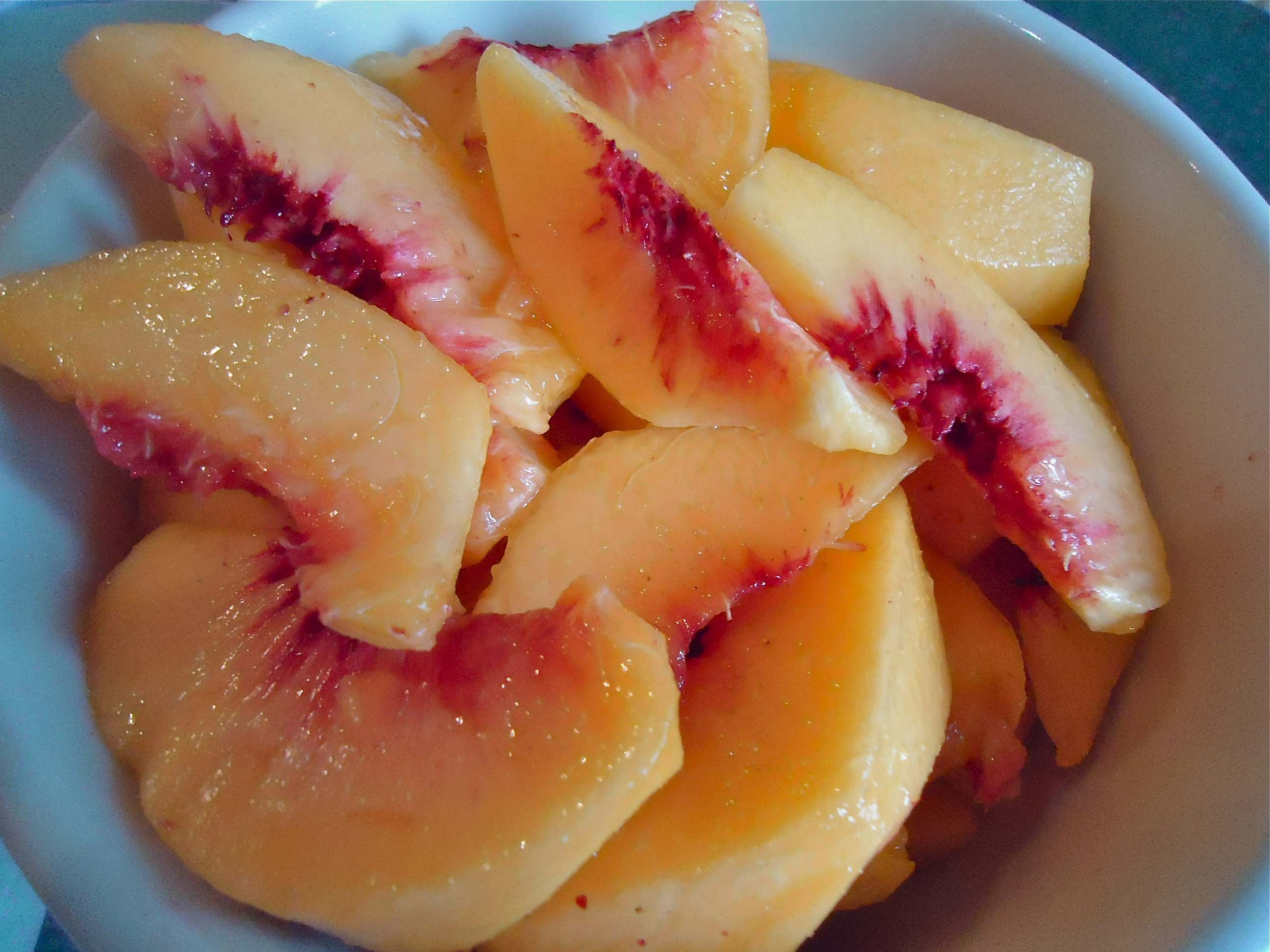
Sliced, fresh peaches.
Mix the rum into the brown sugar and add the softened butter.

Spread this rum/butter/brown sugar mixture into the springform pan.

Place sliced peaches over the rum/butter/brown sugar mixture.

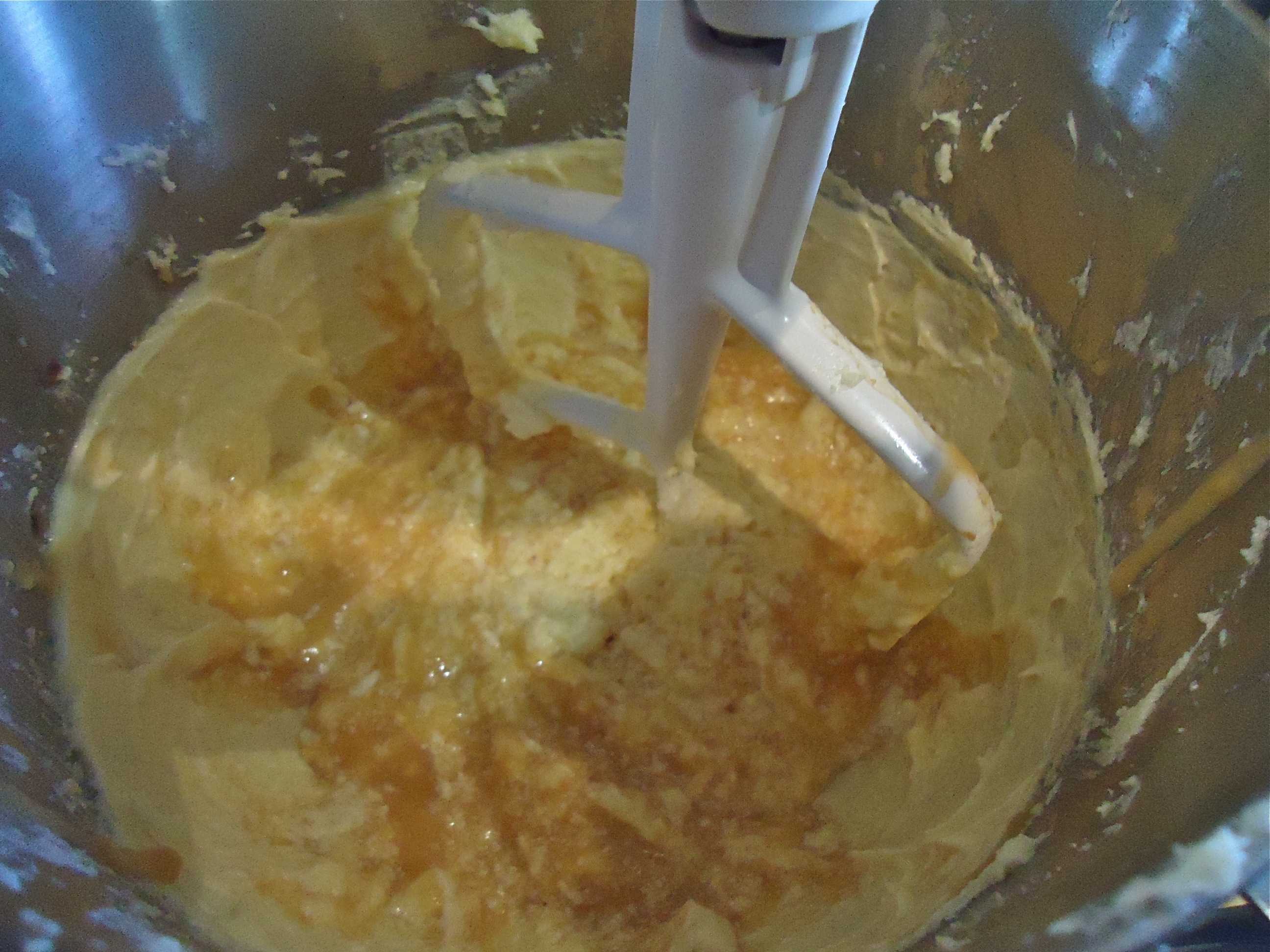
After creaming the butter and sugar together, add the eggs, mixing well after each. Mix in the vanilla extract.

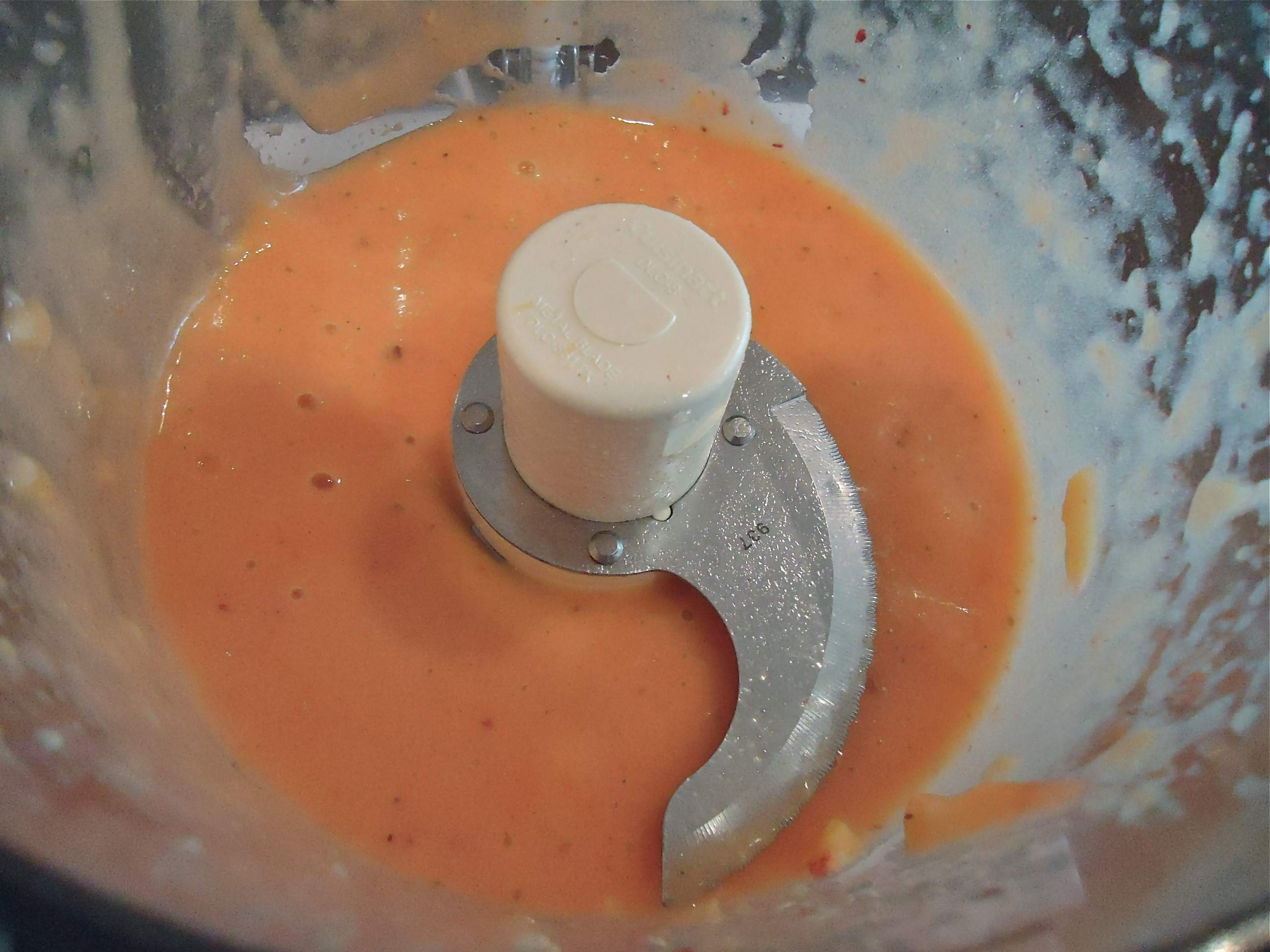
In a food processor or with a hand blender puree the remaining peaches with the buttermilk and 1 tablespoon rum.

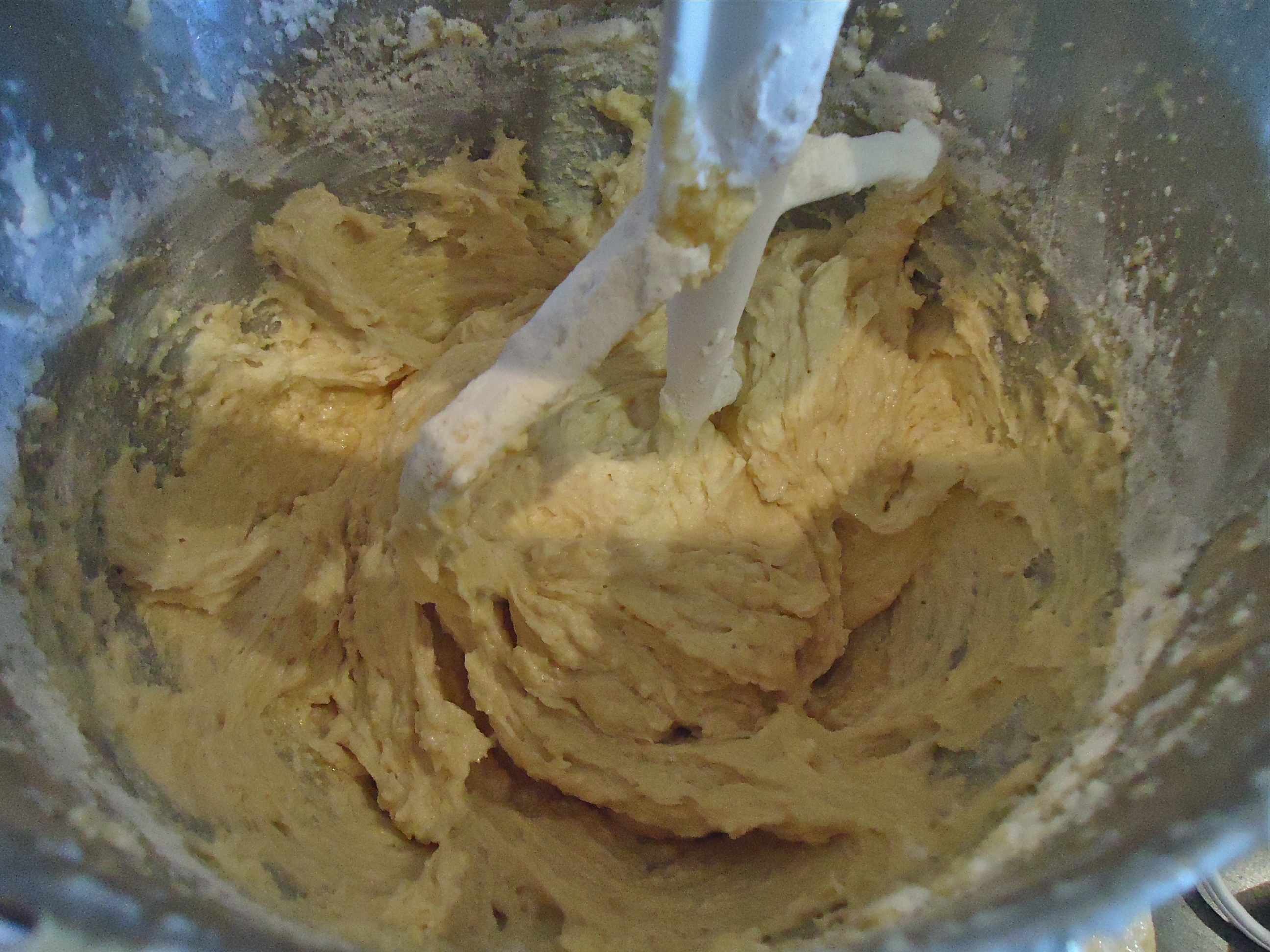
Mix the buttermilk/peach puree into the creamed butter/sugar/egg mixture alternating with the dry ingredients.

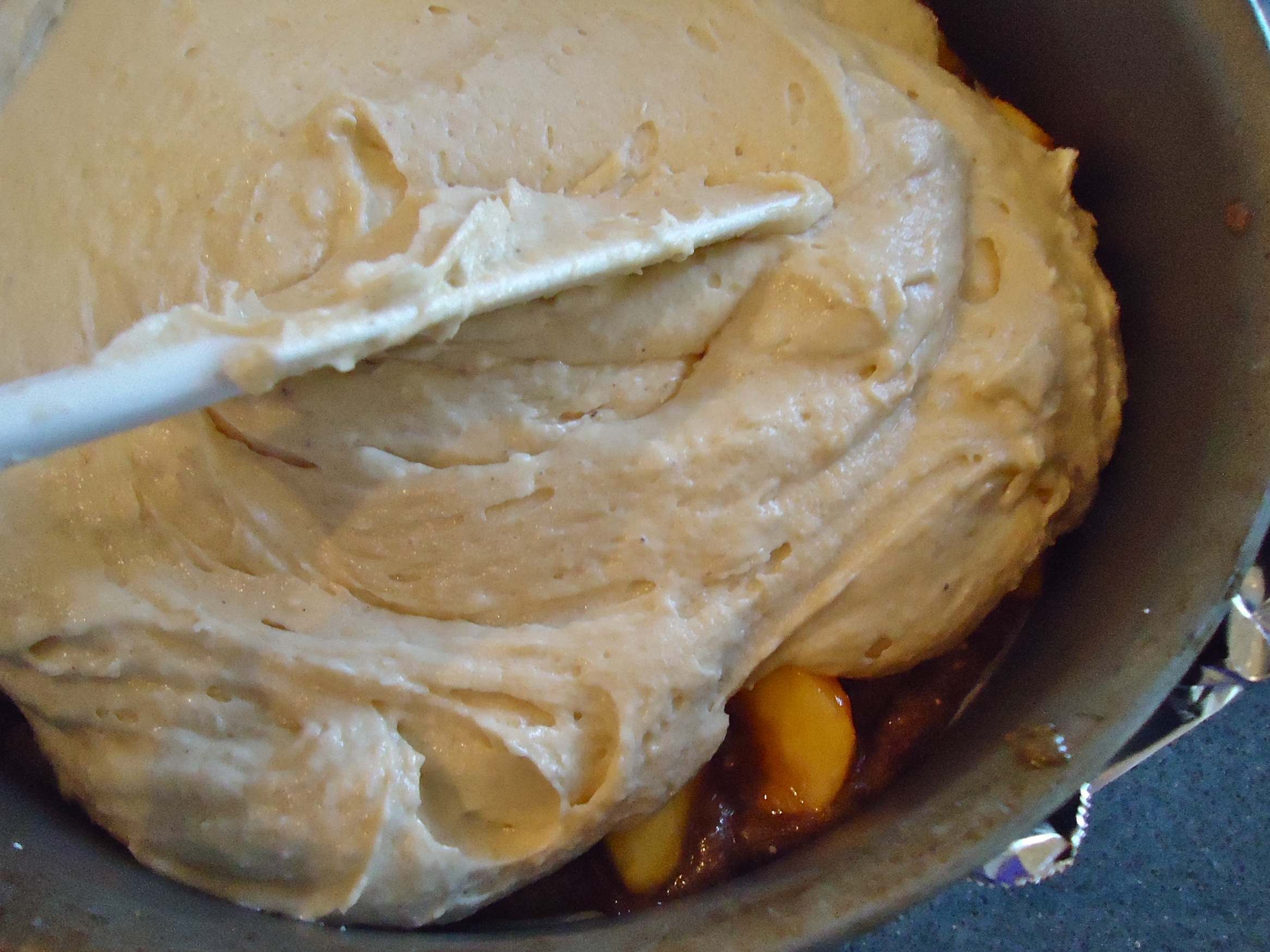
Pour the batter (it will be thick) over the sliced peaches.

Ready for the oven!

Allow the baked cake to cool for only a few minutes, then remove the sides of the springform pan then…

…place your cake platter or serving plate over the cake and…

carefully flip everything right side up. Remove the springform pan bottom.

Voila! Peach upside down cake. I like mine warm topped with whipped cream or creme fraiche.

I topped it all off with a dash of nutmeg too!

Peach Upside-Down Cake

14 tbl butter
½ cup packed dark brown sugar
3 tbl. dark rum
4 large ripe (but not over-ripe) peaches (about 2 ½ cups sliced)
1 cup sugar
2 eggs
1/3 cup buttermilk
2 cups all-purpose flour, sifted then measured
1 tsp. vanilla extract
½ tsp. ground coriander
Pinch of nutmeg
1 tsp. baking soda
½ tsp baking powder
½ tsp salt

Preheat oven 350 degrees. In medium bowl mix 6 tablespoons melted butter with the brown sugar and 2 tablespoons rum. Pour this into the bottom of a 9-inch springform pan (wrap the bottom of the pan in foil to catch any sugar/butter that may leak out the bottom). Arrange about 2 cups of the peaches over this mixture. Set aside.

In a mixer cream 8 tablespoons (1/2 cup) of butter with the sugar until light and fluffy. Add eggs one at time, beating the mixture well after each addition. Add vanilla extract and mix well.

Sift flour, spices, salt, baking soda and baking powder. Set aside. In a food processor or blender puree the remaining peaches, buttermilk and remaining 1 tablespoon rum. Add this to the sugar/butter mixture and mix well. Mix in the flour mixture.

Pour the batter over the peach slices in the springform pan. Bake in a preheated 350 degree oven for 50 minutes or until center is cooked through.

Remove to a rack but while cake is still very warm run a knife around the inside of the pan to loosen the cake. Remove the side of the pan and invert onto serving platter. Remove cake pan bottom. Serve warm with whipped cream or crème fraiche.