Sometimes the best you can do… is pretty darn good.

Zinnias and such… in the Southern garden.

My hands have been dirty for much of my life. We called it “working in the yard” when I was growing up and now that I am an older married lady I suppose I should be calling it “gardening”. Need to be proper and all.

Behind my parents house we had a nice-sized vegetable garden and us kids spent many hours working (playing?) out there. Even in winter my brother and I dug for buried ‘treasure’, usually getting our clothes filthy and occasionally ending up with a prized find of an old Coke bottle or an unusually colored rock. I can even now give a fairly accurate rain prediction because of playing in that garden, but that’s a story for another post…

Since we lived out in the sticks (and there was no internet and only 4 – yes only 4! television channels) entertainment for the most part hinged on our own creativity and imagination. Well that, and a colorful cast of characters including my extended family, my parent’s friends and our neighbors. There was always something to do. The choice was either inside and that usually involved real chores or outside – also chore-related albeit a little more loosely defined. Most outside chores could be easily changed up, especially if my Dad was involved… and voilà, fun!
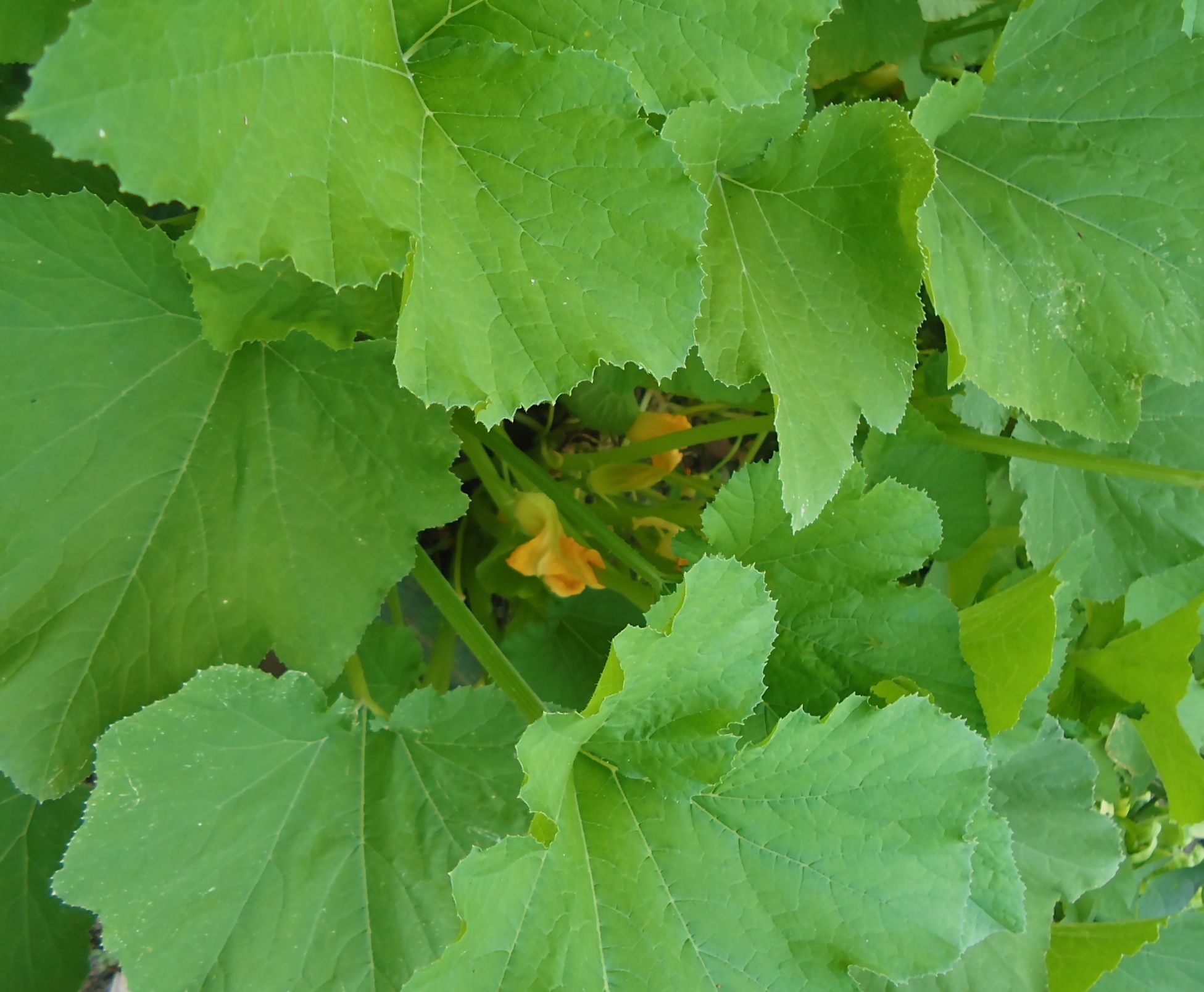
I spy with my little eye – squash blossoms! Need some of those to stuff with cheese – so delish. Not exactly Southern, but Southern Italian, at least.

This included that garden. Although my mom and dad considered it serious business (we ate, preserved or gave away all the produce we grew) mostly it was a pleasure to work the garden. My mother got her Park’s Seed catalog back in January and spent hours pouring over the choices and discussing the mail order with my dad. If we had been behaving they would even allow us to each pick out a packet of something they deemed worthy and feasible to grow in the number 8 USDA hardiness zone. Alas, my usual pick of English lavender never made the cut so I chose some unusual-shaped squash or exotic melon.

The Farmer’s Almanac, filled with lots of useful information on many subjects including “A Brief Look at Pruning”, spring and fall frost dates, a “scientifically compiled” fisherman’s calendar and monthly planting tables.

That garden was magical and wondrous. In just one week, after consulting the Farmer’s Almanac and the local weather forecast, my parents would have the whole garden either planted or in the least, partially planted and totally prepared for any last minute change-ups. After all, my Uncle Gene or Mom’s cousin George may drop off some tomato plants or excess seeds of some kind or another. Expect the unexpected at spring planting time.

When I was young, I loved feeling how cool and good the dirt was in my hands, even though the air was warm, even hot on my face. Now I think about that sensation whenever I need to relax. Funny how things like that, which happened so long ago can stay ever-fresh in one’s mind, but I can forget exactly where I left my smart phone within 2 seconds. Shrug.

The sense of accomplishment in planning, growing, tending and harvesting the garden is also a great feeling and one I long to pass on to my own daughter. I can write all day long about my own experiences but unless she participates it means zilch to her.
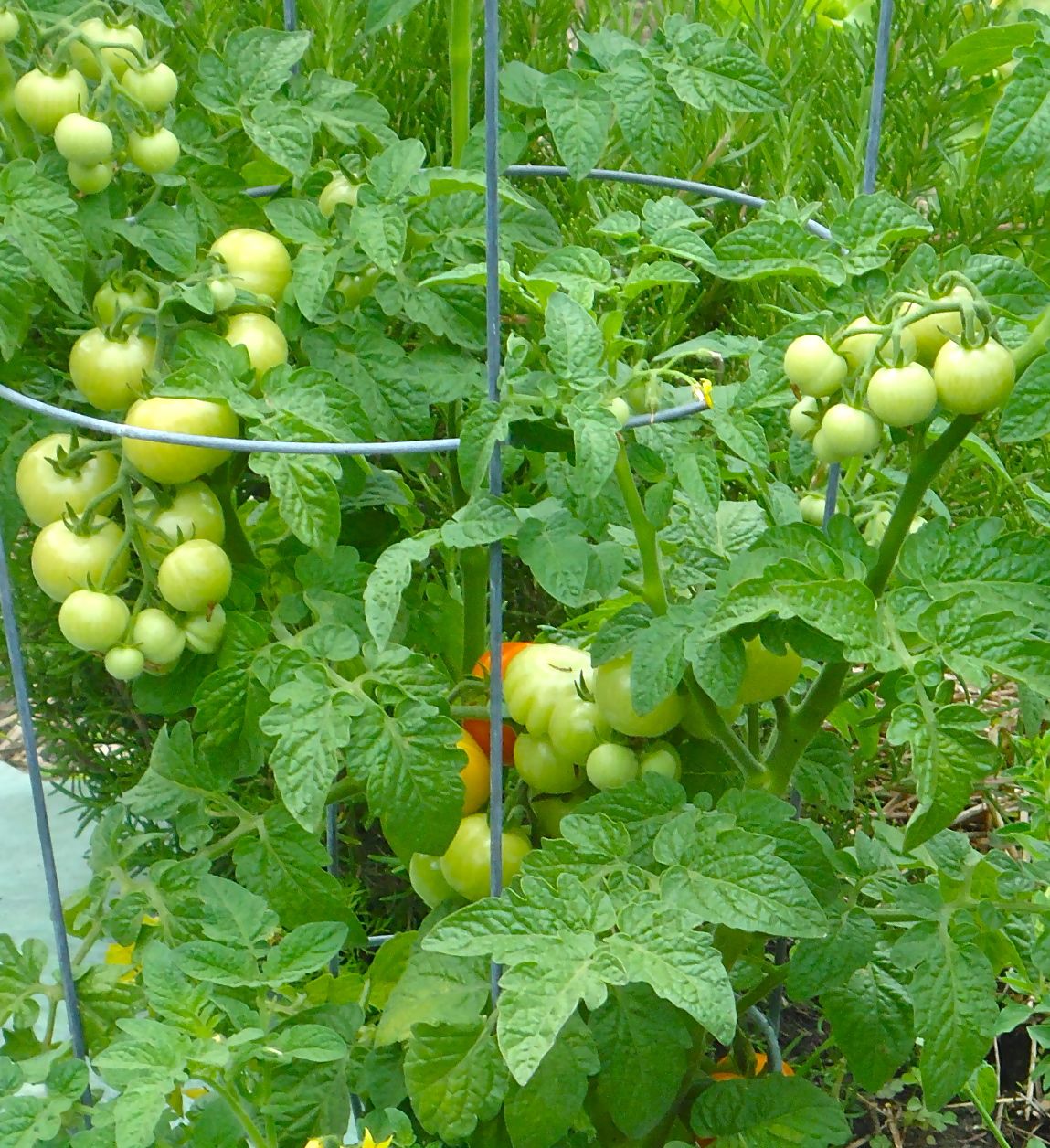
Bush tomatoes – hope ours do this well!

At the moment we reside in a beautiful little spot in the Lowcountry of South Carolina and while I tell everyone within earshot that “we’re never moving!” our current abode is a townhouse with no true yard (but a nice patio). True, we’re never leaving this diminutive ‘burg but I do hope for my own garden space, someday.

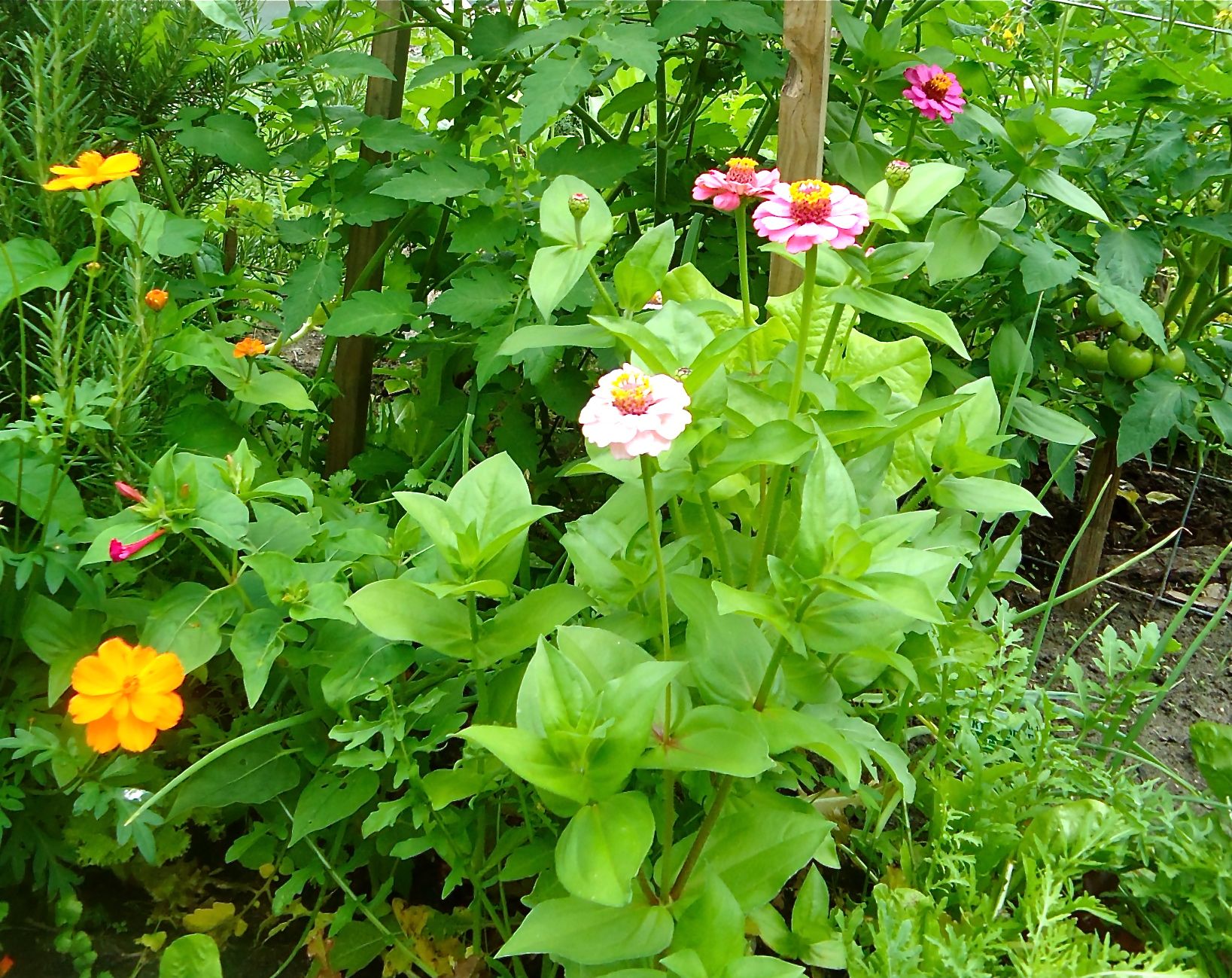
My daughter, and this fills my heart with pride, is a scrappy ‘lil gardener who would mulch a whole one acre plot with her child-sized garden tools if we let her. So this year, we’ve “done the best we can with what we’ve got” and created a tiny potted garden area with some bush-type tomatoes, sweet banana peppers and a variety of herbs out back. We’ve even got some zinnia seeds ready to sow in old paper egg cartons.
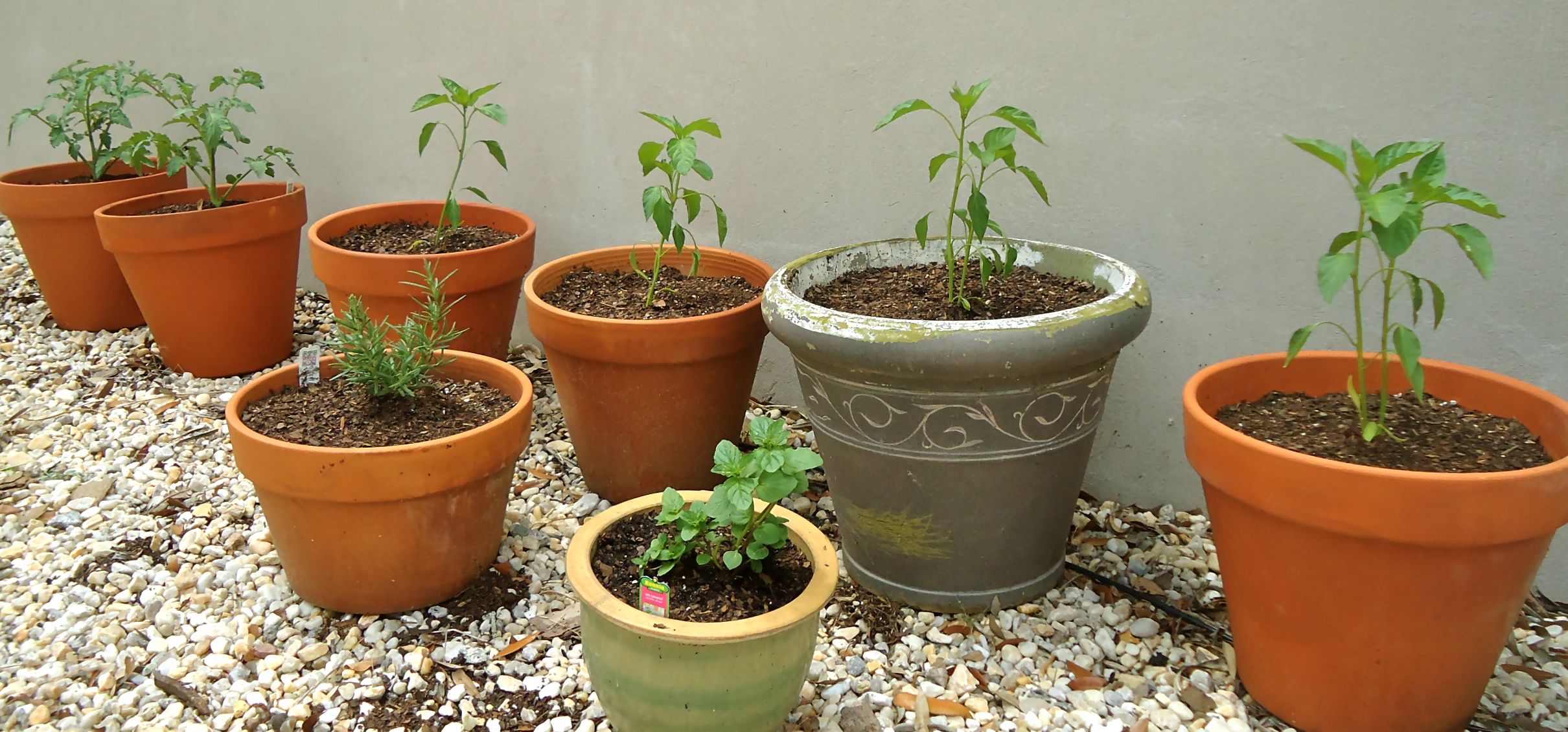
…and in the beginning there was…this. A humble container garden this year.

And the news on the street is that that there is a “super moon’ this weekend. According to the trusty farmer’s almanac this makes May 3rd-7th a great time to plant, entertain friends AND dig holes. How about a garden planting party? Sounds like my kind of fun.
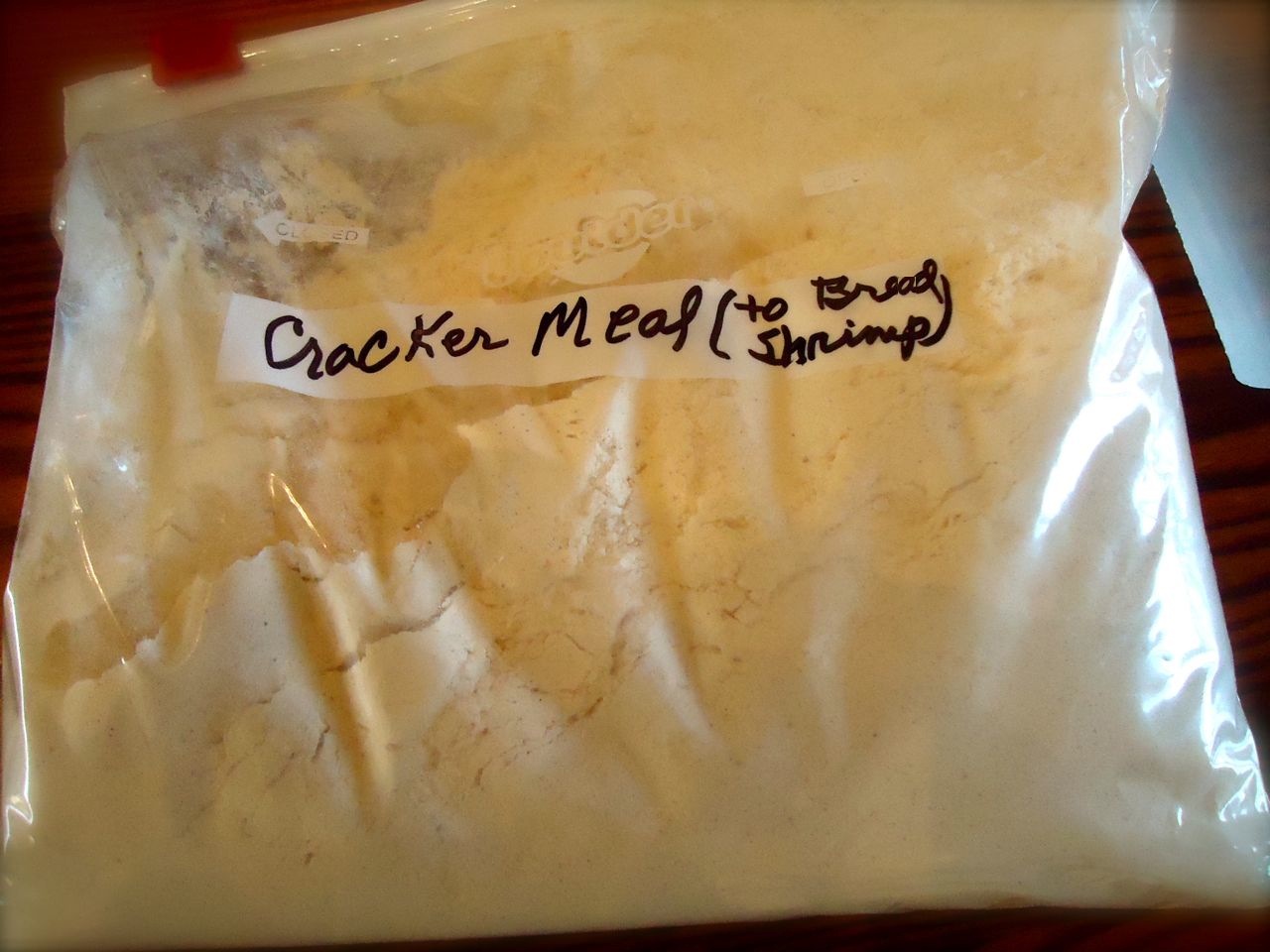
Cracker meal of any other brand would never taste as sweet…

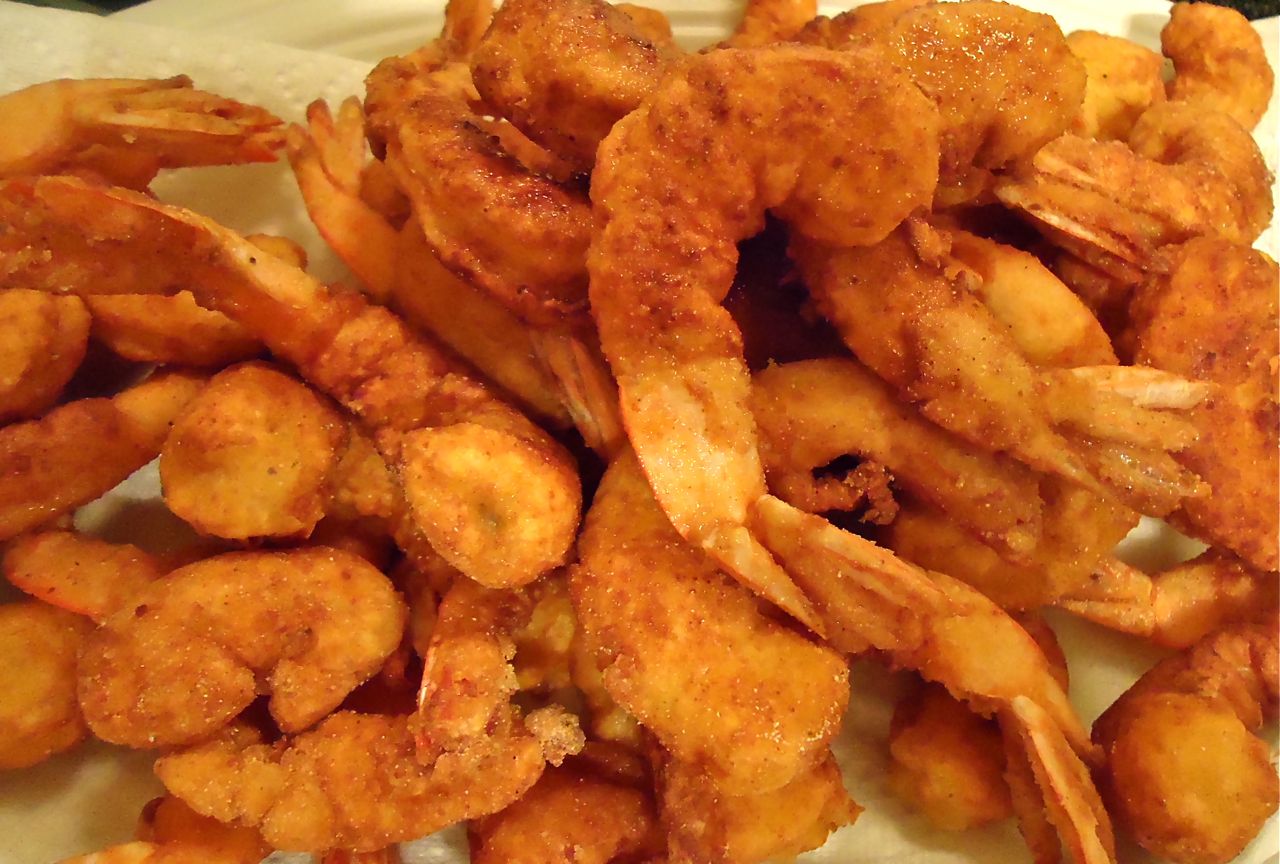
Local shrimp – light and crisp, the best you’ve ever had!

Okay, so here I am waxing poetic (Shakespeare forgive me!) about cracker meal. Please don’t stop reading yet. This post is really more about fresh, locally caught shrimp (or prawns outside the US) than cracker meal, although cracker meal does have a part to play in this seafood tale.

Okay, so first off, there is my mother’s fried shrimp… and there is ALL the other fried shrimp in the world. To be perfectly clear, my mother’s fried shrimp recipe is the unequivocal best ever.

What I took for a run-of–the-mill shrimp preparation in my childhood, i.e. my mother’s, is something of an anomaly in the outside world, apparently. I realized this quickly once I was on my own, dining out often and started really paying attention to exactly what I was eating. And now it was close to being rendered… extinct!

Forget the shrimp tempura, dismiss the coconut shrimp, and by all means pass over the gunky batter-dipped farmed–raised blob that may (or may not) be actual Penaeus setiferus making daily appearances at your local fast-food restaurant (And I use the word ‘restaurant’ loosely here, folks). After all, friends don’t let friends buy foreign, farm-raised shrimp!

But I digress; I will assume you, my knowledgeable readers, only purchase wild shrimp preferably caught by local or nearly local fishermen. Now back to the cracker meal…

This meal, specifically Nabisco cracker meal is the bomb according to my mother and many others too (search “Nabisco cracker meal” online and see what shows up). There is no other substitute according to the de facto expert, my mama. The good folks at Kraft (who bought Nabisco) did not think much of their cracker meal, though, and it was discontinued for consumer sale about 2 years ago.

However, it is still available for those who are willing to make a commitment – a 25-pound commitment. This would include restaurants with superior taste, as well as my own mother. She pledged her commitment and now many little cracker meal-filled baggies line her freezer. She also shares with family and friends – thanks Mama!

Without further ado, I give you this well-lauded recipe with step-by-step instructions for Sarah Ann’s Fried Shrimp. If you are unable to commit to 25 lbs. of Nabisco cracker meal (I don’t blame you honestly) here are a few alternatives I found (although I have not tried them myself). If you do, send me some feedback/reviews, please.

And thanks to my mother who spent her Saturday evening at the beach making these with my 4 year-old daughter and me last weekend. Good times!

Cracker Meal from nuts.com – Currently $1.99 for a 1 lb. bag, $9.65 for a 5 lb. bag.

OTC Cracker Meal from amazon.com – Currently $24.99 for (12) 10-oz packages

“The cracker meal”…

And here’s the shrimp, caught the day we purchased and ate them.

And here’s the shrimp after they have been shelled and washed. Leave the tail on.

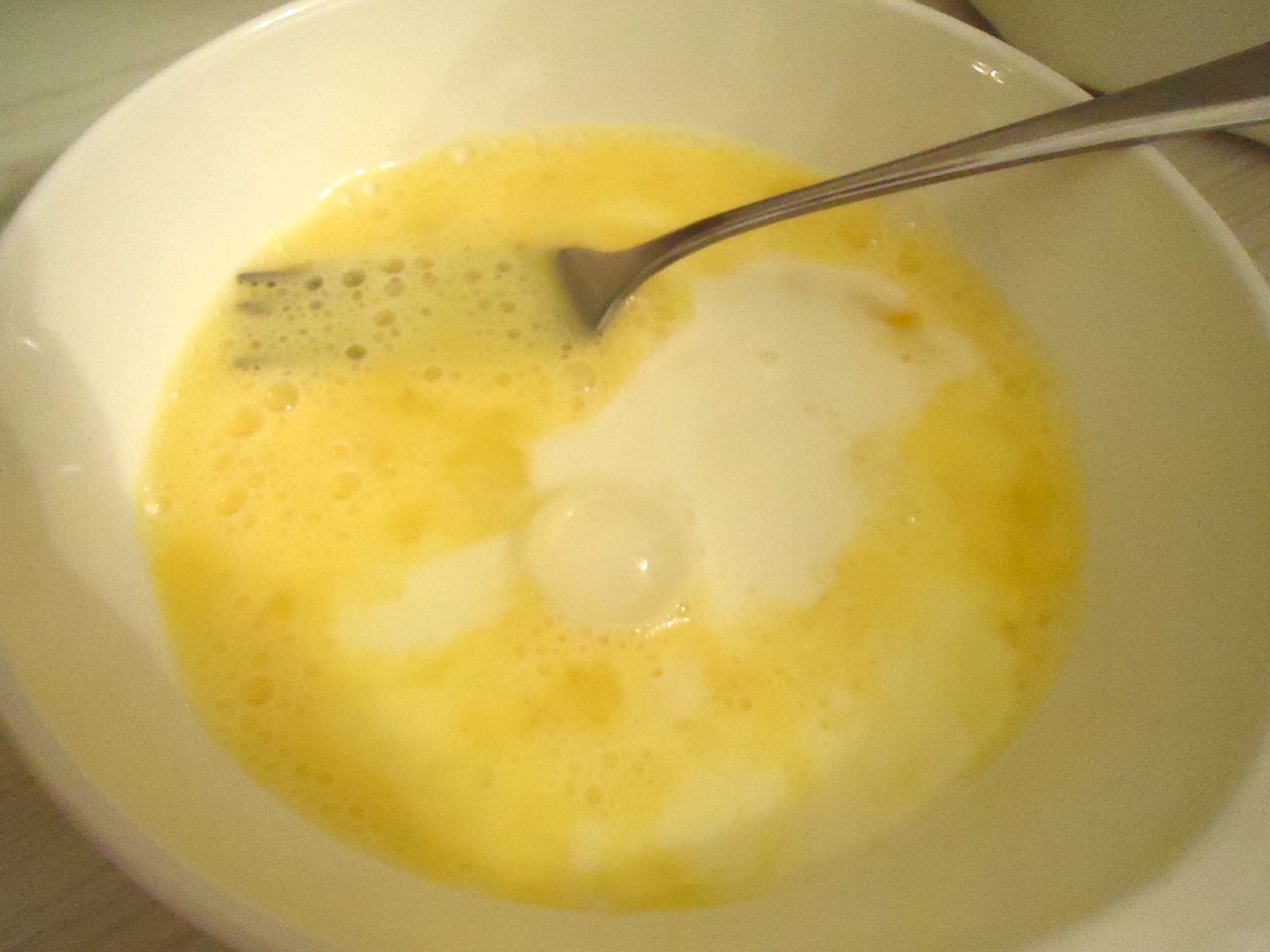
Mix the beaten egg with the milk.

Toss the shrimp with the cracker meal.

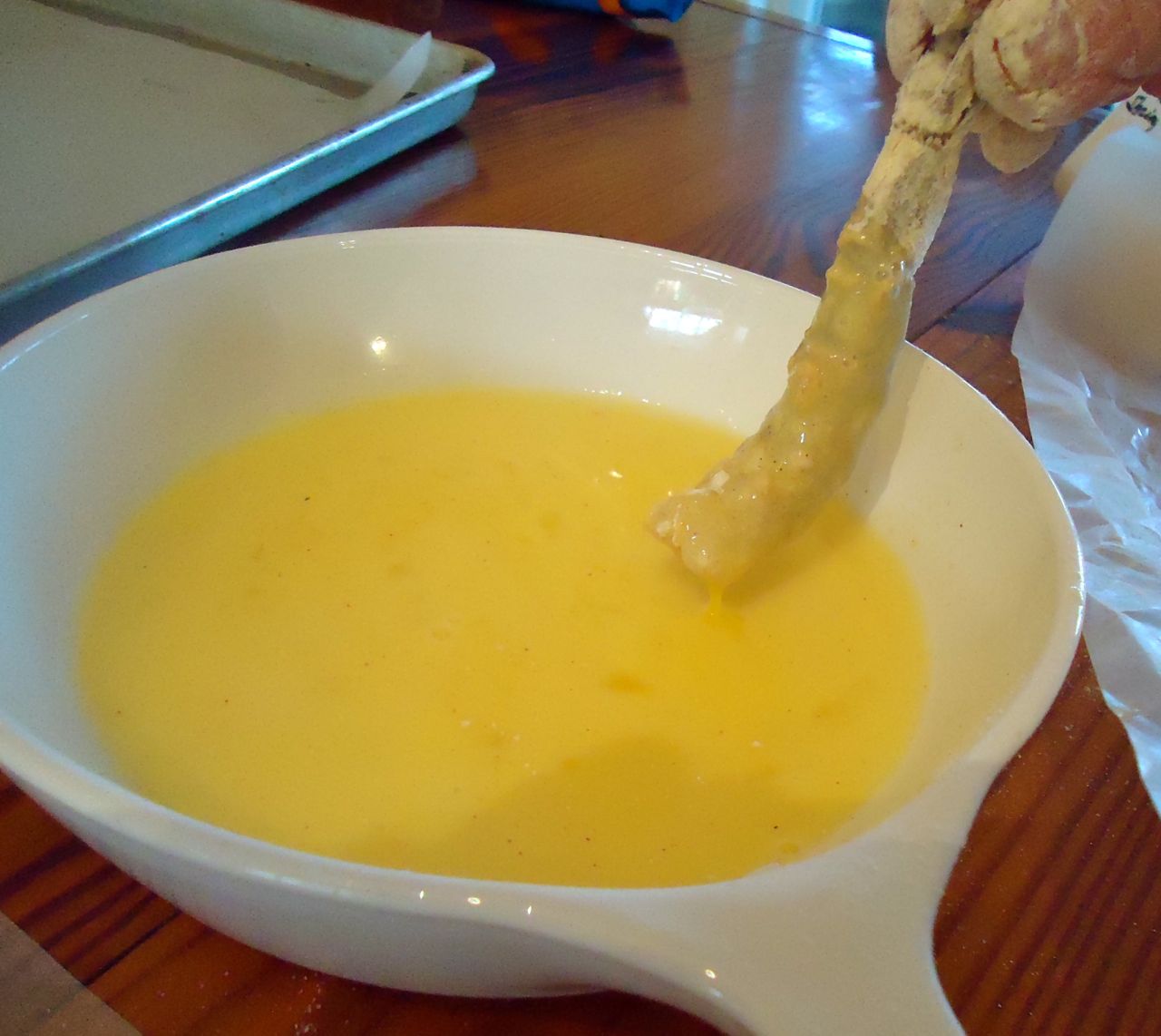
Dip each shrimp into the egg mixture…

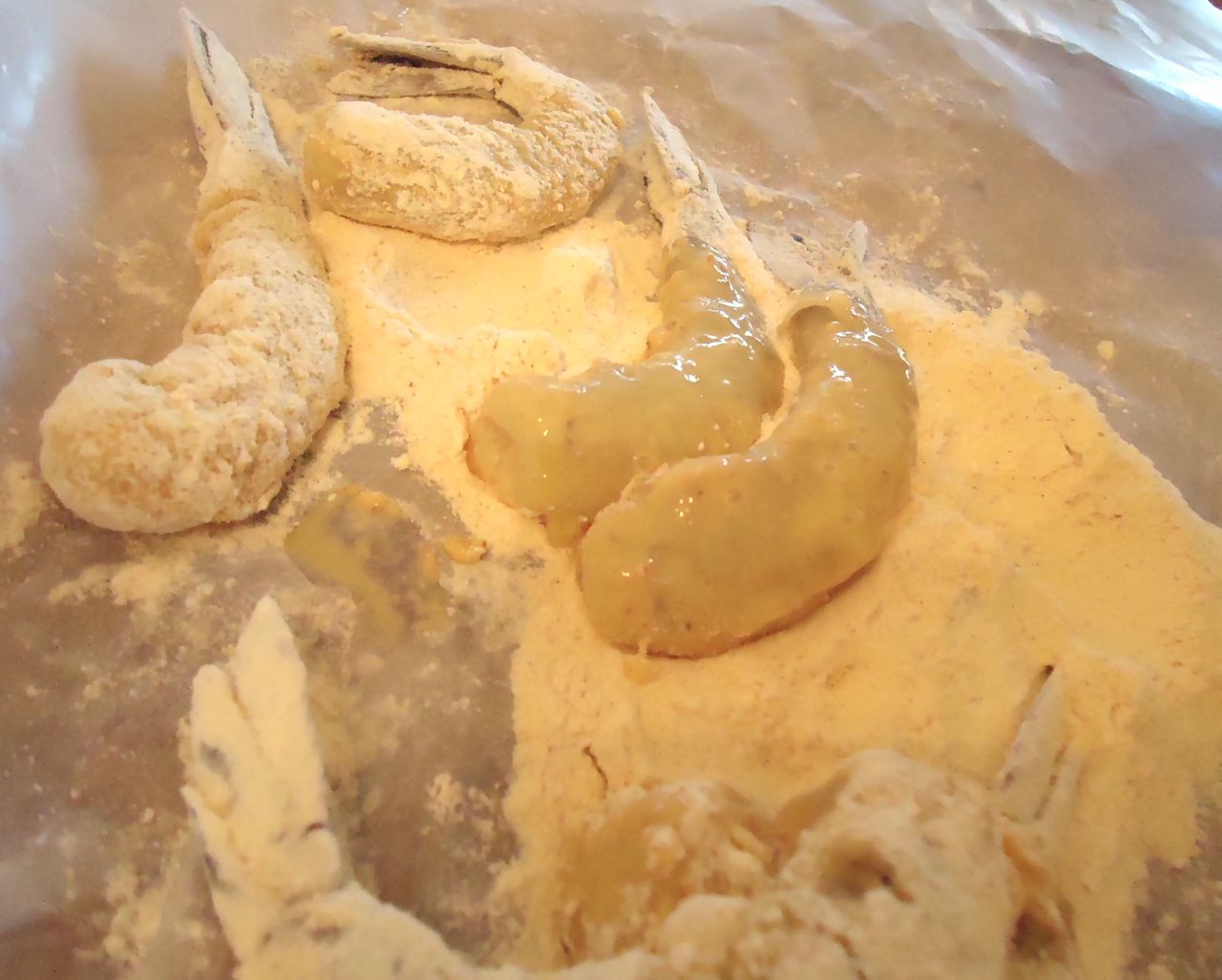
Dredge each back through the cracker meal. Shake off excess.

All the little shrimp lined up on the cookie sheet. Allow to chill in the refrigerator for a few minutes or up to two hours.

Into the hot oil they go! Don’t crowd the pan – about 11 or 12 medium sized shrimp is max for a 10 inch fry pan at one time.

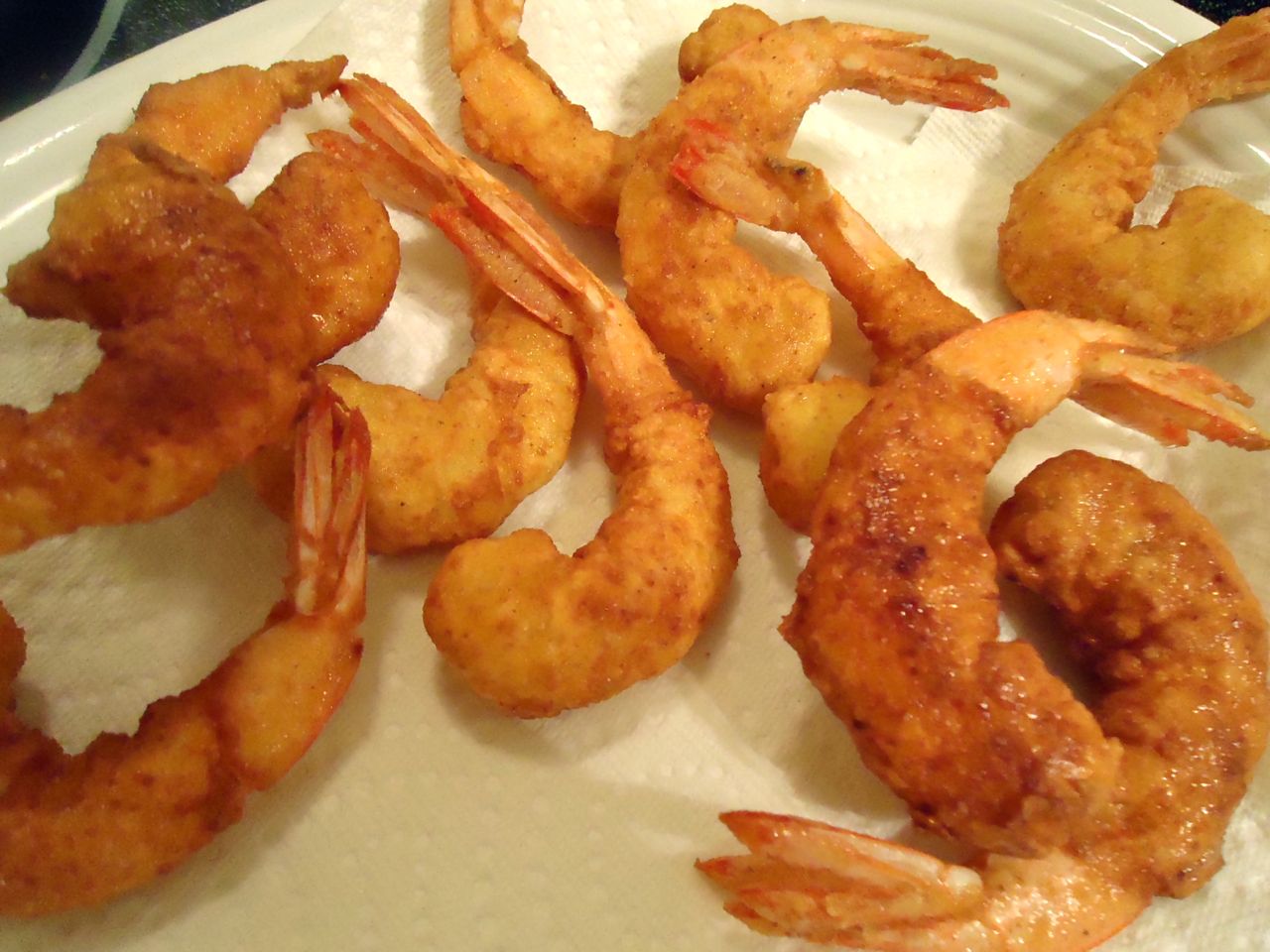
One batch of fried shrimp just out of the oil. Light and crunchy – Yum!

Sarah Ann’s Fried Shrimp

  • 1 1/2 lb. fresh medium sized shrimp, washed and shelled with tails left on
  • 1 egg, lightly beaten
  • 1/4 cup milk
  • 1 cup, more or less, Nabisco cracker meal
  • Salt
  • Pepper
  • Oil for frying (good quality, clean vegetable or canola oil)

Line a large cookie sheet with waxed paper or parchment and set aside. Have at a least 2 other large pieces of waxed paper or parchment on hand. Wash the shelled shrimp and dry on paper towels. Whisk the egg with the milk. Sprinkle the shrimp with some salt and pepper (about 1/2 teaspoon of each) and mix. Pour about 1/3 of the cracker meal onto one of the pieces of waxed paper and dredge each shrimp individually in the cracker meal. Place the dredged shrimp on the other piece of waxed paper.

When all the shrimp have been dredged, add some more cracker meal to your original pile. Dip each dredged shrimp into the egg mixture and then back into the cracker meal. Shake off excess and place on the lined cookie sheet. Continue this process until all shrimp have been dipped in the egg and dredged in the cracker meal.

Cover dredged shrimp loosely with another sheet of waxed paper and place in the refrigerator while you get the pan and oil ready or complete up to this step ahead of time. Keep shrimp chilled until ready to fry – up to 2 hours prior.

Fill a heavy bottom fry pan (cast iron skillet works great) about 1/2 way with oil. Be sure you have a platter lined with paper towels, a heat resistant fryer scoop/skimmer and a good pot holder or two on hand. Frying the shrimp will not take too long so fry when everything else you’re serving is done.

When the oil gets hot (but NOT smoking) add shrimp one at a time quickly. Do not crowd the shrimp by trying to fry too many at a time. In a 10″ skillet you should fit about a dozen medium shrimp. Fry about 2 minutes per side, turn over, continue to fry another 1-2 minutes and remove to the platter. The shrimp should be light to medium golden brown. Continue to fry in batches. Serve immediately with cocktail sauce, if preferred. Serves 4 adults.  This recipe can be doubled, tripled or for a crowd quadrupled!

The Art of Peanut Perfection

Boiled peanuts.

So I was cruising the aisles of the Piggly Wiggly (this is a grocery store) today when I remembered I needed some green onions. So I turned the cart around and made a b-line toward the produce department. After I picked a choice bunch of said onions, I headed back to the checkout and out of the corner of my eye, spied a barrel. This was not any barrel, but one topped with peanuts. And not any old, dry-roasted packaged peanuts, but fresh green peanuts. I thought, “oh boy!” and proceeded to fill a bag with a pound or so.

Now, this time of year is early for local peanuts and the ones I purchased today are from Florida. But seeing how that is only one state over (barely), I rationalized it is okay to buy just enough to satisfy my boiled peanut craving that has been flaring up over the last few weeks. So, as they now bubble and simmer in a heavy-bottom pot on the stove, I write this post almost giddy in anticipation of my briny treat, well ahead of June when our local SC peanut crop will be ready.

Fresh, green peanuts go into the pot for a salty, 4 hour "bath".

Boiled peanuts, pronounced “builled” peanuts (long on the “u” like the word ‘bull’) around these parts, should be cooked slowly for several hours. I would say 4 hours is the minimum. As far as salt goes, I tend to be a less is more type gal, as I am not one who salts anything and everything before I even taste it. Now my Mom loads on the salt and her peanuts are pretty darn good too, so I will state that one should start with a base amount and then salt to your own liking. They’ll continue to soak up the brine even after they’ve been cooked – if they last that long.

A peak in the pot finds the peanuts simmering away - won't be long now!

Boiled peanuts have become a sort of foodie fad of late. The Lee brothers, who hail from up the road in Charleston, have ridden to fame on the back of a peanut shell it seems. Well, and they wrote a cookbook that was named the ‘James Beard Cookbook of the Year’ in 2007 too. Even my current foodie-crush, Chef Sean Brock, serves boiled peanuts as an appetizer at his restaurant, Husk, that incidentally was voted 2011 Best New Restaurant by both Bon Appétit and Southern Living magazines.

The lowly boiled peanut has finally arrived, I suppose. Of course to me, this happened a long time ago. I ate them throughout my childhood and I most closely associate them now with good times. Like snacking on peanuts while fishing in the little jon boat with my daddy in the Congaree or  munching on them in the hammock on the back porch of the family beach house or later, while camping with friends in the forests of NC.

Boiled peanuts are truly THE road food snack of the South. Travel any off-the-beaten-track bi-way in SC, GA, AL or the Florida panhandle and you’ll find a peanut man (or woman) stirring a big billowing pot of peanuts. SC highways 11, 17 and 170 come to mind as does FL highway 98 below Tallahassee and GA highway 80 going out to Tybee Island.

Typical roadside peanut stand. "I brake for boiled peanuts"!

Stop and buy a bag…or three. Resistance is futile when it comes to riding in a car with a warm bag of boiled peanuts – go ahead and dig in ‘cause that first bag will be gone, baby gone, by the time you reach your destination. I guarantee that. And not stop? That would be worse, never admit that you passed up hot boiled peanuts on a road trip. That’s akin to passing up a cold beer on a sweltering August day after doing yard work or such – completely preposterous.

And speaking of preposterous, it would be silly for me to give step-by-step instructions for making your own boiled peanuts – it’s just really that easy. That being said, when you find that peanuts are available in your area grab a couple of pounds and give this a try:

Boiled Peanuts

  • Fresh, green peanuts – rinsed with water
  • Salt
  • Water

In a large heavy bottom pot with a lid, place peanuts and cover with water. There should be at least 1 inch of space at the top of the pot. The peanuts will float but you should be able to stir them easily without inadvertently slinging water or peanuts out of the pot. Stir in salt – I use 1 tablespoon per pound of peanuts. Bring to a boil and stir. Turn heat down to a low simmer, loosely cover and allow to cook for about 4 hours.

Check the pot about every 30-45 minutes, stirring well each time. After 4 hours, taste a couple of peanuts to see if they are done. They should be solid but soft without any ‘bite’. If they are not, continue cooking another half hour and check again. Turn off the heat, and allow to cool in the briny water …or remove from the pot and start eating! Some people like to add hot sauce and other accoutrements – but my preference is the original, no extra accessories required …pass the paper towels!

Dressed To Impress: Spinach-Stuffed Zucchini Cups

Got zucchini? Well, here in the Lowcountry it isn’t quite peak time yet for this muti-purpose vegetable but with the balmy weather I am anticipating a bumper crop for local farmers and home gardeners alike. Come June (maybe late May this year?) there should be a regular zucchini-palooza in my county and I will be looking for new, delish ways to prepare this veggie by July 4th. You can only make (and consume) so much zucchini bread, sauteed squash and cheesy squash casserole in a summer.

Southerners are genuinely generous and Southern gardeners especially are apt to leave a grocery bag of just-plucked goodies on their neighbor’s front porch or co-worker’s desk – a happy surprise that never wears out it’s welcome at my house. But what to do with all that zucchini? Well, here’a a easy-to-prepare recipe that’s dressed to impress – and tastes darn good too.

Tip: Straight zucchini that are all about the same size work best in this dish, both in presentation and to allow even cooking.

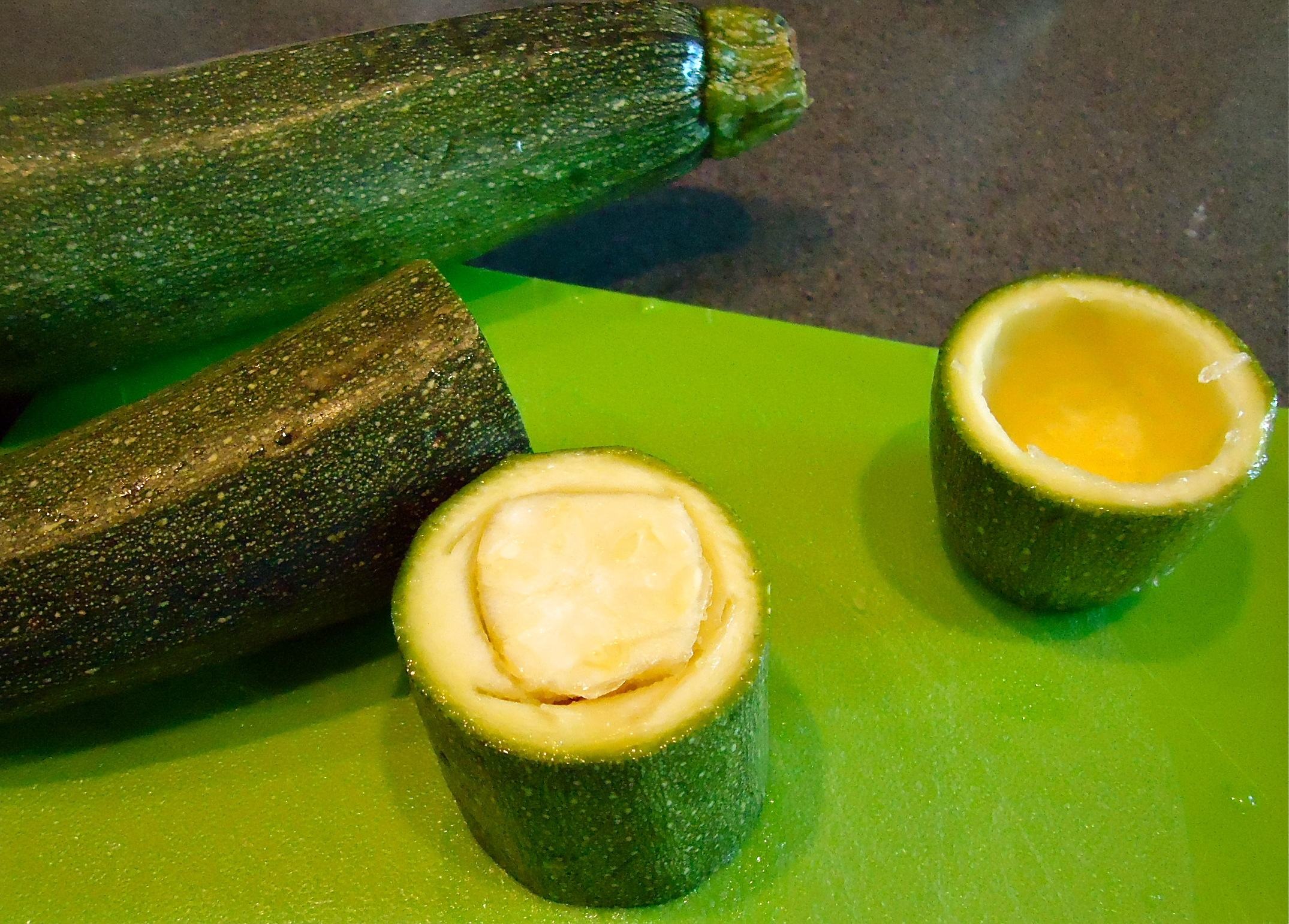
Making "cups" with zucchini is easy. A small spoon will work to scoop out the core as will a melon-ball tool. Try not to break through the bottom of the "cup".

Fairly simple and short list of ingredients for this filling.

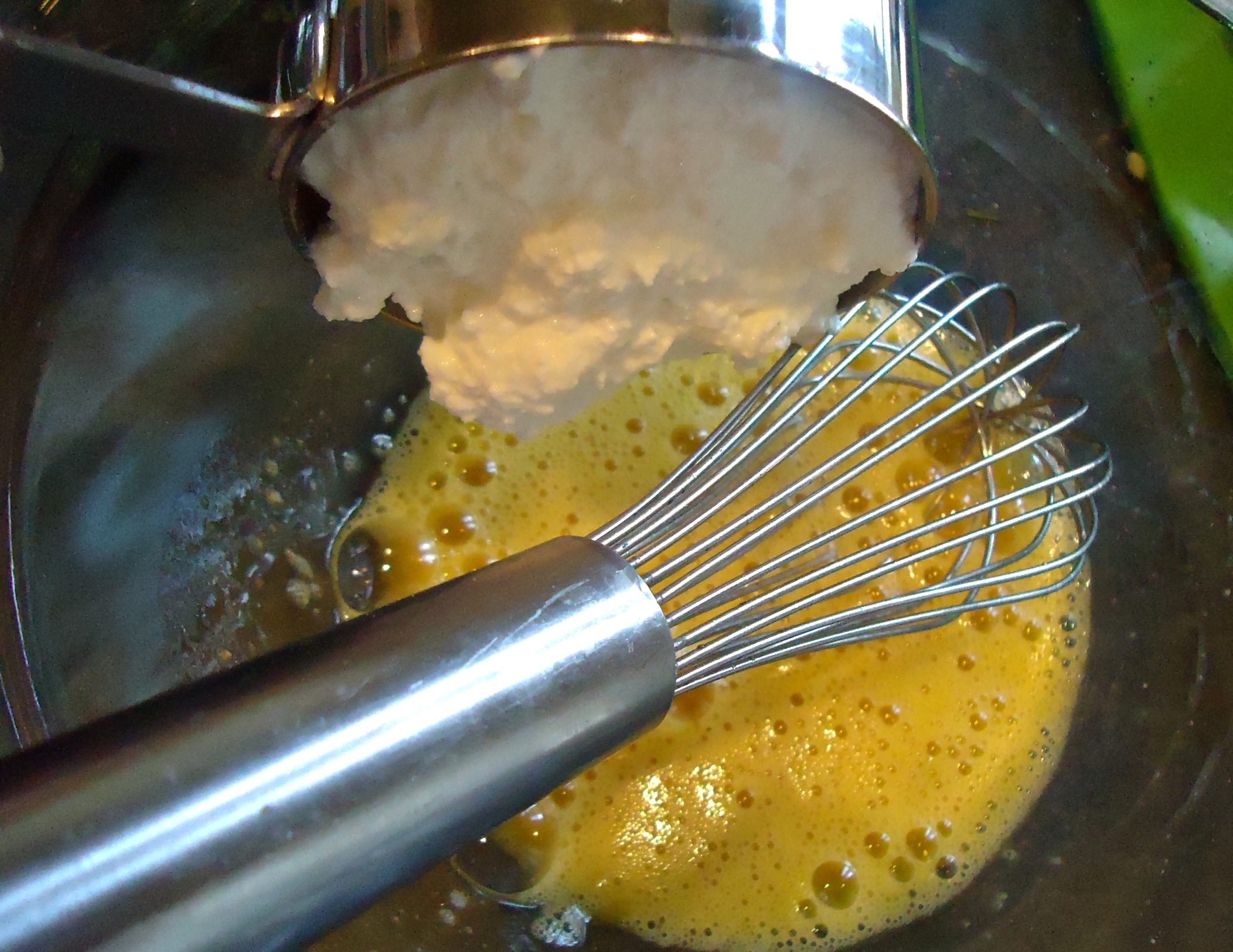
Adding the ricotta to the eggs. A whisk work great.

Mix in the spinach, the grated Parmesan and the seasonings.

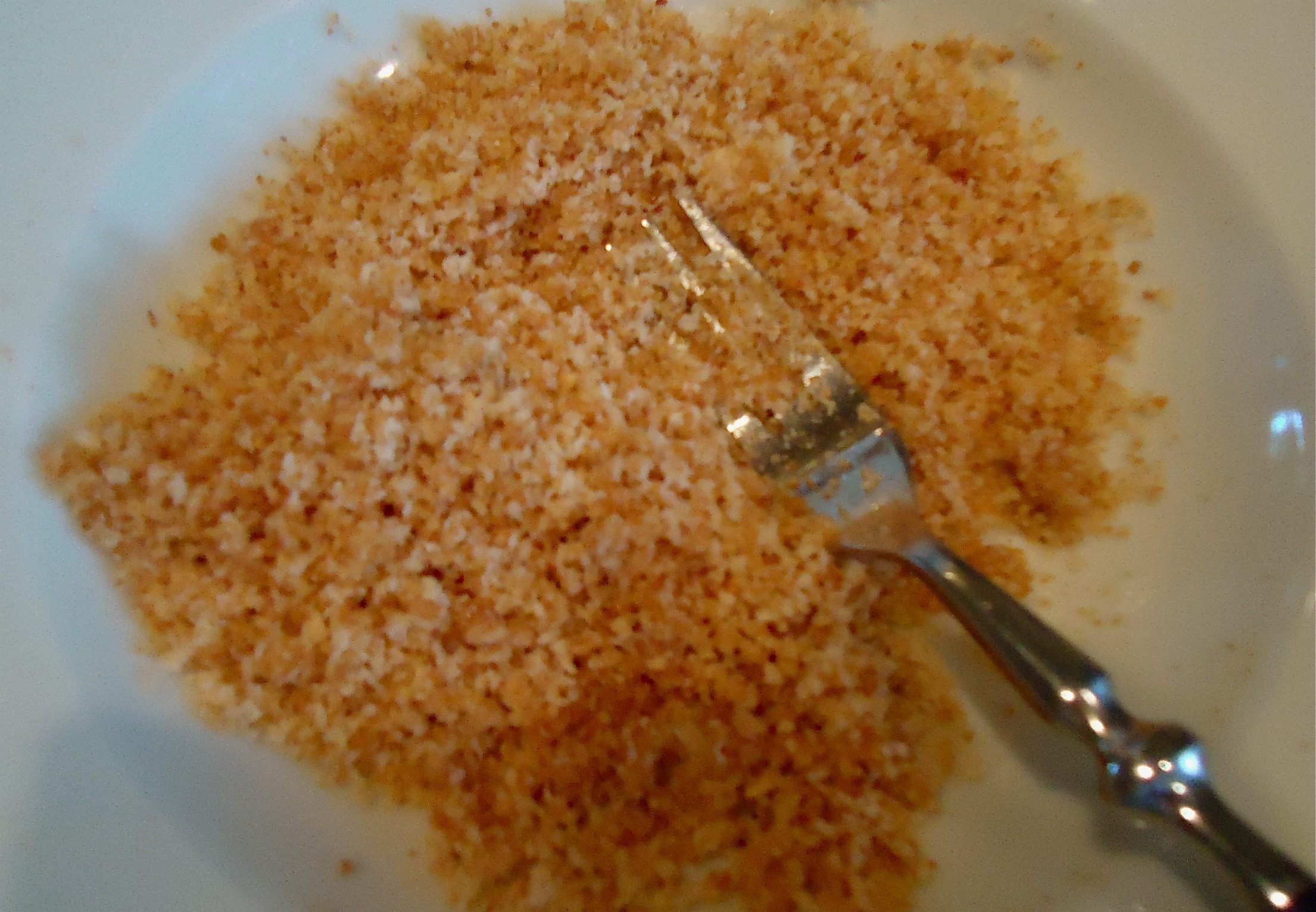
Butter crumbs: Melt some butter in a bowl, add fresh bread crumbs and voilà "butter crumbs". I use the end slices of bread loaves - we call them the heel - for crumbs.

Butter crumbs: I usually have a bag of these in my refrigerator ready to top casseroles, mac-n-cheese or as a crust for oven-fried pork chops.

Sprinkle the butter crumbs over all the zucchini cups or simply dip into the crumbs.

Ready for the oven!

Out of the oven, all cheesy spinachy good with a crunchy top of butter crumb. This recipe makes at least 8 servings of filling, just use more zucchini. Or use your leftover filling to stuff sweet Vidalia onions!

Spinach-Stuffed Zucchini with Butter Crumbs

  • (1) 16 oz. package frozen spinach or fresh (enough for 1-½ cups cooked, chopped spinach that has been squeezed dry)
  • 1 whole egg plus 1 egg yolk
  • 1 cup ricotta cheese (light or whole milk)
  • 2/3 cup finely shredded Parmesan cheese
  • ½ tsp. salt plus extra
  • ¼ tsp. ground nutmeg
  • ½ tsp. freshly ground pepper
  • 5-6 medium zucchinis, washed and dried
  • Butter crumbs (see below)

If using frozen spinach cook according to package instructions, cool and drain. Squeeze out as much water as possible. I use paper towels.

Prepare zucchini by either slicing them the long dimension in half or cutting into 1 ½” pieces to make ‘cups’. Either way, scoop out the core of the zucchini avoiding breaking through to the bottom. Sprinkle lightly with salt and set aside.

In a medium bowl whisk the eggs, add the ricotta and the Parmesan. Mix in the spinach and the salt, pepper, and nutmeg. Fill each zucchini cup or boat with the spinach mixture. Sprinkle with butter crumbs* (or dip the cups into the crumbs as I did, whatever is easiest).

Place in a lightly oiled baking pan, cover with foil and bake in a preheated 350 degree oven for 30 minutes. Remove foil and bake another 5-8 minutes until the tops are browned.

Left over filling can be refrigerated for 3 days. This filling is delicious stuffed in fish fillets like sole, flounder or even salmon or stuffed into other vegetables like Vidalia onions and baked.

*Butter Crumbs: Toast 2  slices of your favorite lunch bread (I use the heel). Grind in a food processor to a fine crumb. Melt 1 Tbl. butter in a bowl in the microwave. Toss the crumbs in the melted butter. That’s it. I store the butter crumbs in a plastic zip baggie in the frig.

The Mayonnaise Wars – Throw it at Me!

My recipe for shrimp spread or dip, if you will. Not even my husband, a true "non-mayo-er" can resist this appetizer. I wonder if he realizes there is mayo in it. Cats out of the bag now!

In the landscape of southern cooking – and eating – there may be no more divisive ingredient than mayonnaise. Feuding families split over which brand they prefer: Kraft, Hellman’s, Blue Plate or my personal favorite, Duke’s. And believe it or not, there are even those who not only don’t like mayonnaise, they admit that even the thought of it makes their duodenum cramp a bit.

True Southerners would consider those folks the politically incorrect “c” word – crazy. (And being ever so polite would never actually say this to their face.) This is likened to not enjoying a warm bowl of creamy grits, homemade hushpuppies, or worse yet, turning your nose (and your tongue) up at pit-roasted, hardwood smoked pork barbeque. Sacrilege.

Considering myself to be a non-judgmental type person I will admit that I too, find it hard to believe that someone would not like all the delicious eats that include mayonnaise in their ingredient list. First off there’s potato salad, then there’s the BLT sandwich, deviled eggs, pimento cheese, and yes, even ranch dressing.

When presented with a “non-mayo-er” situation an uneasy feeling of disbelief sweeps over me. Something is wrong here and I must ascertain the answer ! Like a therapist searching for the clues of life-long anguish, I pester the non-mayo-er, pleading with them, “but why don’t you like it?” There must be something sinister lurking in your past, way back there, behind the pickled jalapeños and the expired yogurt, that slammed the door on all delights deemed, nay doomed, mayonnaise-y in your refrigerator of life.

When I say that my own husband is one of these non-mayo-ers, you may be surprised. Believe me, he will be surprised to read that I’ve spilt the beans regarding his little aversion in the blogosphere. But I am not here to judge or defend. Actually I am here to state that I love mayonnaise and all that it contributes to my spring and summer table.

Apologies to Paula Deen, but I won’t be “slathering my corn with mayonnaise” or recreating my own Mother’s beloved congealed salad recipes (most of which contain mayo) verbatim on South by Southeast. However, I will show how simple it is to make homemade mayonnaise, a superior condiment to any jarred brand, in my opinion. And offer recipes (with step-by-step how to) for some delish sides like old-fashioned potato salad and new favorites like Madras chicken salad sliders.

Duke's Mayonnaise. Created by Mrs. Eugenia Duke in Greenville, SC in 1917 (Yes, 1917!). Since 1929 it has been produced by the C.F. Sauer Company, still in Greenville using the same time-tested recipe. And happily the market for Duke's is expanding. You can even get it in Pennsylvania and west into Missouri now. Go Duke's!

That being said I do buy and use Duke’s Mayonnaise. This is my “family mayo” and no other brand graced the threshold of my parent’s kitchen, ever. Even though my mother is very frugal, no off brand mayo for her either, only Dukes would do. And heaven forbid, she would never allow the “whip” (you know what this is!) into a grocery cart much less onto a tomato sandwich!

What makes this specific brand so good? To me, it’s because I’ve grown accustomed to Duke’s – the clean flavor with just a subtle tang of acidy vinegar kick, I suppose. And honestly, I know what to expect and I appreciate that. Consistency is an undervalued commodity.

So, do you have a favorite mayonnaise? Or other condiment that you cannot live without? What makes it special? Throw it at me (but be nice, please). I would love to hear all about it!

Blue Plate. This is a southern mayo straight out of New Orleans via Gretna, LA. It's a cajun staple.

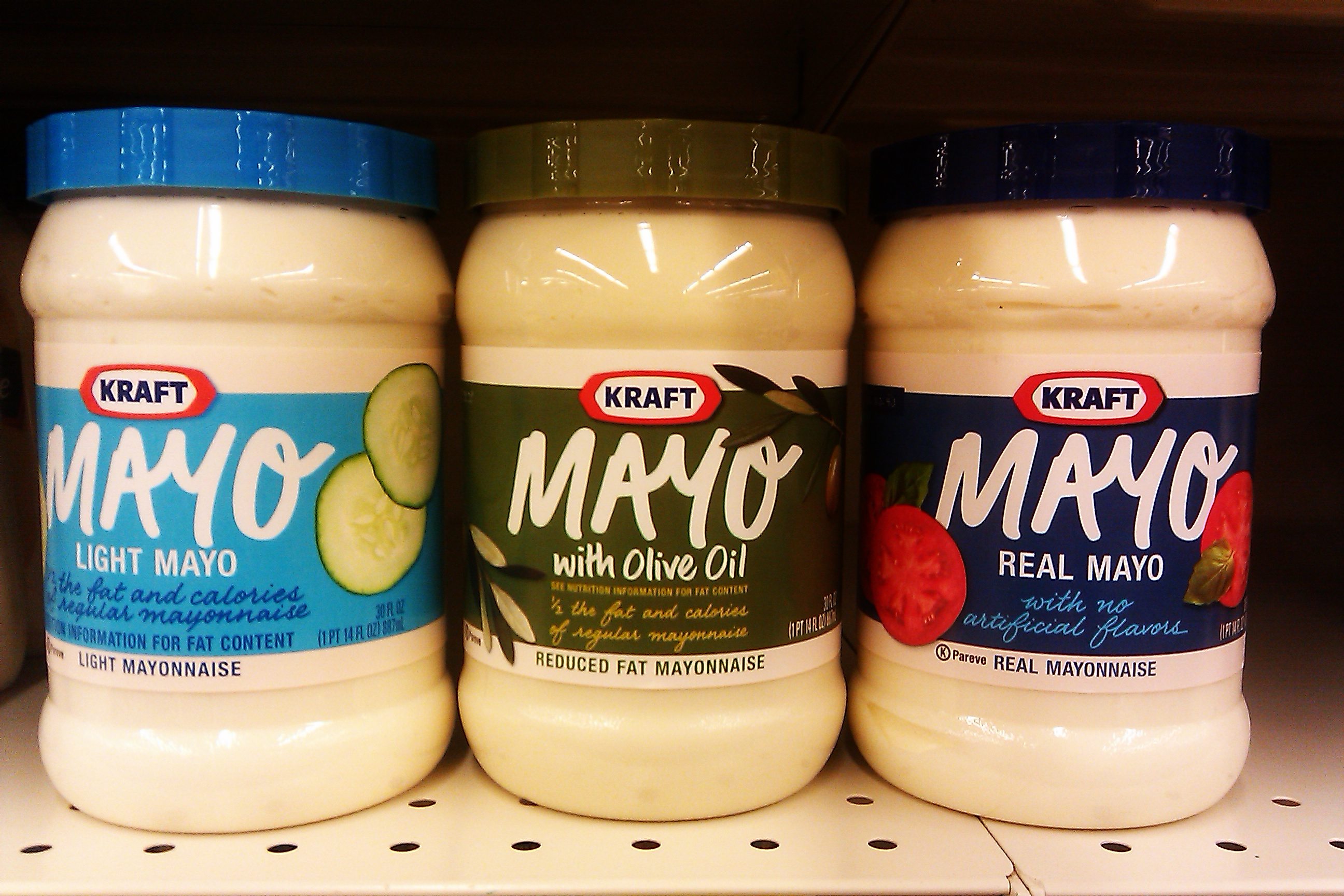
Kraft. There's a style and a size for everyone, pretty much.

Hellman's. There was no 'light' version at my local grocer, however, there was olive oil, for the cholesterol conscious.

Tart-n-Tangy Rustic Rhubarb Almond Galette

All winter I found myself with a hankering for rhubarb. If you’ve never tried rhubarb, oh what you are missing, especially if you like tart and tangy, as I do. It is an unusual plant, considered by most a vegetable but most often prepared as a dessert in pies and tarts and often paired with strawberries.

As a child I was warned, “The leaves of the rhubarb are poisonous!” by my mother, as she ardently cut away that toxic foliage of doom. Of course, this danger factor made rhubarb even more enticing; an exotic, poisonous vegetable elevated to dessert status was pretty darn special in my childhood Carolina kitchen.

Back in the day (like 25 years ago) rhubarb was also a farmers market harbinger of spring, like asparagus and fresh leaf lettuce. Now, with growing seasons blurred, it can be purchased in towns across the US from late winter into summer.

I am a hopeless foodie romantic, though and still prefer my rhubarb spring-grown. Or perhaps that is when my taste buds have been conditioned to expect it. Since I have never been known to argue with my taste buds, why start now?

This galette (fancy French term, folks, for free form tart) has sweet pâte brisée – more sugar here than an everyday pâte brisée recipe, mind you. I like the play of the sweet pastry, the nutty and rich almond filling and the tart rhubarb. Yes, the fillings do contain some sugar but let me repeat, rhubarb is t-a-r-t, so the sweetness is subtle. No missing the flavor tang here.

I served this galette with ice cream – a sweet tea flavored ice cream from Front Porch, a brand out of Mooresville, NC that I recently discovered. It made a nice flavor combo I must admit! Feel free to serve yours as you wish; with whipped cream or vanilla ice cream or even crème fraîche for all those genuine tart-n-tangy lovers out there.

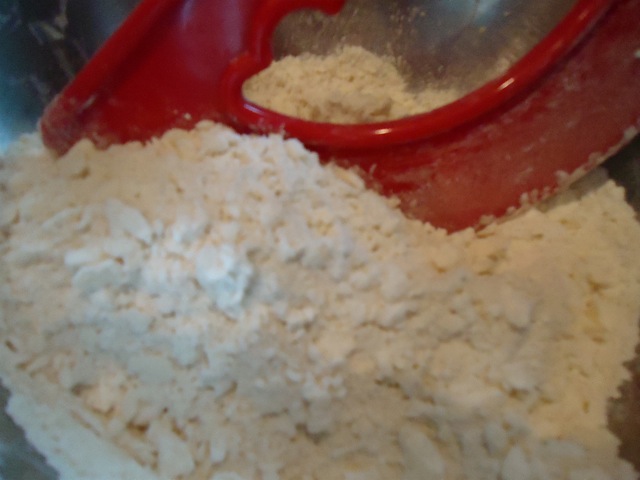
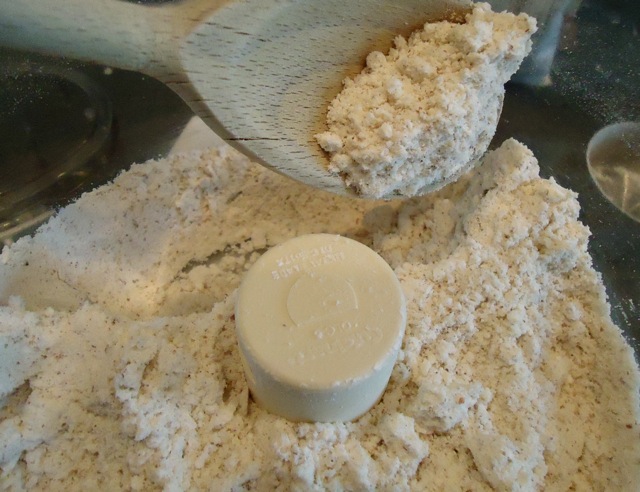
For the pâte brisée: cut the butter into the flour mixture until it is evenly distributed and a crumbly texture.

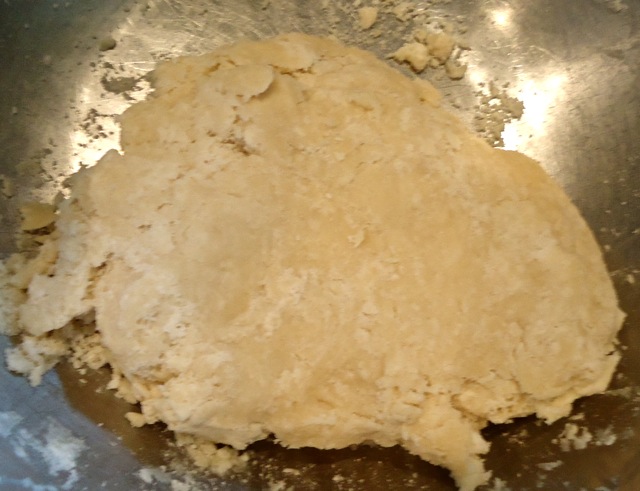
Pâte brisée: Ready to 'rest' in the refrigerator.

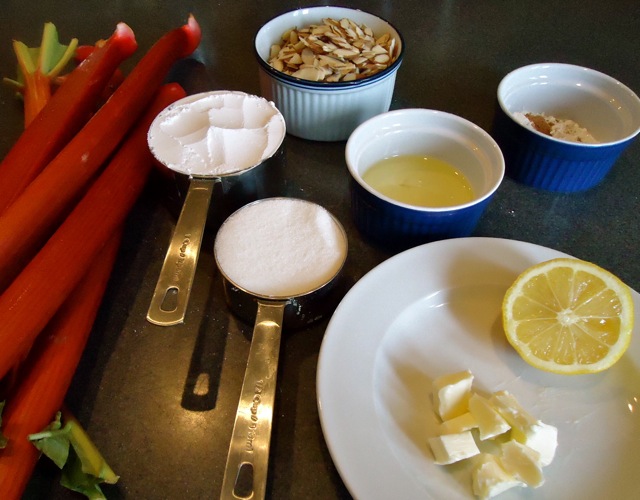
The filling ingredients.

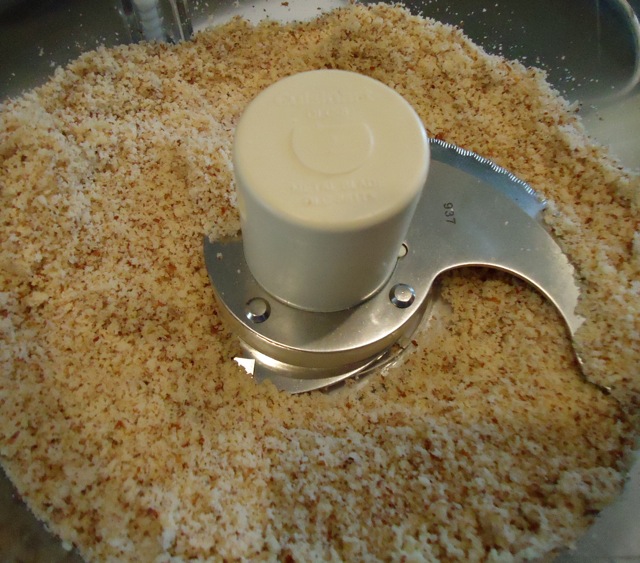
The almond filling: It is important to grind the almonds as fine as possible. I used regular sliced almonds - not blanched whole ones. I think it added to the rustic flavor and texture.

The almond filling with the addition of the confectioner's (10x) sugar.

The almond filling after adding the egg white.

Fresh rhubarb, washed and sliced!

Tossing the rhubarb with the flour/cornstarch/sugar/spice mixture and after the squeeze of lemon.

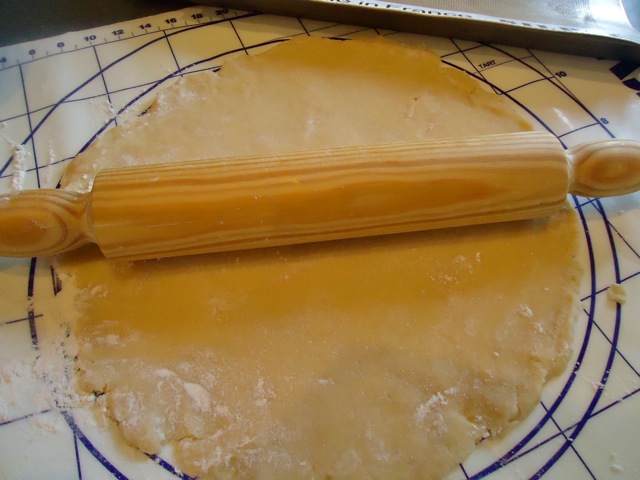
Begin the assemble by rolling out the chilled pastry dough. Don't go too thin!

Transfer the pastry to the prepared baking sheet and then spread the almond filling. Leave plenty of room between the filling and the edge of the pastry.

Mound the rhubarb filling on top of the almond filling. Be sure to pour any left-over rhubarb juices over the top!

Bring the edges of the pastry up toward the center of the filling, all the way around. It looks so good and it's not even baked yet!

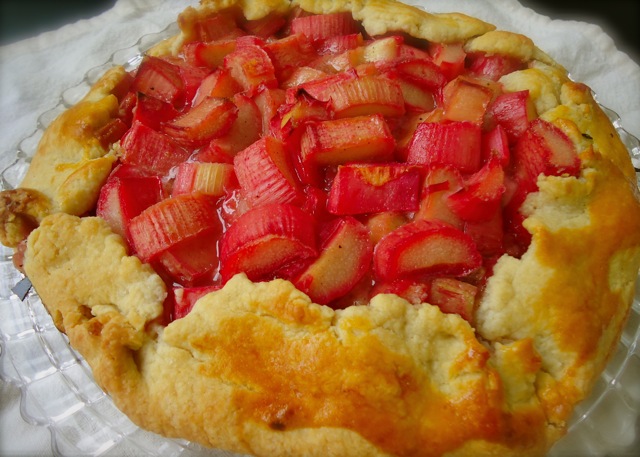
Out of the oven. An egg yolk wash gave the pastry a nice golden crust. You can see that the sugary juices spilled out onto the Silpat, but it just fell away when I moved the galette to the glass serving platter. Hurray!

A fat slice of galette with "Sweetie Tea" ice cream. I also enjoyed this, sans ice cream, with a hot cup of coffee for breakfast!

Rustic Rhubarb Almond Galette

  • 1 lb. rhubarb, washed and sliced into 1 inch pieces
  • Juice of ½ lemon
  • ½ cup sugar
  • 1 tbl. flour
  • 1 tbl. cornstarch
  • ¼ tsp. salt
  • ¼ tsp. nutmeg
  • ¼ tsp. ground dry coriander (NOT fresh cilantro)
  • 1 Tbl. butter cut into small bits
  • 1 egg yolk whisked with a little water
  • 1 recipe almond filling (see below)
  • 1 recipe pâte brisée (see below)

Place the raw rhubarb in a medium bowl, squeeze the juice of half a lemon over the rhubarb and stir. In a small bowl mix the cornstarch flour, sugar, and spices. Toss this mixture with the rhubarb and allow to sit while preparing the other elements of this recipe.

Pâte Brisée

  • 1 ½ cp + extra all purpose flour
  • ¼ cup sugar
  • ½ tsp. salt
  • 4 oz. good quality, chilled unsalted butter cut into pieces
  • 4 tbl. cold water

In a large bowl mix the dry ingredients. Cut in the butter with a pastry blender or fork until the mixture resembles cornmeal. Stir in about half the water and add a little at a time until the dough starts to come together. It should not be sticky or too crumbly dry. Try not to handle the dough too much. Wrap in plastic wrap and place in the refrigerator.

Almond Filling

  • 1 cup sliced almonds
  • 1 cup confectioner’s sugar
  • 1 egg white (reserve the yolk for the pastry wash)

Using a food processor with a sharp steel blade grind the almonds to as fine a consistency as possible. Add the sugar and grind some more. Add the egg white and the mixture will become a paste, which is the filling. Set aside.

To Assemble:

Preheat oven to 400 degrees. Place parchment paper or a silicone baking mat (like Siplat) over a large cookie sheet. Roll out the chilled pâte brisée dough (using a light touch and as little extra flour as possible) to a diameter of about 12 -14 inches. Do not roll out the dough too thin.

Transfer the dough to the cookie sheet. Spread with the almond filling to about 8 inches diameter. Do not spread to the edges of the dough. Stir the rhubarb filling again and carefully mound it onto the almond filling. Scrape out any juices that are left in the rhubarb bowl and pour over the rhubarb. Carefully gather the edges of the pastry and bring them up toward the rhubarb going all the way around the tart. Dot the top of the rhubarb filling with butter.

Bake the galette in a preheated 400 degree oven for about 10 minutes. Then remove the galette and brush the pastry only with the egg yolk wash. Return the galette to the oven and reduce the heat to 350 degrees, baking for another 30 minutes or until the rhubarb is soft and the pastry golden brown.

Note: Juices will run out of the galette and may burn in the oven. I use a cookie or baking sheet with sides to catch anything before it hits the bottom of my oven. I also recommend a Silpat mat as any baked or burned juices will be easy to remove from the finished galette (and cleanup is a breeze!)

Popp’in Good Chicken Pot Pie with Paprika Cheddar Biscuits

Happy Friday ya’ll. Today’s recipe is a savory chicken pot pie. Chicken pies are universally loved everywhere and the South is no exception. My mother made them with lots of veggies from our home garden and we were never quite sure what would be inside, until we broke open that scratch-made crust and took a bite. She usually made hers with chicken, peas, celery and wait for it … corn cut fresh off the cob. But sometimes there would also be a taste of okra or squash or even bell pepper.

My favorite part was – and still is – that last bite: the filling-soaked crust, melting with chicken-n-vegetable goodness in my mouth. Mmm, so good.

This more contemporary recipe is still “mmm” good and while there are several steps involved, store-bought rotisserie chicken works perfectly in the filling – no need to roast your own unless that’s your preference. This recipe can also be made in stages. The paprika infused biscuit dough should be made first anyway and can be prepared a day ahead.  So can the pot pie filling. Wrap the dough in several pieces of plastic wrap, store the filling in an air tight container and place both in the refrigerator. Assemble and bake the next day.

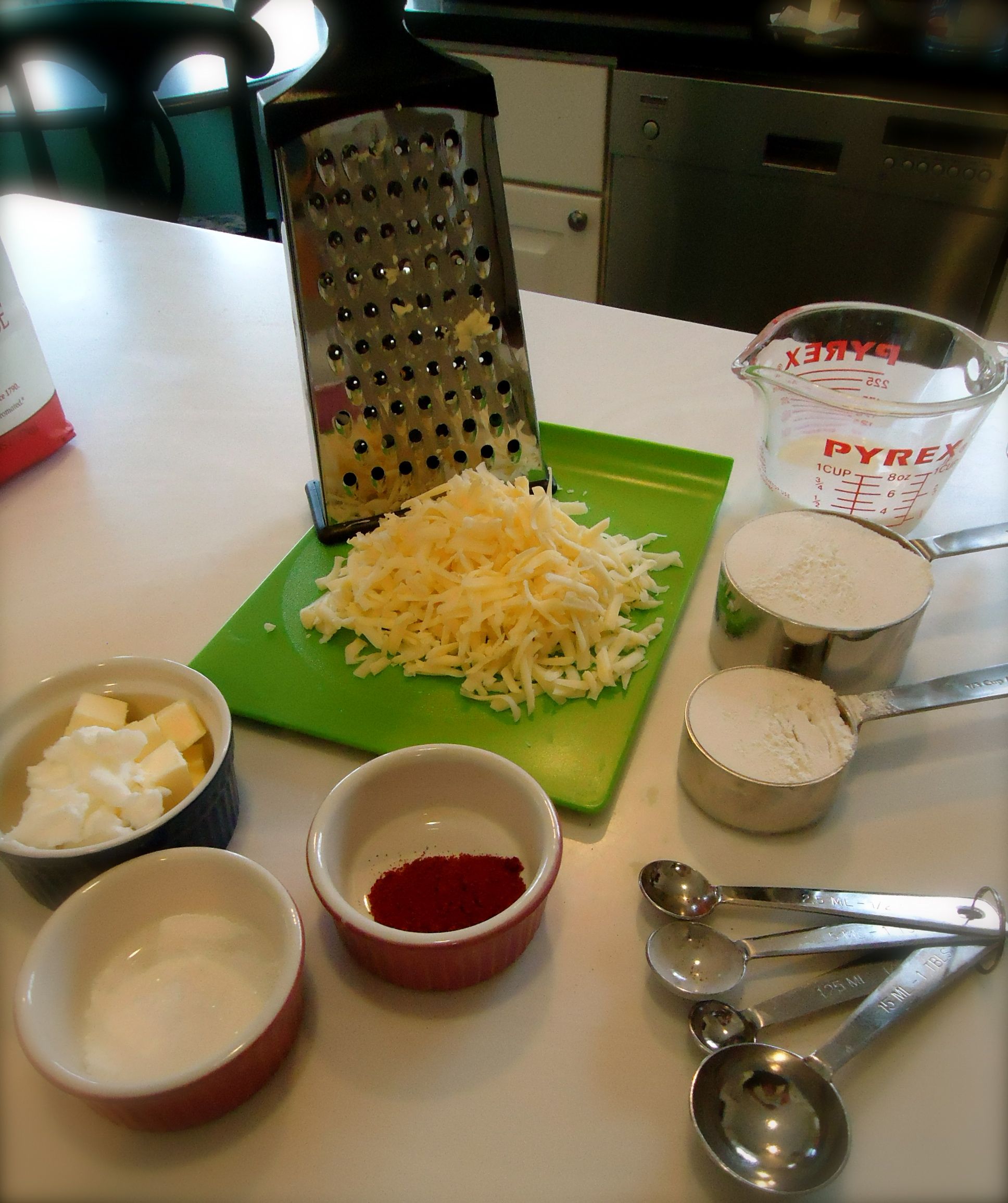
Ingredients for the biscuit dough - pretty straight forward.

Sift all the dry ingredients together right into the mixing bowl.

Cut the butter and shortening into the dry ingredients - use a special pastry tool like I have here or a regular fork works great too!

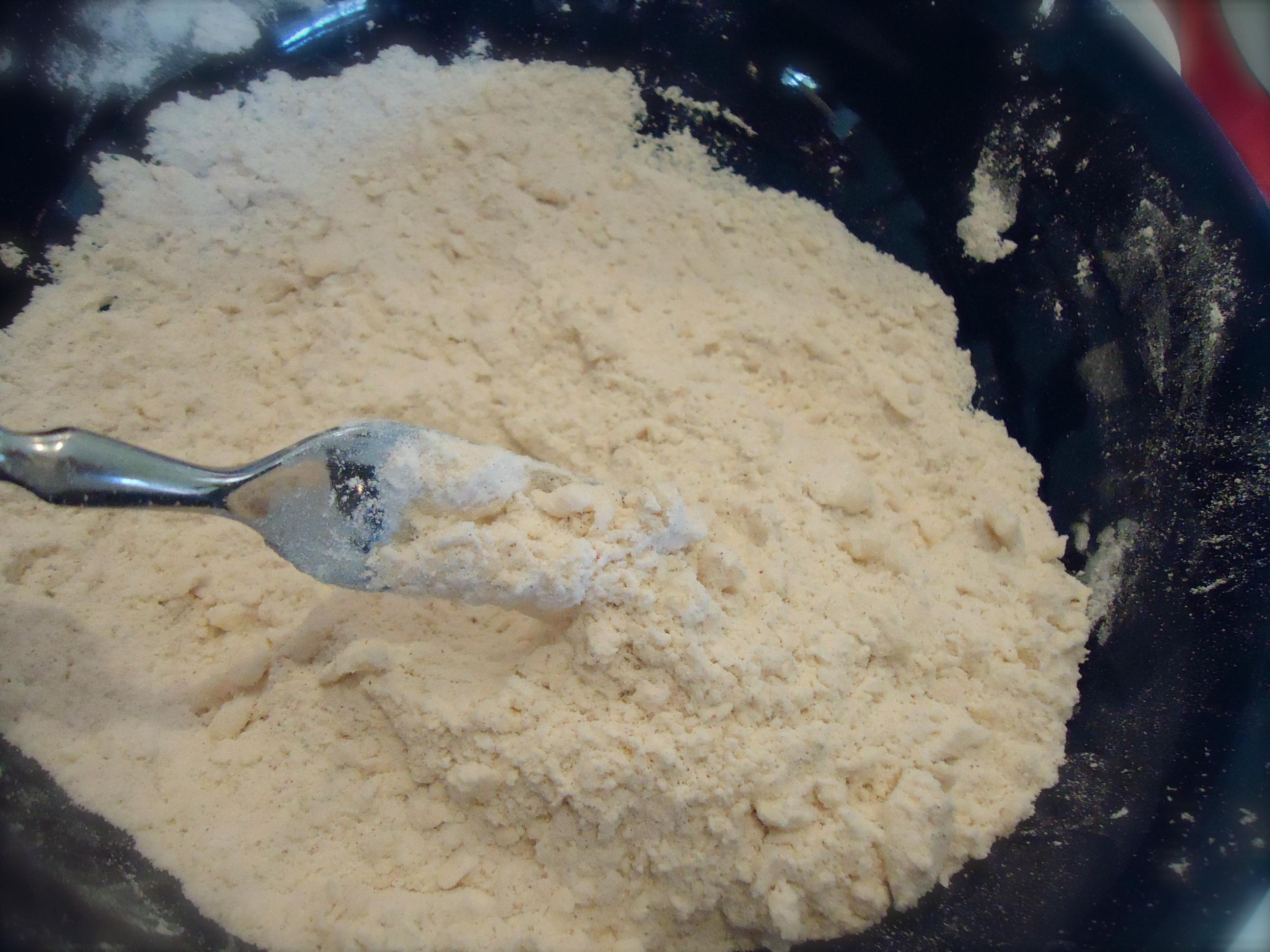
Here is the crumbly texture you want - looks like cornmeal or tiny bread crumbs.

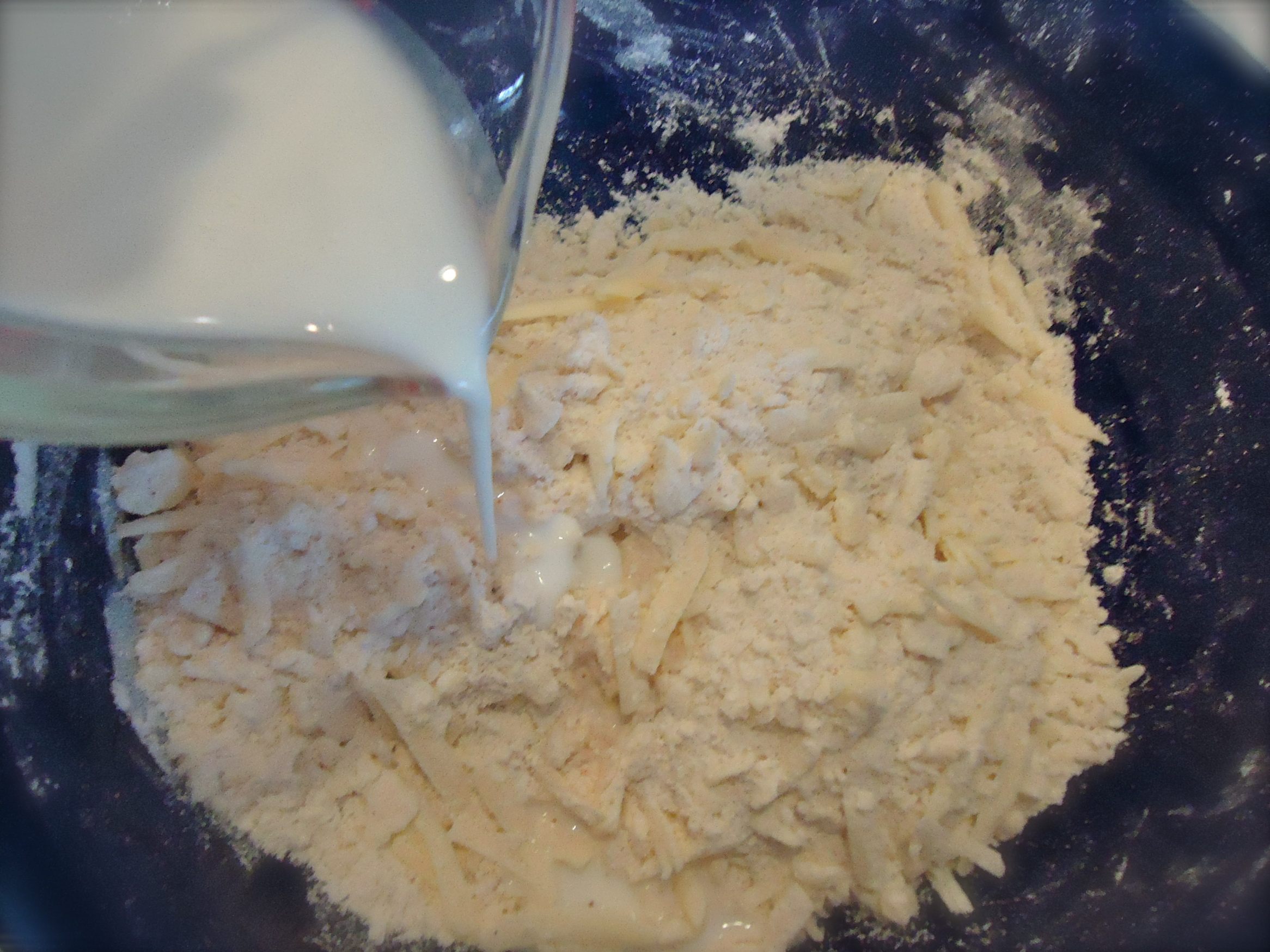
Add the cold buttermilk once you have stirred in the cheese. Tip: Pour in a little, mix it around and keep adding a little at a time and stir a bit more until the mixture just "comes together".

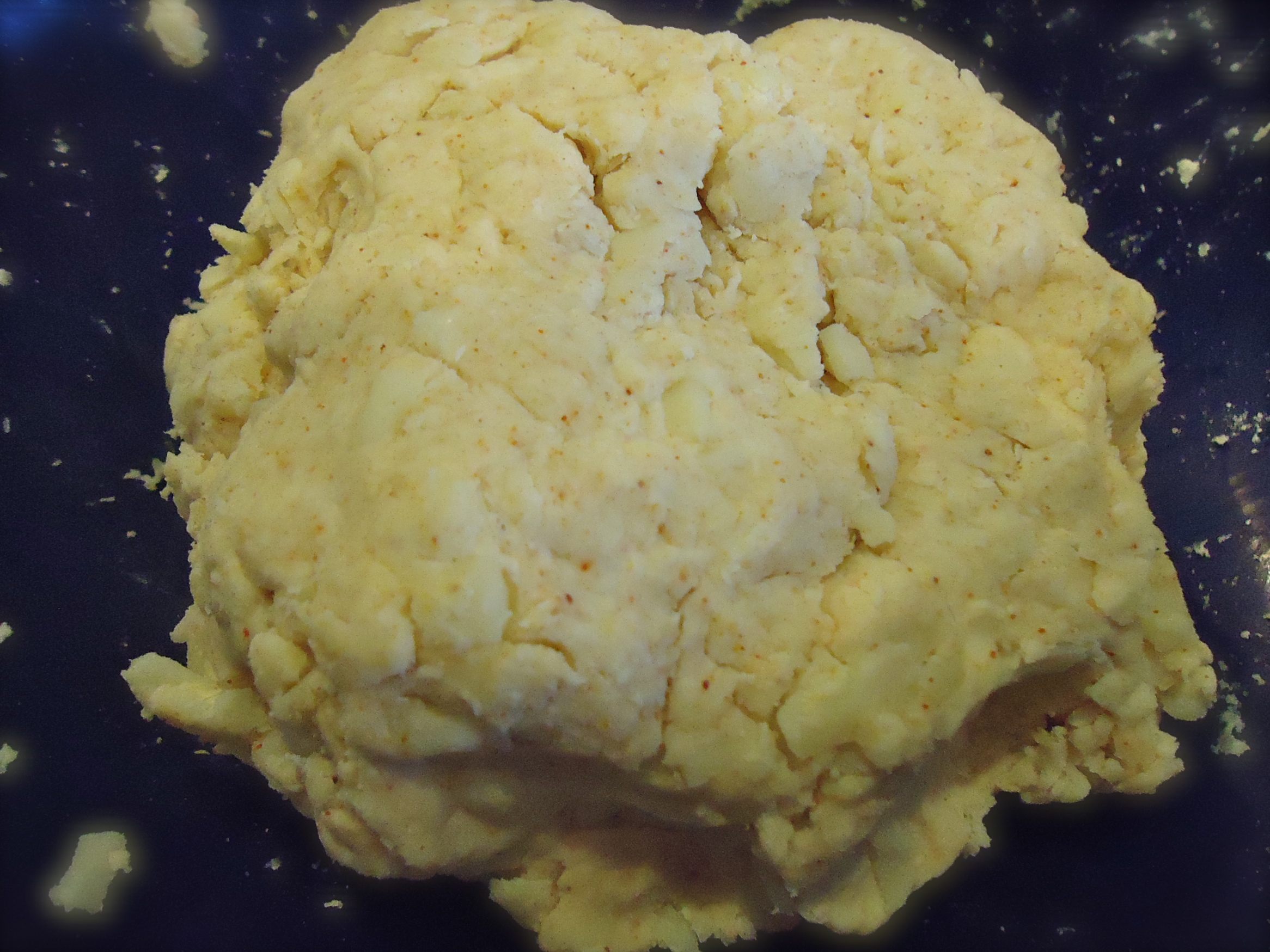
Here's the dough. Wrap it in some plastic and place in the refrigerator to rest. Resting is good!

The ingredients for the pot pie filling.

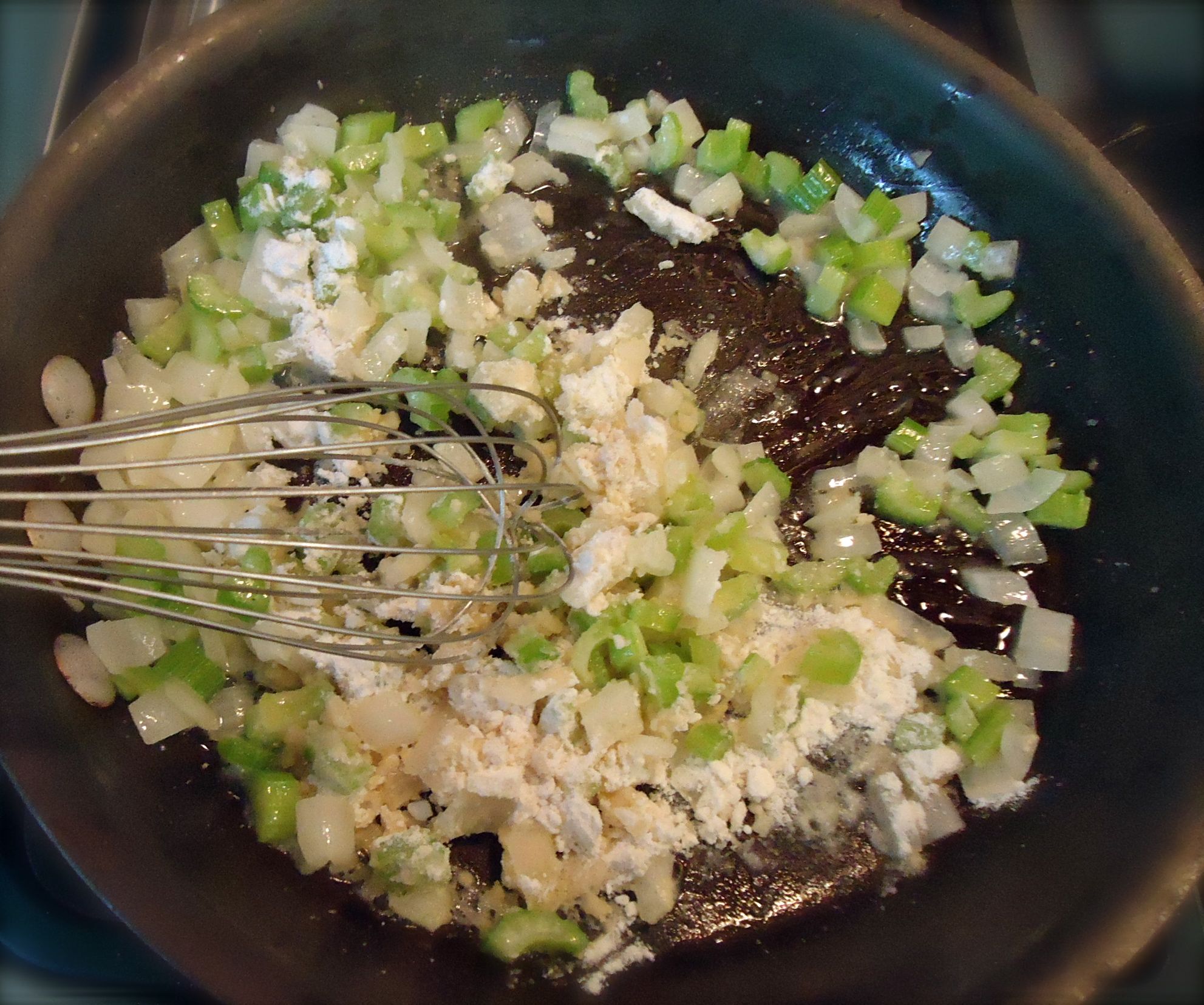
Saute the onions and celery in the butter until just softened and then stir in the flour. Have the leftover stock/broth ready to add...

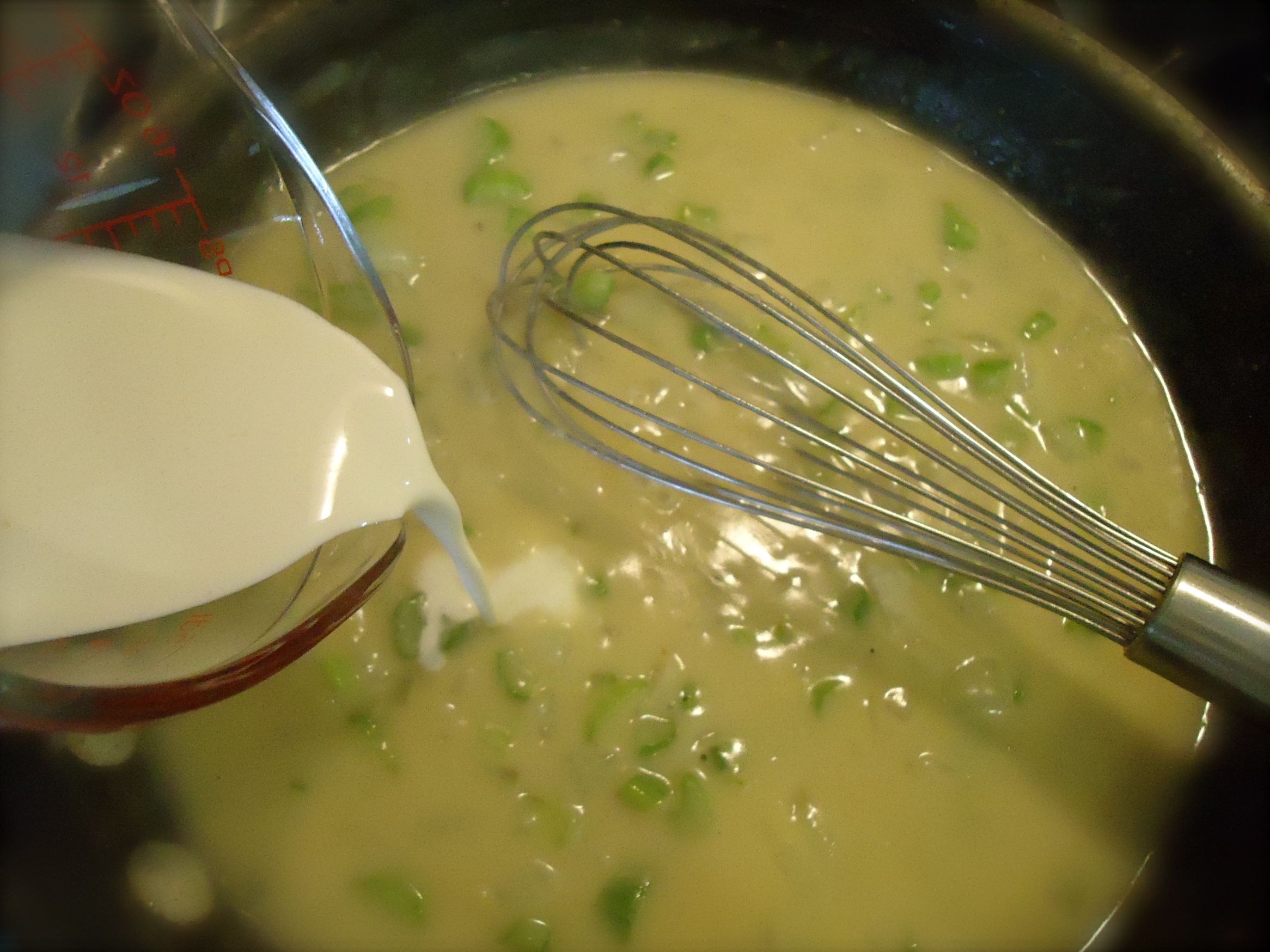
And then add in the cream (after the stock). This "sauce" will hold the pot pie together and adds a lot of flavor!

Pour the cooled sauce into the chicken/carrot/potato mixture.

Add in the last seasonings and the peas and parsley. Be sure to taste it now. If it need a little more pepper or salt add at your own discretion.

Fill the baking dish, using a dish that will have plenty of room at the top for the biscuits and that bubbling pot pie goodness.

Getting back to those biscuits...Roll out the dough to about a 1 inch thickness and cut into biscuits. You can use some extra flour but less is more in this regard as is the handling of the dough. Work quickly and be gentle.

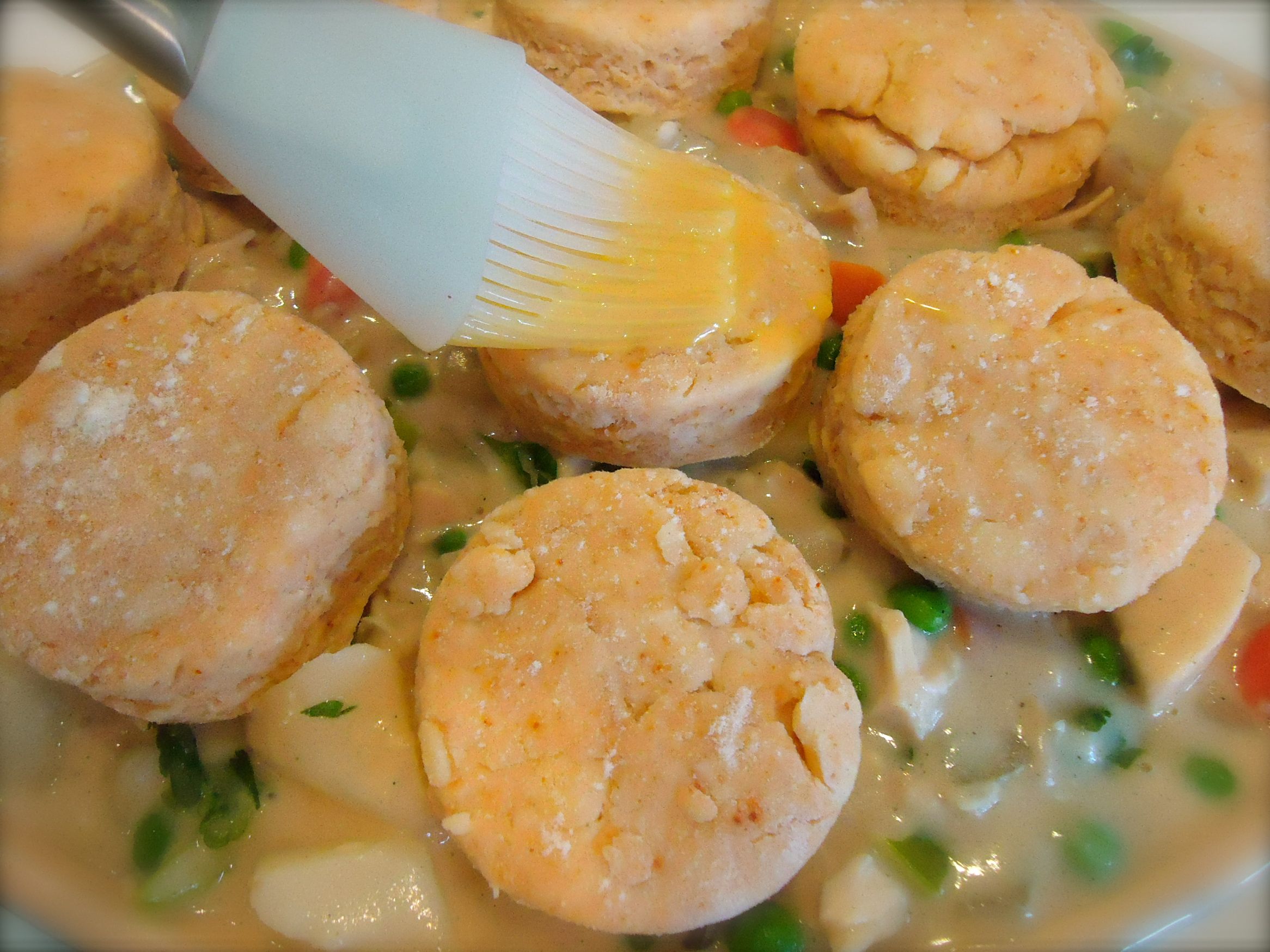
Brush the biscuits with an egg wash and pop the whole pot pie in the preheated oven for about 25-30 minutes. You can also make individual portions in oven-proof ramekins, topping each with it's own biscuit. Adjust the bake time.

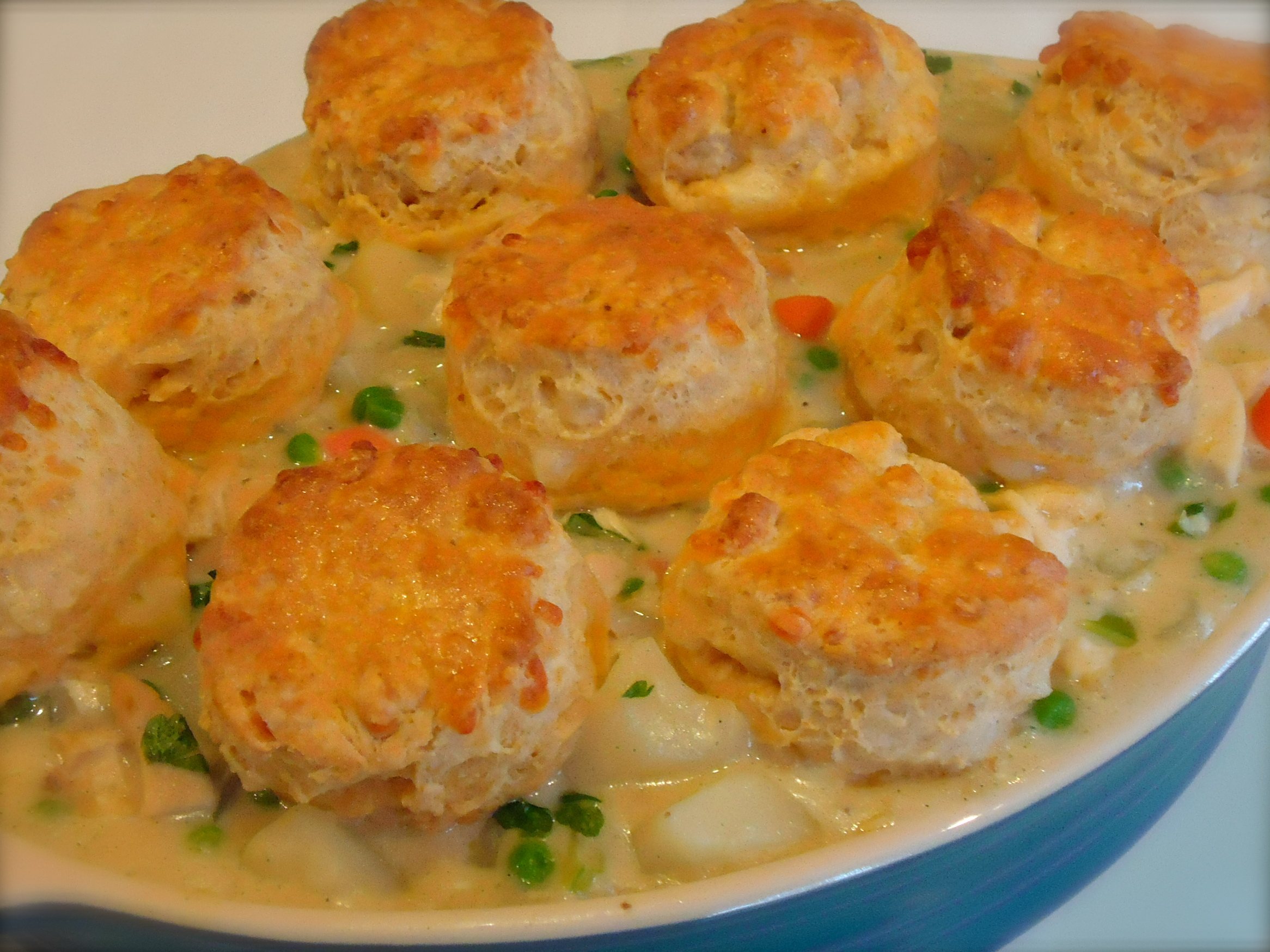
Viola! The finished pot pie - so rich and yummy!

Chicken Pot Pie with Paprika Cheddar Biscuits

  • 3 cups diced cooked chicken
  • 1 cup chopped onion, medium chop
  • 1 cup chopped celery, medium chop
  • 1 cup diced carrots
  • 1 cup small green peas (fresh or frozen)
  • 2 cups diced potatoes
  • 1 tsp. ground thyme
  • ½ cup minced flat leaf Italian parsley
  • 1 tsp. black pepper (more or less)
  • 2 tbl. all-purpose flour
  • 4 tbl. butter
  • 3-4 cups good quality chicken stock or broth
  • ½ cup cream
  • 2 bay leaves
  • 1 tsp. salt (more or less)
  • 1 egg whisked with 1 tbl. water to make an egg wash
  • 1 recipe paprika cheddar biscuits

Prepare the dough for the paprika cheddar biscuits and allow the dough to rest in the refrigerator while you make the potpie filling.

In a saucepot boil the stock and the potatoes, carrots and bay leaves. Lower the heat and simmer until just tender about 7-8 minutes. Remove bay leaves and discard. Remove carrots and potatoes with a slotted spoon to a large bowl and allow to cool. Set the leftover broth aside and measure out 2 cups.

In a medium saucepan melt the butter and sauté the onion and celery until just tender, 3 minutes or so. Add the thyme, ½ tsp of salt and ½ tsp of pepper. Over low heat stir the flour into the vegetables and slowly pour in the stock, stirring constantly. Bring up the heat slightly to thicken and then turn down to low. Whisk in the cream, remove from the heat and allow to cool.

Add the chopped chicken to the potatoes and carrots in a large bowl. Stir in the onion/celery cream mixture and then the peas and parsley. Add in ½ tsp. of salt and ½ tsp of pepper. Mix gently. Taste and adjust the salt and pepper to your taste. Pour filling into an oven proof baking pan. Preheat oven to 350.

Place paprika cheddar biscuits on top of the chicken filling and brush each biscuit with the egg wash. Bake in preheated 350 degree oven until biscuits are baked and golden brown and the filling is bubbly – about 25-30 minutes.

Paprika Cheddar Biscuits

  • 1 1/3 cup all-purpose flour
  • ½ tsp. salt
  • ½ tsp. baking soda
  • 1 tsp. baking powder
  • 3/4 tsp. smoked sweet paprika
  • 1 cp. shredded sharp cheddar cheese
  • 1/3 cup (more or less) buttermilk, regular or non-fat
  • 2 tbl. unsalted butter, cut into small bits
  • 2 tbl. shortening, cut into small bits

Sift all dry ingredients (except the cheese!) together into a large bowl. Cut in the butter and shortening until the mixture resembles breadcrumbs. Stir in the cheese and slowly add in the buttermilk to make a soft (but not sticky) dough. Wrap the dough in plastic wrap or wax paper and place in the refrigerator to rest while you prepare the filling (at least 30 minutes).

When ready, roll the dough out on a lightly floured surface to a thickness of about 1 inch. Cut with a biscuit cutter (I use a wine glass). You should get about 8-10, three-inch diameter biscuits.

Field Trip: Birmingham Botanical Gardens

Irises located in - you guessed it - the Iris garden!

Most Southerners have a thing about gardens. Many, like me, grew up with a backyard vegetable garden where many humid, summer hours were spent pulling weeds, or gathering the day’s burgeoning squash crop, or picking any encroaching critters off my mother’s prized tomato plants. Mostly it was a lot of work, and only as an adult did I think back on what a monumental influence that family garden has had on my way of living and thinking.

The red bridge in the Japanese Garden in Spring. I'm more relaxed just looking at this image. Photo courtesy of Birmingham Botanical Gardens.

Foremost is my innate love of the land that I carry with me always. Then there is the satisfaction found in completing a good day’s work and an appreciation for farmers everywhere (and all the wonderful things they grow). I could go on and on, but I’ll stop by adding just one more thing: that an unassuming family-tended garden showed me that there is beauty all around – at any place, at any given time. Just slow down and pay attention.

There are open spaces for kids (and Dads) to run and play.

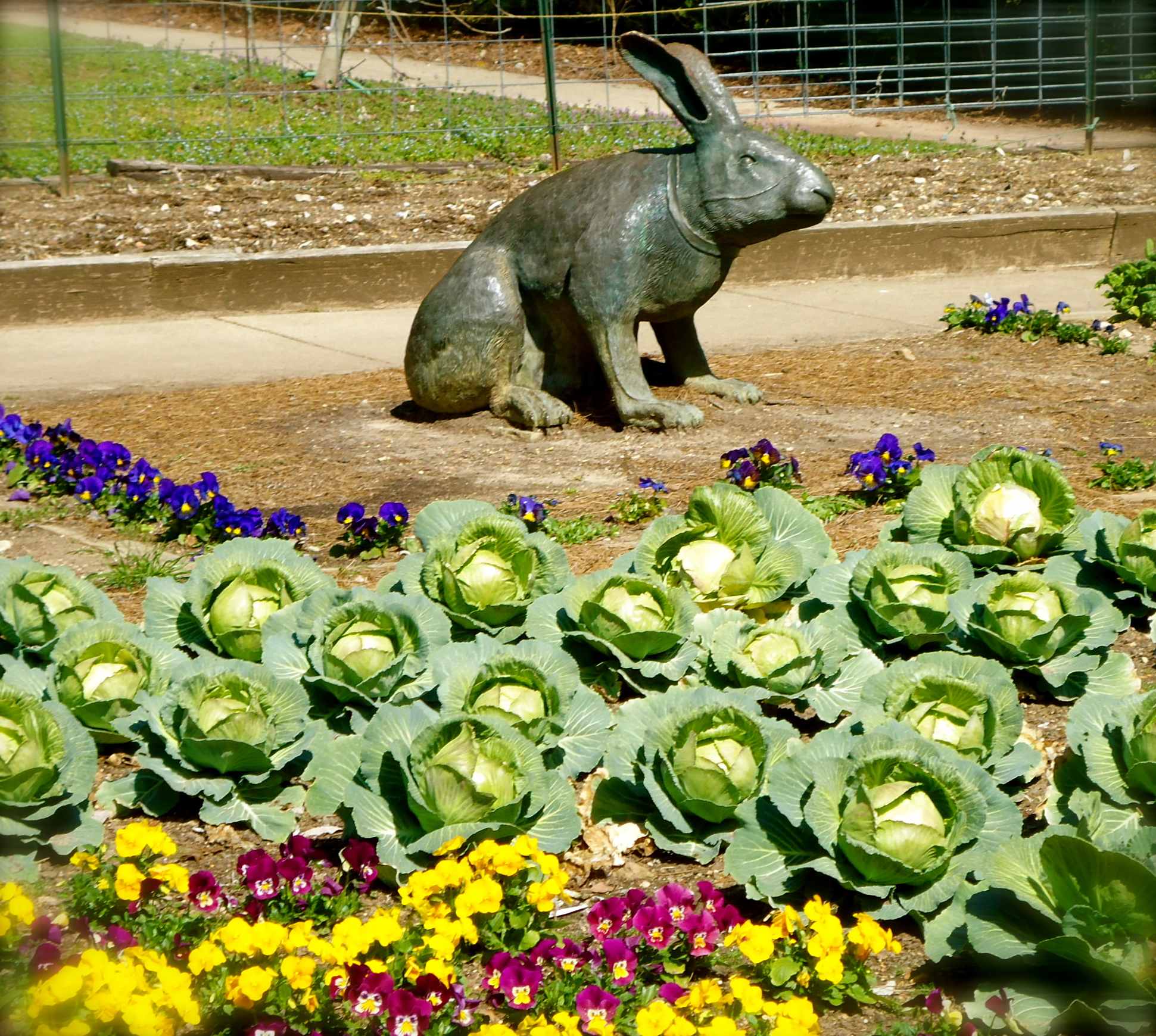
That being said, the Birmingham Botanical Gardens, located in the quaint hamlet of Mountain Brook, Al (just south and east of the Birmingham city limits), has to be one of the most spectacular public gardens I’ve visited. Yes, they do have a vegetable garden (complete with whimsical rabbit sculpture) and a collection of over 3,000 types of plants in 25 plus thematic gardens and a lovely glass conservatory.

Guarded by a large rabbit sculpture, the vegetable garden showcases some tasty cabbage (and pretty annuals too!).

At most times of the year the garden has something spectacular blooming or sprouting or happening. My family and me were lucky to live close by in the Homewood neighborhood so we visited here many times. It is a wonderful spot for spreading out a picnic either in the Ireland old-fashioned rose garden or the formal garden and grassy queen’s gates near the conservatory. Around every corner is a happy botanical surprise.

Iris blooming beside the pond in the Japanese Garden.

But I think our favorite area must be the Japanese garden. With it’s red curved-top torii, or “gate to heaven”, tranquil tea garden, wonderful stroll garden set around Long Life Lake complete with red footbridge, colorful koi and bamboo grove, it is surprising to realize that you’re still on US soil let alone in the state of Alabama. My 4 year old (and my husband!) loved ringing the friendship bell within the Hulsey Woods garden that is adjacent to the Japanese garden.

Fantastically beautiful Helleborus (hellebore) plantings dot the gardens.

Calling themselves a living museum, the Birmingham Botanical Gardens house the largest horticulture library in the nation and boast a nice collection of outdoor sculptures sprinkled throughout its 67.5 acres. There is also an onsite garden store and a café, that utilizes onsite-grown herbs and ingredients in it’s offerings as much as possible.

Honestly, I would need to write paragraph infinitum to describe all that is offered here. For the serious gardener, southern or not, it must be on your bucket list. And for the casual visitor to the area it should be a top attraction for you, especially if you have kids (or you’re a kid at heart) who love the outdoors. There’s plenty of room to roam and run and relax here – and maybe learn a little something too.

And by the way, admission is free for all, local and visitor alike.

Granite Garden is a sculpture of red granite by Jesus Moroles (1988) located near the entrance. There are shady benches surrounding it - so sit and contemplate awhile.

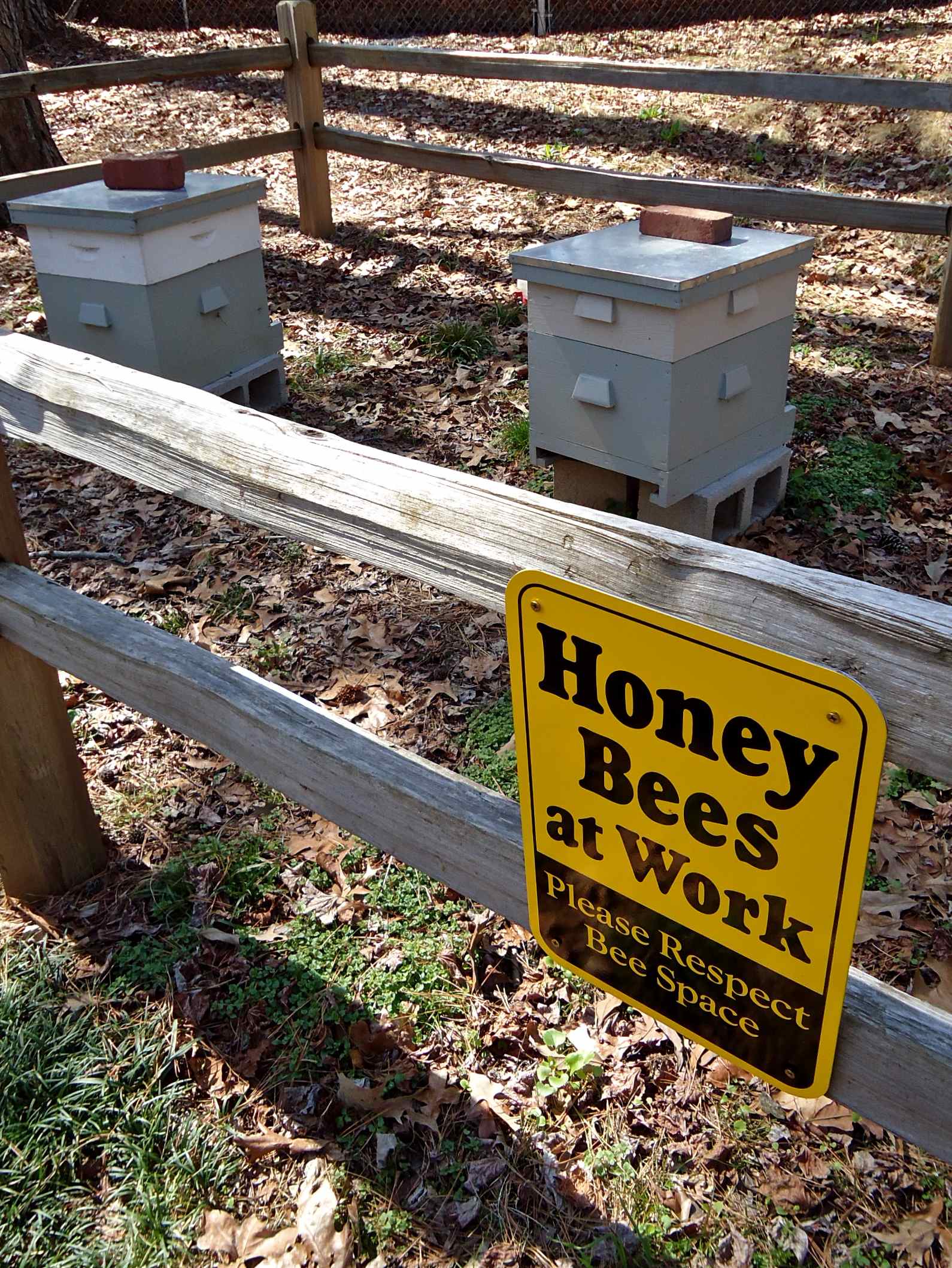
Honeybees working for a living near the Southern Living themed garden.

Strawberry Lemon Thyme Jam

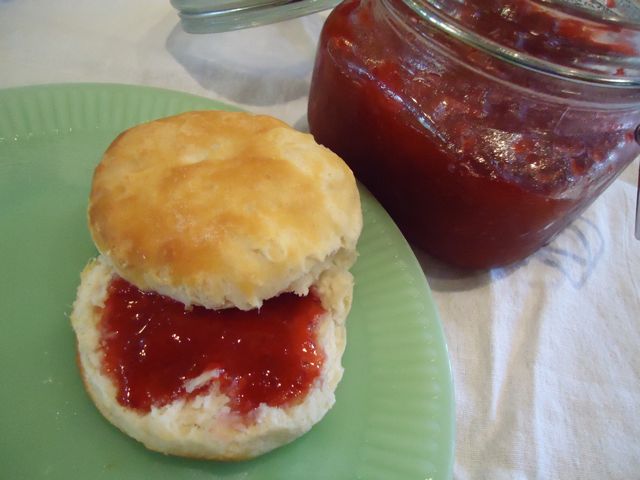
Biscuit with strawberry jam. This is jam, not jelly so it won't be firm but slightly chunky and spreadable.

A love of strawberries is inherent in my family. Even though my Dad had an allergy to them, he loved them. My Mom would say,  “Now Bud, if you eat that strawberry shortcake you know what will happen.” Then my Dad would reply, “Well, maybe this time it will be okay.” Ever the optimist, that was my father. Well that, and he had an insatiable sweet tooth. My Mom would shake her head, smile and then later hold her tongue AND make him a bicarbonate of soda when he complained that his stomach was upset.

Luckily, this allergy passed by the rest of us and every spring I look forward to strawberry picking – and eating. Strawberries can be grown pretty much any place in the US with harvests in my part of “south by southeast” starting in March (actually this year the crop came due early because of the warm winter). I made this easy strawberry jam with the addition of lemon thyme that grows profusely in a container on my front porch. Strawberry and lemon flavors go so well together, don’t you think?

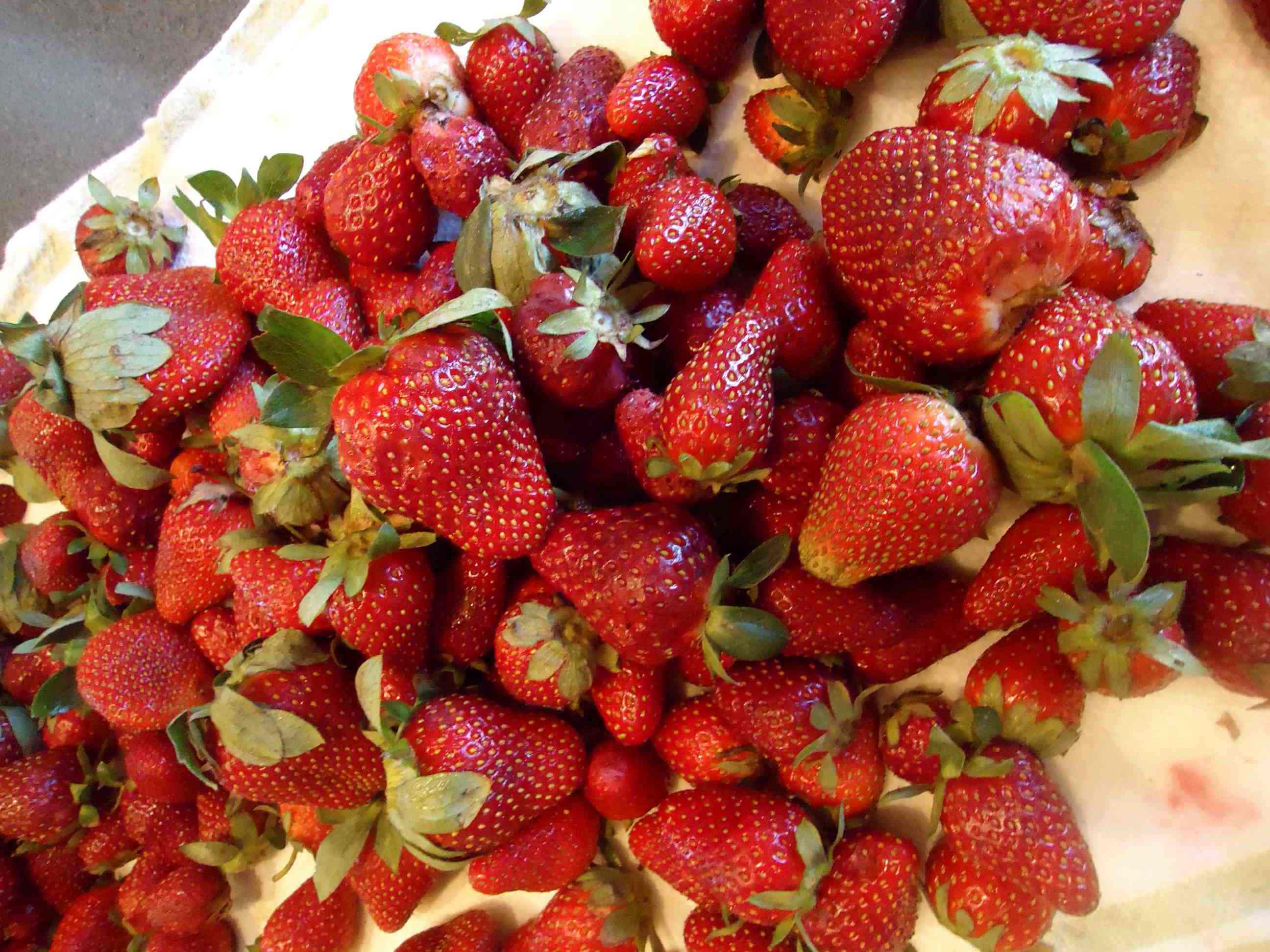
Locally grown strawberries picked by yours truly (and my 4 year old daughter and husband).

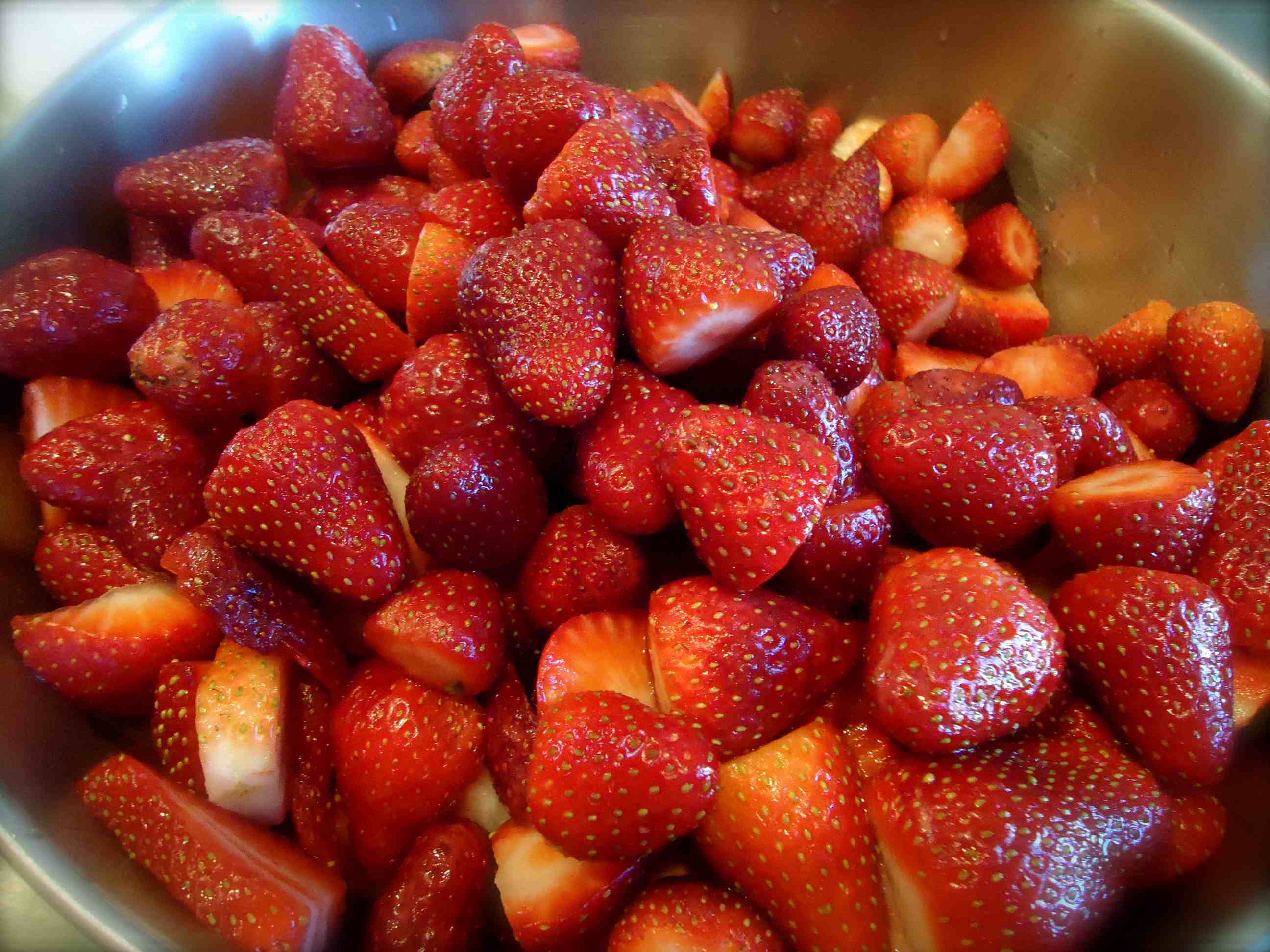
I washed the berries a couple of times, removed the stems and washed again. I sliced the larger ones too.

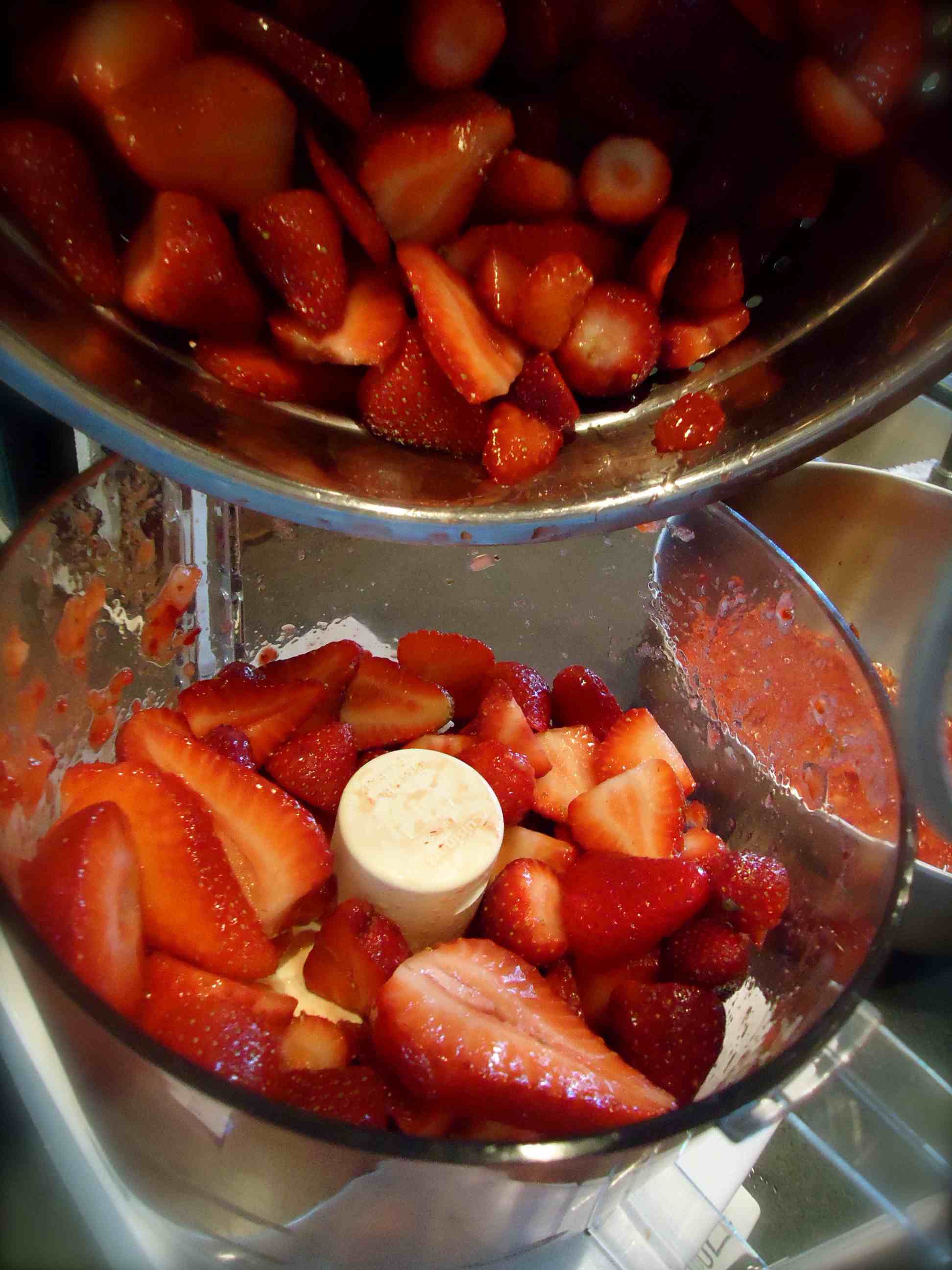
The food processor made quick work of crushing the berries. Use the plastic blade, only crush about a cup or so at a time, and use the pulse so the berries do not become a puree.

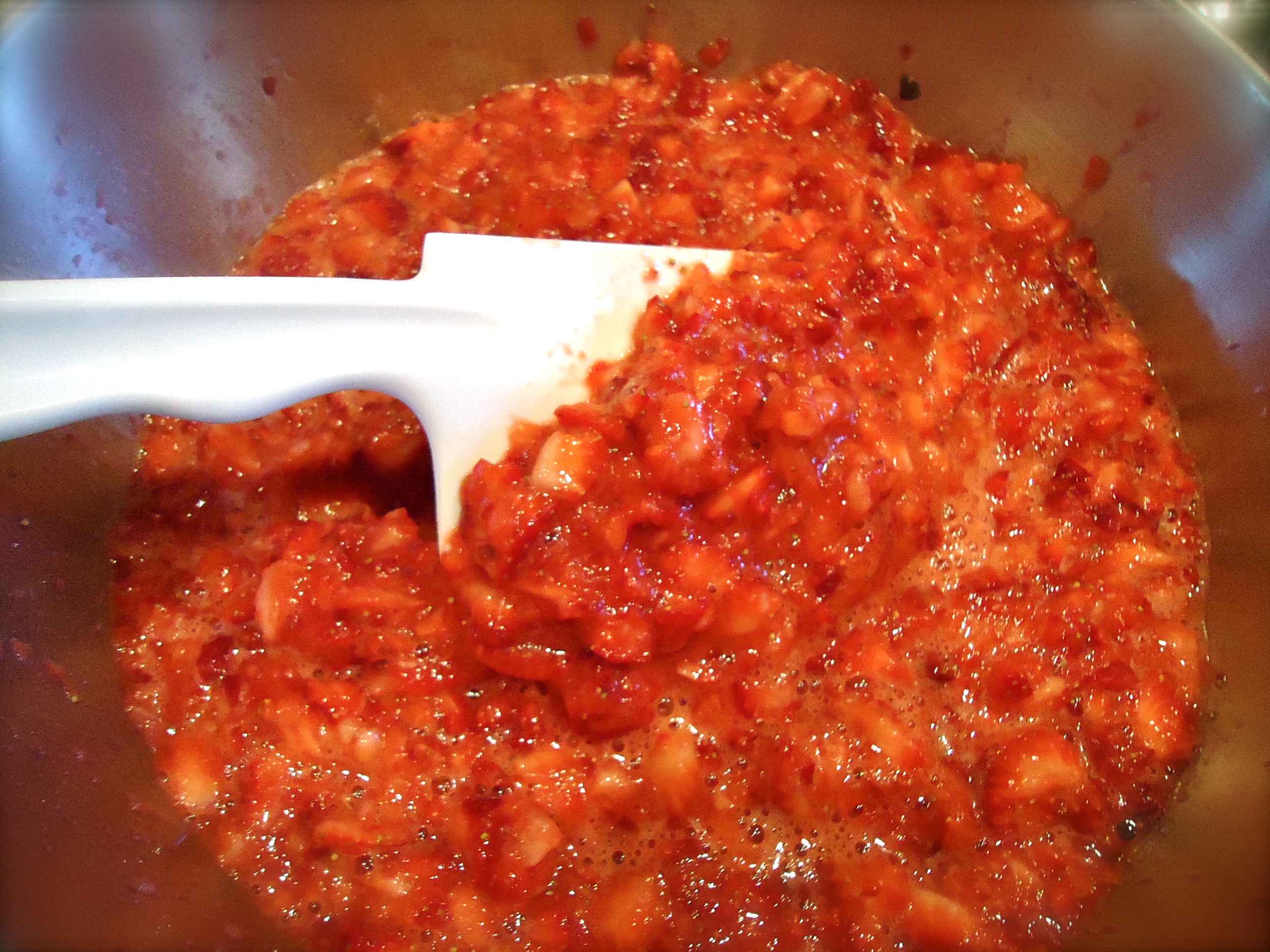
See the consistency of the berries - there should be small pieces of fruit.

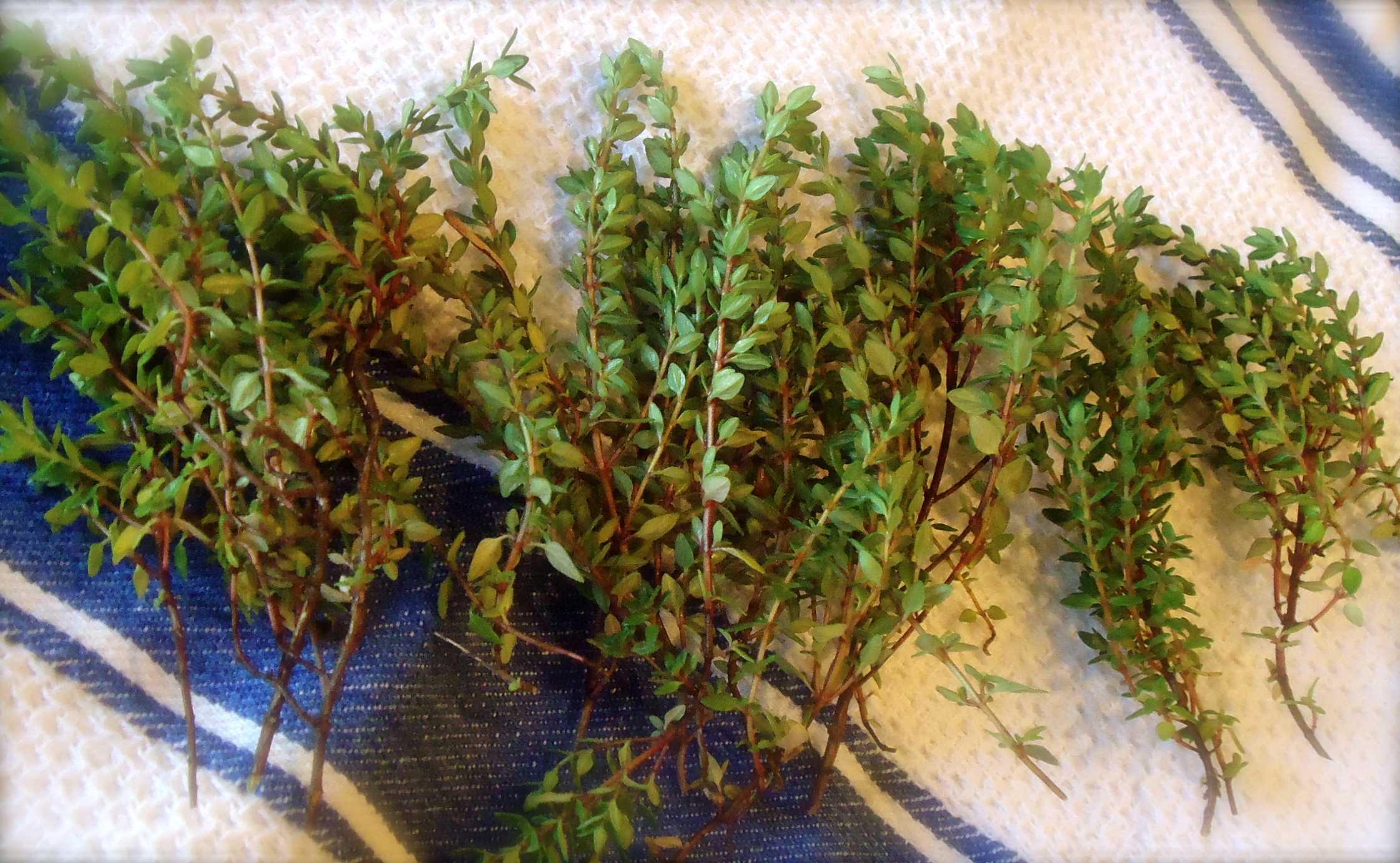
Here's the lemon thyme. You could probably also use lemon verbena although I have not tried that herb in this recipe.

The lemon thyme, water, sugar and lemons/lemon juice simmer together - smells great!

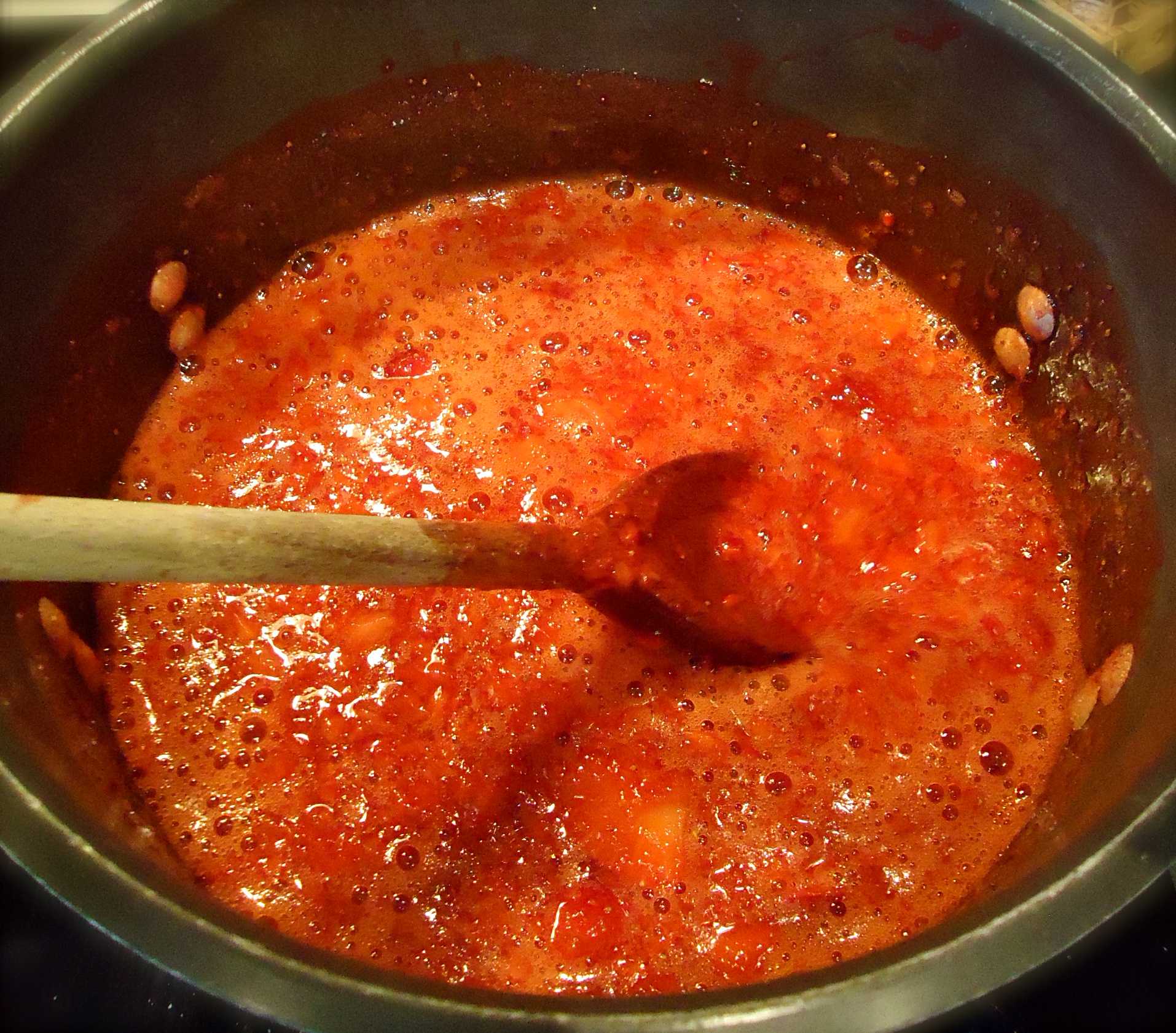
The berries break down on a slow boil. Add the pectin and the sugar. Stir the pot!

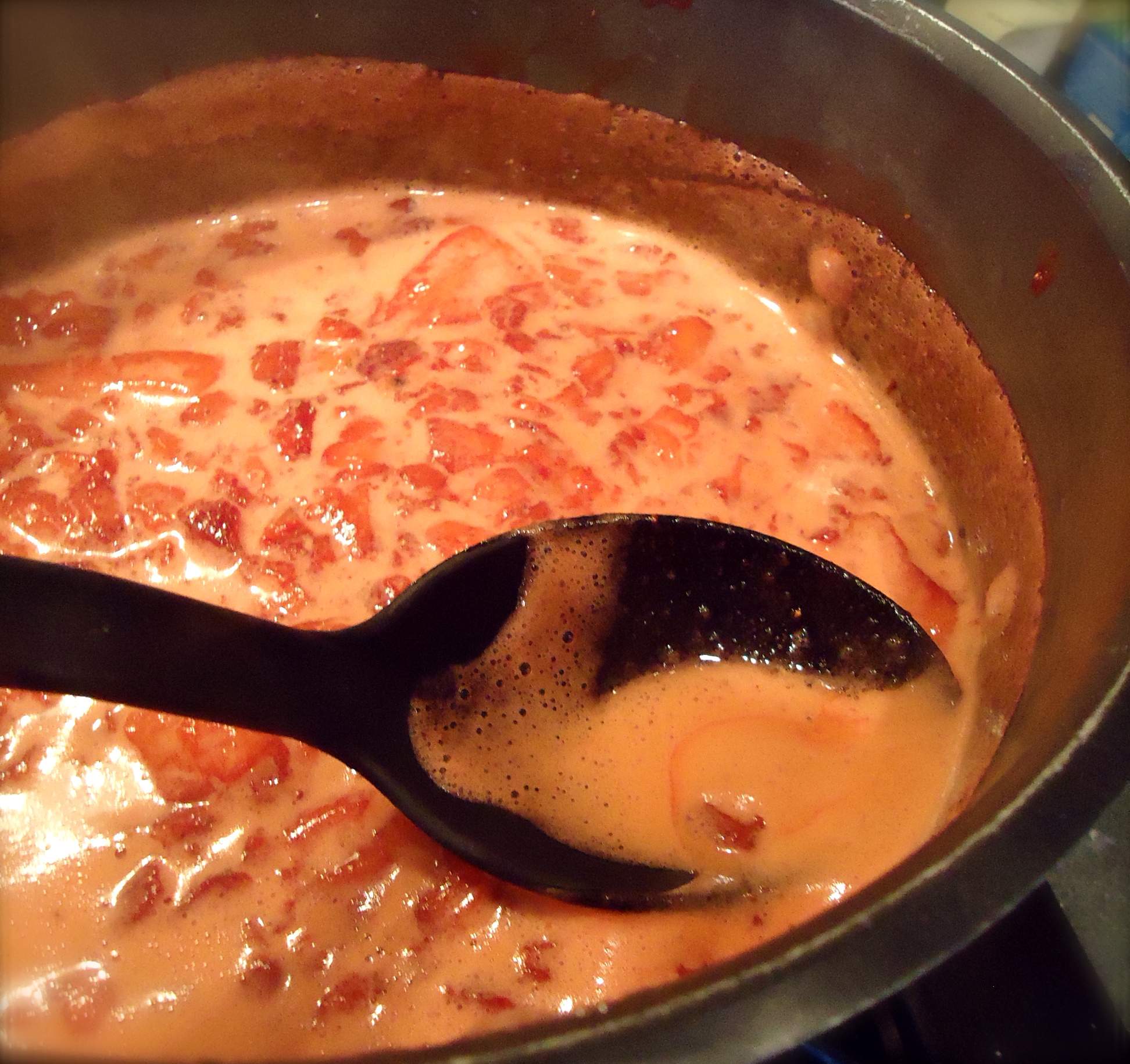
And here is that foam. Skim with a large, flatt-ish spoon. Once you skim most of the foam, skim a little more. Some folks add a tablespoon of butter which magically reduces the foam...

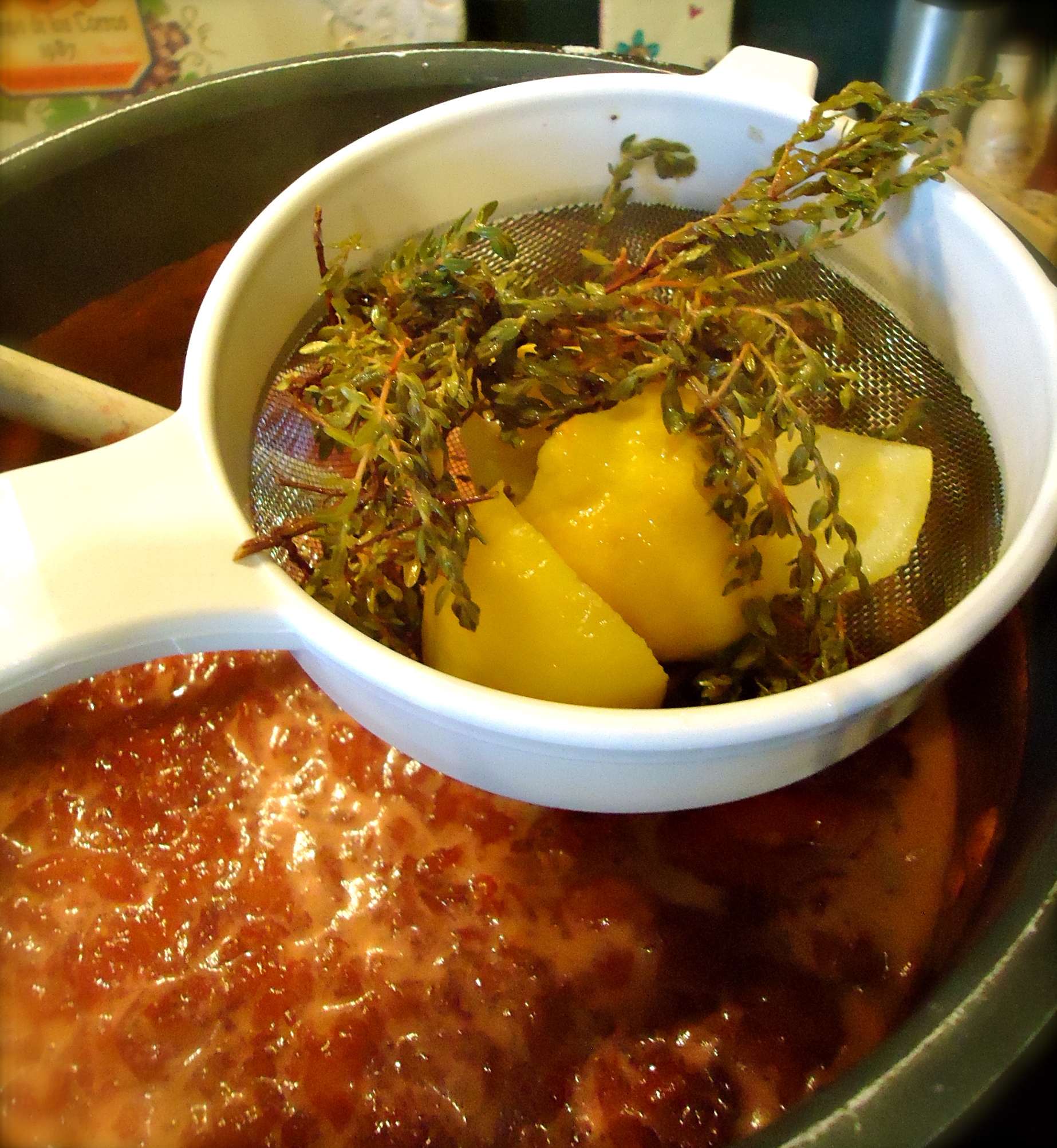
Adding the lemon thyme mixture with a sieve.

The washed, sterilized jars and lids are kept that way in a hot water bath. Word of warning - be careful!

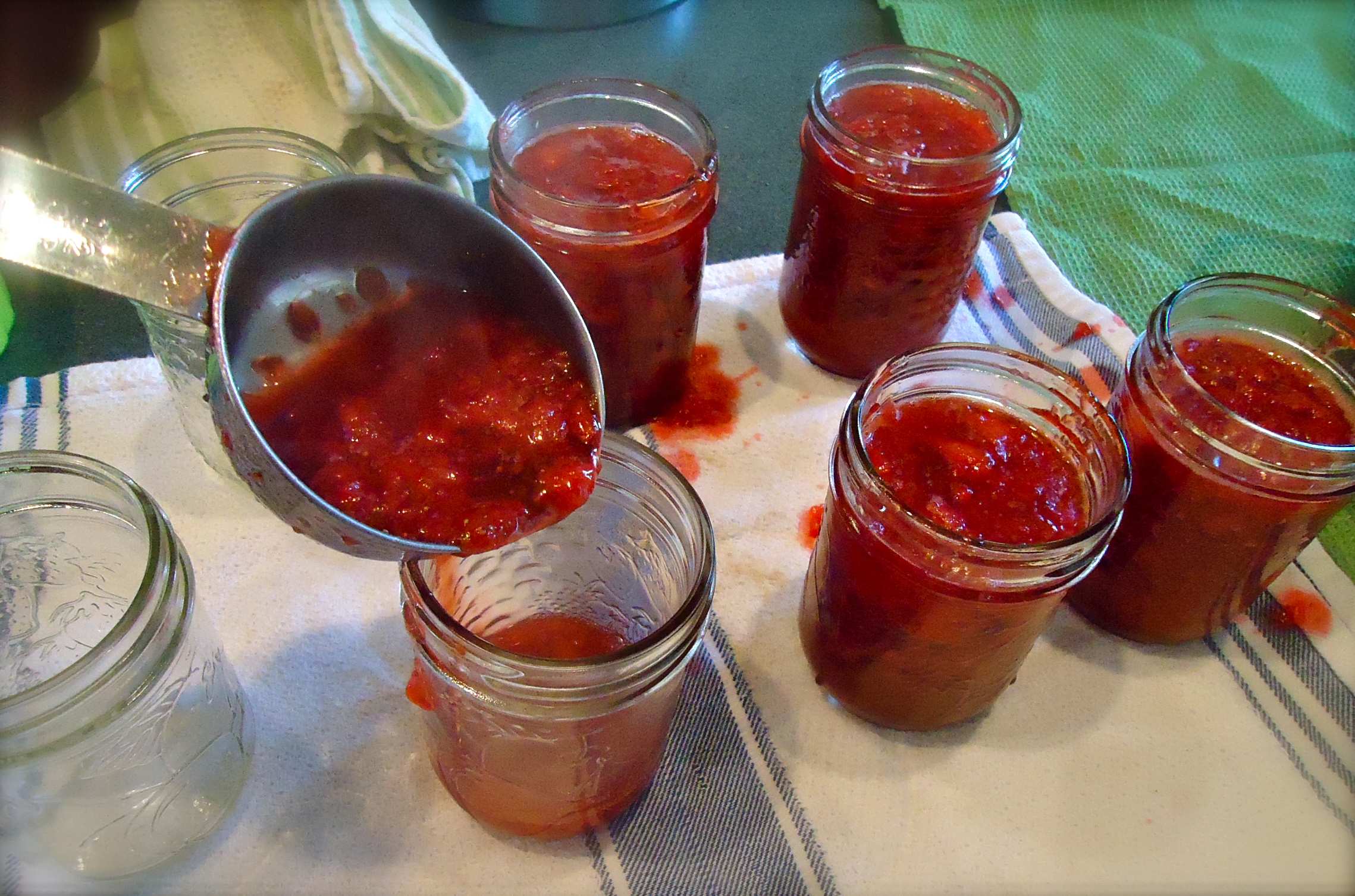
Pouring the jam into the hot jars can be messy. Have paper towels, pot holders and dish towels close by. Wipe the tops of the jars off and quickly get the sterilized lids on the hot jars as quickly as possible. I usually fill 6 or 8 small jars at a time but if you're a newbie try filling 3 or 4 at a time to start.

Sealed and finished jam. Add a cute label and raffia tie and this will make a nice housewarming gift!

Strawberry Lemon Thyme Jam

  • 10 cups of fresh, cleaned and crushed (but not pureed) strawberries
  • 6 cups plus 2 Tbl. Sugar
  • Juice of 1 lemon (save rinds)
  • Fresh lemon thyme – about ½ cup, washed
  • 4 Tbl. dry fruit pectin like Sure-Gel
  • 2/3 cup water

Makes 10-12 half pint jars.

Pour lemon juice, water and 2 tbl. sugar in a small saucepan. Stir and to a simmer. Add in the thyme and continue to simmer about 5 minutes. Remove from heat, cover and set aside.

To crush strawberries: you can either use a potato masher and do this by hand a little at a time or use a food processor with the plastic blade and pulse to gently crush/chop the berries. Do not over do this or you will get puree. You should be able to see small pieces of berry.

To sterilize jars, lids and rings: wash the jars, rings and lids in hot soapy water and rinse well. (If I am using a lot of jars, I use the dishwasher. I time it so the cycle is going through the hot rinse or the hot dry cycle as I am preparing the jam.) Fill a large pot with water and heat. Place the clean hot jars, lids and rings in the hot water and bring to a boil. After 2 minutes of boiling, keep the jars and lids simmering in the hot water bath until just before you are ready to fill the jars. You can remove the rings and cool on a towel.

In a large pot heat all of the crushed fruit over medium heat. Stir in the fruit pectin and bring up to a boil. Stir. Add 6 cups of sugar all at once and keep stirring. Bring back to a boil and then lower the heat to simmer.

You can now start skimming the froth off the top of the mixture using a large spoon. You may remove a lot of froth. Skim until you are satisfied and then skim a little more.

Strain the cooled lemon thyme mixture into the fruit and stir well. Bring back up to a low boil (keep stirring slowly) and then simmer again.

At this point you need to remove the hot jars from their water bath and place on an absorbent, flat towel. I use regular tongs to remove the jars but there are special canning jar lifters you can buy that will be easier, especially if your jars are large. I find regular long tongs are fine for  small ½ pint size jars. Have some extra paper towels, dish towels and pot holders close by.

When you get the batch of jars out of the water, fill them with the jam leaving at least ¼ inch of space at the top. If you have dripped any jam around the jar edges wipe away the excess especially around the top. It will be very hot so use a pot holder to hold the jar with one hand and wipe with the other.

Pull the lids from the hot water bath and allow excess water to drop onto a kitchen towel and then place on the filled jar. Use a ring to screw down the lids. Again use pot holders!

Some people do another step whereas they put the sealed jars back into another hot water bath, bring to a boil, remove and allow to cool. Since I use new lids every time and always check that a seal has been made on each jar I do not do this.

However, you do need to check that a seal has been made for each jar. To do this, lightly push on the top center of each jar after it has been filled for at least 15 minutes. If the lid pops up with your touch, it isn’t sealed and if it doesn’t, it has been sealed.

If it has not sealed, check back after another 20-30 minutes. If after 2 hours a jar and lid have not sealed, you will need to replace the lid and seal and place the entire jar in a hot water bath (boiling water) for 6-8 minutes. In all the years I have made preserves, jams and pickles I have never had to do this. Use quality jars and new lids. The rings and jars can be used many times over but new lids are the key to a proper seal.

NOTE: This jam is not super thick and when cooled it will be chunky but not of a jelled consistency, which is the way we like it in my family. Also, I would avoid making this (or anything using the hot water bath method of canning) with small children under foot  for obvious reasons. Thank you!

What’s the word? It’s Dr. Bird (Cake)

Depending on whom you talk to in my family the proper name of this rich, moist cake is either Hummingbird Cake or Dr. Bird Cake. My recipe is based on one from a fundraising cookbook published in the late 1970’s where it is called “Dr. Bird”. Either way, the recipe is an old favorite that I have modified over the years and is a perfect cake to contribute to a cookout, potluck or baking for the weekend when “company” is expected.

Like a carrot cake, it tastes better the second day. It works well as a layer cake (as I made here) or baked in one large pan (9”x 13”) or even in a Bundt or tube pan; simply adjust the cooking time. You’ll also need only half the frosting if baking in a 9”x 13” pan.

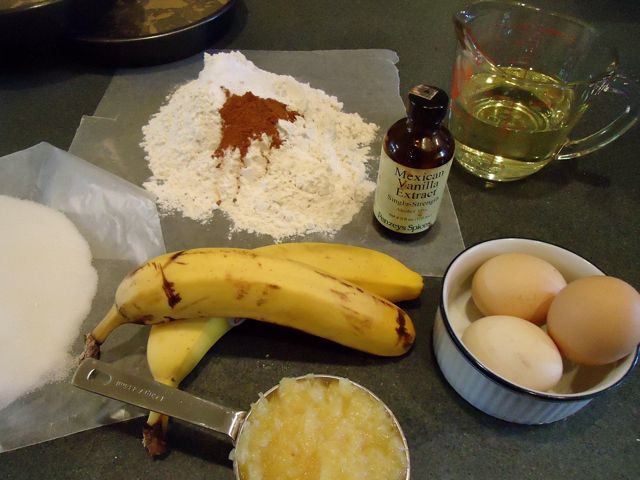
Ingredients for the cake including local eggs from the Bluffton Farmer's Market. But I forgot to place the buttermilk in the shot!

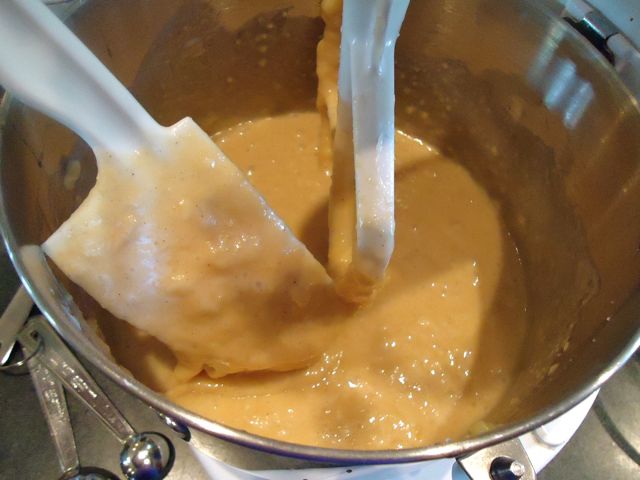
The batter will not be smooth, the bits of banana and pineapple add moisture to this cake.

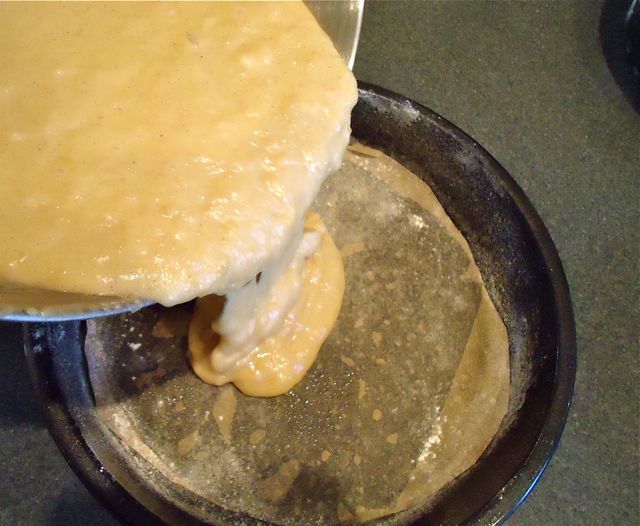
Pour the batter evenly into the three pans or you can use one 9" x 13" pan or even a Bundt or tube pan.The pans are lined with unbleached parchment paper.

The filled pans ready for the oven.

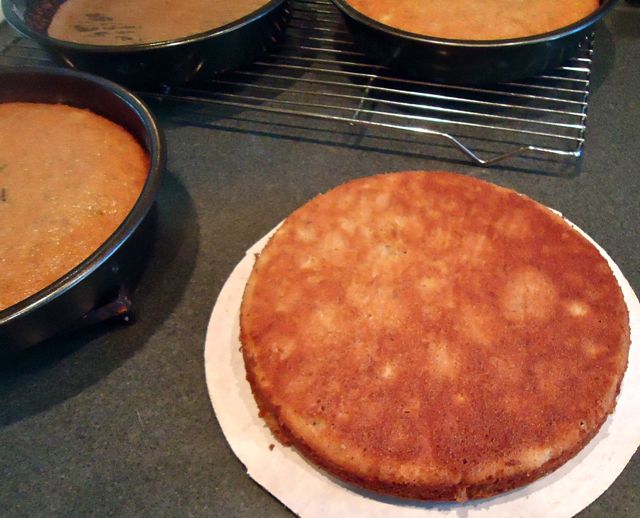
The cake layers cool on racks and one layer is turned out onto a cake platter or baker's cardboard round. I like to use these rounds if I am taking the cake to a get together away from home.

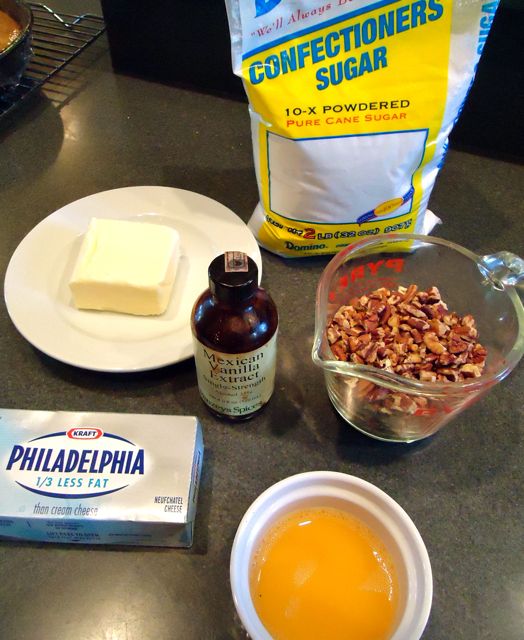
Frosting ingredients include lightly toasted pecans and orange juice measured into a small bowl.

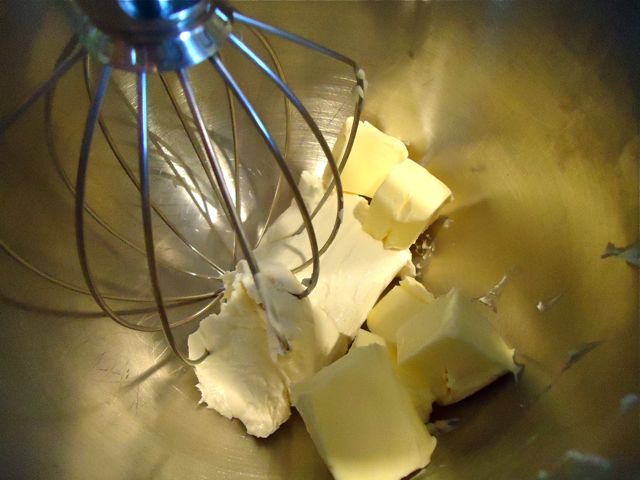
Softened butter and cream cheese are mixed to a smooth consistency before adding the juice and vanilla extract. Then just add in the powdered sugar and whip it, whip it good!

Spread frosting evenly over first cake layer.

Sprinkle pecans over the first layer before adding the next layer and repeating the process.

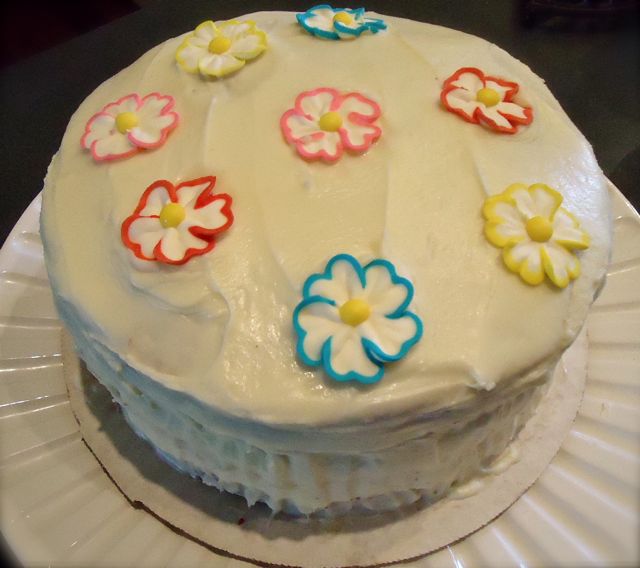
After placing the last cake layer, cover the entire cake with the balance of the frosting. I added some purchased sugar flower decorations for a touch of spring!

Dr. Bird (or Hummingbird) Cake

  • 3 cups plain flour, sifted and then measured
  • 2 cups sugar
  • 1 tsp. salt
  • 1 tsp. baking powder
  • 1 tsp. baking soda
  • 1 tsp. cinnamon
  • 1 ¼ cup oil (vegetable or canola)
  • 3 eggs
  • 2 tsp. vanilla
  • 1 cup crushed pineapple
  • 2 cups ripe, mashed bananas (about 2 large)
  • 1/3 cup buttermilk
  • 1 cup+ finely chopped pecans or walnuts, lightly toasted
  • 1 recipe cream cheese frosting (recipe below)

Cut rounds of parchment for 3, 8” or 9” cake pans. Grease and flour the inside rims of the pans. Preheat oven to 325 degrees.

Combine flour, salt, baking powder, baking soda, and cinnamon in a large mixing bowl. Add the sugar and oil, mixing well. Then beat in each egg, add the buttermilk and the vanilla. Stir in the bananas and the pineapple.

Pour batter evenly into each pan and bake in preheated oven approx. 30-34 minutes. Remove to racks to cool.

After the cake layers are cooled completely, spread frosting over the top of the first layer and sprinkle with ½ the nuts. Add the next layer, frost and sprinkle with rest of the nuts. Add final layer and frost the entire cake. If you like you can sprinkle the frosted cake with more nuts.

 Citrus Cream Cheese Frosting

  • 1 – 8 oz. package cream cheese, room temperature
  • ½ cup unsalted butter, room temperature
  • 5 – 5 ½ cups powdered sugar
  • 1 tsp. vanilla
  • ¼ cup orange or lemon juice

Cream butter and cream cheese in mixing bowl and add in powdered sugar about ½ cup at a time until you have used 4 cups. Add in the vanilla and the juice. Then add in 1 more cup (more or less) of  powdered sugar  and keep beating it on medium high. Add in a little more powdered sugar, if necessary, to get the frosting to the consistency you like.

Things I’ve learned from my dog Jackson.

Our dog Jackson.

For over a year now I have been trying (eh… sort of) to get this project called “South by Southeast” started. I’ve told friends and family all about my big plans for a digital ride across the Southern food and culture landscape through the eyes of a native, albeit not a redneck hick, i.e.…. me.

I have tested recipes, taken pictures, designed header artwork, made numerous outlines, and done a lot of thinking. But for some reason, that apparently only a procrastinator would love, I just could not ‘start’. I thought about all the reasons why I could not ‘start’. The biggest hurdle being, what do I write in my first post? It must be creative, it must clever, and it must be perfect.

Then I took my dog Jackson out for a walk. It started as just a regular walk in our neighborhood. We walked down to get the mail, avoiding the shrubbery in front of the antique shop where all lifted doggie legs are met with a furrowed brow of disdain from the owner. We got the mail and quickly made it up through the main drag pee-free, only stopping after we reached the green clover under the biggest oak tree. The ground is a little soft and cool here under the shade of all that swaying Spanish moss. Clearly this is a popular spot and Jackson makes a beeline for it every time we are within leash length.

Usually he sniffs (Jackson sniffs a lot) and that’s it. But today, he plopped down and rolled over onto his back, paws up, gyrating in a sort of snow angel motion. I guess it was a clover angel. He did this once, snorted with happiness, got up and started walking. I thought, “Oh what has he just rolled in!” Then I did my own sniff. I perused the clover angel making area and discovered nothing discernibly smelly or otherwise.

Jackson then ambled on ahead to the next clover patch, plopped down and did his clover angel move again. I checked for any putridity and nothing. As we walked ahead to the big open, sunny area in front of our home, the breeze picked up some and I then I did smell something good, something sweet. Honeysuckle? No, maybe it was Carolina jessamine, I thought. Love that smell.

Jackson plopped down again and did his clover angel routine. But this time when he stopped he took a moment to just lay there sprawled out, staring up at the blue sky. Then he looked over at me with his (literally) puppy-dog eyes and scruffy face, all fluffed up from his angel making. He gave me, what can only be described as an exasperated and prolonged look, as if to say, “What are you waiting for woman, roll around in the clover. Life doesn’t get much better than this!”

No, I did not roll in the grass, but I did sit and give Jackson a tummy rub and breathed in that spring air for a bit. I watched some tiny ants scurry to and fro with a blade of grass for a bit, oblivious to everything around them. Then we both got up and headed back to the house where I sat down and started writing this post.

There is nothing to wait for. Today is as good as any day to ‘start’.