Summer showstopper: tomato, herb and cheese tart

The recipe today is not my original creation, but one I have altered slightly for my largest tart pan. I’ve been in love with this recipe since 1993 when it appeared in Bon Appetite Magazine as the first course in a French themed dinner party feature. This one recipe includes 4 of my favorite ingredients all in one recipe – fresh herbs, fresh tomatoes, Gruyère cheese and butter. The tomatoes are just coming into season in my area and these are in indeed local – from my patio!

My daughter just plucked these tomatoes – our first of the season (her first home-grown ‘maters in her life) a few days ago. They turned out to be just barely under-ripe so we had to wait an excruciating 2 more days to use (eat) them. Of course I already knew I had to make “the tart” – I had been fantasizing about it since the day we stuck those plants in their pots over 6 weeks ago. It is my traditional “first tomato” recipe – well after slicing into one of the beauties to selfishly (and secretly) build and devour a BLT – with a slather of mayo on toasted bread. Yum.

This ‘pie’ looks and smells so lovely – like summer in a tart pan. The tender crusts presents a buttery stage for the tomatoes, herbs and cheese to shine. The original recipe makes a slightly larger tart but since my largest pan with a removable bottom is 12 inches in diameter I adjusted the recipe. Usually I still have a little dough left over. This is a delicious chef’s (or chef’s helper) treat – roll out the dough thin, sprinkle with fresh Parmesan, cut into strips, bake and voilà, delicious “straws”.

You can also make this tart into individual sized portions with small tart pans and  the recipe can easily be doubled if you need tarts for a crowd. I love this as a first course with a glass of pinot noir or cool Prosecco.  Add a side salad and you’ ve got a nice light lunch. The tart keeps very well refrigerated for a day or two after baking… if any lasts that long!

Herbs from my garden (patio pots) as well the tomatoes. The crust is simple to make and I am not showing a step by step on it, but the recipe is below.

Drain the tomato slices on paper towels.

Oregano, basil and thyme washed, dried and minced.

Slice the cheese fairly thin but more importantly in an even thickness. I like Gruyère but Emmenthal is very good too.
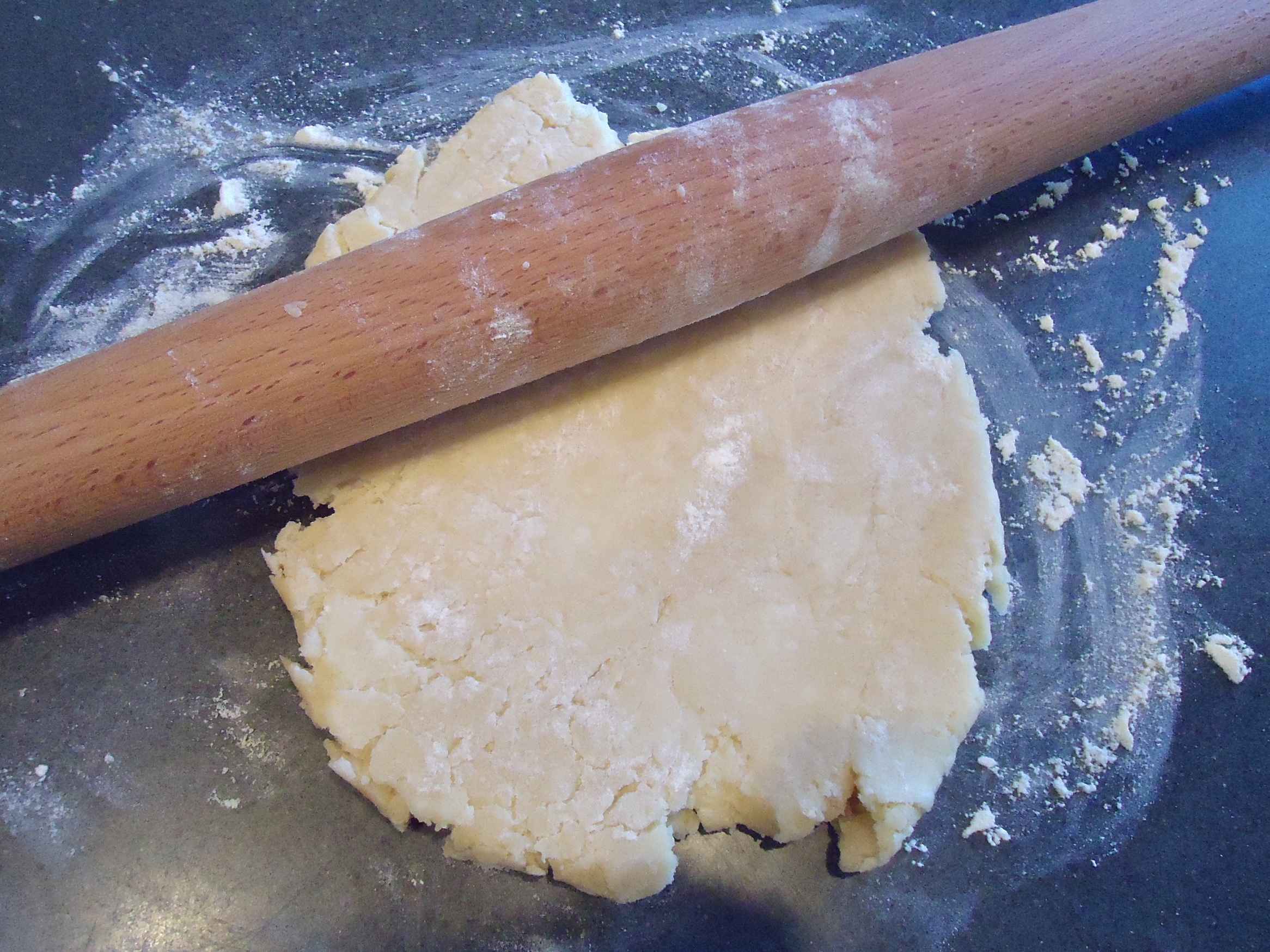
Roll out the dough quickly and use a light touch.

With an especially buttery dough, like this recipe, I find it easier to use the rolling pin to assist in moving the rolled out dough to the pan.
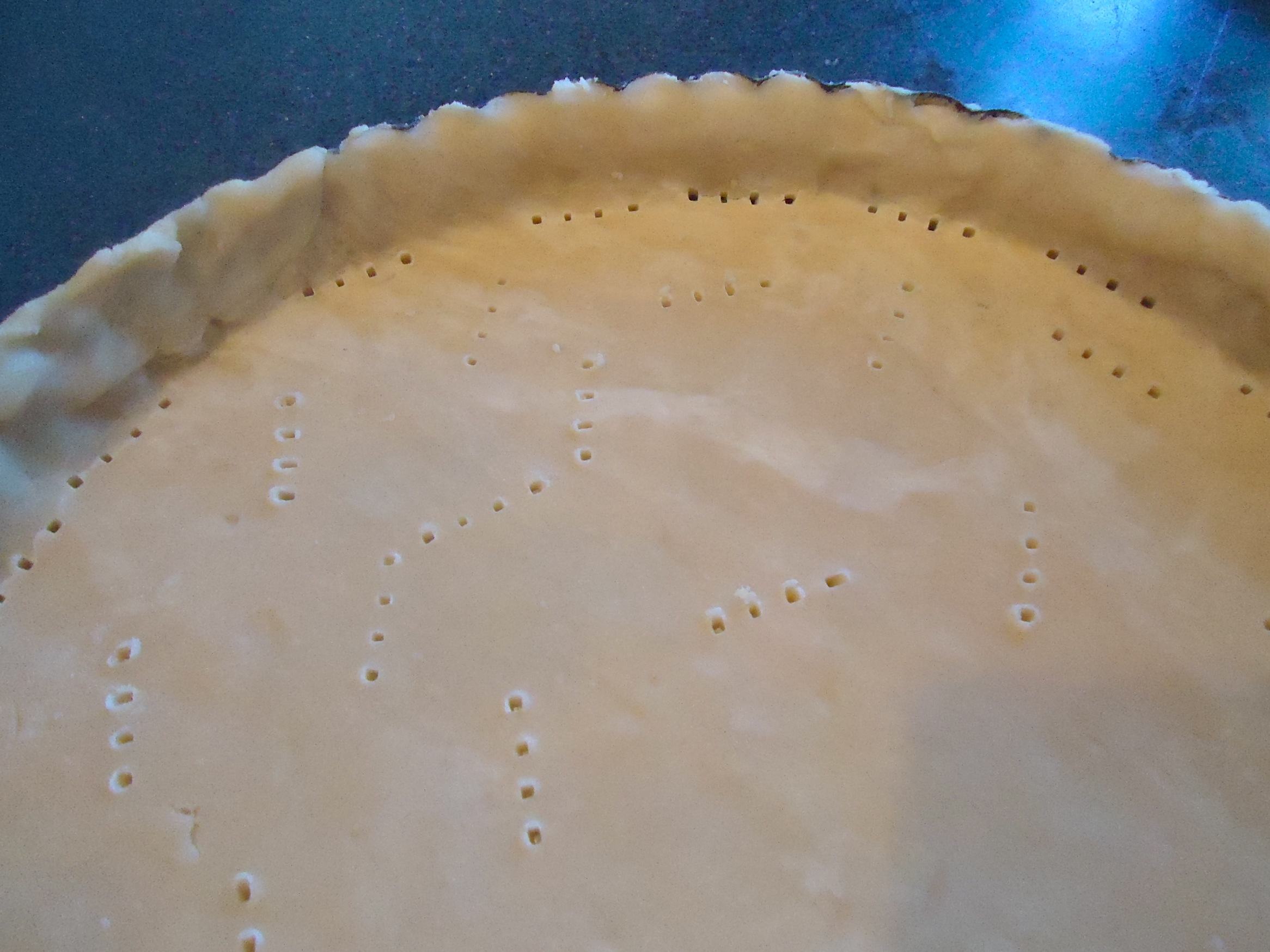
remove the excess dough from around the edge of the crust and prick the bottom and sides with a fork (or use foil with pie weights). Freeze for 15 minutes before pre-baking.
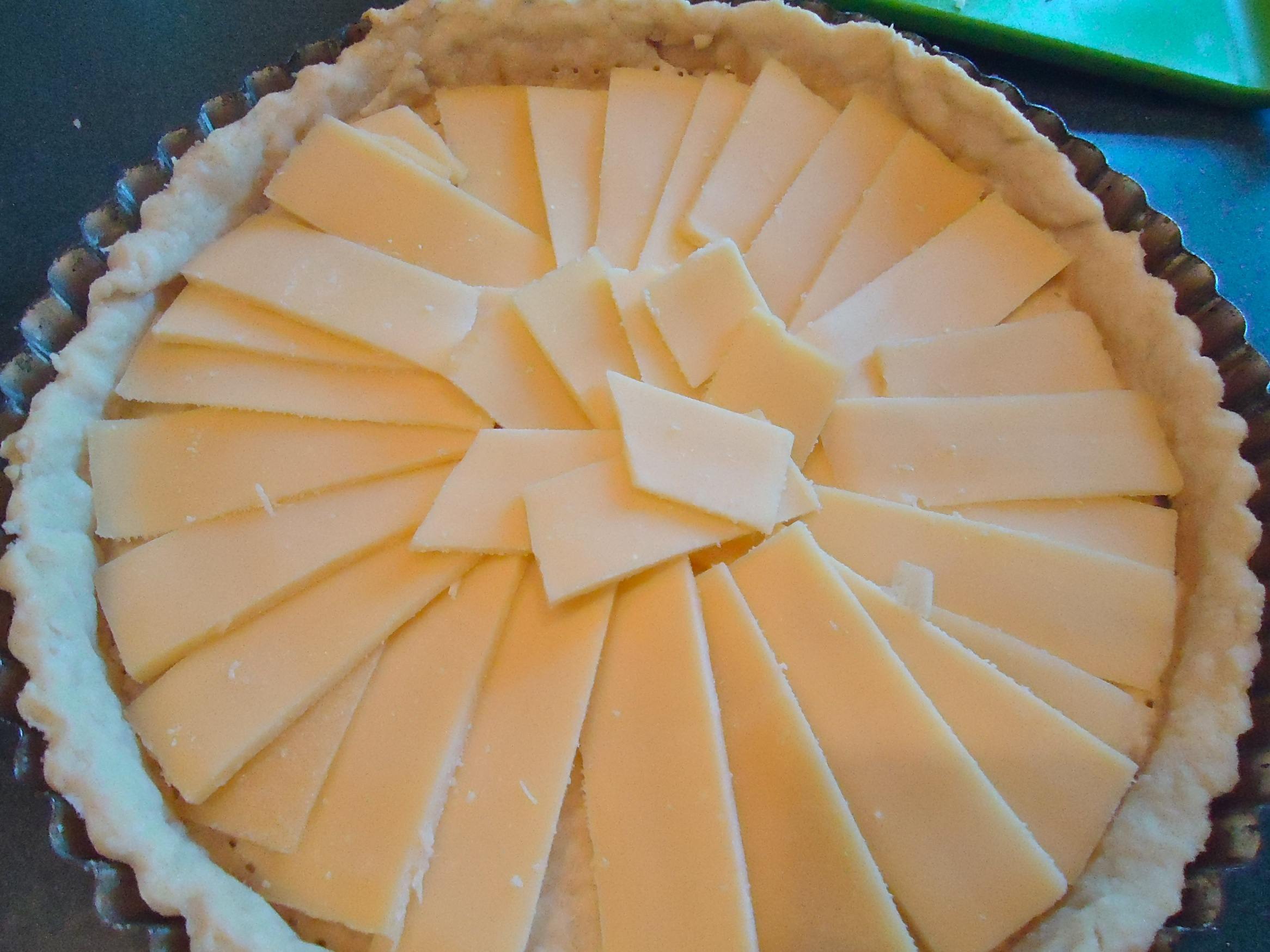
Layer the cheese slices first in the cooled crust.

Next, add the drained tomato slices, overlapping a little.
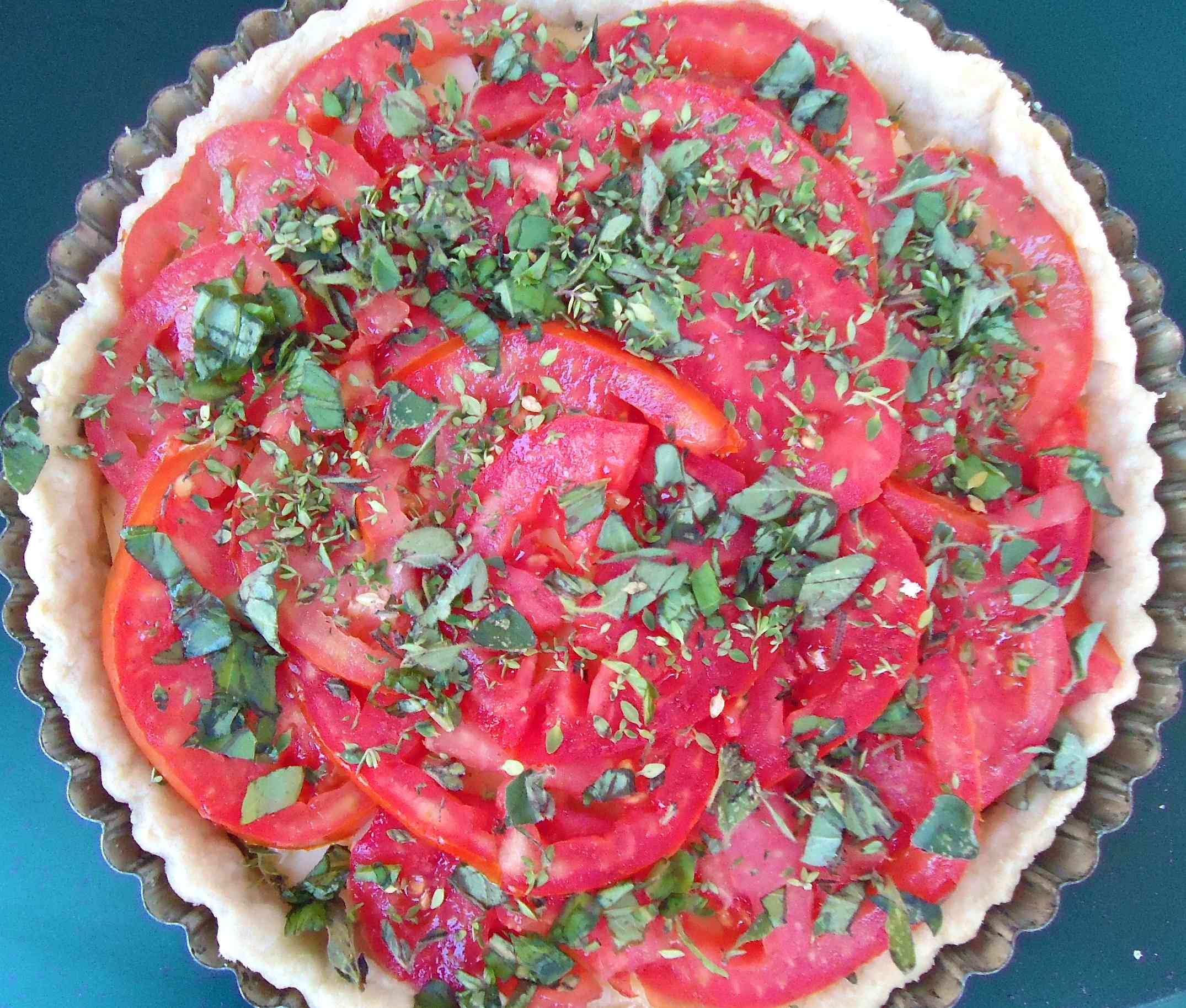
Here come the herbs! Sprinkle the grated Parmesan cheese on top and a few cracks of fresh pepper add zing.

Out of the oven posing with it’s “name sake” recipe from Bon Appetite, circa 1993. Relatively few – but exceedingly fresh – ingredients and a quick-to-put-together butter crust make this a summer showstopper.

Tomato, Herb & Cheese Tart

  • 1 recipe crust (see below)
  • 3-4 ripe tomatoes, cut into ¼” slices
  • 6 ounces Emmenthal or Gruyère cheese, sliced thin
  • 1 tbl. minced fresh oregano or 1 tsp. dried
  • 1 tbl. minced fresh basil or 1 tsp dried
  • 1 tbl. minced fresh thyme or 1 tsp. dried
  • 3 tbl. freshly grated Parmesan cheese
  • Fresh cracked pepper

Preheat oven to 375 degrees. Roll out crust on a lightly floured surface to approx. 12-inch diameter and turn into a 10-inch tart pan with a removable bottom. Trim edges. Freeze for 15 minutes.

Line crust with foil and use pie weights to hold the crust down while it bakes OR simply prick all around with a fork. Bake until crust is set, about 15 minutes. Cool on rack.

Cut each tomato slice in half and place on paper towels to drain 45 minutes. Preheat oven to 375 degrees. Top crust with Emmenthal or Gruyère cheese. Arrange tomatoes on atop cheese overlapping slightly. Sprinkle with herbs and then the Parmesan cheese. Season with a couple of cracks of pepper if you wish.

Bake until cheese melts and tomatoes are softened, about 35 minutes. Cool slightly, remove tart pan sides. Cut into slices and serve.

Crust

  • 1 cup all purpose flour
  • ¼ tsp. salt
  • 6 oz. unsalted butter, chilled and cut into small pieces
  • 3-4 tbl. ice water

Combine flour and salt in a medium-mixing bowl. Cut in butter with a fork or pastry bender until mixture resembles coarse meal. Add enough water by tablespoons for moist clumps to form. Gather into a ball, wrap in plastic wrap and place in the refrigerator to rest for 30 minutes.

Cornbread: plain and simple

There are basically two kinds of cornbread, sweet or savory. Being a South Carolina girl I was raised on the traditional, southern-style unsweetened type. My mother made cornbread and corn muffins quite often especially in the fall and winter. Or if she was making certain other dishes like her wonderful vegetable soup or catfish stew or hoppin’ john – there must be cornbread being baked to soak up all that good stuff in the botttom of the bowl. I love my cornbread with a heaping helping of homemade, spicy chili or better yet, a brimming bowl of seafood gumbo.

I don’t think I ever tasted sweet cornbread until I was in college. I remember thinking that’s pretty good, but… “Shouldn’t it be served at breakfast?” It was so much like a bakery muffin I was hoping for a cup of coffee to go with it.

And just like the sweet versus savory preference, most folks I know have a favorite recipe or likewise, acknowledge someone who “makes the best, ever!” In my family this would be my mother, of course. I love her cornbread. Maybe it’s the old cast iron skillet or the brand of cornmeal she uses, but hers always tastes the best. For years I have tried to duplicate her heaven-sent cornbread, but to no avail. Mine was always too dry or tasteless or hard or greasy or (insert something negative here). Well, up until today’s recipe…

After conferring with my mama once again, I challenged myself to yet another round of cornbread disappointment but, lo and behold, this go ‘round came up with a winner. It’s moist and light with a soft crumb but also a nice crunchy crust around the outside. This is thanks to my mother’s special hot grease technique – genius!

Yes, it’s still savory – no sugar – but I add in corn cut off the cob for extra texture – some nice folks dropped some fresh, local corn off at the husband’s office this week – yahoo! Yes, this recipe does call for rendered pork drippings but with only 1 egg, no sugar and healthy canola/olive oil, I think that the insalubrious factor, i.e. bacon/jowl grease, is canceled out.  I’d like to think that anyway, because the flavor it adds, along with the fresh corn and tangy buttermilk, make this recipe g-o-o-d.

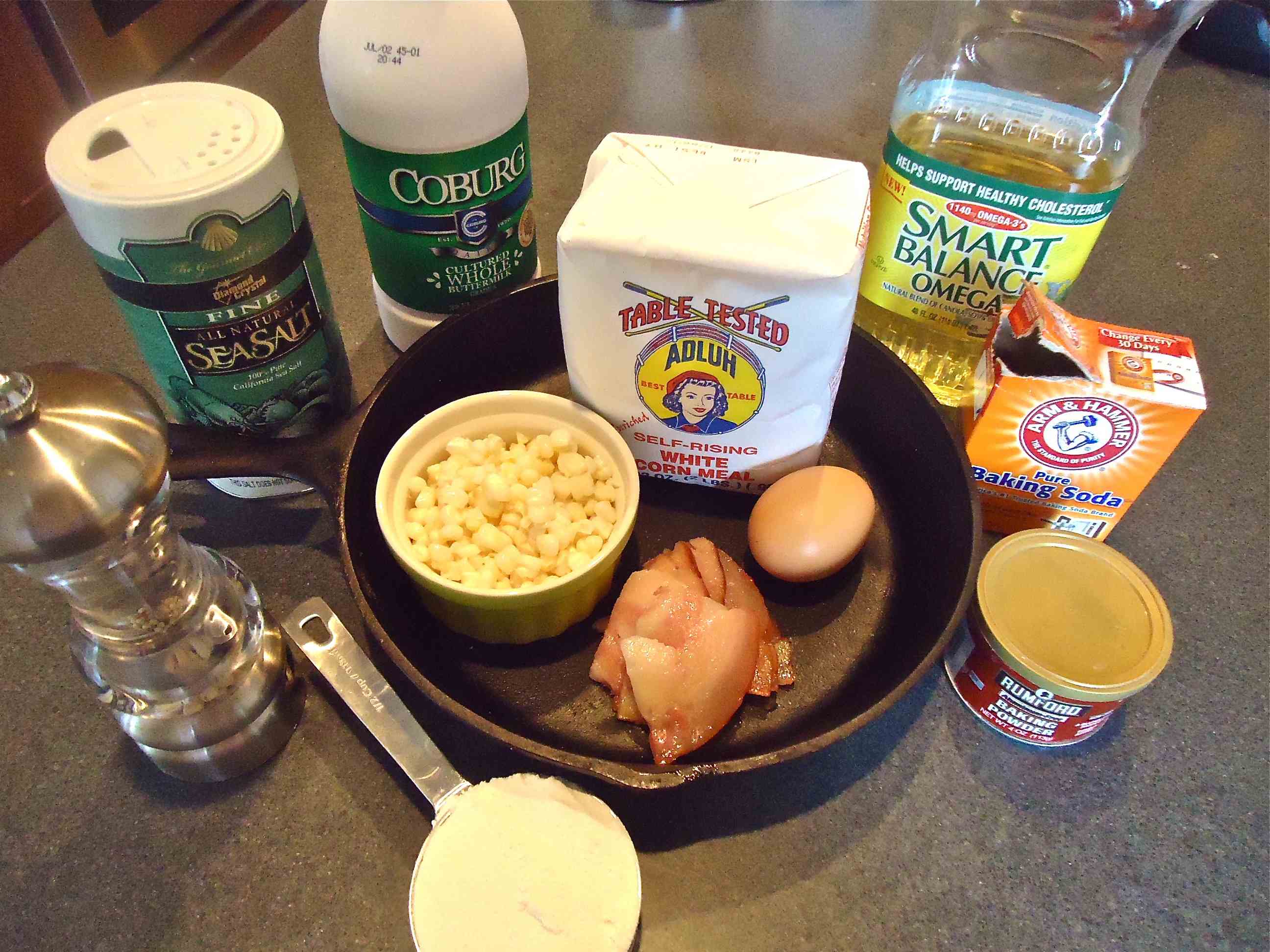
Ingredients for some good cornbread. Notice the “smart balance” oil … and also the sliced “hog jowl”, much like fatty bacon. Also the black cast iron skillet – well seasoned and it’s only about 20 years old…ha-ha!

Hog jowls…not that familiar but they worked out great. Not too salty but they provided just the right amount of fat for my cornbread. Bacon… or ‘pork belly’ would work well too. If you want to be really nutritionally naughty, chop these up after cooking and add them back to the batter with the corn kernels. Remember: you did not get this tip from me…

Whisk the buttermilk into the egg. I used “full strength” buttermilk but light or low fat will work just as well.

Add the dry ingredients to the egg/buttermilk mixture.

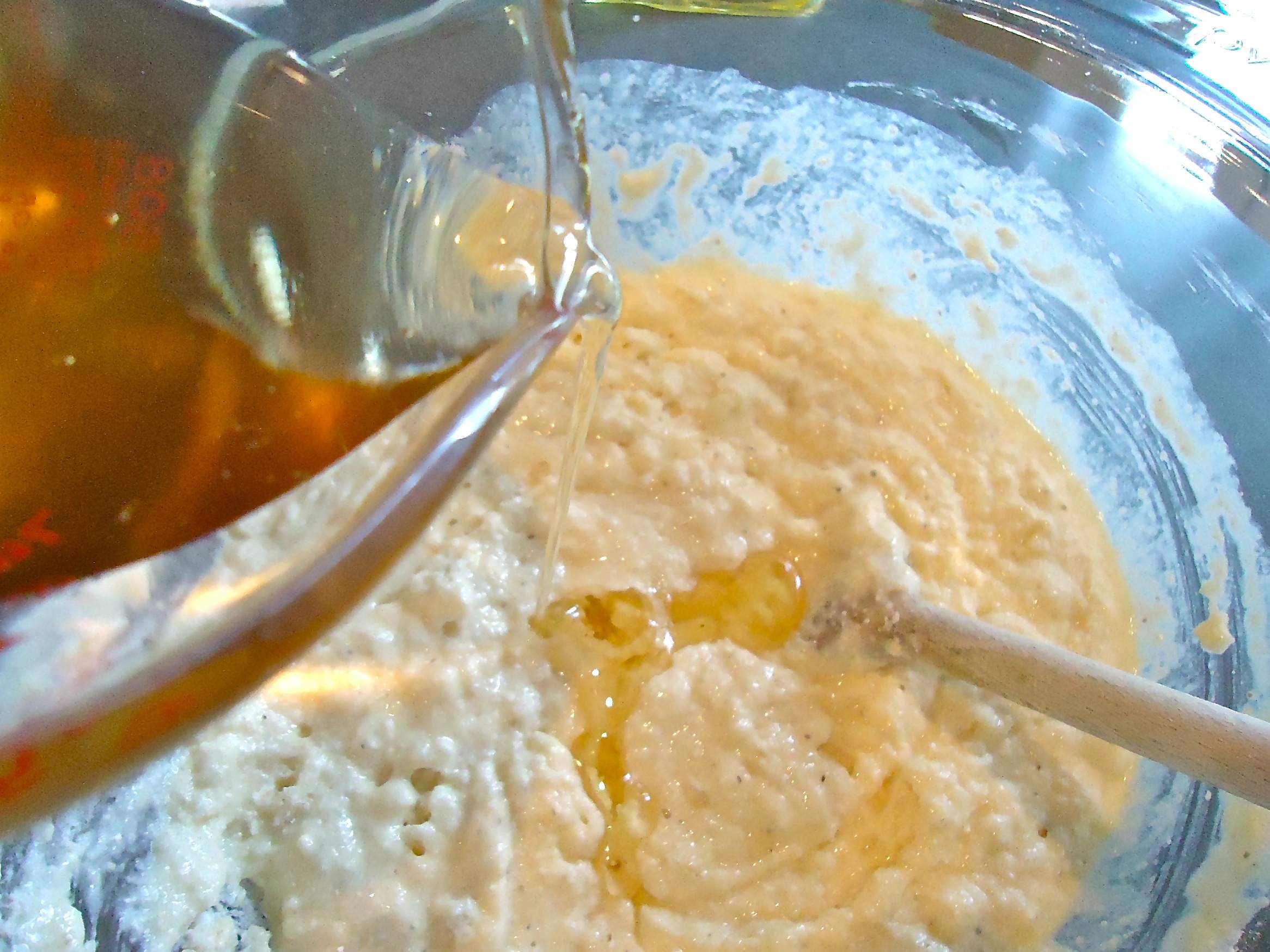
Add the oil mixture (oil plus leftover pork grease) to the batter. The grease/oil should be room temperature so the egg in the batter will be safe from ‘cooking’. After a good stir, add the corn kernels and a few cracks of fresh pepper and you’re ready for the hot skillet.

Pour the batter into the hot skillet.

The hot skillet may sizzle when you add the batter and it will most likely start to curl and cook around the edges, like its doing here. That’s a good thing.

Bake in a HOT oven (450 degrees) for 5 or 6 minutes and then reduce the temp to 425 for another 14 or 15 minutes. Do not over bake.

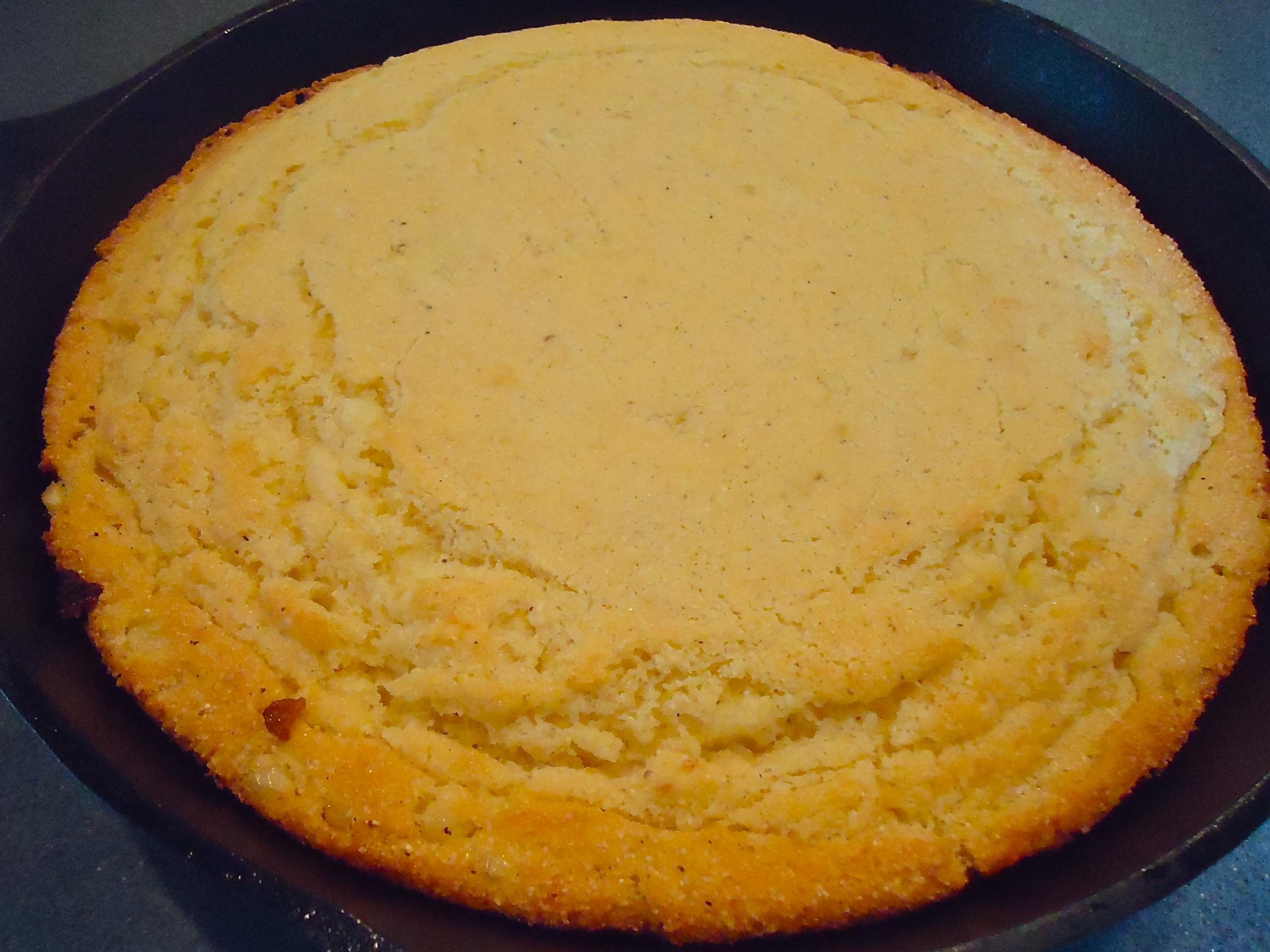
Out of the oven…looks good, smells great!

We have a winner! Finally a cornbread worthy of my cast iron skillet!

Cornbread: plain & simple

  • 1 ½ cup self-rising cornmeal (good quality like White Lily or Adluh)
  • ½ cup all purpose flour
  • ¼ tsp. baking powder
  • ½ tsp baking soda
  • 1/2 tsp. salt
  • 3 slices of bacon or 4 slices smoked hog jowl
  • 1 egg
  • 1 ¼ cup buttermilk (whole or light)
  • 2/3 cup fresh corn kernels
  • Oil (vegetable, canola or mixture)
  • Pepper, preferably fresh cracked

In a heavy ovenproof skillet – preferably cast iron – cook the bacon or hog jowls on medium high heat until the fat is rendered. Remove the meat and pour the remaining grease into a heatproof measuring cup. Add enough vegetable oil to make just under ½ cup.

Preheat oven to 450 degrees. In a bowl or piece of wax paper stir together the corn meal, flour, baking powder, baking soda and salt. Set aside. In a large mixing bowl whisk the egg with the buttermilk until well combined. Add 3 tablespoons of the grease/oil mixture back to the skillet and place the skillet in the preheated oven.

Complete the next tasks post haste. The oil/grease in the skillet is heating but you do not want it to smoke or worse, burn so work rather quickly. Add the flour/cornmeal mixture to the buttermilk/egg mixture. Stir in the remaining oil mixture and then the corn. Add a few cracks of fresh pepper and stir again. Carefully remove the hot skillet form the oven and pour the batter into the hot oil. Place the hot skillet back in the oven and bake 5-6 minutes. Then reduce the oven temperature to 425 degrees and bake an additional 14-15 minutes until the cornbread is baked through. Do not overcook. Cool on a rack for a minute, slice, and serve.

Surprising Summer Citrus Couscous Salad

Today I offer up a recipe that is full of surprises. Like the first time you ever tasted salty and sweet together – who would have thought those two seemingly opposite tastes would complement each other so well? Couscous is an old grain, semolina actually, originally first used in North Africa/Andalusian regions and now widely loved from the Middle East to Europe to South America and the U.S. But the couscous is not the stunner really – well, it may be since I write about Southern-style US cooking, so the fact that I use this as a base for my salad may be out of the box. However, my recipe incorporates other ingredients in combination that are more of a revelation than any actual shock.

Over the years I’ve made this “salad”, I’ve used quite a few combinations of herbs, spices and fruit flavors. But when I stumbled upon the combination of fresh mint and thyme mixed with orange zest I was happily surprised by the overwhelming fresh taste and alluring citrus smell of this dish. I emphasize the use of fresh herbs and fresh orange, not sure anything less would work out as well. The Balsamic vinaigrette also lends the whole dish a bit of extra zing and the crunch of the bell peppers and sweetness of the craisins adds more dimension. It also looks very pretty on the plate!

You can use any flavor or brand of couscous you prefer. I like this garlic and olive oil flavor. The salad can be made ahead – some may even say its better when the flavors are allowed to meld together awhile…

Par boil (or blanche) the carrots for 2 minutes, drain and allow to cool.

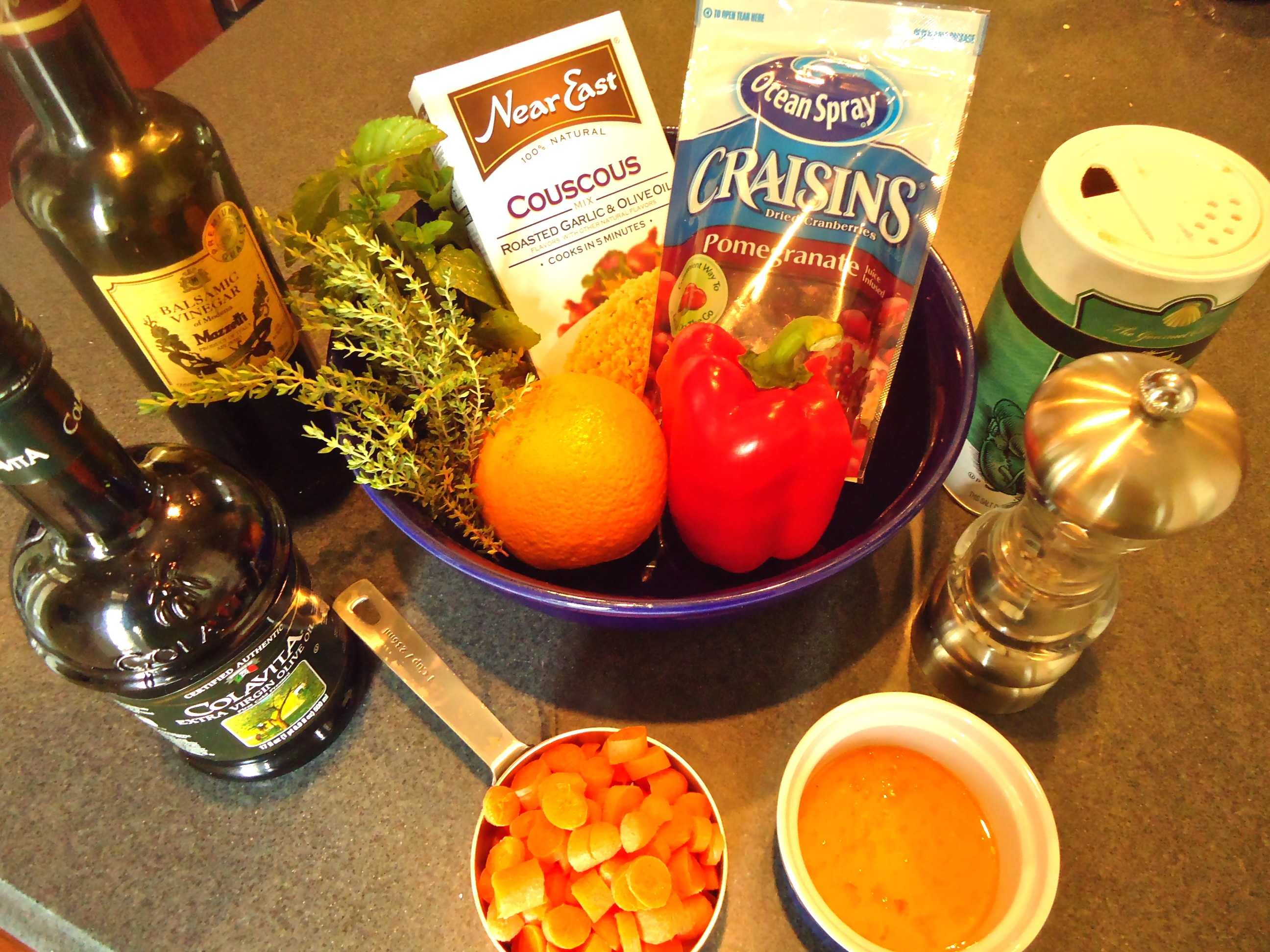
Here are the pretty veggies (and craisins). You can use any color bell pepper you have or like.

Adding the Balsamic to the juice and oil.

Add the honey to vinaigrette. I happened to have some unfiltered orange blossom honey – yummy!

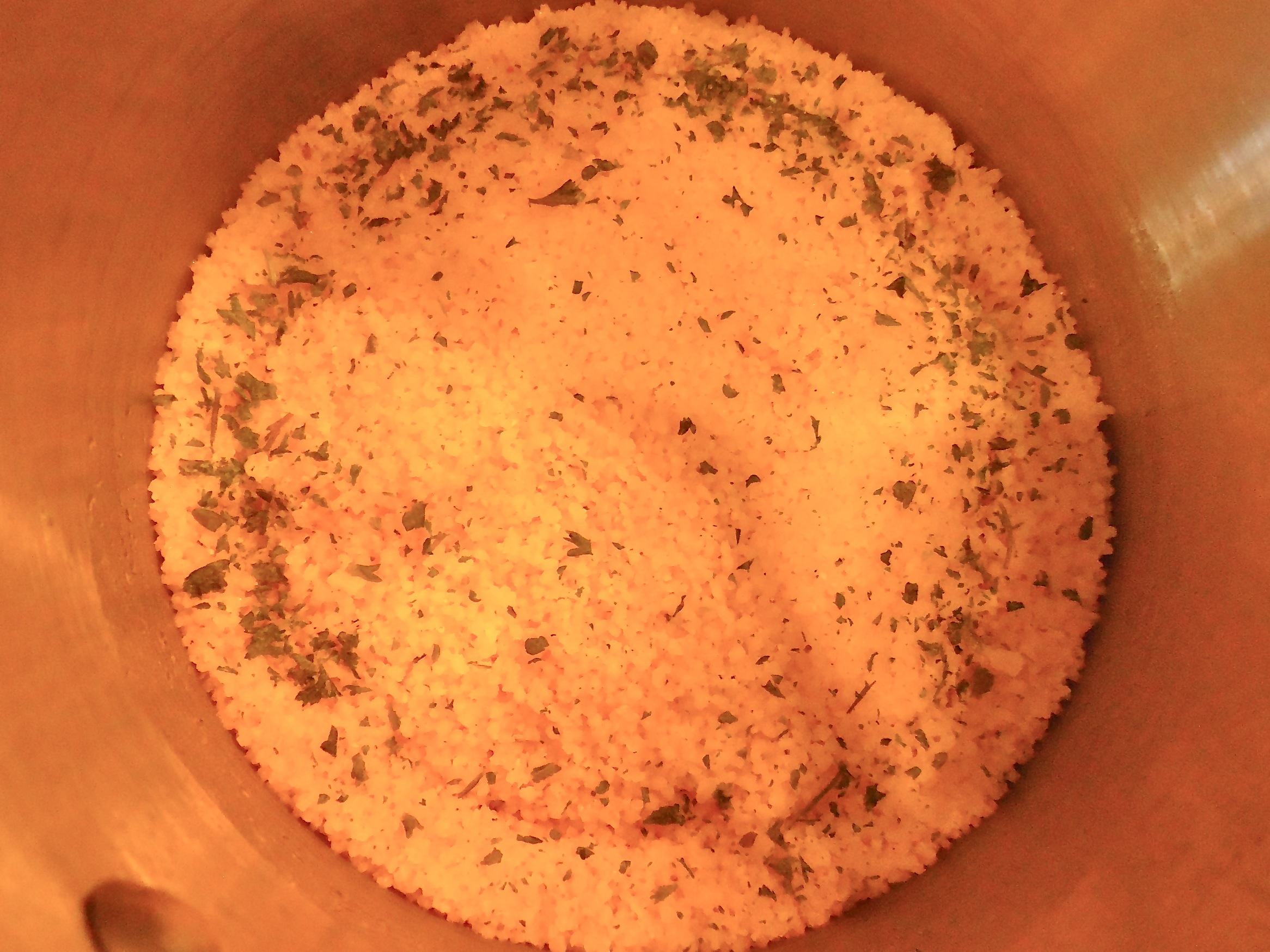
This is what cooked couscous looks like in the pan, before it’s been fluffed with a fork. For those who are not familiar…

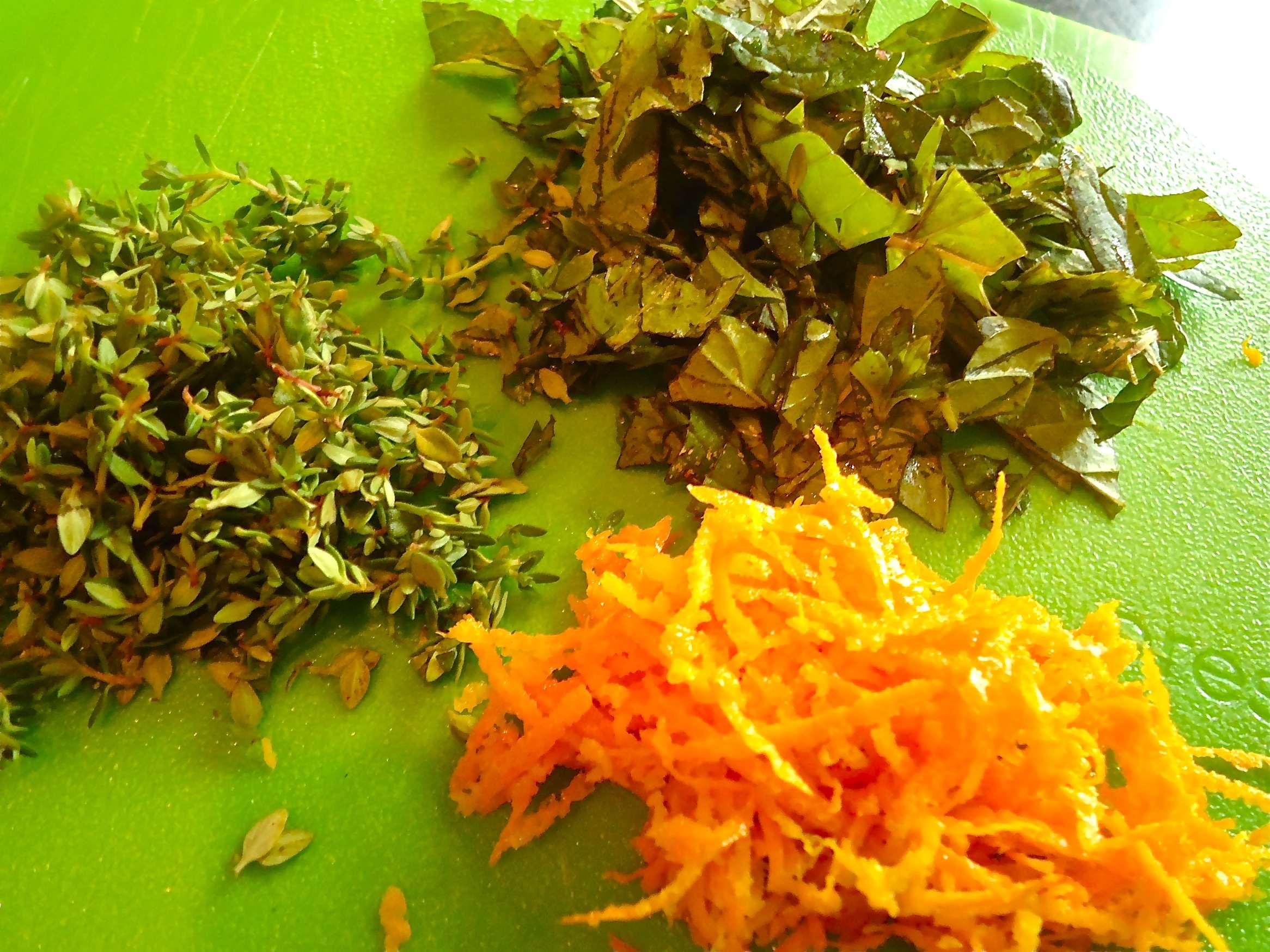
Here is the mint, thyme and orange zest – looks pretty and smells heavenly!

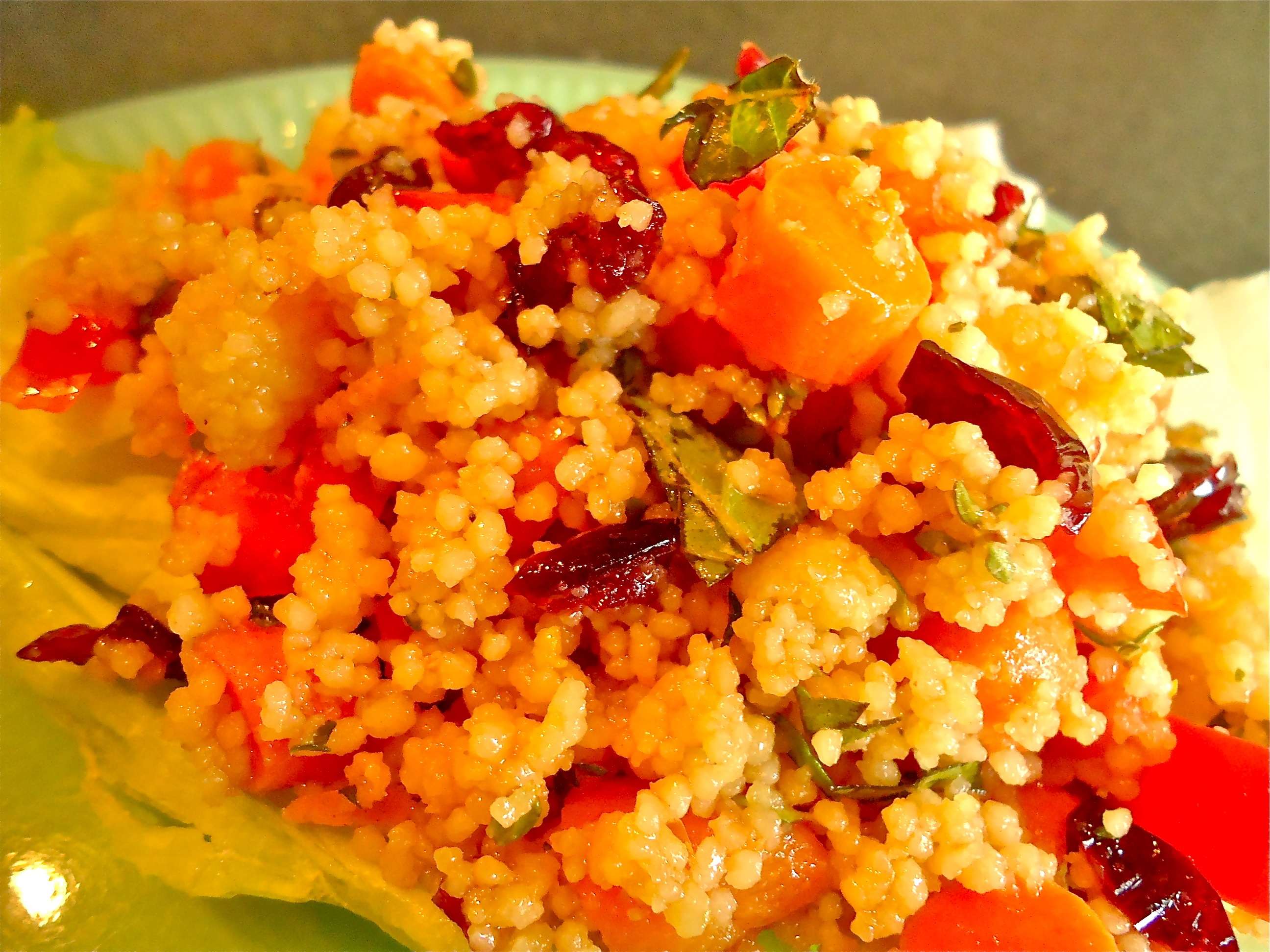
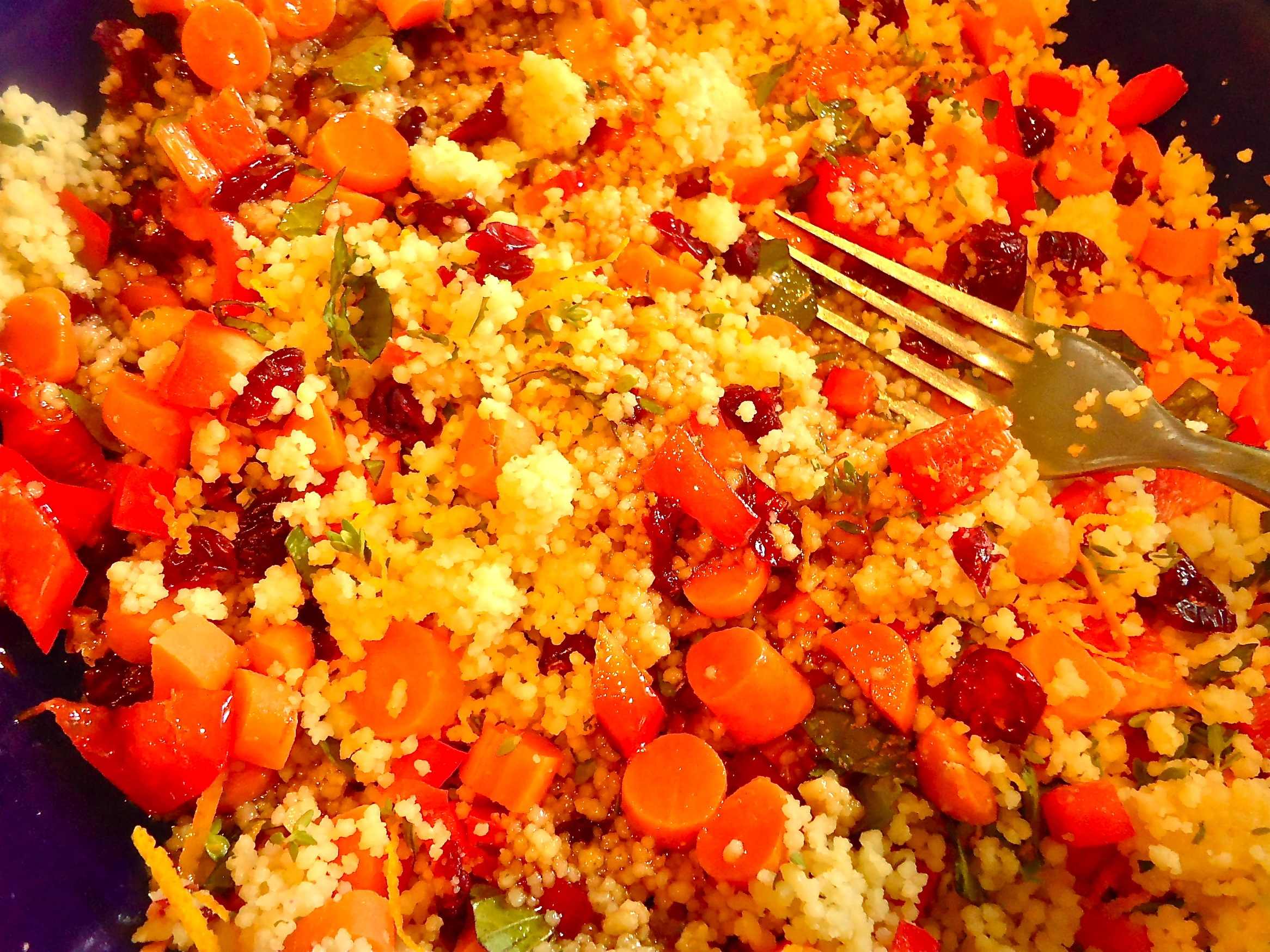
Everything has been added and lightly mixed in. Add in the vinaigrette carefully – you may find, as I do, that you don’t need the whole recipe. Impress your family and friends at your next cook out with this salad! My husband loves this salad – it goes great along side burgers, steaks or grilled fish or chicken.

Summer Citrus Couscous Salad

  • 1 (5.8 oz) box couscous, any flavor
  • 1 large fresh orange
  • 1 cup+ chopped carrots, small chop,
  • ½ cup chopped sweet bell pepper, small chop
  • 1/3 cup dried cranberries (such as Ocean Spray Craisins), roughly chopped
  • ¼ cup fresh mint, washed and chopped
  • 2 tbl. fresh thyme, washed and minced
  • 2 tbl. Balsamic vinegar
  • 1/3 cup extra virgin olive oil
  • 1 ½ tbl. honey
  • ¼ tsp. salt plus extra
  • fresh ground pepper

Prepare the couscous according to directions on the box. Allow to cool and fluff with fork. Set aside. In a small saucepan bring some water to a boil. Add carrots and boil approximately 2 minutes. Remove from heat and drain. Allow to cool. Grate the zest from the orange to get at least 1 tablespoon. Set aside. Squeeze the orange to get about ½ cup juice.

In a medium bowl whisk together the orange juice, olive oil, honey and vinegar. Sprinkle with ¼ tsp. salt, whisk together. You should have almost 1 cup. Set aside.

In a large serving bowl mix together the carrots, bell pepper, craisins and the cooled couscous. Mix lightly. Stir in the mint, orange zest and thyme. Pour half the vinaigrette over the mixture and carefully mix together. Add some ground pepper. You may pour in rest of vinaigrette – or not. I find I usually only use a little more half the vinaigrette. Use the leftover vinaigrette as a base for an Italian-style salad dressing or grilling marinade. It will keep in the refrigerator several days.

Adjust the couscous salad with salt and pepper to your taste. You may serve immediately or cover and store in the refrigerator until ready to use, up to a day.

Ode to Daddys Everywhere: Succulent Cheat’in Ribs

My apologies for only posting twice this week. As it happens, ‘real’ work became a priority and dang nabbit I had to write, write, write all week long. If you’d like to see a snapshot of what I do outside of the southbyse.com blog, I invite you to pop over to the Hilton Head Island Bluffton V&CB blog site, where I make the big bucks (ha-ha) as their foodie vibe blogger.

Ingredients are basic – not too many frills. But you can see the “cheat’in” ingredient in this recipe in the upper left – liquid smoke. Don’t spill any on yourself, you’ll be bound to attract all type of pesky critters looking for barbeque.

Check out these nice juicy, meaty ribs. These are baby back ribs but I really prefer St. Louis style.

Since I feel bad about shorting the posts this week I am going to double-down with both a story-post and a recipe. Here in the states it is Father’s Day on Sunday and I would be remiss if I did not honor the Dads in my life. First there is my husband, who not only is a patient and kind father to our 4–year-old girly girl, but never complains when he gets put in time-out (again!) during ‘class’ ruled over with iron crayons, by said daughter. Cheers go out to my father-in-law Mike, who shares my love of strong coffee and red wine and actually listens to my sometimes forthright opinions on politics, world affairs, and cooking. To my older brother-in-law Lee I say, good job on raising smart, open-minded kids with the wherewithal to appreciate both creamy, slow-cooked grits and foie gras. To my newest brother-in-law, Evan, being your first father’s day and with certainly many more to come, remember to never let a day go by without hugging both your child and your wife and telling them, “I you love”. Sure they know it, but it’s always best to show it!

Make the rub. I always use salt, Demera or brown sugar and different kinds of pepper but it’s really a matter of your taste preference.

Since my own dad passed away almost 9 years ago, father’s day has been a little sad for me. But knowing my Daddy, this would not set right with him and I can imagine him say saying, “Sugar, now don’t be sad! I’m up here watching out for you, don’t you know. Go on and have yourself a big piece of that (insert: cobbler, pie, cake, fried chicken) and you’ll feel right as rain. I’ll see you again someday – not too soon, but someday”. Ah, my Daddy. He was a strong Christian and of the Baptist faith, which fit him perfectly since he was as tall, boisterous and friendly but exceedingly kind and modest, as any country preacher-man.

On the rack with the rub, ready to be covered with foil. Pour the juice or wine or beer or whatever in the bottom of the pan and add the liquid smoke. Shhh… don’t tell.

My Daddy was a friend to both neighbor and stranger, and truly aimed to live by the golden rule: “Do unto others as you would have done to yourself.” It’s a little saying that has a huge impact and to this day I try to live by the same. My father was also a tinker, a thinker, a fisherman, a gentleman farmer and a lover of nature. All traits I admire, and some of which luckily rubbed off on me. Thanks Daddy!

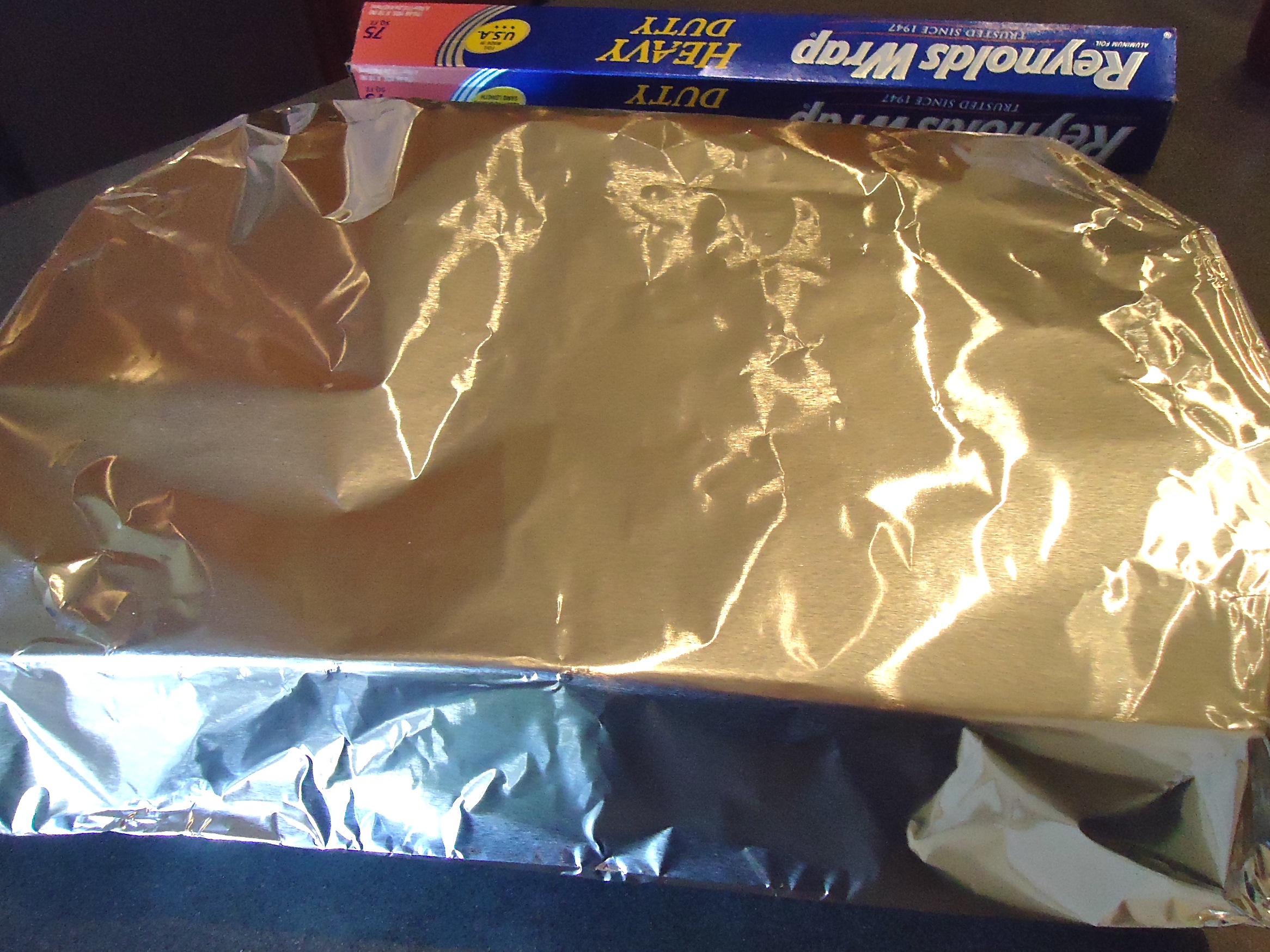
This is a boring picture but it is important to cover the entire pan with foil securely – no rips or missed spots.

There’s so much more good stuff to know about my dad, I could write a book. But I’ll stop here and state that above all my Dad loved his wife (my Mom), his 5 kids and our extended family. We were always his number one, second only to God and placed well above himself.

One thing my Daddy did love was to eat good food. He had a pretty strong sweet tooth and never passed up a dessert, especially my Mother’s cakes or pies. And, as I’ve mentioned before my Dad was a barbeque expert, commonly referred to as a pitmaster. He would laugh at that title, I think. But he did rule the ‘pit’ as his specialty was roasting a whole hog in a traditional method, known as Williamsburg County style. Of late, this method has garnered some fame mostly through Rodney Scott of Scott’s Bar-b-que in Hemingway, SC . TV host and foodie Andrew Zimmern called Scott’s barbeque “the best he’s ever had”. And Rodney cooked up some fine ‘Q’ at the last year’s Music to your Mouth festival at toney Palmetto Bluff. Not surprising to me at all.

Out the oven it’s not as pretty as a wood smoked rack for sure but it should be juicy and flavorful. We’re taking care of the pretties in a moment.

This method of cooking the pork is very basic, allowing the flavor of the pork and the wood smoke to shine, so as long as you don’t use overly hot coals, or otherwise overcook the meat, you’re good. The recipe I’m presenting today is NOT great barbeque on line with Scott’s or my Daddy’s. But it is pretty darn good and since I am currently at a lack for a pig pit or whole hog for that matter, I improvise my barbeque technique.

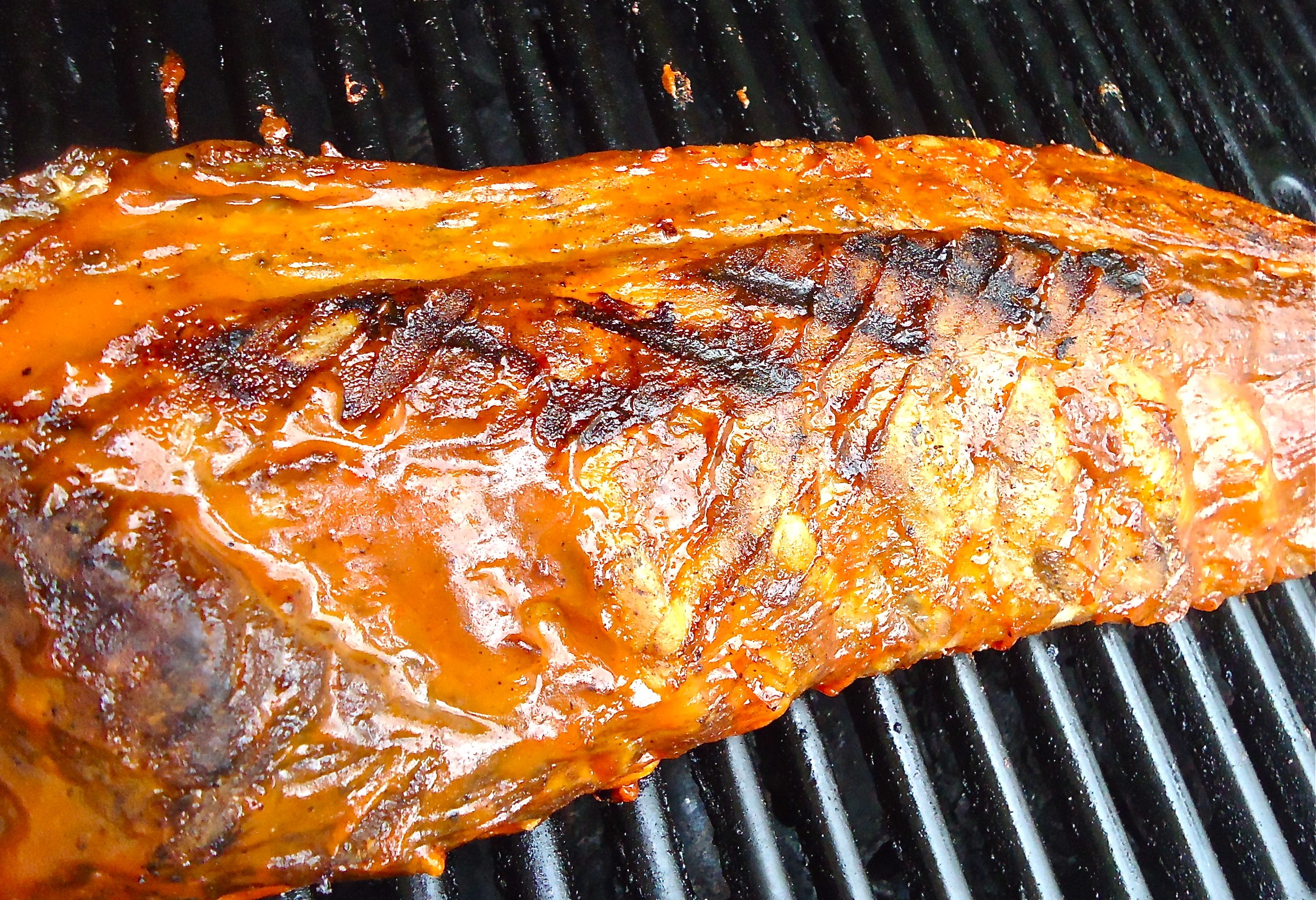
Here it goes onto the rack to sear and get some nice grill marks along with your favorite barbeque sauce.

We love pork ribs in my family so I make these racks whenever we have a hankering for barbeque. The method is the key – cook them low and slow, i.e. low temperature for a long time. I make my own rub with whatever I have available but it always includes salt, sugar, and several kinds of pepper. The cheat’in part is to make up for the lack of smoke – hard to come by without a real wood fire! And of course better quality pork makes better tasting pork ribs.

Here we go, that’s better! Finish it up on the grill and you’re all done. Easy peasy.

Succulent Cheat’in Ribs

  • 1 rack good quality pork ribs, baby backs or St. Loius preferred
  • 1/2 cup brown sugar (or Demera)
  • 1 tsp. salt
  • 1 tsp. black pepper
  • 1/2 tsp. ground chipotle pepper or red pepper
  • 2 tsp. adobo seasoning
  • 1 tsp. smoked sweet praprika
  • 1 tsp. liquid smoke (this is the cheat’in part!)
  • 1 1/2 cups liquid – fruit juice such as apple or wine or beer or a combination
  • barbeque sauce (your favorite!)

Preheat oven to 200 degrees. Wash and dry the ribs. Prepare a roasting pan with rack. Mix together all other ingredients except the liquid smoke and liquid/juice to make the rub. Sprinkle this mixture over and rub onto both sides of the ribs. Place ribs on the rack. Pour the liquid or juice into the bottom of the roasting pan and add the liquid smoke. Cover roasting pan with foil, making sure it is sealed well. Roast in the oven for 3 1/2 to 4  hours or until ribs are cooked and tender but not literally falling off the bone. Depending on what type of grill you have prepare it while the ribs are roasting.

When hot, place cooked rib on grill and brown or sear on each side. After one side is browned slather on the barbeque sauce and continue to grill until ribs are to your liking. Serve immediately with extra sauce.

* If you are using a charcoal grill and have a smoker box feel free to use it when you are grilling off the meat, even it’s just to lessen the “cheat’in” aspect of his recipe!

[Remembering] a white Christmas in June with tasty shrimp dip

Even though summer isn’t official until June 20th, here along the coast of South Carolina we’ve had summer-like weather for a couple of months. School is out and a tropical storm passed within shout’ in distance in May. And while we haven’t landed any monster crabs yet off our community dock, local commercial shrimpers have been filling their nets for several weeks and a neighbor of ours hauled in a couple of beautiful red drum (known around here as redfish or reds) over the weekend.

Thinking about all this ocean bounty started me thing about…Christmas. Yes, I realize this makes no sense, as Christmas is in December and that means winter and cold weather (even here). Let me explain…

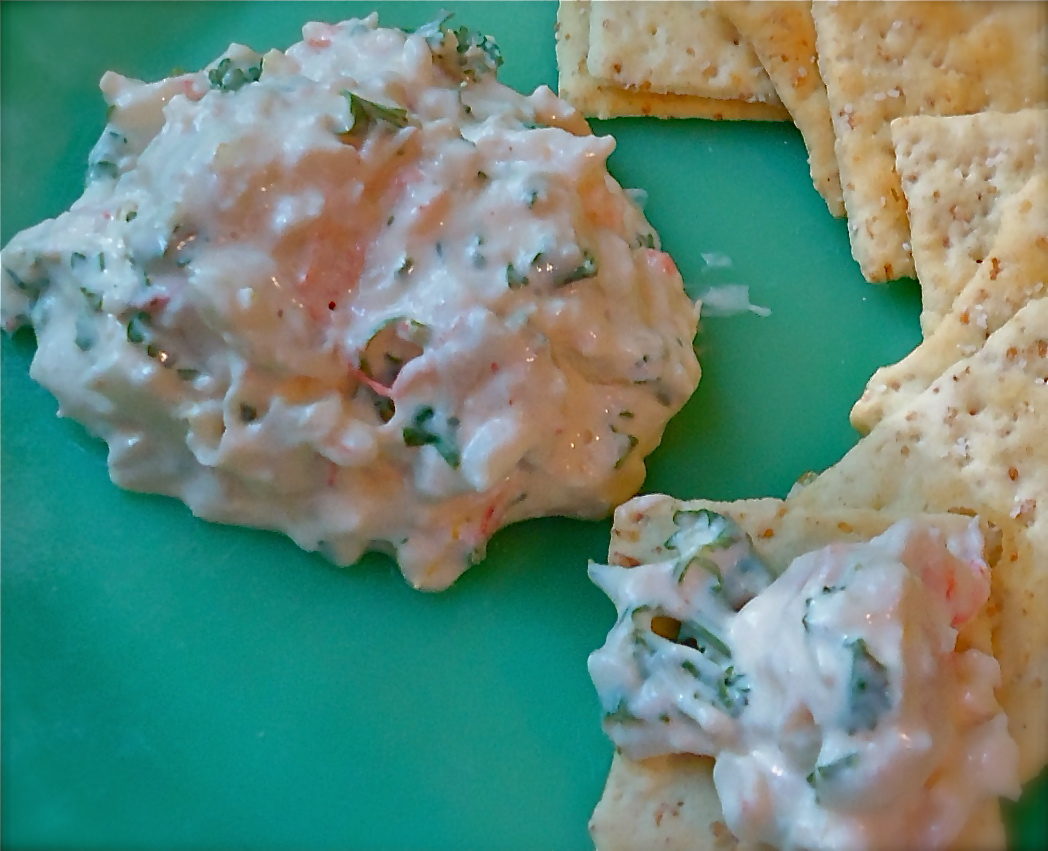
There are a few recipes for which I have a claim to fame, if you will. Well, I use the term ‘fame’ loosely, as the scope of my celebrité reaches the farthest corners of… family cookouts and neighborhood potlucks. Nevertheless, my shrimp dip is probably my most-requested dish.

This recipe goes back, way back – to 1989. It was created out of necessity and a snowstorm, if you can believe it. I was staying with one of my sisters and her family on the isle of Hilton Head and it was Christmas time. While I was supposed to head up to my parent’s home and my sister was supposed to travel to her in-laws in Pinehurst, NC the weather took an odd turn, with frigid temperatures and icy conditions shutting down parts of the Interstate 95 corridor. We could not travel so we went into emergency mode and stayed put at home

After running to the Piggly Wiggly on an emergency supply run, we settled in for a long winter’s nap and woke up to about 4 or 5 inches of the fluffy white stuff and no hot water. While the power was on, a pipe burst and we were without hot water. Oh well, we made due with what we had or were able to purchase the day before. My brother-in-law mentioned he had some shrimp fresh frozen so, “please try to make some kind of appetizer out it and whatever else you like.” Our family likes to snack but snack well, especially while we cook up the ‘main event’ for a holiday dinner. I was up to the challenge.

So I created this spread. The fresh parsley and lemon along with the shrimp really make this sing so I would not substitute or go for less than fresh on these items. Now I did state the shrimp were fresh frozen and they were tiny as well, if memory serves me. But they were locally caught, wild shrimp (not farmed) caught by my brother-in-law in month prior to being used in this recipe.

Letting the mixture sit makes a difference too. I made the inaugural concoction early in the day and it sat refrigerated for a few hours before being gobbled up, so the flavors had time to meld together. Lastly, I prefer noticeable chunks of shrimp in the dip so usually I roughly grind half the shrimp in the food processor and then chop the other half by hand to the perfect size – you’ll get shrimp in every bite!

This is a shrimp boat at the Bluffton Oyster Company. That big pile of shells are actually oyster shells, which will be recycled into paving and decorative building materials.

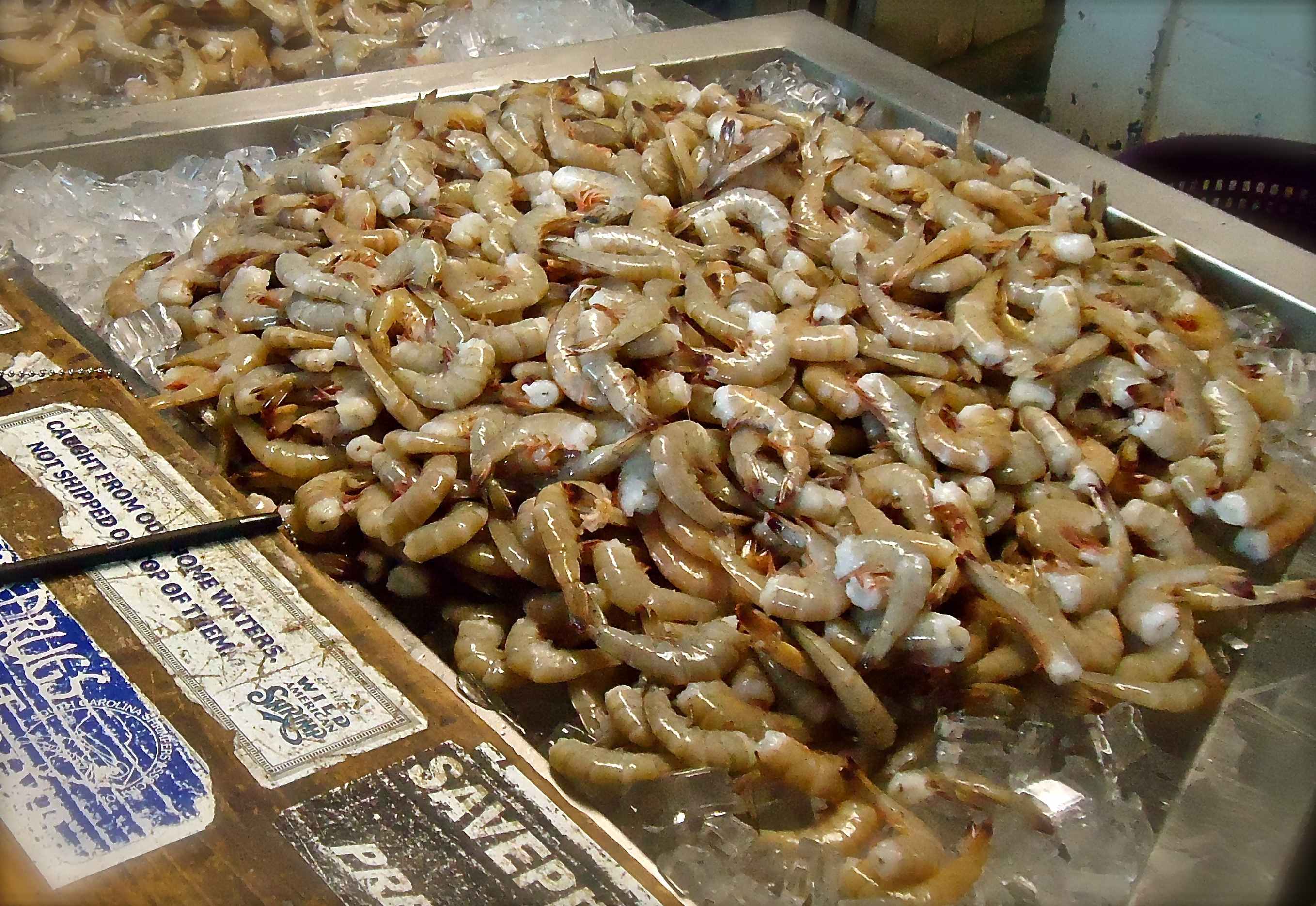
These are fresh, w-i-l-d shrimp for sale – yum! (This is Bluffton Oyster Company.)

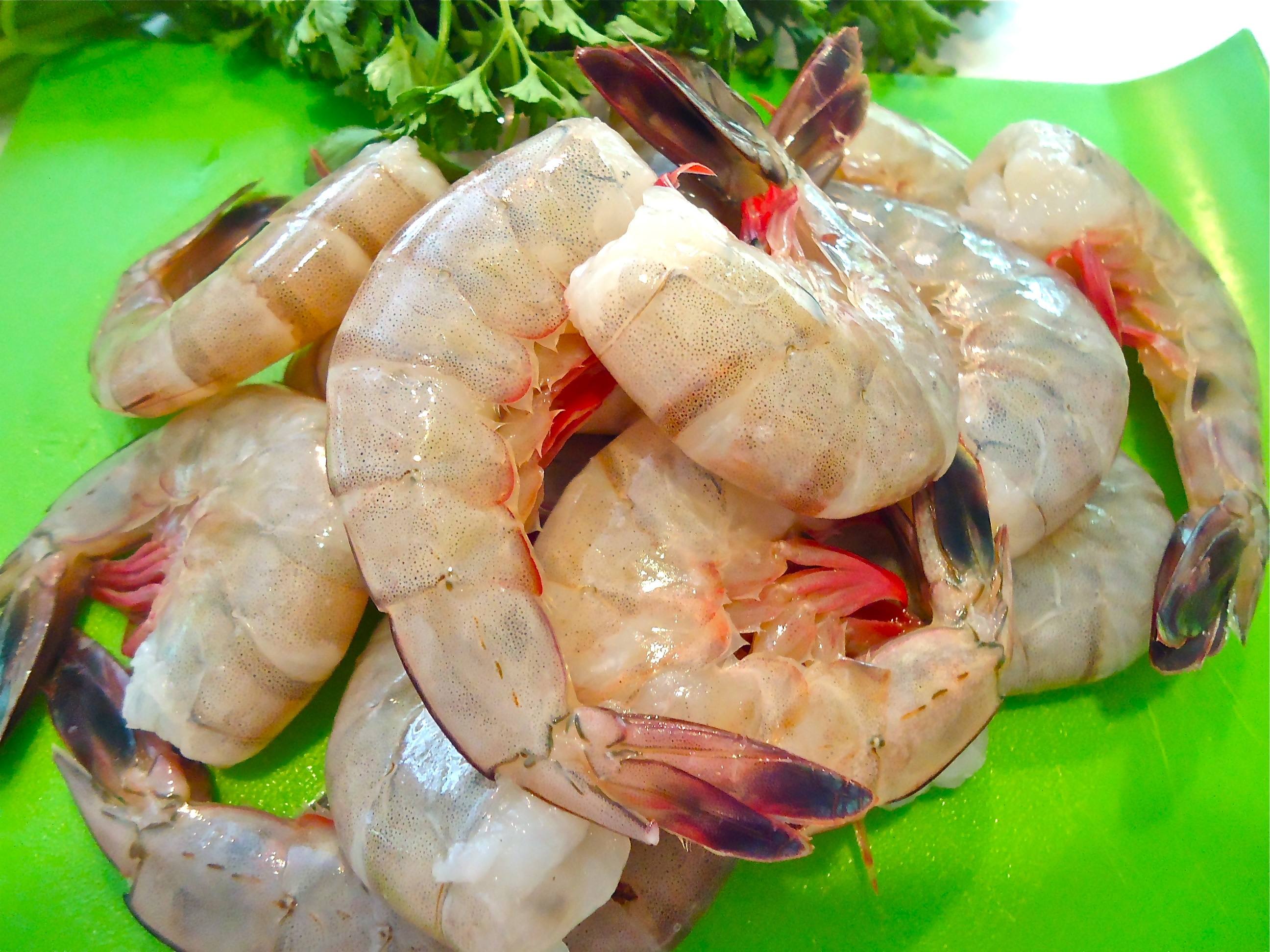
A much smaller pile o’shrimp, ready to be lightly cooked.

Cooked shrimp have been drained and are ready to peel.

Chop the shrimp by hand or use a food processor – usually I use both so half the shrimp are finely minced and half are chopped.

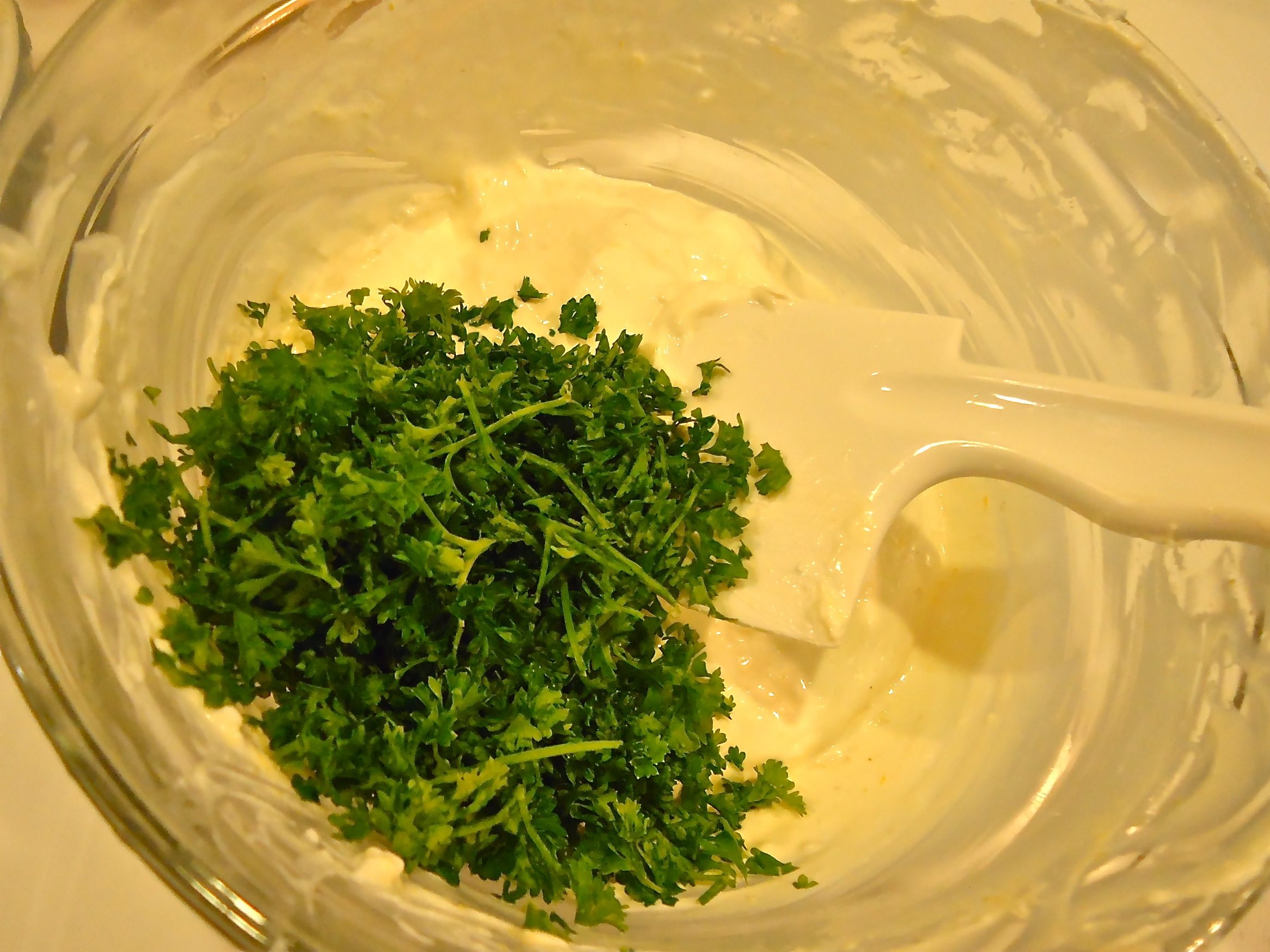
I mix the cream cheese and mayo first and then add the other ingredients. I prefer homemade mayo but Duke’s is my first choice for store-bought.

Adding the hot sauce. I like Crystal or Tabasco but use your favorite!

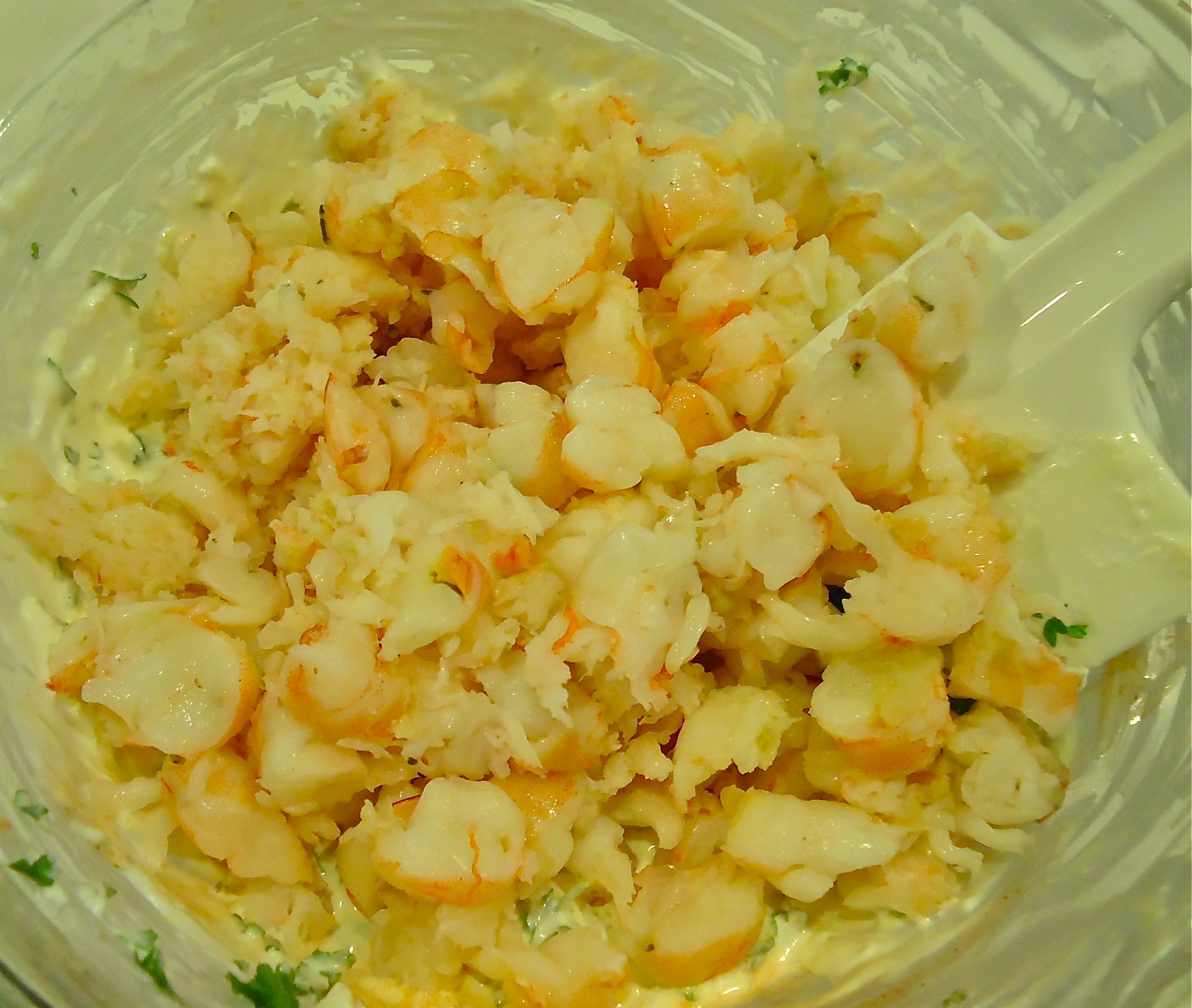
Finally, fold in those delicious shrimp. Let the mixture rest in the refrigerator so the flavors meld – if you can keep your kids, your spouse, your friends and yourself from snatching samples!

Tasty Shrimp Dip

  • 1- 8 oz. package cream cheese, softened
  • ½ cup mayonnaise (preferably homemade)
  • 1 1/2 cups cooked shrimp, peeled with tails removed
  • 1 lemon
  • ¼ cup sweet onion (preferably Vidalia), grated
  • 1 large clove of garlic, minced or pressed
  • ½ cup fresh parsley, washed, dried and finely chopped
  • 2 tsp. Dijon mustard
  • 1 tsp. hot sauce
  • salt and pepper

Finely chop the cooked shrimp but do not pulverize. You can do this by hand or with a food processor. Grate the zest of the lemon and squeeze the juice and set aside. In a medium bowl mix all the ingredients together including the shrimp and the lemon except the salt and pepper. I suggest this order: Mix mayo and cream cheese until smooth. Then add onion, lemon zest and juice, garlic, and mustard. Mix in parsley and the hot sauce. Fold the shrimp in last. Taste the mixture, adding salt and pepper if you like.

Store in a covered bowl in the refrigerator at least 1 hour or up to 24 hours. Serve with crackers or toast points.

Farmers market pick: savory stuffed patty pan squash

Do you like farmer’s markets? I love farmers markets. Within 20 miles of my home there are 8, yes 8, farmers markets going on during the week. Very nice for our little ‘burg. Some are relatively small and simple and some are bigger with a festival atmosphere and extras like craft vendors, live music and food trucks. I love them so much that dear Hubby has put my wallet on ‘farmers market lock-down’ and I now stick to a budget of less than $15. Well, unless we’re having a meal there or we’re having guests and I’m cooking.

The farmers market is made for browsers like me. I tend to walk around a lot before I make any purchases and this can drive those who are not browsers (like Hubby) crazy. He’s not a browser, but a git-r-done type person. It can also unnerve some of the farmers and vendors, I realized recently. I see them look at me as I pass by their stall for the third or fourth time and I can tell they are thinking, “You again…what are you up to? Just go ahead and buy something already!”

To each their own, but I like “look’ in” as my Daddy would say. It’s relaxing to me and with the variety of colors, textures and smells, my creative juices begin to flow. I am formulating a plan in my noggin. What looks great? What may be out of season and NOT available soon? What is reasonably priced? How can I combine this vegetable with some other ingredient I have a hankering to cook this weekend? Hum. At this point Hubby has taken our girl over to get lemonade or an Italian ice and left me to decide my final purchases. Smart, smart Hubby.

Thus, I come home with a bunch of patty pan squash, among other things. Over the last several weeks I had seen them at every farmers market. They are so cute with bright yellow scalloped bases splashed with dark green splotches – they can even sport hats! “They’d make the perfect vessel for something delicious”, I thought.

As it so happens, I also stopped that day by a favorite vendor, Mibek Farms, and discovered garlic sausages for sale. My brain clicked into high gear and after one mediocre attempt, the Savory Stuffed Patty Pan Squash recipe was given the thumbs up by Hubby (and me). This recipe uses a combination of fresh herbs I had available, but feel free to try your own preferred mixture and if you can’t find garlic sausage use your favorite fresh, uncured sausage.

See you at the farmers market!

Use a sharp knife to remove the top at an angle. Trim excess pulp and remove any large seeds.

Scoop pulp out of the squash. I use the knife to neatly loosen it all the way around and a spoon to remove the center. It should pop out, but don’t break through to the bottom.

Chop the pulp. Again, remove any excessively large seeds.

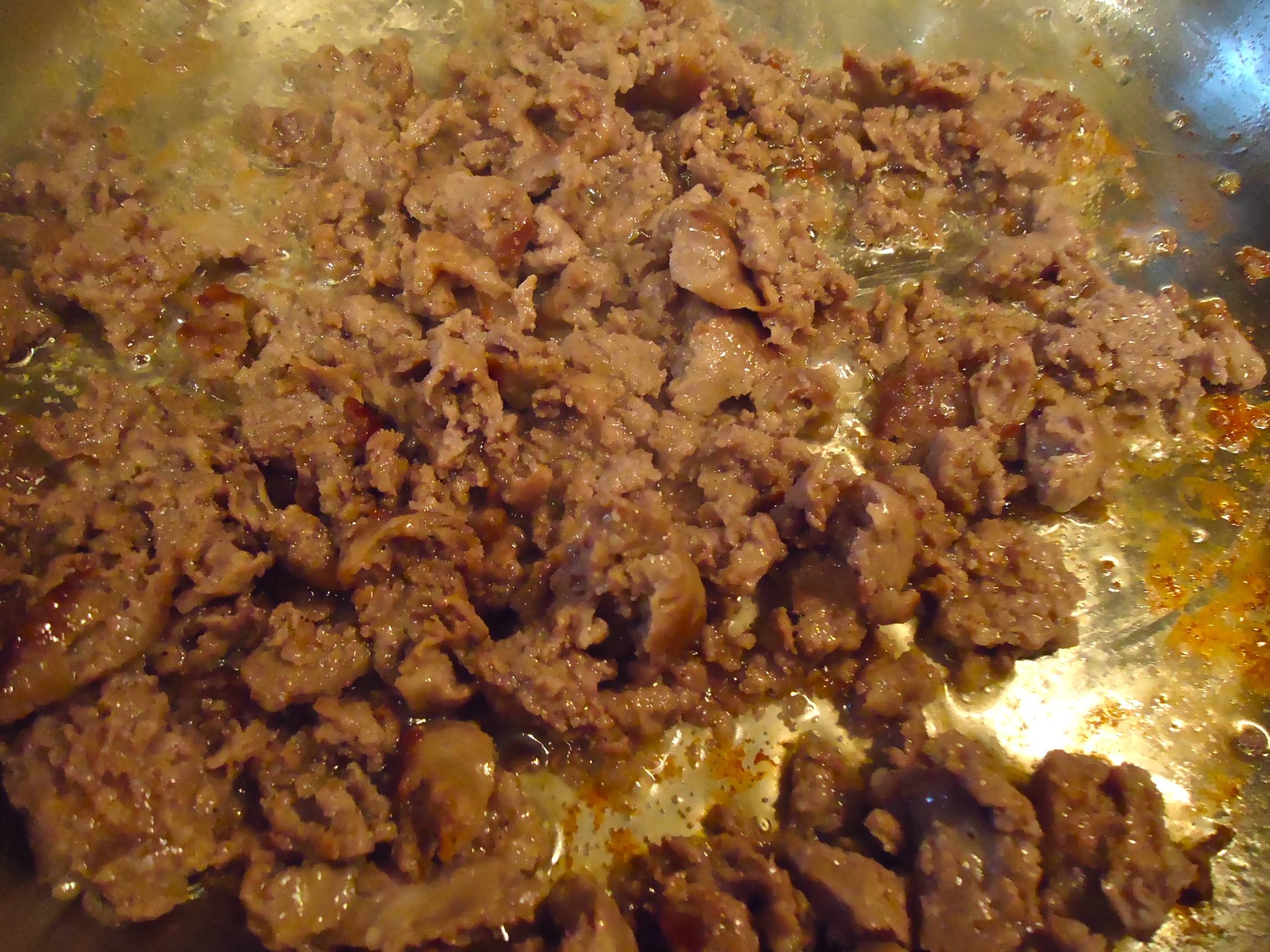
Brown the sausage and then drain on paper towels. You’ll use this saute pan to…

…saute the onions. No need to use a clean pan. Try to scrape up any leftover sausage bits.

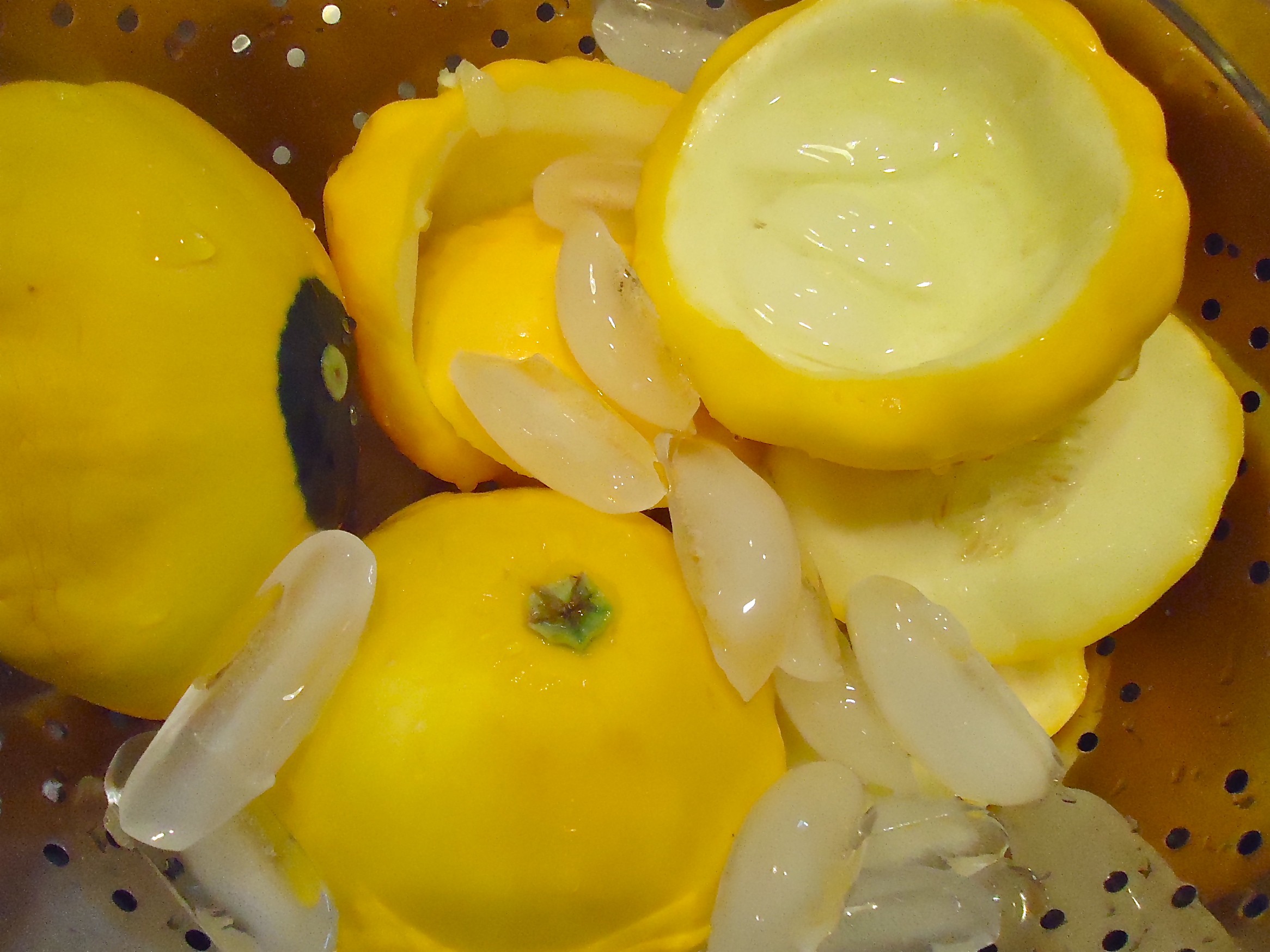
Meanwhile, par boil the patty pan squash. If you have big ones, drop the bottoms in first and allow to cook about 2 minutes, then drop in the tops and remove all after another minute. The small patty squash should par boil about 1 minute for the bottoms plus 30 seconds or so for the tops.

Drain the squash in a colander. I pour some ice and water over them to stop the cooking process.

Add the cooked rice, drained sausage, herbs, chopped squash pulp and a few cracks of pepper to the sauteed onions.

Stir in the tomato paste and chopped tomato until just mixed.

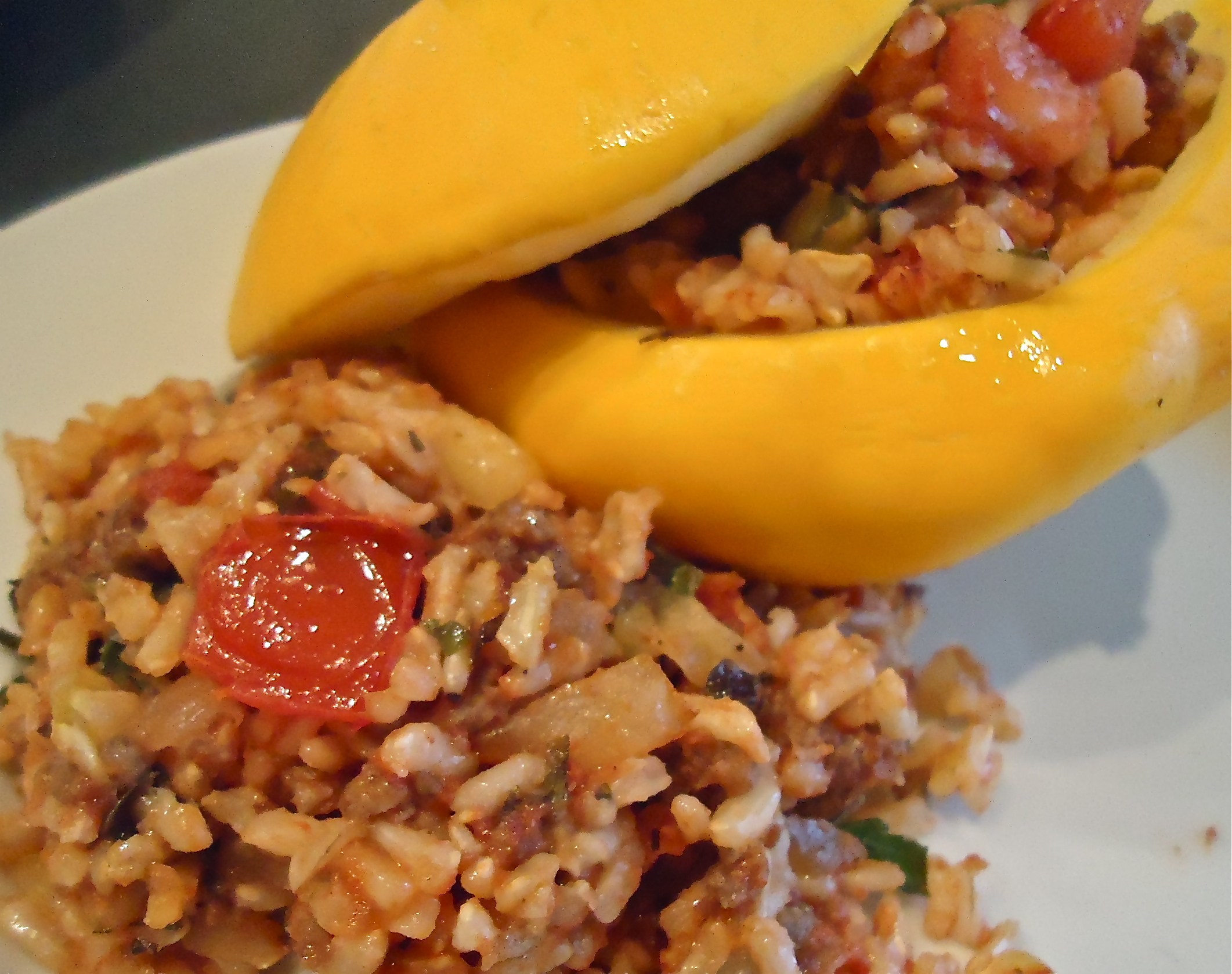
Place half the filling mixture in the baking dish and place the patty pan bottoms on top. Sprinkle some salt inside the squash bottoms and spoon in the filling.

Place the tops on the squash and cover the baking dish with foil (or a cover if you have one). Out of the oven in about 45 minutes.

Savory Stuffed Patty Pan Squash

  • 4-5 large or 8-10 small patty pan squash, cleaned with pulp scooped out and chopped (save tops)
  • 1 cup brown rice
  • 2 ¼ cups vegetable stock
  • 1 tsp. olive oil
  • 2/3 cup sweet onion, small chop
  • 2-3 links garlic sausage (or your favorite fresh sausage, not breakfast sausage) casings removed
  • ½ tsp. + extra salt
  • ¼ cup fresh Italian parsley, chopped
  • ¼ cup fresh oregano, chopped
  • 1 tsp. herbs de Provence
  • ½ tsp. powdered thyme
  • 1 tbl. grape oil or vegetable oil
  • 2 tbl. tomato paste
  • 1 small tomato, small chop
  • Fresh ground pepper

Cook the rice in the vegetable stock and olive oil. Heat the grape oil in a large sauté pan and brown the sausage and drain on paper towels. Do not clean the pan but sauté the onions in the pan for about 3-4 minutes, scraping up the bits stuck in the pan. Remove form heat and set aside.

In a large pot heat water and add a few dashes of salt. When near boiling drop squash bottoms in salted water and allow to par boil about 2 minutes for the large patty pan and 1 minute for the small size. Add the tops and cook all another 1 minute. Drain all the squash in a colander and cool with water and/or ice to stop any further cooking.

Add the sausage, rice, and herbs to the onions and stir. Stir in the tomato paste, shopped tomato and a few cracks of fresh pepper and salt to taste.

Preheat oven to 350 degrees. In a 9 x 13 oven-proof baking dish spread about half the filling. Place the patty pan bottoms on the filling and lightly sprinkle the interiors with salt. Spoon filling into each patty and place tops on each squash. Cover the baking dish with a cover or foil and bake for about 35 minutes in the preheated oven. Remove foil and bake another 5-10 minutes.
Rutabaga, rutabaga, where for art thou…my rutabaga?

For the last couple of weeks I have had an oogly little monster of a vegetable staring at me from across the kitchen island. Purchasing the rutabaga was a whim. I saw a small pile of them displayed upfront and center at my local grocery with a handmade sign exclaiming, “Sale! $.59 lb.!” That got my attention and even though I know that this turnip is a late fall and winter crop, not late spring, I reasoned that for less than a dollar I could have some fun with this root vegetable, plus I actually like them. I’m not kidding.

The most off-putting part of dealing with the rutabaga (also called a swede) is its odor. It does not exude a pleasant smell when being cooked. But the aroma can be camouflaged easily enough by use of other smells – garlic, onion, lemon, and of course, spices like cinnamon, cloves etc. I chose the latter.

A few days ago my tuberous friend sprouted a couple of leafy green spikes so I surmised it was either cook it up somehow or stick it back in the ground to eat another day. This time I chose the former. Deciding how to prepare it was another quandary altogether. I thought about making croquettes or roasting it with other root vegetables, or maybe a soup. But in the end, I settled on a quick bread – using a nice combo of spices and some toasted walnuts in a moist batter.

My Mom cooked up rutabaga a good bit in our household and both of us appreciated it’s unusual flavor. Now my dad and brother did not, so happily we got the rutabaga all to ourselves. She just cooked it into a mash of sorts, with some butter and a dash of salt. It is one food that does not taste like it smells after it’s cooked – to me the taste, when simply prepared, is rich and earthy and clean.

And believe it or not, that one rutabaga I used in this recipe provided enough shredded pulp for both the loaf of bread and about 2 cups of cooked puree. I guess I should add ‘economical’ to the rutabaga résumé.

My friend the rutabaga…

The rutagaba is not as difficult to peel as say, a jicama.

Shred the rutabaga with a grater, mandolin or a food processor.

Mix together all the wet ingredients: eggs, oil, buttermilk, applesauce, and vanilla extract. You can use a whisk or a mixer.

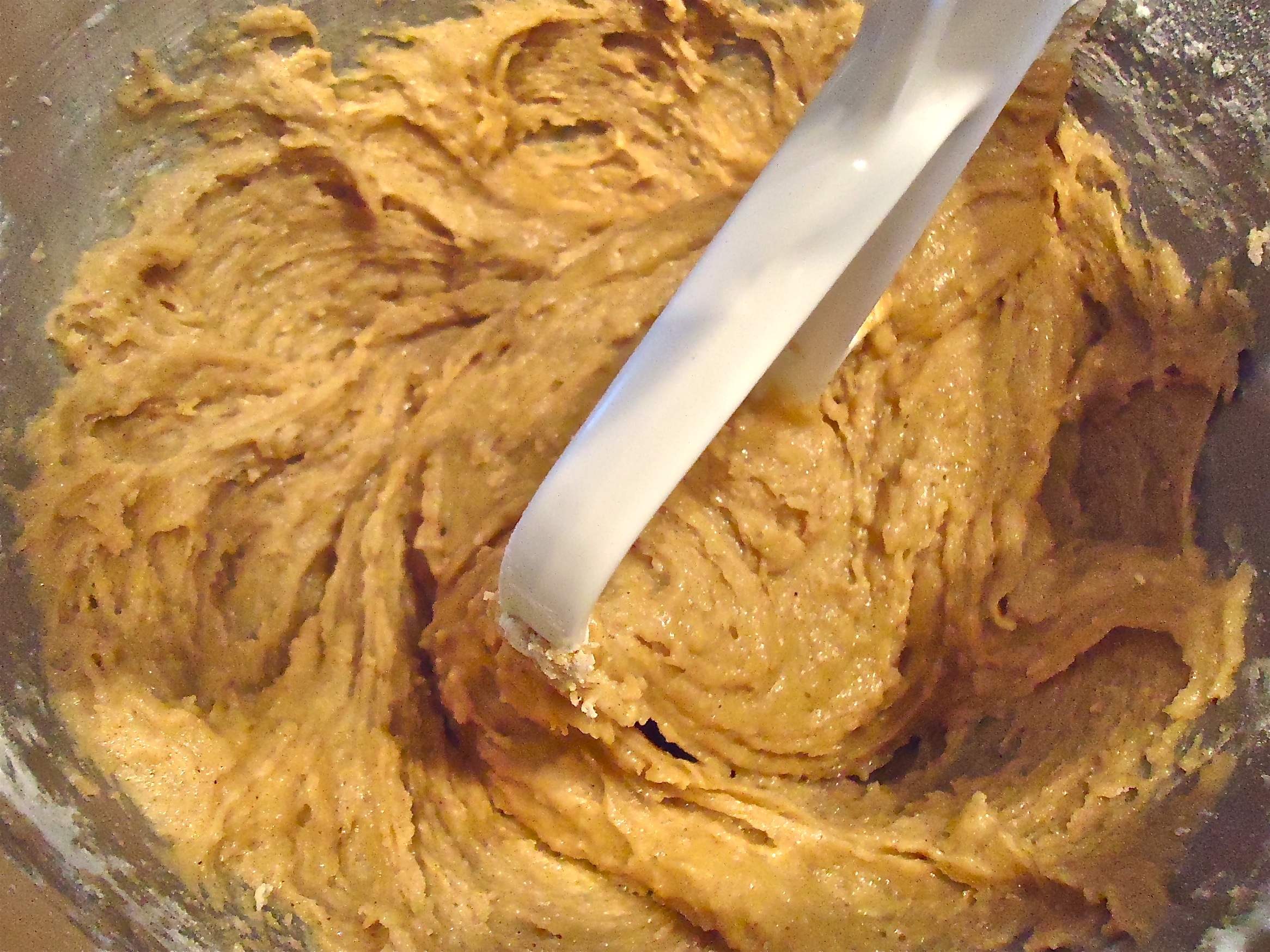
Add the sugar and the dry ingredients into the batter – which you have sifted together already. It will be pretty thick.

Stir in the rutabaga.

Mix in the toasted walnuts.

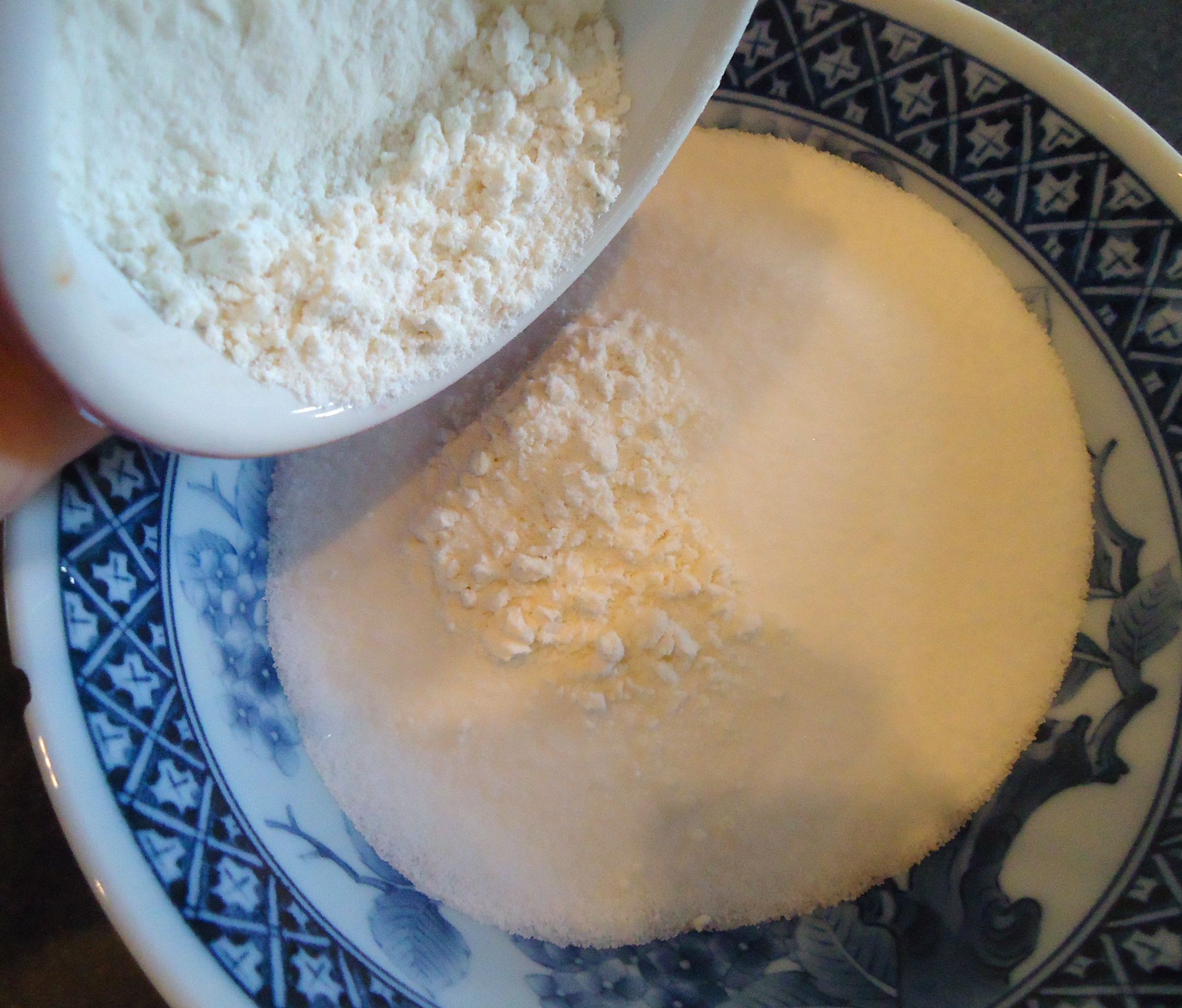
Make a typical streusel-type topping with butter, sugar, and flour plus some cinnamon. I like demera sugar (and it’s molasses overtones), especially when it’s on sale!

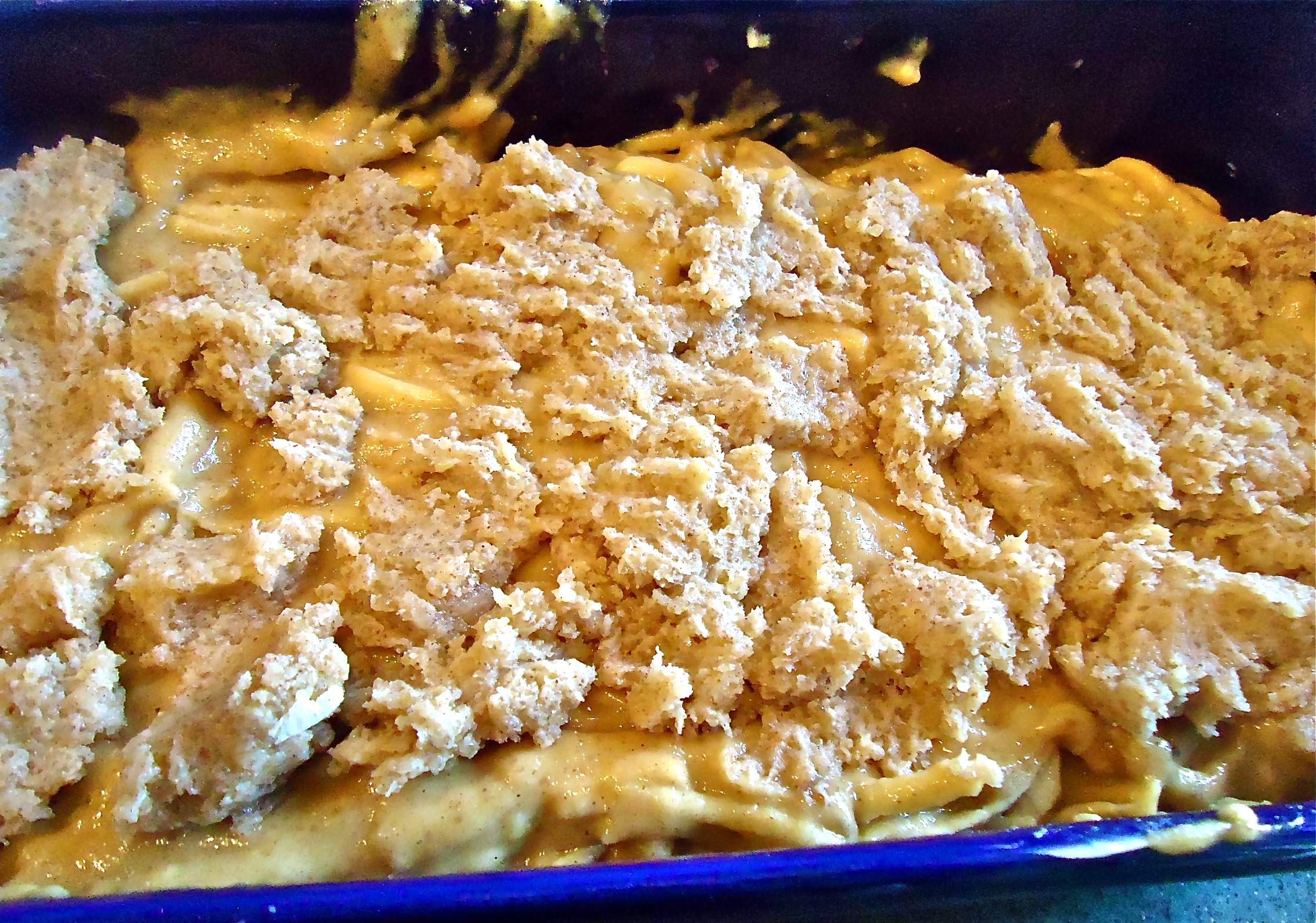
Drop the streusel topping onto the rutabaga batter.

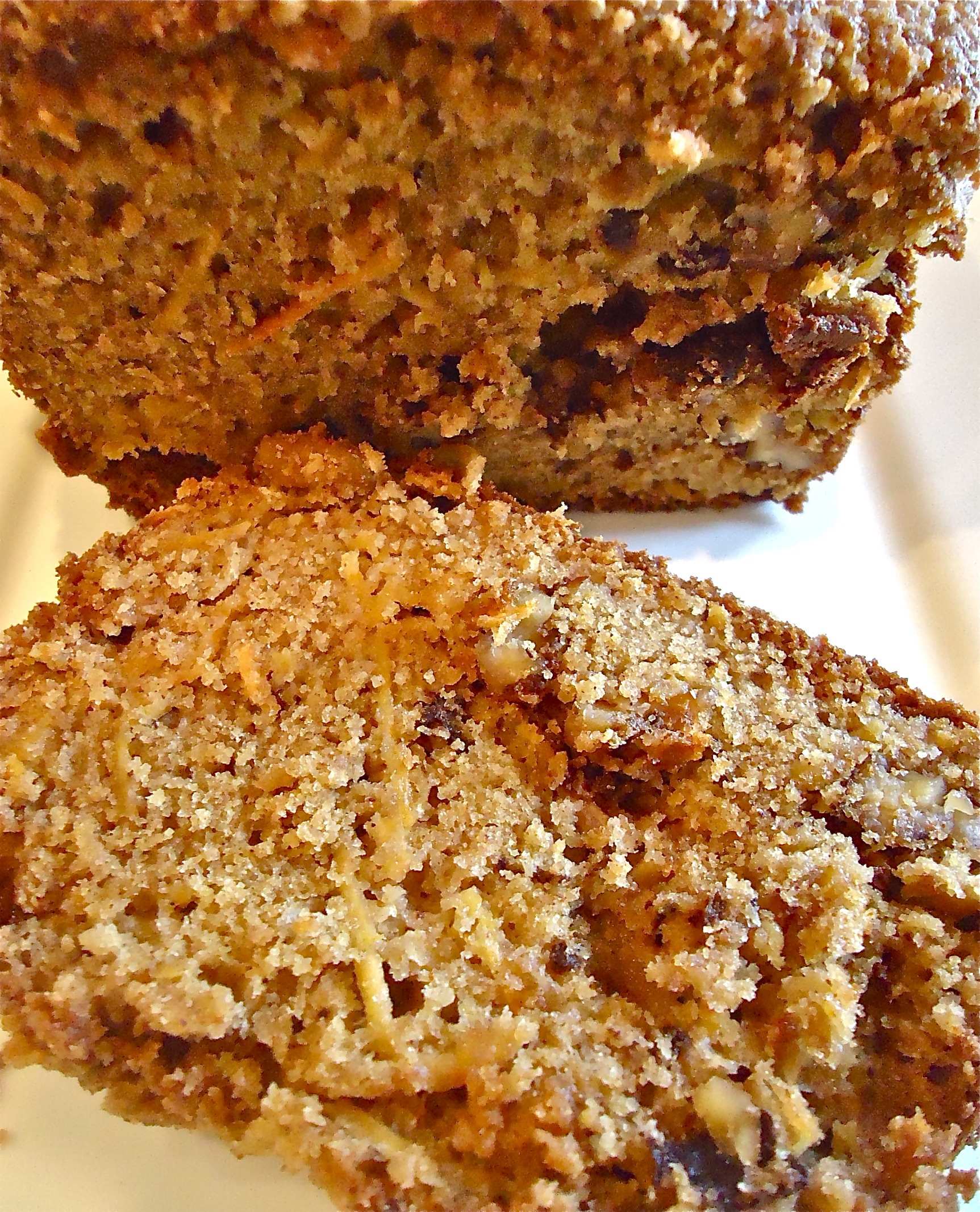
Remove the bread form the oven and allow to cool in the pan for about 10 minutes. Then release onto a rack to finish cooling. When completely cool, store in an air tight container or covered with plastic wrap. Delicious for breakfast with a hot cup of coffee!

Rutabaga Walnut Spice Bread 

  • 2 cups shredded rutabaga
  • 2/3 cup toasted chopped walnuts
  • 2 eggs
  • ½ cup applesauce
  • 2 cups flour (combination of 1 cup all purpose and 1 cup white whole wheat)
  • ¼ cup all purpose flour
  • 1 tsp. baking soda
  • ½ tsp. baking powder
  • 1 tsp. salt
  • 1 tsp.+ ground cinnamon
  • ½ tsp. ground coriander
  • ¼ tsp. ground cloves
  • ½ cup vegetable oil (canola or just vegetable)
  • 2 tbl. buttermilk
  • 2 tbl. butter, softened
  • 2 tsp. vanilla extract
  • 1 cup + ¼ cup demera sugar (or brown sugar, packed)

Preheat oven to 350 degrees. Lightly oil or grease a loaf pan. Sift together the flour, salt, baking powder, baking soda, 1 tsp. cinnamon, the cloves and coriander. Set aside. In a large bowl beat the eggs with the applesauce, buttermilk, vanilla extract and oil until eggs are well incorporated. Mix in the sugar, other dry ingredients and the rutagaba. Stir in the walnuts. Pour into the prepared loaf pan.

In a small bowl mix the butter, ¼ cup flour and ¼ sugar with a fork. Sprinkle in some ground cinnamon – perhaps ¼ teaspoon. Drop this in small pieces – about the size of a nickel – over the top of the uncooked bread. Bake until a toothpick inserted in center of the loaf comes out clean, 55 to 60 minutes. Allow to cool in the pan for 10 minutes and then invert onto a rack to finish cooling. Slice and serve.
Rolling in the deep: luscious, comfy custard

When cooking is your hobby and food a passion, epiphanies occur often. I’ve had a fare share of epiphanies throughout by life with the crux usually involving food, somehow. Understanding that most kids in this country did not have a big backyard garden or meals regularly featuring venison, quail or shrimp – provided by their own family members, as I did – was a surprise and an important insight. It’s also a point of guilt for me, when I remember how I begged my mom to buy Chef Boyardee that I had seen on television or tried at one of my school friend’s houses during a “spend the night party”.

I would complain in a whiny tone, “But why does everything we eat have to come from the garden? I want canned food!”,  I would exclaim. My heart sinks a little when I think of this now. I was so very lucky to have parents who not only knew how to raise their own food, but who loved gardening and home cooking and imparted that knowledge and love into their children.

My mom was (and is still) a wonderful home cook, but her claim to fame is her baking and dessert making. A classic dessert that was always to be found in our refrigerator, especially in the summer, was custard. I guess in some parts of the world this would be called ‘boiled custard’ but in our extended family, we just say ‘custard’ and everyone knows what you’re talking about. As I got older and understood a few of those epiphanies, I realized that lots of people had never had the pleasure of this luscious, homemade comfort food. What a shame.

My family eats custard plain, with fresh fruit, as an accompaniment to cakes and pies, as the pudding in banana pudding, and the pièce de résistance, as a base for making homemade peach ice cream! No July 4th holiday was complete at my house without peach ice cream. Since there was an abundance of free labor (5 kids in my family and at least another dozen or so between cousins and neighbors) the hand cranked ice cream churn was placed into production. We really worked for that ice cream but it was worth it!

Under the blazing Carolina sun, we would have the sprinkler set up in the backyard and our bathing suits on. After running through the sprinkler a few times, and we’d go relieve the “churner” at the helm. We’d turn the crank a few times and when the next kid/churner arrived, head back to the sprinkler. Every 20 or 30 minutes we’d add more rock salt and ice. After 3 or 4 hours (yes hours!) of this, the ice cream would go into the freezer for another couple of hours to harden up before being dished out after supper.

Rich and creamy, not too sweet with chunks of fresh SC peaches*, this ice cream was in a word, scrumptious. I think all the work made it that much better too, and when I think about it now, I suppose we did not see it as ‘work’ but as play. For me no store bought ice cream, no matter how decadent, will ever match this taste (and the warm & fuzzy feeling I get remembering those times).

One of my goals this summer is to make some of that peach ice cream with my daughter (and I’ll post on southbyse, of course!) but in the meantime here’s our family recipe for custard. Some folks actually drink custard, but not at our house – this recipe is fairly thick so we always used a spoon.

* South Carolina, the state where I was born and reside today, produces more peaches than any other state in the US. I know you thought that would be Georgia (since it’s motto is “the peach state”), but nope – we’re number one in peaches! In fact, according to the Clemson University extension service, just one grower in SC, Titan, produces more peaches than the entire state of Georgia. How about those apples – err, I mean peaches.

Simple ingredients: Whole milk, fresh eggs, a little sugar and flour and vanilla extract.

Mix the flour with the sugar. My mother always uses flour in this recipe to insure the custard thickened but don’t over do it. “Flour-ery” custard is blahhhh.

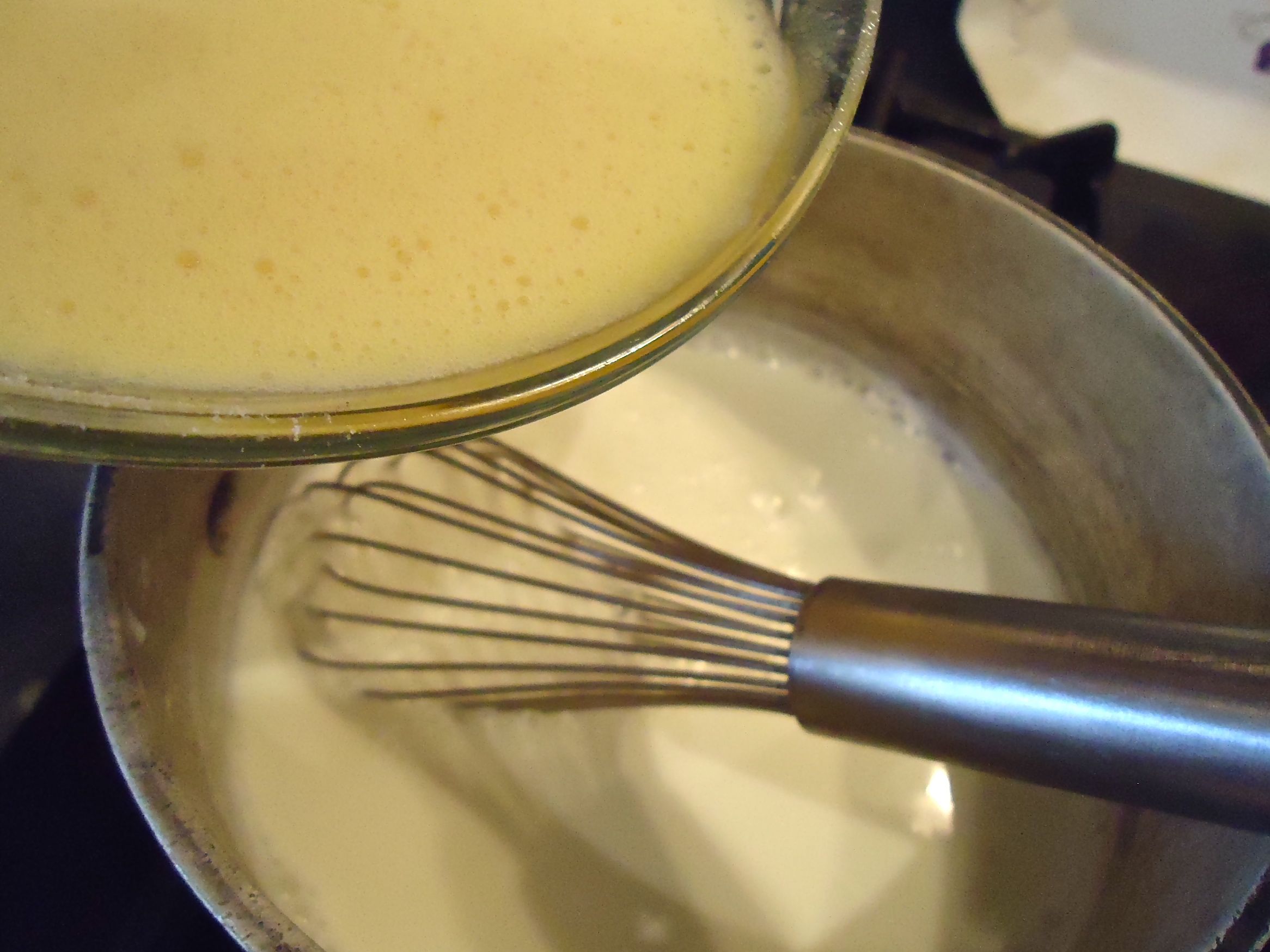
After the milk is scalded, add some of the scalded milk into the egg/sugar mixture and whisk away. You don’t want the eggs to ‘cook’ and end up with scrambled eggs.

After incorporating some of the scalded milk into the egg mixture do the reverse and whisk the egg mixture back into the scalded milk as the milk is reheating on low. Keep whisking as this mixture cooks. I use my ancient Calphalon saucepan but you can use a double boiler or a heavy pan like mine. This pan is so old (and used so often) the anodized finish is gone. It’s like an old friend to me now.

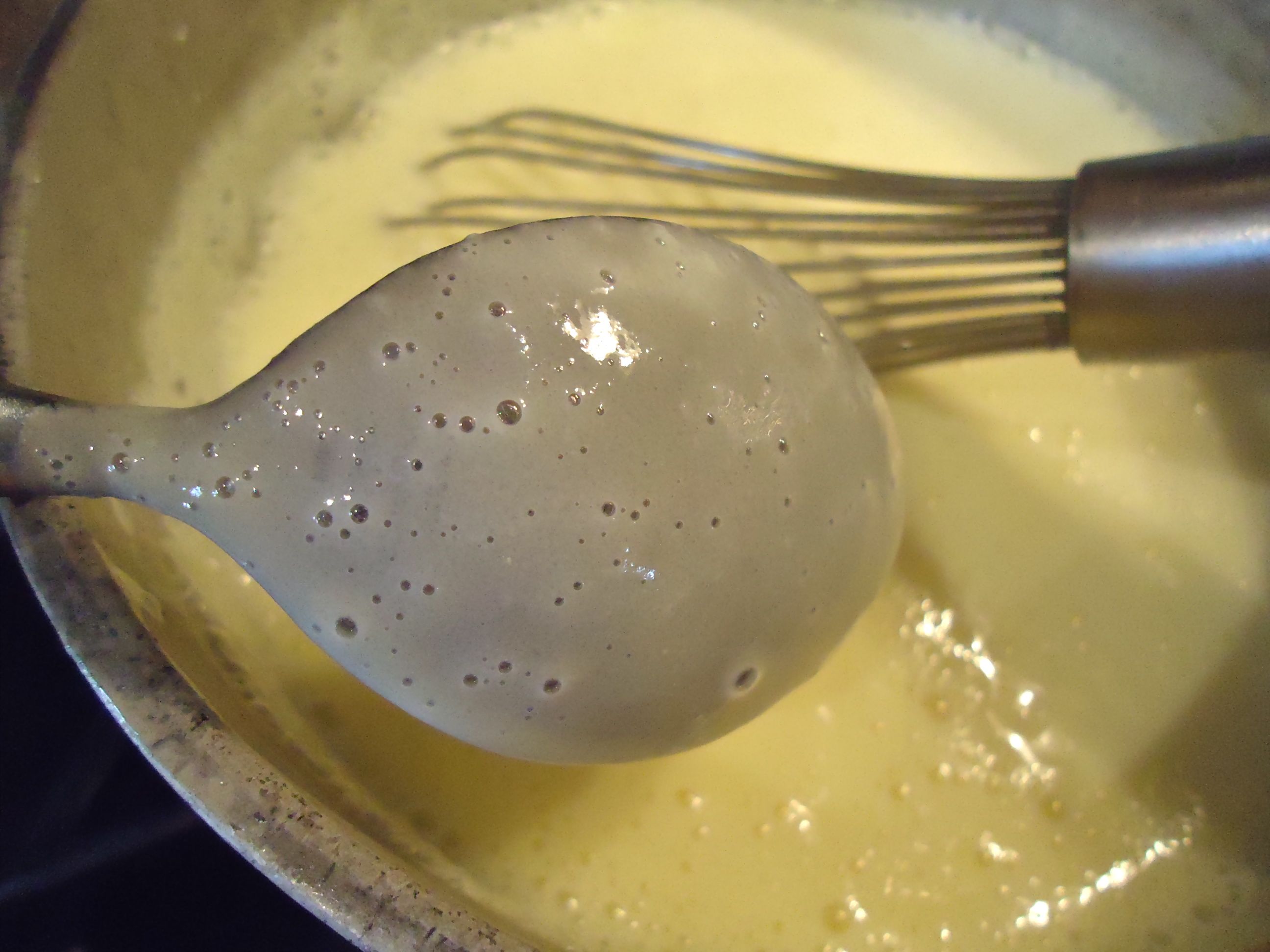
Keep cooking the mixture and stirring or whisking. Do not bring it to a full-on boil but just under a boil. The mixture will start to thicken and when it coats the back of a spoon it’s done. This image shows that it is NOT coating the spoon, yet.

Keep stirring/whisking and the custard will be thickening. Test with a spoon – and yes! This is coating the back of a spoon. It’s ready so remove from direct heat.

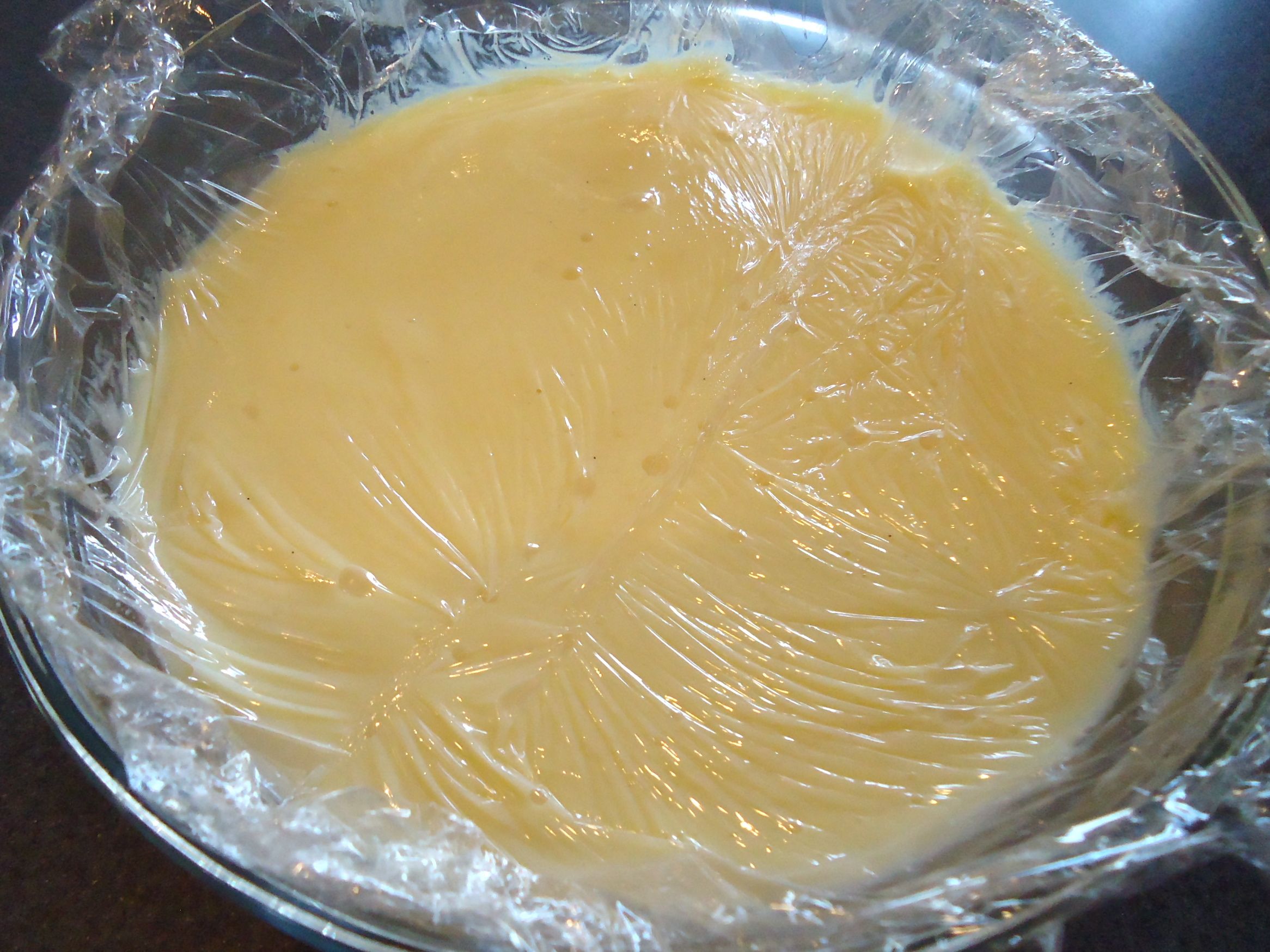
Stir the vanilla extract into the custard and pour into a container. Allow to cool slightly and place a sheet of plastic wrap directly to the top of the custard. This will prevent a ‘skin’ from forming on it. Cover the bowl with more plastic wrap (or a lid) and place in the refrigerator.

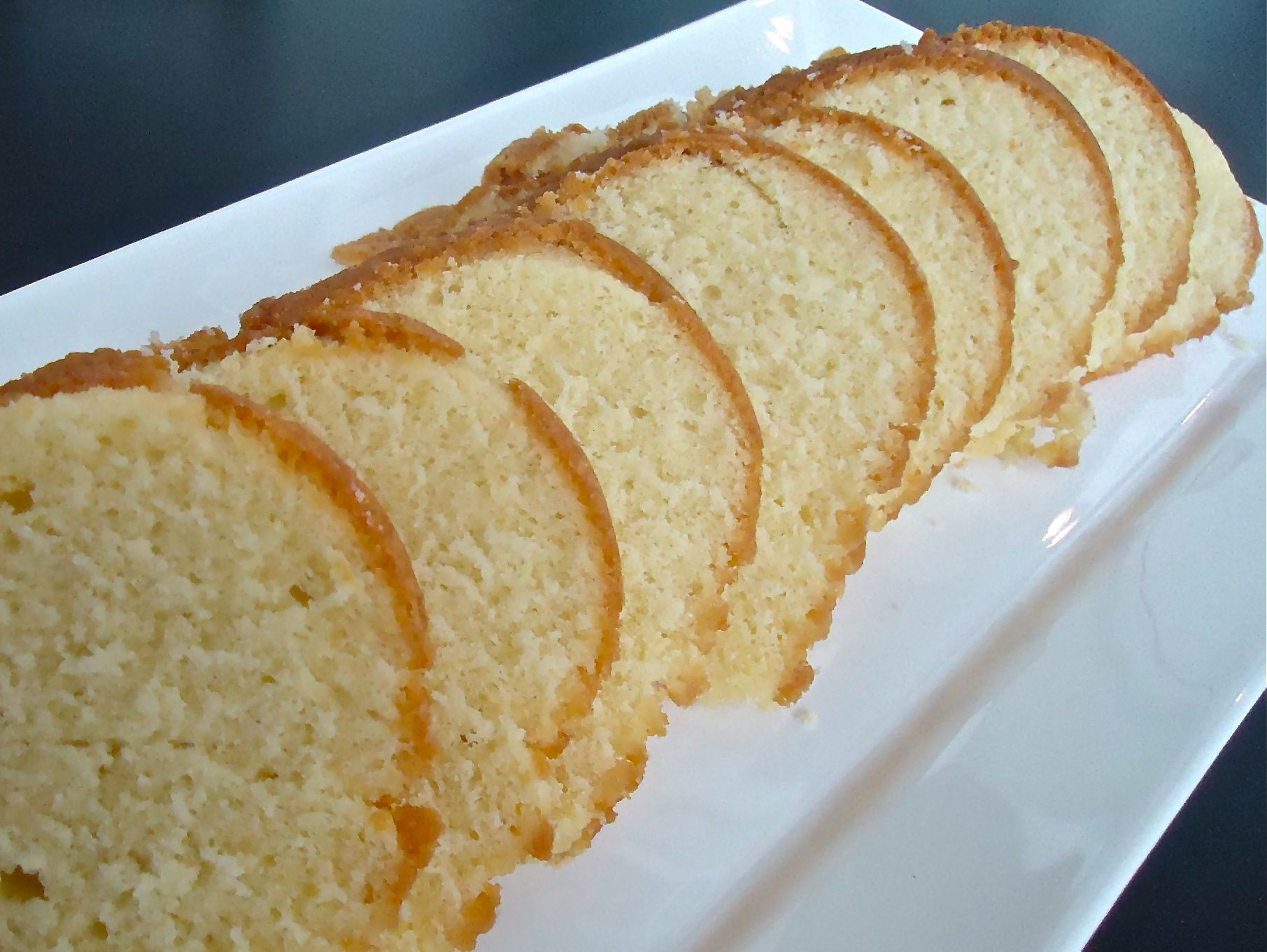
Here is a pound cake I made recently… and what’s that there? Yes, it’s custard (and some peaches too). This custard is versatile and it keeps for several days well covered, in the refrigerator.

Custard

  • 3 large eggs, well beaten
  • ¾ cup sugar
  • 1 quart of whole milk
  • 2 tbl. all-purpose flour
  • 2 tsp. vanilla extract

In a heavy, medium-sized saucepan or top of a double-boiler, scald the milk and allow to cool slightly. In a small bowl mix the sugar and flour. Whisk the sugar/flour mixture into the eggs. Make sure this mixture is well incorporated and smooth. Spoon or scoop out about ¼ cup of the egg mixture and quickly whisk this into the scalded milk. Repeat and mix well.

Place the milk back on the heat and whisk the remaining egg/sugar mixture into the milk as it heats. Keep whisking and heating until the mixture comes almost to a boil and coats a spoon when it is dipped into the hot custard (see image). Remove from the heat and stir in the vanilla extract. *Allow to cool slightly and place in the refrigerator.

Serve on it’s own, with berries or as a cake or pie topping. This is awesome in banana pudding!

*Cover the slightly cooled custard with plastic wrap that touches the top of the custard. This should prevent a “skin” from forming on top.

Toss it up, baby! Fettucine with shrimp & artichoke

Dinner on the run doesn’t have to be fast-food. It can have all the appearances of a well-thought our meal, tasting and looking very “gourmet” even. I find this especially to be the case with seafood. Something – pretty much anything! – made with seafood can be impressive and for the most part, the simpler the better. Good seafood doesn’t need much in the form of accoutrements. Luckily I live on the coast in an area where we have an abundance of fresh, local seafood delicacies most of the year.

One evening a few weeks back I had all the ingredients in my kitchen to make pasta with shrimp and artichokes. The shrimp are locally caught but I had frozen them in water about 2 months earlier when we had an overabundance. And I’m not bragg’in or anything, but it was time to enjoy them as shrimp season has rolled back around again.

I set them out to thaw and by mid-day they were well on their way, so they finished up de-icing in the refrigerator. I removed the shells lickety-split and I swanny if they didn’t look and smell like they were just pulled from the trawler’s net, i.e. they had no smell and they were firm but glistening with freshness. Aside from this defrosting (and never try to thaw shrimp in a microwave or under warm water. They will get cooked or worse, become host to some unpleasant bacteria) this recipe comes together very quickly once you prepare the roux and cook the pasta. Toss it up, baby!

So I left the sweet Vermouth out of this picture. Sorry! I like Noilly Prat brand in the red bottle.

Here are the raw shrimp (prawns), out of my freezer, cleaned and shelled. Being only a pound they thawed quickly.

Here are the shallot and garlic sautéing in the butter. The beginnings of my roux.

After adding in the flour, pour in the stock and whisk until smooth. I have no idea why I was using this spatula(?) but it worked anyway…

There’s that Vermouth. Cook for a minute or so after adding this so the flavor stays but the alcohol evaporates. My sauce is smooth now too!

In go those shrimp. It will only take a few minutes for them to cook. They turn pink when they are cooked.

In go the peas and the artichoke hearts. Yes, I use frozen peas – fresh would be better – but frozen was what I had on this day. Green peas are so handy to keep in the freezer.

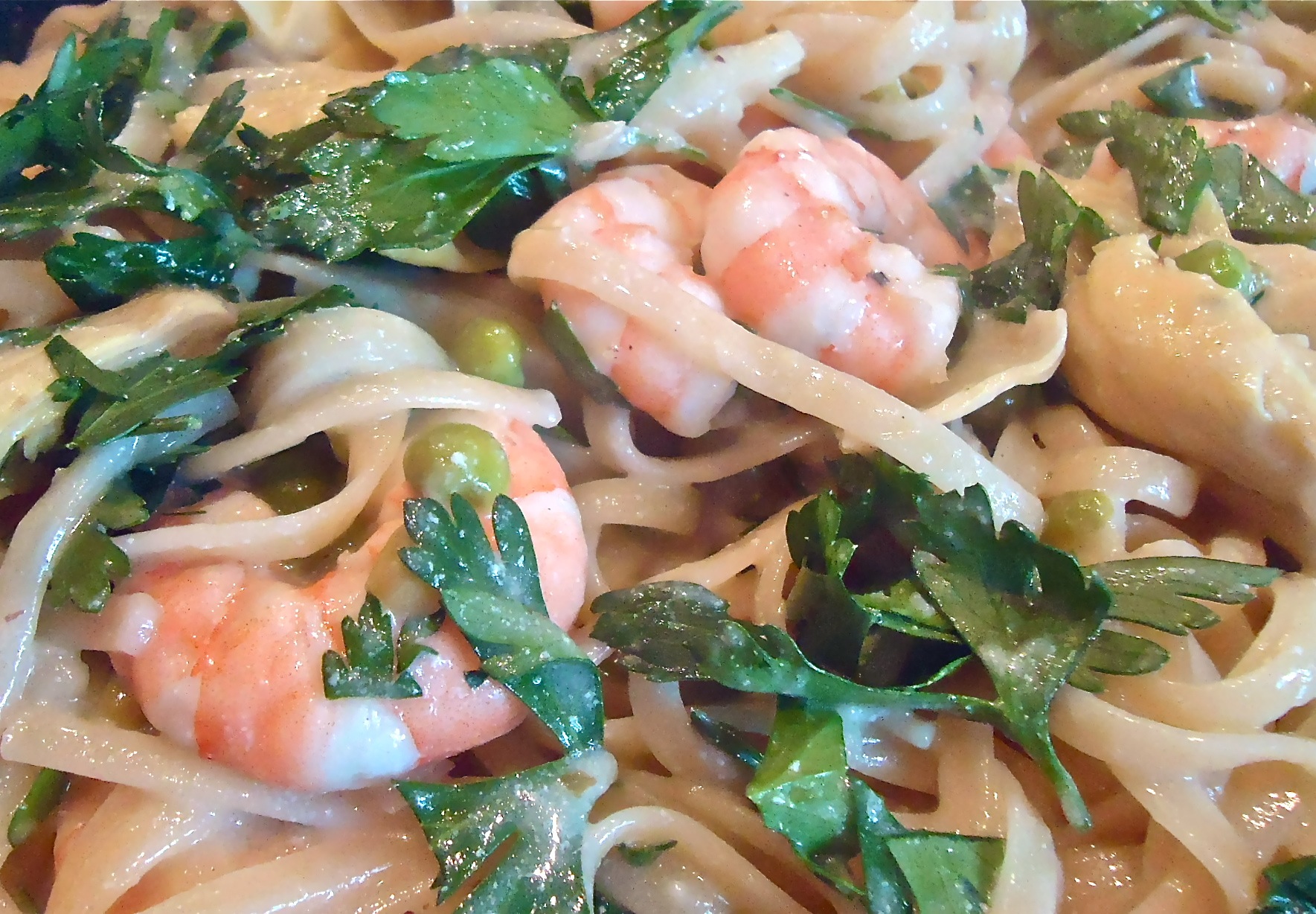
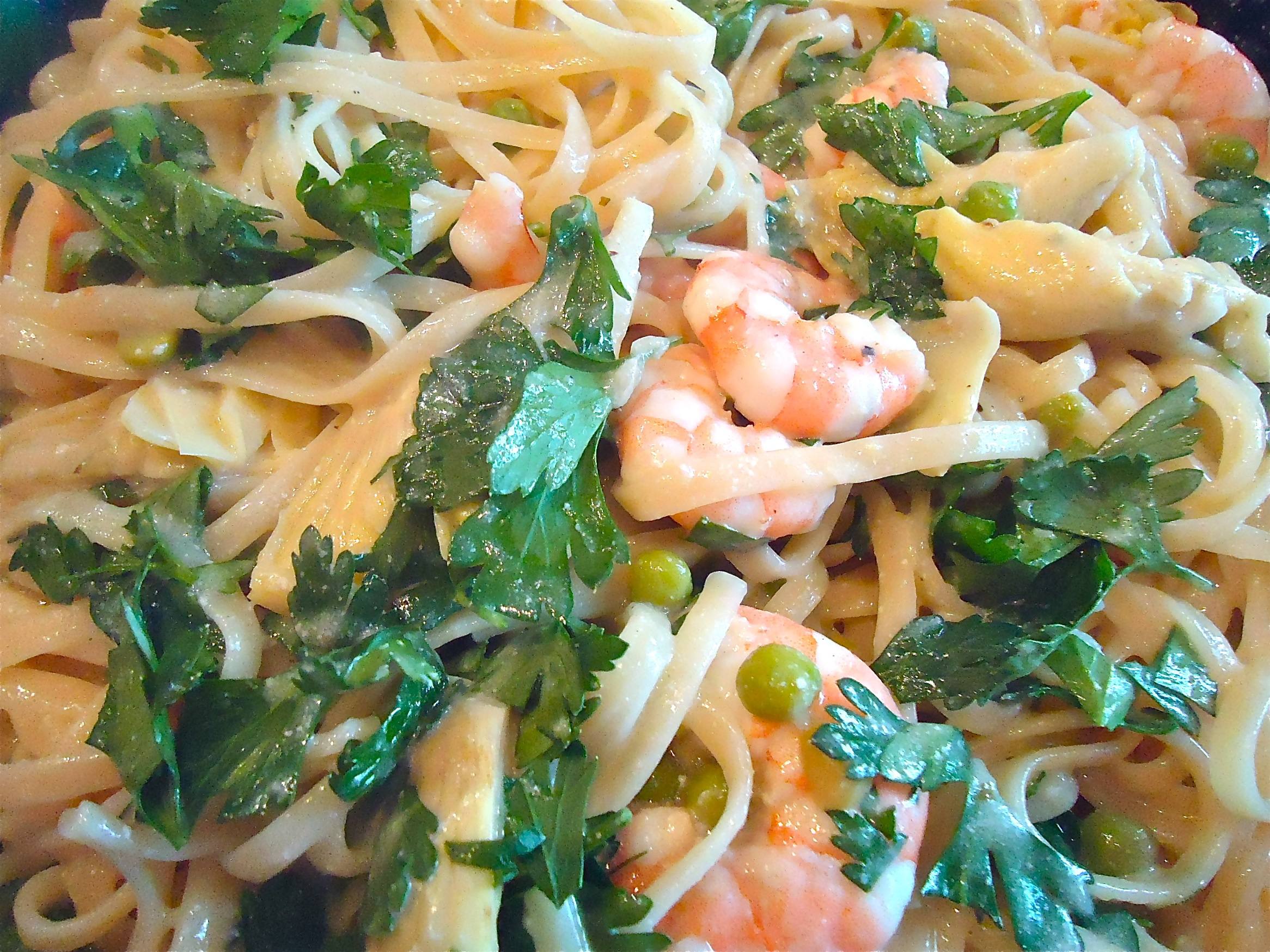
Toss the sauced shrimp and artichoke artichokes with the warm fettucine and fresh chopped parsley. Sprinkle on some Parm if you so desire!

Fettuccine Tossed with Shrimp & Artichoke

  • 1 lb. shrimp, cleaned, shells and tails removed
  • 1 lb. fettuccine
  • 1 small jar artichoke hearts
  • 3 tbl. butter
  • ½ cup Italian flat leaf parsley, washed, dried and chopped
  • 1 shallot, minced
  • 1 garlic cloves, minced or pressed
  • 1 cup small green peas, fresh or frozen
  • 2 tbl. flour
  • 2 cups vegetable broth or stock, warmed
  • ½ cup half & half
  • Juice of 1 lemon
  • 1/4 cup sweet Vermouth (I like Noilly Prat, Red)
  • Salt
  • Pepper, freshly ground if possible

In a large pot begin heating water to a low boil. Melt butter in large sauté pan. Add shallots and garlic and sauté 2 minutes. Stir in the flour and cook until smooth, about 2 minutes. Using a whisk add in the vegetable stock and continue to stir or whisk. Stir in the Vermouth and cook another minute. Stir in the half and half and the juice from the lemon. Reduce heat and cook about 1 more minute. Reduce the heat to as low as possible or set off the heat.
Once the pot of water is heated, cook the fettuccine according to package instructions. Drain the pasta and set aside. You can also keep it warm in a strainer set over warm water if you like.

Begin the heating the sauce mixture again. Just before it begins to bubble add the shrimp, the artichokes (don’t drain) and the peas to the mixture. Cook for about 4-5 minutes on medium, stirring occasionally, until the shrimp are pinkish and cooked. Add salt and pepper to taste. Toss with the cooked fettuccine and the flat leaf parsley in a very large, warmed serving bowl. Serve with grated Parmesan, if desired.

Warning: Calories on board! Stuffed banana peppers make your grill sizzle.

Okay so this is fair warning…if you are on a diet…if you are a vegetarian…if you avoid pork. What! Now pretend you hear squealing brakes and see wheels skidding to a stop. Who in their right mind would avoid pork? Well, let me tell you…

I know a few people and that’s okay by me – for religious reasons, for health reasons, for (ahem) “I’ve never had really well prepared pork so why all the fuss” people. But today’s recipe is not for any of those people. This recipe is extra special because it is my brother’s recipe, because it uses fresh local peppers, because it uses only 3 ingredients (4 if you count toothpicks, ha-ha) and because it is so darn good!

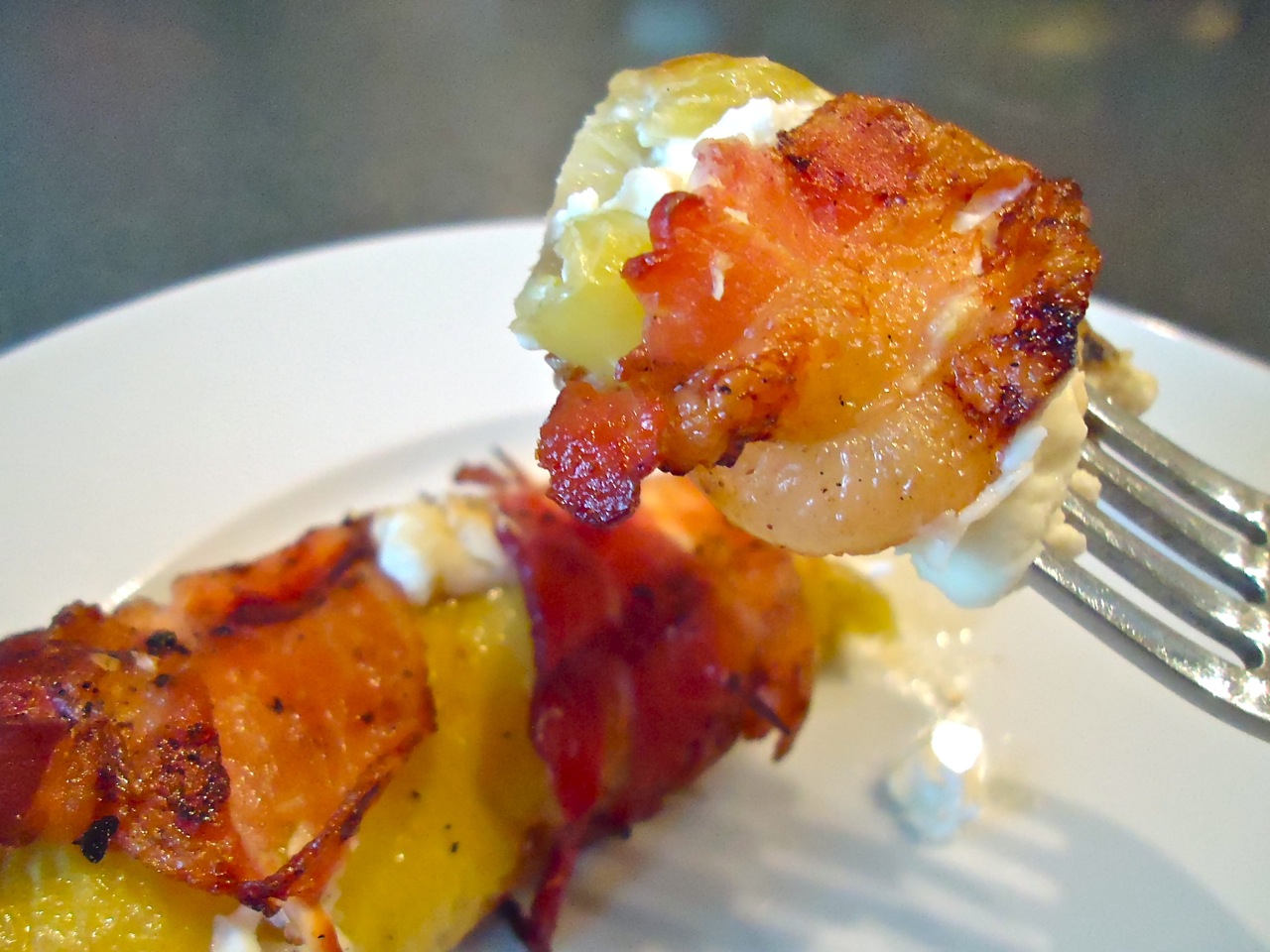
If the picture above didn’t reel you in like a catfish to a hunk of old pork rind, then STOP because “there is something wrong with you, son” – as local restaurateur and friend Hugh Lockman would say. This recipe is not for those on a diet – so stop reading this post immediately if this means you. Well, unless you think 205 calories is not too caloric, well then, you’re approved to proceed.

What with cream cheese AND bacon?!? I know what you’re thinking but my 100% non-scientific method of calculation gives me a number of approximately 205 calories and 10 grams of fat in one of these beauties. Have smaller peppers? Then can reduce the calorie and fat number per stuffed pepper accordingly. The peppers themselves have no fat but do contain copious dietary fiber as well as vitamins A, C and E, folate, niacin, calcium and potassium. And home grown or farmers market fresh? Buckle your seat belt ‘cause those exceed the taste limit in my book.

These are favorites of my hubby, and me too. We wait all winter and most of the spring for the new crop of sweet banana peppers to arrive at the farmers market. We even set out our own plants (see previous post) in the hope of having plenty to use specifically for this recipe during the summer.

While you can certainly use hot banana peppers, we prefer mild peppers with plenty of pepper flavor, but no real heat at my house. These are very popular at summer cookouts at the beach house, at the lake, at home. And special thanks to my brother John. His recipe has brought much grilling happiness to our table, and now hopefully to yours too.

The ingredients list is minimal but the flavor is maximum!

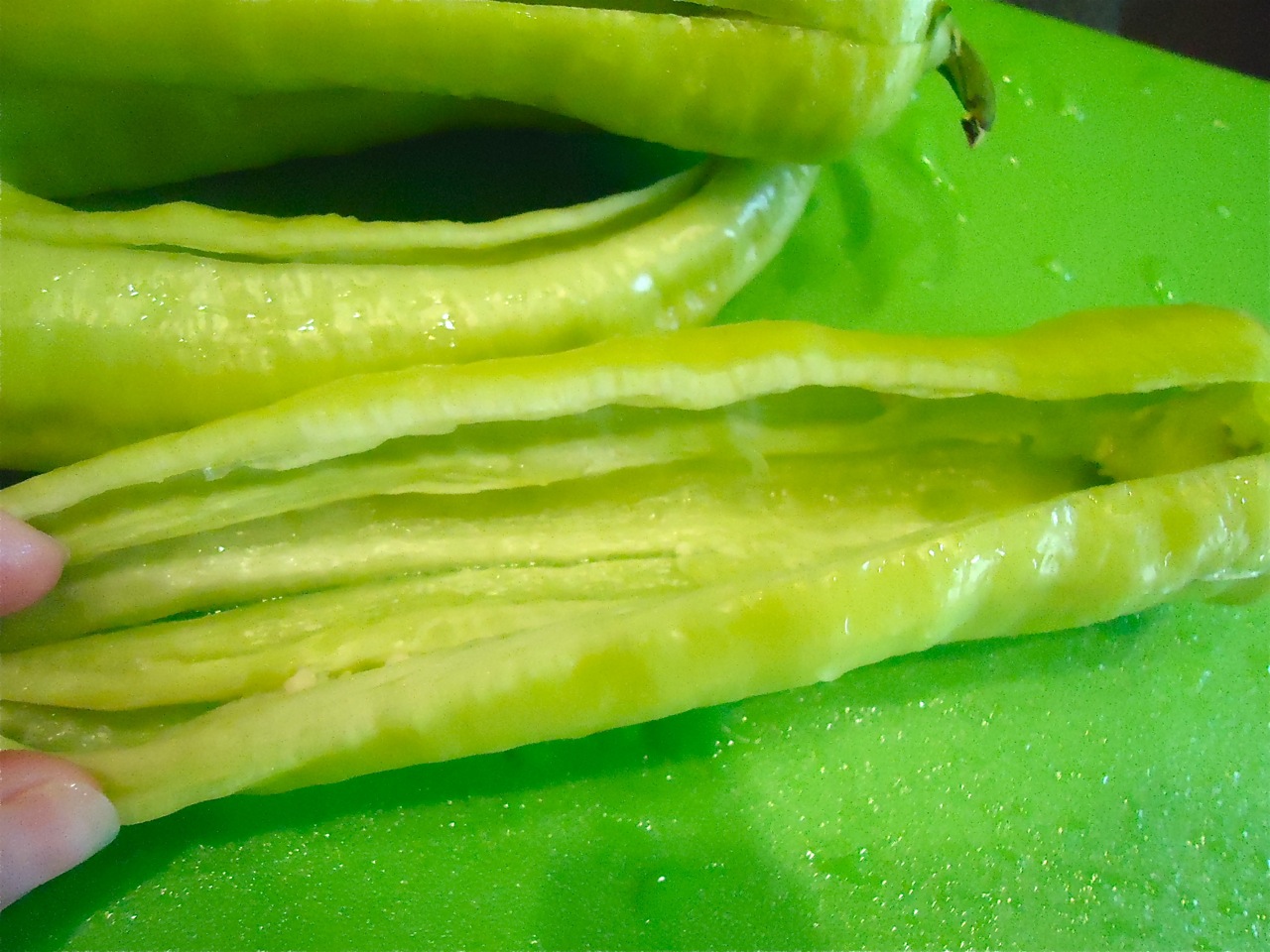
Peak inside the pepper. You need to remove the seeds and that stringy flesh they are attached to.

This is how the peppers should look after being cleaned.

Pepper stuffed with cream cheese.

Around and around we go with the bacon. Secure with toothpicks. I try to stick the toothpick through the meat of the bacon, rather than the fat.

Ready for the freezer. The peppers came be made up to this point and stored in the freezer, for up to a day. They need to freeze at least 1 hour anyway.

Here they go onto a sizzling grill. The cooking time depends upon your grill, i.e. how hot it gets and how evenly the heat is distributed. The best way to find out is by giving the recipe a try!

These peppers are almost done! Looks like I lost a toothpick. Oh well, I call ‘cooks treat’!

Ready for the dinner table. The combo of smoky bacon and roasted peppers smells so delicious… and only 205 calories! I don’t feel too guilty.

Stuffed Banana Peppers

  • 6 large (6”) sweet banana peppers
  • 12 oz. light cream cheese (about 1 ½ packages)
  • 6 pieces bacon (I use low sodium and nitrite free whenever possible)

Wash and dry the peppers. Split each pepper down the center along the long side, careful to not cut through to the other side. Clean out all the seeds and the stringy part inside. Wash and dry the insides. Stuff each pepper with the cream cheese – about 2 oz per pepper – smoothing to cover the entire length of the pepper. Once you’ve filled all the peppers, wrap 1 piece of bacon around each and secure with toothpicks. I usually use 2 each for medium peppers and 3 for these large ones.

Place stuffed peppers on a platter or baking dish, cover with plastic wrap and place in the freeze. Can be made up to this point up to one day ahead. Freeze at least 1 hour. Fire up your grill and place the frozen peppers on the grill. Watch them carefully and rotate to cook the bacon as evenly as possible, but avoid flipping them around too much. Once the bacon is cooked – after about 10-15 minutes – remove from the grill and serve immediately.

Quest for the Best: Tea Brined Roast Chicken

Tea Brined Roast Chicken.

Roasted chicken is one of those dishes that while very popular – both prepared and eaten everyday by many – has a certain mystique about it. In Mastering the Art of French Cooking, Volume One, Julia (and if you have to ask who this is, well shame on you!) states, “you can always judge the quality of a cook or a restaurant by roast chicken.” Her exceptionally detailed recipe, with it’s trussing and endless basting is wonderful and for the novice home cook, will guide you toward the epitome of poultry perfection.

Reading through her description of how to know when the chicken is done; “a sudden rain of sputters in the oven, a swelling of the breast and slight puff of the skin…” I can hear in my head her breathy, high-pitched voice and this makes me smile. Julia and I go back a long way you see, and her television show and cookbooks inspired me probably as much as my own mother. But that’s a story for another post. Right now, I’m all about the chicken and in particular, tea brined chicken.

A few years back I roasted a tea brined turkey for Thanksgiving and in a word, it was fantastic. I figured this technique would work for any kind of poultry and happily it makes roasting the juiciest, most flavorful chicken at home easy – without all that trussing and basting (sorry Julia!)

I brine my bird between 20 and 24 hours, however a little less ‘brine time’ will work as well and would be advantageous if the chicken is small. I would estimate that a 2 ½-3 lb. chicken should only brine 10- 12 hours. Leftover tea brined chicken makes splendid chicken salad too!

The ingredients. Use whatever fresh herbs you have available.

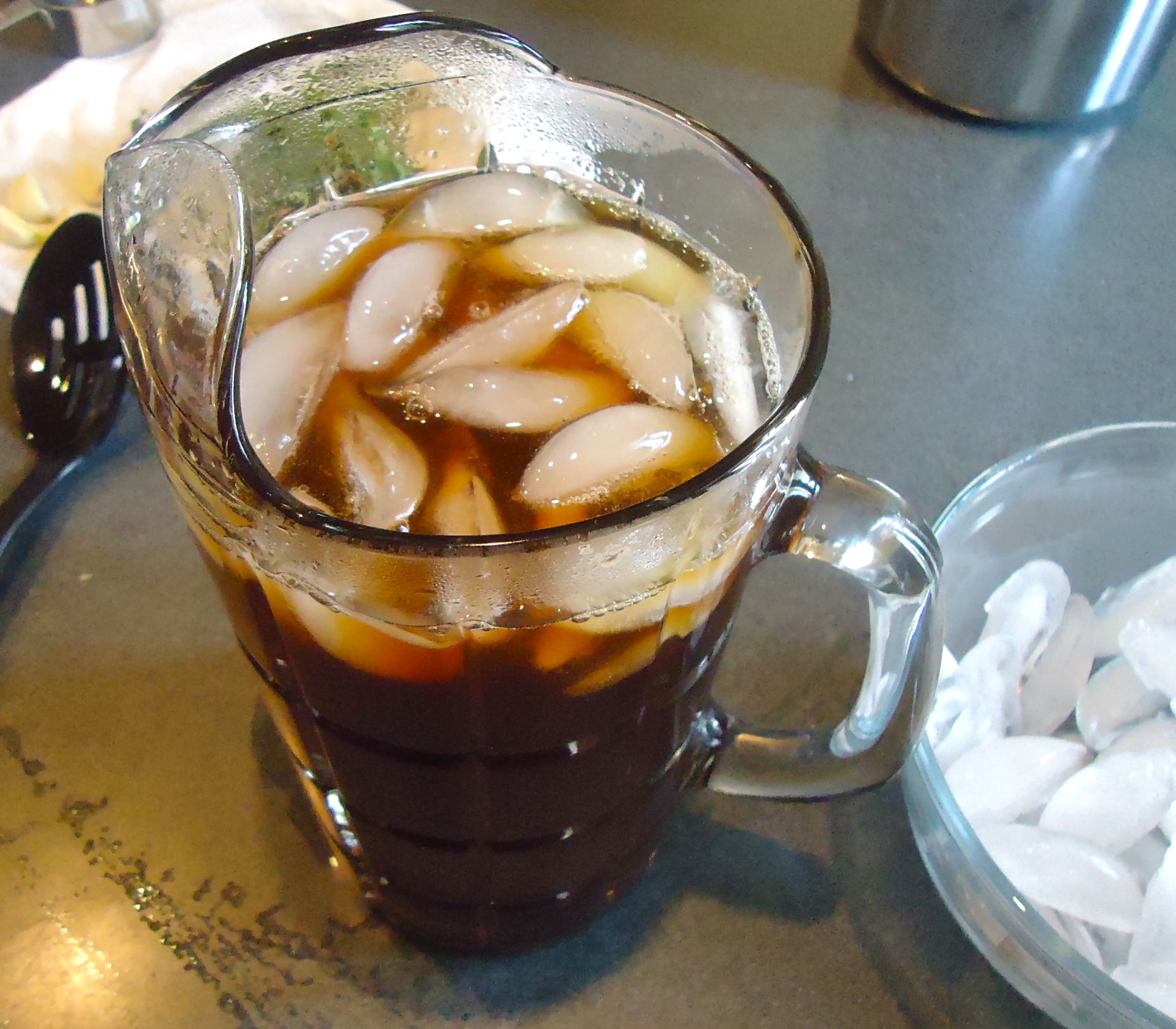
I use iced tea-making tea bags, however you can use loose tea – just strain the leaves. The brine should not become bitter.

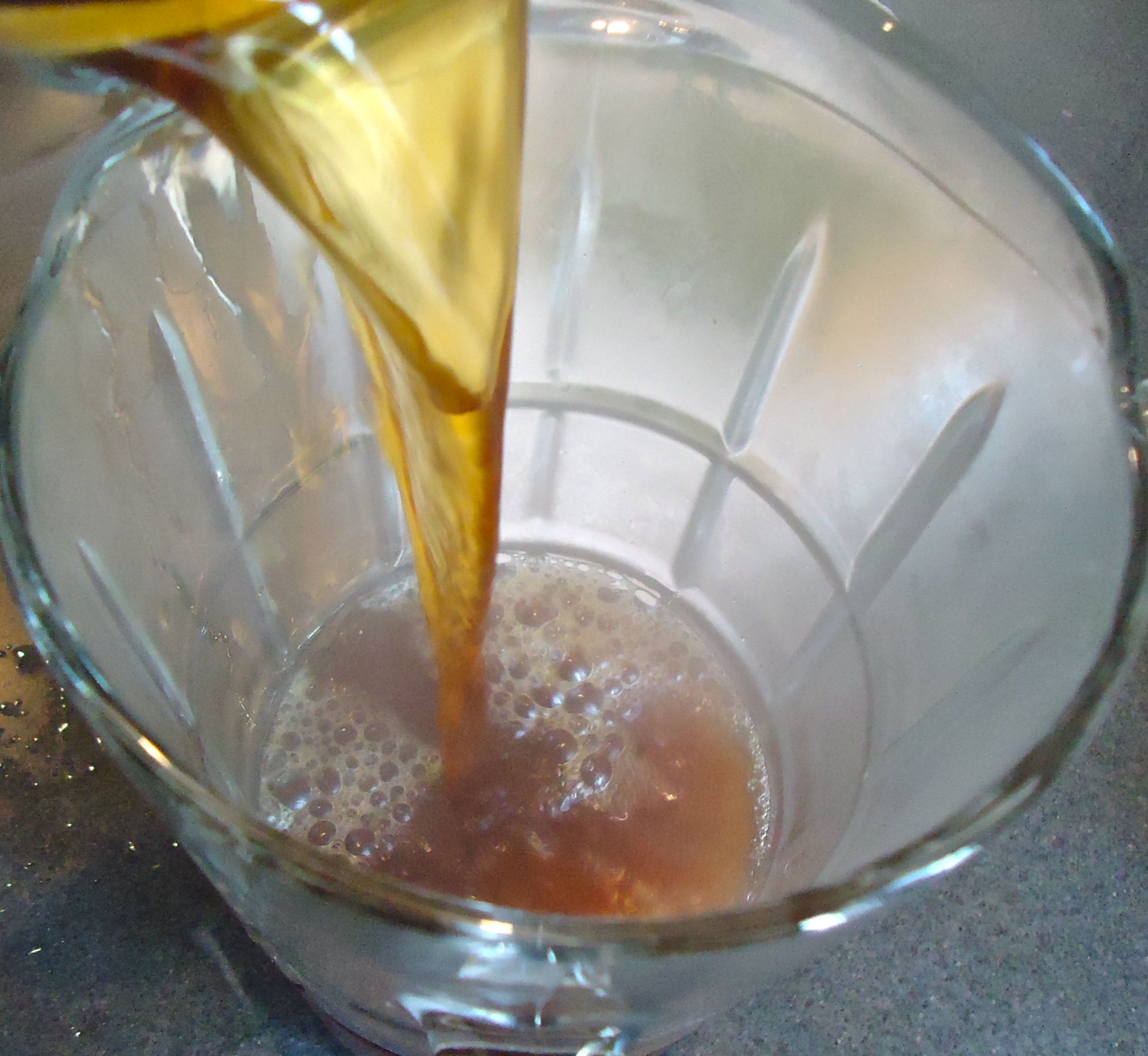
The tea has steeped for about 3 minutes and then remove the tea bags.

Mix the hot tea with the salt/sugar mixture. Stir.

Cool down the tea mixture with ice. At this point you could store the brine in the refrigerator if you like.

Place the herbs and the garlic in the bag and then add the brine.

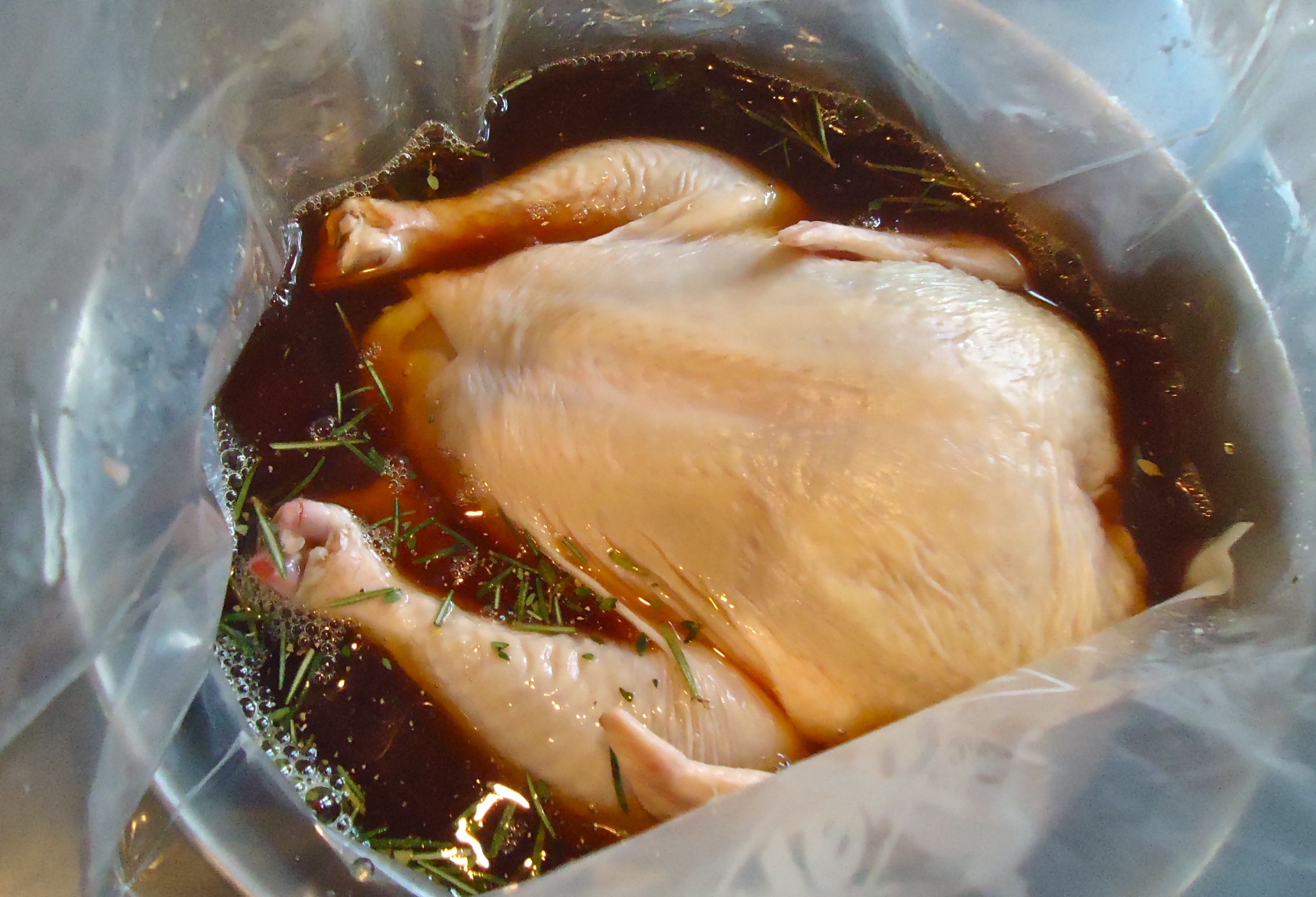
Place the chicken in the brine and zip up the bag. I place the bagged chicken inside a large bowl, just in case there’s a leak…then place in the refrigerator. Let the brining begin!

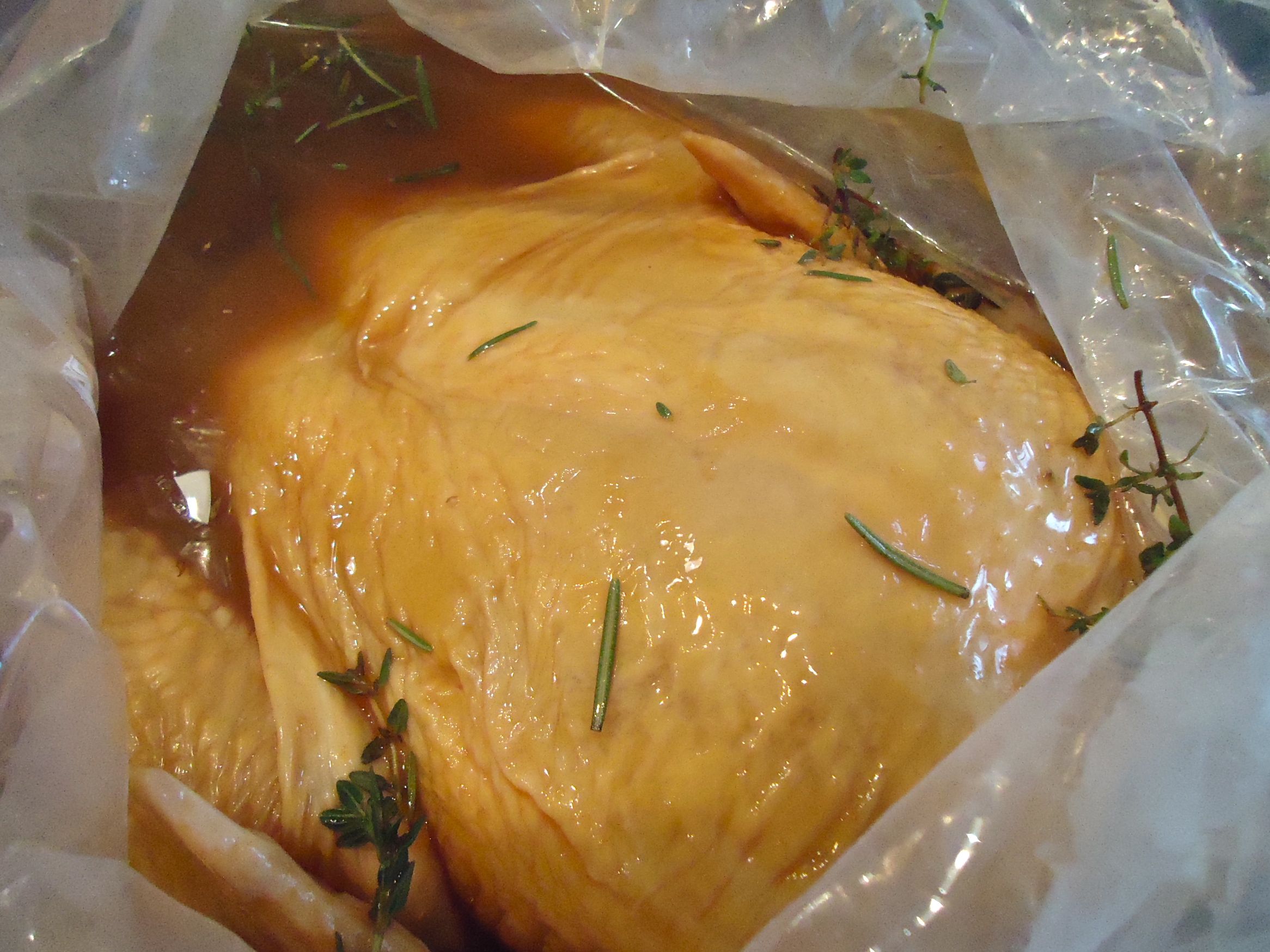
After brining about 24 hours the chicken takes on the color of tea. Roasting time!

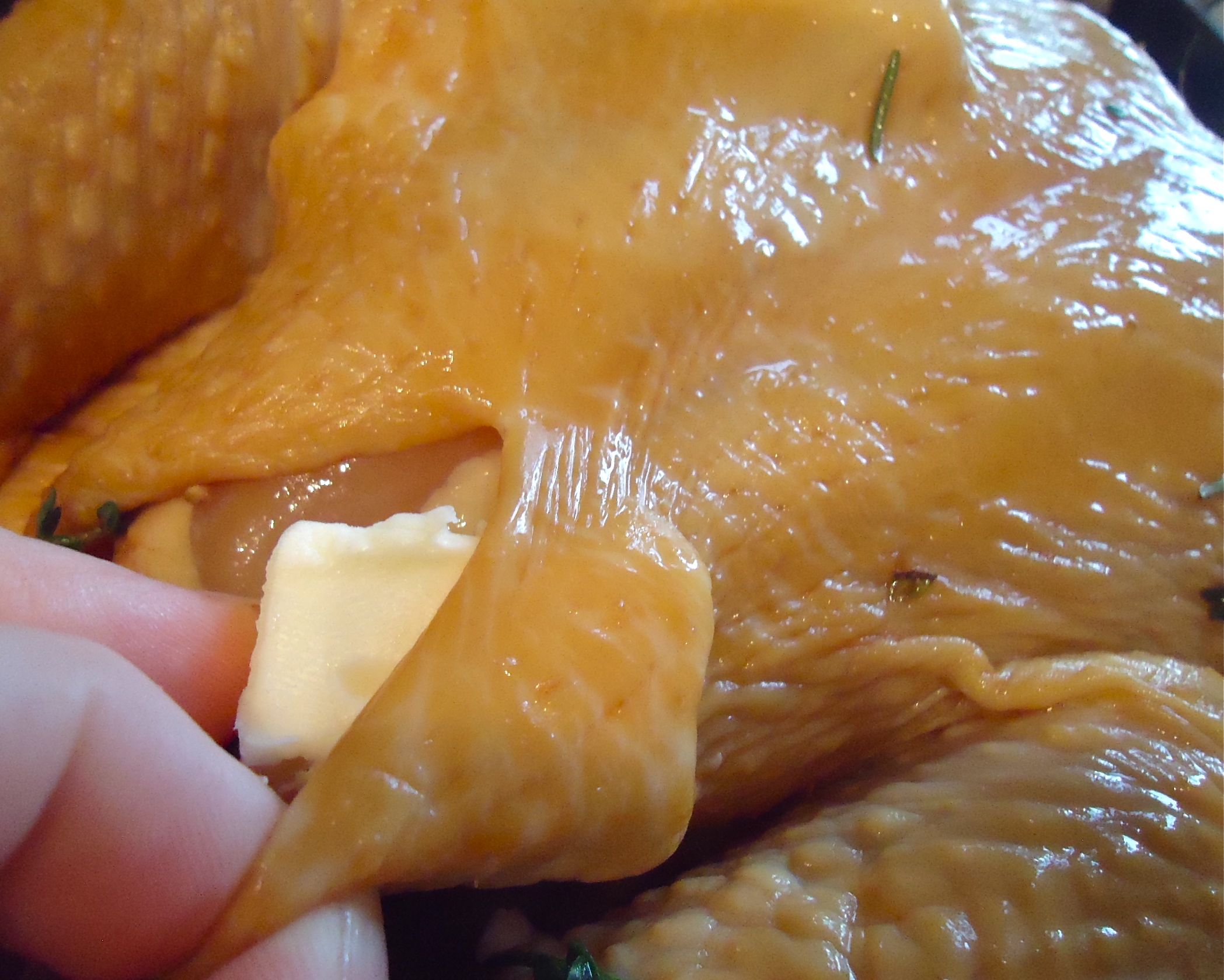
Place a little butter in the pockets between the breast meat and the skin, on both sides and then a couple of bits go inside the cavity. I did not bother to truss this bird but you can, if you like.

Juicy chicken goodness! Brining works it’s magic by increasing the moisture holding capacity of the meat. Salt changes the structure of the muscle tissue (meat) which allows it to swell, absorbing water and flavorings and resulting in a very tender and juicy bird. The tea gives the bird a great color too!

Tea Brined Chicken

  • (1) 4 – 4-½ lb. whole chicken, trimmed of excess fat, washed and dried
  • 8 regular size tea bags or 2 family size tea bags
  • 1/3 cup kosher salt
  • 1/3 cup brown sugar
  • water
  • various fresh herbs (rosemary, thyme & oregano is a good combination)
  • 3-4 whole garlic cloves, sliced in half
  • 2-3 Tbl. butter
  • Pepper, preferably fresh ground

Make the tea: Heat about 4 cups of water in a pot with a lid. Bring to a low boil, add tea bags, and remove from heat and cover. Allow to steep 3 minutes. Remove tea bags, squeezing them gently. Discard the used tea bags. In a large pitcher or bowl add the salt and sugar. Pour tea over this and stir well. Add 2-3 cups of ice and stir. Allow to cool to room temperature and place in the refrigerator to cool.

In an extra large plastic bag (that zips securely closed) add the herbs and the garlic and pour in the tea. Then place the chicken in the bag and secure. Place the chicken (you can place the bag in another bowl or pan just in case of leaks) in the refrigerator.

The chicken will remain in the refrigerator for up to 24 hours but at least 12 hours for a 4 lb. bird. Turn the chicken over 2-3 times in the course of the entire marinating time so the brine is sure to reach the chicken evenly.

When ready to roast heat oven to 425 degrees. Prepare your roasting pan by placing the rack inside it and greasing the rack lightly with oil and a brush or use a spray oil. Cut the butter into smaller pieces, 5 or 6. Remove the chicken from the brine and place breast side up on the rack. Discard the brine. Slide 1-2 pieces of the butter between one side of the breast meat and the skin and do the same on the other side. Place the last bit or two of butter inside the chicken cavity. Sprinkle the breast, legs, etc. of the chicken lightly with pepper.

Roast the chicken in the oven for 10 minutes at 425 degrees. Reduce the oven heat to 350 degrees and continue to roast until the juices run clear – about 45 minutes and/or the internal temperature registers 160-170 degrees in the thickest area. (Poke the thermometer into the thigh just above the leg). You will want to check the bird after about 20-25 minutes into the roasting (at 350 degrees) for desired brownness. The tea will give the bird a wonderful color but it can get too brown too fast. So check and when browned to your liking, just place a piece of foil very loosely as a tent over the bird. This will stop the browning, more or less.

Once the chicken is done, remove from the oven and allow to rest (under the tent) for about 5-10 minutes. Carve as per usual.
Great expectations, meet my mama’s poundcake!

Browsing through some of my old cooking magazines for inspiration, I became increasingly aware that tastes have quite literally changed over the last 20 years or so. Ingredients and techniques that I thought were exotic and unusual (raspberry vinegar and foods wrapped into ‘purses’ or bundled together) now seem over the top AND staid. Curious. I will admit that I have and still do love some food fads – like artisanal cheese and the current bacon infatuation.

Hey, I am Southern… so the love of the pig (and all it’s piggy parts) have always been a constant in my life. But today I’m not writing about pork, but rather the “other” P-word. Born in the 18th century kitchen and revered since time immortal (or at least since the first days of even oven temperature), famed as the traditional wedding cake, and the best loved dessert on the southern sideboard – the pound cake.

For as much as tastes change and fads come and go, I know this much is true: a good pound cake never goes out of style and is always in high demand. My mother’s pound cake is quite possibly – and according to my daddy, most definitely – the best pound cake, ever. Period. The end. It is the item most requested at any family potluck or social gathering at which my Mother is expected to attend. And see that I specified “item”, not just food, but anything from beverages (adult and otherwise) to the main dish.

Luckily, I happen to not only have access to the recipe, but was taught by my mother the techniques employed in creating this cake since I was knee-high to a grasshopper. In as much as it is very important to use quality ingredients, it is essential to follow the mixing techniques. This cake uses no chemical leaveners. The cake rises due to mechanical leaveners – chiefly “creaming” the butter and sugar and incorporating the eggs into the batter one at a time, beating well after each.
This cake has only 6 ingredients so yes, the better the butter, the cream, the eggs and the flour, the better the pound cake. This is one time that I do use salted butter too. I usually serve this cake plain but have been known to spoon on some homemade vanilla custard and in-season fruit from time to time.

Before I finish, I do have a word of warning: Once you try this pound cake you will forever more compare all other pound cakes to this one. This may bring some disappointment into your life, since once you’ve have the best, nothing else can match it. I’ll add too, that with high caloric intake there will be high expectations – this recipe will not disappoint on either count. Just go for an after-dinner stroll… and have another piece!

Sift some flour once and then measure out exactly 3 level cups.

Yes, I said sift 3 times!

This fabulous cake has only 6 ingredients and no “chemical leavening agents”.

Grease and flour the pan, even one with a non-stick surface.

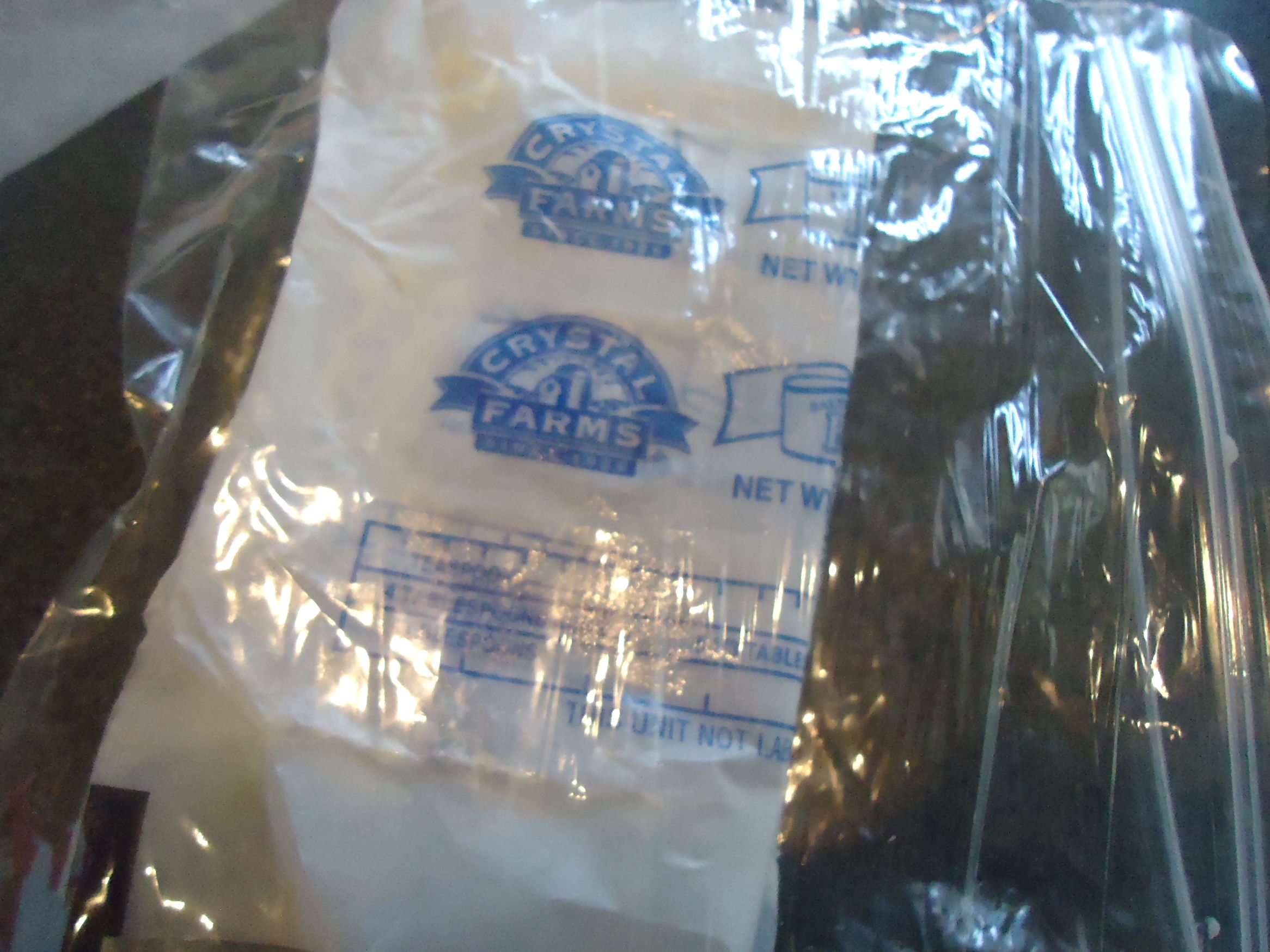
Tip of the day: Save your wrappers! Instead of tossing out butter wrappers into the trash, place in a plastic bag and toss into the freezer. You never know when you may need to butter a casserole dish!

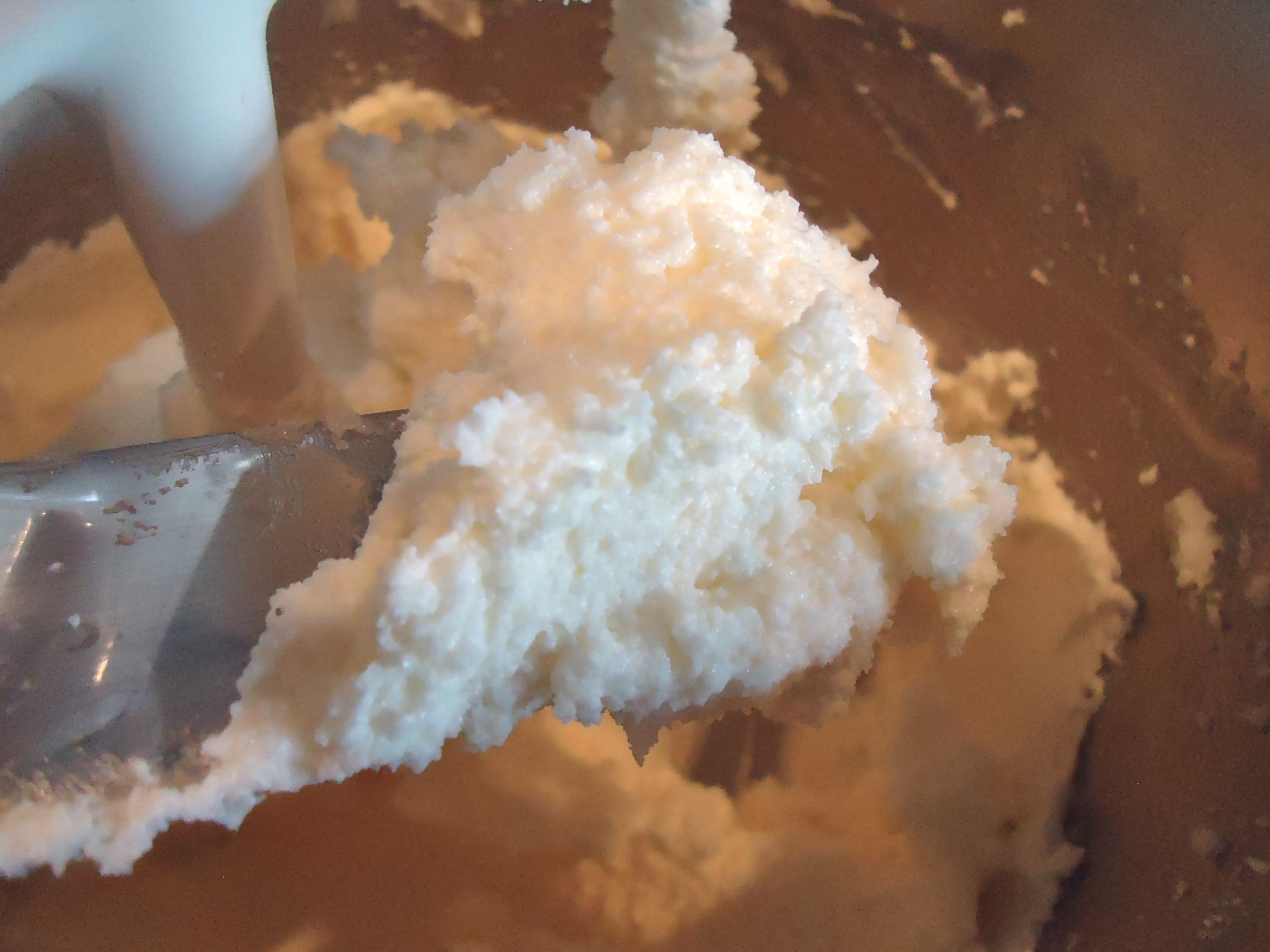
In this recipe creaming the butter with the sugar is as important as sifting the flour 3 times. I usually start by whipping up the butter first.
Creaming the butter and sugar is the leavening agent in this cake recipe. This is after only 1 minute of creaming, a long way to go!

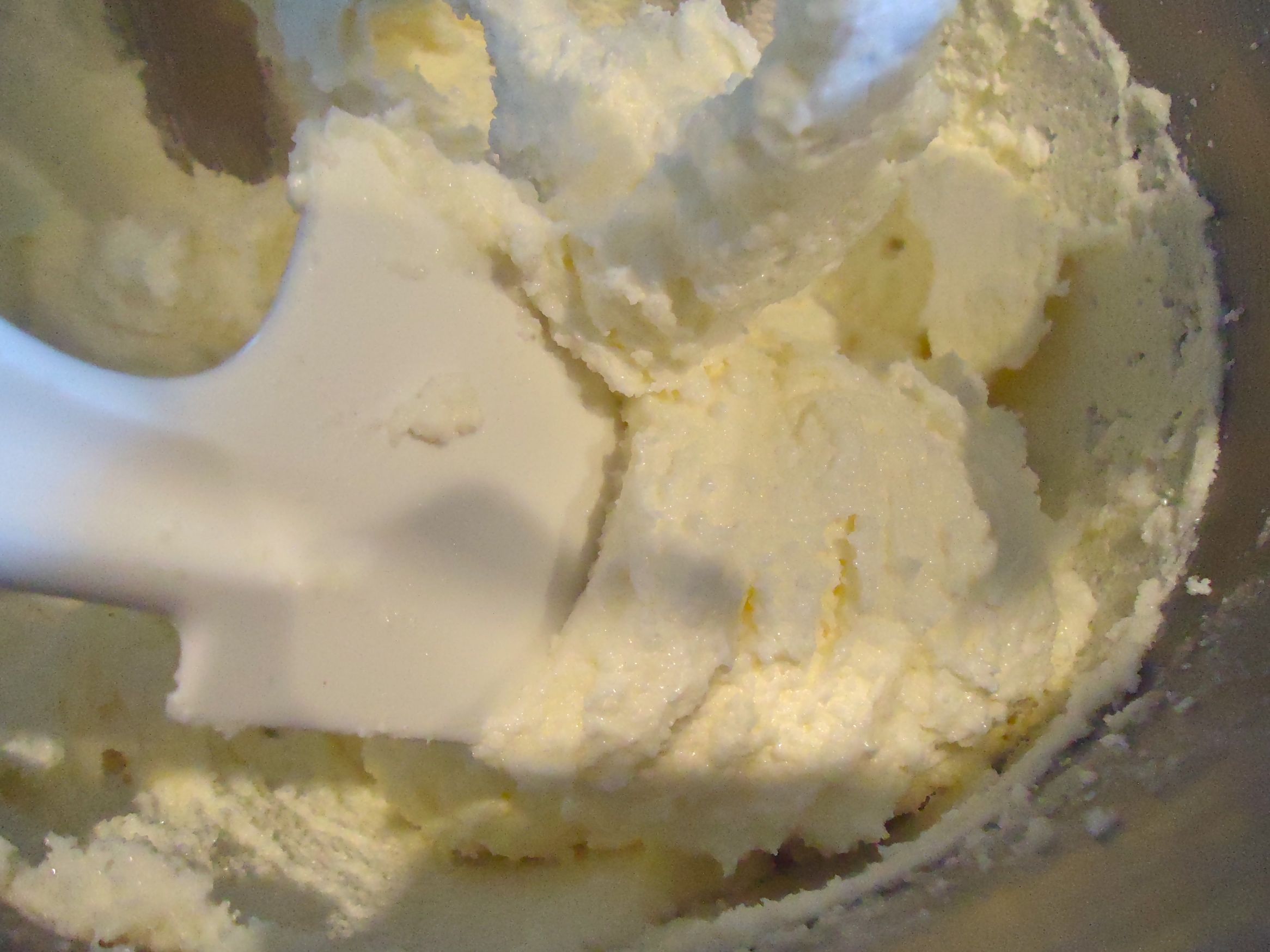
At 3 minutes the mixture is still crumbly and not light. With my KitchenAid mixer I use the No. 4 speed setting.

After 8 minutes the sugar and butter are much lighter and we’re almost there!

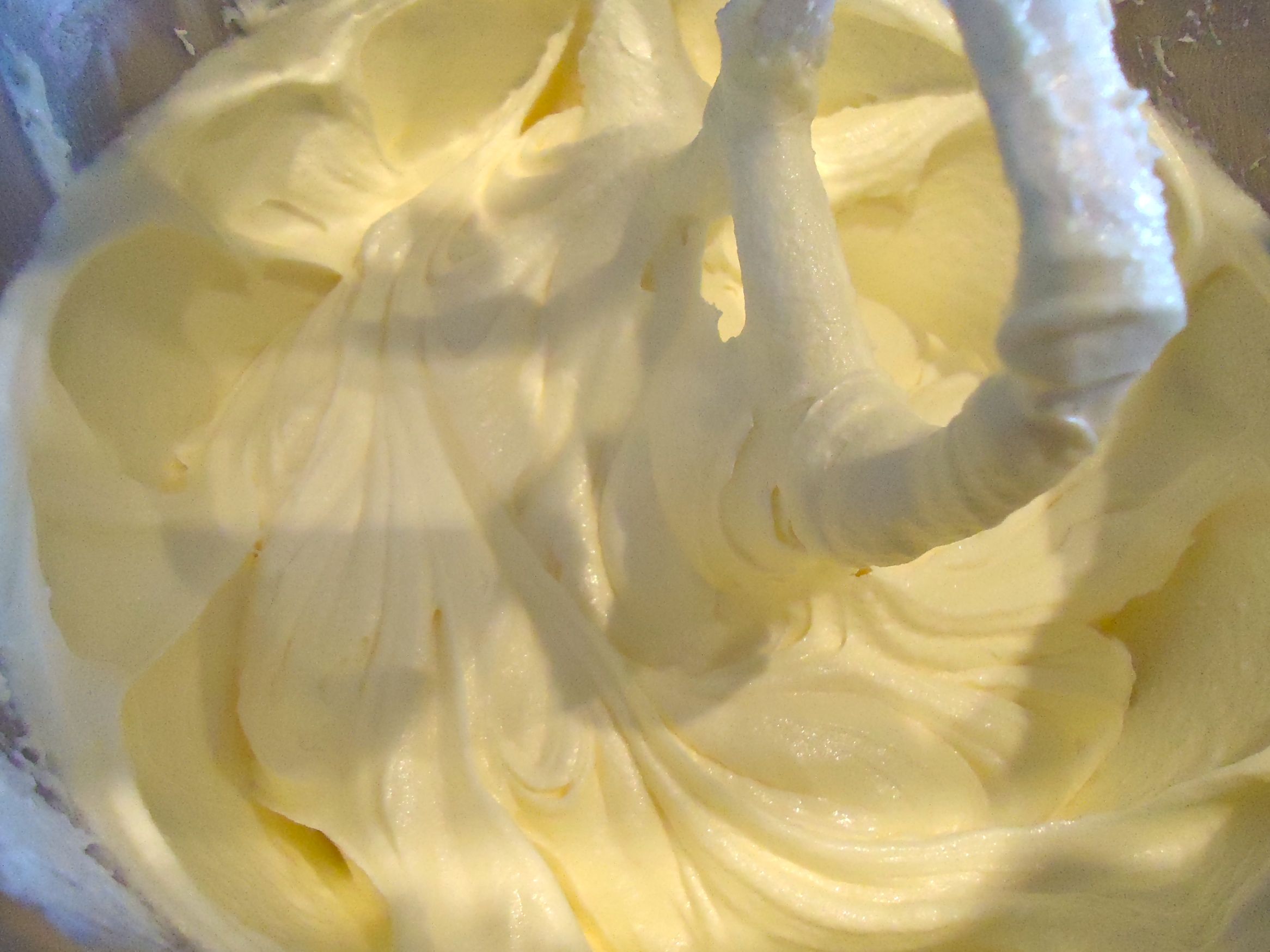
After 10 minutes, the sugar/butter mixture is light, creamy with only a hint of sugar granules.
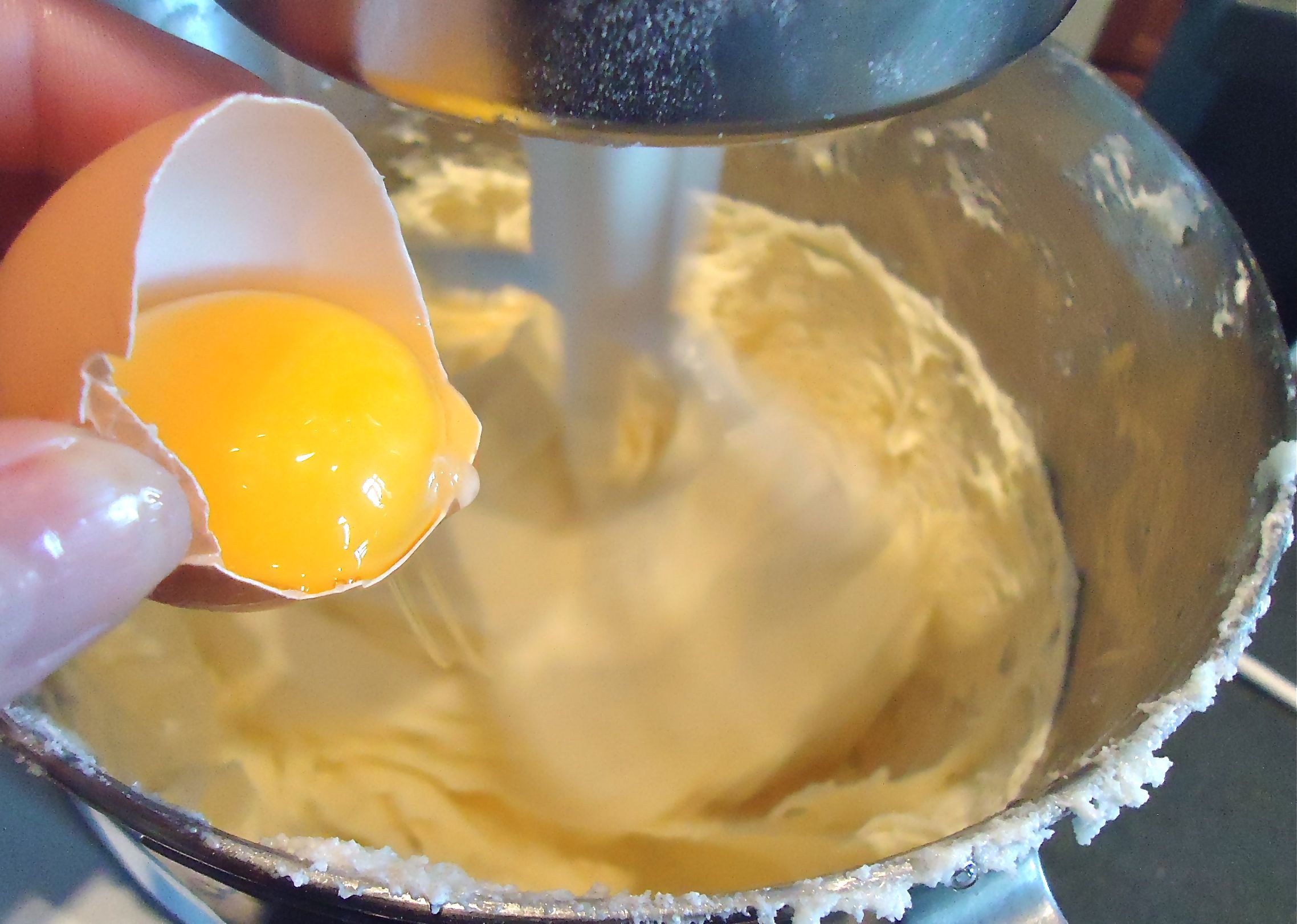
Next add in the eggs ONE AT A TIME. Beat well and I mean really well after each. With my mixer I mix at the No. 4 speed setting for about 60 seconds after each egg. I also scrape down the sides of the bowl after every second egg too.
After the addition of all the eggs. Very creamy.

After you alternately add the flour and cream (begin and end with the flour), mix in the vanilla extract. Sometimes my mother uses almond extract instead.

The finished batter, ready for the pan. I thought this image was sort of pretty in an industrial chic meets the bakery sort of way.

Batter up! Yes, I am a little messy but it can be difficult to pour batter and take a photo at the same time.

After 90 minutes, the cake is ready to be pulled from the oven. Allow to rest on a rack for 10 minutes or so and then turn onto a serving plate. You may need to cut away some of the crust in the center first, though, especially if your cake pan is smallish like mine. I think I need a new tube pan!

Pound cake with homemade vanilla custard and fresh peaches. Hello summer!

Pound Cake

  • 1 cup butter (salted)
  • 3 cups sugar
  • 3 cups all-purpose flour – sifted 3 times (*see below)
  • 6 large eggs
  • ½ pint whipping cream
  • 2 tsp. vanilla extract

Preheat oven to 300 degrees. Butter and flour a tube or Bundt pan.

In a large mixing bowl cream the butter and sugar. It should be light and fluffy. It will take about 10 minutes at medium speed in a heavy-duty mixer. Be sure to scrape down the sides during this process at least once. Add eggs, one at time, beating well after each addition. Scrape down bowl after every second egg.

After all eggs have been added, mix in the flour (in 4ths) alternately with the whipping cream (in 3rds) – beginning and ending with the flour. Scrape down the bowl, if necessary. Mix in the vanilla extract and pour batter into prepared pan. Bake in a preheated 300 degree oven for 1 ½ hours. Cool cake on a rack for about 10 minutes and turn out onto a serving platter. Allow to cool completely before covering.

* Sift at least 3 cups of flour once. Then accurately measure 3 cups of flour out of the first batch and sift twice more.