Pucker up for crispy bread & butter pickles

If there is one thing always to be found in my refrigerator it’s a jar of bead and butter pickles. Of course, I am particular to my own pickles or my Mothers and store-bought really will not do at all. These sweet and tangy pickles are the first thing I learned to “put up” and I remember vividly waking up to the aroma of vinegar, onions and tumeric wafting through our house on a summer Saturday morning.

It makes my mouth pucker up just thinking about it. But it also makes me smile, reflecting on how familiar that smell is and how I knew exactly what was happening and what was going to come to pass later that day.

The pickle production line – gurgling pots and steaming jars. My mother announcing that all dogs and small children must stay out of the kitchen, which meant our Pekepoo mix, Pepper, and my brother. I was usually allowed to watch the proceedings IF I was quiet and not under foot. I may even be allowed to hold the funnel over the jars with potholder-covered hands. In the least I would get to “test” the filled jars for a seal – the popping sound snapping back at me as I dutifully pressed and checked the lids like a Vlasic quality control inspector.

Over the years I have found the value of homemade bread and butter pickles to be incalculable. The actual pickles, the onions and the juice have made their way into so many other favorite recipes, which surely would be far less enjoyable without the tart-n-tangy pickle. From deviled eggs to curry chicken salad to pimento cheese and yes, barbeque sauce (!), a jar of bread and butter pickles is the MacGyver of the kitchen pantry – but without all those pesky explosions.

My mother usually makes her bread and butter pickles sans the overnight lime soak. However, I adore the crispness produced with this method so I find it worth the extra steps. Another difference is the thickness of the cucumber slices – my Mama always slices them paper thin, but I prefer a heftier portion per slice. This year a request was made for more onions so I actually almost doubled up on sweet onion – they are great on sandwiches. Chop them up with some pickle slices and voilà, relish. MacGyver should be so resourceful!
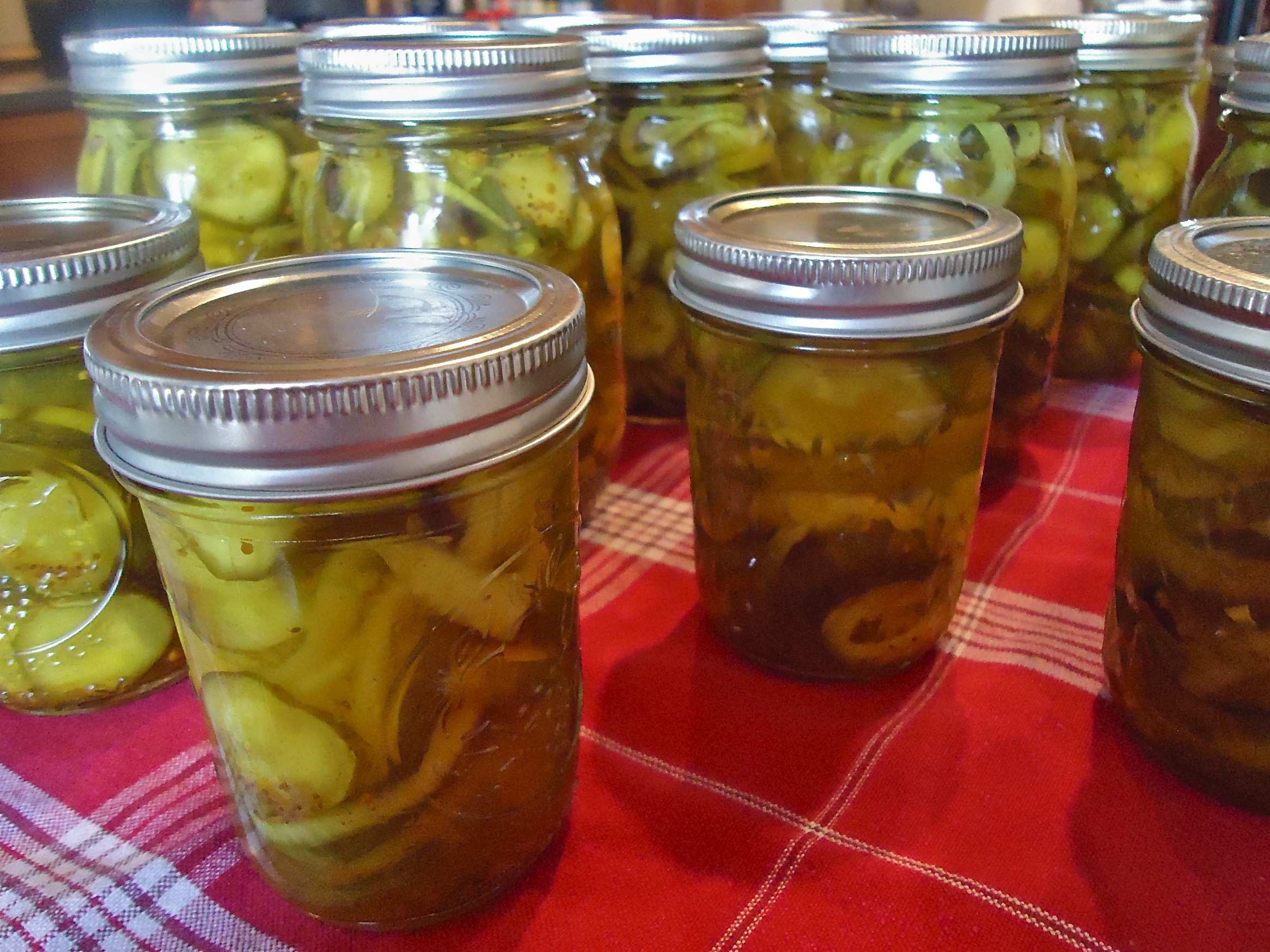
A look at the finished product – a little inspiration to start.
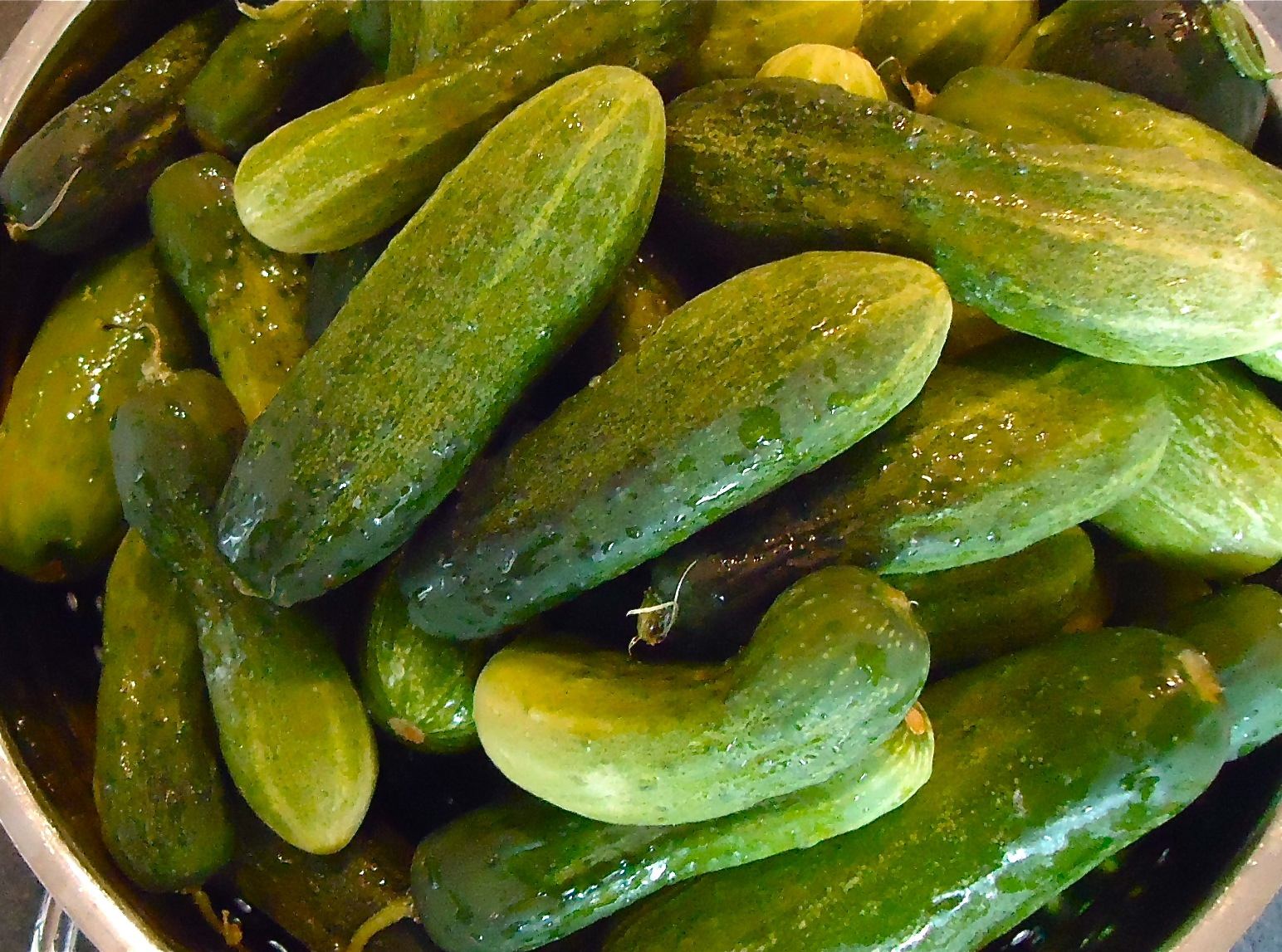
These cucumbers are about to become pickles, well, in about a day.
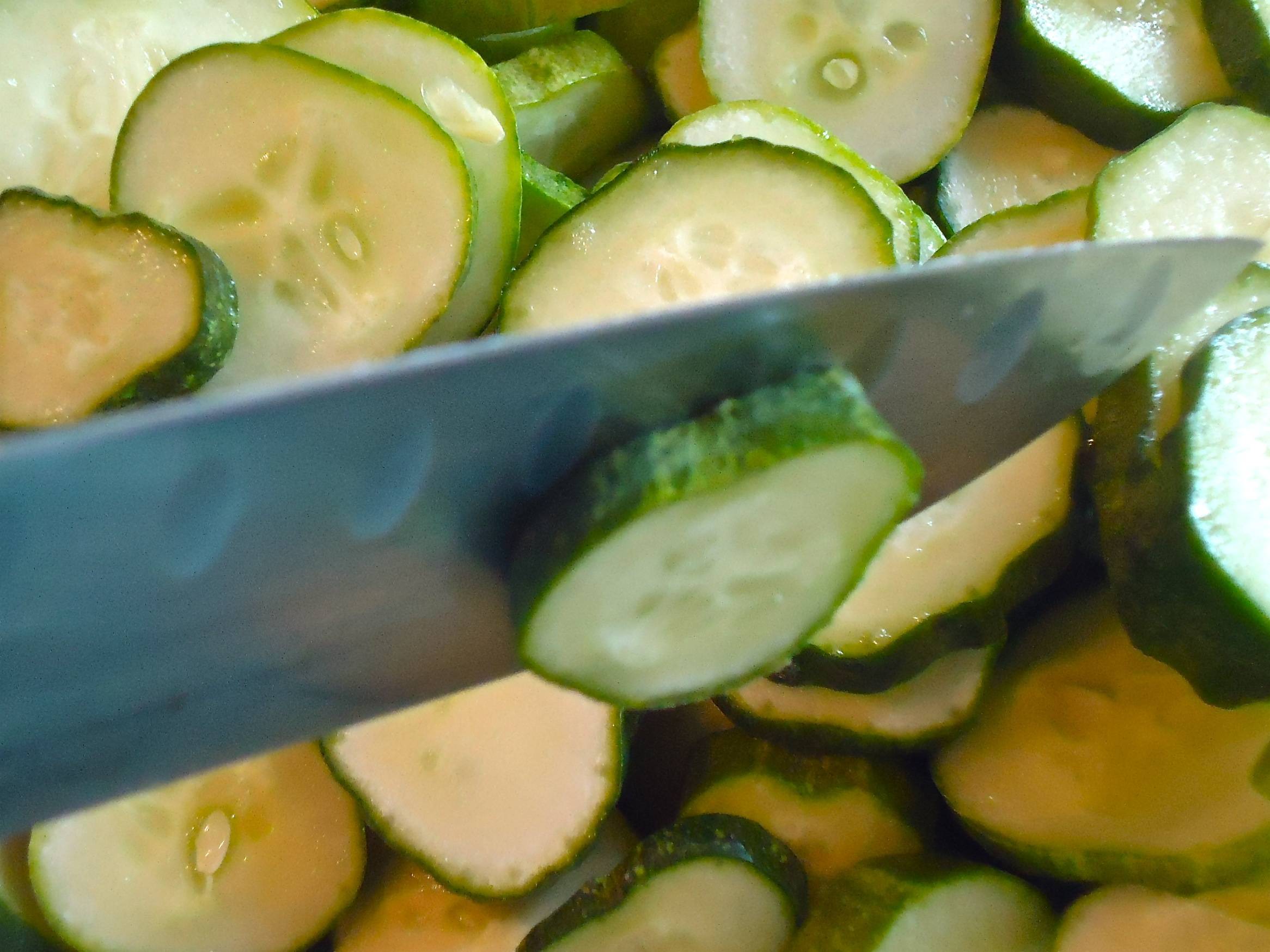
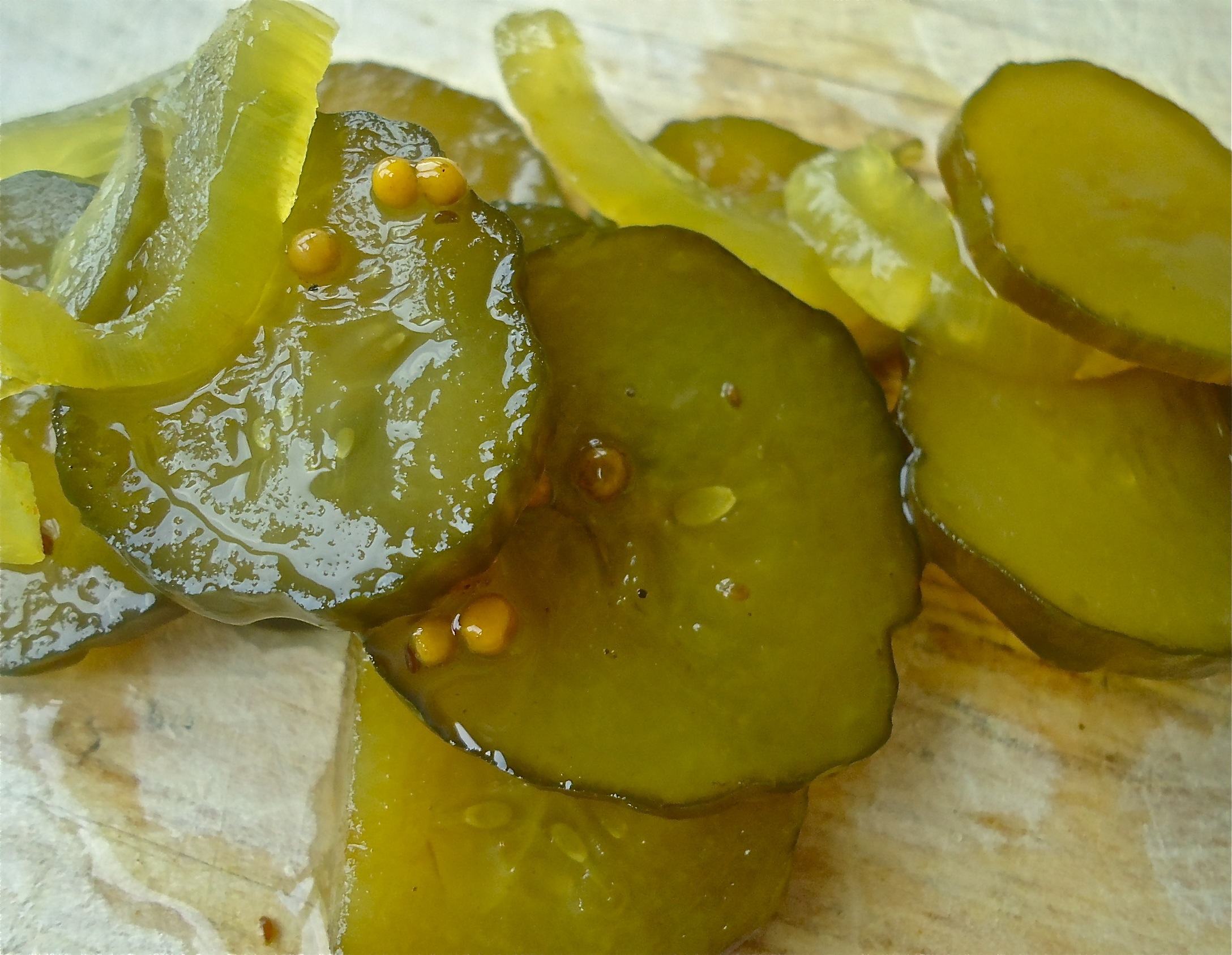
Here’s a slice to show the thickness. Of course, you can slice the pickles thicker or thinner, your preference.
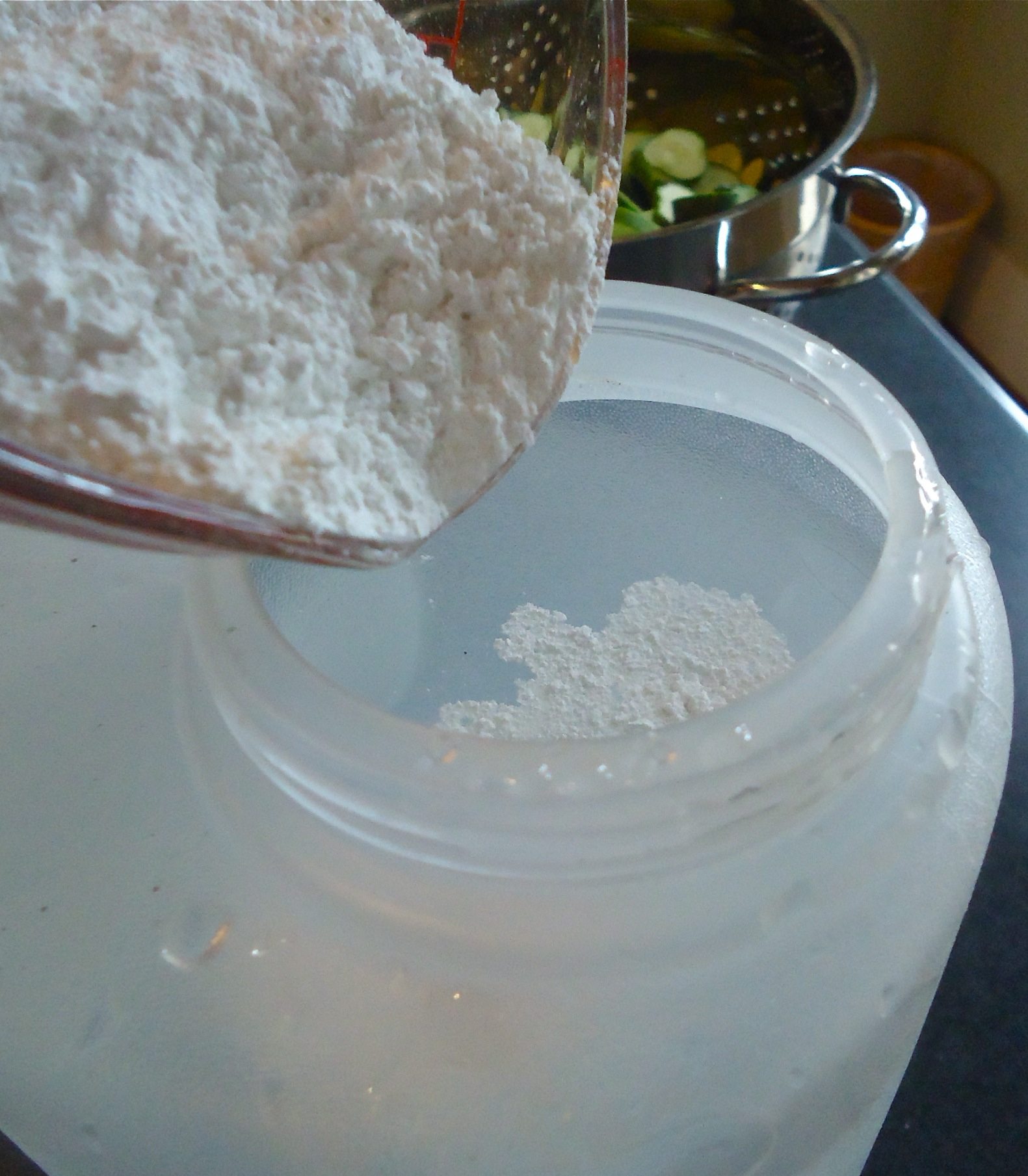
Mix the lime into the water. Note that the lime will not completely dissolve.
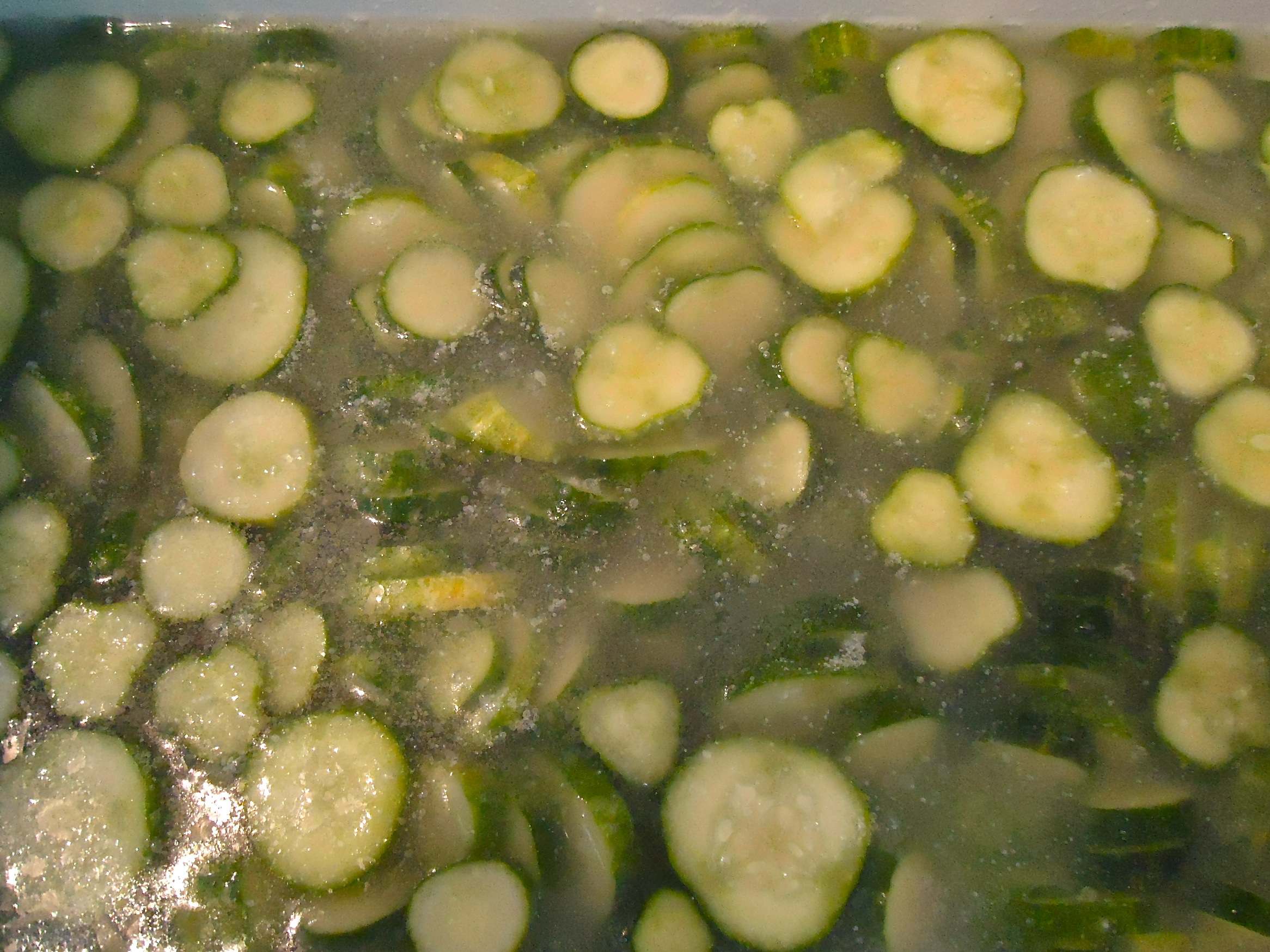
The cucumbers need to soak in their lime “bath” overnight or up to 24 hours. This batch soaked for 18 hours.
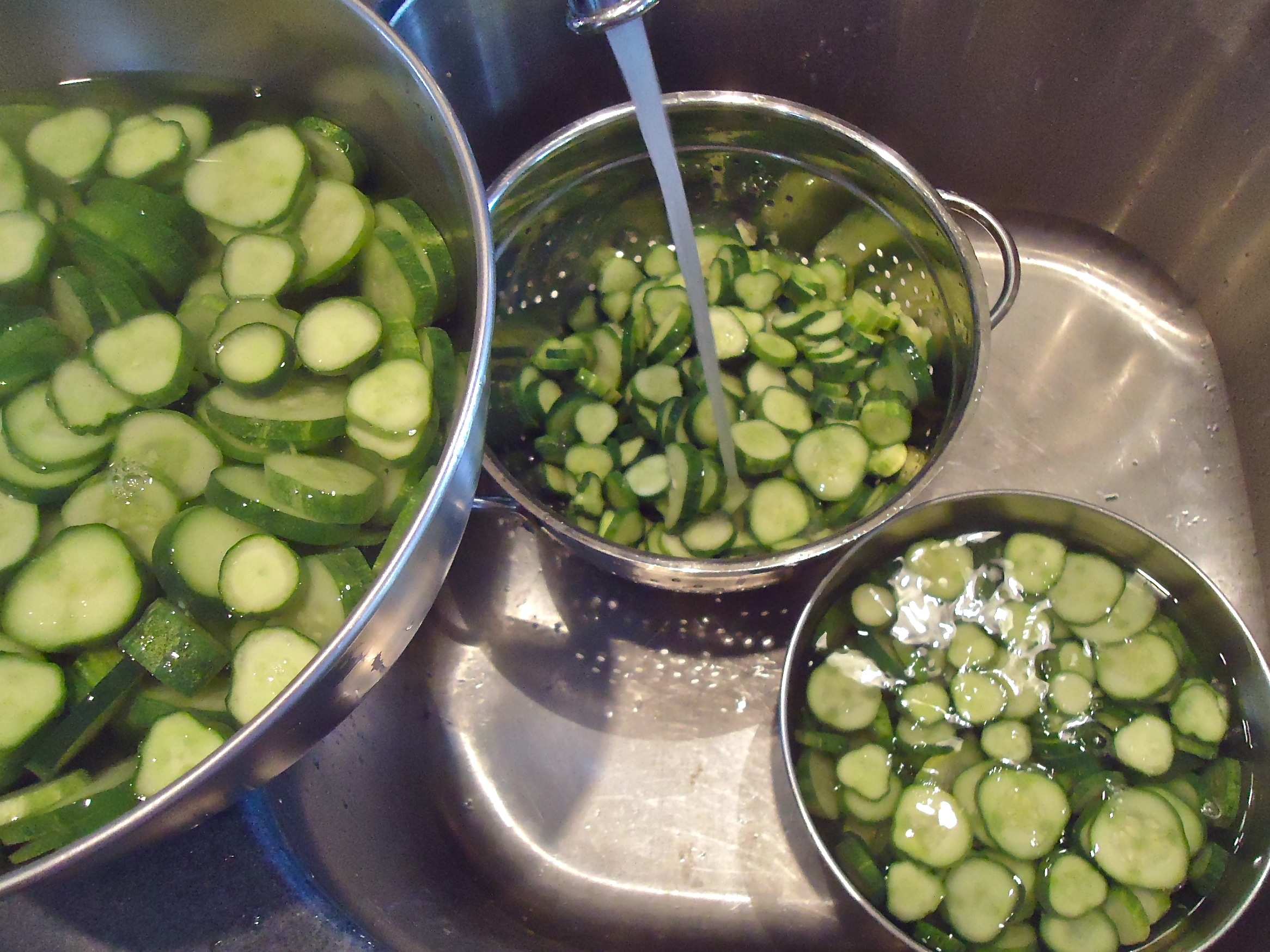
The lime must be washed off the cucumbers completely so rinse them 3 times. I washed them in batches.
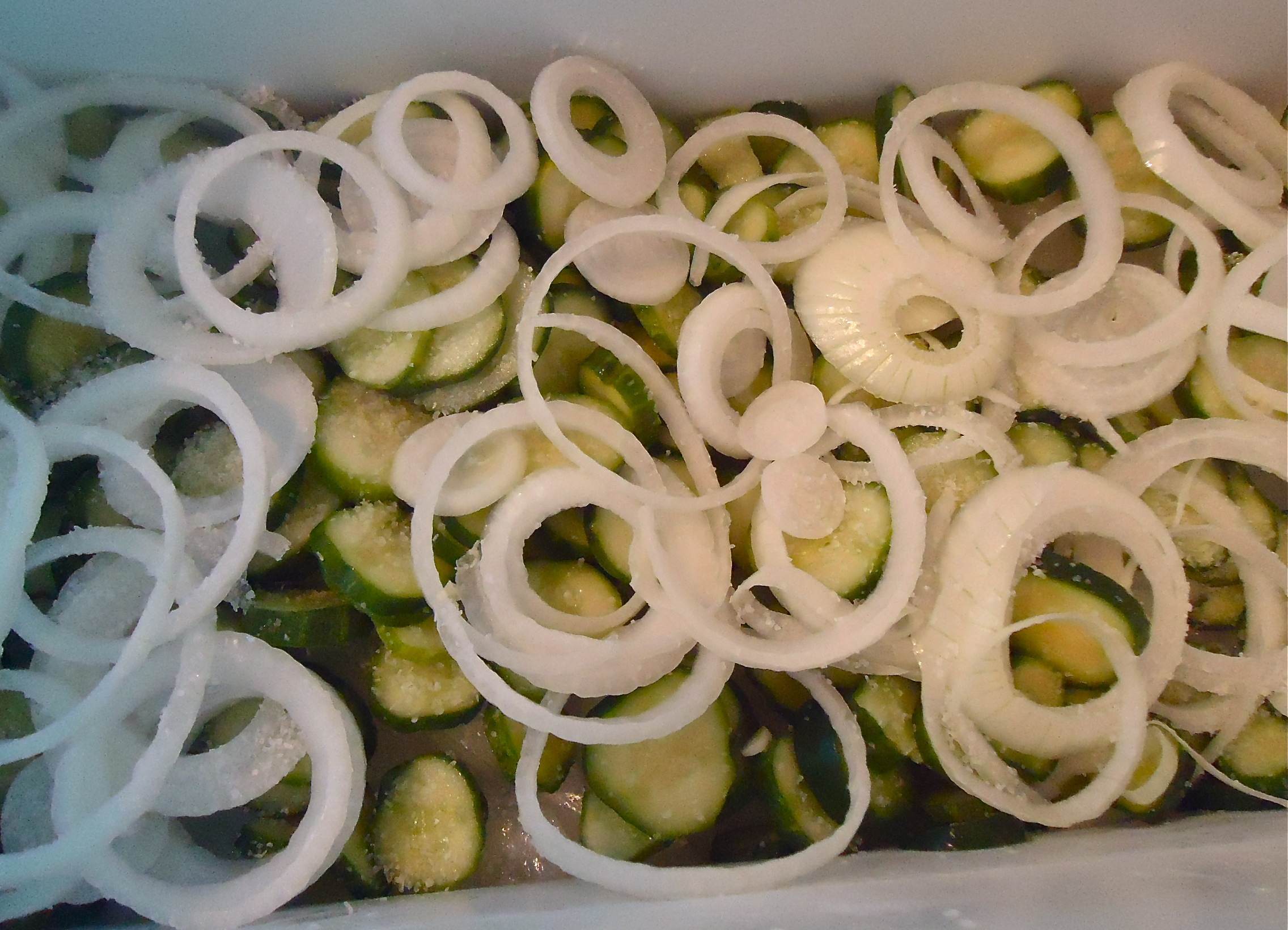
The next step is to layer the cucumbers, onions, kosher salt and ice and allow to sit for 3 hours.
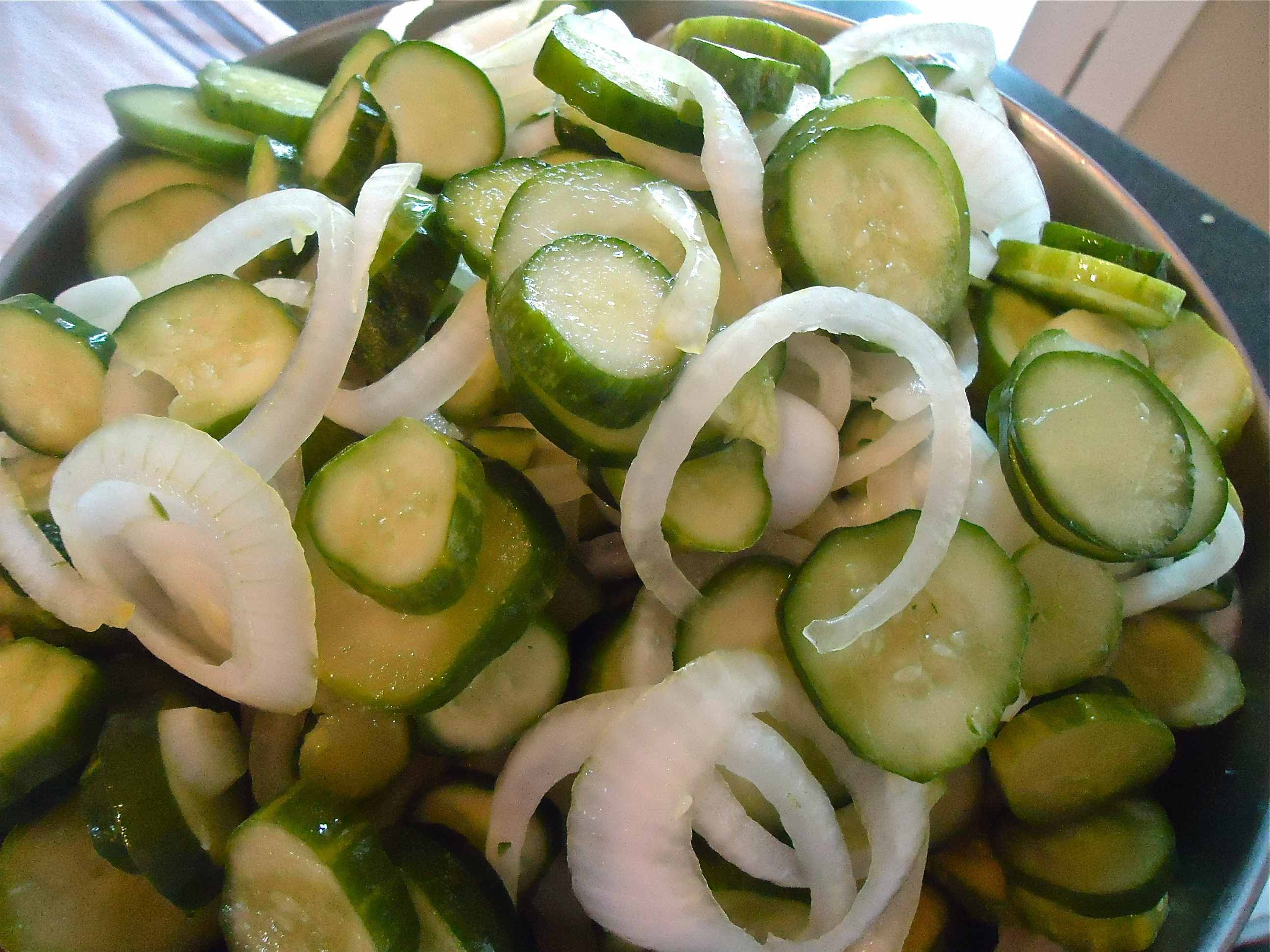
After their 3 hour cruise, errr… I mean ‘soak”, we are ready to finally get to the actual ‘pickling’.
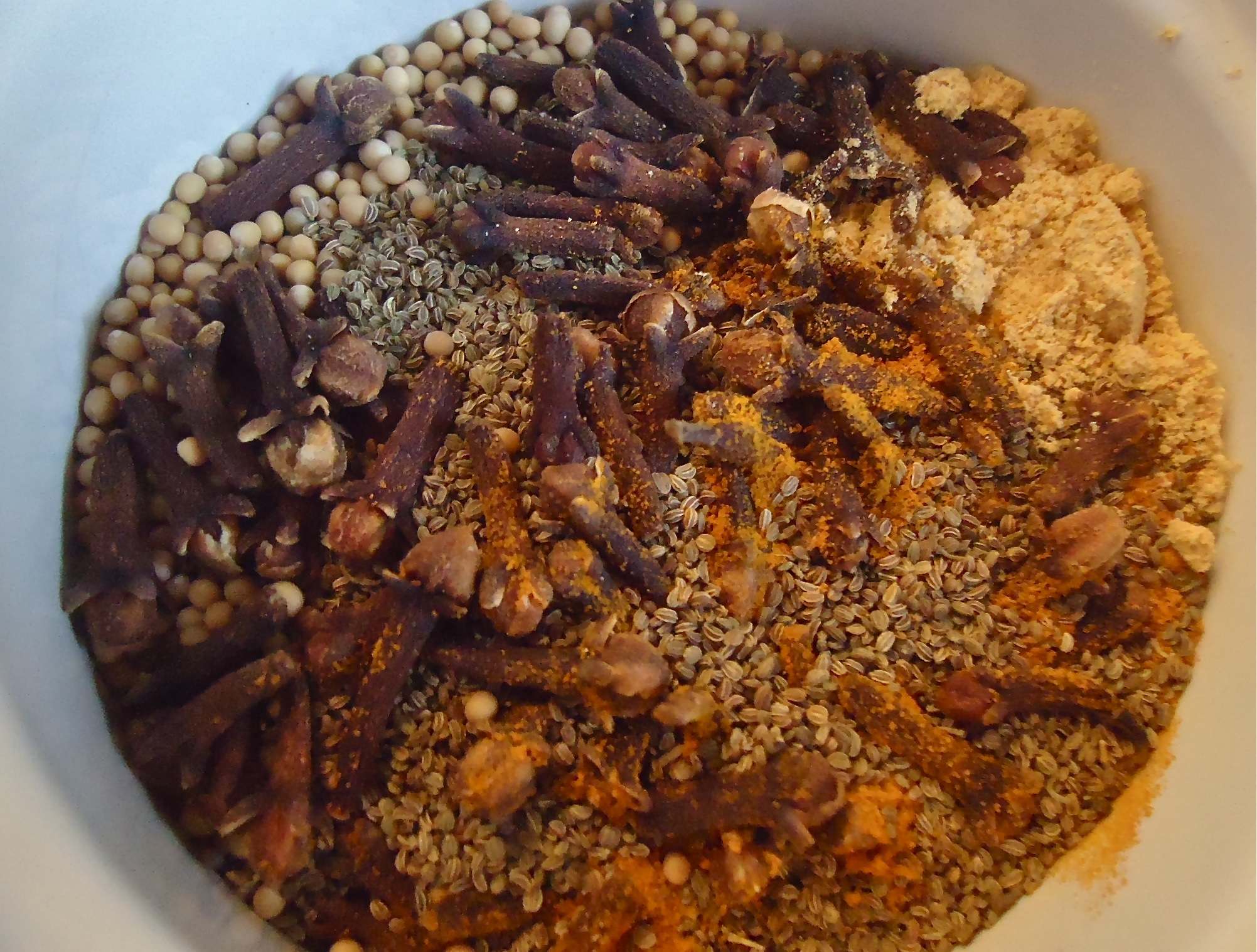
Here are the pickling spices. You can mix them individually into the syrup or mix them together and then add to the syrup, which is what I do here.
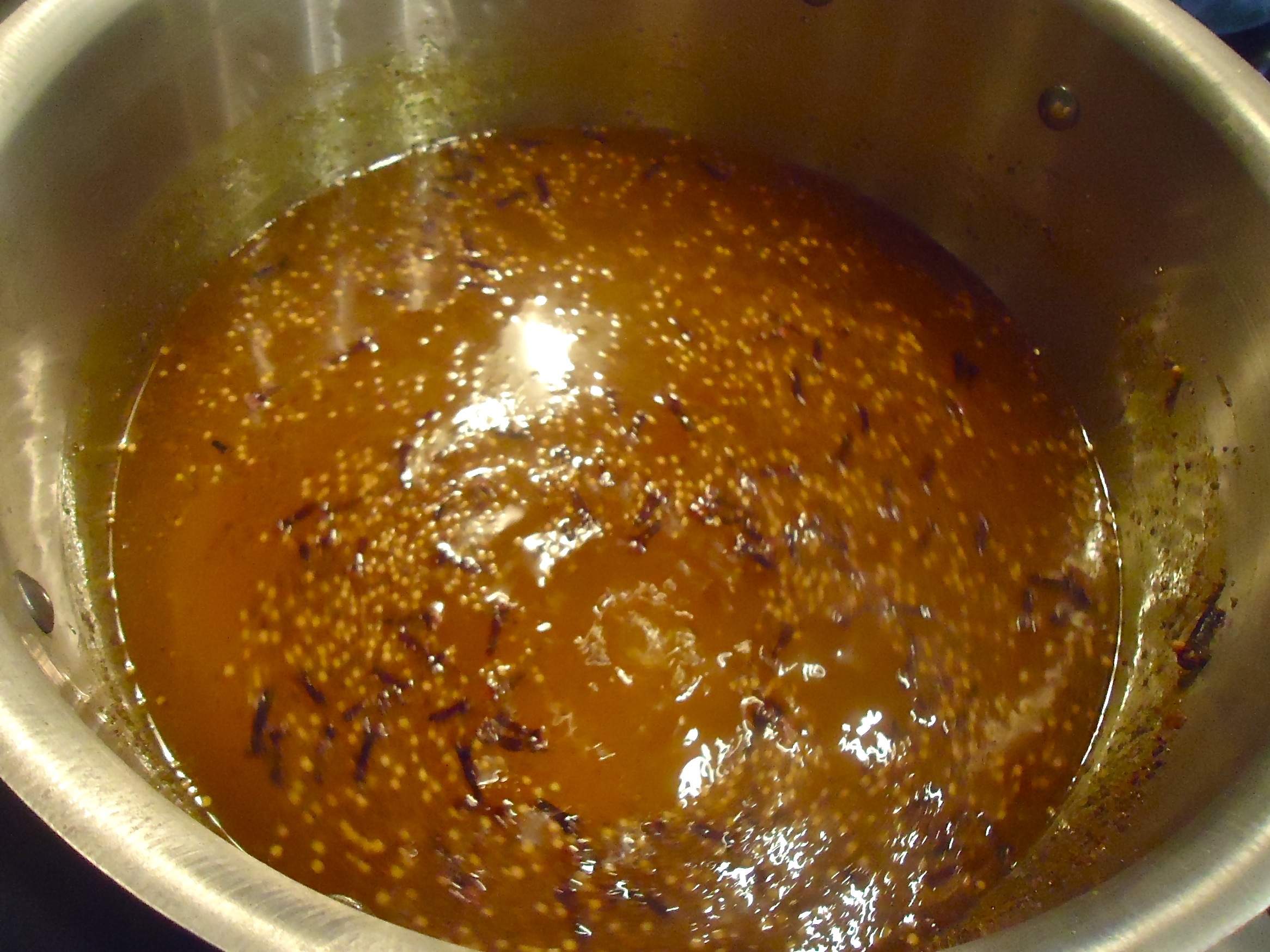
Mix the spices into the sugar/vinegar syrup and bring to a boil.
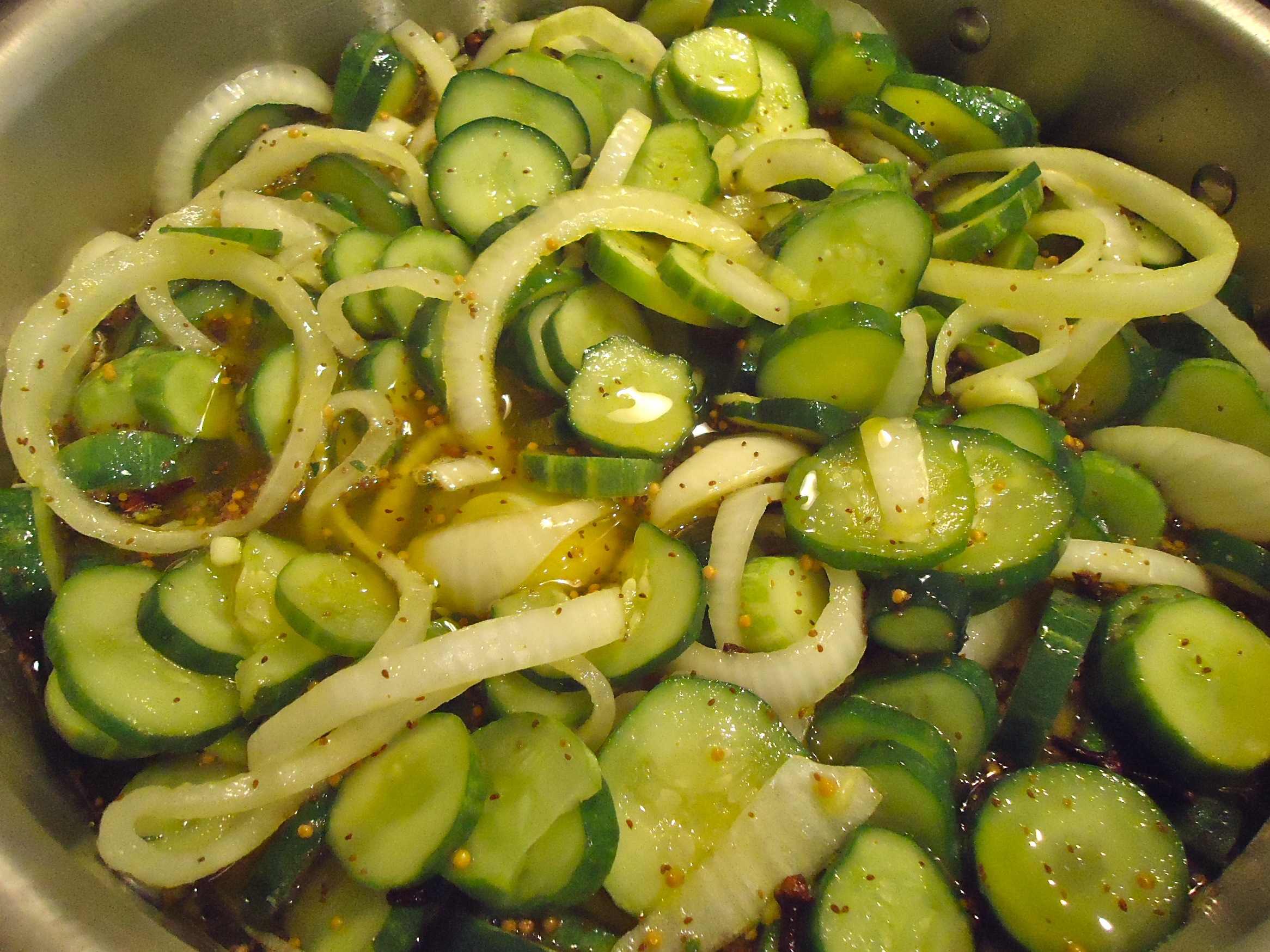
Add the cucumber/onion mixture to the spiced syrup and bring back to a boil. Stir but try not to smash and break up the pickles.
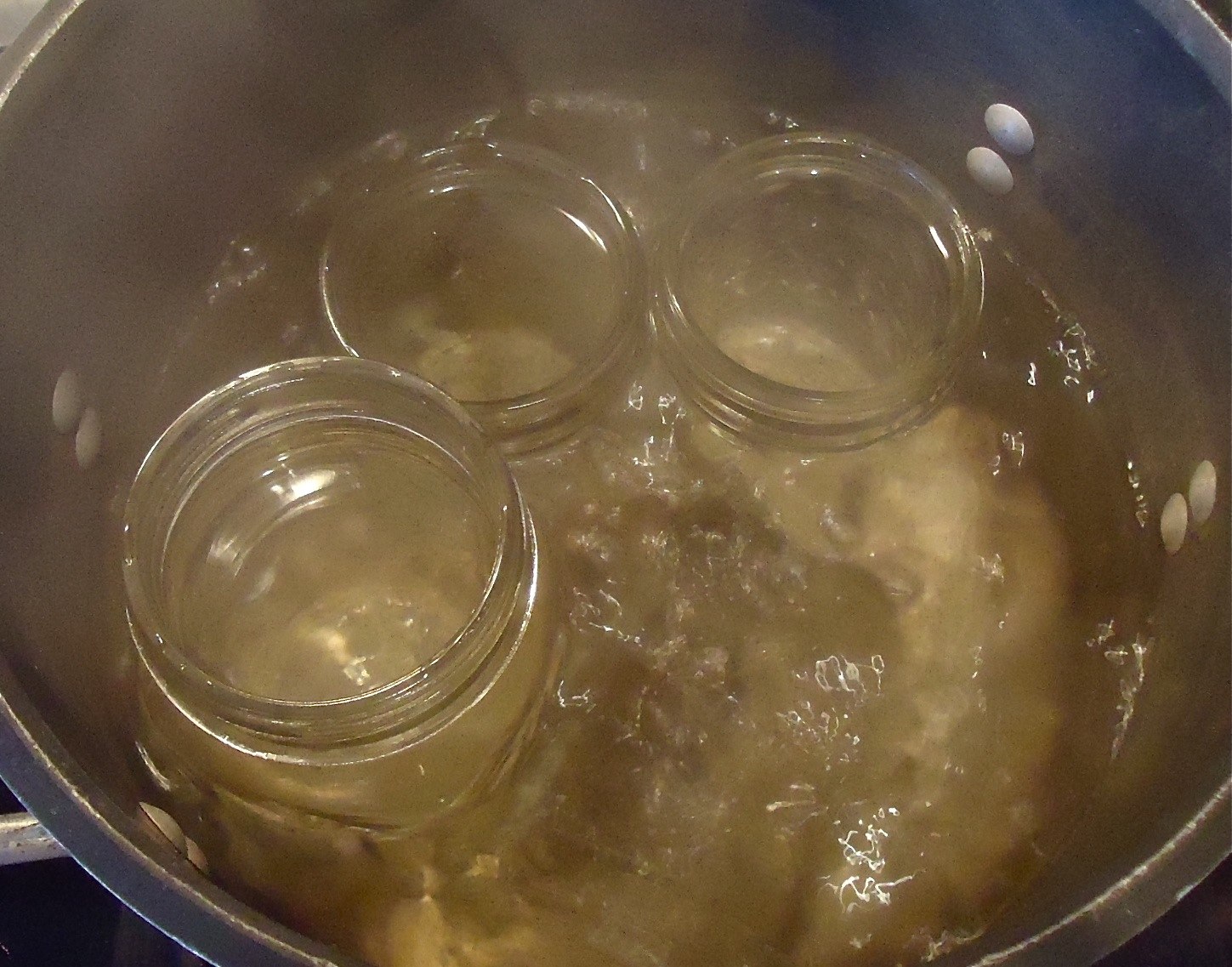
Meanwhile, the canning jars (and the lids and rings) should be boiling away in their hot water bath. Be careful lifting the jars from the hot water – use long tongs and/or jar lifters plus have lots of potholders and dish towels available. Like my Mama said, little kids and pets should not be underfoot while canning.
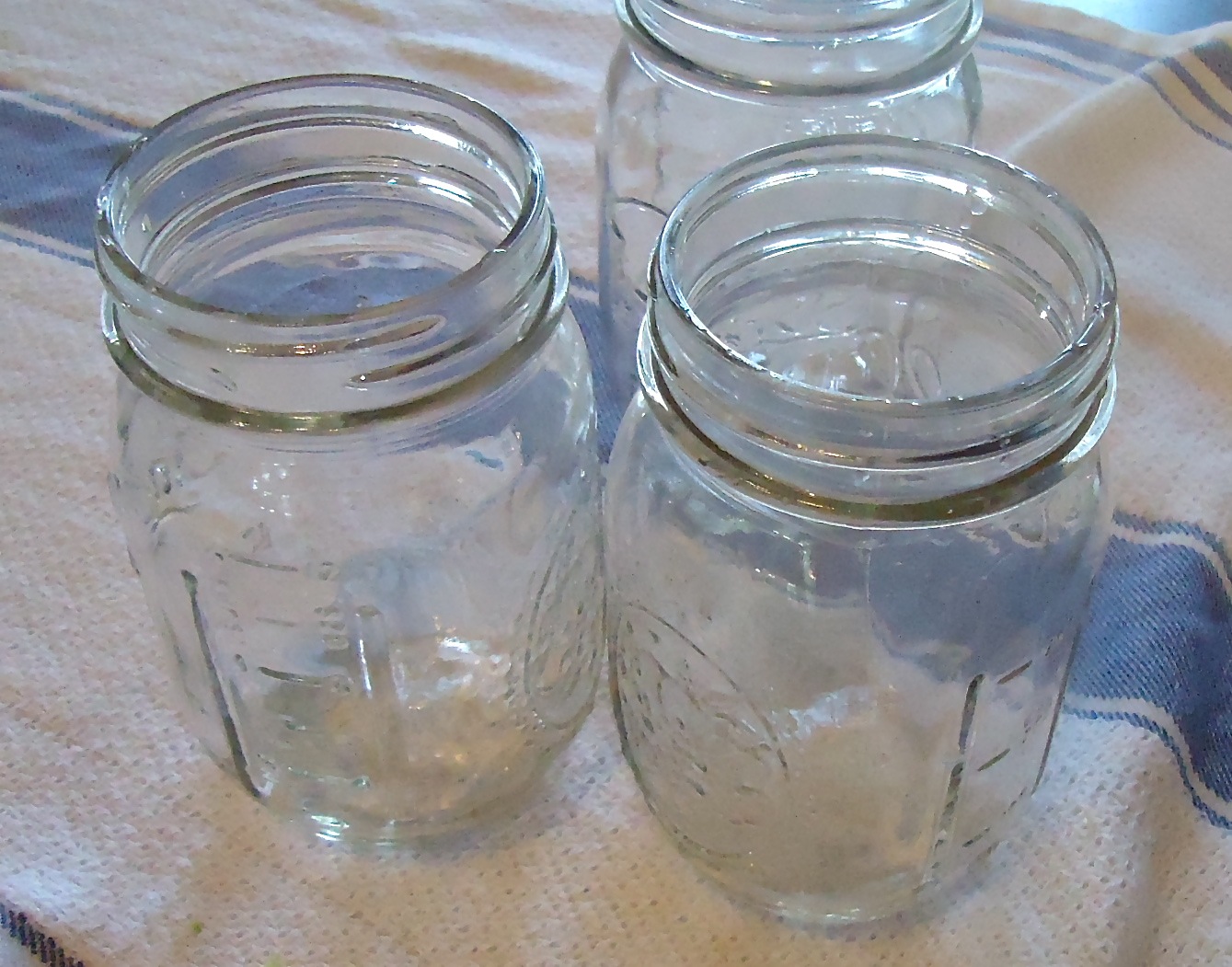
Hot jars ready to be filled.
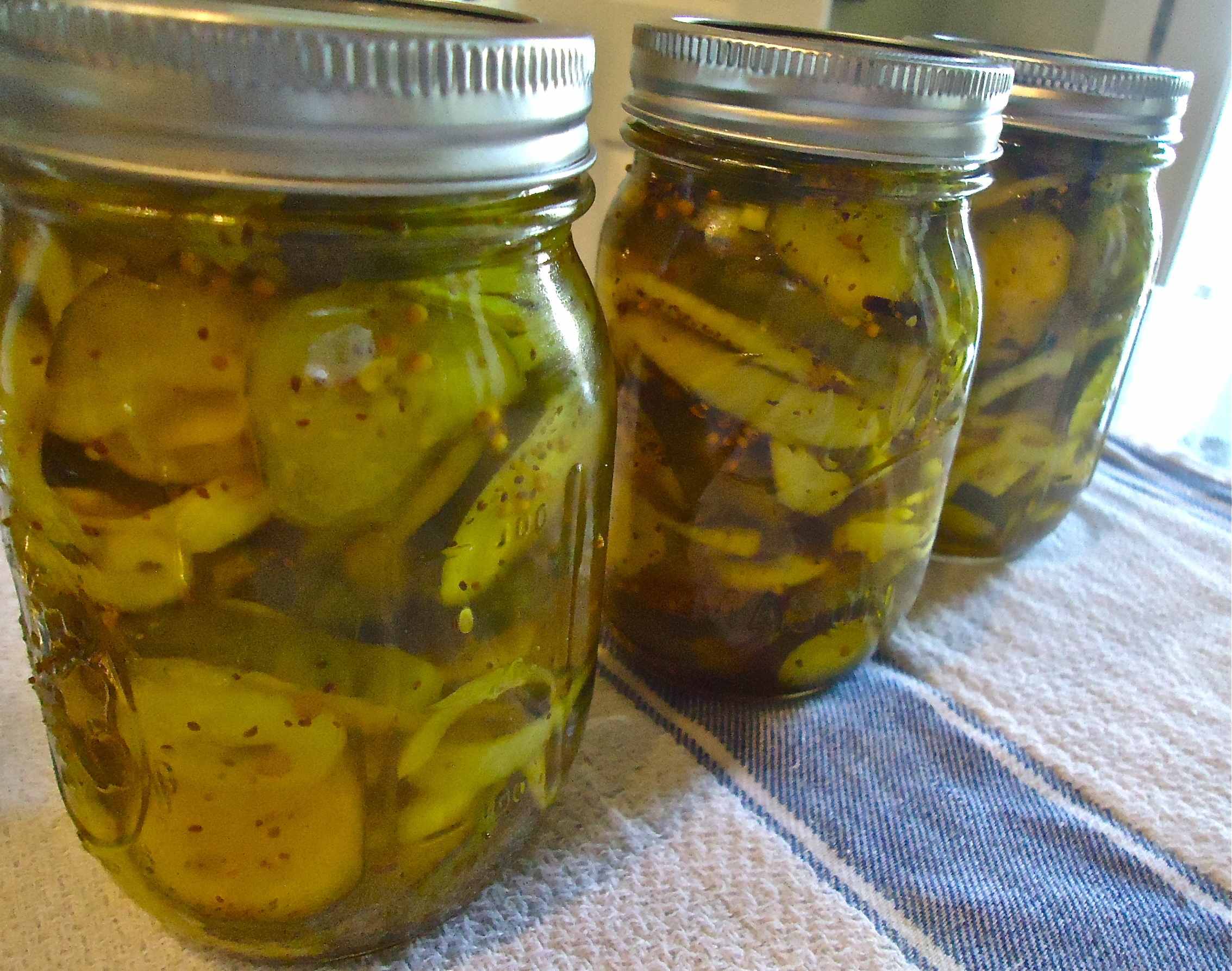
Add the pickle mixture to the hot jars. Wipe any spilled syrup or juice from the rim of the jar and top with a sterilized lid. Secure with a ring using a potholder or dish towel to hold the hot jar. Wait at least a couple of days before diving into your pickles.
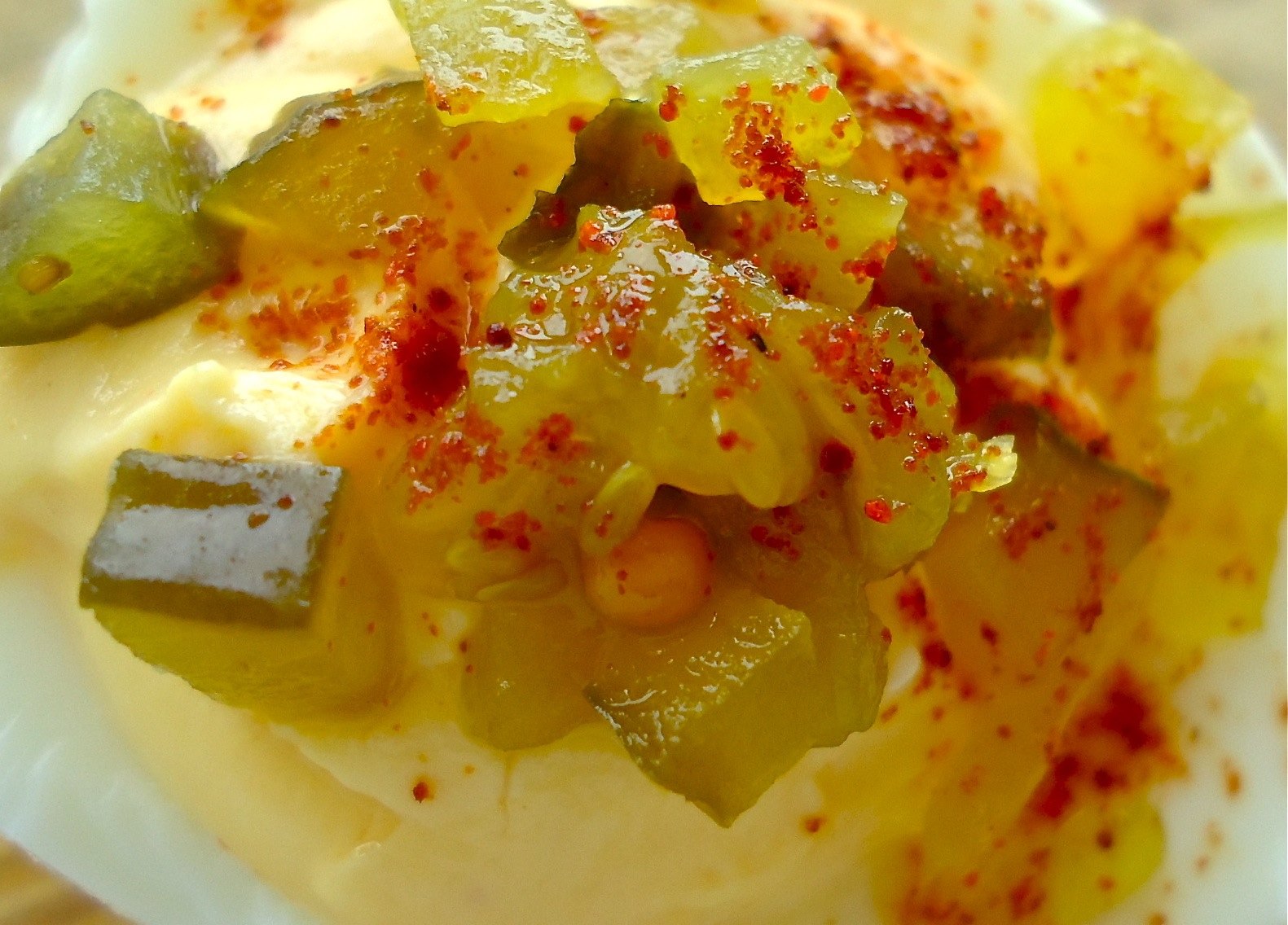
I like to top my deviled eggs with diced bread and butter pickles and a bit of pickled onion, of course!

Crispy Bread & Butter Pickles

  • 8-10 lbs. small Kirby or “pickling” cucumbers, washed.
  • 1 cup pickling lime
  • 1 gallon fresh water
  • 3 tbl. Kosher salt
  • Ice
  • 4-6 medium onions, peeled and sliced
  • 6 cups vinegar (apple cider or white or a combination)
  • 6 cups sugar
  • 3 tbl. mustard seed
  • 2 tsp. tumeric
  • 2 tsp. celery seed
  • 2 tsp. whole cloves

Begin the day before you plan to can the pickles. Slice the cucumbers between 1/8 and ¼ inch thick discarding the end pieces. Mix the pickling lime into the gallon of water. The lime will not completely dissolve in the water.

In a large, clean non-reactive (plastic, glass, stainless steel or porcelain – NO aluminum!) mix the cucumbers with the lime/water. Stir and cover. Allow to sit in a cool area overnight and up to 24 hours. Stir once or twice during this time.

Drain cucumbers and rinse in clean water thoroughly 3 times to remove all lime residue. In a large non-reactive container layer the cucumbers, onions, salt and ice. I divide everything by three and layer in thirds. Cover and allow to sit for 3 hours.

Meanwhile *wash the canning jars, new lids and rings and set up for sterilizing the jars. In a large pot (or canning pot) heat clean water to boiling– enough to cover several jars when submerged – add 3 or 4 washed jars, bring to a boil and reduce heat to simmer. In a smaller saucepan heat clean water to boiling and add the new washed lids and rings. Reduce heat to just below boiling- keep them hot.

After 3 hours drain the cucumber/onion mixture. Do not rinse but discard any remaining ice. In a large non-reactive pot mix the vinegar and the sugar and begin heating. Stir to dissolve the sugar and add the spices. Bring to a boil and add the cucumbers/onions. Mix gently to evenly saturate the mixture in the syrup. Bring back up to a boil and stir. Reduce heat to a simmer.

Begin canning the pickles. Carefully remove hot jars from the hot water bath. Fill each jar to within ½ inch of the top of the jar. Wipe away any excess syrup from the moth of the jar with a clean towel. Place a hot, sterilized lid on top and secure with a ring. Use a hot pad or towel to hold the jar while you screw on the lid as it will be hot. Continue to can all the pickles, adding clean jars to the sterilized water and keeping the pickle mixture hot. I can about 3 or 4 jars at a time.

Some people do another step whereas they put the sealed jars back into another hot water bath, bring to a boil, remove and allow to cool. Since I use new lids every time and always check that a seal has been made on each jar I do not do this step.

However, you do need to check that a seal has been made for each jar. To do this, lightly push on the top center of each jar after it has been filled for at least 15 minutes. If the lid pops up with your touch, it isn’t sealed and if it doesn’t, it has been sealed.

If it has not sealed, check back after another 20-30 minutes. If after 1 hour a jar and lid have not sealed, you will need to replace the lid and seal and place the entire jar in a hot water bath (boiling water with water covering the entire jar) for 10-12 minutes. In all the years I have made preserves, jams and pickles I have never had to do this. Use quality jars and new lids. The rings and jars can be used many times over but new lids are the key to a proper seal.

This recipe makes 12 pints of bread and butter pickles. Refrigerate after opening.

* I wash my jars, lids and rings in the dishwasher on the hottest setting. I try to time this so that all will be clean, rinsed and still hot when I place them in the sterilizing hot water bath.
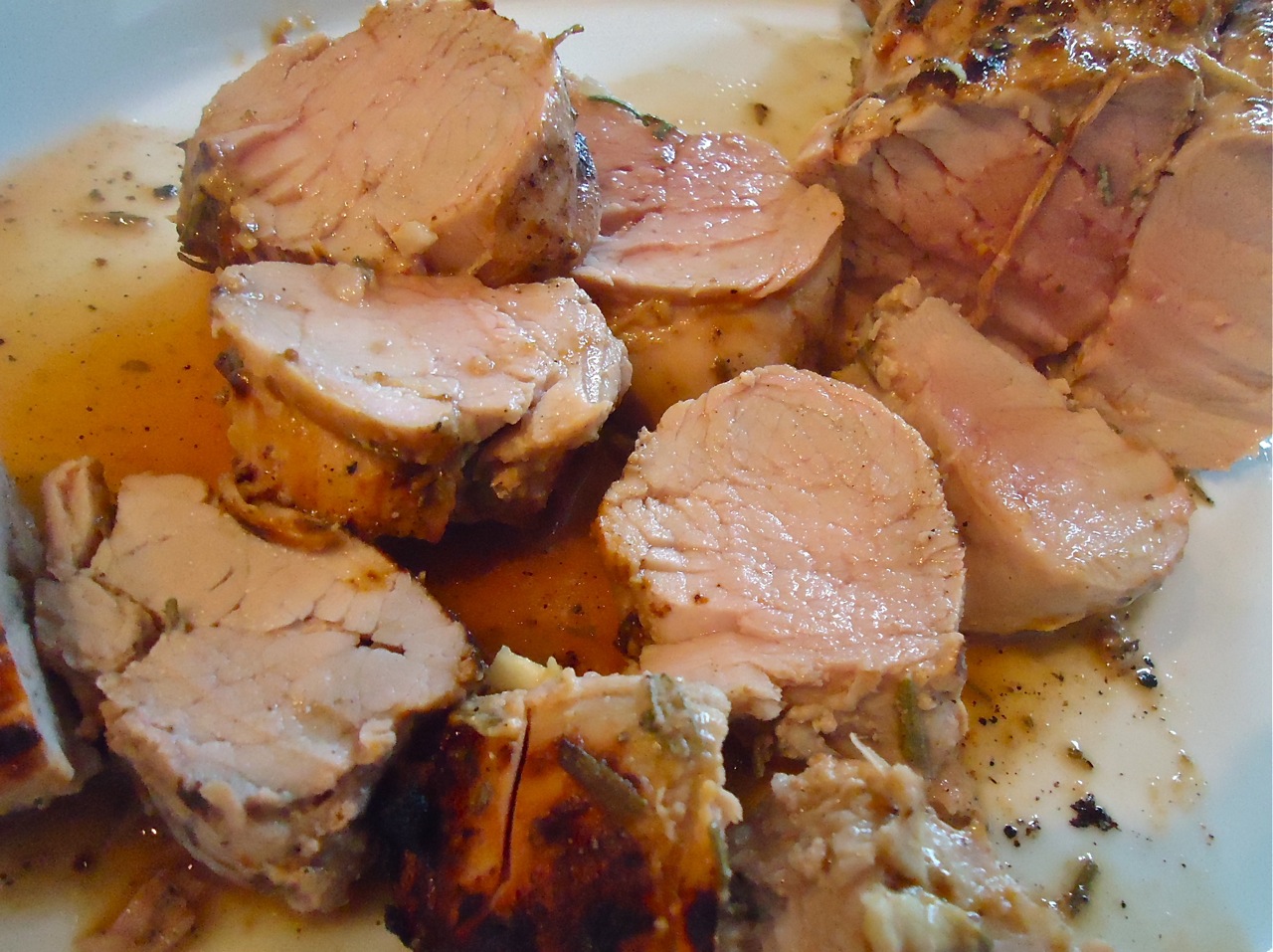
The noble pig is ‘all that’ with mustard roasted pork loin

So today I finish the week’s posts with the third recipe in my creation of mustard roasted pork loin with creamy grits and okra. Getting to the meat of it, ehrrr… the pork loin. This cut of pork is pretty versatile – roasted, pan fried, grilled, smoked – there are many ways to get it from the refrigerator to the plate.

I absolutely love my gas grill and since it’s summer, I find it a snap to cook with it, keeping the mess and heat out of the house. Cooking outdoors is fun in and of itself, not to mention one isn’t allowed to command the grill, at our house anyway, without a proper libation – beer, wine or maybe an adult Arnold Palmer which we make with local favorite, Firefly Vodka (Wadmalaw Island, SC). Their sweet iced tea flavored vodka is in a word, delightful, especially mixed with icy lemonade and enjoyed among friends. I first tried this concoction during the RBC Heritage golf tournament last April and have been hooked ever since. It is quite refreshing if you are partial to iced tea, and if you aren’t, this may make an iced tea lover out of you.

Back to the pork. I actually have found that grilling alone, no matter if using charcoal or gas heat, can be tricky with pork loin. Pork loin is a lean cut, hence it can become dry if overcooked. I prefer my pork loin pink in color in the center and since pork loin, like many cuts of beef, needs to rest (and will continue to cook) before serving, getting the heat and timing just right can be tricky. The best course of action is to practice and take note of how your equipment (grill and range) cooks the pork within a specific time frame. Choosing a symmetrical loin of even thickness is a good idea too.

Over the years I have found that searing off the pork loin on a very hot grill and then roasting it in the oven gives me the best results. Believe me, I have turned some pork loins into shoe leather in the past when only utilizing the grill, so the lesson has been learned. Now I follow the at-home technique that many professionals use exclusively at work: searing and roasting. One could also wrap the loin in foil and roast on the grill and I would try this if I had no other alternative (if I was camping, for instance), but since I have a nice gas oven I see no reason to test fate. Plus I want pan drippings for my sauce.

The marinade is more like a liquidy ‘rub’ – thick with Dijon mustard, honey, garlic and rosemary. The flavor is best if the slathered loin can marinate, refrigerated, for 3 hours but at least one hour is permissible. Obviously, I adore this with creamy grits and crunchy fried okra – making a superb flavor and texture combination. But the loin could also be served with garlic mashed potatoes or even a good quality brown rice favored with stock and herbs, perhaps, if you are not into grits.

And before I forget, leftover pork loin also makes for a delicious sandwich. Add a crusty toasted bun, some caramelized onions, fresh greens and a dollop of homemade peach chutney (hint, hint) and you’ve got a lunch worthy of supper!

Ingredients include a nice pork loin, some fresh rosemary and garlic cloves. The honey is local from Yaveh Farms and is unfiltered, i.e. it includes some honeycomb.

Mix the marinade/rub ingredients together and…

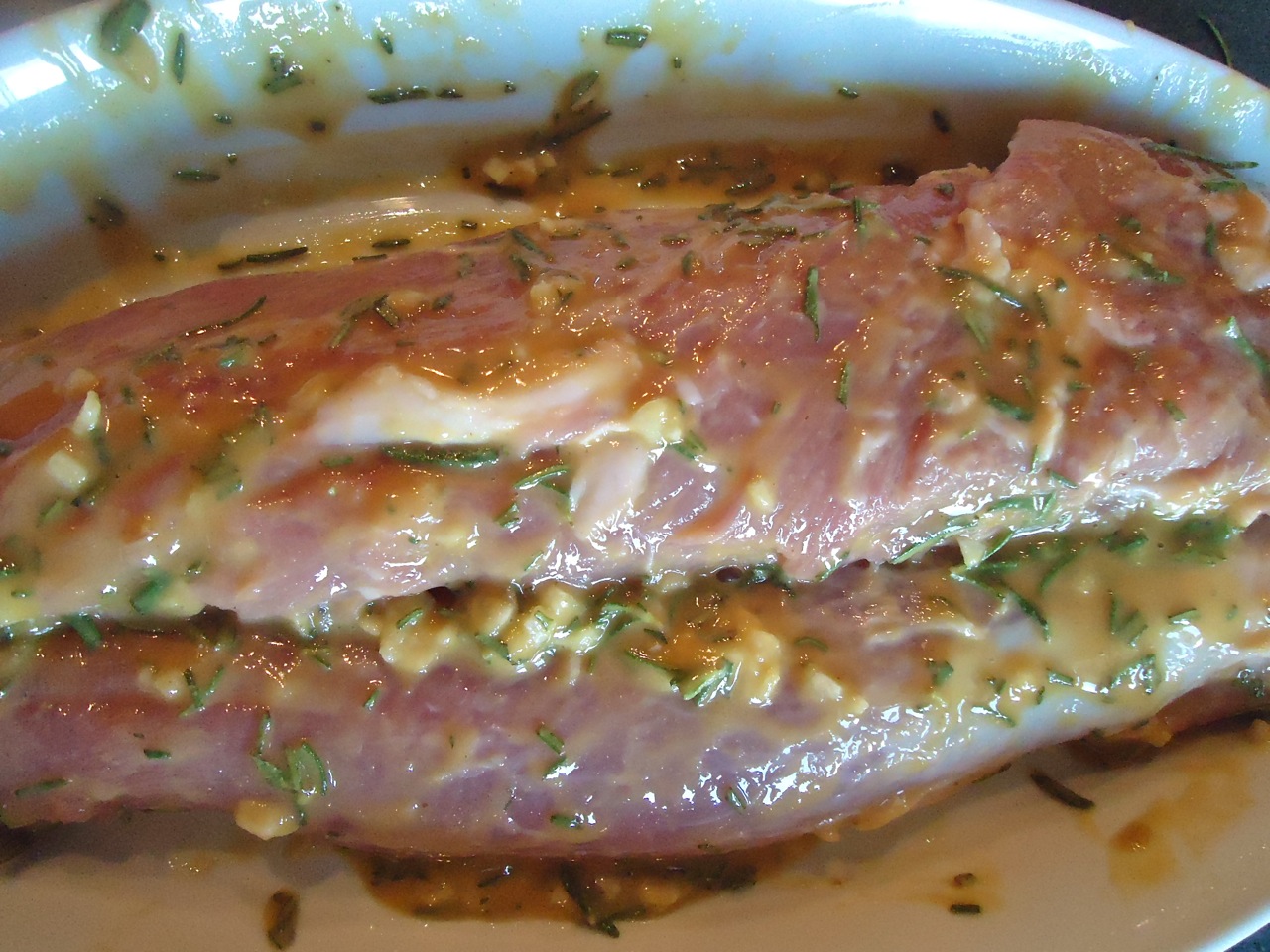
slather it on the pork loin. I tied the two pieces of loin together with some kitchen twine. Refrigerate, covered, for 3 hours.

Remove the loin from refrigeration and allow to rest at room temperature while you heat the grill. Sear the loin on all sides but avoid flipping it around too much.

Place the seared loin on a rack in a roasting pan. Add wine or stock to roasting pan.

Place the roasted loin on a warmed platter and…

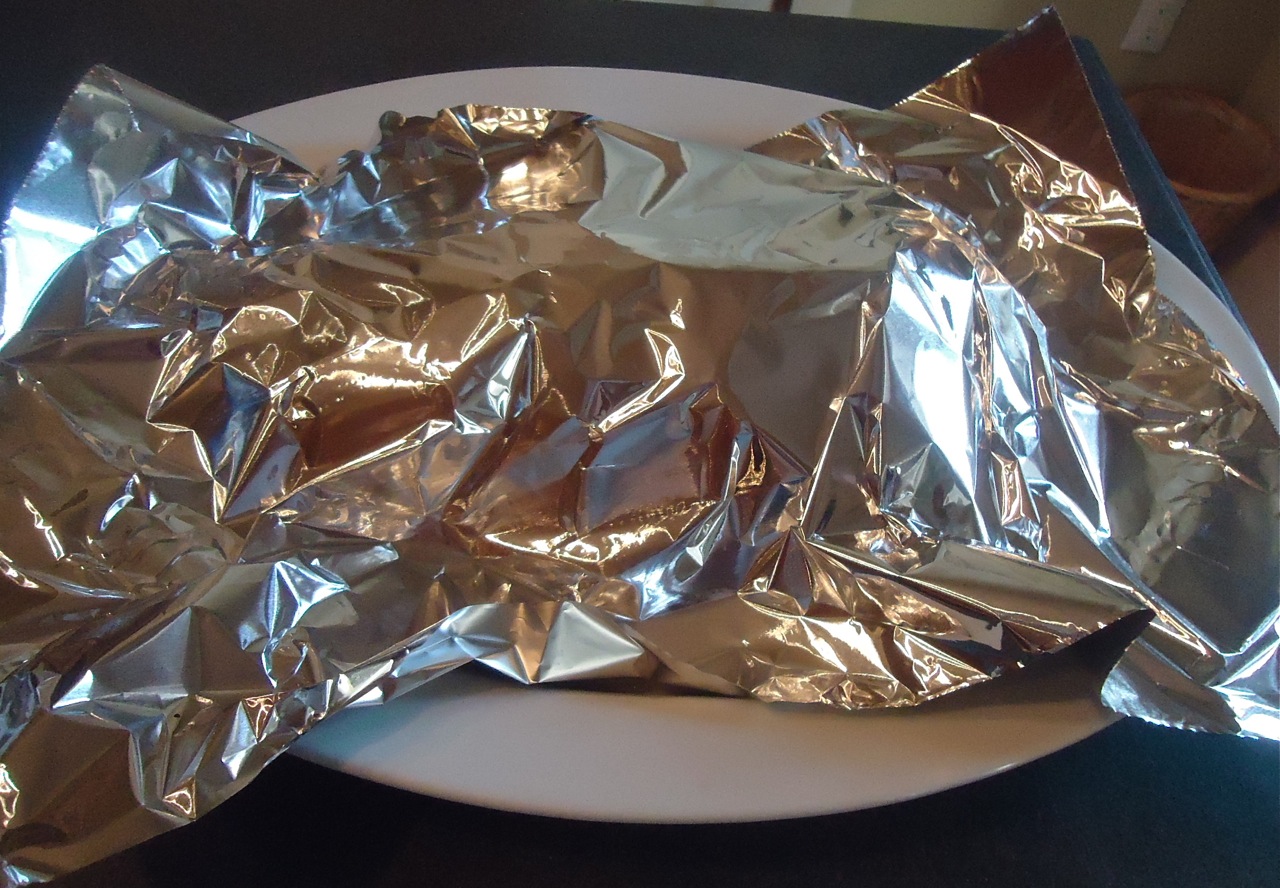
cover it loosely with foil. I am showing this because it is very important, even though I realize many home cooks know how and why to do this.

Meanwhile, pour the pan drippings from the roasting pan into a sauce pan.

Reduce the pan drippings and add 1 tablespoon each of honey and butter.

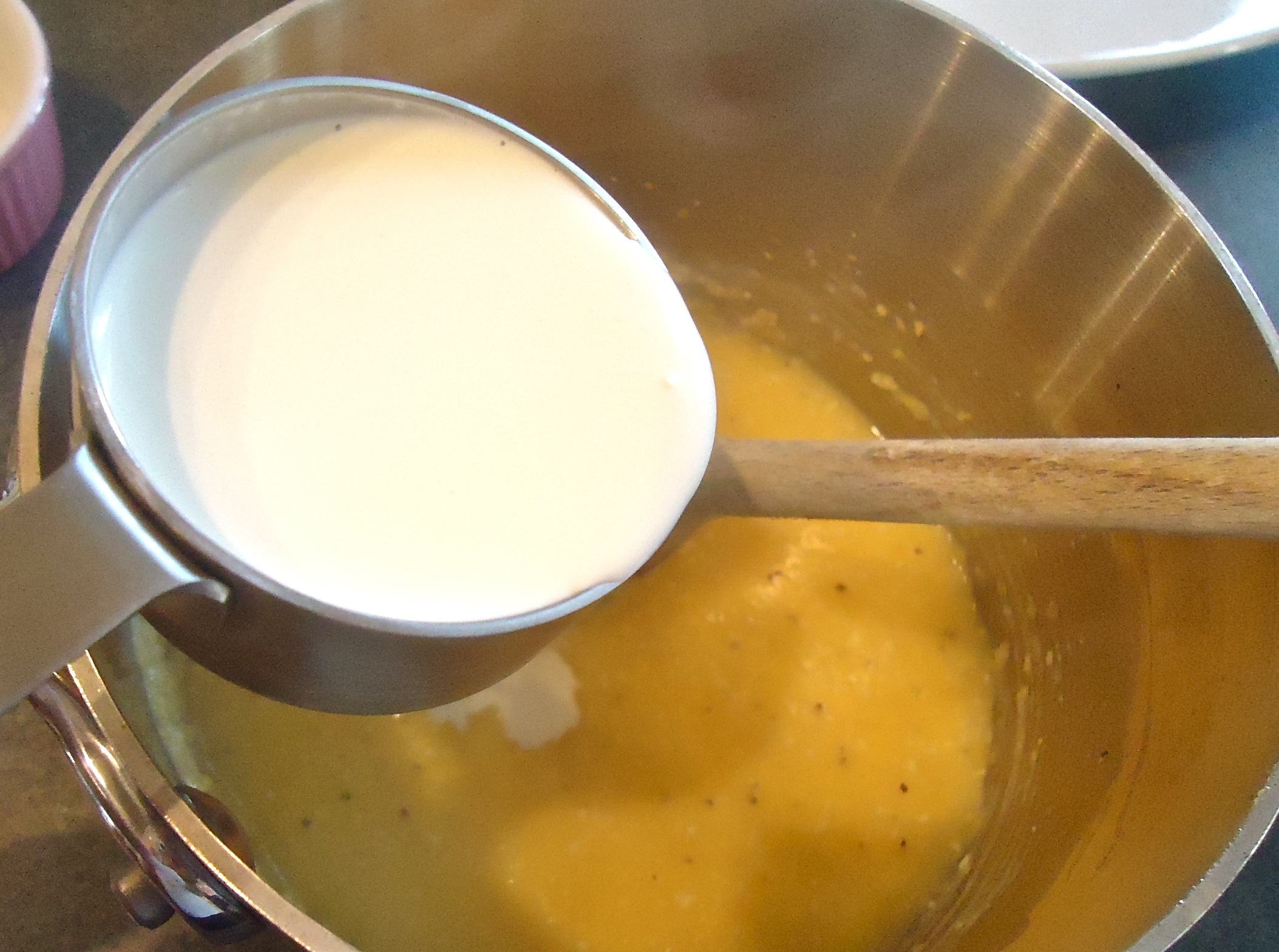
Finally whisk in the cream.

The sauce is ready. It is not thick.

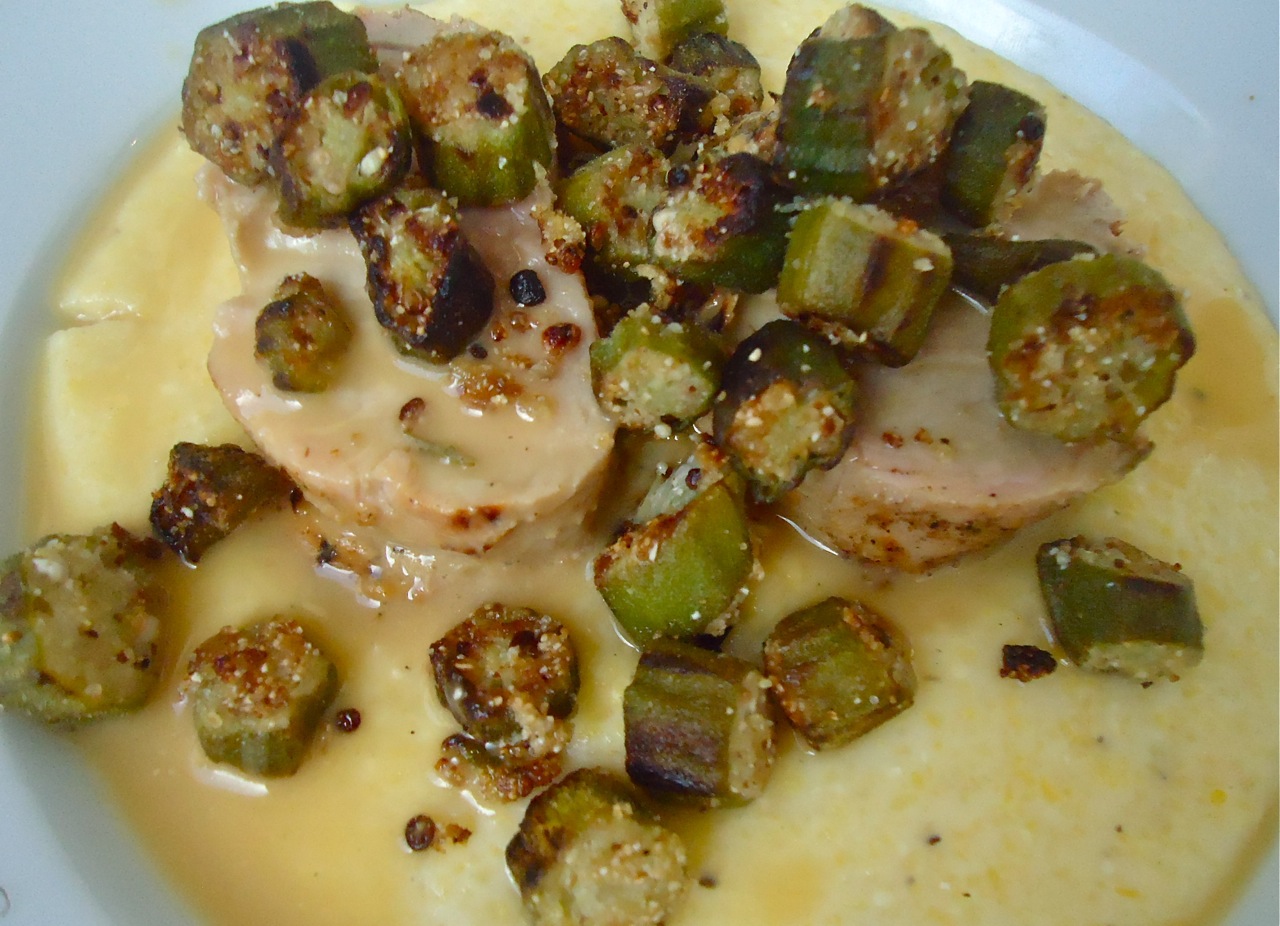
Mustard pork loin served on a bed of creamy grits with accompanying sauce, topped with crispy fried okra. Yum!

Mustard Roasted Pork Loin

  • (1) 3-4 pound pork loin
  • 3-4 cloves of garlic, peeled and crushed
  • 1/3 cup Dijon mustard
  • 2 tbl. honey
  • fresh rosemary, washed and minced, approximately ¼ cup
  • 1 cup white wine or vegetable or chicken stock or combination
  • 1 tsp. salt
  • ½ tsp. fresh ground pepper

Wash and dry the pork loin. In a small bowl mix together the garlic, mustard, honey, and rosemary. Slather this mixture all over the pork loin. If your pork loin is in 2 pieces, tie together with cotton kitchen twine at several places along the loins to secure.

Place loin(s) on a platter, cover and refrigerate 1 – 3 hours. Prepare your grill about 1 hour 15 minutes (or more for charcoal) before planning to serve the pork loin.

Preheat your oven to 375 degrees. Remove the pork from the refrigerator and allow to sit out 15 minutes or so (it’s still covered). On a hot grill sear the pork loin on all sides, careful not to flip it around too much. Remove the pork to a rack set in a roasting pan. Pour about 1 cup of liquid (either white wine or vegetable or chicken stock or some combination) in the bottom of the roasting pan.

Roast pork loin in oven for 30 minutes. Remove the loin from the roasting pan and allow to rest on a warmed platter, covered loosely with foil. Meanwhile make the sauce:

  • pan drippings
  • 1 tbl . honey
  • 1 tbl. butter
  • 2 tbl. cream
  • salt & pepper to taste

Pour the pan dripping through a sieve from the roasting pan into a medium saucepan. Allow this to come to a low boil and cook until reduced by about a third. Reduce heat and whisk in the honey, butter and cream. Taste and adjust salt and pepper. Serve immediately with sliced pork loin. Note: this sauce will not be thick.

Grits are “groceries” – why yes, they are!

Stone-ground grits, not so plain but simple to make.

To many Southerners grits are a revered food, akin to barbeque in that most everyone has their favorite brand of grits or preference of white grits over yellow grits or vice versa, or “special” preparation technique. My own father, who was a child of the Depression (the real one) had a funny saying, “grits are groceries”, which to him meant they filled up your belly and are good enough to have at any meal. Good quality, properly prepared grits can make a meal.

Basically grits are the same thing as polenta (if you are familiar) but technically they are not the same. Grits can be either stone ground or hominy style, dried corn that treated with an alkali in a process and then ground. I am not  a hominy-grits lover really, I prefer mine stone-ground. According to Anson Mills (located right here in South Carolina) grits and polenta are made from two different types of corn. Here is their explanation:

“Dent or Flint? Corn is classified by the type of starch (endosperm) in its kernels. The premier mill corn of the American South, known as dent (the name derives from the dent that forms on the top of each kernel as it dries), has a relatively soft, starchy center. Dent corn makes easy work of milling – it also makes phenomenal grits.

Flint corn, by contrast, has a hard, starchy endosperm and produces grittier, more granular meal that offers an outstanding mouth-feel when cooked. One type of American flint – indigenous to the Northeast – was, and remains, the traditional choice for Johnny cakes. 
In Italy, flint has been the preeminent polenta corn since the 16th century when Spanish and Portuguese treasure hunters brought Caribbean flint to the Piedmont on ships.”

So there you go. I also have been told that in Italy, polenta can also include other grains besides corn. The grind for polenta is finer than that for grits and the cooking technique is also different. So yes, polenta is ground corn – as are grits – but they are not the same thing.

As far as brands of grits, I have eaten many different brands of both white and yellow varieties and I’m open to trying ones I find during stops at road-side stands or country stores. My mother buys Jim Dandy brand grits – the white type and obviously that is the type I grew up eating. After I flew the coop, I stuck to Jim Dandy mostly, but Quaker and Adluh brands found their way into my pantry. (Adluh is a local South Carolina mill and they make very good products but can be hard to locate as they not carried much out of SC. See the side bar for a link).

In my twenties, I was gifted some stone ground grits from Nora Mill, located in Helen, Georgia. I have been lucky to try both their white speckled grits nicknamed “Georgia Ice Cream” and their yellow speckled variety over the years – all are delicious! Once I tried stone-ground grits it was impossible to go back to anything else. Sorry Jim Dandy!

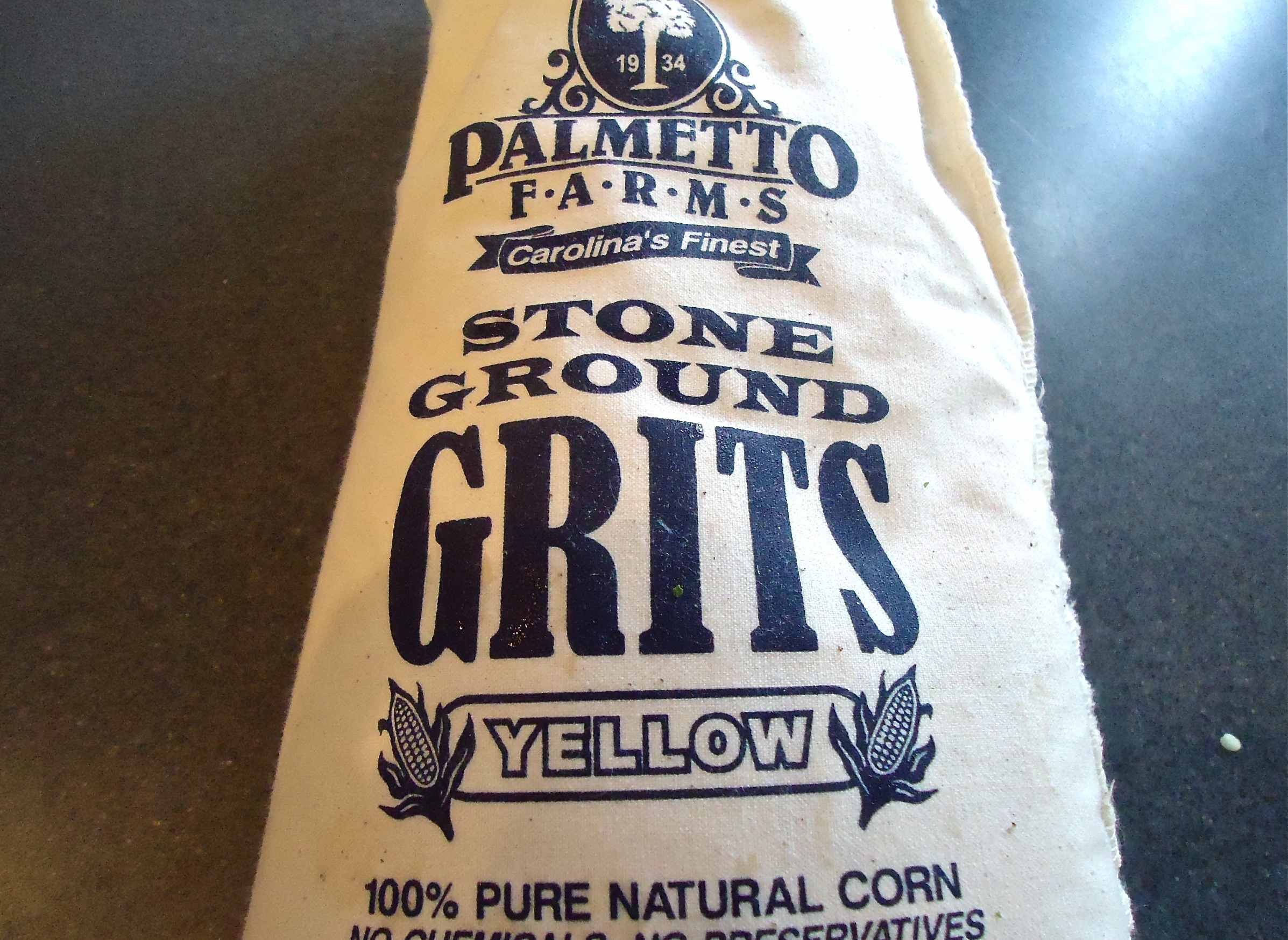
When we lived in Alabama I purchased McEwen & Sons (Wilsonville, AL) stone ground grits and found they were also quite good. Their products are organic and they even sell blue stone ground grits. My current pound bag o’grits is from Palmetto Farms located in historic Galivants Ferry, SC. This is a 3rd generation mill operation that began in the 1930’s. I enjoyed the texture and corn flavor of these grits so I’ll be buying more of these in the future.

“Grits Tips”

  • Use stone ground grits: If you live in the South and your grocer has a “locally grown” section see if they carry grits milled nearby. If not, order a pound of grits online from any of the purveyors I mention above.
  • Keep your grits cold: Freezing in fact. Grits are best stored in an air tight bag/container in the freezer.
  • Do not buy instant grits: Friends do not let friends buy and eat (pluh!) instant grits, for obvious reasons…
  • Cooking: Even if your grits are “quick cooking”, cook longer than advised on the instructions. A pot of grits needs at least 20 minutes of slow cooking (and stirring) after the initial boil.
  • Salt: If you add cheese and/or stock to your grits do not salt them until very near the end of cooking. Otherwise you could end up with some salty grits.
  • Have fun with your grits! Once you have the basic cooking technique down, experiment and try grits with cheese or fresh mushrooms or better yet mushrooms and cheese! Add herbs, sausage, or vegetables – whatever you think would tempt your palate.
  • Grits aren’t just for breakfast: Although they are delicious in the morning try them for supper with grilled fish, seafood, roast pork or game, like quail. Pan roasted quail was a favorite of mine when I was younger. Add my Mom’s creamy pan gravy and a biscuit and the post-hunt sideboard was complete.

A bag of lovely stone-ground grits from Palmetto Farms. Keep your grits in the freezer, they stay fresher that way!

Add the grits to the hot – and soon to be boiling – water/stock liquid. Get ready to stir.

After about 8 minutes the grits are still rough, not broken down much yet. Add some more liquid and stir.

After another 10-12 minutes (total of 20 minutes) of cooking , stirring and adding more liquid, the grits are creamier and close to being ready. You could keep cooking these all day if you liked – adding more liquid and stirring. They will just get creamier.

Add the cream just prior to seasoning. My daddy always added milk or cream to his grits; my mother does not. It’s a personal matter, I suppose…

Pouring the grits into the bowl you can see the creamy goodness! These grits are plain but you if you like, stir in cheese or sausage or bacon or chopped green onions or a combination of whatever you prefer. Grits are a non-partisan food!

Recognize this image from a couple of weeks ago? Nestled beneath the crunchy fried okra and tender, mustard roasted pork loin is a pool of creamy grits.

Grits

  • ½ heaping cup stone ground grits
  • 1 1/2 cup plus extra water
  • 1 cup vegetable or chicken stock or broth
  • 1/3 cup plus light cream
  • salt & pepper

In a medium saucepan with a lid, heat 1 cup of water and 1 cup of stock. Stir or whisk in the grits. Bring to a boil and then turn heat down to low. Place lid on the saucepan and allow to cook on very low heat for 8 minutes or so. Stir grits and add water (1/4 cup). Allow to cook with lid on for another 5 minutes. Stir again and add more water (1/4 cup). Allow to cook 5 more minutes and stir. Add more water of necessary. Cook another 2-3 minutes* with the lid off until the consistency is a little thicker than you prefer. Stir in the light cream and season with salt & pepper to taste. Serve immediately. Makes approximately 2 cups of cooked grits. This recipe can be double, tripled, or quadrupled.

* At this point you can continue slow cooking the grits all day if you like – just keeping add more water (or other liquid) and stirring every so often. If you allow the grits to cool they will congeal, however.

Feel the love with ‘perfect’ carrot cake!

I simply adore carrot cake. It is neck-in-neck with my mother’s caramel cake as my absolute favorite cake. Carrot cake is moist, it is sinfully rich (especially with cream cheese frosting), and you can enjoy it for breakfast and no one will give a second look. Its main ingredient is a vegetable AND most carrot cake recipes are both straightforward and simple.

There’s no down side – well maybe my backside (!) – after eating too much cake. That being said, carrot cake is also a wonderful cake to share…at a picnic or a potluck or at the office. Coffee klatsch time! However, I have made an observation or rather, have a question about men and carrot cake. In my experience, they don’t seem to care for it, at least not overtly.

Now my dear hubby will eat a piece or two of my carrot cake – even eat a slice of leftover cake (I think its better the next day) of this own free will. But he would never order it in a restaurant or request that I make it – ever. I’ve never heard a man say, “Alright! Carrot cake! Can’t wait to have a slice.” Or utter anything to that effect – like I have heard women, with passion in their voices, say many times.

Do men not like carrot cake? Like I said, when presented with a nice big fresh hunk most I know devour it. So what’s up with the lack of carrot cake love, men? Is eating a vegetable in a dessert off-putting for you? Or are carrots in cake form not considered “manly”? Is there some secret anti- carrot cake ‘man-law’? Inquiring minds would like to know. Enlighten me to your take on men’s blasé attitude toward carrot cake… please.

I call this recipe “perfect” because it is my perfect carrot cake – no raisins, no coconut and no pineapple. I do like nuts – either pecan or walnuts in my carrot cake. And I also shred my own carrots, preferably whole ones – not the mini carrots as I find them too watery for cake. The credit for this fine recipe belongs to Marian Morash and her Victory Garden cookbook. My copy was published way back in 1987 (newest version published 2010) and yes, it is based off the PBS television series. It’s an excellent cookbook and I have made many wonderful recipes from its pages. If you ever come across a copy I suggest checking it out!

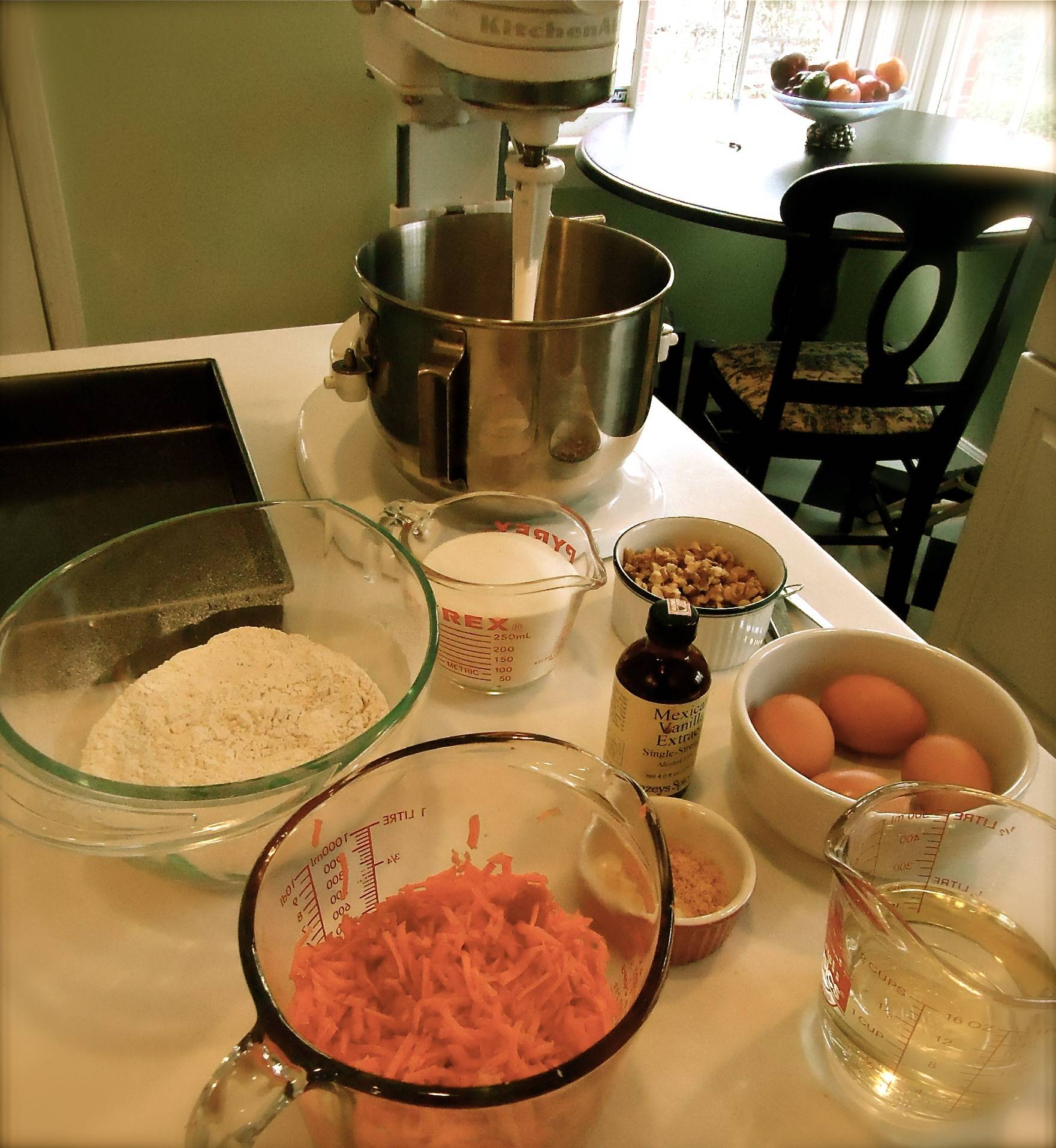
Ingredients for the perfect carrot cake.

In this recipe, fresh carrots make a difference so shred your own. The Cuisinart makes quick work of it.

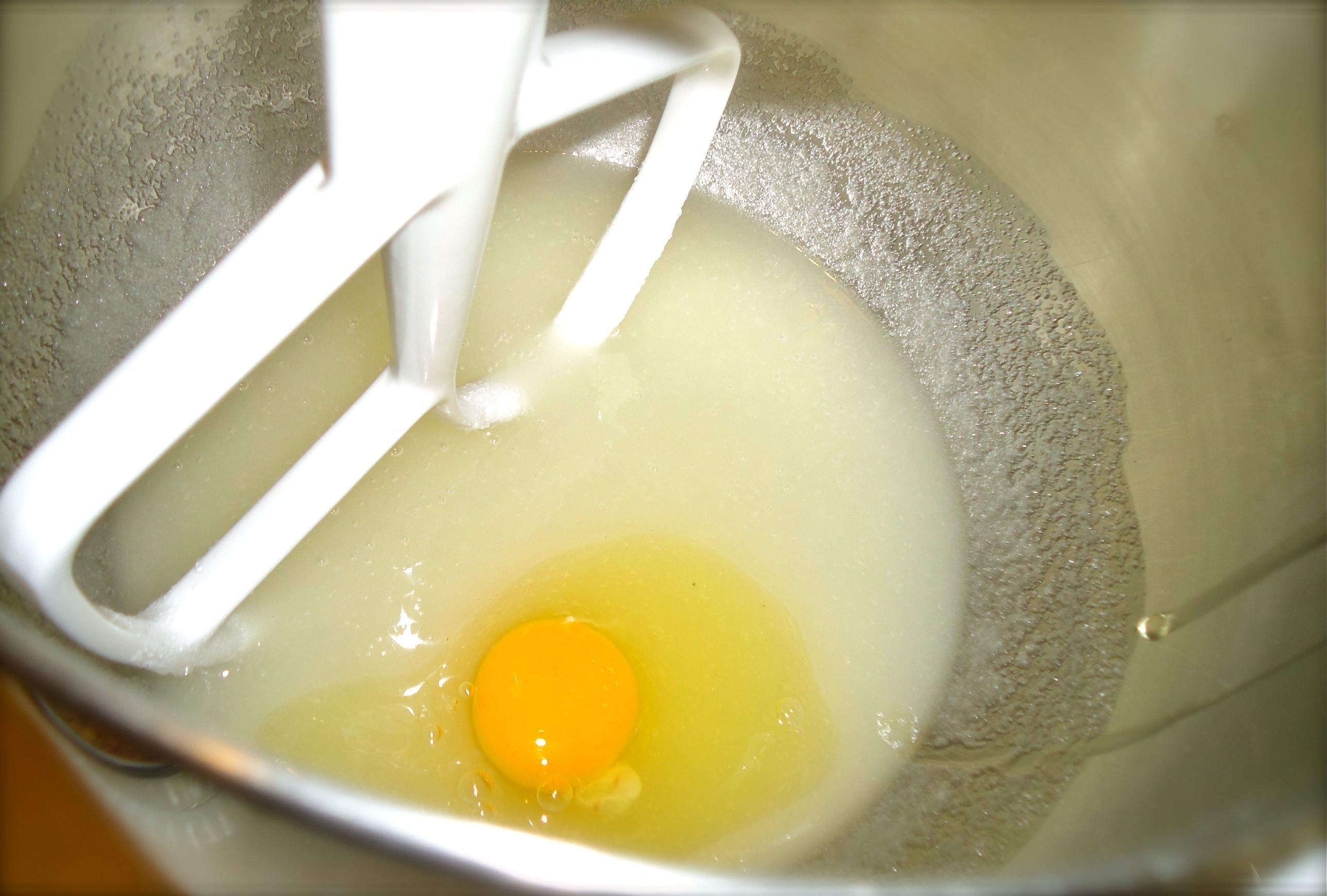
Making the batter is easy: first mix together the sugar, oil and eggs…

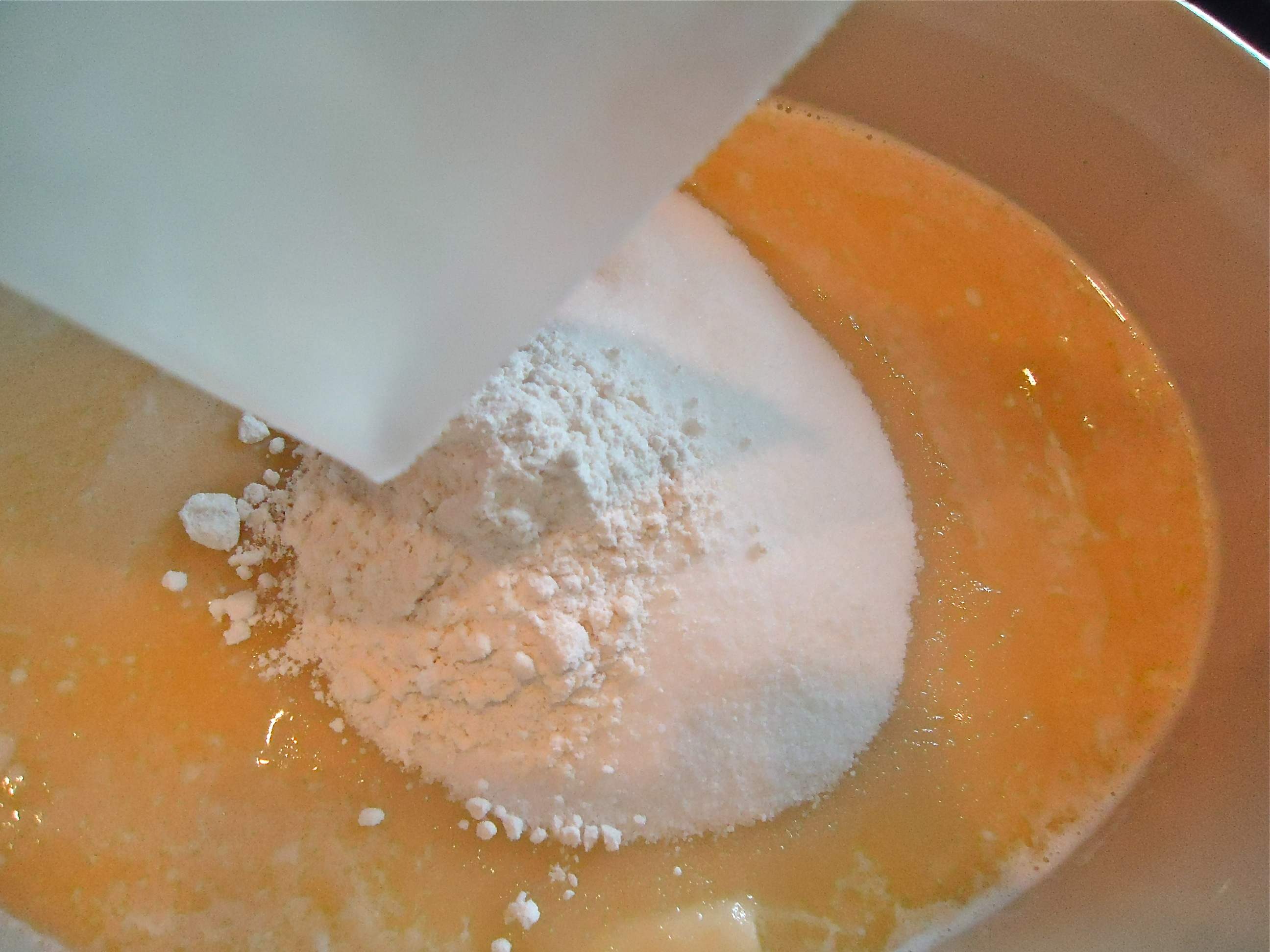
Then just add in the flour mixture.

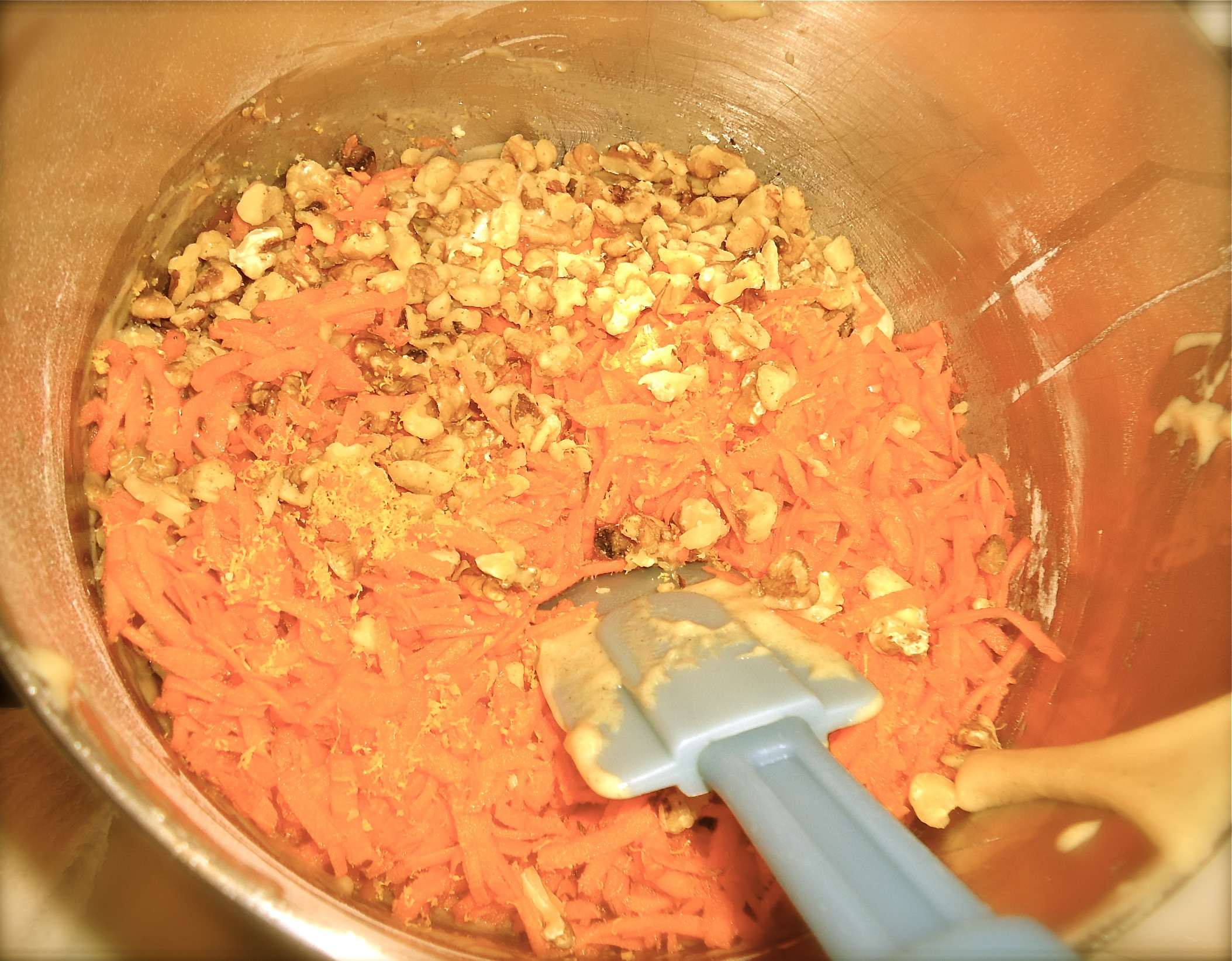
Last, stir in the shredded carrots and chopped nuts.

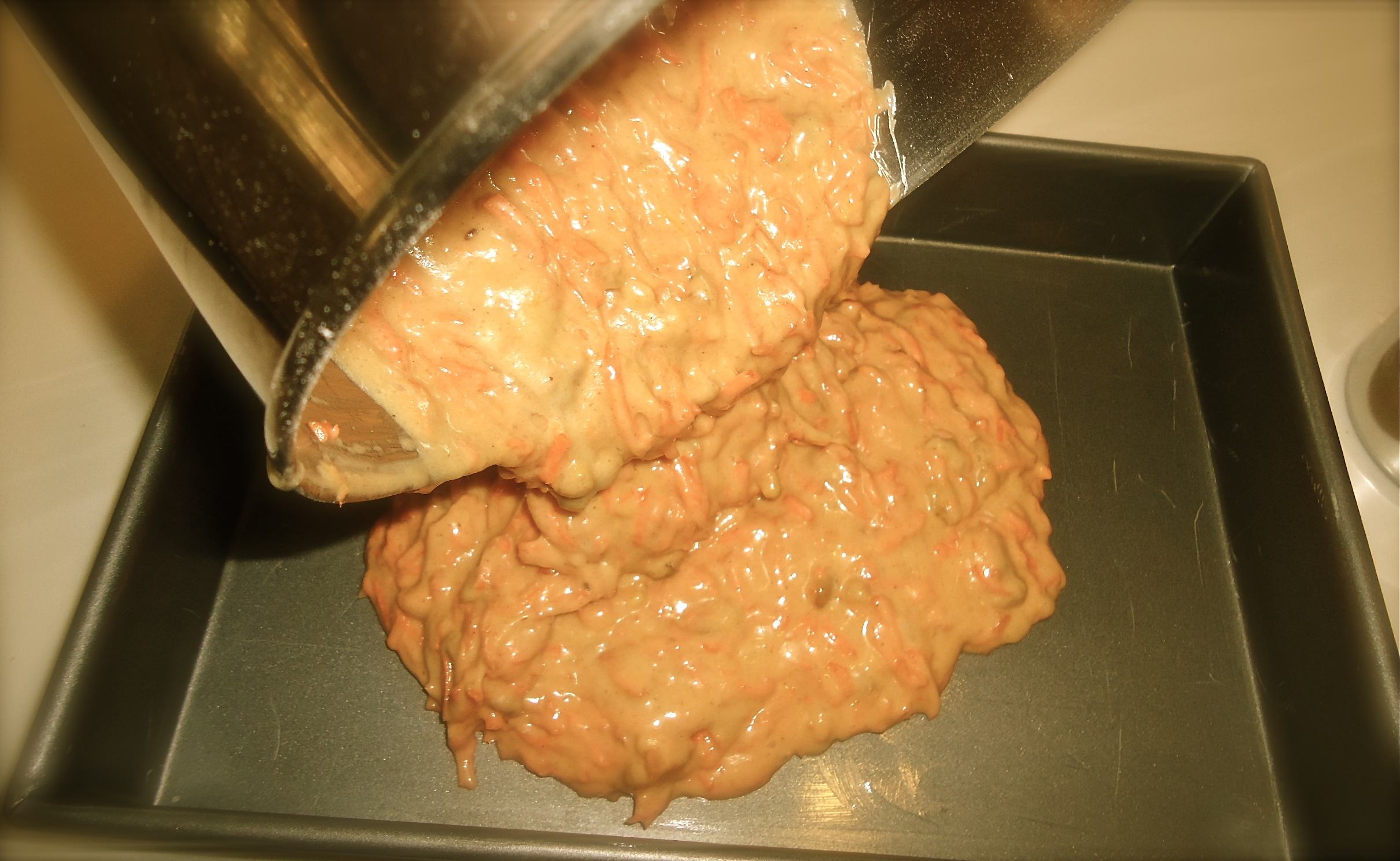
Pour the batter into your prepared pan. This recipe allows one to use a variety of pan sizes. You can even make cupcakes with this batter, just use cupcake liners.

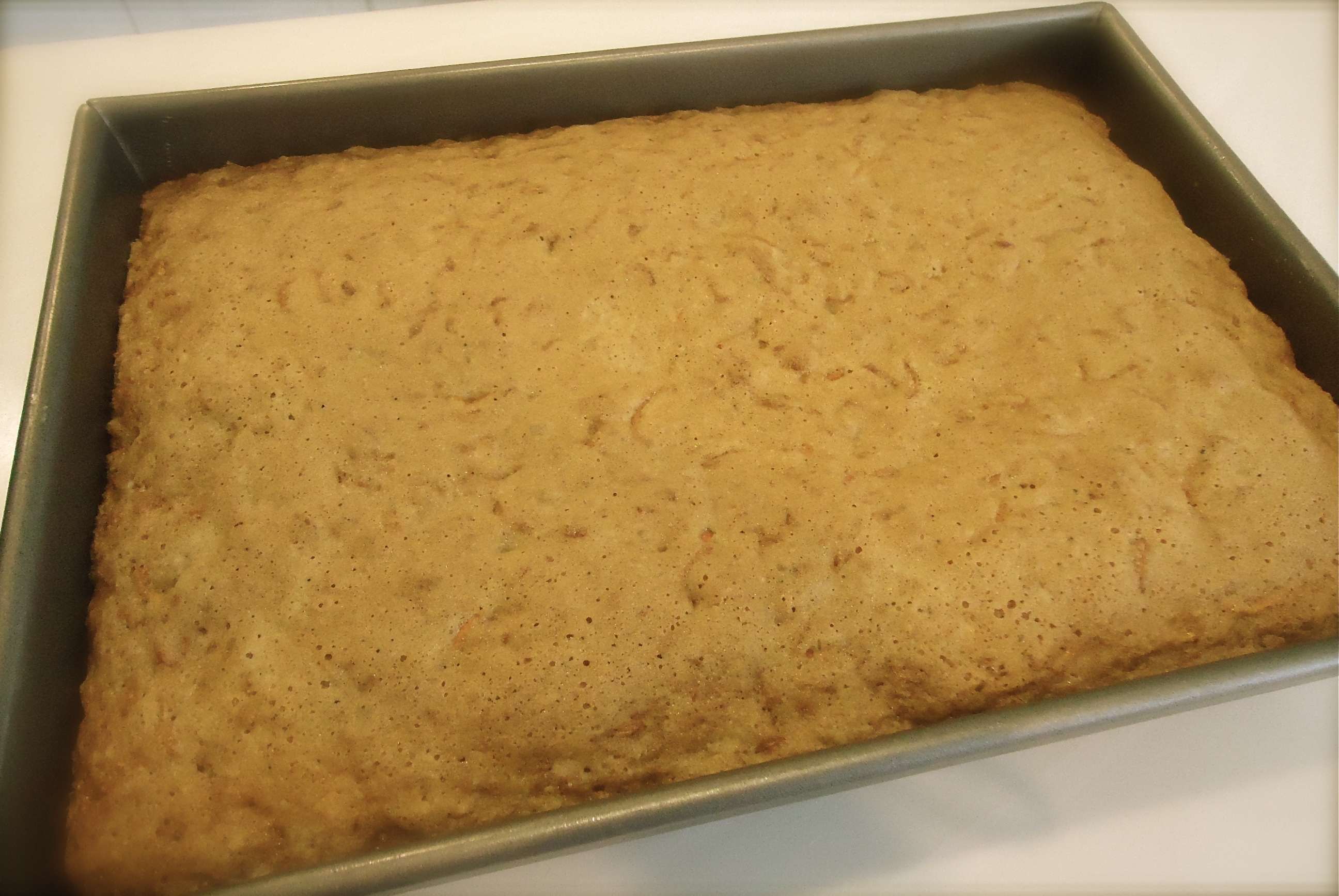
After baking, cool on a rack. I made it easy on myself and simply frosted the cake in the pan I baked it in. But you can use a tube or bundt pan or make three 8-inch layers.

To make the frosting start by creaming the butter and cream cheese. Then add in the confectioners sugar about 1 cup at a time.

After adding about 3 cups of sugar add the flavorings of lemon juice and vanilla extract. Add more confectioner’s sugar a little at a time until you get the consistency you prefer.

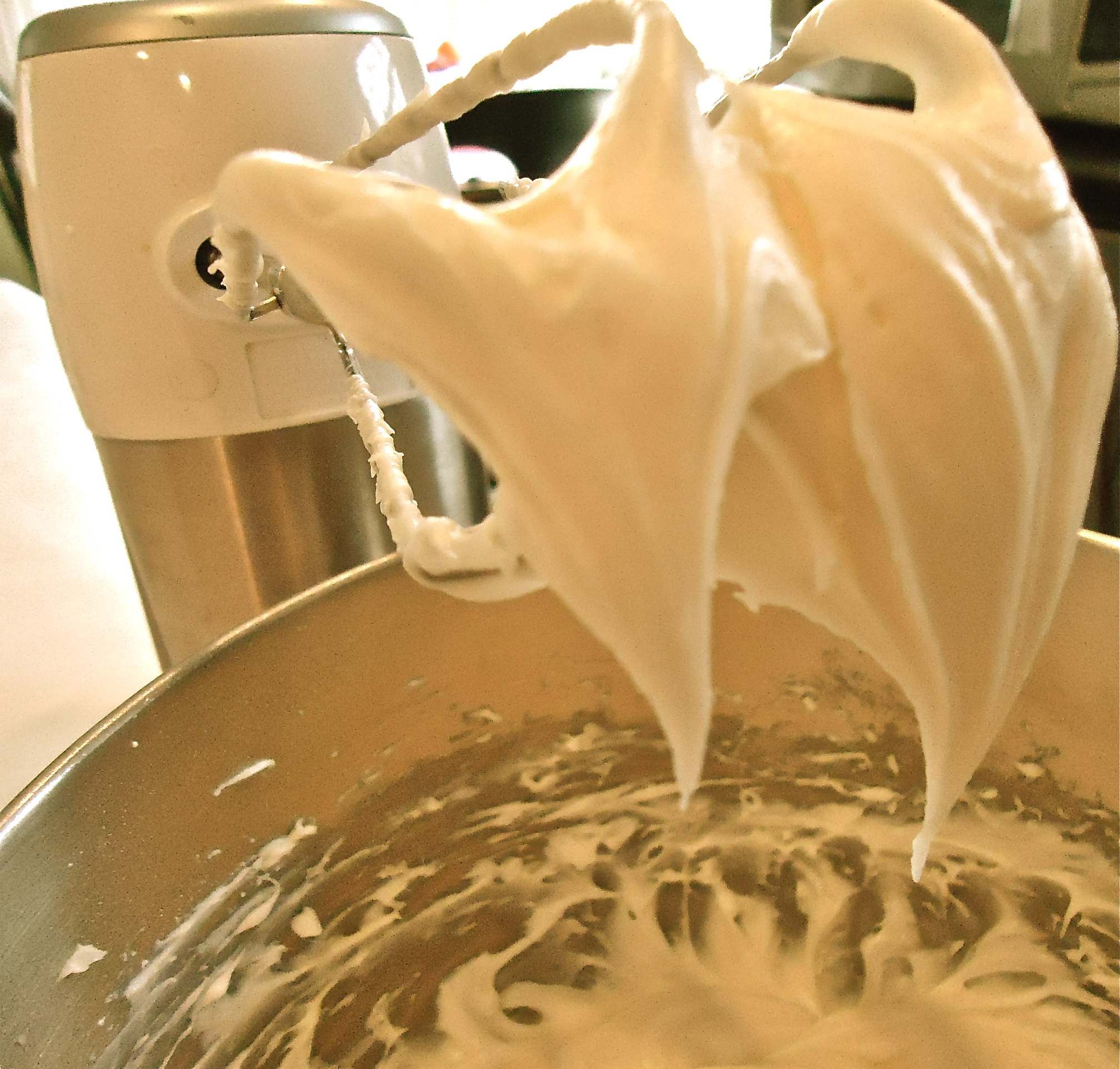
This is my preferred consistency – creamy and spreadable but thick enough to hold up in the humidity that can blanket the South.

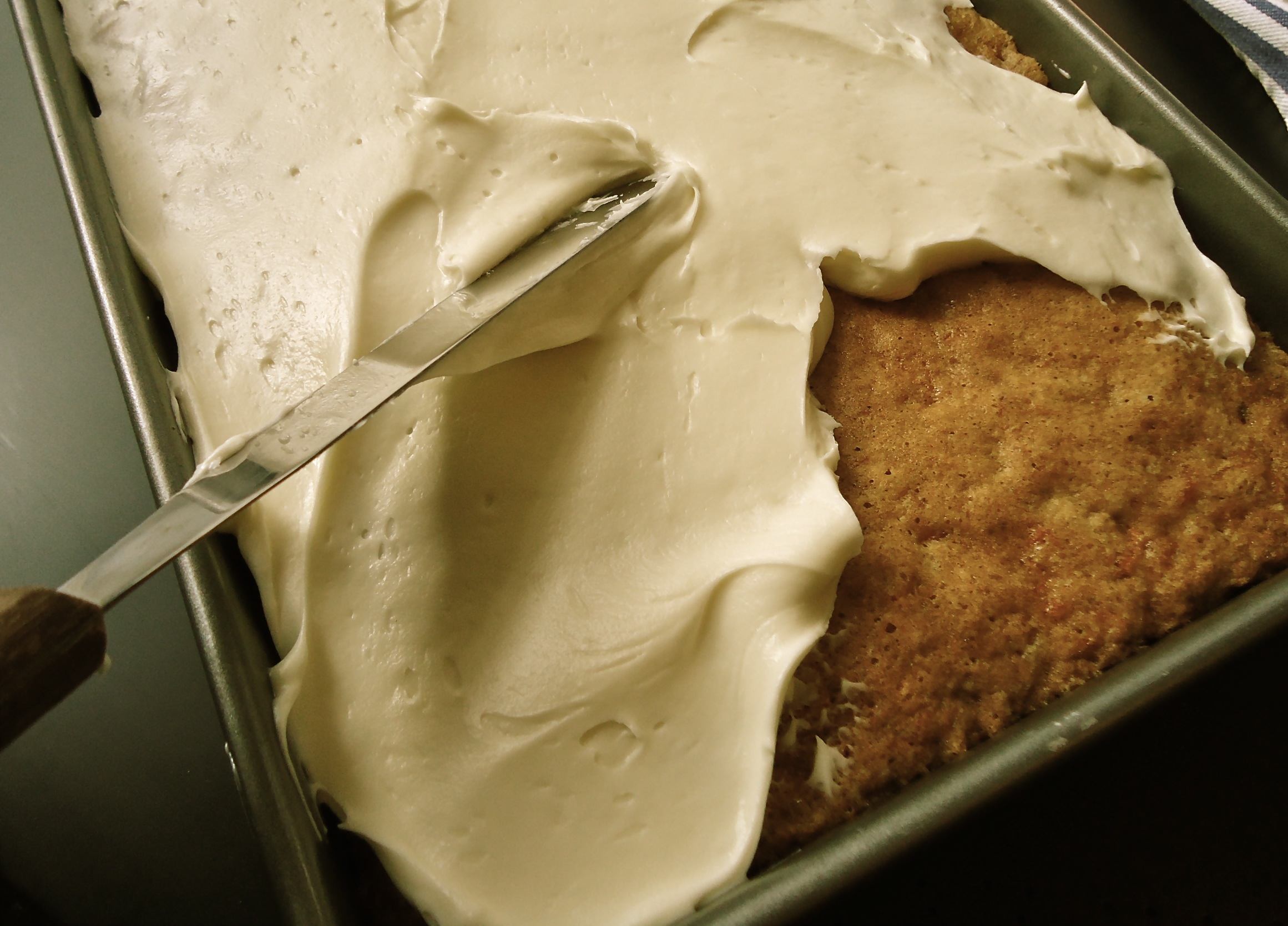
Spread the frosting over the cake and you’re done. Now time for a piece with a big glass of milk!

Perfect Carrot Cake

  • 2 cups flour
  • 2 tsp. baking powder
  • 2 tsp. baking soda
  • 1 tsp. salt
  • 1 tsp. cinnamon
  • ¼ tsp. ground mace
  • 1 ½ cup sugar
  • 1 ¼ cup oil
  • 4 eggs
  • 3 cups shredded carrots
  • ¾ cup chopped walnuts or pecans

Preheat oven to 350 degrees and grease either a 9” x 13” baking pan, a 10-inch tube/Bundt pan or (3) 8-inch round cake pans.

Sift together the flour, baking soda, baking powder, salt and spices and set aside. In a large mixing bowl beat together the sugar and the oil. Gradually beat in the eggs and then the flour mixture. Stir in the carrots and then the nuts. Pour in the batter and tap on the counter to release any air bubbles. Bake the 45-50 minutes for the baking pan, 50-60 minutes for the tube pan, and 25-30 minutes if baking in the 8-inch pans. If you insert a toothpick in the center of the cake and it comes out clean it is done. If it comes out with batter on it, it’s not… so keep baking and check again in 5-8 minutes.

Cool cake on a rack. If using the tube pan or the 8-inch rounds, cool 15 minutes and then invert and remove from the pan. Cool and frost with classic cream cheese frosting.

Cream Cheese Frosting

  • 1 (8) oz package cream cheese, softened
  • 4 tbl. butter, softened
  • 3-4 cups confectioners’ sugar
  • 2 tsp. lemon juice
  • 1 tsp. vanilla extract

Cream the butter and cream cheese. Slowly add in confectioners sugar 1 cup at a time until you’ve mixed in 3 cups. Add in the lemon juice and vanilla extract. Add more confectioners sugar a tablespoon at a time until the frosting is at your desired consistency.

Note: If you are making a 3-layer cake you may prefer more frosting. I suggest using 12 oz of cream cheese, 6 tablespoons butter and 6-7 cups of confectioners’ sugar. Also increase the lemon juice to 1 tablespoon.

The return of the pork chop.

Today’s recipe is probably most suited for the fall in my opinion, but not according to my dear hubby. He loves these pork chops with its rich stuffing of apples, whole grain bread and Gouda cheese any time of  the year and has been pestering me to post this recipe for several weeks. So being fresh off of a few days sabbatical at Edisto Beach, I succumbed to posting the pork chop recipe. Perhaps it is also his way of asking me to make this dish soon as well. Hum, interesting… Guess he doesn’t realize I took all the ‘how to’ pictures the last time I prepared this recipe…maybe I’ll make it for him anyway. Awwww!

So this recipe is a good one for several reasons. First its relatively easy – just a matter of dicing some vegetables and bread. Cutting the pockets in the chops is not difficult – use thick bone-in chops and a sharp knife. The recipe can be prepared early in the day and held in the refrigerator until you’re ready to roast the stuffed chops. And not only is the combination of pork, apples and cheese exceedingly tasty it also makes an impressive main dish for your next dinner party or special occasion supper. This recipe can also easily doubled or tripled.  It’s a win-win!

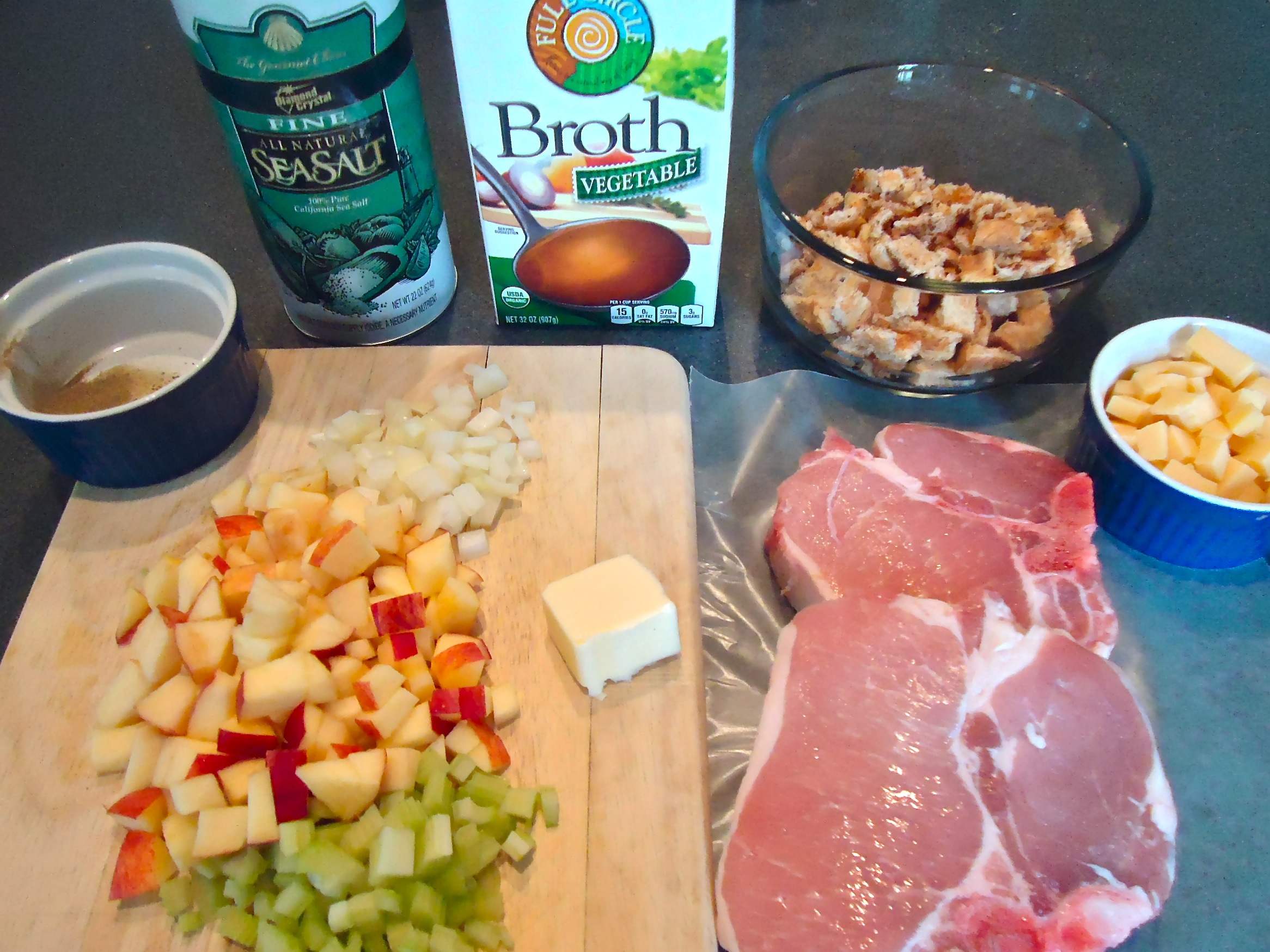
The ingredients. Add the saute pan, spatula, a sharp knife and baking dish and my ‘mise en place’ is complete! Note that I did not include bacon this time but feel free to add as per the recipe below

Saute the veggies in the butter – not a complicated step but it makes a pretty picture!

Add the broth (or stock) to the veggies and cubed bread.

Mix the chilled cheese cubes with the breadcrumb/apple mixture.

Make a pocket in the side of each chop with a sharp knife. Yes, that is my chubby,wrinkled hand…

Cut a deep pocket (that reaches the bone) which you will fill with that delicious stuffing. There’s that chubby hand again!

Lightly salt and pepper the pork chop pocket and then stuff.

Spoon any extra filling around the pork chops, cover with foil (or a cover) and roast for about 20 minutes in a 400 degree oven. Remove foil and continue to roast for an additional 10 minutes. You may also run under a broiler to get a good crisp on your chop, if that’s your preference.

Stuffed Pork Chops with Apple and Gouda Cheese

  • (2) 1 1/4 inch+ thick bone-in pork chops
  • 2 medium apples, washed, cored and diced – peel left on
  • ¼ cup diced onion
  • 1 stalk celery, diced
  • 3 slices whole grain sandwich bread, toasted and diced (not crumbs!)
  • 1 tbl. butter
  • 1/3 cup vegetable stock or broth
  • 1/3 cup diced good quality Gouda cheese, chilled
  • 2 slices of good quality bacon, cooked crisp and crumbled – optional
  • ¼ tsp+ extra salt
  • ground pepper

Preheat oven to 400 degrees. In a medium sauce pan melt the butter and sauté the onion and celery over medium heat 2 minutes. Add the apple and sauté another 2-3 minutes. Remove from the heat and set aside to cool to room temperature.

Meanwhile cut pockets into one side of each pork chop being careful not to slice through the top or bottom. In a medium sized bowl combine the cooled sautéed vegetables, the broth, ¼ tsp. salt, and the bread crumbs. Fold in the diced cheese and optional bacon and stir to combine. Sprinkle with a few cracks of pepper and stir once more.

Sprinkle the inside pocket of the chop with a dash of salt and pepper. Stuff each pork chop, sprinkle with another dash of salt and pepper and place chops in an oiled baking dish. Spoon any leftover stuffing around the chops. Cover the baking dish with foil and bake for 20 minutes. Remove foil and continue to bake 10 minutes. If you prefer your chops very brown and crispy, I suggest running them under the broiler for an additional minute or two.

Real Southern-style Banana Pudding.

Hey, it’s summer and it’s sizzling here in the Lowcountry of South Carolina. We have family down for a long weekend and we’ll all be heading to our historic town for their annual festivalapolooza… the “Beaufort Water Festival”. Actually it will be the first one I’ve attended, so I’ll be checking out the vibe and get back on the blog with some insider’s information and a recap. It lasts 2 weeks with events and different things going on every day. Should be fun if we don’t all melt in the heat but hey, that’s July in the South so it’s par for the course.

In the meantime, here is a recipe for a Southern favorite, banana pudding. It utilizes my Mama’s southern custard recipe with the addition of homemade whipped cream plus vanilla wafers, bananas and a surprise meringue topping. The meringue is not my original idea. At last year’s Music to your Mouth Festival, I encountered the banana pudding from Crook’s Corner (Chapel Hill, NC). What made it the bees knees was this meringue topping, so hats off to them for actually adding a new twist to this old favorite. I would say the key to banana pudding is the homemade custard and the vanilla wafers. I always use Nabisco “Nilla Wafers” and I would never even bother making it unless I had homemade custard. Does that make me a banana pudding snob? Then guilty as charged.

The ingredients for authentic banana pudding. I cut off the image so you can”t see the confectioner’s sugar and the cream of tartar at the bottom. Sorry about that!

Fold the whipped cream into the chilled custard – makes it just that much richer.

First layer the wafers in the bottom of the serving dish.

Then spoon on the custard and the banana slices. Then repeat the entire process.

Make the meringue with egg whites, cream of tartar and sugar. Whip it all until stiff peaks are formed.

Spread the meringue on a greased piece of parchment on a baking sheet.

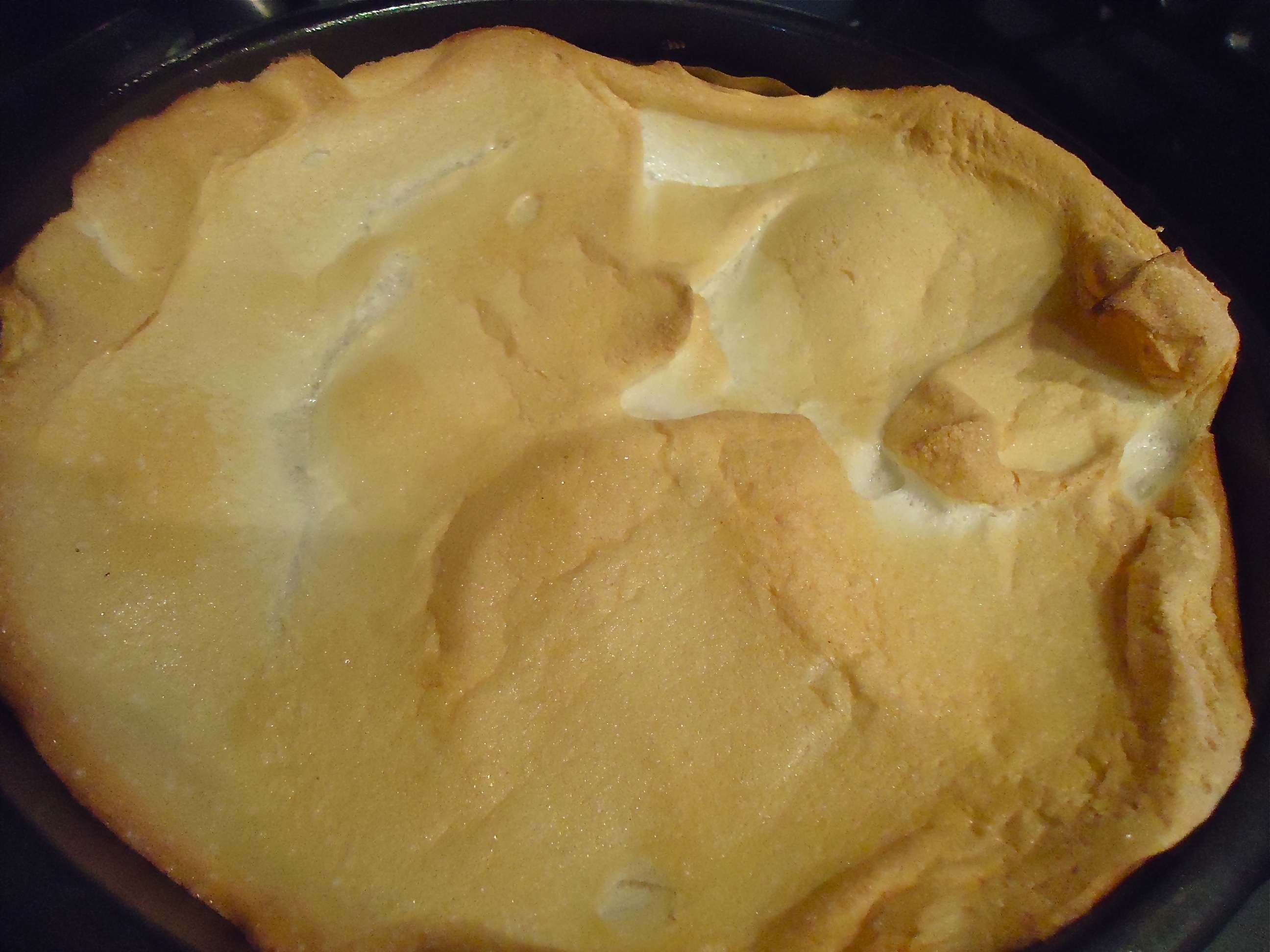
After baking a few minutes you get a crusty sweet topping for your ‘nanner pudding.

Close-up of the finished, plated pudding. A cool and rich dessert perfect for summer.

Southern-Style Banana Pudding 

  • custard – 1 full recipe’s worth (see below), chilled
  • 1 cup whipping cream
  • 2 tbl. confectioners sugar
  • 3 egg whites
  • ¼ tsp. cream of tartar
  • 3 tbl. sugar
  • 2-3 large bananas, ripe but not brown
  • vanilla wafers

In a mixing bowl whip the cream until frothy, add the confectioner’s sugar and continue to whip until fluffy. Fold into the custard.

In a large and deep baking dish layer layers vanilla wafers to cover the bottom. Spread ½ the custard and add a layer of sliced bananas on top of that. Repeat the layers. Cover and chill until just before ready to serve.

Preheat oven to 400 degrees. Whip the eggs whites with the cream of tartar until frothy. Continue to whip the egg whites, adding the sugar 1 tablespoon at a time until the meringue is light, fluffy and hold it’s shape when the beaters are lifted.

Lightly oil or butter a piece of parchment and place on a baking sheet. Spread the meringue on the parchment and bake until lightly browned – about 2 to 3 minutes. Remove from the oven and scoop immediately to top individual portions of the banana pudding.

Note: If you are serving a crowd and expect all the banana pudding will be eaten you can spread the meringue on top of the chilled banana pudding and bake the entire pan at once.

Custard

  • 3 large eggs, well beaten
  • ¾ cup sugar
  • 1 quart of whole milk
  • 2 tbl. all-purpose flour
  • 2 tsp. vanilla extract

In a medium saucepan or double boiler, scald the milk and allow to cool slightly. In a small bowl mix the sugar and flour. Whisk the sugar/flour mixture into the eggs. Make sure this mixture is well incorporated and smooth. Spoon or scoop out about ¼ cup of the egg mixture and quickly whisk this into the scalded milk. Repeat and mix well.
Place the milk back on the heat and whisk the remaining egg/sugar mixture into the milk as it heats. Keep whisking and heating until the mixture come almost to a boil and coats a spoon when it is dipped into the hot custard. Remove from the heat and stir in the vanilla extract. *Allow to cool slightly and place in the refrigerator.

Cover the slightly cooled custard with plastic wrap that touches the top of the custard. This should prevent a “skin” from forming on top of the custard.

Field Trip: Cooking up a storm at the Culinary Arts Center

Recently I attended a cooking class at the Culinary Arts Center at Hilton Head Health. The CAC facilities were totally renovated in 2011 into a larger space with top of the line EVERYTHING. Hilton Head Health has been in existence over 35 years, helping those struggling with weight issues AND individuals (and groups) who would like to focus on a healthy lifestyle. By addressing the mind-body connection between weight loss, fitness, nutrition and overall well being they supply the tools to sustain a healthy weight-loss. They were featured on the A&E weight loss docudrama, HEAVY.
This is the classroom. Each station has a professional range, sink and even pot fillers. At front is the huge stone “island” demonstration area – large monitors make following along with the chef easy. Photo courtesy of the Culinary Arts Center, Hilton Head Health.

But my afternoon there was all about cooking and seafood. As part of a post that I am writing for my other blog (Hilton Head Foodie Vibe) I was invited to attend the “Seafood 101” participatory class. Led by Chef Jen Welper the packed class began by getting some basic instructions and information about the ingredients we were going to use. We were given a packet of recipes for sauces or marinades plus instructions for cooking methods for fish fillets, shrimp, and scallops.

We then paired up with a partner. Mine was Marie, who was on a 3-day getaway program – a gift of her husband. Nice husband! She was bubbly and friendly and we hit it off from the start. I will state that I had thought to myself, “Okay, I know how to cook seafood so I’m wondering what I can learn here?”

Well, I learned how to quickly “press” garlic cloves without using a garlic press the professional way. Also a great way to let some aggression by slamming your lower palm down on a chef’s knife that is pressed flat on a garlic clove. Then just mince a little – so easy.

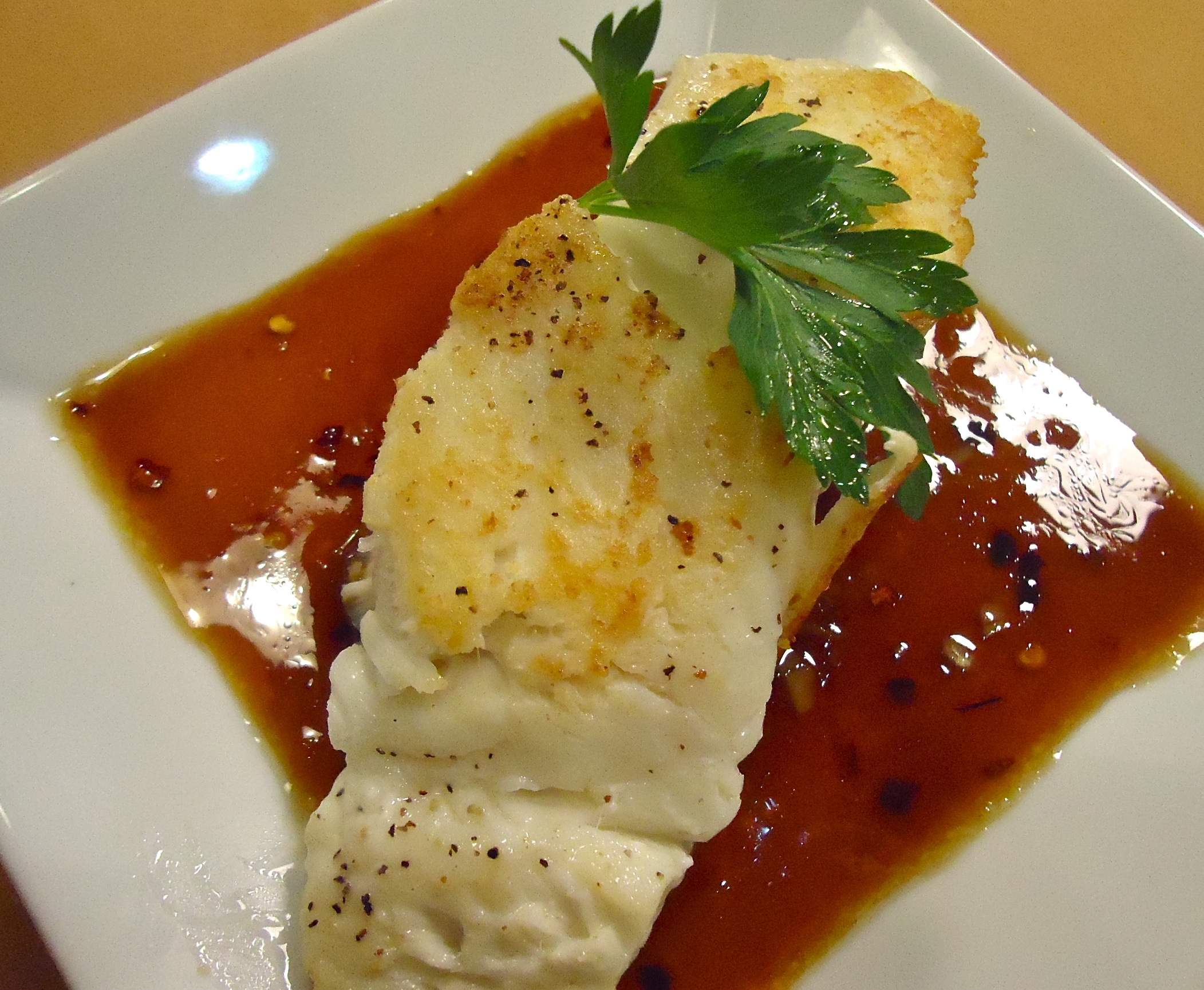
The snapper was pan seared and then surrounded by a pool of sesame ginger marinade.

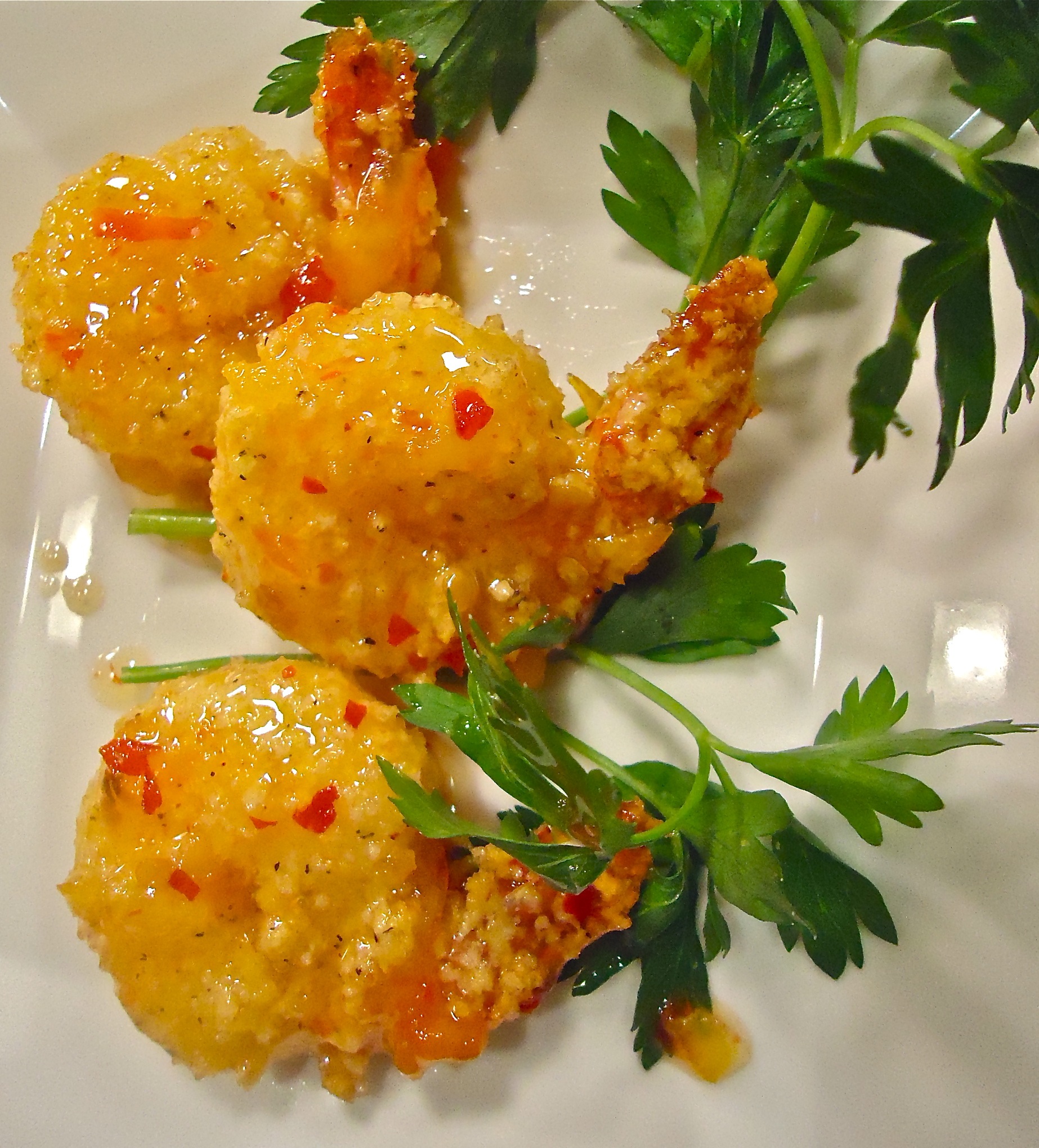
I learned that shrimp can be crunchy and delicious by baking in an oven and that one of my favorite restaurant appetizers, Bang-Bang shrimp, was super easy to make at home. While I do not have step-by-step instructions for the “Bang Bang Shrimp”, I am offering up the recipe, courtesy of the Culinary Arts Center, below. It is a straight-forward recipe with two parts – the sauce and the shrimp. You can make the sauce earlier and simply warm it before tossing with the shrimp too.

The other two recipes we made were a sesame ginger marinade (which we used as a sauce) for a mild, pan seared snapper fillet and shrimp scampi, where we were able to use that garlic smashing technique. With the onset of the local shrimp season and plenty of fresh local fish I’ll be preparing those recipes in the future with step-by-step images and instructions.

Shrimp scampi: garlicky, lemony, tasty!

The cooking classes and demonstrations at the Culinary Arts Center are open to everyone – you do not have to be enrolled in a program at Hilton Head Health. So if you are interested in visiting the Hilton Head area and would like to include some learn’in (and cooking fun) while you’re on vacation, check it out.

Bang Bang Shrimp

Culinary Arts Center at Hilton Head Health

Bang Bang Sauce:

  • ½ cup orange marmalade
  • ¼ cup sweet chili glaze
  • ¼ cup water
  • ¼ tsp. Red pepper flakes
  • Panko shrimp (below)

Preheat a medium saucepan. Mix all ingredients (except the shrimp) in the saucepan until sauce is well mixed and warm. Toss in the cooked hot panko shrimp until coated. Note: we served our sauce on the side. Serve immediately.

Panko Shrimp:

  • 6 shrimp per person peeled, deveined (21/25s size)
  • ½ cup Panko Bread crumbs (Japanese bread crumbs)
  • ¼ cup Egg Beaters or just egg whites
  • ¼ tsp. ground black pepper
  • ¼ tsp. salt

Preheat oven to 375 degrees.

In one bowl place Panko crumbs, pepper and salt. Mix lightly. In a separate bowl place Egg Beaters. Dip each shrimp in Egg Beaters, then toss each shrimp in the Panko crumbs. Spray baking sheet or pan with non-stick cooking spray. Place shrimp on baking sheet and bake in the oven for about 15 minutes. Remove from the oven and toss with Bang Bang sauce and serve!

Welcome Back, Mr. Crab!

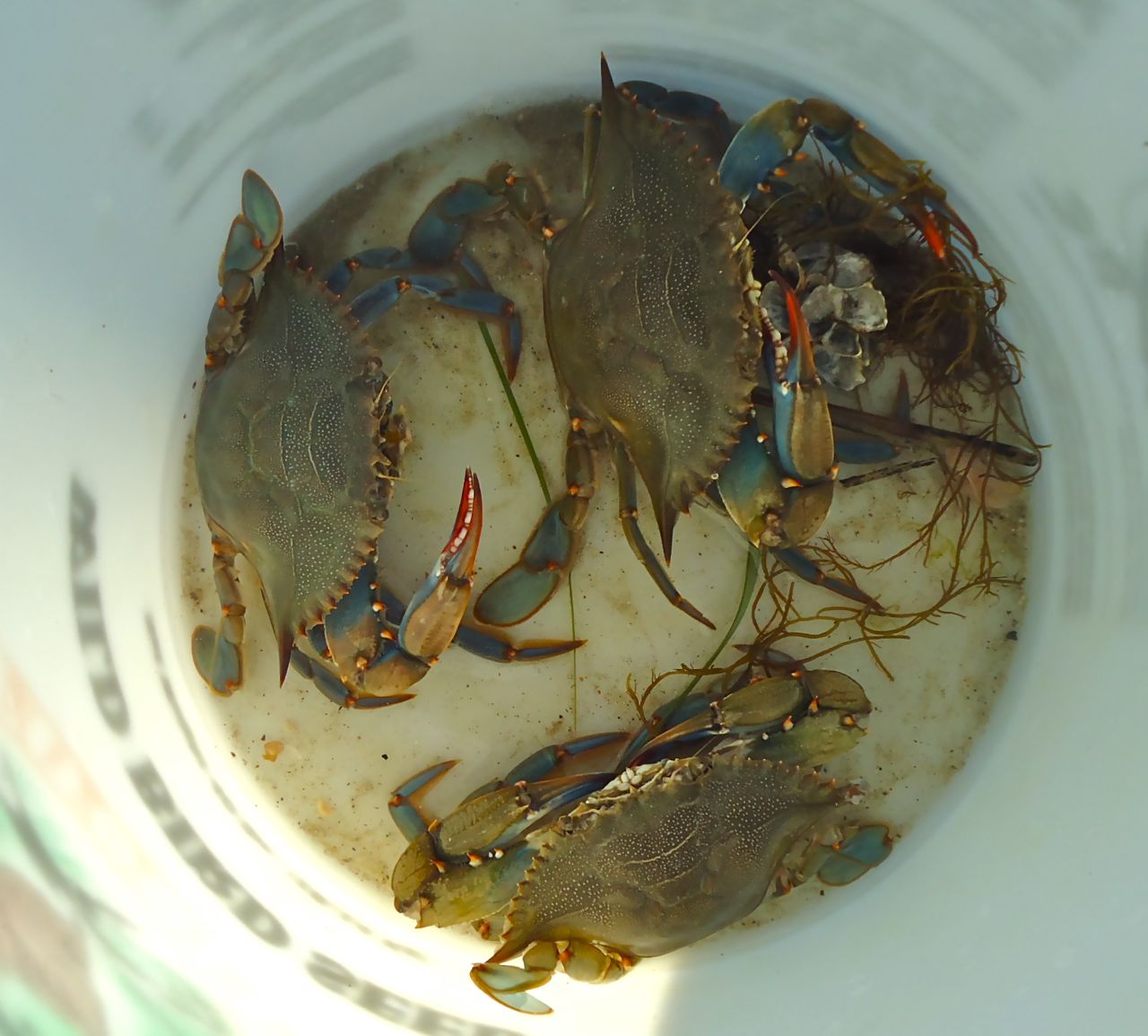
Summer has arrived here in South Carolina in all its humid glory. While I am not too keen on 60%+ humidity, the warm tropical temps do have at least one very positive effect – male blue crabs are getting plumper as they fill up the local saltwater marshes. Catching blue crabs by hand off the dock is a summer pastime I learned on weekend jaunts to my aunt’s beach house in Garden City, SC.

That beach house saw a lot in its time, many fish stories told, re-enacted and perpetuated by members of my family. Everyone I know has at least one to tell, even if it they weren’t witness to the actual fish-story generating event.

Blue crabs, sure they’re interesting looking but they are fun to catch and delicious to eat. Watch out for the pinchers!

My personal favorite involves a 30-gallon trash can full of shrimp and some wily blue crabs caught by my Dad, uncle and older cousins in a large seine net in the creeks around our beach house. I’ll never forget almost losing my finger to one of those testy crabs when I reached into the shrimp container and then made the belated realization that I had made a very poor choice! Instantaneously, I felt panic and pain as that voracious blue caught hold of my finger. My ensuing scream heard ‘round Garden City Beach’ was followed by howls of laughter from my brother as I flung the crab across the dock where it landed squarely at my Mother’s feet. I’ll admit that it took a couple of summers to participate in catching blues again following the “crab incident”. However, these days I do take great pleasure (revenge?) in every crab crack, crab cake and crab casserole set in front of me.

Now I know you may think, 30-gallon trash cans full of shrimp and crabs? We need a fact check here. But yes, the waters along the entire coast of South Carolina are brimming with blue crabs, shrimp, oysters and flounder for the taking. Back in the day (the ‘70’s in my case) all you needed was a permit, the right equipment and some local insider knowledge to catch the limit. Today, while you may not be up for pulling a net through 3 feet of pluff mud or setting crab pots you can visit your own local seafood market. Look for a product that was caught as close to your own town/state/area of the country as possible. I was recently informed that there are no commercial crab packing facilities in SC any longer – although there are plenty of commercial “crab men” – the picking and packing is done in NC. So you may have to ask where the crab was caught, but do ask, as any good seafood market would be happy to oblige. (If they do not, I would propose buying from a different source.)

Here’s my standby recipe for crab cakes. No real secrets involved, however, I will suggest using your own freshly made breadcrumbs as well as fresh lemon juice and parsley. Here I topped them with a cold lemon dill sauce – recipe below. You can even freeze them for up to a week, so it’s a delectable, do-ahead appetizer for a party. Just freeze them on a lined cookie sheet and transfer to a large bag or plastic container (with a good sealing lid) after they harden and freeze. Easy, peasy!

Fresh blue crab, picked out by ‘moi’ just a couple of hours earlier. Less than 24 hours before this picture was taken these crabs were footloose and fancy free in a nearby marsh, now they are dinner. There is some work involved but not as much sacrifice as those ‘blues’…so thanks to them we get to eat crab cakes tonight. Hurray!

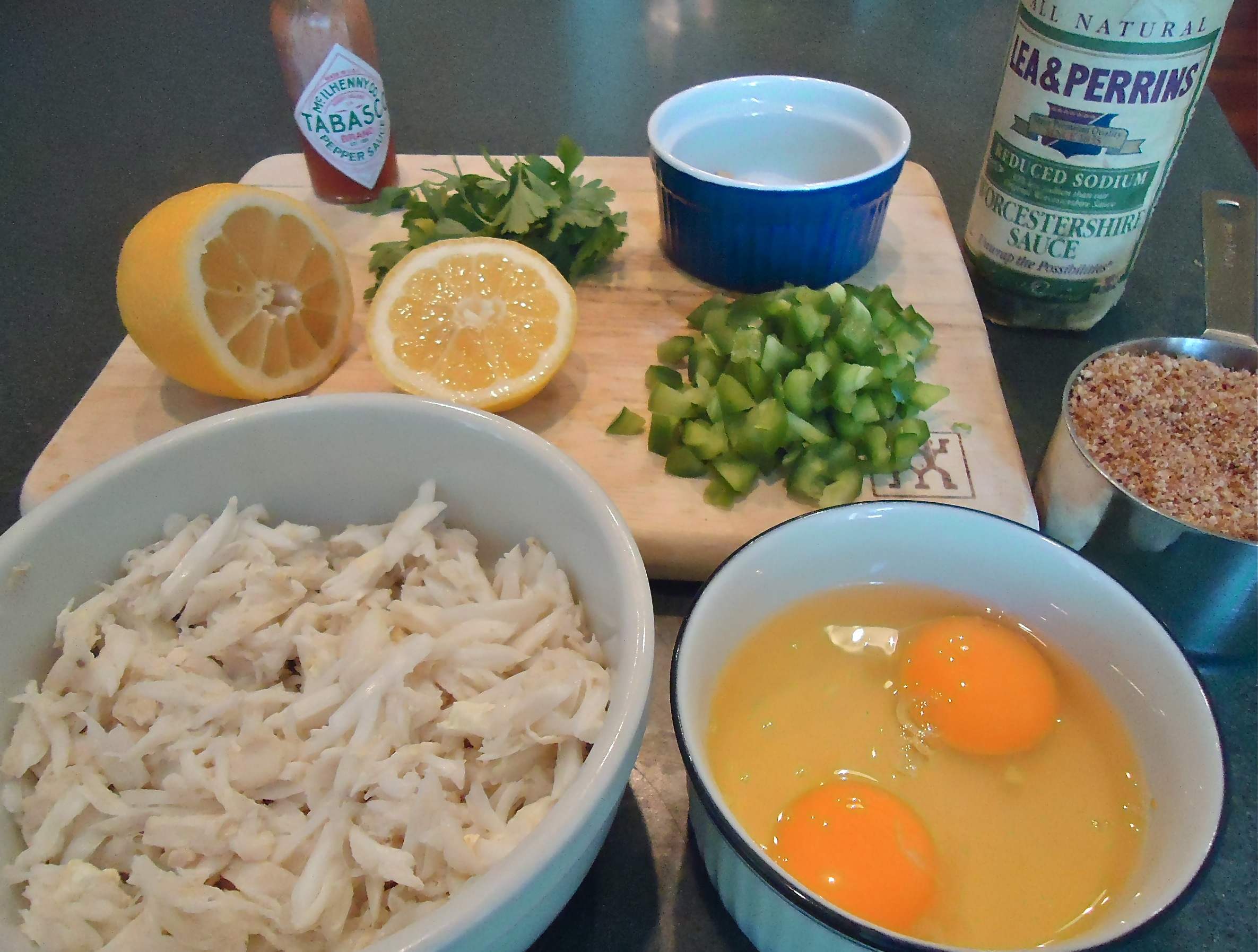
All the ingredients, sort of… you will actually need some more bread crumbs as well as the ingredients for the lemon dill sauce (lemon, mayo & dill).

I know this is a boring image but you have to start somewhere…whisk the eggs first in the one bowl you need for making these crab cakes. Then…

add all the other ingredients except the butter. Mix together and chill. I only used a 1/2 teaspoon of hot sauce as we needed ‘family-friendly’ crab cakes but feel free to add more if you like spicy.

Here is the crab cake ‘batter’. Cover and chill for at least an hour.

Coat each crab cake in fine bread crumbs. I only use fresh bread crumbs that I make in my mini food processor, never canned breadcrumbs. Go light on the bread crumbs.

Here they are, ready for the big chill. If you want you can freeze them at this point on the baking sheet. When frozen solid remove to an airtight bay or container.

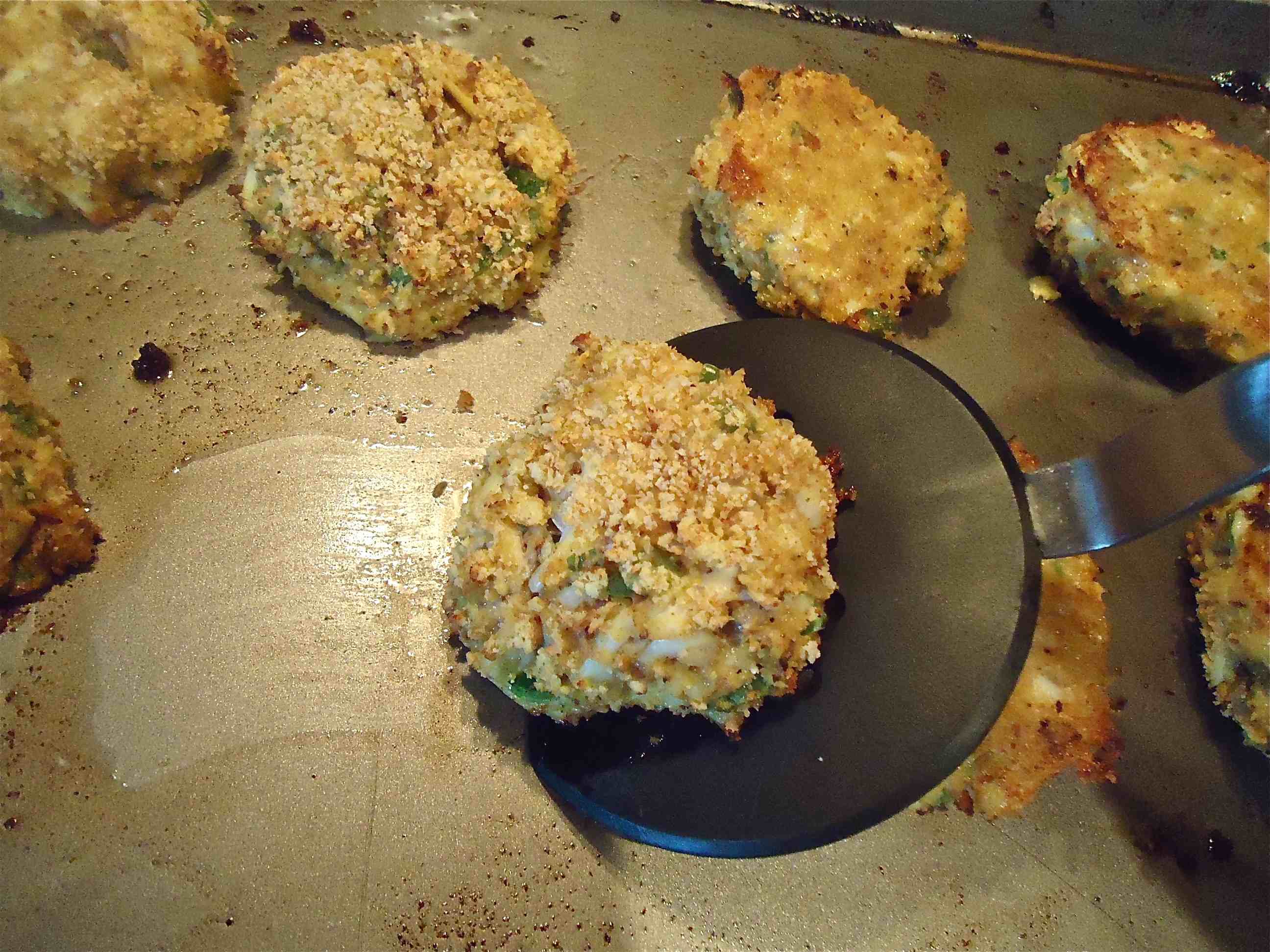
After they chill, bake in a preheated 400 degree oven. Flip them over once and bake another few minutes (exactly depends on the size). I baked these 8 minutes per side.

Fresh out of the oven. I find baking the crab cakes – instead of frying – still gives me a crispy crust but is lighter tasting (not greasy) and better for you, I would think. It’s all about the crab!

Okay, so this product, a refrigerated herb by Gourmet Garden is really the bomb. I do not have room to grown fresh dill and buying it is too expensive so this works great. A tube will last me a couple of months and I’m not throwing out old withered herbs – waste makes me c-r-a-z-y. They make other ‘flavors’ but the dill is the one I have used.

Carolina Crabcakes

  • 1 lb. of crabmeat
  • 2/3 cup + extra, fine breadcrumbs
  • ½ cup sweet bell pepper, finely chopped
  • 2 eggs
  • ½ tsp. salt
  • 1 tsp. dry mustard
  • 1 tsp. Worcestershire sauce
  • ½ tsp black pepper
  • ¼ cup fresh parsley, finely chopped
  • 1 tbl. fresh lemon juice
  • 1 tbl. butter
  • hot sauce, like Tabasco or Crystal, to your taste

In a medium bowl lightly whisk the eggs and all the other ingredients except the butter. Mix well, cover and refrigerate for at least 1 hour. Shape into crab cakes: 18-20 bite-size or 8 meal size. Coat each in extra fine bread crumbs lightly and place on a wax paper-lined  sheet pan. Chill another hour in the refrigerator (or pop into the freezer if you want to bake* them later).

Meanwhile preheat oven to 400 degrees. Melt 1 tablespoon butter in a cookie sheet to coat. Place crab cakes on the cookie sheet and bake for 2-3 minutes for mini crab cakes and 8 minutes for large crab cakes. Turn crab cakes over once and bake another 2-3 minutes for minis and 8 minutes for large ones. Serve immediately with rémoulade, tartar or my favorite, cold lemon dill sauce.

Lemon dill sauce: Mix ½ cup mayo with 1 heaping tablespoon chopped dill weed (fresh or  “Gourmet Garden” type) and juice of ½ a lemon. Chill until ready to serve.

* Frozen crab cakes will take a bit longer to bake, 1 more minute per side for the minis and 2 more minutes per side for the large.

Got Okra?

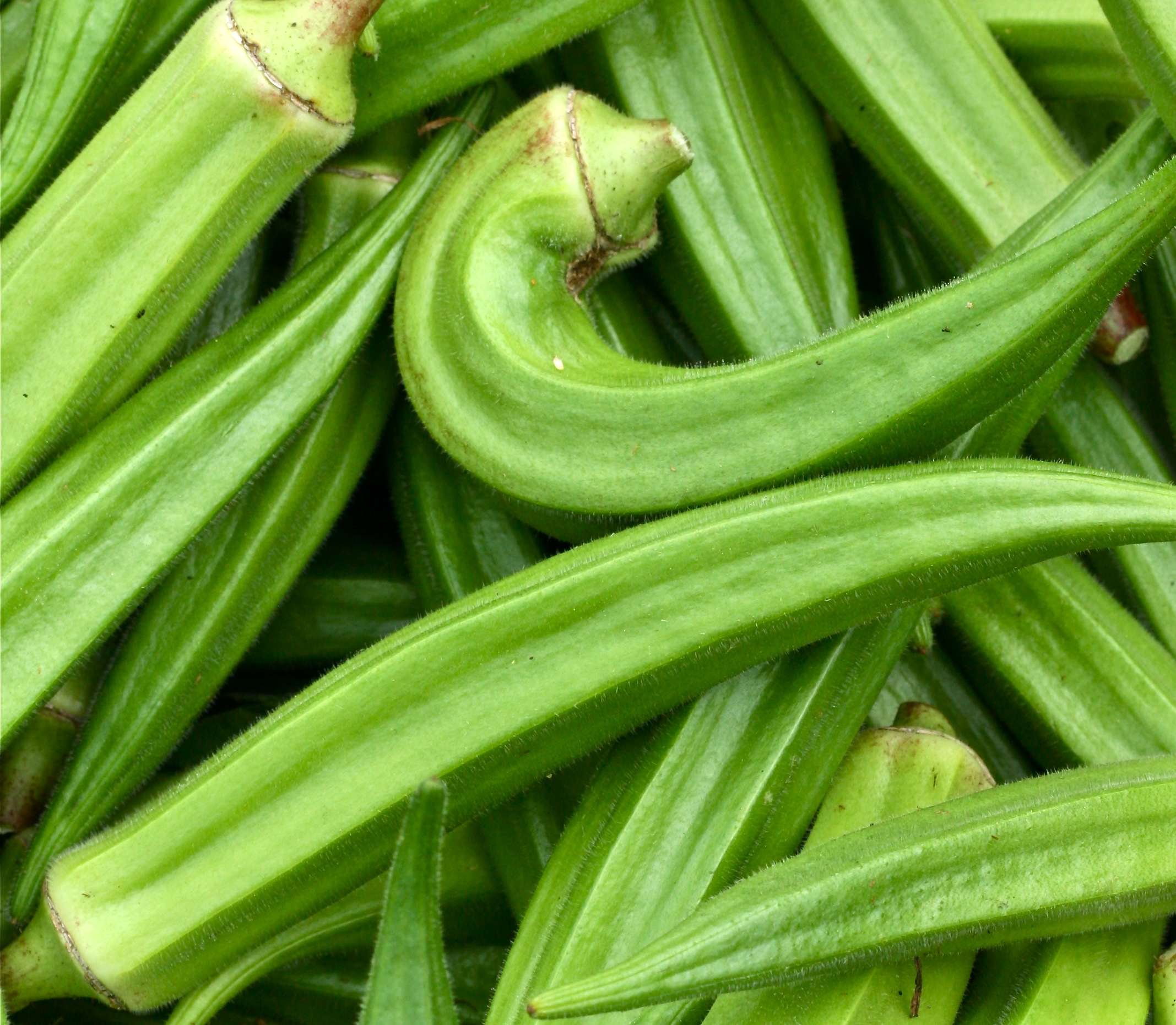
Okra is one of my favorite foods. Yes, I love it fried but also in gumbos, stewed with tomatoes, pickled, and even slow cooked alone for what my mother and I refer to as “slimey okra”. Has a nice ring to it, doesn’t it? When the fresh okra started coming in heavy in our garden, my Mama would prepare a small pot of slimey okra just for her and I to share. It is basically just plain okra slow cooked whole in slightly salted water. The okra releases it’s “goo” (called mucilage) and the entire okra was well, in a word, ‘slimey’. Since none of my other family members would come within 6 feet of it, the slimey okra was all ours. Yum.

If you like gumbo you know it’s this same goo that makes a traditional gumbo thick but if you cook it with tomatoes some of the sliminess is reduced (due to the acidity of the tomatoes). During my childhood, we ate many dinners of stewed okra and tomatoes – seasoned with a little bacon, salt and pepper and usually served over rice. This is very much a South Carolina dish and we ate it often during the summer months when the main ingredients were literally over flowing from our backyard garden. It made a light but filling summer supper during those hot months.

In my okra research, I recently found out that okra can also be described as a health food since it’s high in fiber, vitamin C, and folate content and contains antioxidants too. The seeds of edible okra also produce oil that is high in unsaturated fats and apparently tastes and smell pleasant, although I’ve never found okra oil for sale. I’ll have research this more. Okra seed oil is also suitable as a biofuel. Okra of different varieties is grown and eaten throughout the world – from Malaysia to Nigeria to Vietnam to the Caribbean.

Of course, here in the South we love our okra. I do believe it is a very under-rated vegetable – obviously it’s good for you and can be prepared in many ways – surely one to suit most any taste. Now frying okra is probably the least healthy but very tasty. My “died-in-the-wool non-southern food eating” husband now loves fried okra. Yes, he told me didn’t like “southern food” when we first met and yes, I married him anyway. I feel one of my goals in life is to undo the wrongs of bad food – so I’ve been converting him slowly over the past 7 years. But that’s a story for another post – or two.

Fried okra is a treat in our house and I prepare it for special occasions and/or when the first local okra comes into harvest, which is about right now. It so happens that I was testing a mustard roasted pork loin recipe when I made some fried okra so I paired them with creamy stone-ground grits. It was a wonderful combination of flavors and texture. I’ll be posting the recipes and images for the entire meal soon but I’ve included one picture now, just to whet your appetite!

Cut the washed okra into slices about a half inch in size – but smaller is okay too.

I use a little grape oil to coat the okra; it allows the cornmeal to stick better.

Sprinkle the okra with salt, pepper and the cornmeal.

Add the cornmeal coated okra to the hot oil. My cast iron skillet is perfect for frying up a pound or so of okra. Too much okra in a small pan would not cook as evenly.

The okra is getting browned. Try to avoid stirring and flipping the okra too much. Having a seasoned skillet and a familiar stove top makes this easier.

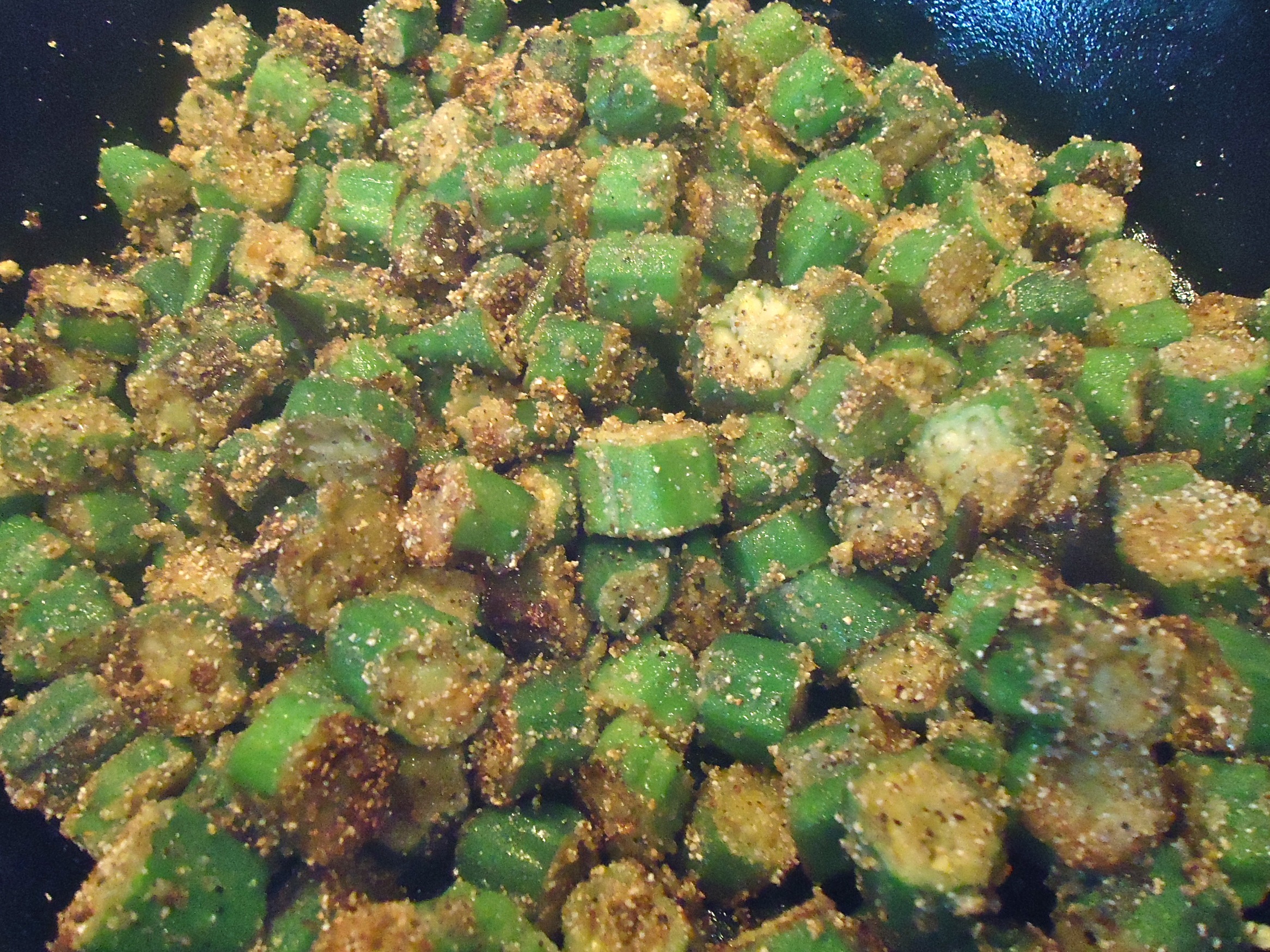
Here you can see the okra at about 10 minutes into the frying process – won’t be long now!

The okra is ready…crunchy with a great fresh flavor. Remove to a paper towel lined platter so the excess oil can drain off. Fried okra is best eaten asap!

Here is that fried okra crowning a plate of creamy stone-ground grits and mustard roasted pork loin. Delicious.

Fried Okra

  • 1 lb. fresh tender okra, washed
  • 1 tbl. grape oil*
  • 1/3 cup cornmeal
  • 1 tsp salt
  • ½ tsp. pepper
  • ¼ + 1 tbl. vegetable oil

Trim the stems from the okra and cut each pod into approximately ½ inch slices. Sprinkle the okra with grape oil and stir lightly to distribute the oil throughout. Sprinkle the okra with the salt, pepper and the cornmeal. Stir to coat.

Heat a heavy skillet (I use a seasoned cast iron skillet) and add ¼ cup plus 1 tbl. good quality vegetable oil (I use a canola blend). Heat until very hot, but not smoking. Lower the heat slightly and add the okra all at once. It may splatter, so be careful. Allow to ‘fry” for a full minute or so before turning the mixture over. Adjust temp as necessary so okra cooks at a medium high temp but does not burn. Try not to smash the okra too much and stir only as necessary to allow even cooking. Total cooking time should be 15-20 minutes depending on the size of your pan.

Remove okra to a paper towel lined plate to drain excess oil, season with more sat and pepper to taste if necessary, and serve immediately.

* Grape oil has a higher burn temp than most other oils such as olive oil, so I use it when I know I will be cooking in high heat.

Fantastic butterscotch brownies make the flax seeds go dowwwn…

It’s fascinating how the human mind works. I wanted to post a recipe for butterscotch brownies, which is a childhood favorite of mine. I also want to find ways to make rich bakery treats like these, less caloric or at least healthier.

So I made these and tweaked my Mom’s recipe including adding some ground flax seed. Then I started thinking about how one can add or remove ingredients, change a recipe a little and make something wonderful better for you, many times with just a subtle difference.

In writing this post, the song “A Spoonful of Sugar” from the movie Mary Poppins, ‘popped’ into my mind… “just a spoonful of sugar makes the medicine go down, the medicine go dowwwn”.  Adding or altering to make the-not-so-appetizing “go down”.  This lead me to think about playing the “favorite all time” game with my husband or friends. The topic of movies is an easy one.  Mary Poppins is one of my top three movies – along with Out of Africa and wait for it, Raiders of the Lost Ark.

“Fantastic Mr. Fox” is a movie our family loves – no sugar required to make the humor in this one “go dowwwn”. Fox Searchlight Pictures.

My criteria is that I can watch the movie over and over again, without getting sick of it – well, with a limit of maybe once or twice a month a month, for years. If I can watch and enjoy it that often, then it is great. Another movie that is creeping up to the top of the pops is Fantastic Mr. Fox.

Based on the novel by Roald Dahl, it’s chocked full of adult humor and witty repartee, it is also a clean movie and even our 4-year-old loves it – although she is clueless over why we are both chuckling most of the time. It’s good like that. Looking back it should have been named “best picture” of 2009… in my opinion.

Now dear hubby is a movie buff. He knows a lot about movies, old and new, with a particular fondness for science fiction and old classics like Lawrence of Arabia. Me, I can be content with viewing a movie relaxing on the couch at home, but he loves a real movie experience, i.e. going to the theater, eating popcorn, etc. I admit I do enjoy this too, although between the prices of the tickets and the snacks, our authentic movie theater “experience” is going the way of the dodo. I can wait awhile until the movie comes to blue ray or on-demand cable, thank you very much. We save the authentic and expensive movie experience for actual, great movies we truly want to view on a big screen, not a poorly written, awfully acted romantic comedy or special effects-laden bomb with no plot.

So you ask, what about those butterscotch brownies, huh? I got off on a tangent… see how the human mind works? Or maybe it’s just my human mind. Sigh. These butterscotch chewies remind me of childhood summers… picnics at the lake, fish fry’s in our backyard, and taking turns swinging in the hammock at the beach house. And while they’re certainly not “Mrs. Bean’s Famous Nutmeg Ginger Apple Snaps”, the inclusion of healthy flax seeds makes this snack just that much more, well, fantastic. Here’s hoping Mr. Fox would agree…

Straightforward ingredients including just 2 eggs and 1/2 cup of butter. I used light brown sugar but the dark brown variety will work too.

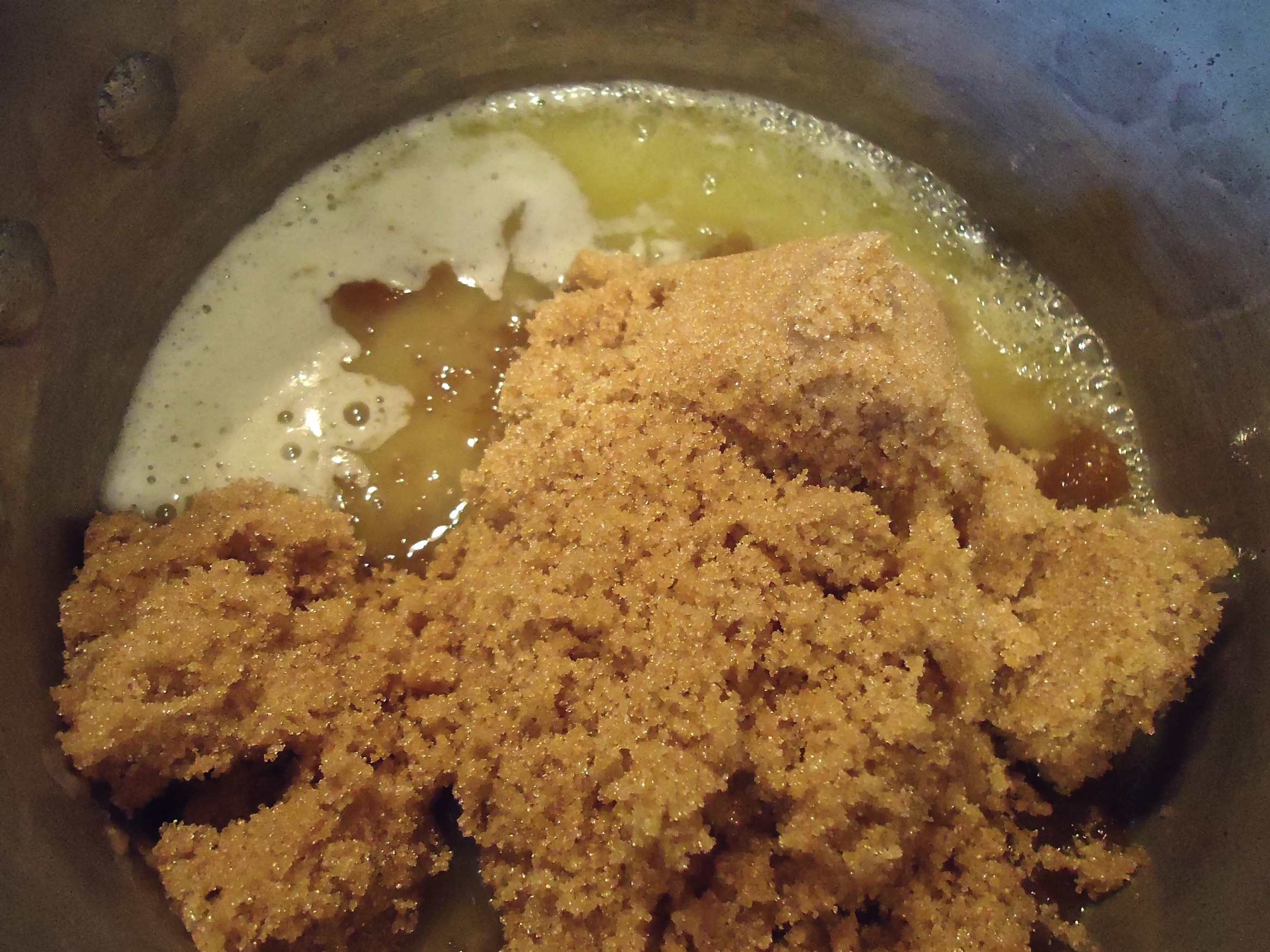
Melt the butter in a heavy bottom medium-sized sauce pan. We mix everything in this sauce pan except beating the eggs and milk together first.

This is a good recipe for young cooks and bakers – my daughter can break the eggs (no shells, either!) and whisk in the milk.

Once the butter/sugar mixture has cooled and the egg mixture has been incorporated, we add the flour mixture and those ground flax seeds.

After adding the vanilla and nuts (I like walnuts), pour into a greased 9 x 13 inch baking pan. Pop into a preheated 350 degree oven to bake about 25 minutes. Hint: Check after 22 minutes or so just in case your oven bakes fast – you don’t want to over bake these. They should be ‘chewy’.

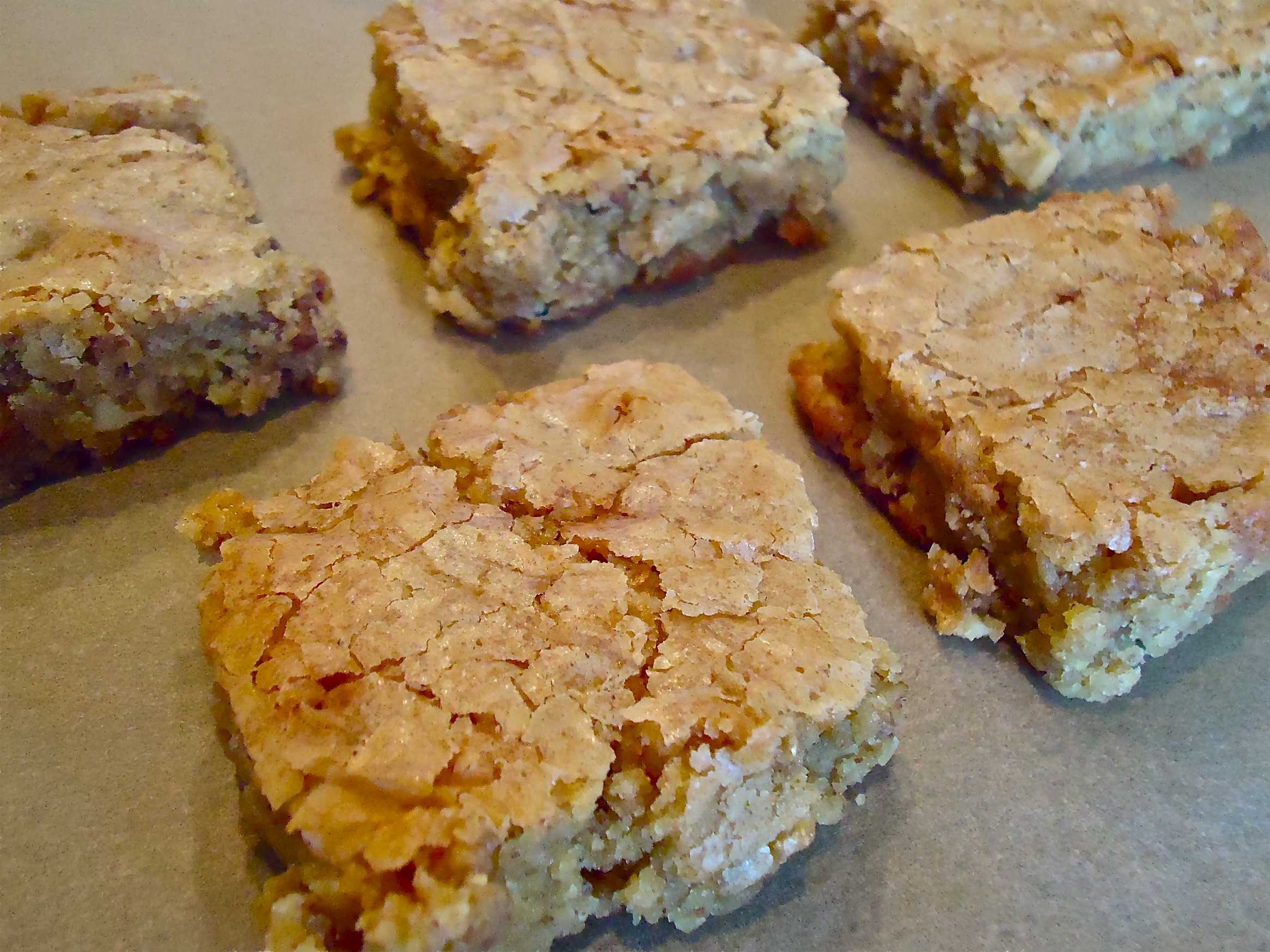
…and soon enough you’ll have these gooey, delicious brownies. Allow to cool for a few minutes in the pan (that is elevated on a rack) and then cut into bars. Like chocolate brownies these travel well…for picnics, cookouts, tailgating.

Butterscotch Brownies

  • 1/2 cup butter
  • 2 cups packed brown sugar
  • 1 tbl. vanilla
  • ¼ cup milk
  • 2 large eggs
  • 2 cups all-purpose flour
  • 1 cup chopped nuts
  • 1 1/2 teaspoon baking powder
  • 2 tbl. ground flax seed
  • 1 tsp. salt

Preheat oven to 350°F. Grease bottom and sides of 9 x 13 pan with shortening.

In a medium saucepan, melt butter over low heat and stir in sugar. Stir until edges bubble, about 2 minutes. Remove from heat and allow to cool 10 minutes. Mix together the flour, salt and baking soda.

In a mixing bowl whisk eggs and milk until well blended. Using the whisk quickly add in a little of the warm butter/sugar mixture in the egg mixture. Then whisk the egg mixture back into the butter/sugar mixture. Beat until very well combined.

Add in the flour mixture until just combined. Stir in the vanilla extract and nuts. Pour into the prepared pan and bake for 23-25 minutes. Do not over bake. Allow to cool on rack for 5-10 minutes before cutting into bars.

Robust rules the grill with ancho chili lime steak

Sometimes you just feel like eating a steak and since I’ve had my cholesterol checked recently (all is well) that time is now. In recent years I have taken to buying grass fed, organic or otherwise locally farmed beef whenever my tastes turn bovine.

Small-production, grass-fed meat can be a lot more expensive than your average grain-fed beef, just as artisanal cheese costs more than industrial cheddar. So at the same time I have tended to purchase more affordable “bargain” cuts like sirloin, flank, chuck eye and skirt (my personal favorite) rather than a bone-in ribeye or porterhouse. I do realize that a bulk purchase of grass fed beef would significantly lower our over-all cost and we have considered making a freezer commitment. Unfortunately, reality set in and our current abode (a loft-style townhouse) is not roomy enough. Rest assured we will come back to this idea in the future!

Skirt and flank steak are my favorite bargain cuts. They have a rich beef flavor hiding covertly within that protein, just requiring a little thoughtful planning and a good marinade to tease what could be a tougher cut into tender submission. I play around a lot with rubs and marinades for my beef (and other meats too) and in most cases they contain garlic, some type of fruit (I’m partial to citrus) and beer, wine or alcohol, like Bourbon. Lately I’ve been loving the addition of peppers, from smoky and sublime Poblano (Ancho when dried) to kicky with chipotle, jalepeno and New Mexican varieties.

My tips for a great, marinated steak:

  • Salt just before grilling (no salt in the marinade)
  • Marinate at least 12 hours (24 is much better)
  • Allow the meat to come to room temperature (or close to it) before grilling
  • Sear the meat off on a clean, hot grill but do not flip it around too much
  • Invest in a good quality meat thermometer if you are unsure of your skills in determining meat “doneness”
  • Likewise it is not advisable to slice into a steak or other cut of beef to check its “doneness”
  • Allow the cooked meat to rest on a warmed platter, covered, before slicing and serving

Ingredients. I soak the ancho chilies in the warm syrup I make with just sugar and water.

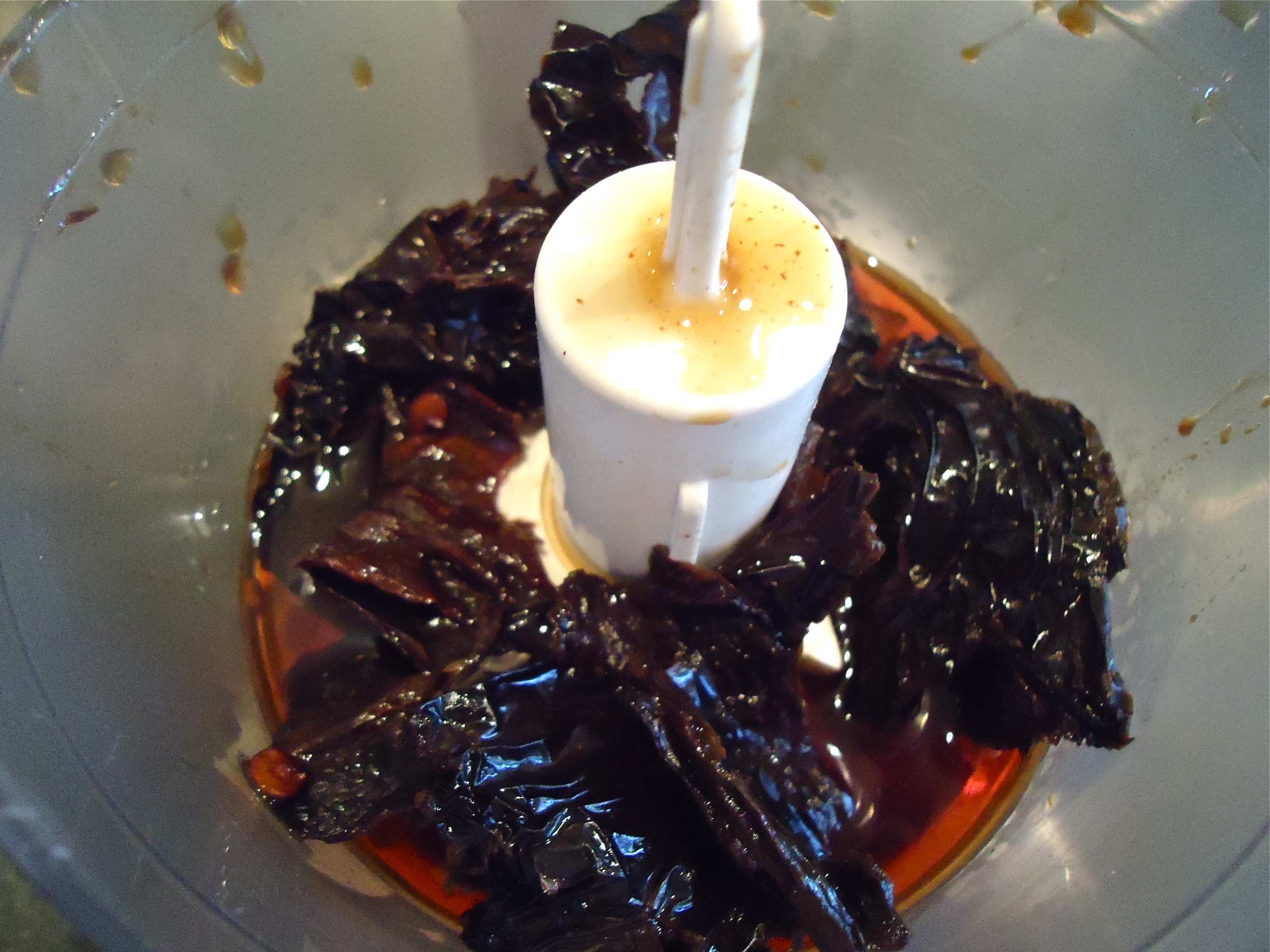
Puree the chilies. My small food processor is the one electric kitchen tool I find indispensible. I use it almost everyday.

The chilies look like this after they are pureed.

Add the lime zest, garlic and fresh ginger to the chili puree along with the lime juice, pepper and paprika.

Beer goes in last. It doesn’t matte what brand you use – whatever brand you like. My hubby likes Belgian-style “Shock Top” so that’s what I used here.

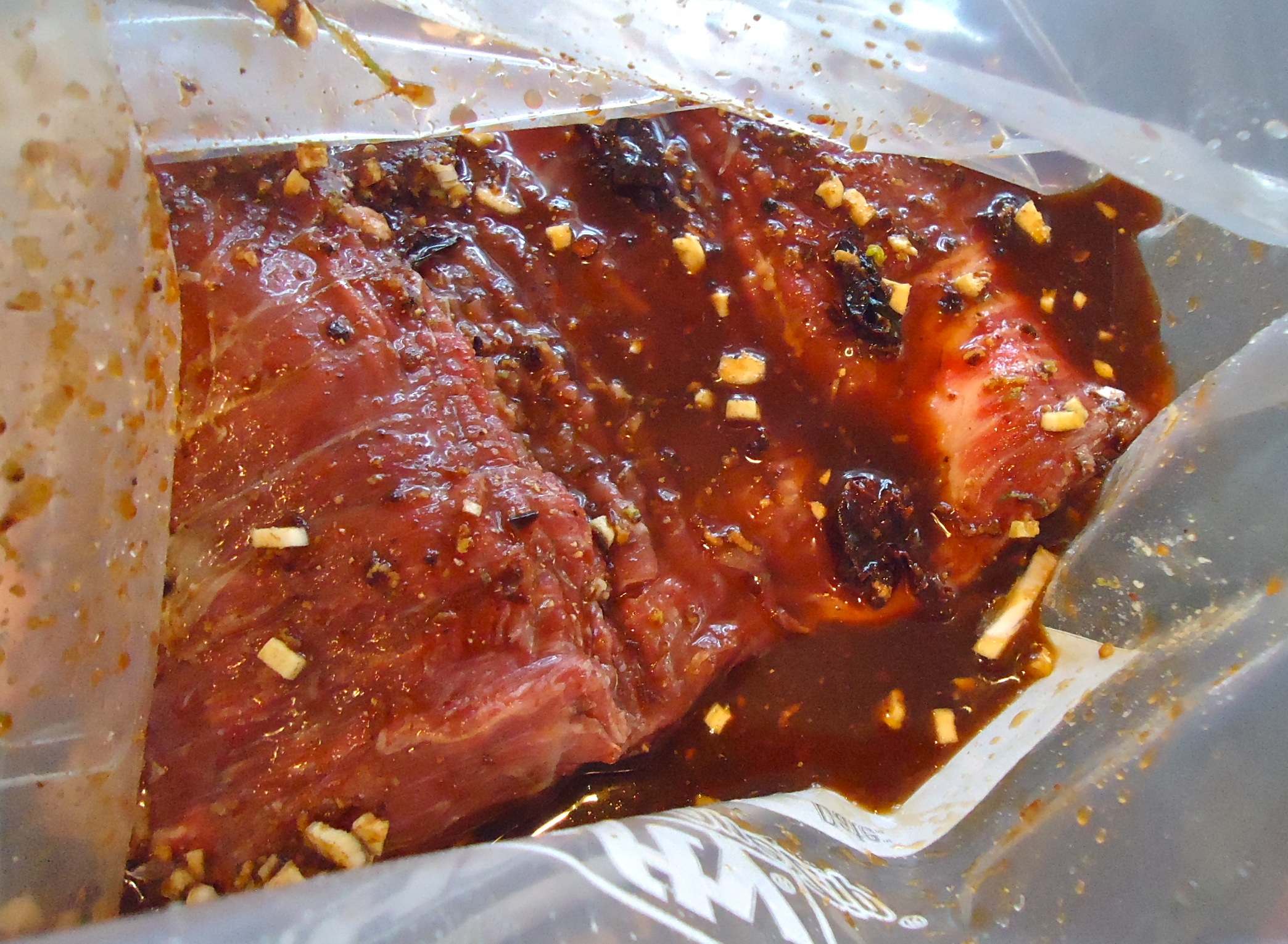
As you may know I’m a fan of those huge zippered bags for marinating (and brining) and that’s what I’m using here too.

Sprinkle liberally with salt and sear the meat on a hot grill. I use gas but charcoal works great too. It would be a treat to use real wood coals, someday perhaps…

Here’s that beautiful flank steak, almost ready for the platter. I made this for my hubby on Father’s Day along with grilled bacon wrapped, stuffed banana peppers and grilled fresh corn on the cob. My husband’s favorites.

After removing the steak from the grill allow it to rest for a few minutes, loosely covered, before slicing. This steak was really juicy and tender to the bite with a peppery, meaty flavor.

Ancho Chili Lime Marinated Flank Steak

  • 1/3 cup Demera or brown sugar
  • 1 cup water
  • 2-3 dried ancho chili peppers
  • 2-3 inch piece of fresh ginger
  • 1 lime
  • 3-4 cloves garlic, peeled
  • 1 tbl. ground pepper
  • 1 tsp. smoked sweet paprika
  • 1 beer
  • salt
  • 2 ½ – 3 lb Flank steak (or skirt or sirloin steak)

Prepare the marinade the day before you plan to grill and serve the steak. In a saucepan heat the water and sugar and stir until the sugar dissolves. Bring to a boil for 30 seconds and then remove from the heat. Add the dried Ancho chilies and allow them to soak for at least 30 minutes.

Meanwhile, peel and then grate or finely mince the ginger. Remove the zest from the lime and squeeze the juice into a bowl. Mince or press the garlic. Set aside.

Remove any tough stems fro the Ancho chilies and grind in a food processor or blender along with the soaking liquid. When ground, pour into a bowl and add the garlic, lime zest and juice, ginger, pepper and paprika. Pour in the beer and mix well. Wash and dry the steak. Place the steak in a very large bag or glass dish, pour marinade over and secure bag (or cover with plastic wrap).

Place in the refrigerator to marinate for 24 hours, turning the bag over 2 or 3 times during this time. When ready to cook, prepare your grill. Remove steak from bag and sprinkle liberally with salt. Sear each side and grill to your desired doneness, but I suggest rare or medium rare for best results. When grilling is complete remove to a warmed platter, cover with foil and allow to rest for 5-8 minutes before slicing across the grain.

Something delicious this way comes… blueberry streusel cobbler

Hey there, it’s blueberry season across the USA ya’ll. Blueberries are my favorite fruit and I am always on the lookout for new delicious ways to make use of them, especially in the summer when they are fresh. Of course, they lend themselves best to desserts and baked goods and that’s how I first enjoyed them as a kid. Being Southern I also have a love for that most quintessential of southern desserts, the cobbler.

I enjoy a cobbler of the crispy, pie crust like variety as well as the more gooey, cakey type. My favorite recipe of the latter is probably well known to you if you’re a southern cook, as the “1-cup cobbler” recipe. Over the years I have taken this recipe, played with some of the ingredients and created a variation I find perfect for blueberries. This goes together in a snap.

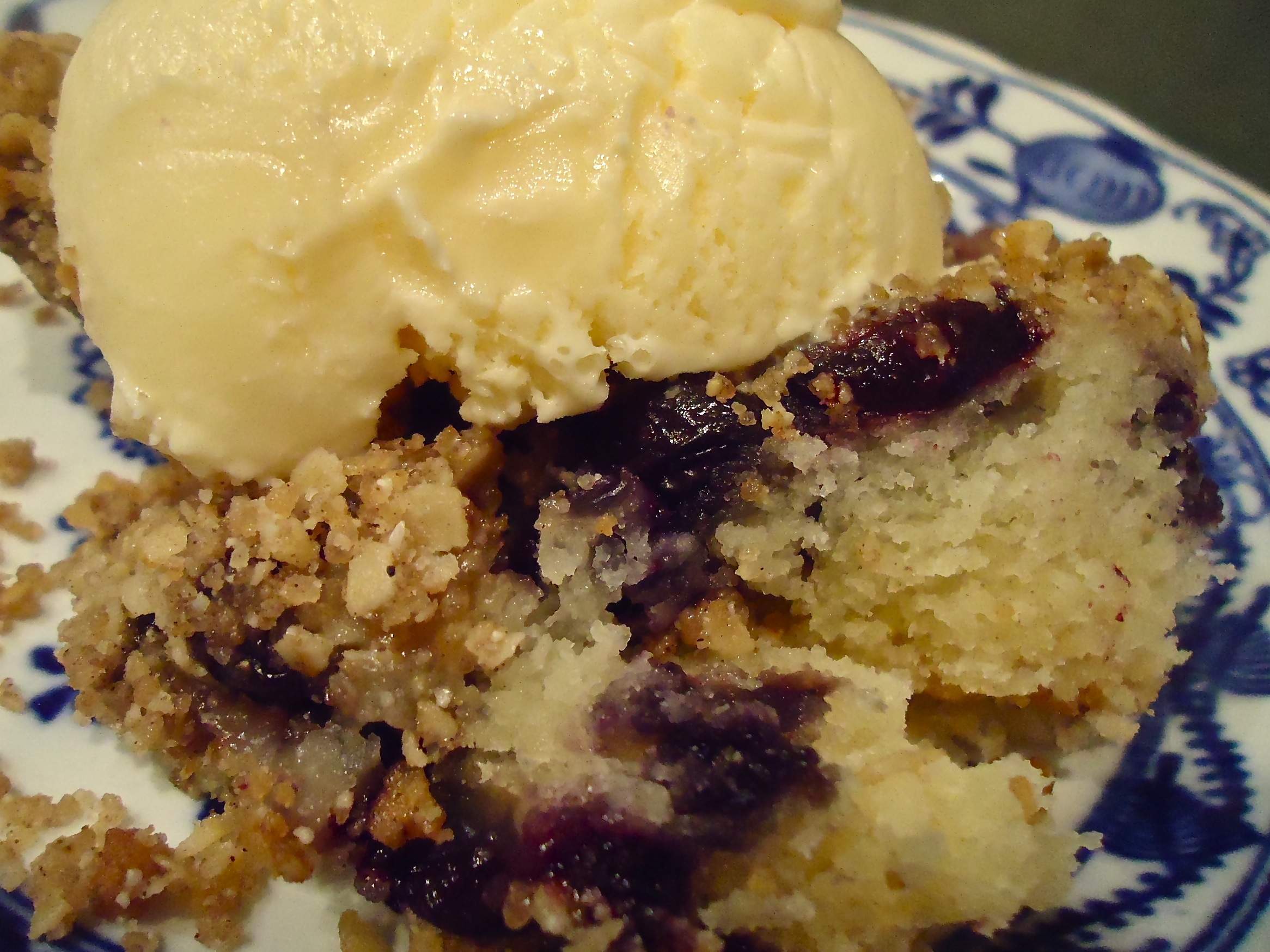
It works well with blackberries too or a mixture of both. Top it with a big dollop of real whipped cream, good quality vanilla ice cream or for an authentic taste of the south, homemade vanilla custard (which I posted a few weeks ago).

Ingredients for this recipe plus the baking dish I use.

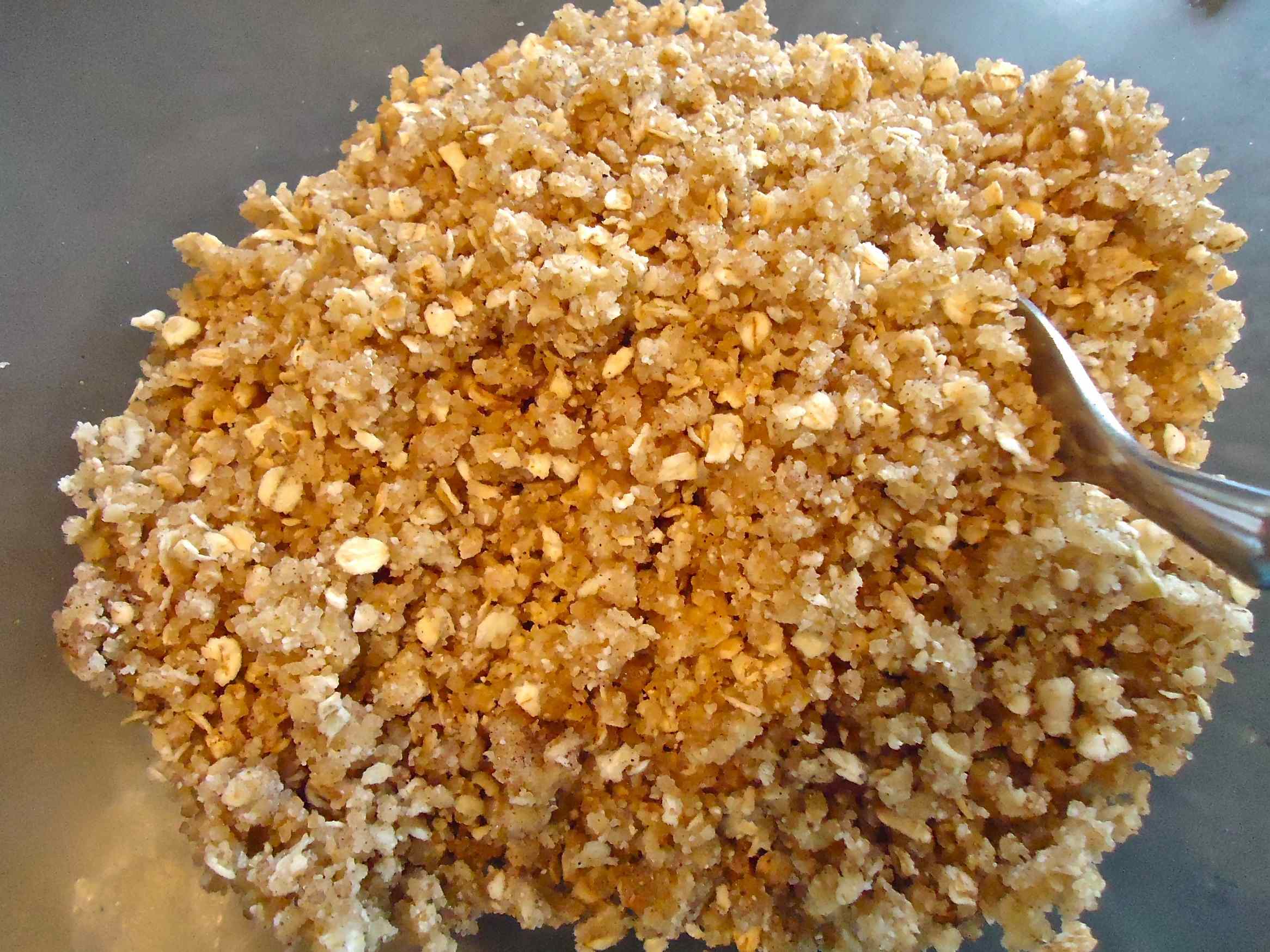
The streusel topping is made by mixing 4 tablespoons softened butter with the oatmeal, some Demera sugar, flour, cornmeal, a little salt and allspice. It will be crumbly.

Melt the butter right in the baking dish (and use the preheating oven for energy efficiency). Add in the sugar, the flour mixture and the vanilla.

The cobbler “mix” is also crumbly before adding the milk.

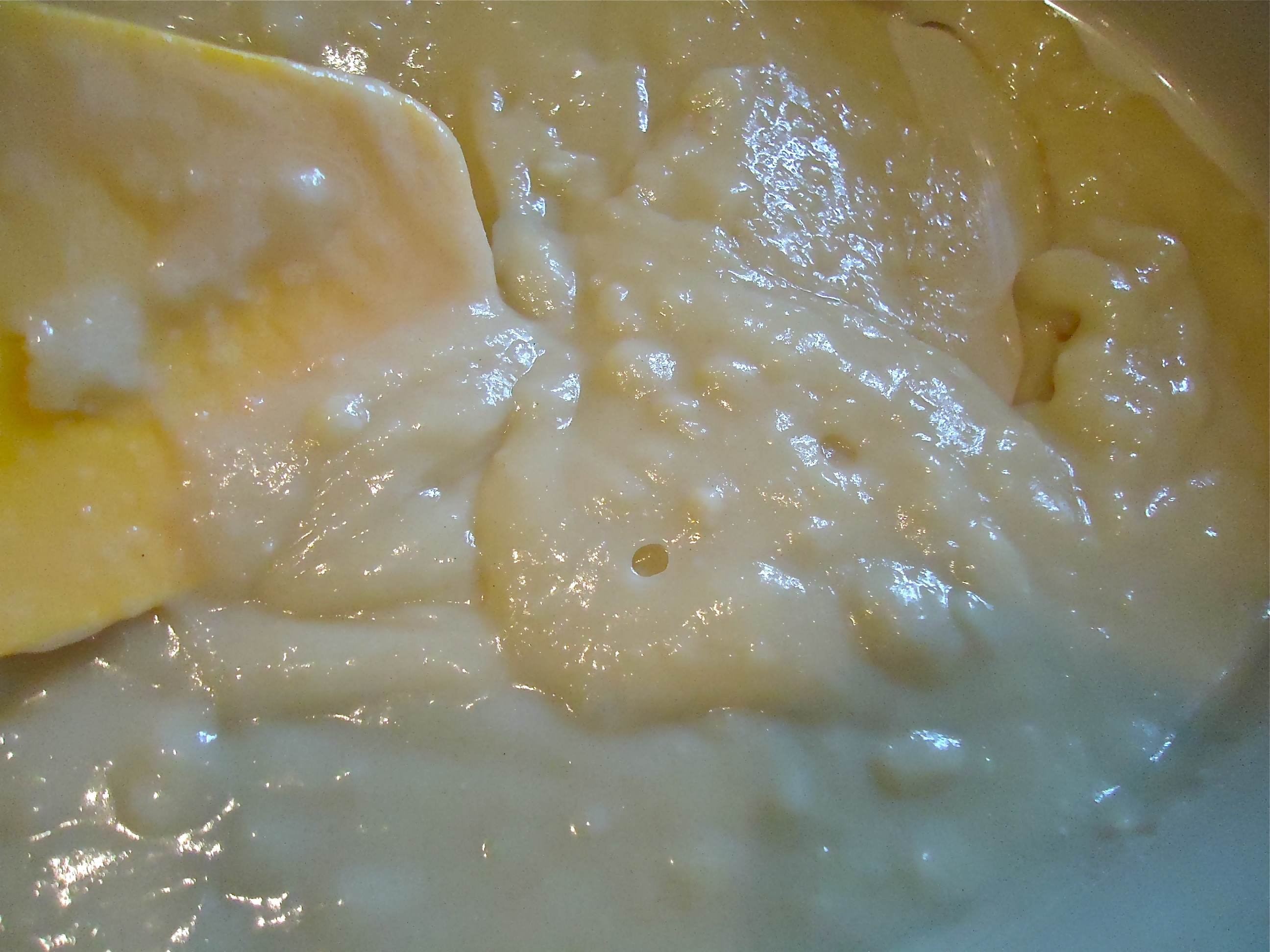
Add the milk and stir but do not over mix. There will be some lumps.

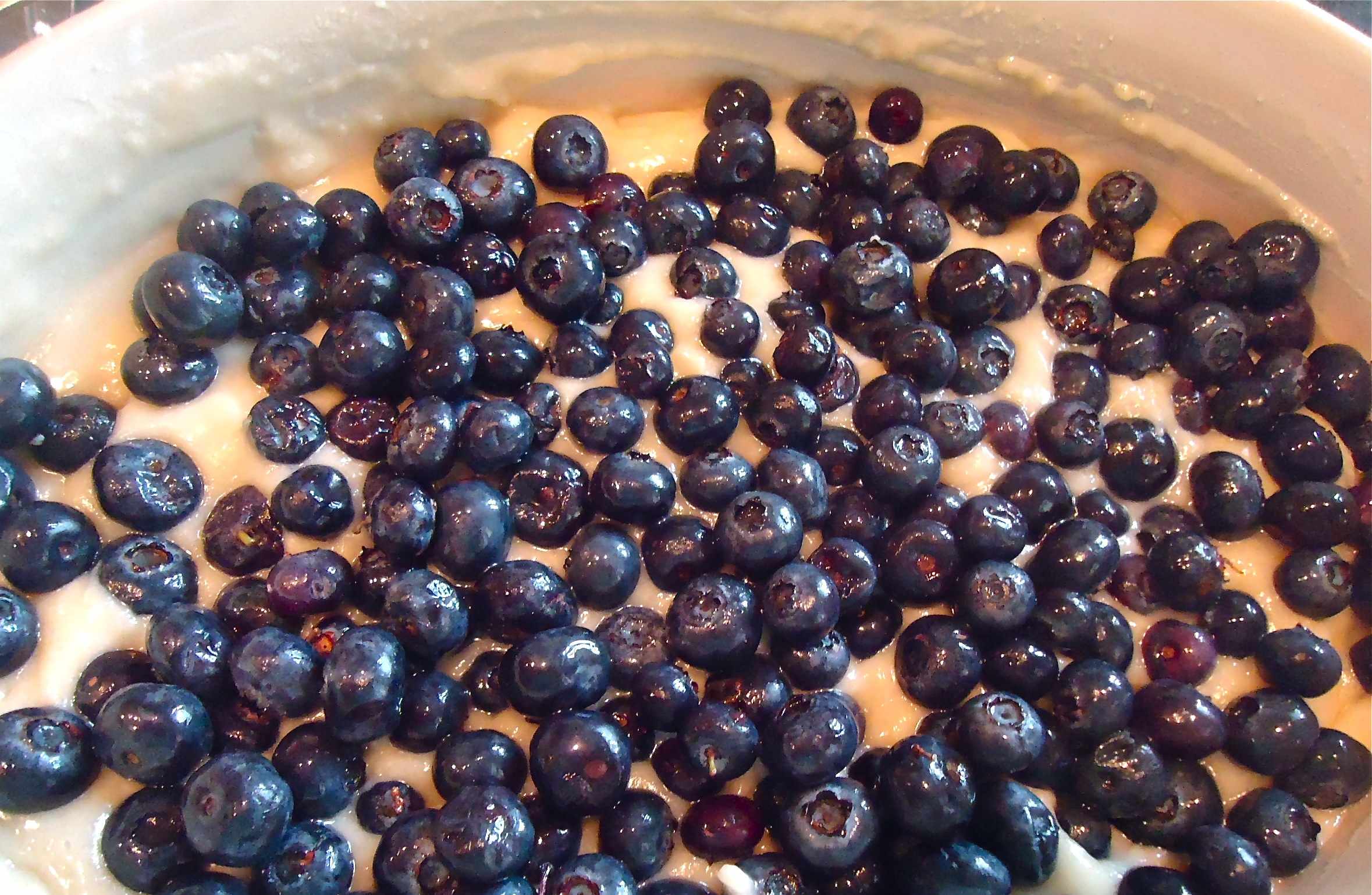
Blueberries go on top, looks like I missed a tiny piece of stem. Oh well, good for digestion!

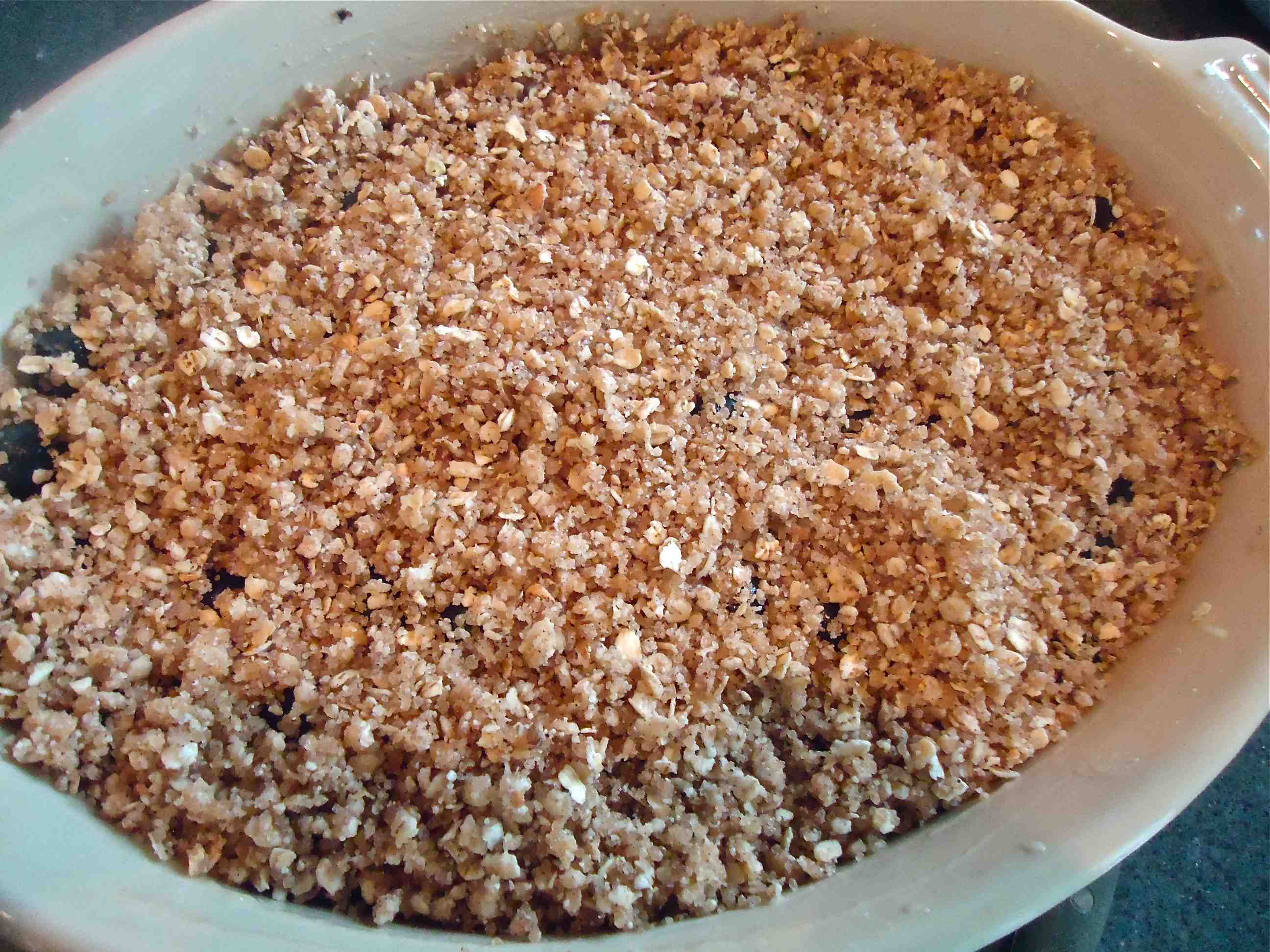
At last the streusel topping goes…on top!

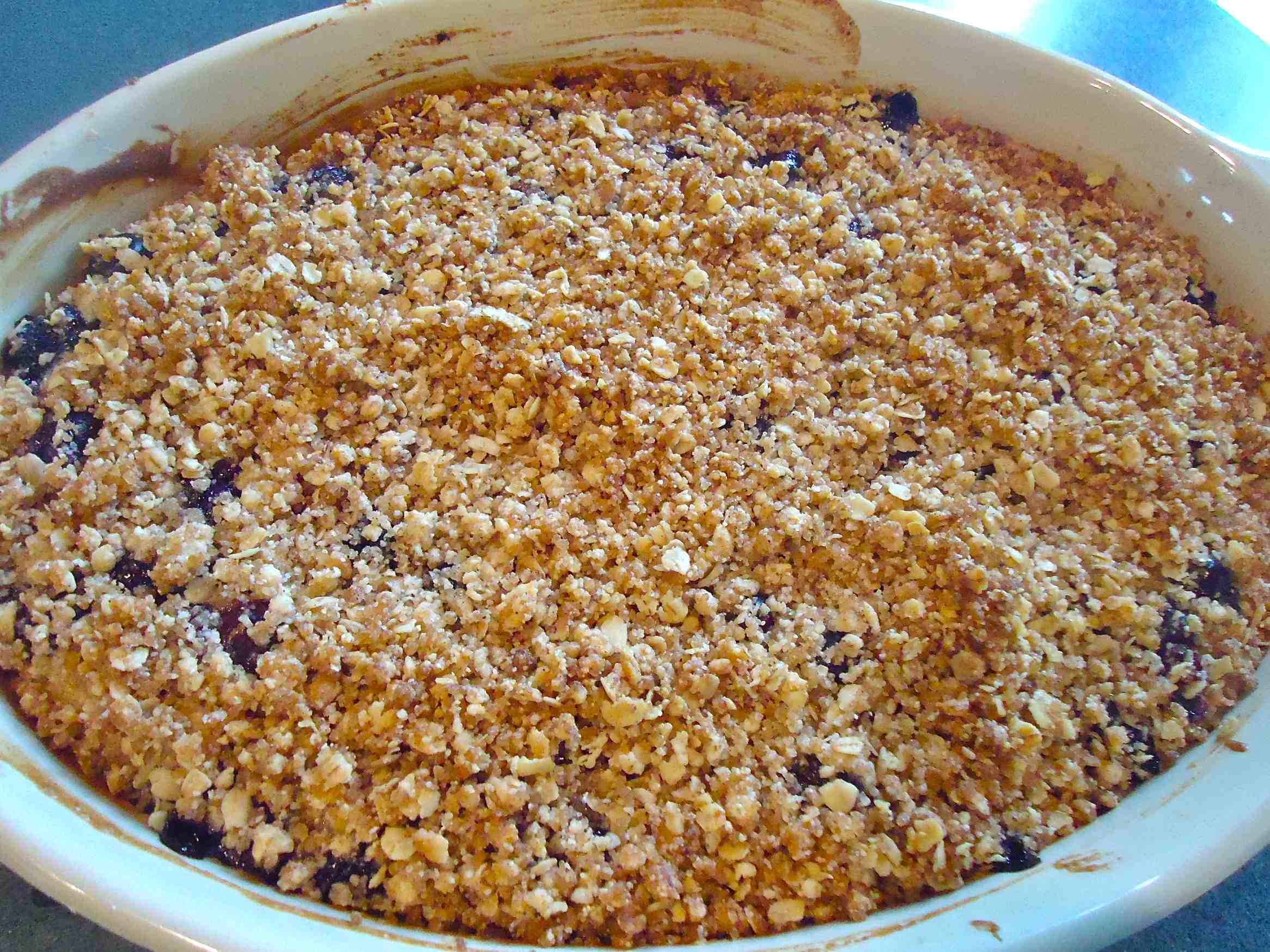
Out of the oven. Serve immediately. Cover leftovers with plastic wrap or foil and store in the refrigerator. You could also prepare this in individual portions by using small ramekins (should fill about (8) 1/2 cup size) and bake for 20-22 minutes.

Blueberry streusel cobbler

Streusel topping:

  • 4 tbl. unsalted butter, softened
  • ½ cup oatmeal
  • 2 tbl. cornmeal
  • 1/3 cup all-purpose four
  • ½ cup Demera or light brown sugar, packed
  • ½ tsp. salt
  • 1 tsp. allspice

Mix all ingredients together. The topping will be crumbly. Set aside while you make the cobbler.

Cobbler:

  • 6 tbl. unsalted butter
  • 3/4 cup sugar
  • 1 cup all-purpose flour
  • 1 tsp. baking powder
  • ½ tsp. salt
  • 1/2 cup milk
  • 1 ½ -2 cups fresh blueberries, washed and picked over
  • 1 tsp. vanilla extract
  • 1 recipe streusel topping

Preheat oven to 375 degrees. Mix the flour, salt and baking powder together. Melt butter in an ovenproof baking dish and stir in the sugar, flour mixture and vanilla extract. It will be crumbly. Stir in the milk until just mixed together – it will have lumps. Top evenly with the blueberries and then sprinkle streusel on top of that. Bake for approximately 40 minutes. Serve with ice cream, whipped cream or custard.