Peachy-keen chicken salad with a curry kick.

Recently I posted a recipe and accompanying ‘how-to’ for peach chutney – with cherries and I mentioned that I would be sharing some recipes for using said chutney. The first is chicken salad. Okay so I just heard a collective “ugh” from those of the male persuasion and an “alright” from most of the women. I fully realize that chicken salad is a woman-thing, like quiche or any tea-time sandwich served with the crusts removed.

But perhaps, just maybe, this chutney will change the most ardent “I don’t eaten chicken salad” manly man. That’s because this chicken salad has a definite “kick” – mostly due to the inclusion of the chutney – and a little because of the addition of Balti seasoning, a great curry seasoning from Penzy’s. Since I consider myself a chicken salad connoisseur of sorts, I am proud of this recipe in all its simplicity. This chicken salad is wonderful scooped onto a bed of lettuce, piled high on crusty, toasted bread or tucked inside a pita pocket.

The chicken I used in this recipe is my tea-brined roasted chicken but another option is deboned, rotisserie chicken purchased from your local market or deli or any roasted chicken, actually. I happened to have some luscious purple grapes in my fruit bin, but any seedless variety will taste great. And while I adore Penzy’s Balti Seasoning you can easily substitute your favorite curry powder.

My experience with this recipe is that the flavors are best after being refrigerated for a few hours. I also prefer my chicken salad slightly chunky but feel free to either mince the chicken or only coarsely chop it, as per your own preference.

Looking for more ways to enjoy that peach chutney? Please stay tuned… I’ve only just begun!

Ingredients. No southern-style chicken salad would be ‘right’ without hard boiled eggs.

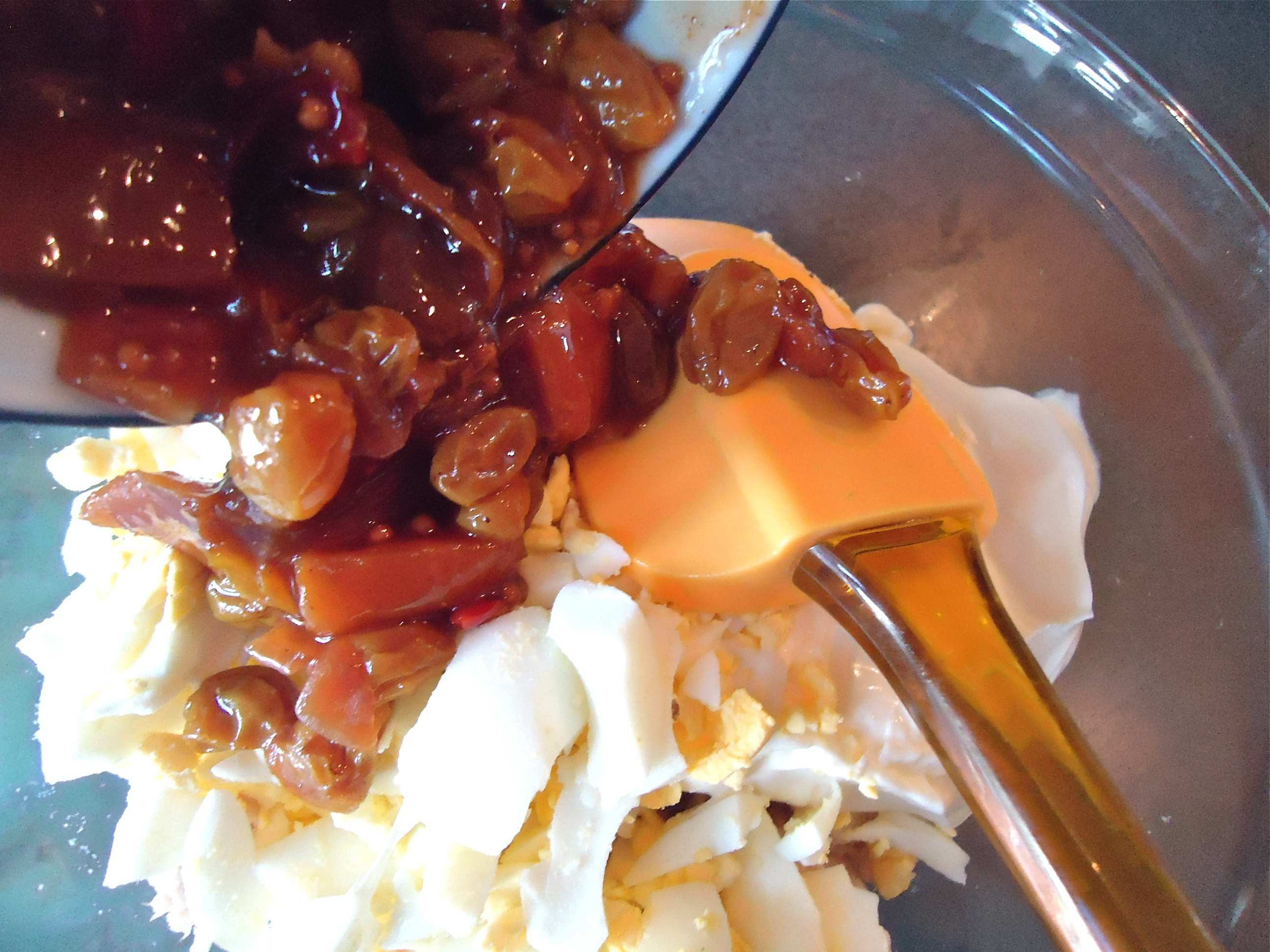
Mix the mayo, chicken, chutney and eggs together well so that the chutney is distributed throughout the mixture.

Add the Balti (or curry) seasoning and mix well.

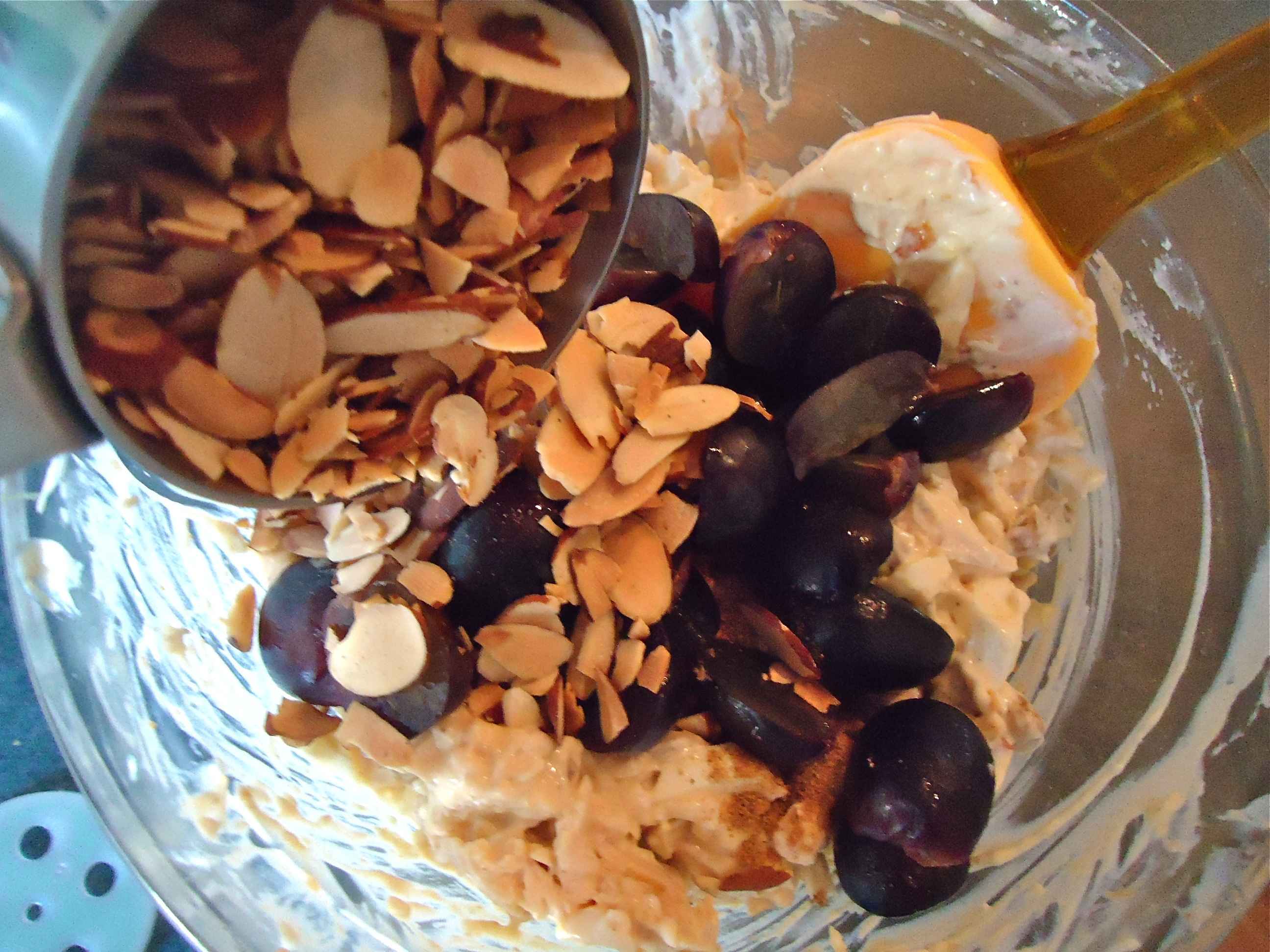
Fold in the toasted almonds and the grapes last. Mix gently.

Keeps well for 3 days, covered and refrigerated.

Peachy Curry Chicken Salad with a Kick

2 cups chopped cooked chicken, preferably tea brined
½ cup peach chutney with cherry or your favorite peach chutney
½ scant cup mayonnaise, light or regular
1 tsp. Balti seasoning (or your favorite curry powder to taste)
2 hard cooked eggs, chopped
1/3 cup sliced almonds, lightly toasted
Scant cup of sliced fresh seedless grapes

Mix chicken, chutney, mayo, eggs and seasoning together in a medium mixing bowl. Carefully fold in the almonds and grapes. Cover and refrigerate at least 1 hour for flavors to meld. Season with salt to taste if necessary and serve as a sandwich, with crackers or on your favorite salad greens. Makes 4-6 servings.

Never gonna say goodbye: zucchini bread with fig and hazelnuts

A vegetable disguised as a breakfast food. This is my take on zucchini bread. Like carrot cake, quick bread made with the ubiquitous summer squash had its 15 minutes of fame back in the late 60’s and 70’s when as cookbook author Marian Morash once said, “carrot cakes were a restaurant quality test for awhile and the cake formulas were top secret. Now that the craze is over we can all relax.”

I think the same is true for zucchini bread. When I was enjoying the fruits, or rather the vegetables, of my parent’s labor from our family garden we ate a lot of squash because those plants always produced. And produced. And produced. It would seem that an undersized zucchini left behind to its own devices would suddenly be 2 feet long overnight. It was incredible to me as young child – like a miracle. I remember wanting to camp out in the garden so I could ‘catch them’ growing.

My parent’s shared the produce from our garden with family, friends and neighbors. But we always had lots of squash, specifically zucchini. My mother preferred them smallish and tender but there usually was one lonely, overlooked, gargantuan zuke left sitting in the bottom of a basket. Still edible but too big for a sauté or stir fry …time to bake some zucchini bread!

Probably the most famous original recipe for zucchini bread came from the beloved James Beard via Portland writer Carl Grohs. This is the very same recipe my version is based upon. I dare say that down south, zucchini bread hit the big time and thus influenced many home cooks, through appearing in Southern Living magazine. I’m sure this is how it made it into my Mom’s baking repertoire.

I remember it blowing my mind as a kid that squash could be made into bread and a great tasting bread to boot! I hope you like my version – not sure if it’s really any technically healthier than a straight-up zucchini bread recipe – with the substitution of applesauce for some of the oil and fig preserves for some sugar but it is moist, hearty and if wrapped, will stay delicious for several days. The flavor combination of fig, hazelnut and a touch of ground mace play off each other nicely in this version.

The ingredients. Yes, it was disheartening to use store-bought fig preserves and although these worked out fine, I wish I could have used preserves I made myself.

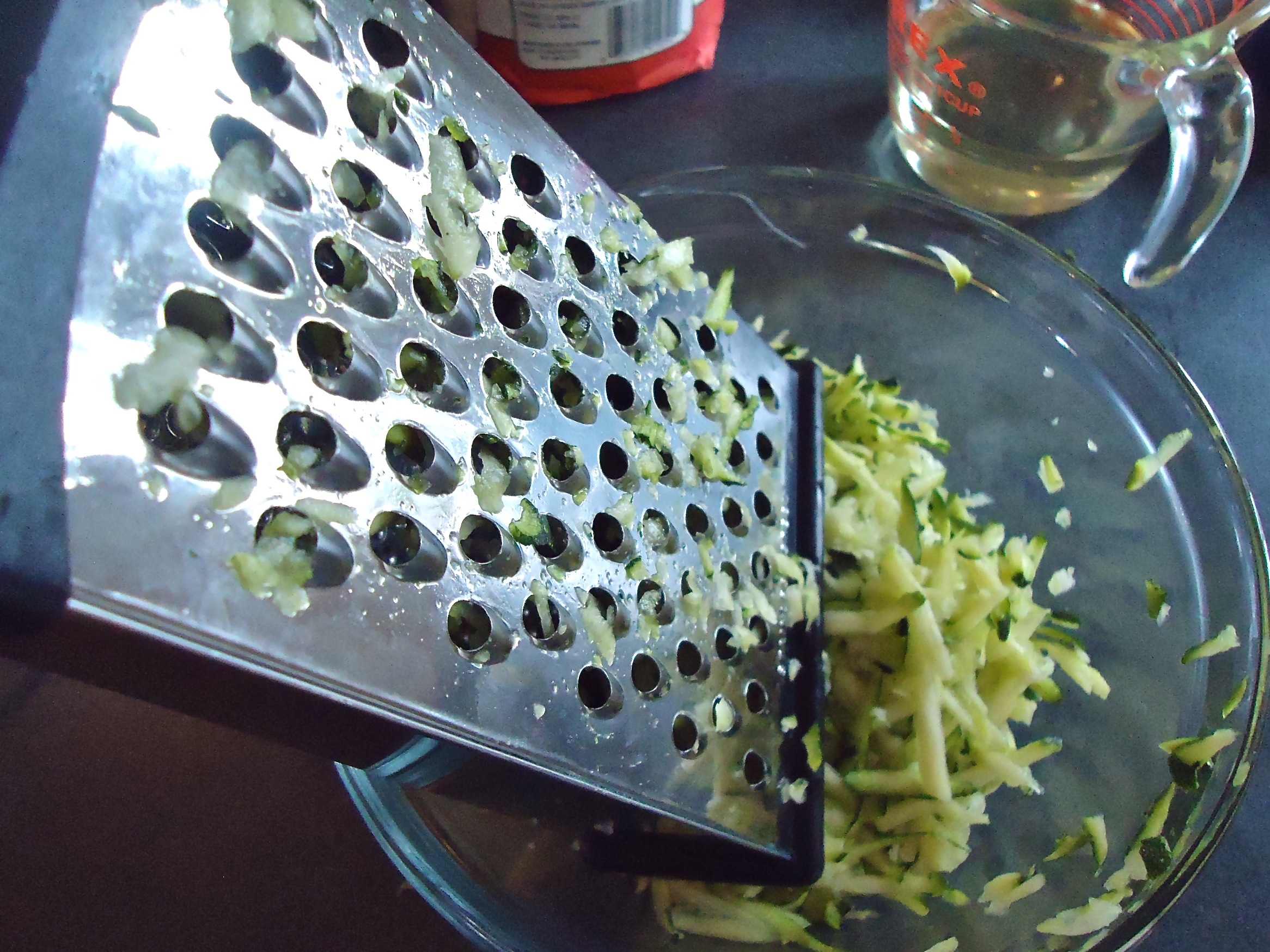
I grated the zucchini by hand but use a food processor if you like. By the way I only needed one of the zucchini squash. The larger one made 2 packed cups.

Mix the leavening ingredients, spices and salt into the sifted flour. When baking I always sift the flour once before measuring.

Beat the eggs well before adding in the sugar.

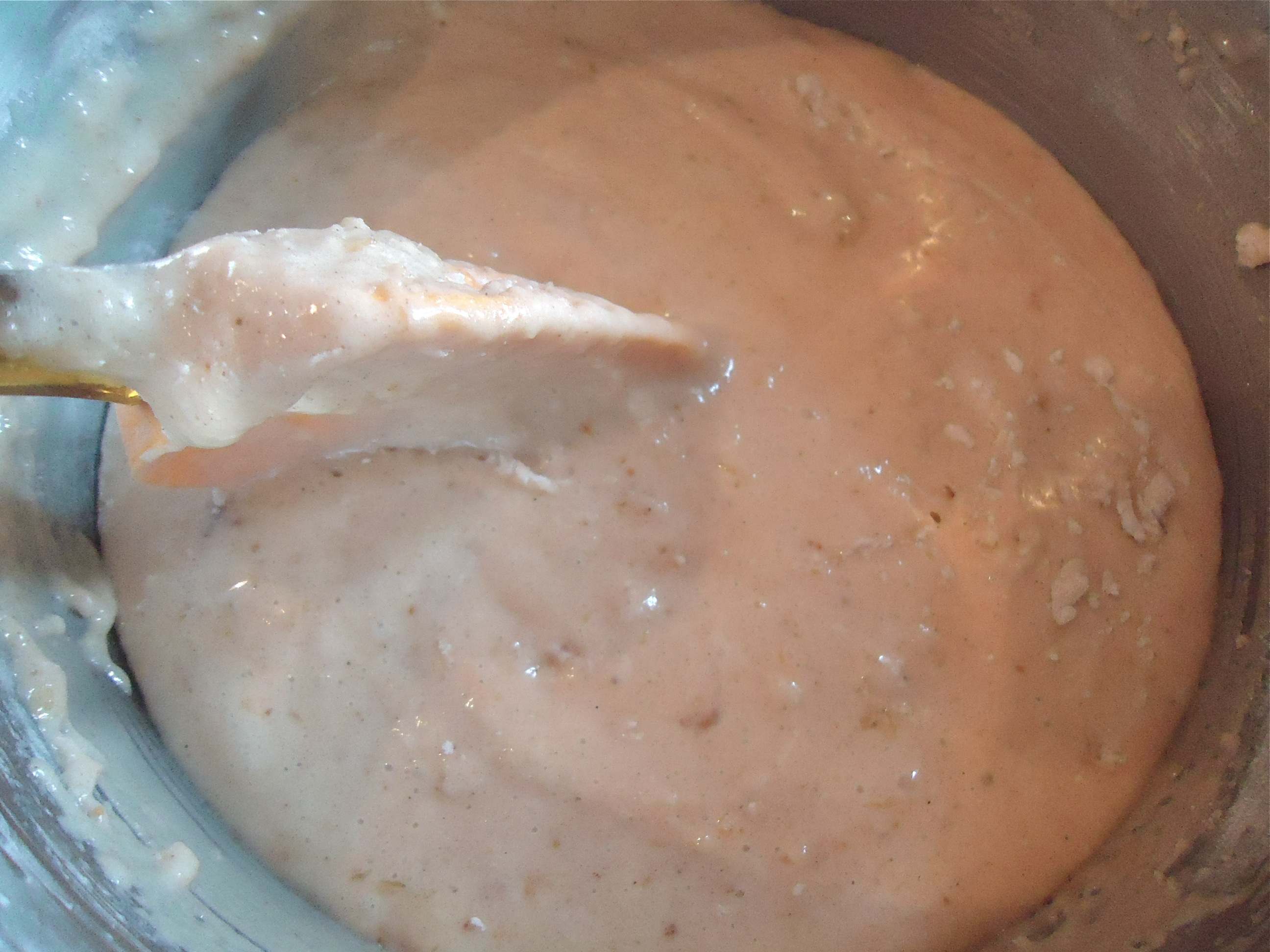
After adding in the oil, applesauce, vanilla extract, and preserves beat the mixture very well. The preserves should be broken down and distributed throughout the batter. Then use a spatula or spoon to mix in the dry ingredients by hand.

Don’t over mix the batter at this point. After stirring in the flour we’ll add the star of this show…

The shredded zucchini along with the hazelnuts. Stir until just combined.

Pour the batter into 2 loaf pans. You could make one giant loaf out of this…however, I make two so I can share. More fun that way!

Here they are out of the oven, cooling in the pan on a rack. After about 10 minutes, loosen from the sides of the pan and flip out onto a rack to finish cooling. Using oiled parchment on the bottom of the pan makes it a cinch to get the loaves out cleanly.

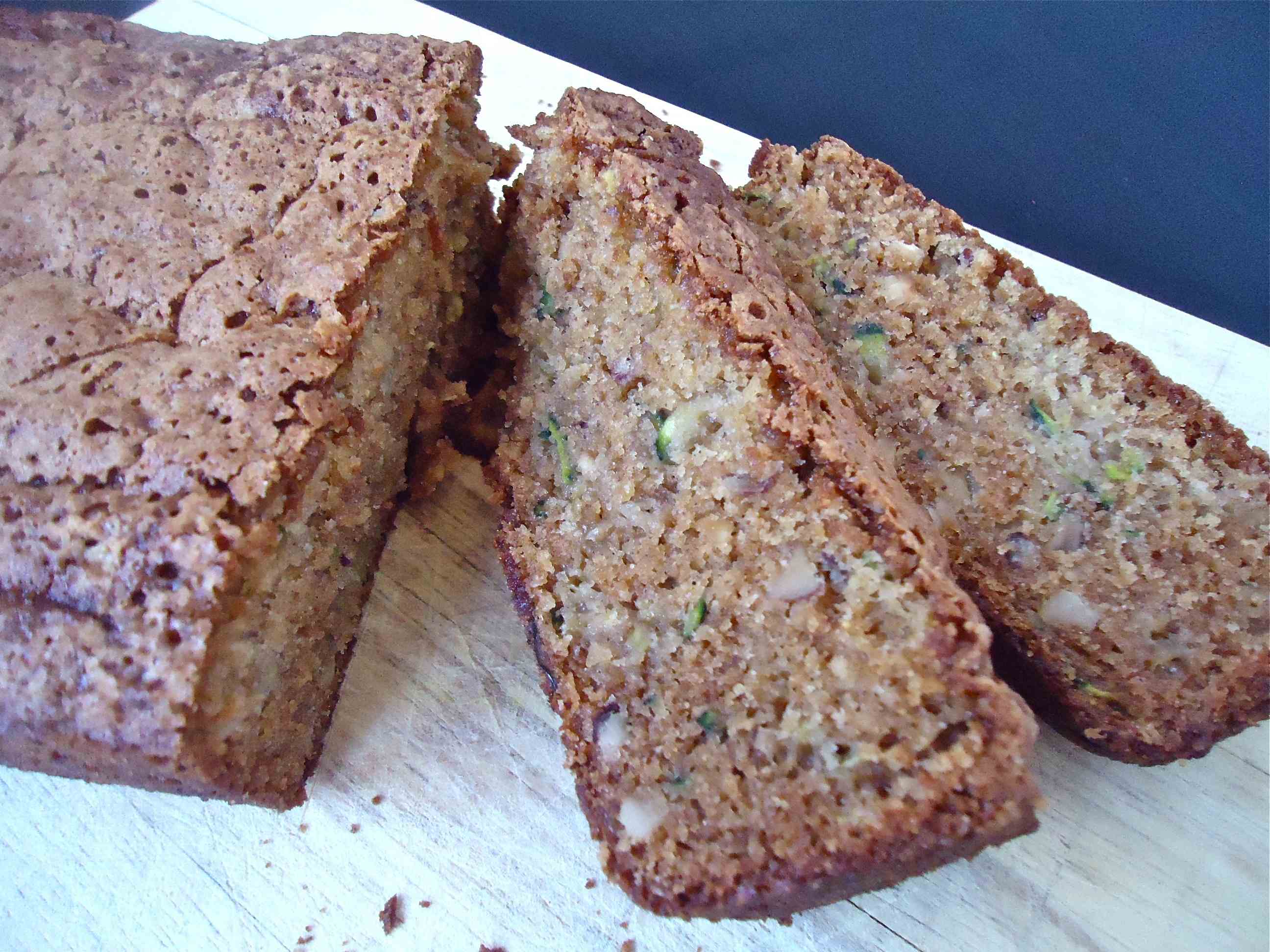
Here they are cooling right-side up. Sturdy but with a tender crumb. After they’ve cooled be sure to wrap them in plastic or foil – they will dry out if left unwrapped.

Zucchini bread with fig and hazelnuts

  • 3 eggs
  • 1 2/3 cups sugar
  • 2/3 cup vegetable oil
  • ½ cup applesauce, regular or cinnamon
  • 1/3 cup fig preserves
  • 1 tsp vanilla extract
  • 2 cups grated zucchini
  • 2 cups flour, sifted once then measured
  • 1 tsp cinnamon
  • ¼ tsp. ground mace
  • 1 tsp baking soda
  • 1/2 tsp baking powder
  • 1 tsp salt
  • 2/3 cup chopped hazelnuts

Preheat oven to 350°F. Oil 2 loaf pans and line bottom with oiled parchment. Set aside. Shred (or grate) the zucchini and set aside. Mix flour, spices, salt, baking powder and baking soda and set aside.

In the bowl beat 3 eggs with an electric mixer on medium speed about 1 minute. Add in sugar and beat 1 minute more. Stir in the vegetable oil, applesauce, fig preserves and vanilla. Beat again at medium speed until well mixed, especially the preserves, about 1 more minute. You do not want chunks of preserves.

With a spatula or wooden spoon stir the flour mixture into the egg/sugar mixture. Mix until just combined. Stir in the zucchini and hazelnuts and pour into the two prepared pans.

Bake for approximately 50 minutes or until bakes through*. Allow loaves to cool in pan for 10 minutes, run a knife along the sides to loosen bread, remove from pans and cool on a wire rack. (Remove parchment). Serve plain or with whipped cream cheese.

*If you are unsure, insert a skewer or toothpick into the center of the bread, if it comes out clean (no batter on it) the bread is done. If not, bake it a while longer.

No excuses not to love Sea Island Okra Gumbo.

Being a holiday here the good ‘ole USA, I’m taking the day with my family so a shortened post but a good recipe nonetheless. It’s a gumbo from my friend Sallie Ann Robinson, cookbook author and Daufuskie Island native. This recipe is from one of her cookbooks, Gullah Cooking the Daufuskie Way. I apologize in not having step-by-step images from the recipe – actually I took pictures but somehow, when “cleaning” my laptop all but two of my finished shots were deleted. Excuses, excuses…

Too bad too, as the ham hocks were gorgeous that I used, as were the veggies and the fresh shrimp. Pinky promise to make this again and capture the process on “film”. Also a promise to share more about the talented Sallie Ann and unique and mysterious Daufuskie Island, which is the Lowcountry locale depicted in Pat Conroy’s novel, The Water is Wide (also the movie Conrack). Sallie Ann was one of the students Mr. Conroy taught in little Mary Field’s one room schoolhouse on Daufuskie. And he wrote the forward in her first cookbook too. So perhaps I’ve piqued your interest…come back for more good stuff soon.

This recipe is incredibly fresh with authentic Lowcountry flavor – use the freshest shrimp you can get and it’s still okra season- so no excuse not to make this simple, and hearty gumbo. Happy Labor Day!

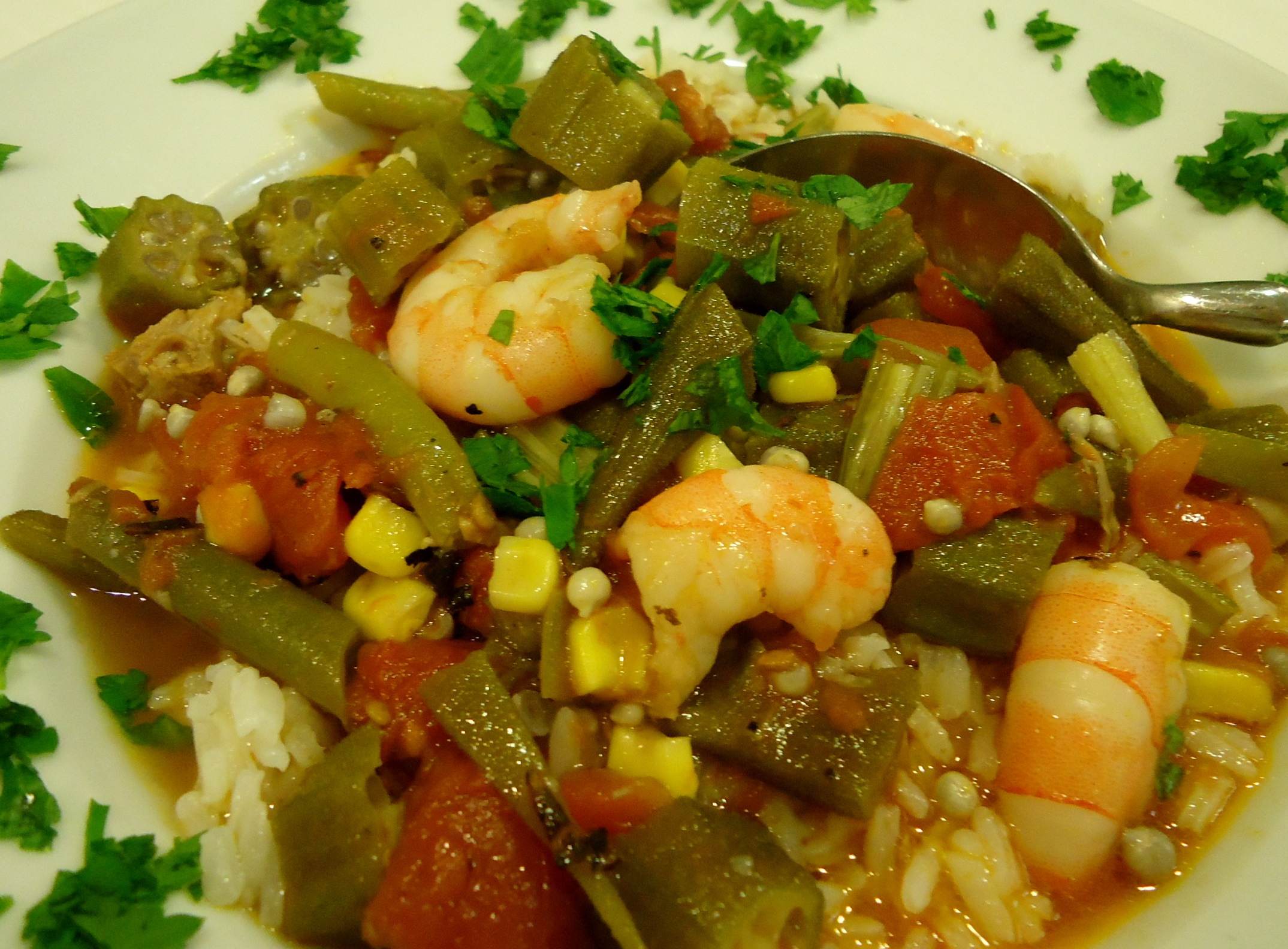
Here’s a close up – I ladled this gumbo over some rice – traditional Lowcountry style!

Sallie Ann Robinson’s Sea Island Okra Gumbo

2 pieces fresh ham hock
3 pieces fresh pig tail*
1-2 cans diced or stewed tomatoes
4-5 cups of water
3 cups okra, washed and cut up
1 cup of fresh shrimp, peeled and deveined
Corn, fresh green beans (optional)
Salt & pepper to taste
Hot sauce, to taste

Put pig tails and ham hocks in medium pot, half full with water. Boil 20 minutes, then drain. This will clean the meat. Rinse the meat again, twice. Return the meat to the pot, add the tomatoes (more or less, as you prefer) and 4 to 5 cups of water, and boil slowly until the meat tender and the tomatoes break down in the soup (30 to 60 minutes). If you wish, pre-fry the okra with a dash of oil to reduce the slime. Add the okra, pre-fried or not, along with the shrimp, to the tomatoes and meat. If you like add corn, green beans, or any other vegetable, canned or fresh. Serve as a soup, over rice, or with stiff grits.

* Note: I could not find fresh pig tails so I dissolved ½ tsp. gelatin in about 1/3 cup water and added it to the meat/tomato/water stew. It thickened perfectly although if I could have found fresh pig tails I would have used them!

“THE” twice baked potato for the ‘epicurean’ in all of us.

Back to the real world now after almost a week away and I am still thinking about all the wonderful restaurants I encountered while in Ohio. I have a newfound appreciation for the Cleveland area and it’s bounty of dining delights – any foodie should be very happy to visit that town, especially during the summer. I’ll get more in depth on the trip later, specifically the West Side Market. Coming from my town where one must exert a good bit of time to finding ingredients like fresh butchered meats, game and/or unusual spices it is a treat to literally shop under one roof for it all.

My recipe today may be one that you’re familiar with or if you’re over about age 40, enjoyed at a “fine dining’ restaurant many years ago. In my family it is known as “THE” twice-baked potato and is one of my go-to side dishes for steak or lamb chops. I created this specifically as a tribute to my favorite restaurant from childhood, The Elite Epicurean, located in Columbia, SC (my hometown).

The Elite Epicurean opened in 1932 and it’s location on the corner of Main and Laurel Streets meant that it was across from the Federal Courthouse and City Hall. When it closed in 1997 many a ‘politico’ and/or local mover and shaker-type had enjoyed it’s European/Mediterranean fare. My Dad’s office was downtown and he often lunched there, I guess, as a member of the ‘traffic club’ – a professional organization for those in transportation industries.

I remember dining at the Elite Epicurean on special occasions, like birthdays and my high school graduation. It was like a fancy diner with a long bar, wooden tables (white table clothes too) and big overstuffed booths along one wall. But here the food was the thing. They had what, in those days, would be considered a huge menu with lots of variety. Their lunch menu was sizeable, famous for sandwiches with curious names like “The City Hall,” with a tongue and cheek description reading something like, “conservatively roasted with a liberal dose of mayonnaise.” And “The IBM,” “logically stacked with onions and programmed to your specifications.”

The dinner menu had for that time “epicurean” level entrees like lamb chops, veal, shrimp cooked in a wine sauce as well as an actual “amuse buche” served along with your meal… fancy-smancy for Columbia, SC in the 1970’s and 80’s. Of course, I always ordered the most exotic thing I could find on the menu, like the lamb or grilled calamari, while everyone else opted for something more conventional. The one thing we would all agree on, however, was the masterpiece known as the Epicurean potato.

This twice-baked potato was the best…ever. It was crispy on the outside – because it was fried, yes, fried! But the inside was light, fluffy and rich. I do not know exactly what was mixed into those potatoes but it was nothing short of spud perfection.

Apparently the restaurant closed one day in ’97 without any prior notice but after being a business in decline for years. I’m sure oblivious patrons would have rallied to the cause if they had known; it was a sad day. In years since, I came up with my own recipe, and although it is not fried, it packs on the calorie count with the butter, cheese and light cream. It’s a make-ahead side dish – add some chopped ham, sauteed minced veggies or fresh-made sausage and it could be a meal in itself too.

To me it’s claim to fame is reminding me of fun times with my family, particularly my father, and interestingly enough it was the side dish served to my now-husband at the first meal I ever prepared for him. I always thought (he says) it was the accompanying rack of lamb that propelled him to fall for me but now that I think about it, maybe it was “THE” twice-baked potato all along…

Clean potatoes are wrapped in foil – just like a regular baked potato.

After baking, allow the potatoes to cool a little so you can handle them. Slice the potatoes in half so that the two pieces will be able lay flat in the baking dish. Russet potatoes work best. Carefully scoop out the cooked potato.

The cooked potato goes into a bowl or container. Mash with a large spoon or potato masher.

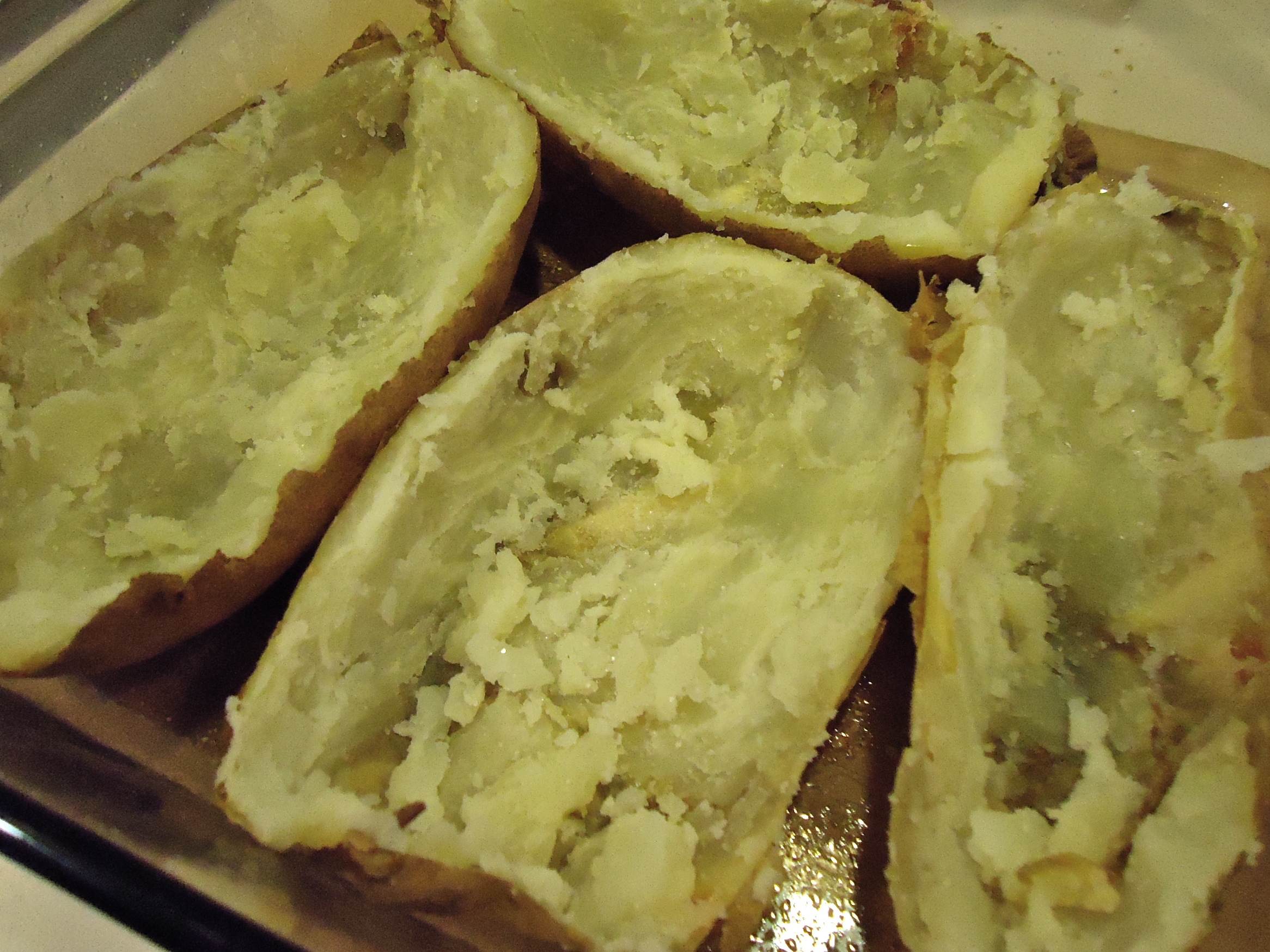
Here are the potato jackets, sprinkled with a touch of salt and pepper and ready to be filled.

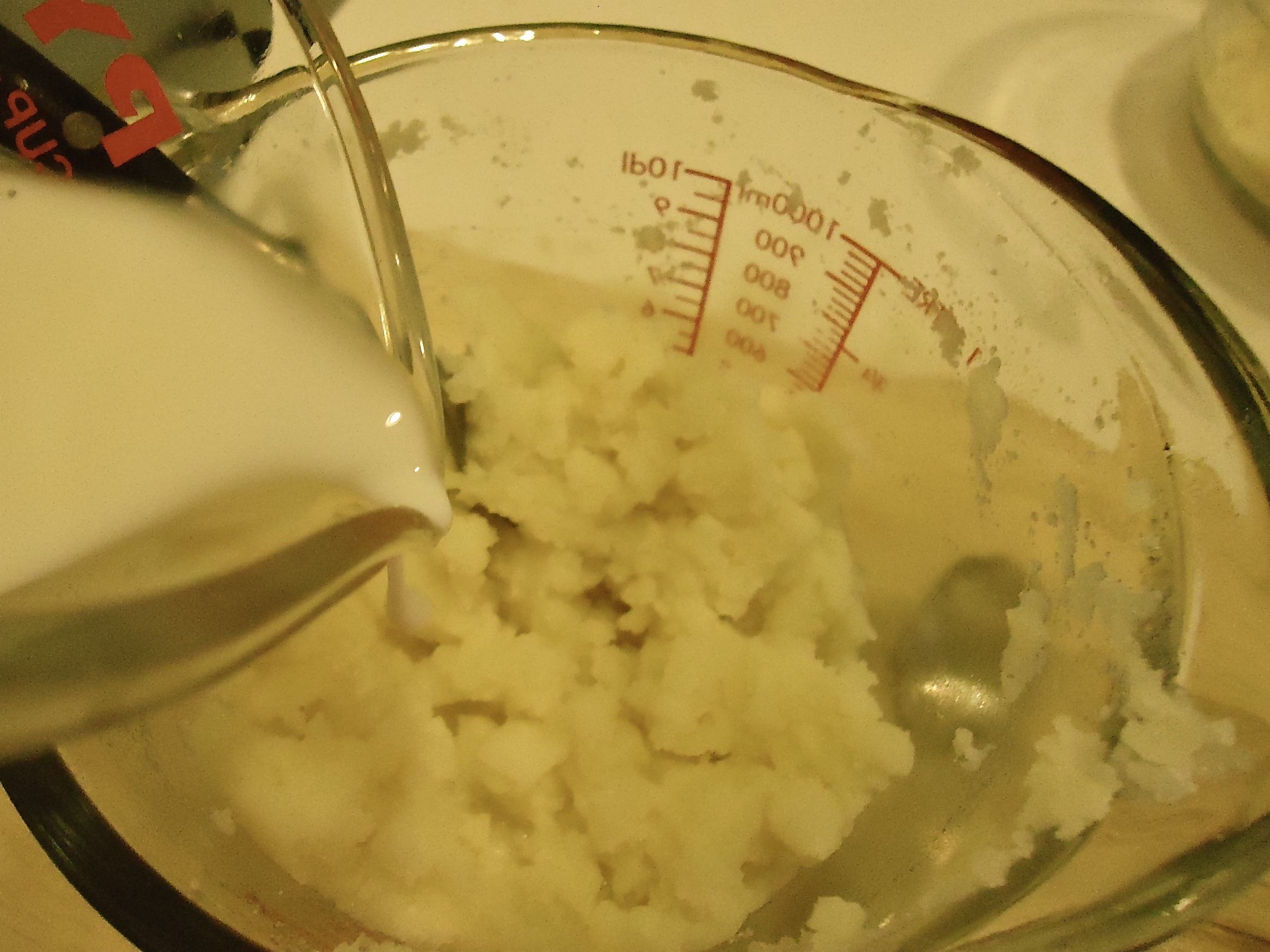
After adding in softened butter pour in the half and half. Mix in the sour cream and salt and pepper.

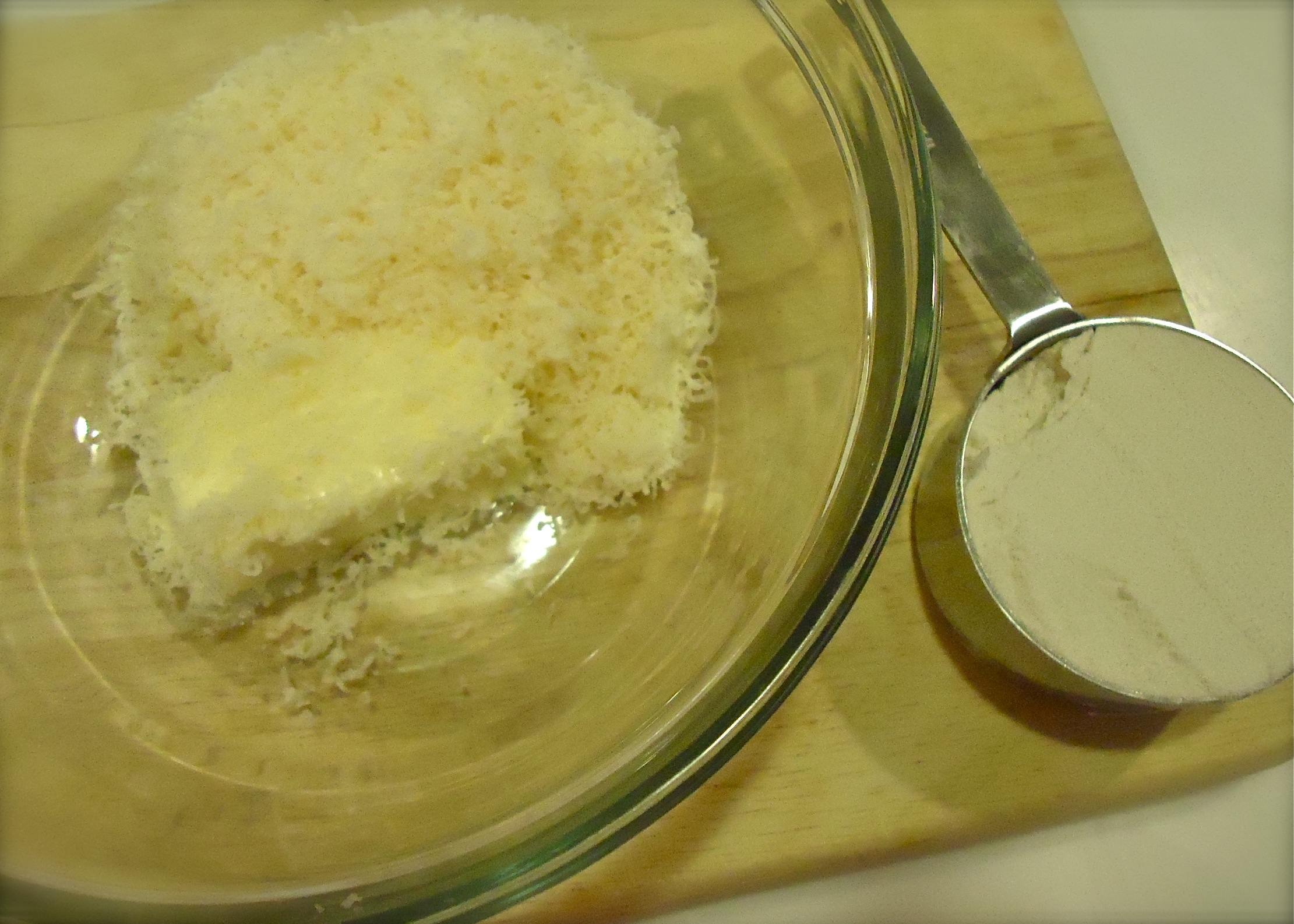
Three ingredients for the topping: butter, cheese and flour.

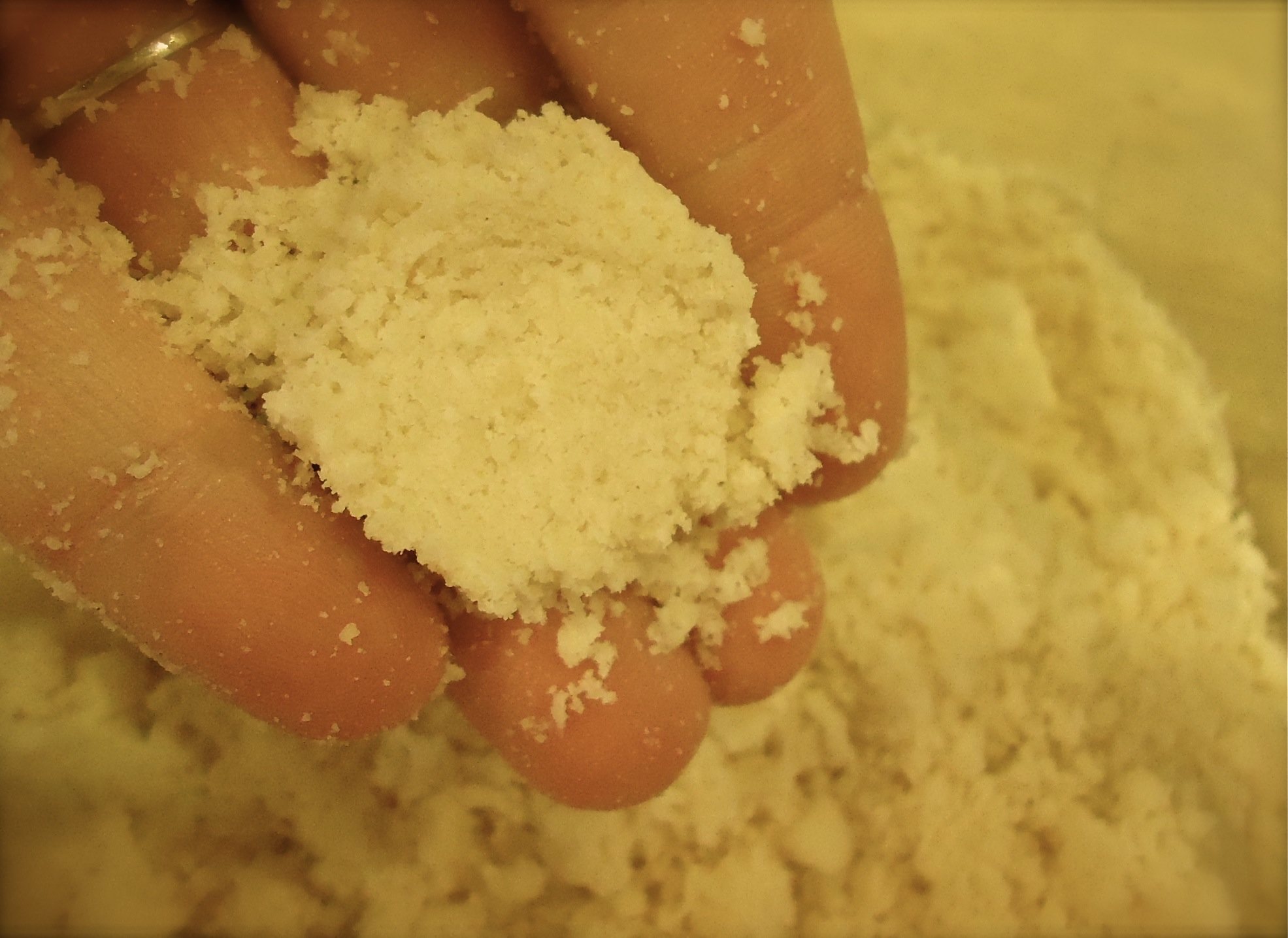
The topping is crumbly but moist.

Fill the jackets with the potato mixture and then…

Carefully spoon on the topping. Bake in a preheated 400 degree oven – or hold in the refrigerator until 20-25 minutes before serving time, then bake.

“The” Twice Baked Potatoes

  • 2 large Russet baking potatoes
  • 6 tbl softened butter (salted)
  • ½ cup finely shredded Parmesan or Romano cheese
  • 1/3 cup all-purpose flour
  • ¼ cup half and half
  • ¼ cup sour cream
  • ½ tsp. salt
  • ½ tsp. pepper
  • Extra salt and pepper for the jackets

Preheat oven to 500 degrees. Wash (scrub if necessary) and dry the potatoes. Wrap each potato in foil and place in the oven. Bake for 1 hour or until cooked through. Remove from oven and allow to cool slightly. Reduce oven temp to 400 degrees.

In a medium bowl mix 4 tablespoons butter, cheese and flour. Stir to combine to make a crumbly mixture. Set aside.

Slice potatoes in half so that each half will sit on its flat side. Carefully scoop out each potato and place the cooked potato “insides” into a medium bowl. Mash the insides with a potato masher or a mixer or a large, flat spoon. Add the remaining 2 tablespoons butter, the half and half and the sour cream to make the filling. Season with the ½ tsp salt and ½ tsp pepper.

Place the potato skin ‘jackets’ in a buttered baking dish. Sprinkle the inside of each jacket with a little salt and pepper. Spoon the filling into the jackets. Top each potato half with the cheese/butter crumble mixture*. At this point you can cover potatoes and hold up to a day in the refrigerator if you like.

Place potatoes back in the preheated oven and bake 20-25 minutes until filling is hot and the tops are browned. Serve immediately. Makes 4 servings and can be easily doubled.

Peach chutney (with a cherry on top).

This week’s second post is somewhat abbreviated as I am officially ‘vacationing’ in the Buckeye state. Having arrived after an uneventful 12-hour car ride and suitably plied with good red wine and fed a lovely meal outside on the patio by the in-laws (thanks Mike & Kay!), my good intentions of loading this post last evening were shot. So forgive my tardiness but please rush out and buy some fresh peaches to make this awesome chutney. Down South, this year’s peach harvest is on the decline but apparently up here along the Great Lakes, peach season has just begun. I am pleasantly surprised by this tidbit of information, because I didn’t know peaches grew this far north. Our South Carolina peach crop was especially ‘peachy’  good this year and I was inspired to make this chutney so we can enjoy their flavor, albeit punched up a bit, all year long.

This recipe is straightforward and although I added cherries, you could make it with only peaches as the main fruit (just substitute extra peaches for the cherries). I use golden raisins and lots of whole cloves. Use the best spices you can – nothing old – fresh spices makes a big difference in the taste. If you’ve never tried making it, give it a go. It’s a forgiving recipe and you’ll surely find lots of delicious uses for this condiment.

Chutney is delicious on roasted and grilled pork and chicken, served with cream cheese and crackers as a snack or appetizer (handy to have when company rolls in) and a myriad of other fun foodie amusements. I’ll be posting some of these in the coming weeks. And homemade preserves always make a welcome housewarming or hostess gift.

Ingredients for this chutney include fresh peaches, cherries and golden raisins.

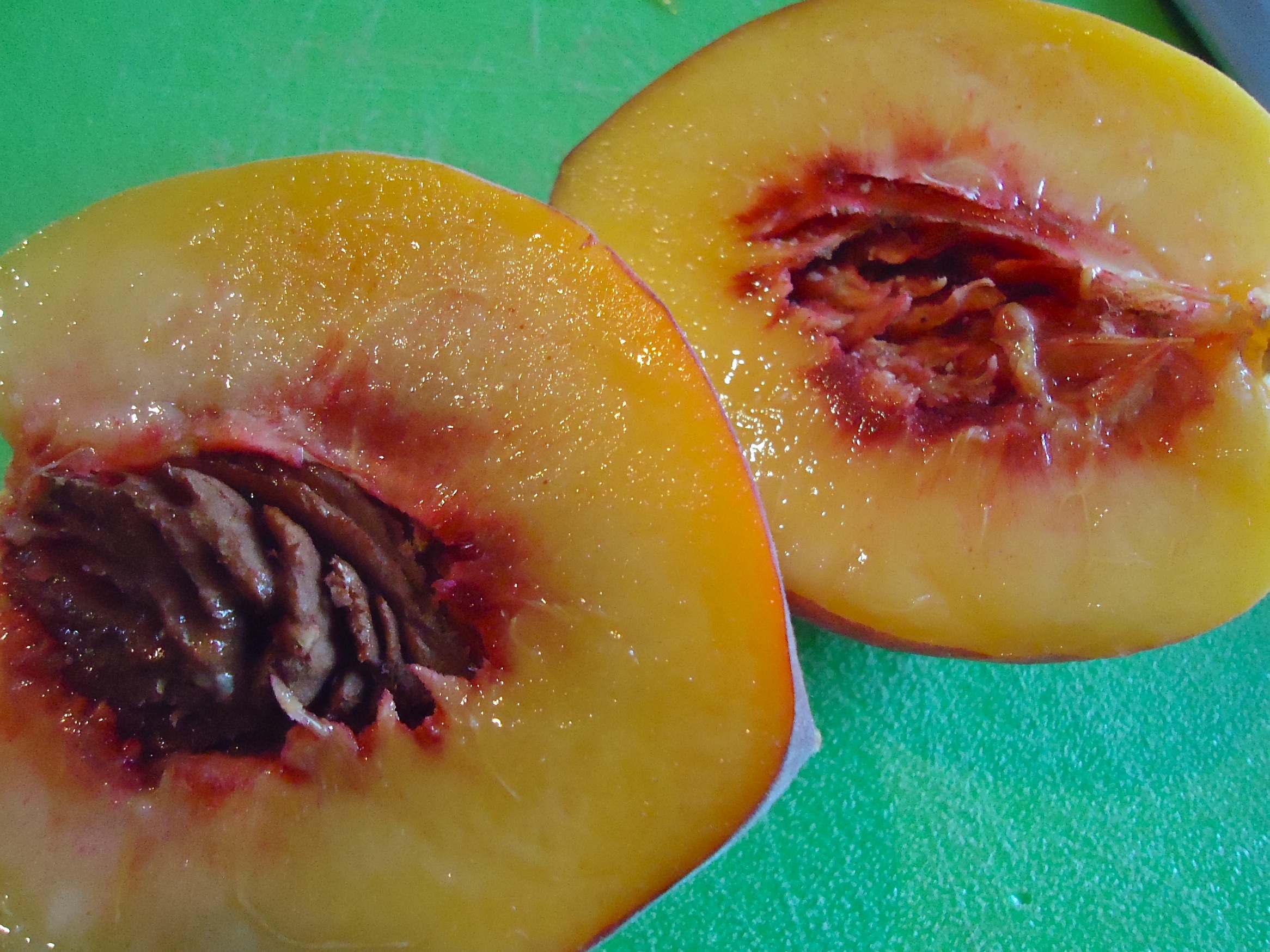
No need to peel the peaches but you must remove the pitt from the cherries.

Mix the sugar and the vinegar to make a syrup. Then all you do is…

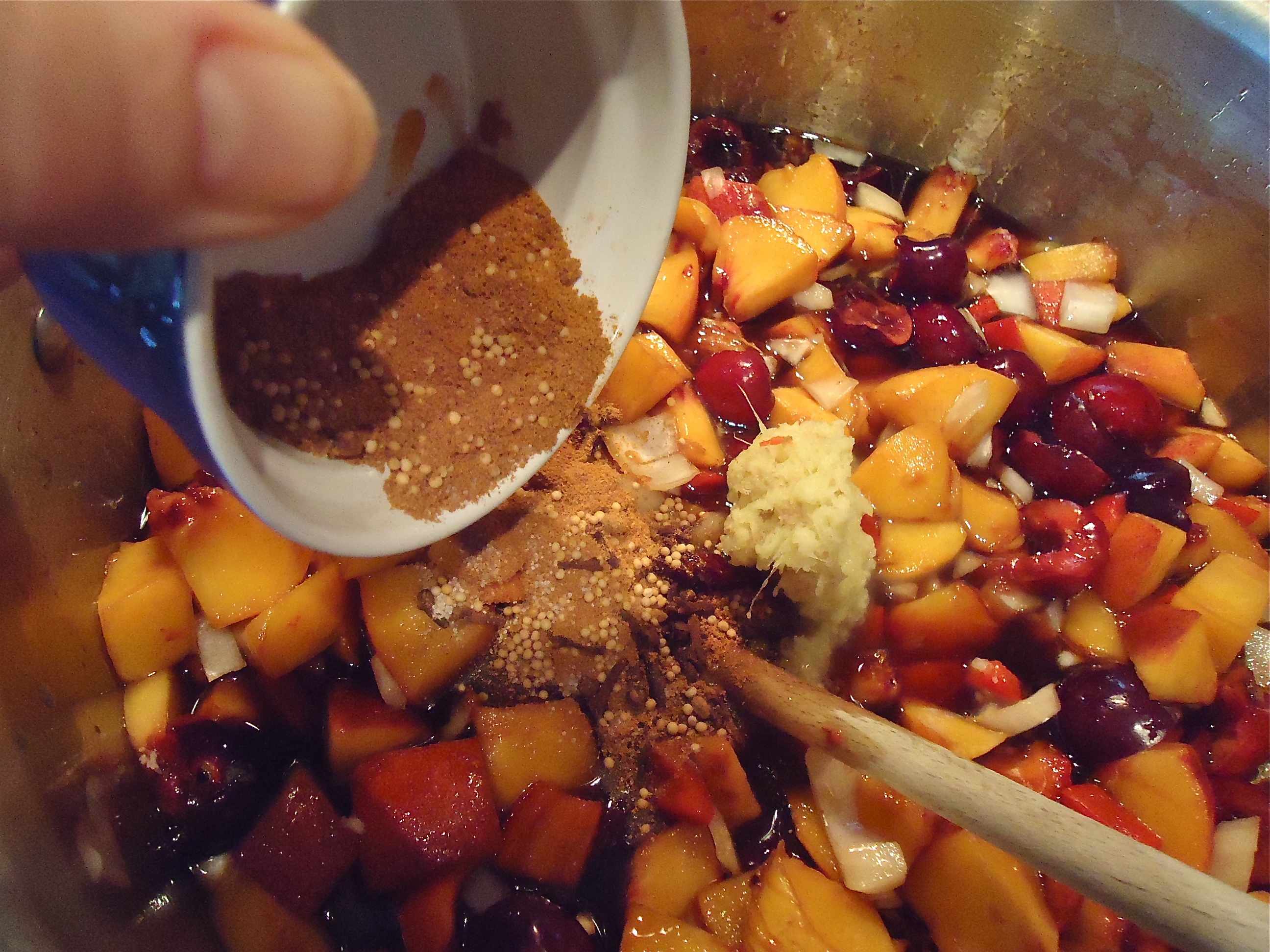
add in the onions, fruit and spices. Smells so good!

The heat in this chutney comes from hot cherry pepper which I slice and cook with the chutney for awhile.

Once the chutney has the level of ‘heat’ I want ( which isn’t much) I remove the pepper. Since I give some of these as gifts and we have a 4-year-old I don’t make spicy hot chutney. It has a bite but not a “my mouth is on fire” burn.

The chutney is just about ready. The fruit should be soft but not cooked beyond recognition.

Fill the hot, prepared jars. Wipe the rims clean and seal with hot, sterilized lids and rings.

Peach Chutney – with a cherry on top!

Ingredients

  •             10 cups peaches, washed and diced – no need to peel
  •             2 cups fresh cherries, washed, stems remove, pitted and cut in half
  •             2 ½ cups packed light or dark brown sugar or a combination
  •             2 cups chopped onions
  •             2 cups raisins
  •             2 ½ cups white or cider vinegar
  •             1 fresh red sweet pepper, washed and diced
  •             1 hot pepper, washed, cut in half and seeds removed
  •             1 heaping tbl. fresh ginger, peeled and grated
  •             1 tsp salt
  •             1 pinch cayenne pepper
  •             1 tsp. tumeric
  •             2 tsp. mustard seeds
  •             ½ tsp. cinnamon
  •             1/4 tsp ground cumin
  •             1 tsp. ground coriander
  •             1-2 tsp. whole cloves*

Preparation

Mix spices (last 7 items listed above) plus the salt in a small bowl, set aside. In large heavy nonaluminum pot, combine sugar and vinegar over medium heat. Stir and bring up to a boil. Add peaches, cherries, onions, raisins, red pepper, ginger and spices; bring to boil. Reduce heat to medium and simmer, stirring often, for 45 minutes or until thickened. Add in the hot pepper and stir. Cook another 5 minutes stirring every minute or so.

Remove from the heat. Discard the hot pepper. Pour into hot canning jars, leaving 1/2-inch headspace. Wipe rims with a clean cloth and seal with prepared lids and bands. If any of your jars do not seal within 15 minutes of being canned, process in a hot water bath for 10 minutes. When a seal is made you will hear a ‘pop’ and if you push down lightly on the top of the lid with your finger it will not bounce back. If it does, it is NOT sealed. Makes 12 half pints.

* I love cloves so I use 2 teaspoons but if you are not so inclined use less.

I went back to Ohio… but my pineapple ginger marinade was gone.

This week I am going on “vacation”. Well, it is more of just a trip but ‘vacation’ sounds way more impressive, don’t you think? We are traveling (by car) north to what several of my friends – and a large percentage of the population living on Hilton Head Island call the “motherland”… Ohio.

I lived on Hilton Head Island for a long time and it is a beautiful, wonderful place indeed with many (can you believe over 200!) very good and interesting restaurants. While the Island still retains some of it’s southern roots, it is a real melting pot of people – one of the best aspects of living there I think. On the one hand it can be enlightening to be around people from all over, but on the other hand, it can be difficult to ‘get ’r done’, i.e. squabbling, lack of compromise, so many transplants wanting everything to be just like it was in “insert town name here, Ohio”.

It’s curious to live in a place where so many people move to mostly because they loved it so much on vacation. I used to joke that it’s as if the Island magically set adrift from the Buckeye state and then took hold of the South Carolina coast or perhaps Charles Fraser (he developed Hilton Head for the most part) threw out a line as it was passing by and then anchored it good and taut in Calibogue Sound.

But I do like Ohio folks – in my opinion they should just slow down a bit, allow the southern way of life to percolate awhile and enjoy Lowcountry living. And I do like visiting my father-in-law Mike and his wife, Kay up in O-h-i-o. Their latest weather report of 70’s during the day and high 50’s (50’s!) at night is right on time for this southern girl. I’m also looking forward to trying some local Walleye and an exploratory trip to the West Side Market as well.

So as I am preparing for said vacation – finishing real (i.e. paying) work and packing a sweater (yes a sweater in August), I came across this marinade that uses fresh pineapple and ginger and realized I had not posted it yet. I love fresh pineapple but unless we have company or a party, I end up with that last cup or so uneaten. I hate to waste delicious fresh pineapple, so I made this marinade, and slathered it on some thick bone-in pork chops that then seared off in my hand-dandy grill pan. Easy peasy for the day before vacation, ya’ll.

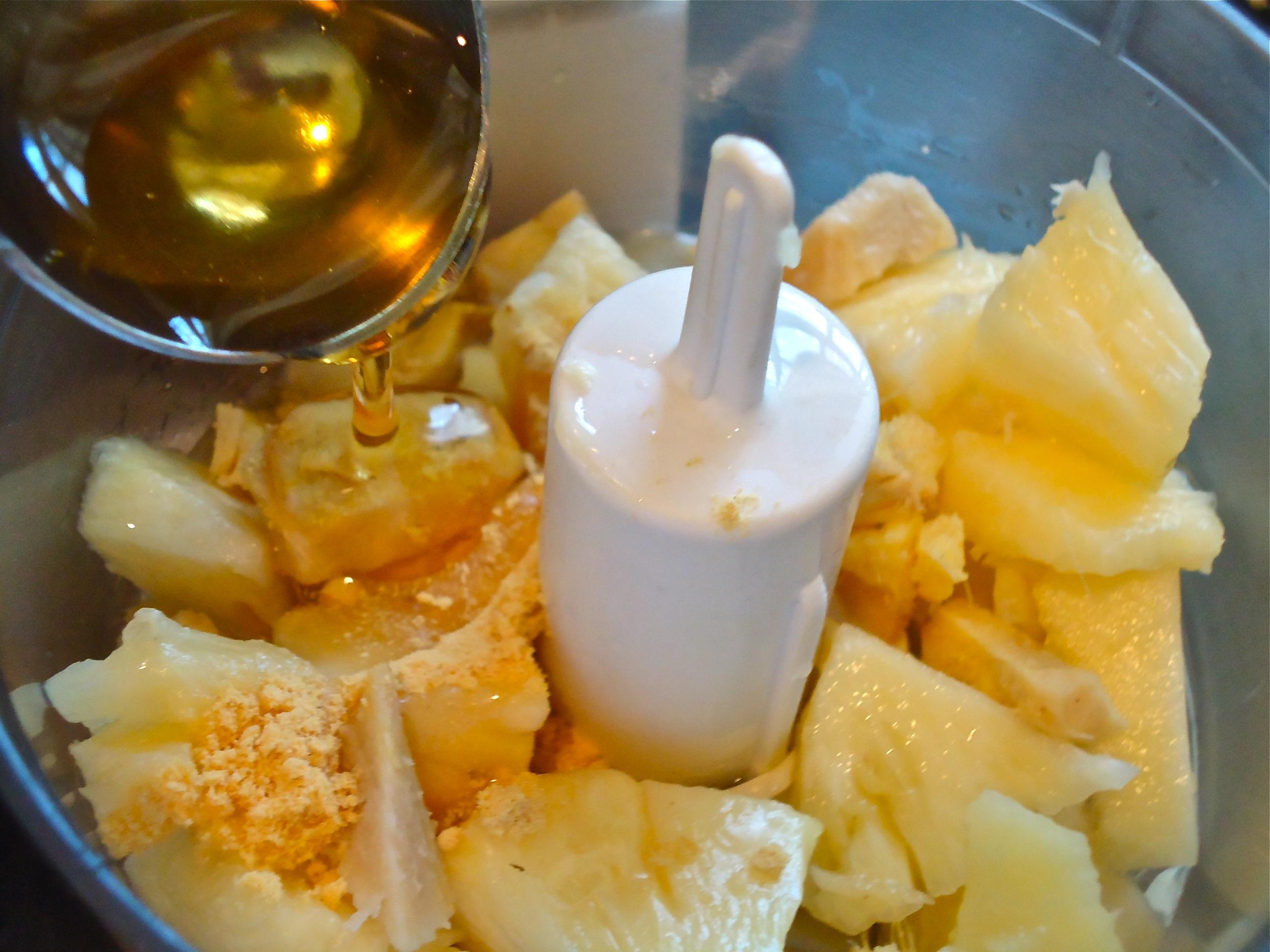
The few ingredients are combined in the food processor and ground up to a chunky puree.

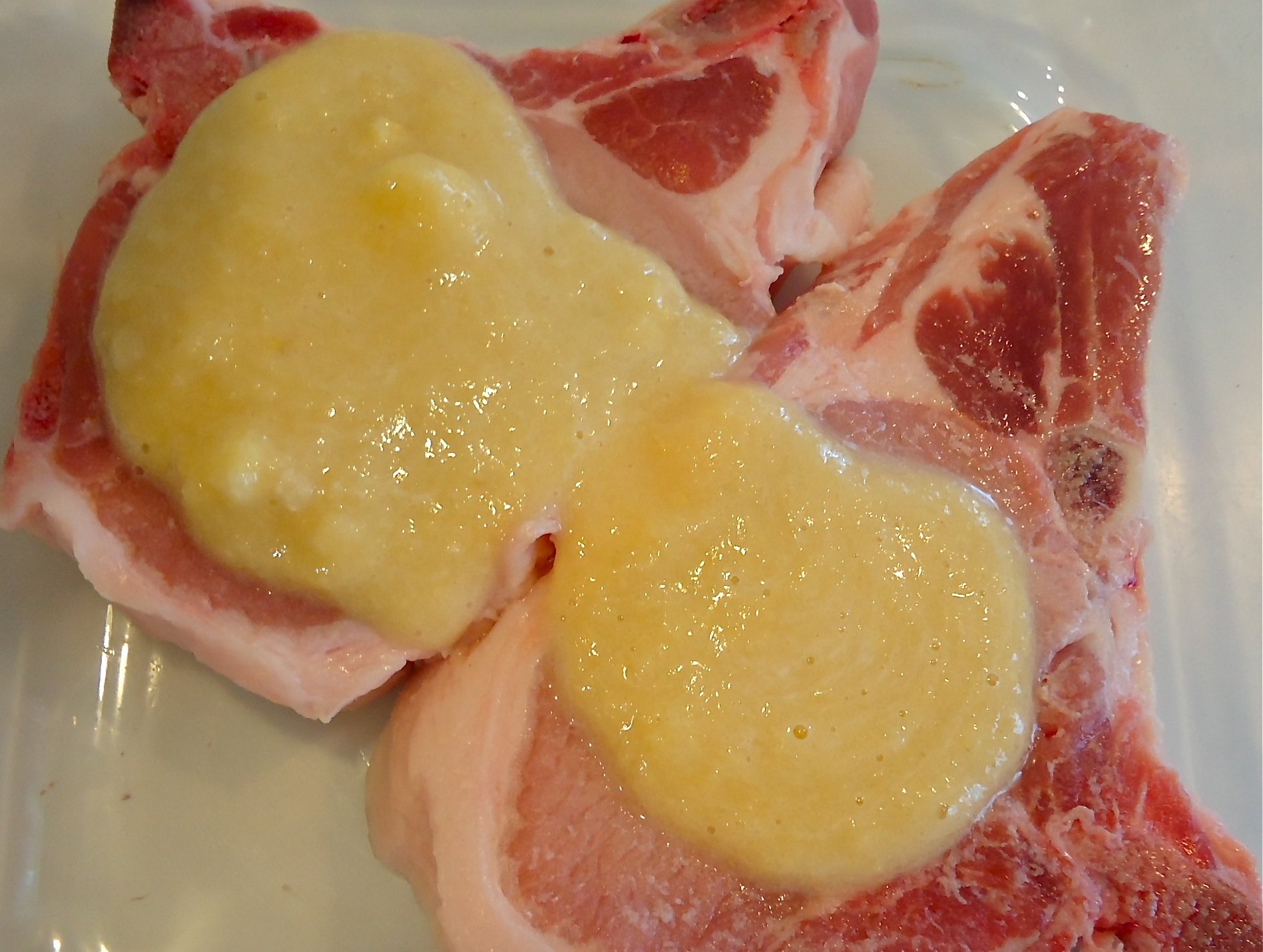
Slather the chops in the marinade, cover and allow to marinate several hours.

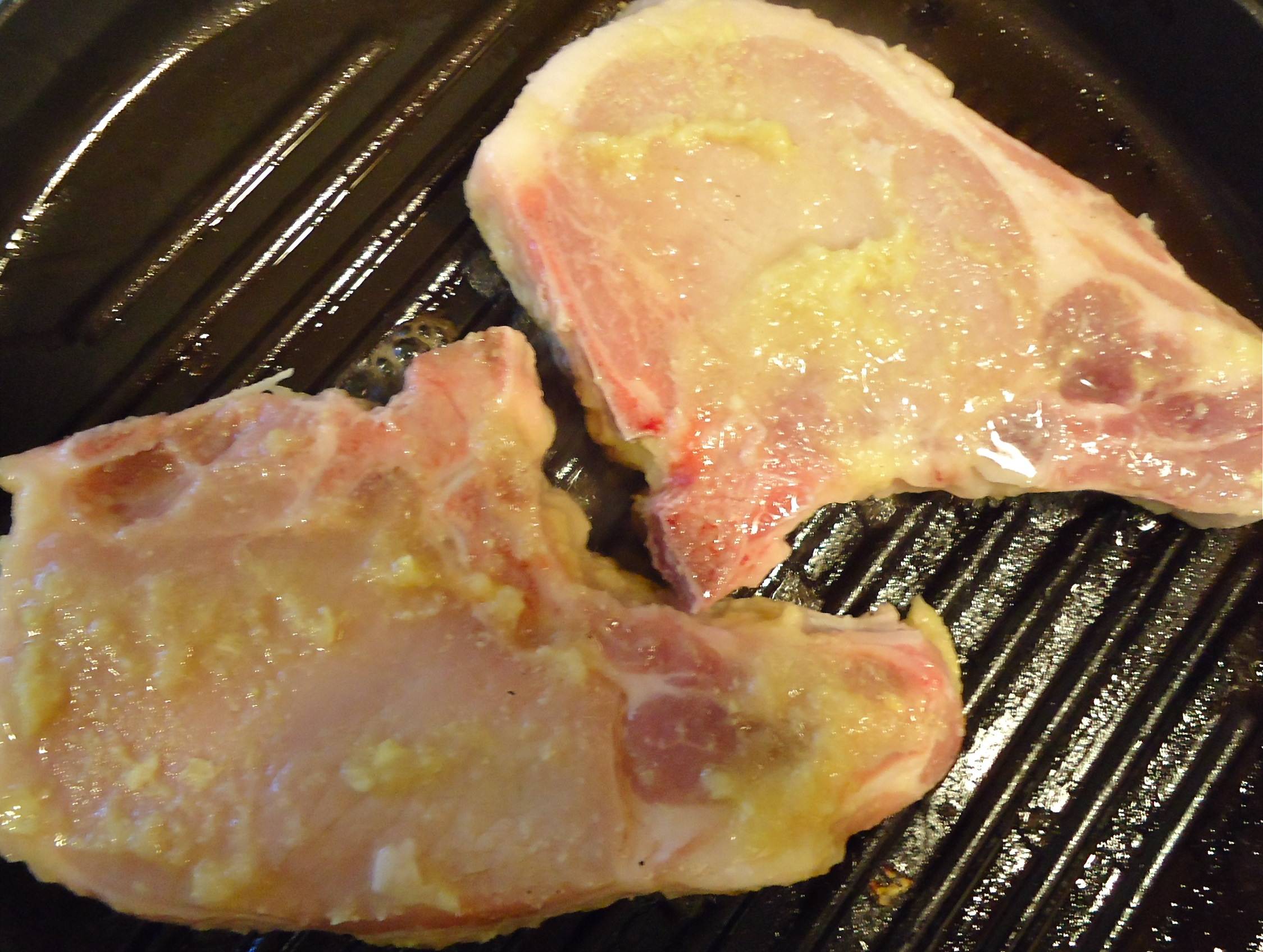
About 30 minutes before serving sear the chops. Here I used my grill pan because it was a rainy evening, but you could use your outdoor grill.

Turning the chops over you can see I got some good grill marks with my pan.

Baste the chops with the reserved marinade. Sorry this pic is blurry!

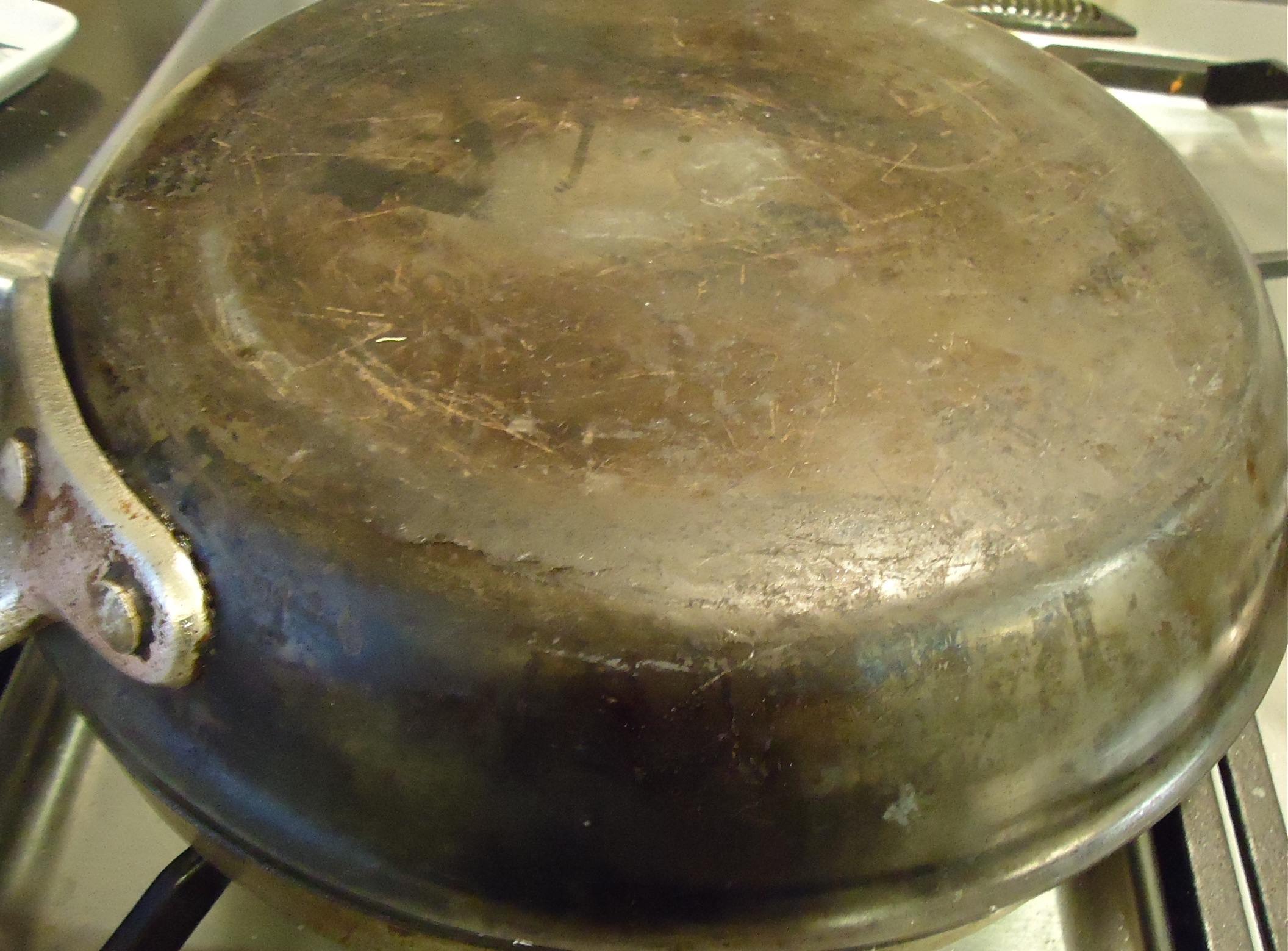
Once the chops are seared on both sides cover the grill pan (or remove to a covered roaster) and allow to cook until you reach your desired doneness. I like my pork slightly pink in the center. And keep in mind that meats continue to cook even after you remove fro direct heat.

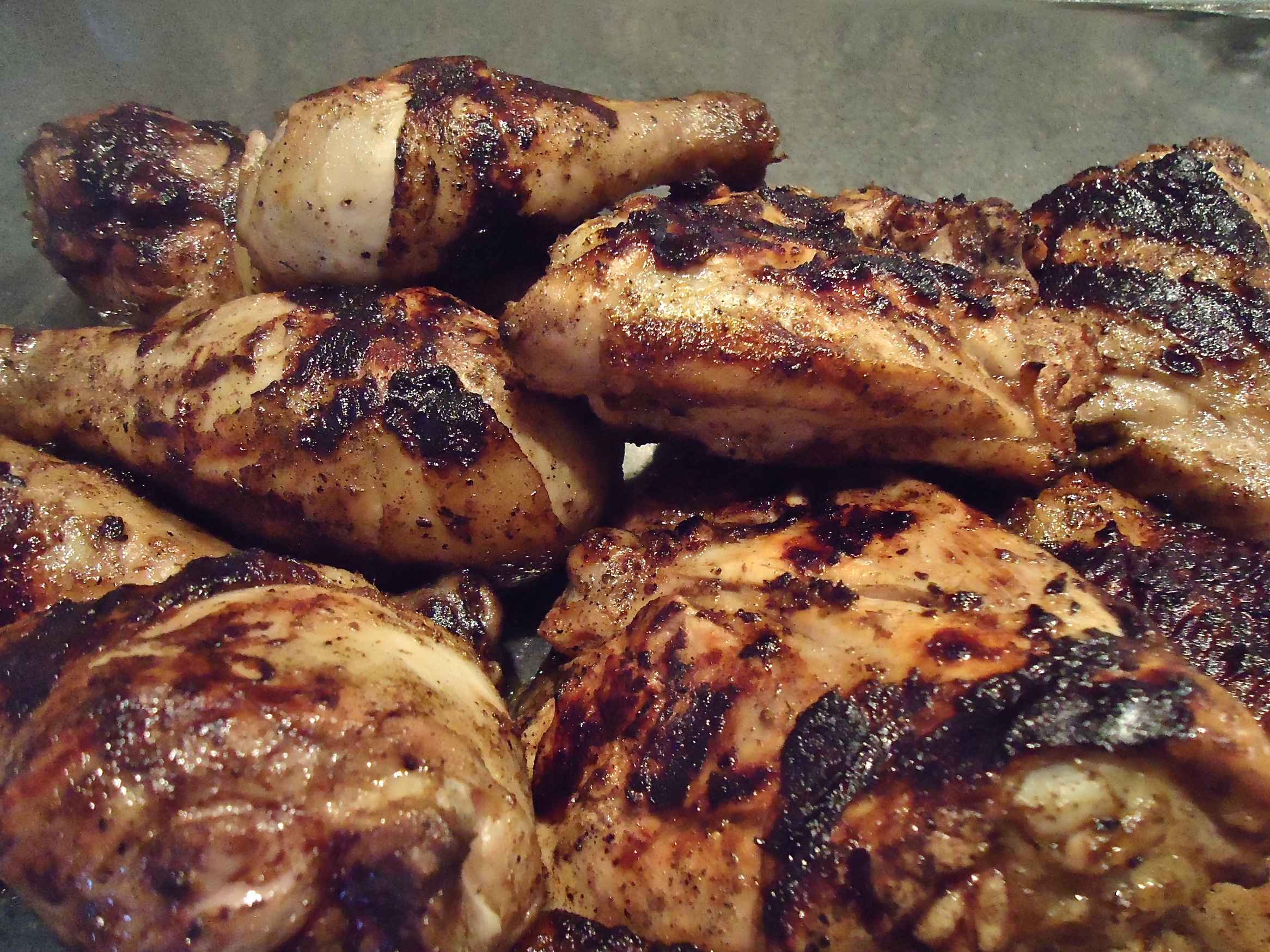
Finished chop – still juicy and delicious. Fresh fruit salsa, scalloped potatoes or coconut jasmine rice would go great with this entree!

Pineapple Ginger Marinade for Pork Chops

  • 2 thick bone-in pork chops
  • 1 cup fresh pineapple chunks (and juice)
  • 2 tbl fresh ginger, grated
  • 2 tbl agave nectar
  • 1 tsp dry mustard
  • salt and pepper

In a food processor or blender mix all above ingredients except the salt and pepper. It will be thick and mostly smooth – some small chunks are okay. Reserve ¼ cup of this mixture for basting. Slather the balance of the marinade on the chops, cover and allow to chill in the refrigerator 4 hours, turning at least once.

Prepare your grill. If using a grill pan, brush on grape oil, or other oil with a high burn temperature threshold. When the grill pan or grill is hot (but not smoking) sprinkle the chops with salt and pepper to your taste and sear on each side. Baste with reserved marinade. Cover grill pan and cook to your desired doneness. If using a grill you may remove the chops to a roasting pan and roast in a preheated 350 degree oven. You can double this recipe.

This marinade is also very good on chicken – 2 large bone-in breasts or 2 thighs and 2 drumsticks or a combination of pieces.

Happiness is – a platter of homemade fried chicken!

Oh boy I hope this post will not come across as cliché. This has been my thought as I pondered posting my recipe for fried chicken. Yes, at the center of southbyse.com is the food and culture of the American south but do I really want to go there, straight to one of the most stereotypical southern foods of all time?

I don’t think of fried chicken in that way, but most of the world (if they ever come across it) probably does. No one would dare accuse me of being a food snob, however when it comes to a few of my most beloved favorites then I will gladly admit to being biased. This goes for seafood (especially shrimp), tomatoes, peaches and fried chicken.

I like my shrimp wild and local. I like my tomatoes ripened on the vine and local. I like my peaches to smell like peaches (not a vacuum bag) and if they sport a sticker it better be stamped ‘South Carolina’. And I like my fried chicken crisp, with the skin left on and local – preferably from my kitchen… or my Mama’s or someone else’s mama’s kitchen.

Yes, I have eaten fried chicken from the Colonel and even from neighborhood grocery stores over the years, but there has never been any purchased fried chicken to match the chicken that was fried in my (or my mom’s) own cast iron skillet. In childhood, we ate fried chicken about twice a month, maybe a little more during the winter and a little less in the summer. It was on the Sunday dinner (lunch) rotation along with pot roast, roast chicken, and ham. Sometimes we would have it during the week as well, with sides of fresh vegetables, rice or homemade potato salad.

Thinking about delicious homemade fried chicken makes my mouth water, much like the smell of smoking barbeque pork, and it conjures up warm feelings and memories that I associate with that food. Dreaming about biting into that first taste of crispy, juicy chicken transports me back to my Mom’s small kitchen in Columbia, SC, with my Dad watching a baseball game in the den and my mother hollering for my brother to “come in and get washed up, ‘cause dinner was fixin’ to be ready!” It makes me feel good inside…plus it’s just plain delicious.

Truthfully frying chicken can be somewhat messy – sticky chicken pieces, flour covered work surface and cleaning up that grease. If you’re doing it right, then hot oil will splatter across the range top. That fried oil odor may hang on for a while too. However, if you have a good ventilation fan it’s not much of a problem. Be sure to eject all small chicken and pets from the frying area– it can be hazardous for small ones. Used flour bags work great for tossing the chicken pieces and seasoned flour; it keeps any flour dispersion to a minimum too.

Unless I have some kind of insatiable craving for fried chicken, I’ll make it when there’s a crowd to feed – like a potluck picnic or wait for it…tailgating. Today’s tailgater may be expecting something grilled or perhaps smoked, but my traditional football tailgating spread must include fried chicken. Even if you’re traveling for the game, just pack the fresh, hot fried chicken tightly in an insulated container and you’re good. Heck better to serve cold homemade fried chicken than none at all – that would be sad, and probably bad luck. Make people happy… cook up some fried chicken!

I skipped showing the ingredients and mixing up the marinade but it’s a simple task. I highly recommend using homemade ranch dressing, i.e. I use Hidden Valley Ranch mix and fresh low fat buttermilk. Turn the chicken over a couple of times throughout the marinating time so each piece is soaked well.

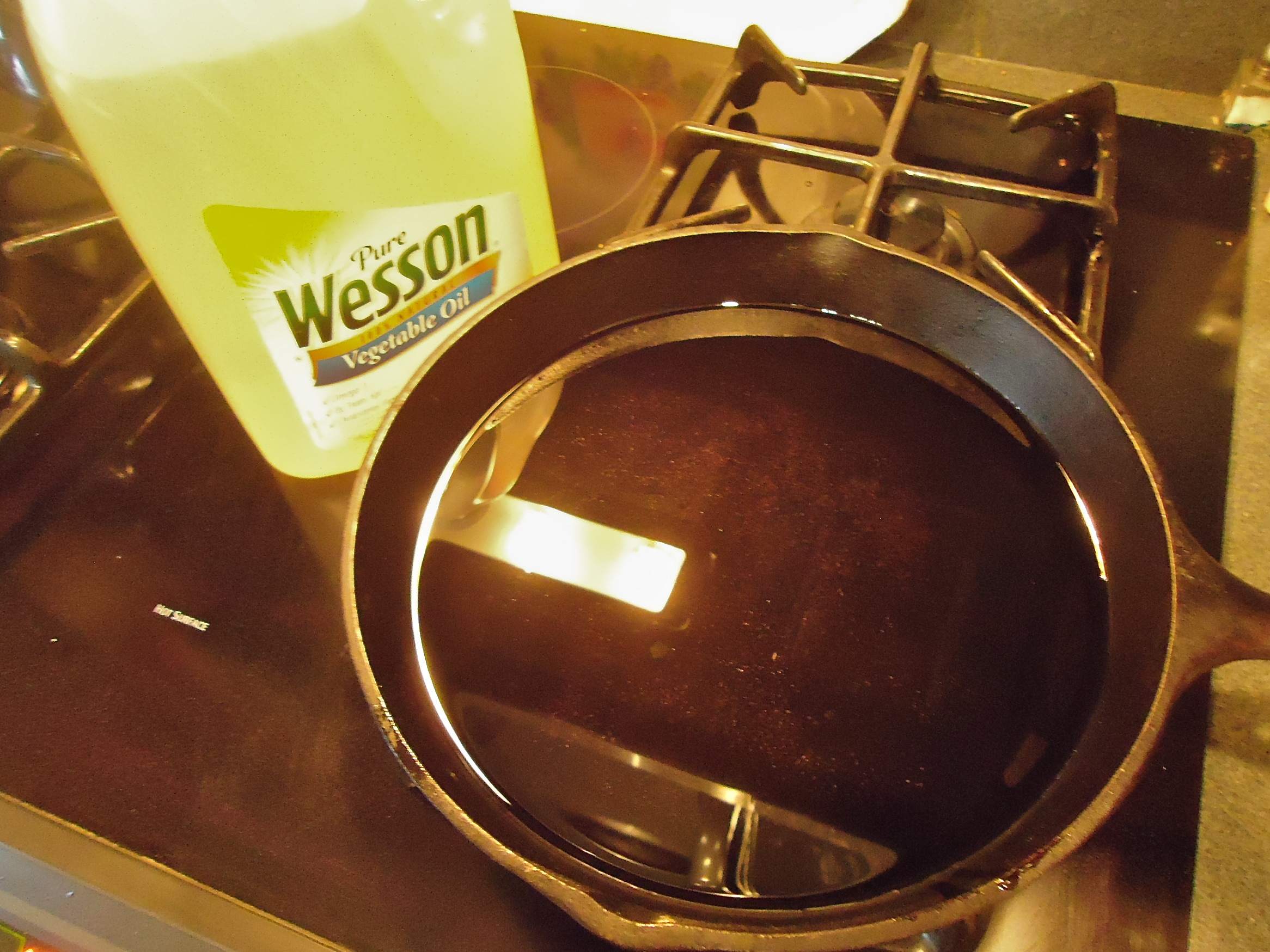
Having the right equipment is important in frying chicken to ensure good results and safety too. Like the coal miner’s daughter Loretta Lynn (remember those commercials?) I prefer Wesson Oil for frying chicken. Leave ample space between the oil and the top of the pan, but you will need 1/2 inch of oil in the skillet.

I save my used flour bags for frying chicken. One of these bags will work great for 8-10 pieces of chicken, then you may need to use a “new” bag. The flour, salt and pepper goes into the bag.

I test my oil by throwing in a pinch of flour. If it sizzles it is ready for chicken. If it just sinks and/or slowly fizzles it’s not hot enough. If it’s smoking it is too hot so turn down the heat asap.

Here the first 2 pieces (breasts) go into the hot oil. You can see the frying in this image and that the oil is near the top of the pan, but not going over it. That would be incredibly dangerous so be careful. I find that when oil is 1/2 inch deep it is perfect for cooking half way up the largest chicken pieces – you only want to turn the chicken over once.

Here is the next batch and you can see the wing portion. I fry my wings down side first (so the wing tip is down) which allows more even cooking of this piece. If you do the opposite it is impossible to get the whole wing to lay flat and cook evenly.

Here you can see that blood is seeping up from the chicken. This is good – it means the chicken is almost ready to turn over to the other side. For large pieces like this breast, I let it go another two minutes or so after the blood appears before turning.

The chicken has been turned over and is just about ready for the platter!

I guess you can go home again, at least I can, with this meal! This is similar to a meal my own mother would serve when I was child: hot fried chicken, fresh steamed green beans with potatoes and homemade savory muffins.

Betsy’s Fried Chicken

  • 1 cut-up chicken (2 breasts, 2 thighs, 2 drumsticks, 2 wings or a combination of 8 pieces)
  • ½ cup buttermilk dressing, preferably homemade
  • ½ cup milk
  • 1 tsp. Grill Mates Montreal Chicken flavor seasoning
  • ½ cup all-purpose flour plus scant 1 tsp. salt and ½ tsp. black pepper
  • Vegetable oil

Mix dressing, milk and Montreal chicken seasoning in a bowl. Wash and dry chicken pieces careful to not contaminate surfaces. Place chicken in a large container or resealable jumbo-size bag and pour the dressing mixture over. Be sure it coats all the chicken. Place in refrigerator to marinate at least 4 hours and up to 8 hours. You may want to flip the bag or mixture over a couple of times throughout this marinating time.

When ready to fry the chicken, prepare a paper towel covered platter and have tongs available. Take chicken out of the refrigerator and set aside. Heat oil in a deep, heavy frying pan, preferably a seasoned cast iron pan. Pour oil ½ inch deep (or deeper) just so that there is at least 1 inch of space between the oil and the top of the pan. This is very important in keeping the pan from overflowing.

In a large bag or shallow bowl, stir the flour with salt and pepper. Begin heating oil until it is very hot but not smoking. Test with a pinch of flour – if it sizzles immediately, then the oil is hot enough. Dredge 2 or 3 pieces of chicken in the flour mixture so they are well coated, shaking off any excess flour. Carefully lay each piece of chicken in the hot oil. Do not crowd the chicken in the pan.

The chicken will be ready to turn over in 5-8 minutes depending on which pieces you are frying. If blood is beginning to draw from the bone and you can see it, it is almost ready to turn over. Allow to fry a minute or two more and turn over. Fry on the other side and remove to the prepared platter. Allow the oil in the pan to reach the proper heat again before adding the next batch of chicken. Repeat & then eat!

Serves 4. Double or triple this recipe as desired.

Lovely and amazing: fresh fig stuffed with pecan, chevre and honey

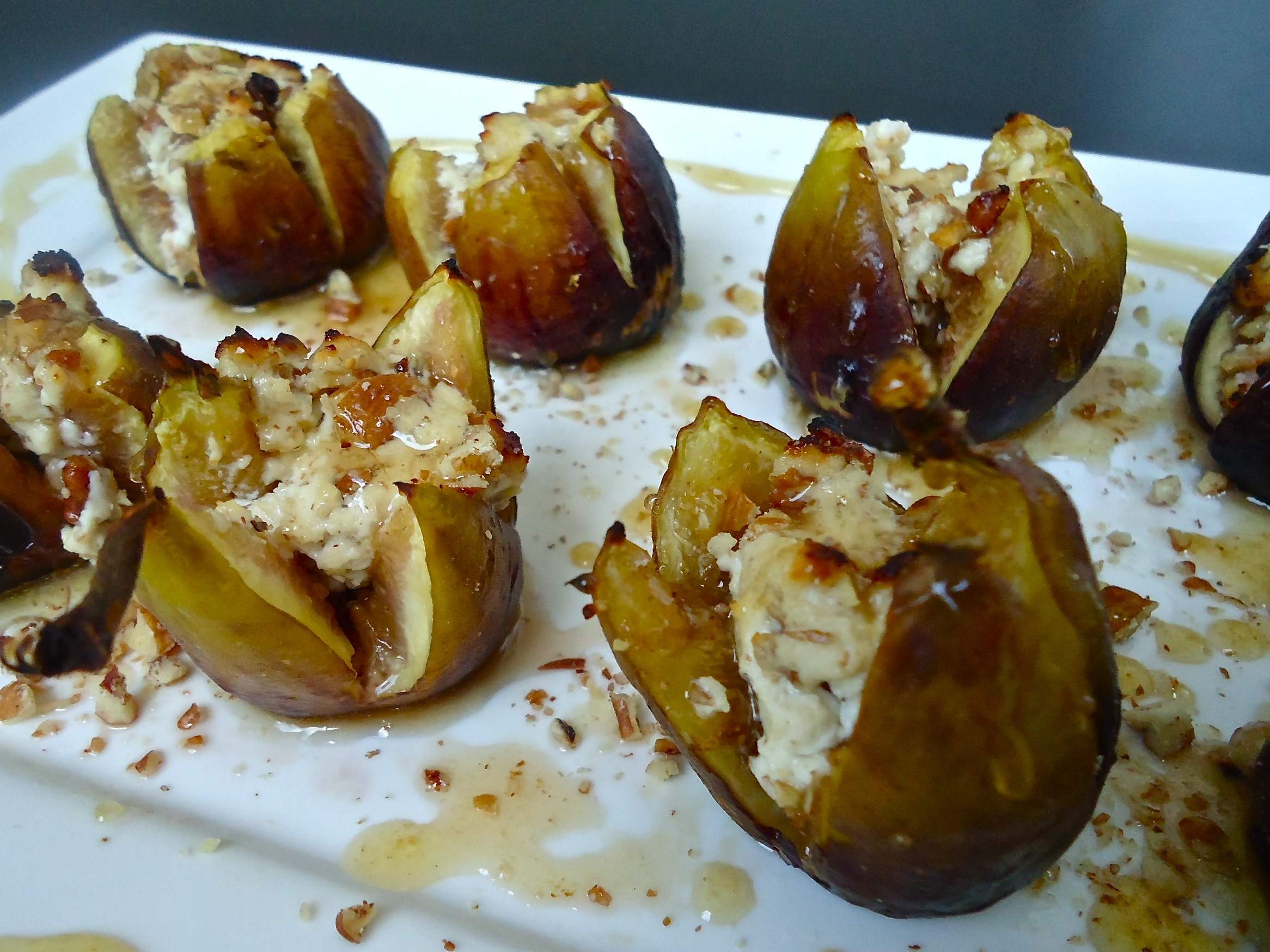
It has certainly been quite the chore finding figs this summer, but I am happy to report that I did find a few of the brown turkey variety last week. Unfortunately this was not enough to make preserves, obviously, and just devouring the whole lot by myself seemed, well, downright selfish. So, I decided to prepare these fresh beauties one of my favorite ways, stuffed with chèvre and toasted pecans and lightly roasted. A flourish of local honey drizzled over the top adds a touch of sweetness. Fresh figs do not need much in the manner of fussy accompaniments or tricky preparations, and I was not about to mess up the delicate flavor of my few precious figgy fruits.

This recipe make both a tasty appetizer or a light dessert. You can use plain goat cheese or a flavored one, like the honey infused variety I used here. I adore pecans and pairing them with figs just seemed the right fit, if you know what I mean. But walnuts are good too. I enjoyed these figs with a Pinot Noir, but I would think that most any light to medium bodied wine (red or white) would pair well with this recipe.

Fresh figs – these are brown turkey, probably the most common variety grown here in the South.

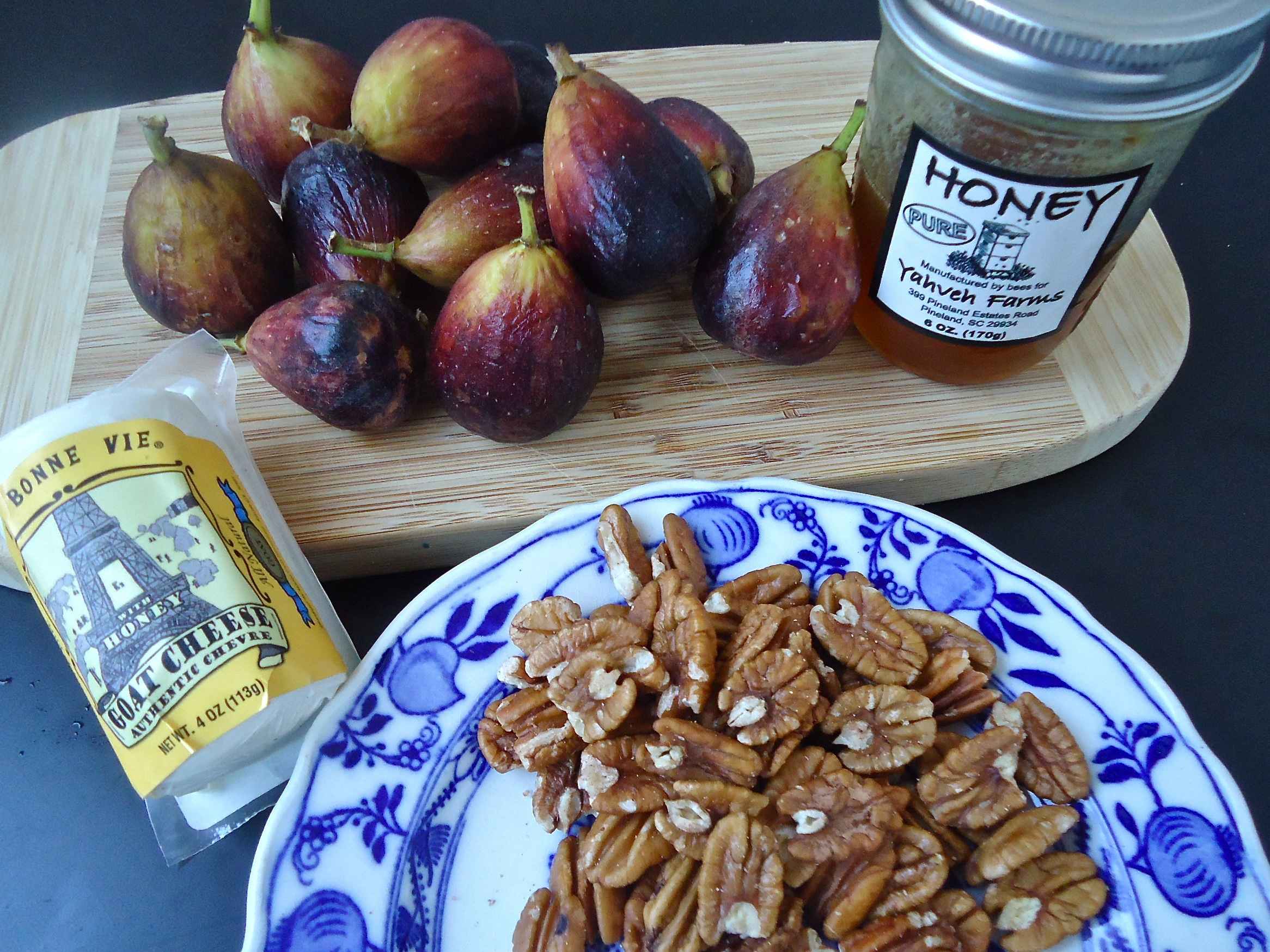
Ingredients of four: figs, goat cheese, pecans and honey.

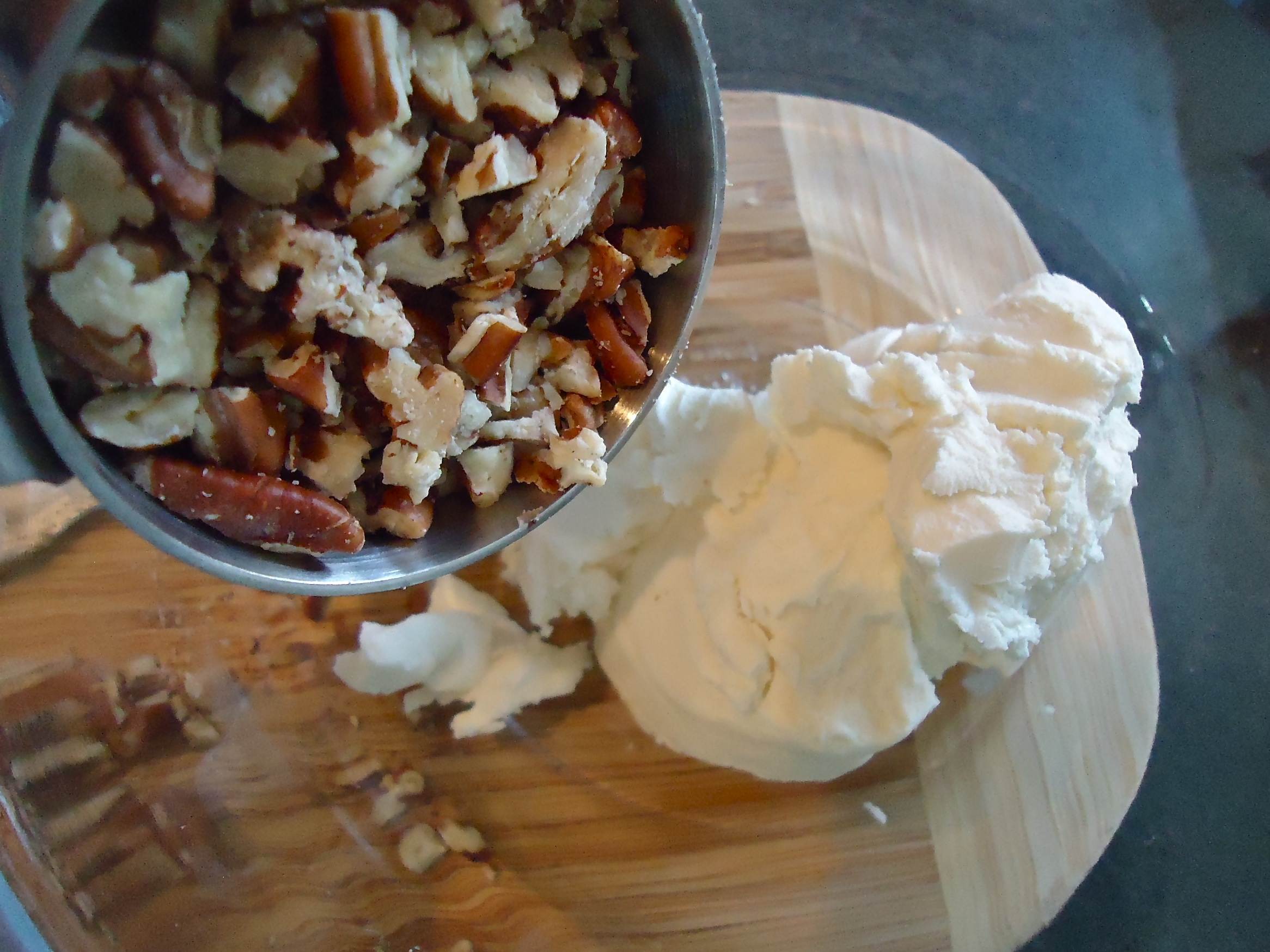
Step 1: Mix the toasted nuts and the softened cheese.

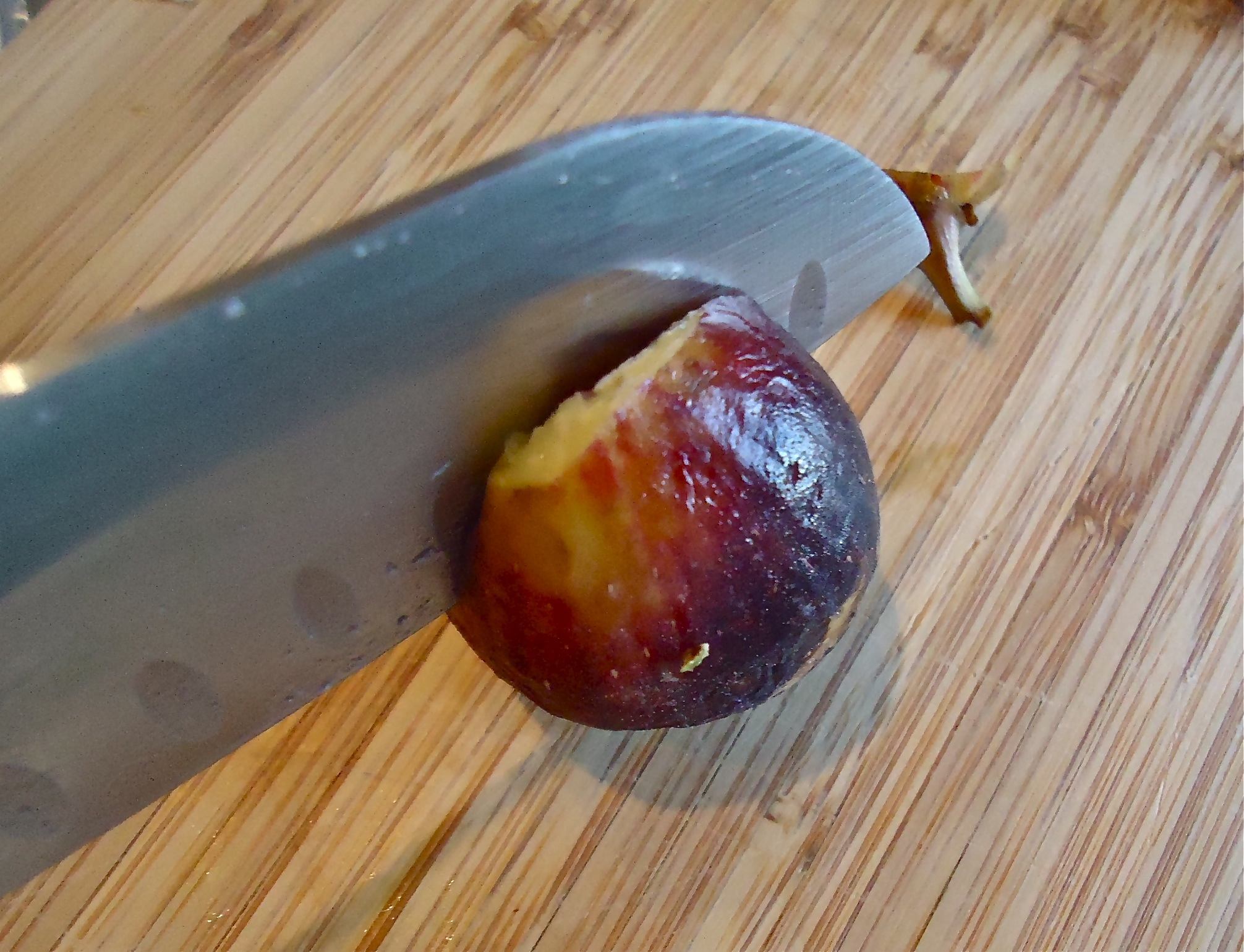
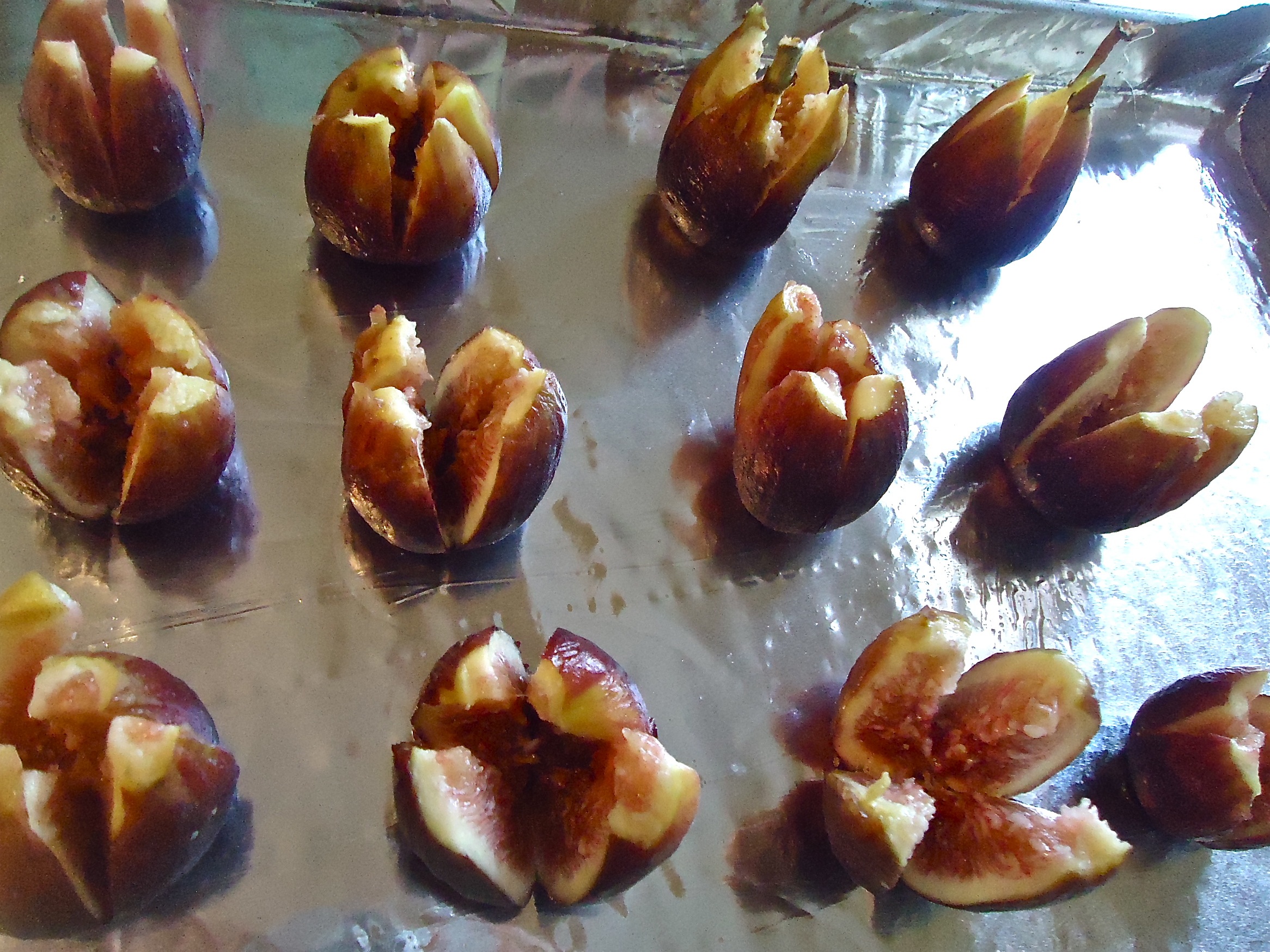
Step 2: Slice the figs in a cross across the top but not all the way through the fruit.

Line the figs up on an oiled baking sheet.

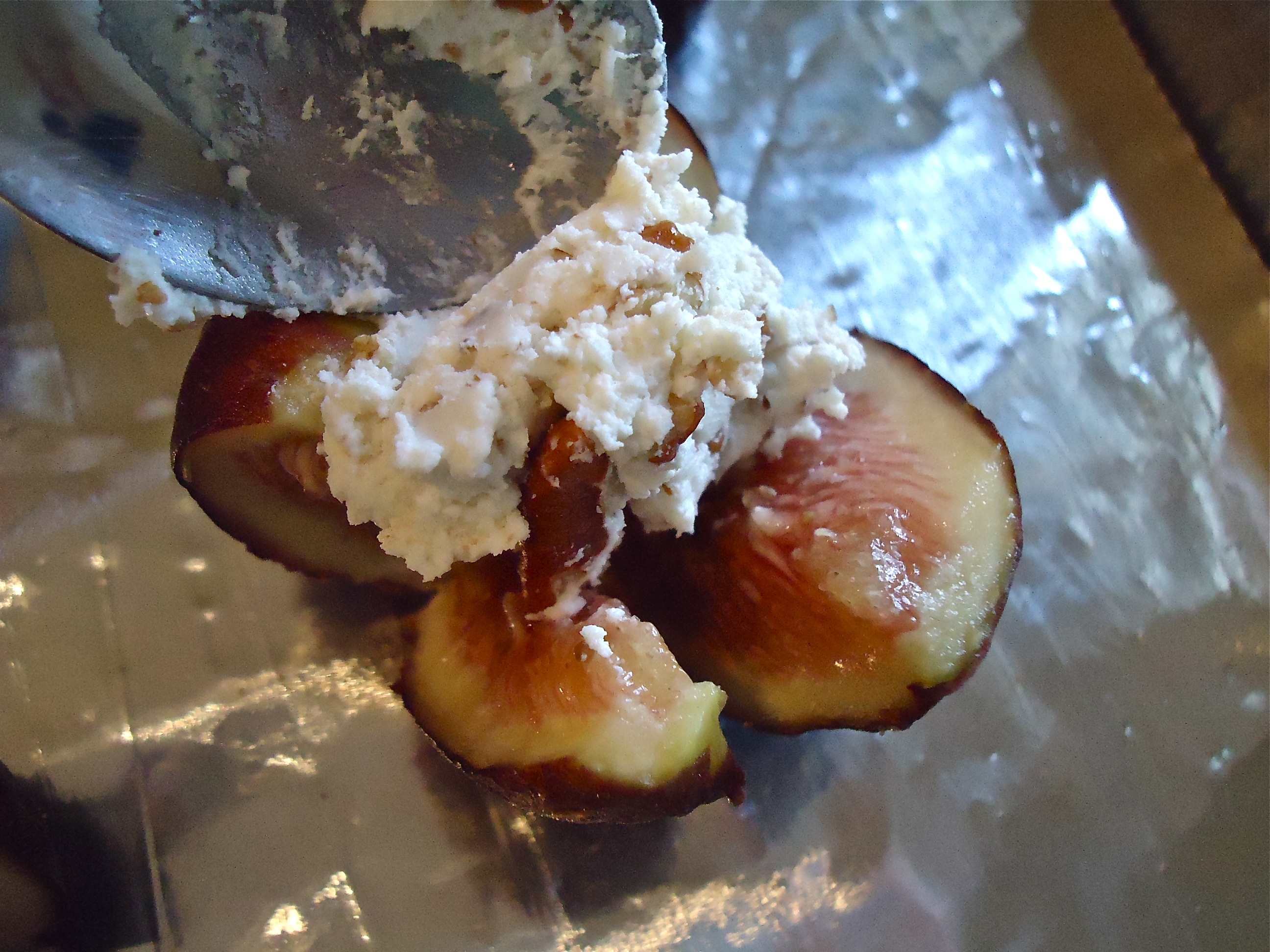
Step 3: Stuff each fig with a bit of the pecan/cheese mixture and roast for a few minutes in a preheated oven.

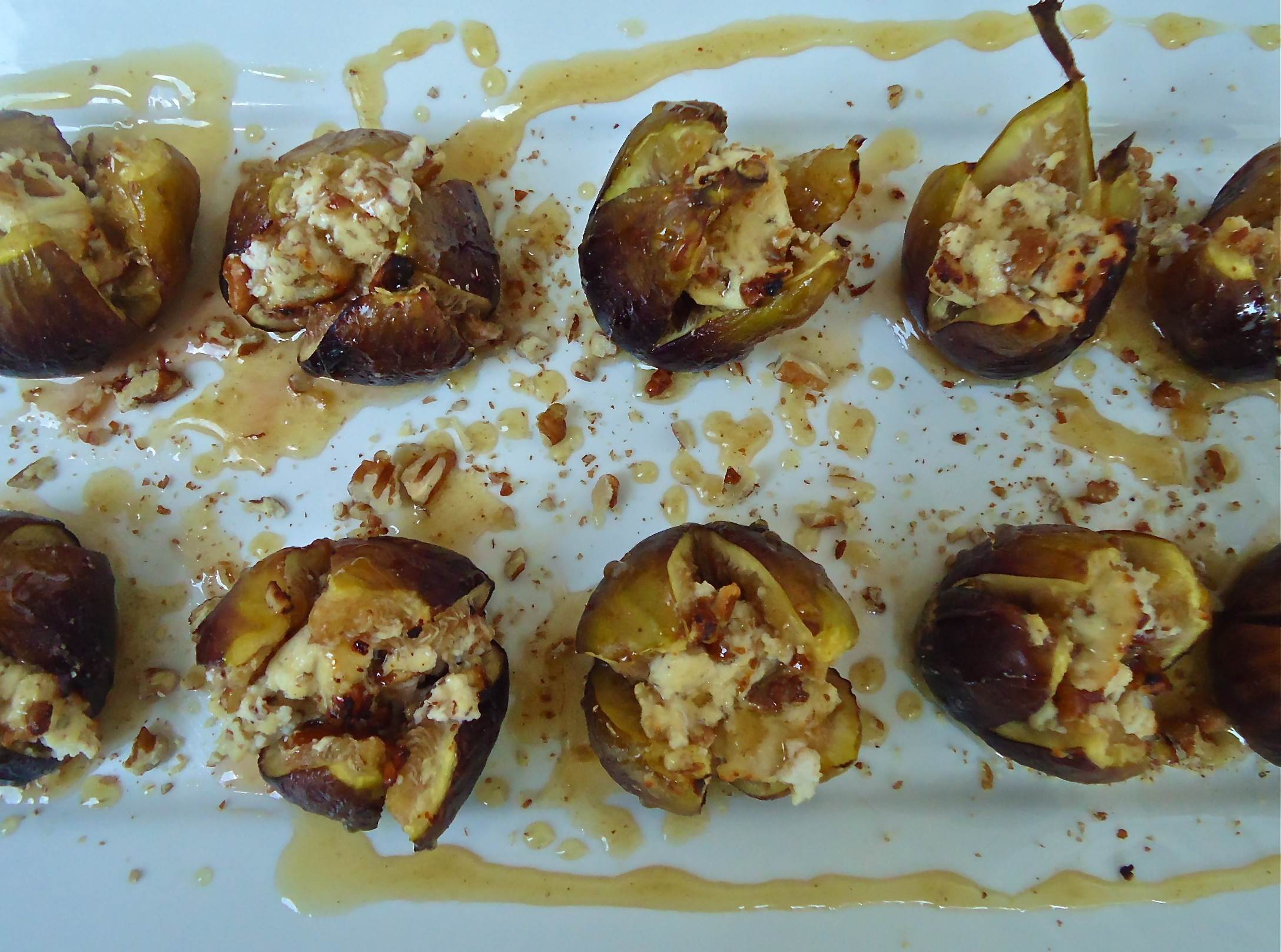
Step 4: Remove the roasted figs from the oven onto a platter and drizzle with honey. Snappity snap, there you go!

Simple Stuffed Fresh Summer Figs

  • Large fresh, ripe figs (at least 12)
  • 1 – 4 oz package chevre (goat cheese) regular or honey-infused
  • 1/3 cup toasted and finely chopped pecans or walnuts
  • Warm honey (1/4 – 1/3 cup)
  • Vegetable oil – I use grape oil

Preheat oven to 425°. Wash and dry figs. Lightly oil a baking dish. In a small bowl mix the goat cheese and nuts. Quarter the figs, cutting three-quarters of the way down (but not all the way through). Stuff each fig with the cheese/nut mixture. Bake the figs in the oven about 6-7 minutes. Remove and drizzle with the warmed honey. Serves 4.

PEAS pass me the grilled shrimp, zipper pea and heirloom tomato salad!

In my recent search for local figs (hardly any luck here I’m sorry to say) I have run across an item at the farmers market that caught my fancy. It reminds me of my youth and many a summer afternoon sitting on my parents screened porch cross-legged, basket in my lap shelling field peas or butter beans or a peck of whatever goodies had been picked that morning. It could be a monotonous job, and was not something I volunteered to do.

It was the better of two choices my Mom would offer (demand), like “weed the garden or shell peas” or perhaps, “fold 3 loads of laundry or shell peas”. For some arcane reason I liked shelling peas and by the end of the summer I was fast. And if we had a bushel or two to “put up”, we would all shell –  even neighbors would join us, and it was sort of a pea-shelling party. There would laughter, some gossip and perhaps a slice of something sweet my mom had baked when we were finished. Divide up the finished bags ‘o peas with an extra bag and slice of cake for the elderly neighbors.

It sounds quaint, even old-fashioned and maybe hard to believe in today’s world that a tween/teen would enjoy something like that and even decades later remember it fondly. But it’s all true – well, the extent of my warm feelings are probably more exaggerated now that I have grown older, experienced a few things, and look back in retrospect. The demanding ways of the busy world make that repetitive and quiet hand work more appealing. Sometimes one needs to pull the hand brake and extricate oneself from the ceaseless hamster wheel of life. Sometimes one needs to start a task and finish it the same day. Sometimes it okay to relax your mind and allow nothing to seep in… only the question of whether you’ll get 3 or 4 bags of peas for the freezer.

A feeling of accomplishment can do wonders for the human soul, especially when it’s a solid task, one that directly benefits your family, friends and even strangers. Got an extra bag of peas? Cook them up and send them over to the neighbor down the way, you know the one who’s been struggling, but always gives you a wave and asks if they can do something for you. Pay it forward may be cliché but who cares? There are peas to be shelled.

Good times… good feelings all around… and all you need are some peas. Who knew?

____________________________________________________________

The peas I use in this recipe are called zipper peas. They are a ‘cream’ pea akin to black-eyed peas but smaller. I mean teeny tiny. Fresh ones are a cinch to cook – some chicken or vegetable stock and a little bacon (I used smoked hog jowl, believe it or not… amazing what you can find at the Piggly Wiggly). The cook time is quick – 25 to 30 minutes for about 2 cups of fresh peas. Don’t overcook them because they will get mushy, thus the term “cream” pea.

I like them over rice with pickled onions on top – a traditional, southern way to enjoy field peas. But I also love them in salads as I served them in the post. They make a good addition to grain based salads like couscous, rice or quinoa or added into a vegetable soup.

This salad also boasts the most gorgeous and wonderfully-flavored heirloom tomatoes I’ve encountered in a long while. Purchased at the Bluffton Farmers Market and called ‘Mr. Stripey’.  Also one of my favorite grilled shrimp recipes, using local Beaufort County shrimp and a fairly low fat creamy dressing made with ricotta cheese, buttermilk, lime and cilantro.
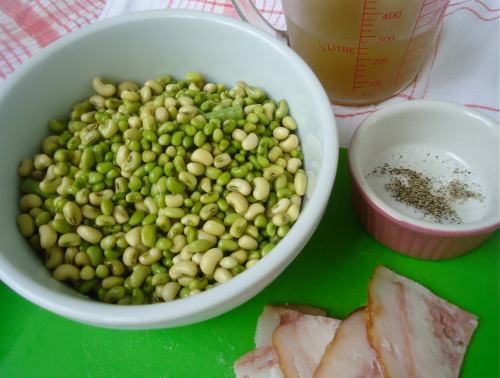
Ingredients for cooking zipper peas. I like hog jowl as it isn’t too smoky and a little bit renders a good amount of fat, which is what you want in a this dish. The cooked jowl is discarded.

Grilled Shrimp, Zipper Pea & Heirloom Tomato Salad

  • 1 recipe zipper peas, room temperature
  • 1 cup creamy ricotta cilantro lime dressing
  • 1-2 lb. grilled shrimp – your favorite recipe or see below. I figure 6 shrimp per person for lunch and 12 for dinner.
  • 1-2 sliced large tomatoes, preferably heirloom or home grown or your favorite
  • 2 Avocados, sliced and coated with a squeeze of lime or lemon to prevent browning
  • Mixed greens like green and red leaf, Boston butter, spinach, etc. – 1 1/2 cups or so per person

Prepare dressing and set aside in refrigerator. Prepare zipper peas. Both of these can be made earlier in the day. Prepare your grill. 20 minutes before serving prepare the grilled shrimp. Assemble salads with green first, tomato slices, avocado slices, and  shrimp. Drizzle with dressing. Serve with slices of 1-2-3 bread slathered in olive oil,sprinkled with parmesan cheese and lightly toasted.
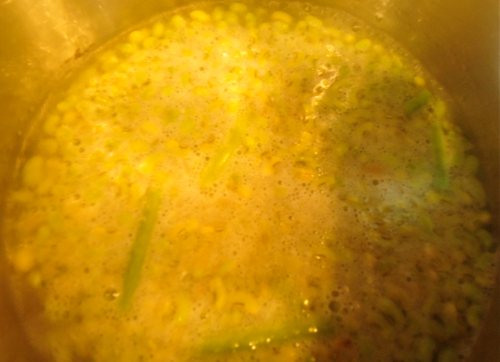
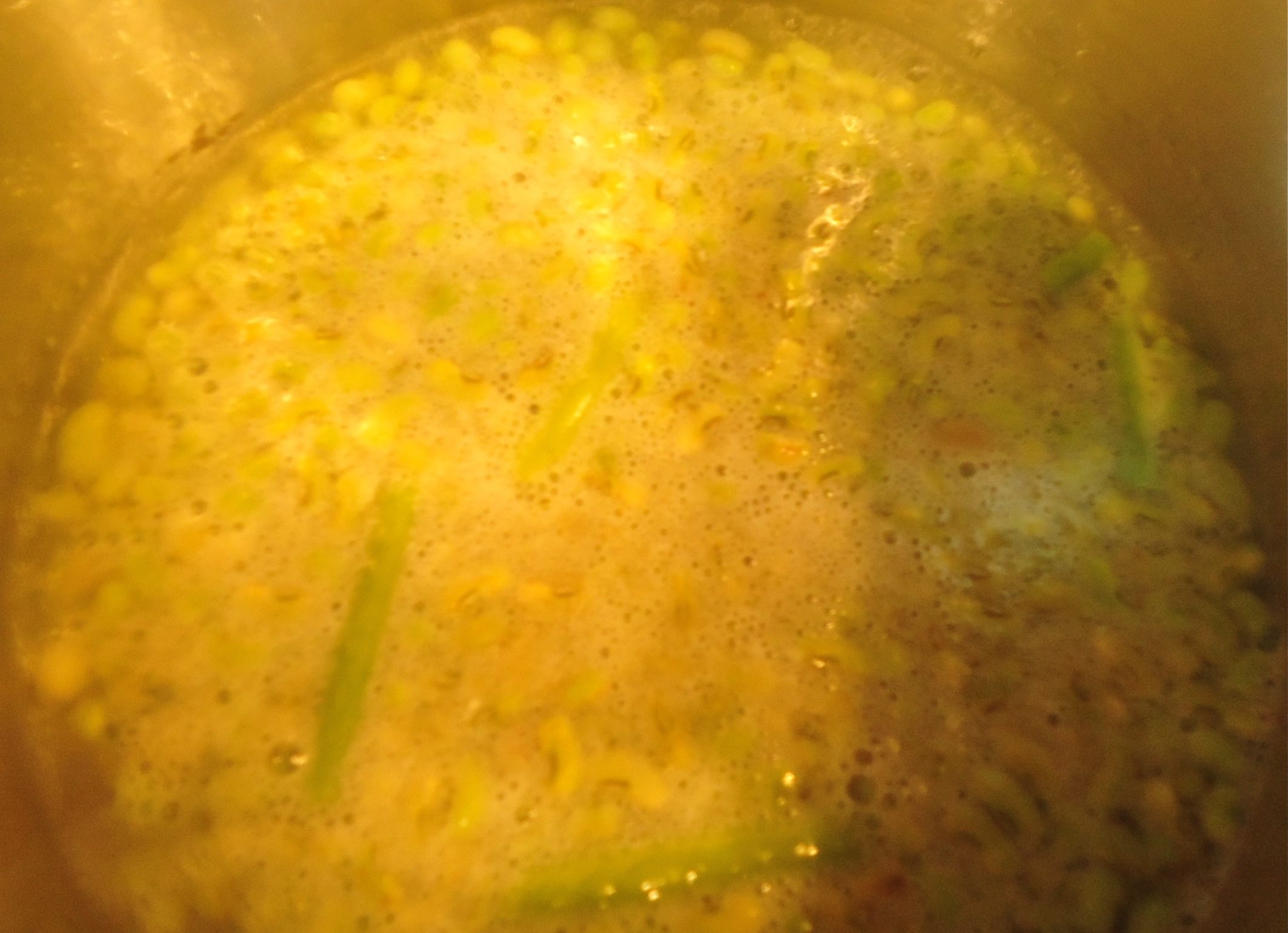
The peas are boiling, so then turn down the heat, cover and allow to simmer until they are cooked through.
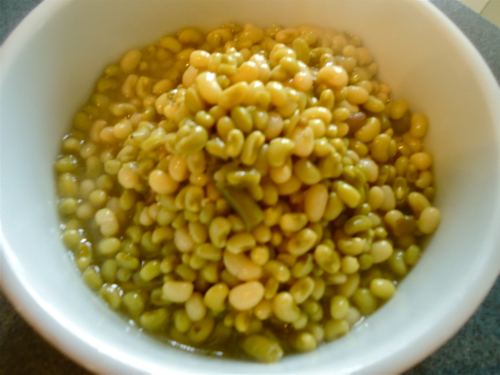
The peas are done! Allow them to cool while you assemble the salad or make them earlier in the day.

Zipper peas

  • 2 cups fresh zipper peas
  • 1 cup chicken or vegetable stock
  • (4 ) 1-inch pieces bacon, hog jowl or fatback
  • salt & pepper to taste

Wash the zipper peas in cold water and drain in a colander or sieve. In a medium saucepan cook the hog jowls or bacon until fat is rendered –about 4-5 minutes (do not burn). Remove from the saucepan and add the stock and peas. Bring up to a boil, stir, reduce heat to a simmer and cover. Allow to simmer for 25-30 minutes. Season to taste with salt and fresh ground pepper. Peas should be soft but not mushy.

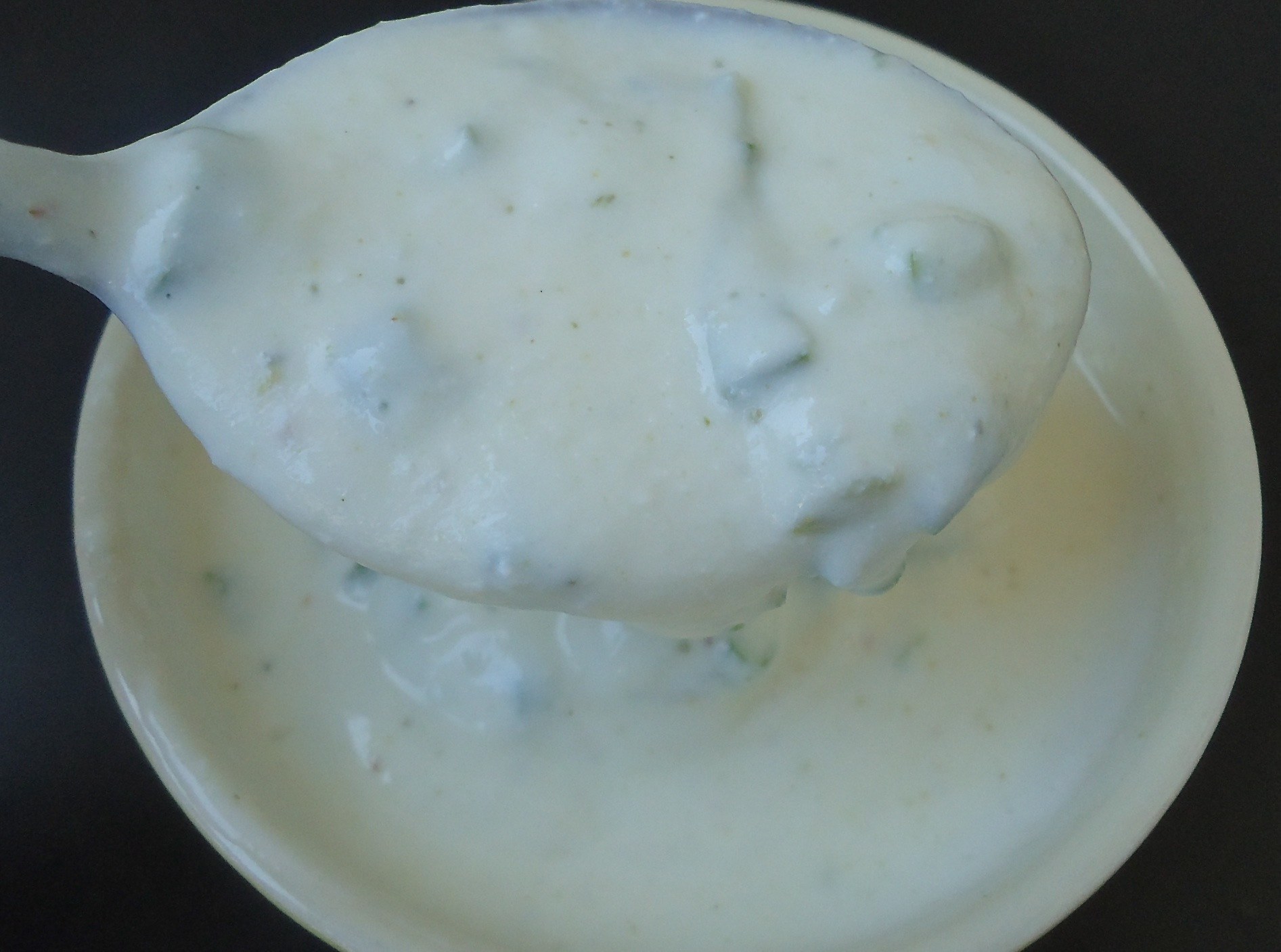
Mixing the dressing ingredients in a food processor makes quick work of this recipe. You could also use a blender or immersion blender. Stir in the cilantro and green onions into the blended mixture.
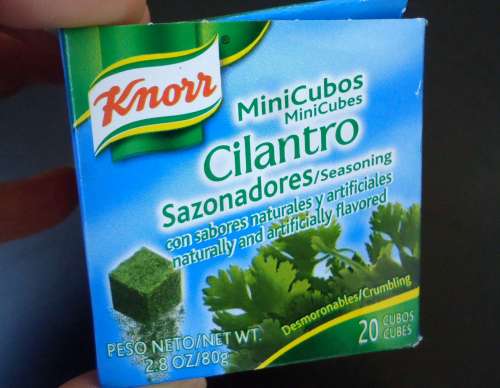
I used this product – wanted to give it a try and it gave a light cilantro flavor. I prefer fresh but this will do in a pinch…

This dressing uses no oil – but it’s creamy and flavorful without all that fat. Makes a nice dip for veggies and grilled shrimp too!

Creamy ricotta cilantro lime dressing 

  • 1 cup ricotta cheese, light or regular*
  • ½ cup low fat buttermilk
  • 1 lime – juice (approx. 2 tablespoons) and zest
  • ¼ cup plus chopped fresh cilantro or 2 mini cubes cilantro seasoning
  • 1 clove garlic, crushed and minced
  • 2 green onions tops, minced fine
  • 1 scant tsp. salt
  • 1/4 tsp. fresh ground pepper

In a blender or food processor combine ricotta cheese, buttermilk, lime juice and zest, salt, pepper and garlic. Puree. Pour into a mixing bowl and stir in green onions and cilantro. Store in a covered bowl in the refrigerator for at least an hour for flavors to meld. Remove from refrigerator 15 minutes before serving so dressing comes close to room temperature before drizzling on your salad greens. Makes about 2 cups of dressing.

* If using regular ricotta cheese increase buttermilk by 1/4 cup  (3/4 cup total) so dressing will be easier to pour.
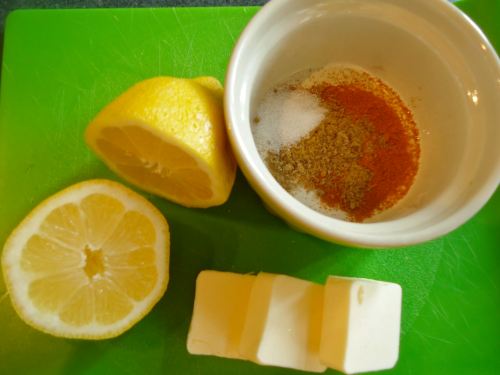
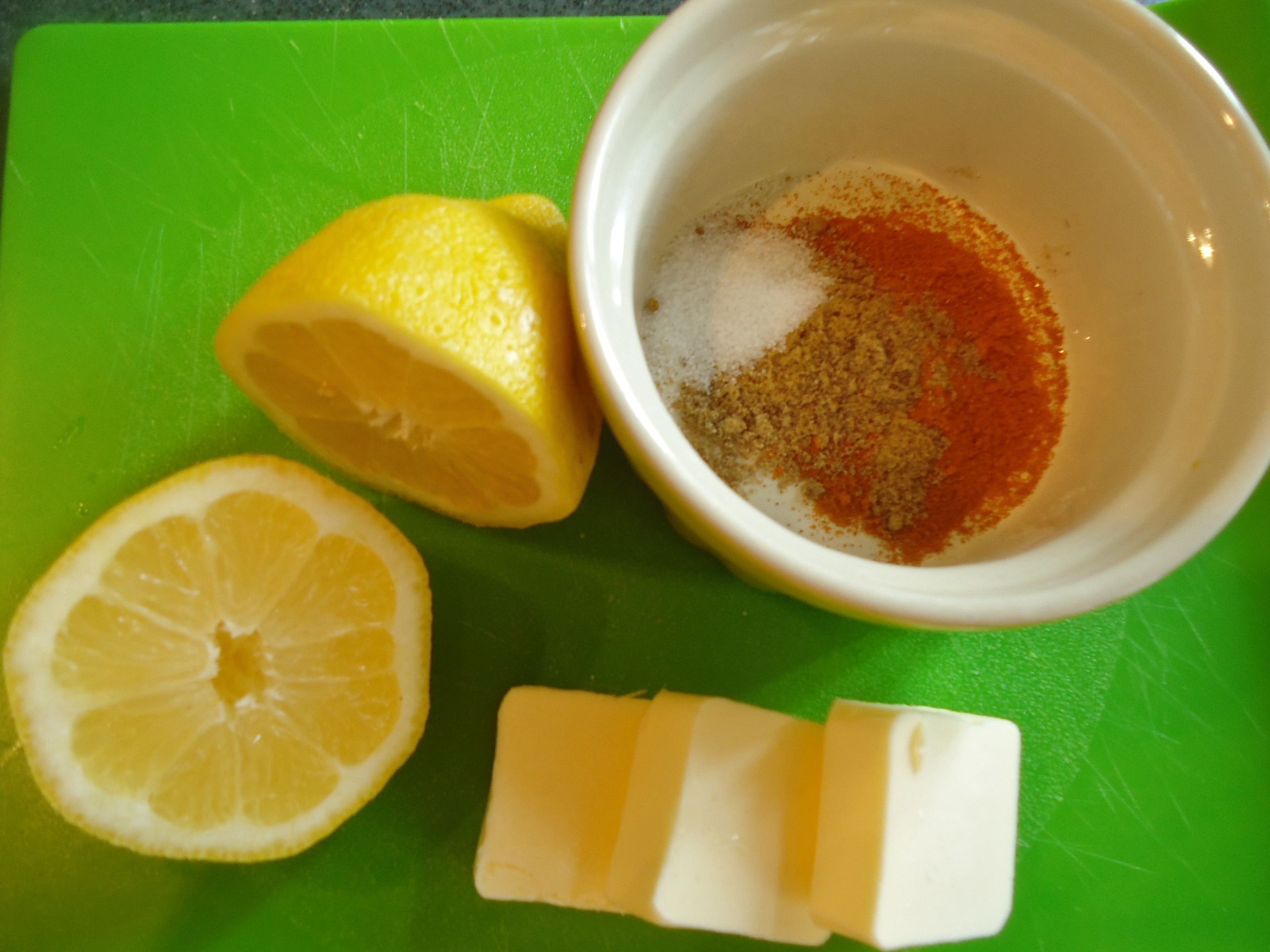
Ingredients for the grilled shrimp. Double or triple this if you are grilling several pounds of shrimp. This grilled shrimp recipe is a nice appetizer on its own too, just add a toothpick because the tumeric will stain your nails!
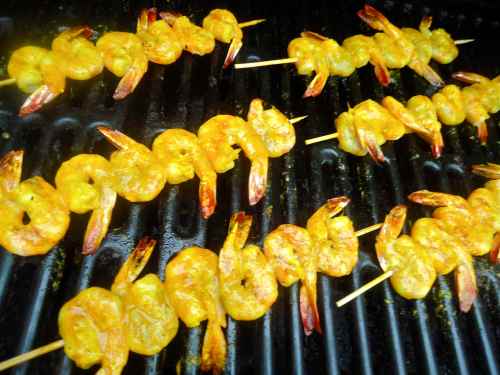
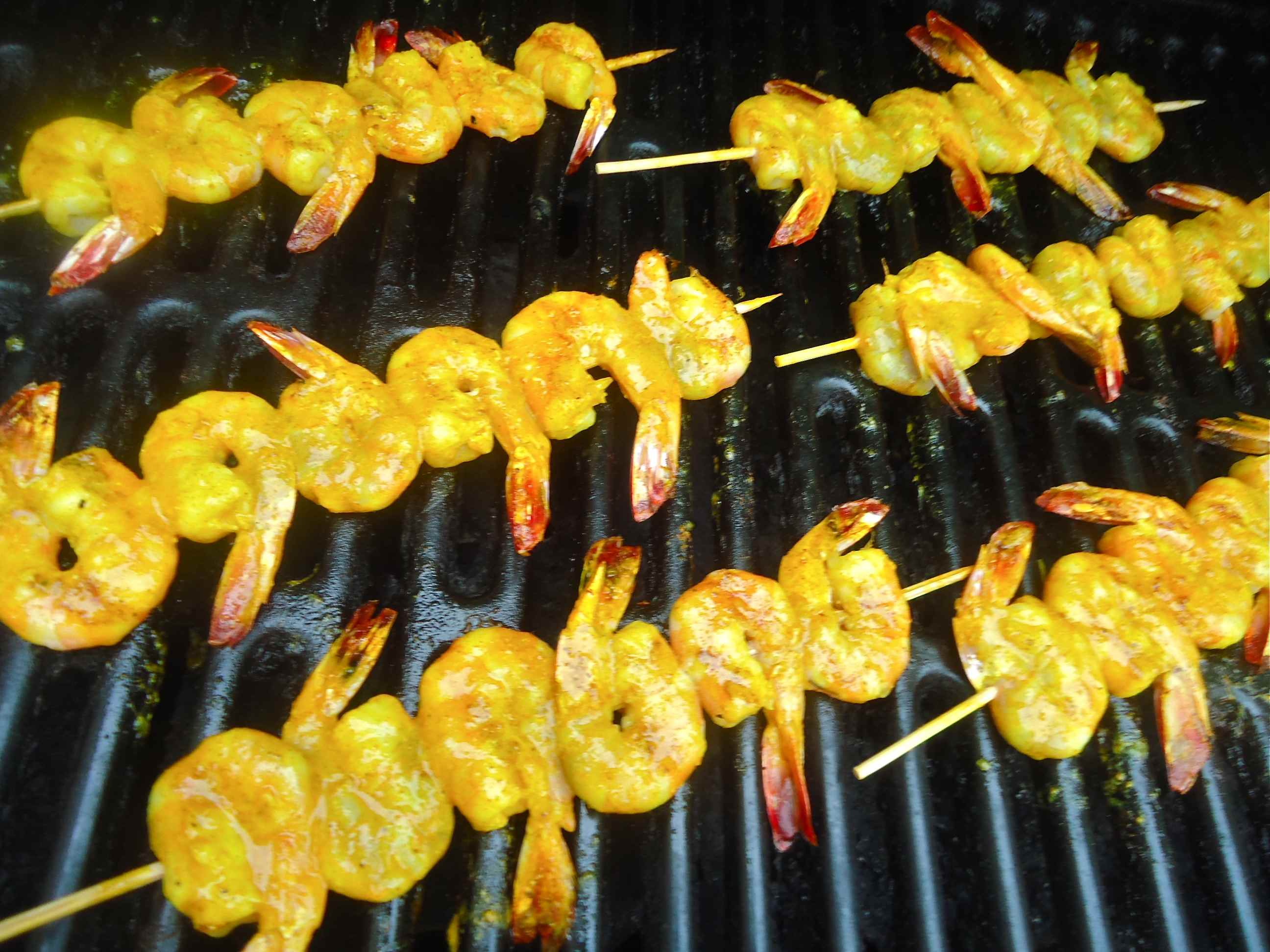
Shrimp on the grill. If you use wooden skewers be sure to soak them in water before hand. Or else if your grill is super hot they may catch on fire. I like these smaller-diameter wooden skewers for grilling shrimp.

Grilled Shrimp with 3 Spices

You can use your favorite grilled shrimp recipe for this salad. Here’s one of mine based off a recipe from the classic cookbook, The New Basics by Julee Rosso and the late Sheila Lukins. In the original lots more butter is used and  they are broiled (even though they say in the book ‘grilled’). I find wooden skewers easier to use with medium shrimp, just remember to soak them in water so they do not catch fire…

  • 1 lb. fresh shrimp, washed, peeled and deveined (if necessary). Tails left on.
  • 1 tsp. tumeric
  • ½ tsp. coriander
  • 1/8 tsp. cumin
  • ½ tsp. salt
  • Juice of 1 lemon
  • 3 tbl. butter, melted
  • skewers – wooden or metal

Skewer the shrimp and set aside, covered, in the refrigerator while you make the marinade. In a small bowl mix the spices, lemon, salt and melted butter. Prepare your grill. Brush one side of each skewer with the butter mixture and lay that side down on the grill. Brush the other side of the skewers (facing up) with the butter. Allow to cook about 3-4 minutes*, or until they begin to turn pink, turn over and brush again with the butter mixture and cook for another 3-4 minutes. Remove from the grill and serve immediately. This recipe can doubled or tripled, depending on how much shrimp you are grilling.

* If using extra-large or jumbo shrimp grilling time be a minute or so longer on each side.

“Mr. Stripey” was so pretty – and flavorful. Just dunk those slices into that dressing – yum!

Livin’ on grilling time with Moroccan-style chicken

I grill a lot. You may have noticed this by reading southbyse.com. It is just easy since we live in such a temperate climate here in the Lowcountry. I also like the fact that with the gas grill it’s an easy cleanup and we keep the heat out of the house, especially this time of year.

Grilled chicken is a family favorite, but it can get boring – it’s chicken after all. I’m always on the lookout for new recipes and I found a great one with this Moroccan chicken. It is based on a Bon Appetite recipe from 2003 and honestly, it is almost the same. Here are the few differences and tips I have incorporated after making this many, many times:

• The original recipe calls for only olive oil but I have found that using mostly canola oil (or safflower or grape oil) is better since olive oil has a lower burn temperature.

• I also like this with drumsticks and thighs as I find grilled chicken breasts seems to dry out – plus I like the rich flavor of ‘dark meat” chicken. Oh, thighs and legs are less expensive too.

• Use bone-in chicken not boneless. The bones add flavor and give the meat something to hang on to… boneless thighs tend shrink up to nothing. By the same measure I prefer leaving the skin on as it helps keep the meat moist and makes for a prettier presentation too with a nice grill-mark sear on the grill.

This grilled chicken is a superb entrée for a crowd and since should soak awhile, it’s mostly a do-ahead recipe. You can easily double or triple this recipe. If you want to go authentic Moroccan serve with a couscous salad, grilled eggplant and mint tea. Or go Southern-style with homemade potato salad, grilled zucchini squash and Vidalia onions and iced tea (or a fairly full-bodied Chardonnay or Saint-Véran Burgundy).

Ingredients include lots of spices, fresh citrus fruits and chicken, of course.

A close up of the pretty limes, oranges and lemon. Smells divine!

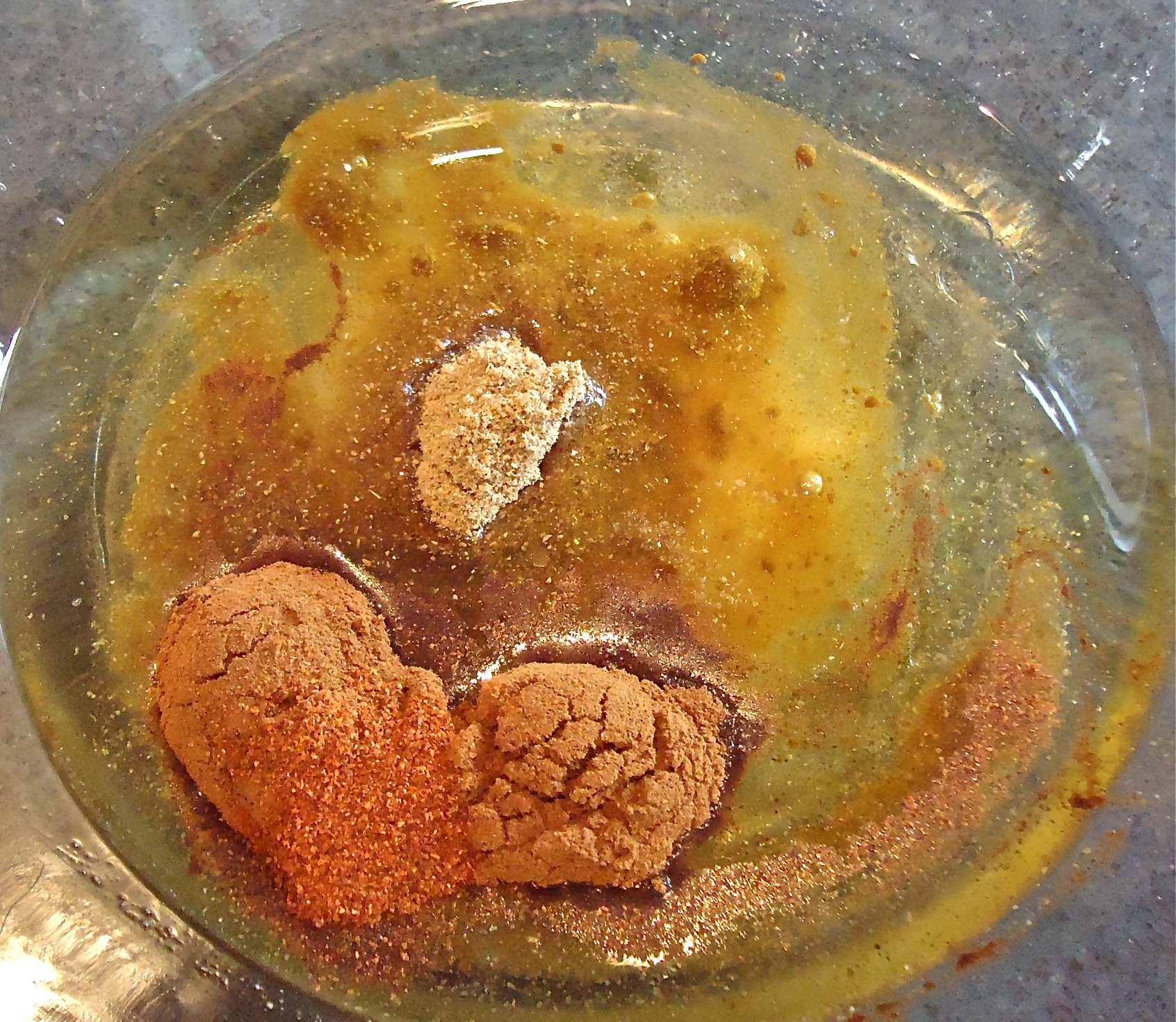
This is an easy recipe. the most time consuming part is getting all the ingredients together – here is everything but the sliced fruit in a bowl. Just mix it together.

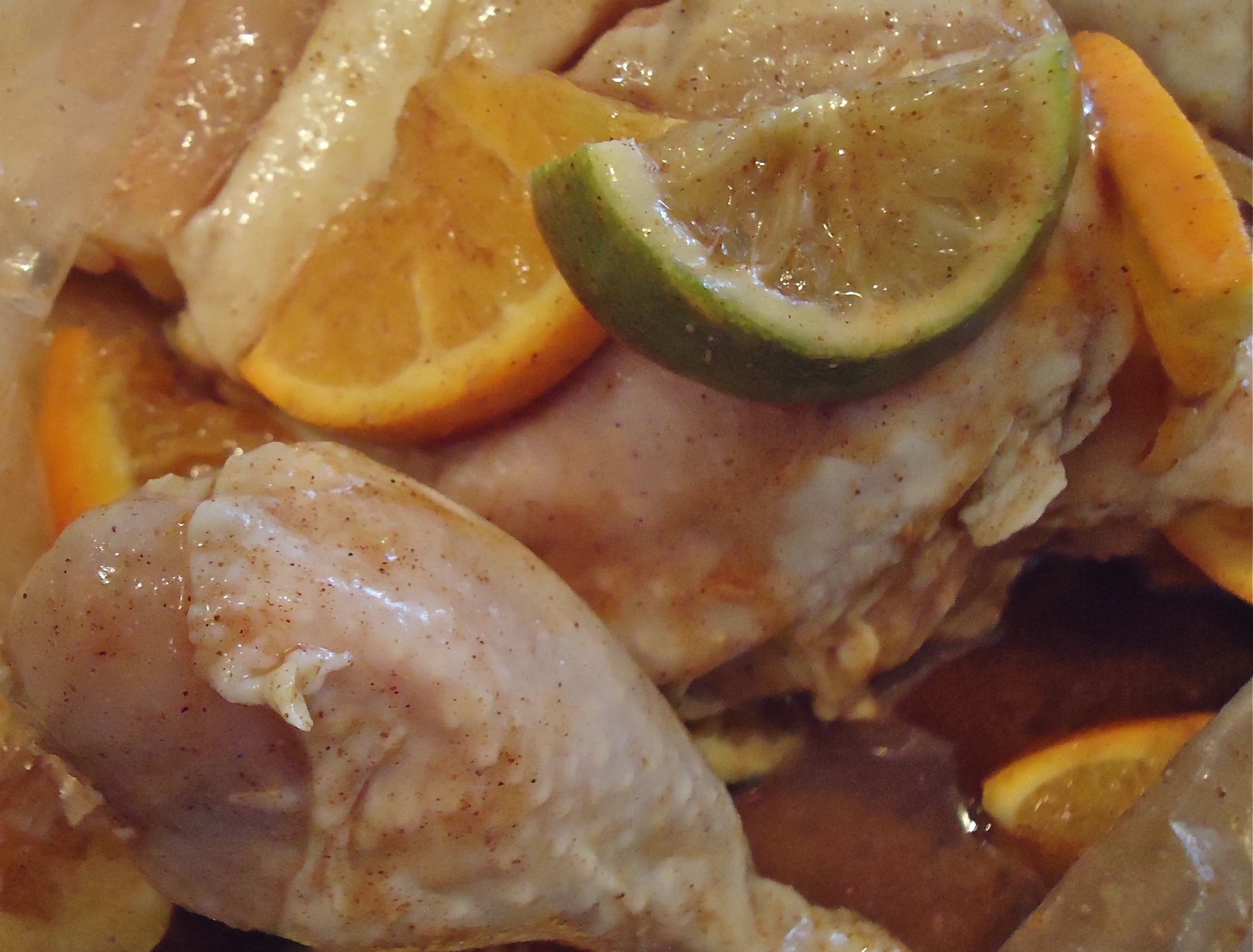
Place the chicken pieces in the bag , add the marinade and the sliced fruit. Make sure the marinade is coating the chicken and place the closed bag ( or covered bowl) in the refrigerator. During the marinade time flip the bag over a time or two.

After marinating all day this is how the chicken looks. You can discard the fruit and excess marinade. Get your grill ready!

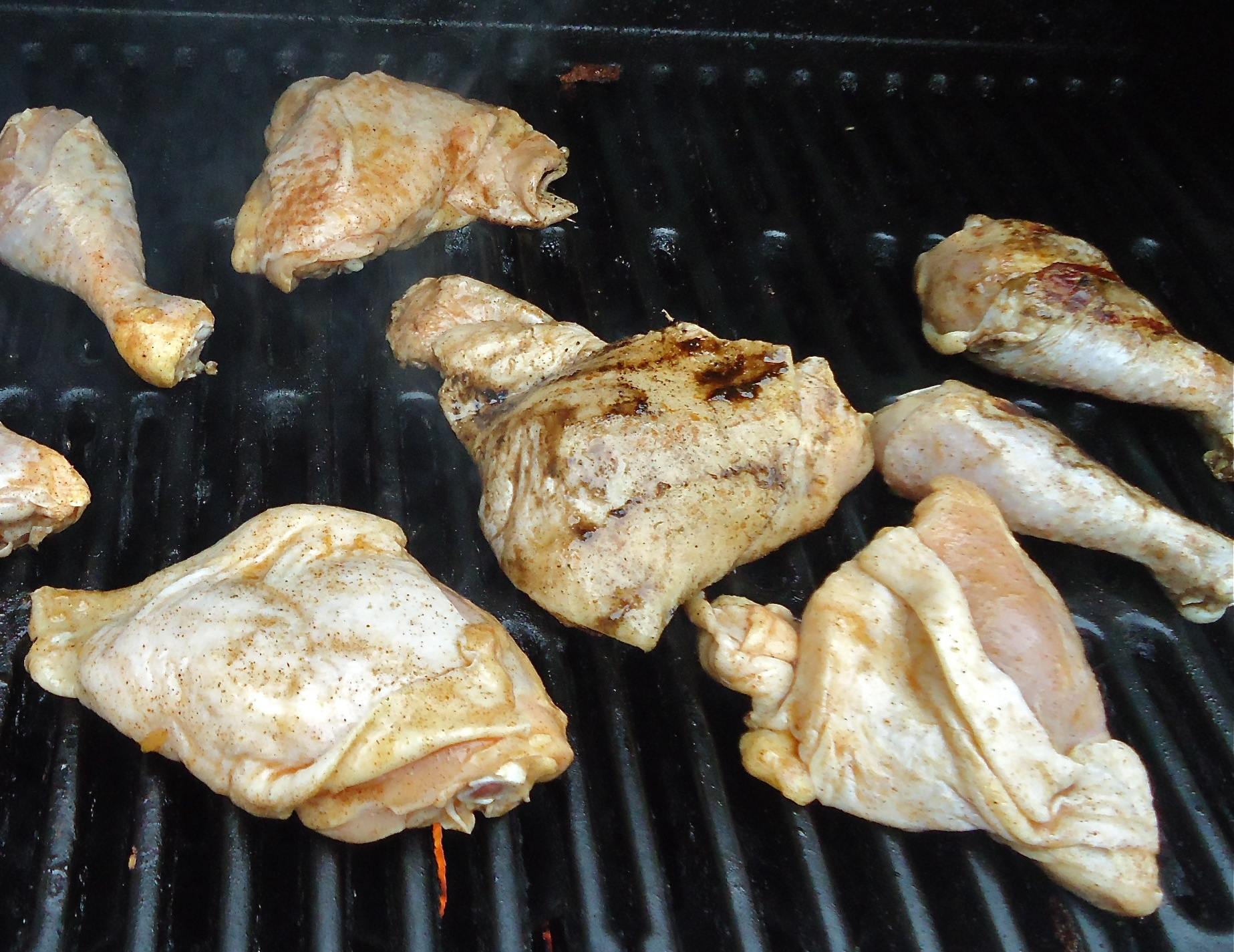
The chicken goes onto the grill. Be sure to watch it carefully as both the oil-infused marinade and the chicken itself can cause flare-ups and burning.

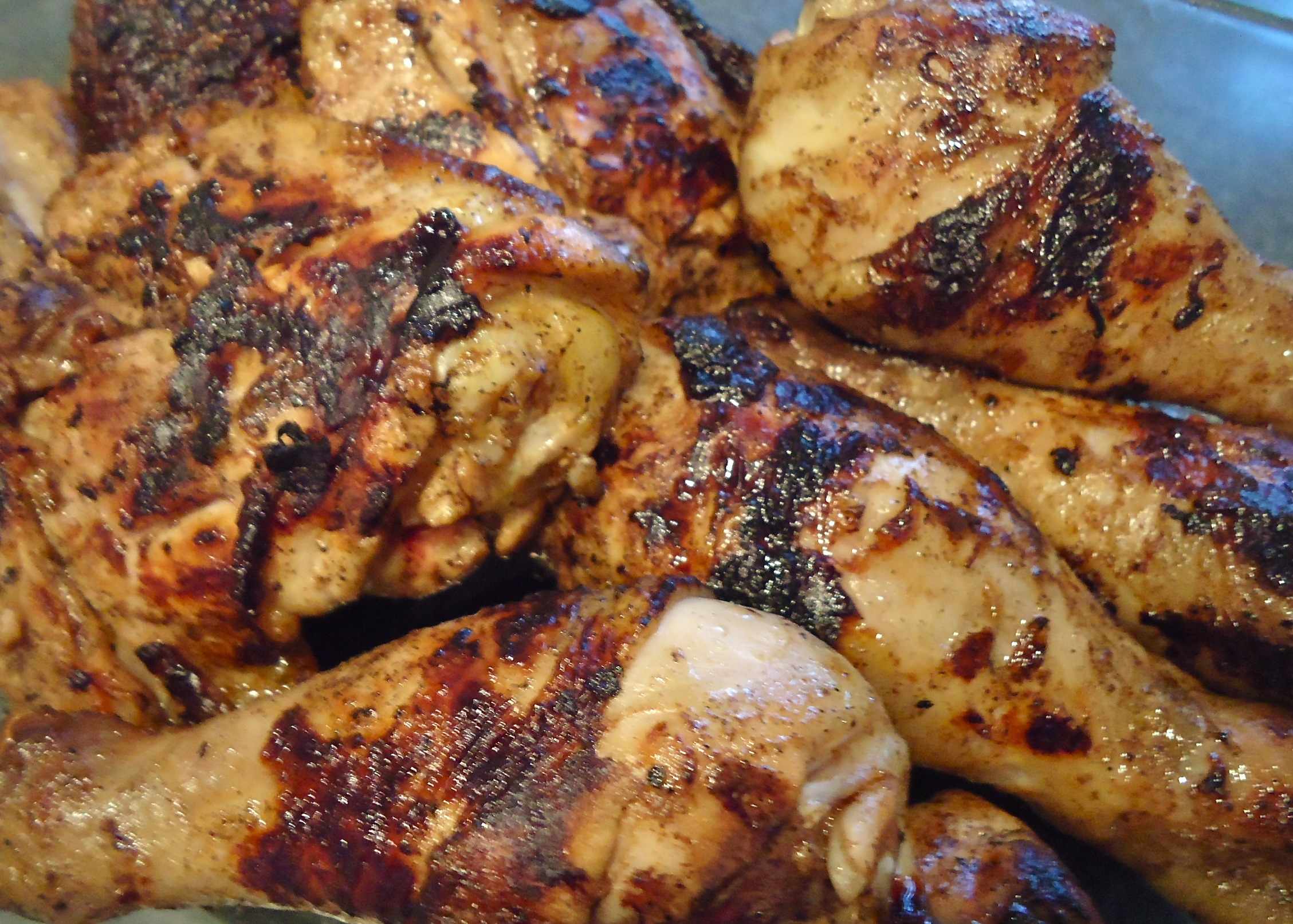
Another shot of the grilled chicken. Moist and flavorful!

Grilled Chicken, Moroccan-style

  • Chicken pieces: mixed thighs and drumsticks, 12 pieces in total. Do NOT use boneless.
  • 1/4 cup olive oil
  • 1/2 cup canola oil (or safflower or grape oil)
  • 1/2 cup vinegar – mild such as rice wine vinegar
  • 2 oranges, 1 squeezed (reserve juice) and 1 sliced
  • 1 lemon, sliced
  • 2 limes, sliced
  • 3 tsp. cumin
  • 2 tsp. ground coriander
  • 3 tsp. cinnamon
  • 2 tsp. salt
  • 2 tsp. sugar (Demera or light brown)
  • ¼ tsp. cayenne pepper

Wash and dry chicken pieces and set aside. In a bowl mix the oils, vinegar, spices and salt. Add in the juice from 1 orange. Add sliced fruits. In a large zippered plastic bag or shallow container add chicken and pour the marinade and fruit over the chicken. Cover or secure the bag and place in the refrigerator to marinate at  8-12 hours. Turn the mixture over a few times throughout the marinating time.

Prepare your grill. When ready, sear chicken pieces on the grill, careful that they do not burn. Since the marinade contains a lot of oil (and if the skin is left on the chicken) it will easily catch on fire. Grill until cooked through. Serve immediately. Serves 6.

A good loaf: 1-2-3 Bread

Hi all you bread makers out there! Does the summer get you down a little? With the warm weather, most people don’t seem to relish the thought of baking bread, well, except for me, I guess. That’s because I like to bake bread any time of the year and with that thing called “air conditioning”, I actually have a good non-humid environment in my kitchen to work.

Bread has been a great love and an enemy to me throughout my life. That being said, I adore good bread but it means carbohydrates, which are definitely not a friend to my waistline (or my hips or my arms or my….you get the drift). My compromise is to eat ‘good’ bread, which is bread that has at least some whole grain and thus fiber, and to limit the amount of bread I consume.

I find this the most difficult at quality restaurants, where the bread-basket can be unlimited and warm out-of-the-oven bread is served with real butter or better (or worse!) honey butter. At one of our favorite local restaurants, Plums, they serve the their homemade yeast biscuits with pecan butter (with a touch of honey, I think). This is so difficult for me to resist that I am trying to devise some kind of psychological ploy to trick myself into not devouring 2 or 3 before my entrée arrives. People stare when I literally sit on my hands or gnaw at my fingers so I’ll let you know what I come up with…

Recently, I did create my own bread recipe that is both reasonably healthy and tasty. It received the thumbs up from Dear Hubby and Girly Girl so I’m proud to present my “1-2-3 Bread”. The name came from two obvious ingredient amounts in the recipe: 3 types of flour and specifically 1 cup of whole wheat flour, 2 cups of bread flour and 3 cups of all-purpose flour (well, about 3 cups – more or less). The flour combination is great – for a rich but not heavy dough.

This recipe makes 2 large boules or 3 loaves so freeze a loaf or two for later if you like. Note the frozen dough will not rise quite as high as freshly made dough because some of the yeast may die when frozen – but the frozen-dough will still do fairly well, have a nice crumb and a chewy consistency. The molasses and the buttermilk give the bread zing and I feel pretty good about eating some whole grain, plus the aroma of fresh baking bread is the best air freshener I know.

Ingredients for 1-2-3 Bread. Can you tell I like King Arthur Flour? I find it to be the most consistent in quality for my baking.

Pour the scalded (but NOT boiling) milk and water into the yeast. The water should not be hot, just slightly warm. Hot temperatures will kill the yeast at this point!

Add the molasses to the yeast/milk mixture. Molasses gives just a touch of sweetness which is not really discernible in the baked bread.

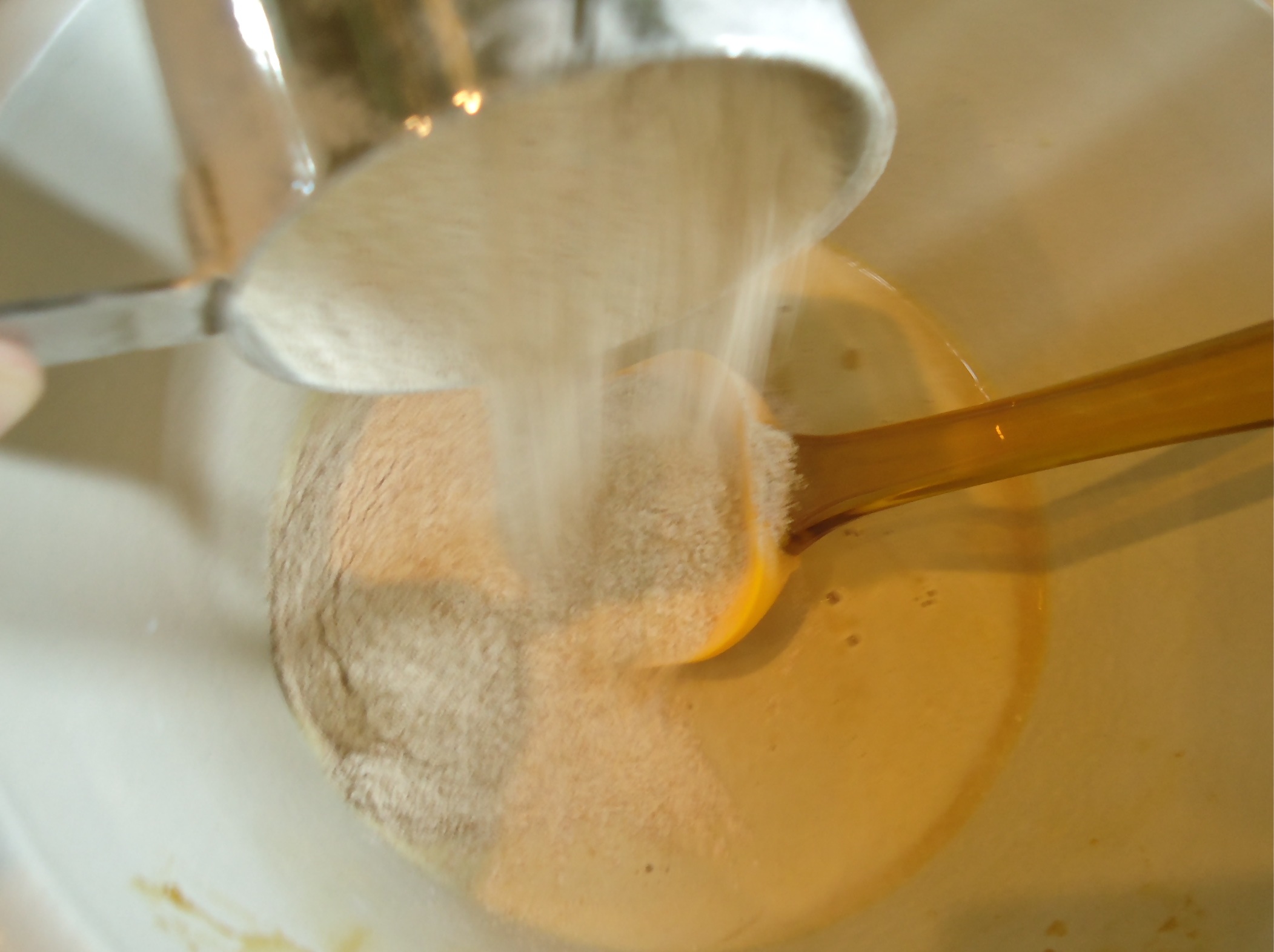
Add the whole wheat flour and the bread flour and mix well.

After sitting for 20 minutes the dough will be spongy.

Add the egg/butter mixture to the spongy dough and mix with a spoon or spatula.

Mix in more flour (the all-pupose flour) and the dough will come together and not be quite as sticky. Once you can handle the dough…

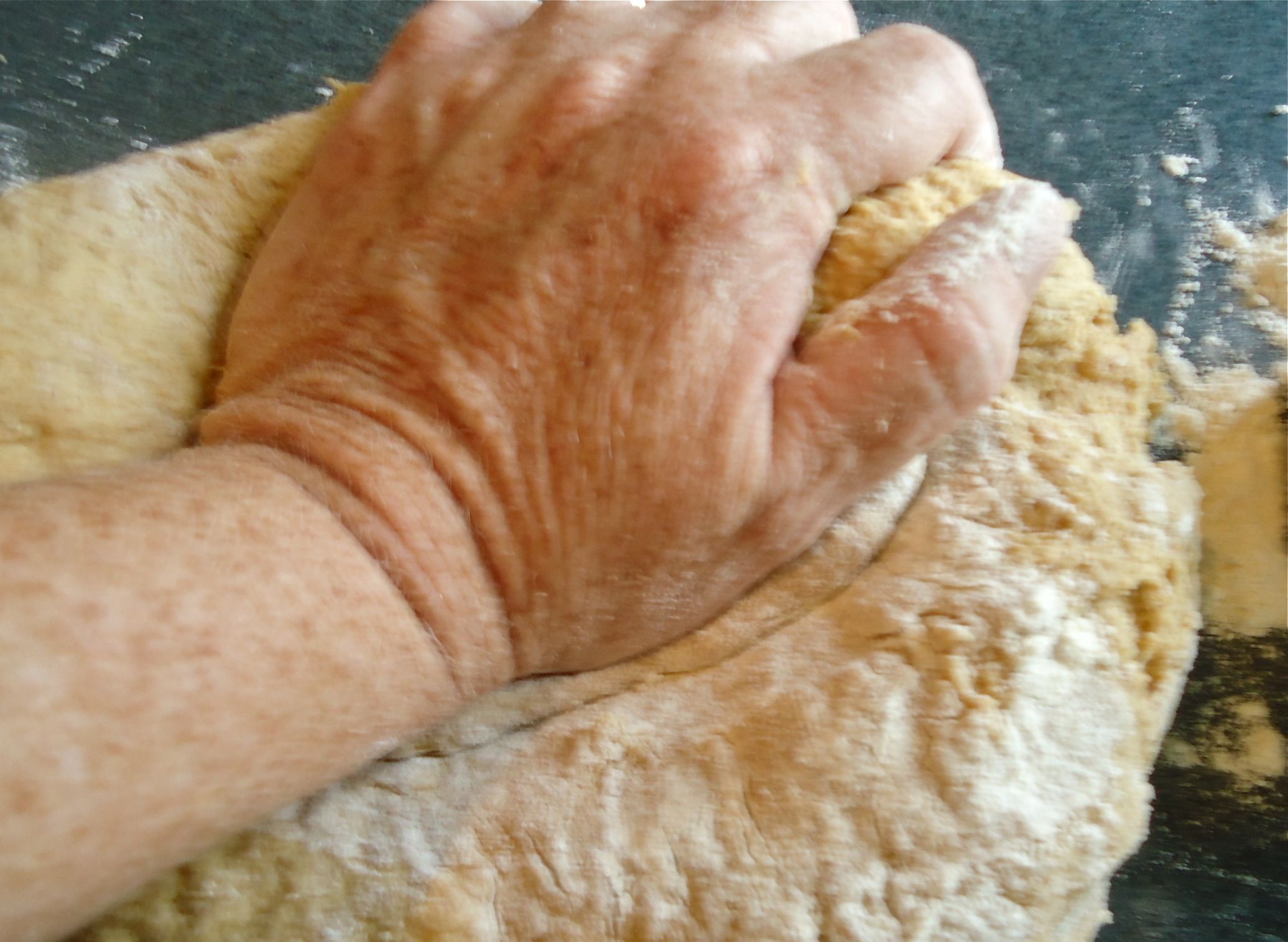
Knead the dough by adding a small amount of flour, incorporating it into the dough. The steps to knead are the following:

Sprinkle with flour and fold dough over slightly, then…

push the dough back with the palm of your hand.

Turn the dough ball approximately 45 degrees and repeat the steps: sprinkle with flour, fold over the dough and push back with the palm of your hand. This is called “kneading”. You will do this for 10-12 minutes or until the dough is not sticky, but elastic.

Place the kneaded dough in a greased or buttered bowl. Cover with a cloth and set in a warm (but NOT hot) place to rise for about 1 hour. Do not sit directly on heat.

After an hour or so, the dough will rise to about doubled in bulk.

Next, squeeze the dough or “punch it down” as shown here. It will deflate. Remove the dough to a clean surface to divide in half or thirds.

I divided this dough for 2 loaves or boules. The one on the right is going to be part of dinner tonight. The other boule is going into the freezer. After it is well frozen ( 2 hours or so ) I will wrap it up tightly with plastic wrap and store in the freezer for a week.


Allow the loaf (or boule) to rise again in a warm place for about an hour. Here I sliced an “x” into the top of the boule (before allowing it to rise!) and gave it an egg white wash just before popping it into a hot 425 degree oven.

1-2-3 Bread 

  • 2 packages dry yeast
  • 1 cup water, barely warm
  • 3 tbl. molasses
  • ½ cup milk scalded
  • ½ cup buttermilk
  • 1 egg, beaten
  • 3 tsp. salt
  • 2 tbl. butter, melted but cooled slightly
  • 1 cup unbleached whole wheat flour
  • 2 cups unbleached bread flour
  • 3 cups unbleached all purpose flour

In a large mixing bowl combine yeast, water, molasses and milk. Allow to sit 5 minutes. Whisk in the buttermilk. Add the whole wheat flour, bread flour and salt. Allow to sit for 20 minutes at room temperature. In a separate bowl whisk egg with butter. Add this to the yeast mixture. Mix in 1 more cup of bread flour and using about ½ more cup at a time mix in the all-purpose flour to make a soft dough. Note that you may only add in 2 cups of all-purpose flour to the dough, but knead in the other cup. Knead about 10 minutes using as little all-purpose flour as required to get reduce stickiness of the dough.

Place kneaded dough in a greased bowl and allow to rise until doubled in bulk, about an hour. Punch down. Divide in half for 2 boules or into 3 parts for 3 loaves or pinch into 3 inch pieces for rolls*. Place into greased pans and allow to rise again for 1 hour. Preheat oven to 425 degrees.

Bake in the preheated oven about 25-30 minutes for the large boule, 18-20 minutes for the loaves and 13-15 minutes for the rolls. Cool on wire rack.

*At this point you can freeze the dough in a flattened disk. Be sure to wrap well to prevent freezer burn. When ready to bake, allow to defrost n the refrigerator overnight. Then let dough rise and proceed with rest of the recipe.

Winner, winner…sticky toffee banana pudding – for dinner?

Have you been enjoying the London Olympics? Our family is burning the mid-night oil this week, viewing much more television that normal. How about that Gabby Douglas? Not to mention Missy Franklin and world-record setting Rebecca Soni – it’s been exciting to see our teams do so well this time  and during this Olympiad sharing the excitement with our 4-year old has been a treat. Yes, we‘ve let her stay up late to watch. Perhaps we’ll pay for that after another week (when she’ll go back to a normal bedtime), but the summer games are only every 4 years, so what the hay?

I remember seeing many spectacular moments as I watched the games throughout my childhood. Let’s see… Mark Spitz winning 7 gold medals and setting 7 world records, Nadia Comaneci awarded a perfect 10 for her uneven bar routine and the 1996 ‘Magnificent Seven’ winning gold in Atlanta. I was very lucky to attend the games in ‘96 and although I did not get to attend any gymnastics I did go to some diving, baseball and celebrate at the Warsteiner Village with some refreshing Premium Verum and Dunkel.

This time around I am enjoying seeing the sights around London and remembering the trip I made there several years ago with two of my sisters. Cudos to the London Olympic Committee and the all British travel professionals because I really want to go back now. During my previous excursion, our accommodations were a pretty flat located very near Buckingham Palace that boasted a terrace view of Big Ben. We took in many of the regular touristy sights (love that British Museum as well as the Tate) and saw the show “Chicago!’ (ironic to see it in “London!”), visited Greenwich (of ‘Mean Time’ fame) and had several delightful meals around town including lunch at The Ivy, where we lucked into a reservation at a moment’s notice.

As I remember all three of us ordered à la carte and everything we ate (and shared) was quite good. Being a foodie-type person even then, I had done my homework and knew something about The Ivy and it’s fabled sticky toffee pudding. As stuffed as we were from our entrees and as one sis left to work (that’s we were able to tag along on the trip), my other sister and I hunkered down for dessert. I was not leaving without that sticky toffee pudding! In fact, I think I inquired if they had it on the menu that day before we were even seated.

Needless to say the pudding was more than I had hoped for, it was rich and dense and gooey with toffee/caramel flavor. It was simply fantastic. I’m pretty sure I rolled myself back to the flat for a power nap afterwards.

My new purpose in life was to recreate it, once I returned home. I found The Ivy recipe and had fun making it a few times for dinner parties, telling anecdotes from my trip to London and The Ivy. Over the years I have played around with the original recipe, making additions occasionally and reducing the serving quantity. Honestly it is a very rich dessert, so a little goes a long way.

It’s my small homage to the Brits and London, in particular. Here’s to you London for being a great host of the games this time around. Nice to see you on the telly, but I do hope to visit again in person. Cherrio!

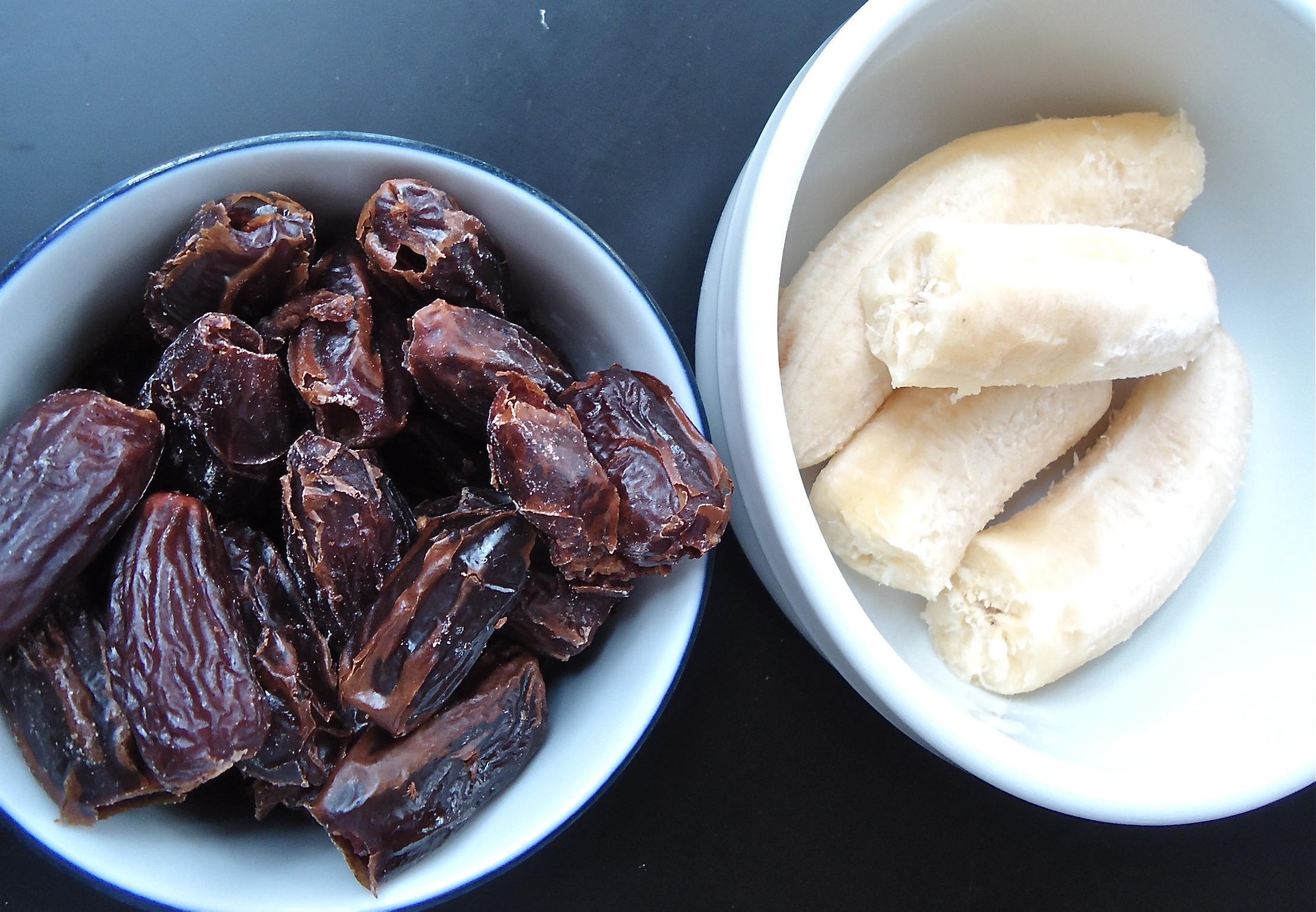
Use good quality, pitted dates and ripe bananas.

Mix the oil and sugar in a mixing bowl.

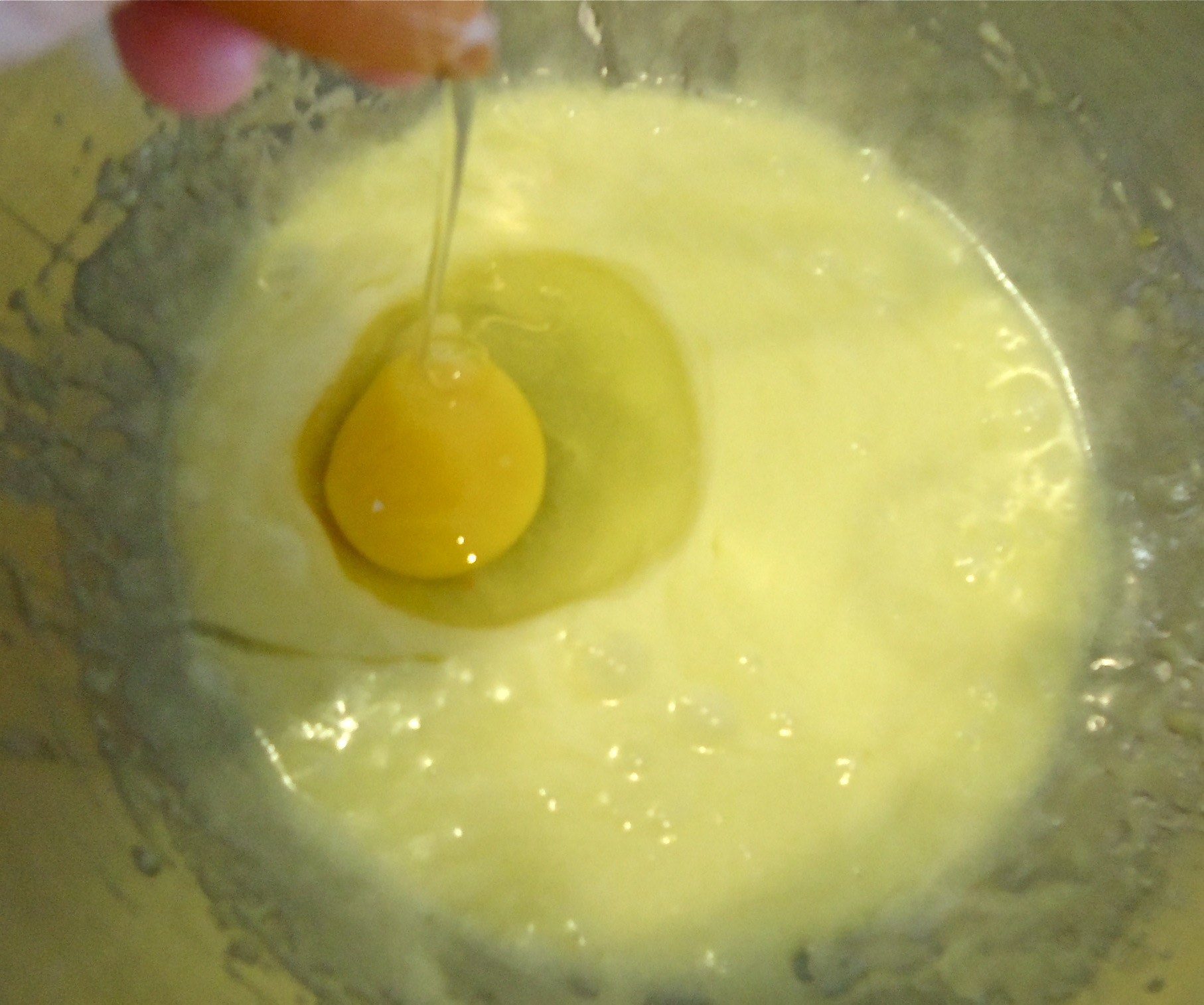
After the butter add the eggs one at a time. Mix well, scraping the bowl if necessary.

Add the flour mixture to the egg/oil/sugar mixture. Then add the vanilla extract.

Add the pureed dates to the batter. You can see the consistency is chunky but moist since soaking them in the hot water.

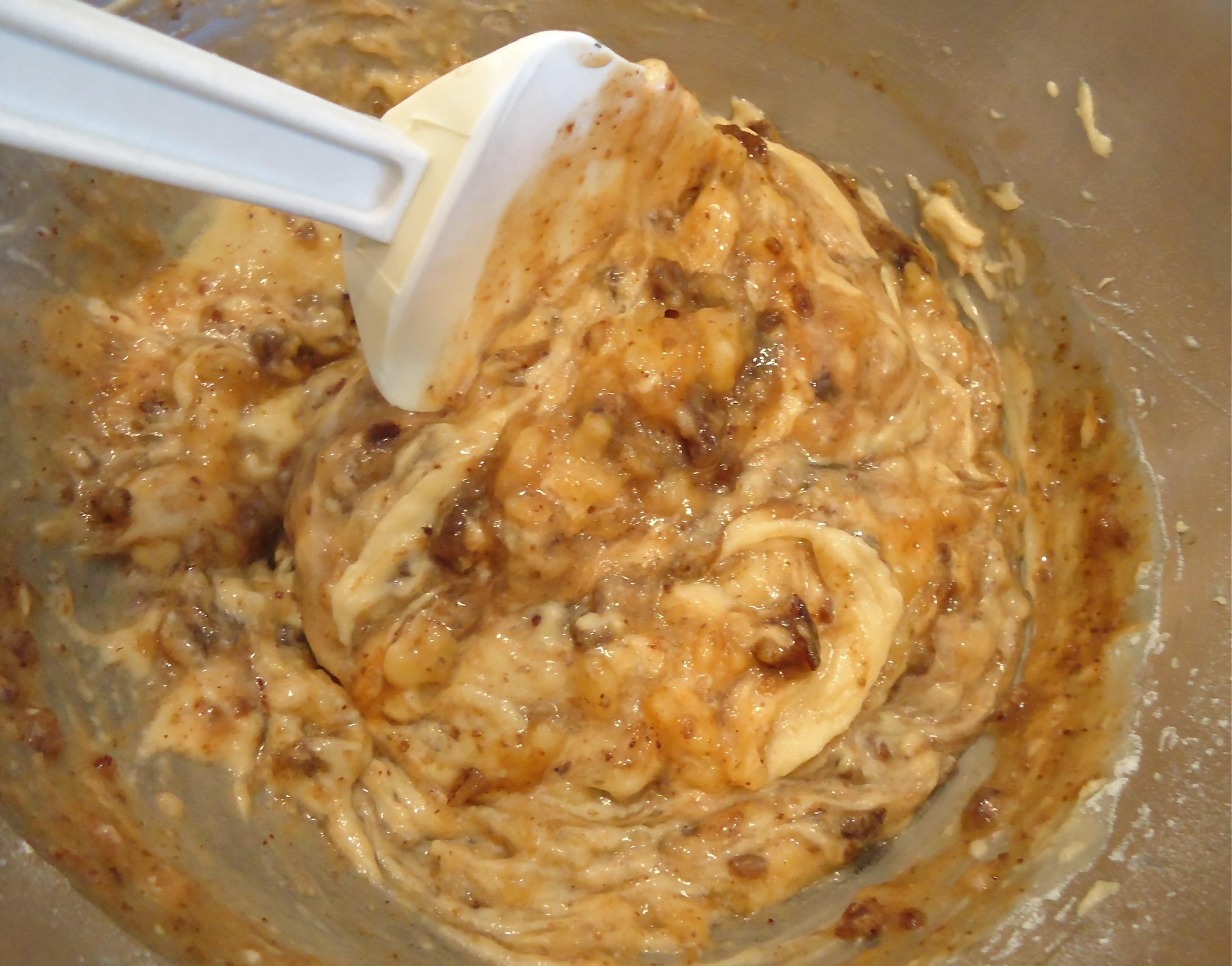
Here’s the batter as I stir in the dates and banana. Almost ready for the baking pan!

Pouring the batter into the prepared pan.

The baked pudding. Leave it in the pan because we are going to smother it in ooey, gooey toffee sauce!

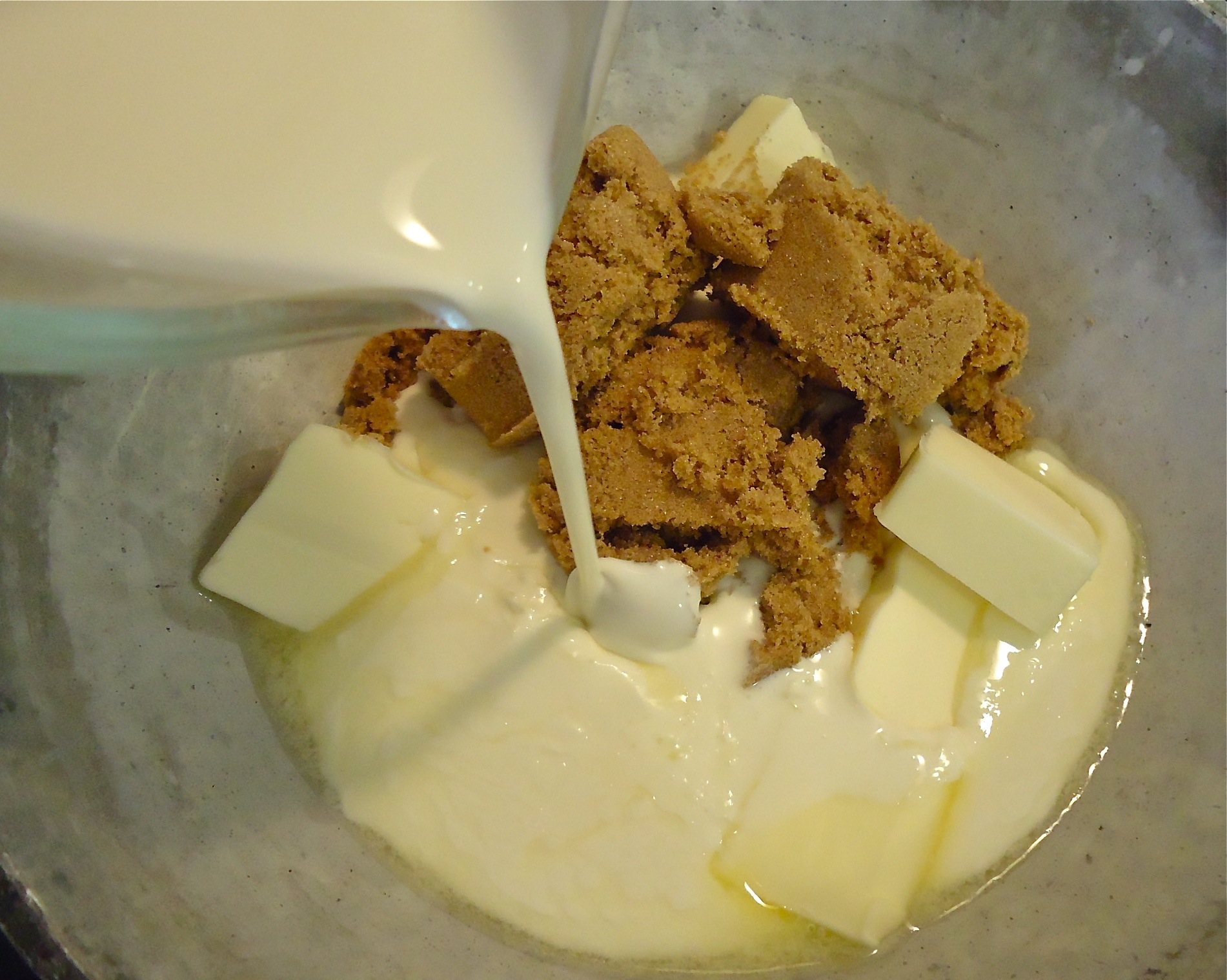
This toffee/caramel sauce is so easy to make. Melt the butter with the brown sugar over low heat. Add the cream.

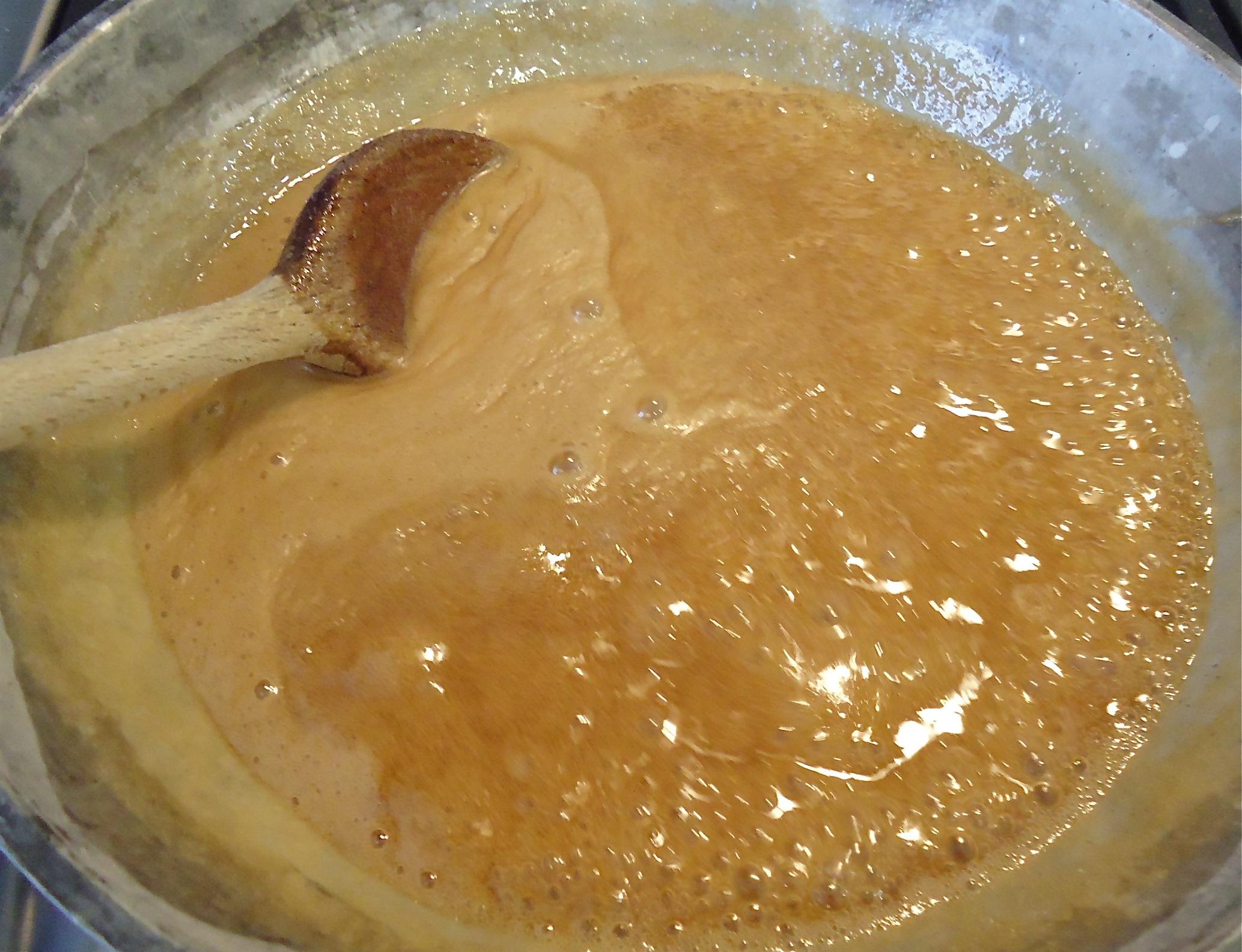
Next turn up the heat but keep stirring. Bring to a simmer and when the mixture starts to foam remove from the heat. Sir in the vanilla extract.

Using a skewer poke holes in the pudding in an even pattern. Pour about half of the hot toffee sauce over the pudding. Allow to ‘soak’ at least 15 minutes before serving.

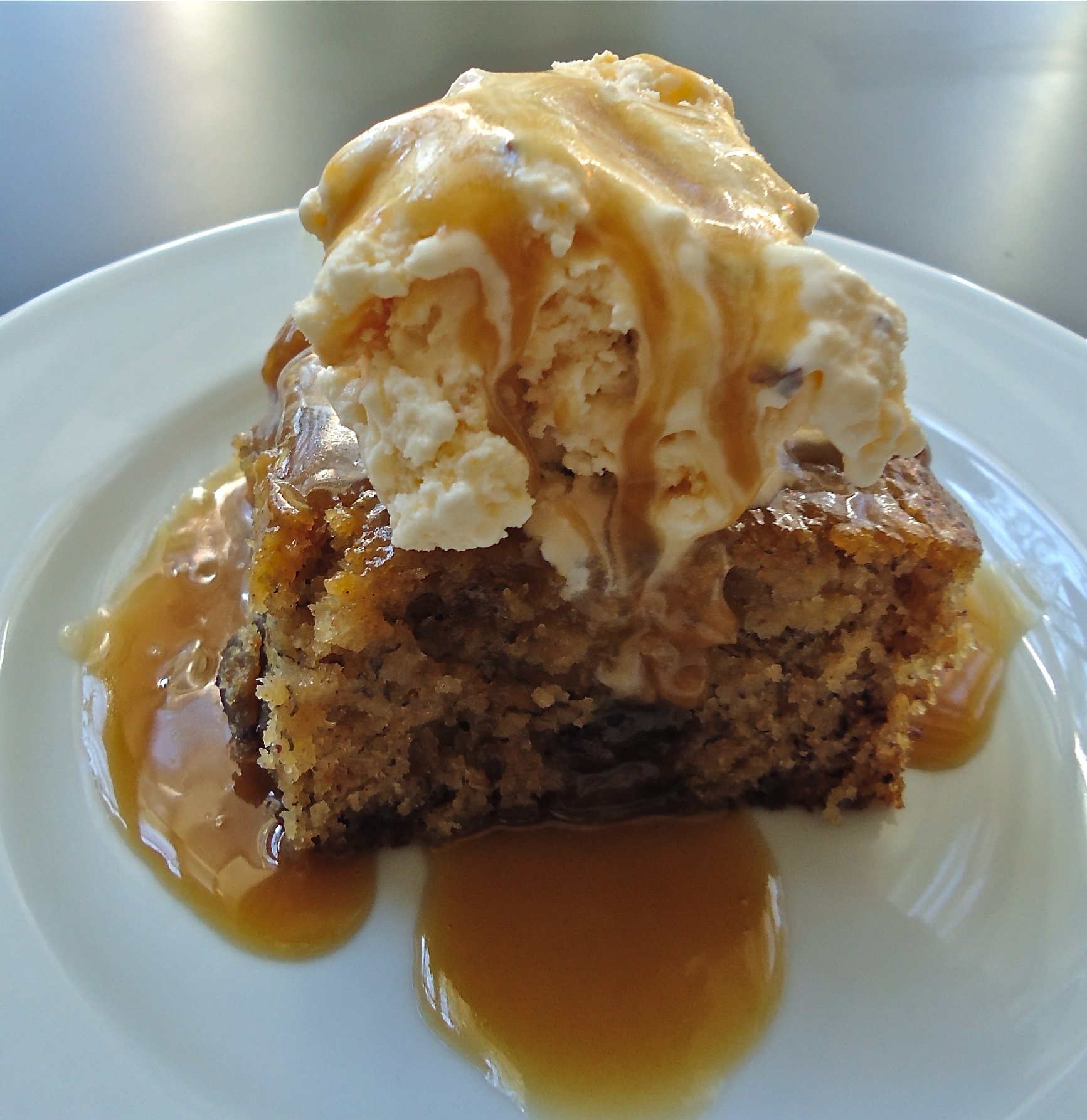
Another shot of the finished sticky toffee banana pudding. Yummy!

Sticky Toffee Banana Pudding

  • 1 cup pitted dates, rough chopped
  • 1 cup ripe bananas, mashed
  • ½ tsp. baking soda
  • ½ cup boiling water
  • 1 cup all-purpose flour
  • 1 tsp. baking powder
  • ½ tsp. salt
  • 2 tbl. butter, melted
  • ½ cup sugar
  • 2 eggs
  • 1/3 cup vegetable oil
  • ½ tsp. vanilla extract
  • 1 recipe caramel toffee sauce (see below)
  • ice cream, whipped cream or crème fraiche

Preheat oven to 350 degrees. Oil or butter a 8 or 9 inch square baking pan.

In a bowl place dates and pour boiling water. Allow mixture to sit for 10 minutes. Place dates and soaking water in food processor and chop until fine – almost a puree but with keeping some small bits. Add the baking soda and set aside.

Sift flour, baking powder and salt and set aside. In a large mixing bowl beat vegetable oil and sugar. Add melted butter and mix. Add egg one at a time, mixing well after each. Mix in vanilla extract and stir in the flour mixture. Beat on medium speed 1-2 minutes, scraping bowl. Stir in dates and banana.

Pour batter into prepared pan and bake 20-23 minutes or just until the center of the pudding is not jiggly in the center. Do not over bake. Remove pudding to a rack to cook – but leave in the pan! Make the caramel toffee sauce (below).

Using a skewer punch holes across and all over the top of the pudding. Pour half of the hot caramel toffee sauce over the pudding so it soaks in for at least 15 minutes. Cut warm pudding into squares, top with a dollop of whipped cream, vanilla ice cream or crème fraiche. Drizzle a spoonful (or two!) of caramel toffee sauce.

Make 6-9 servings. Store leftover pudding, covered, in the refrigerator.

Caramel Toffee Sauce

  • 2/3 cup  dark brown sugar, packed
  • 6 tbl. butter
  • 2/3 cup heavy cream
  • 1/2 tsp. vanilla extract

In a saucepan, heat the butter with the sugar over low heat. Add the cream and stir. Increase heat to a simmer and keep stirring. When the mixture begins to foam, remove from the heat and stir in the vanilla extract. Pour half over the pudding & reserve other half for serving with individual portions of the pudding. Refrigerate any leftovers.