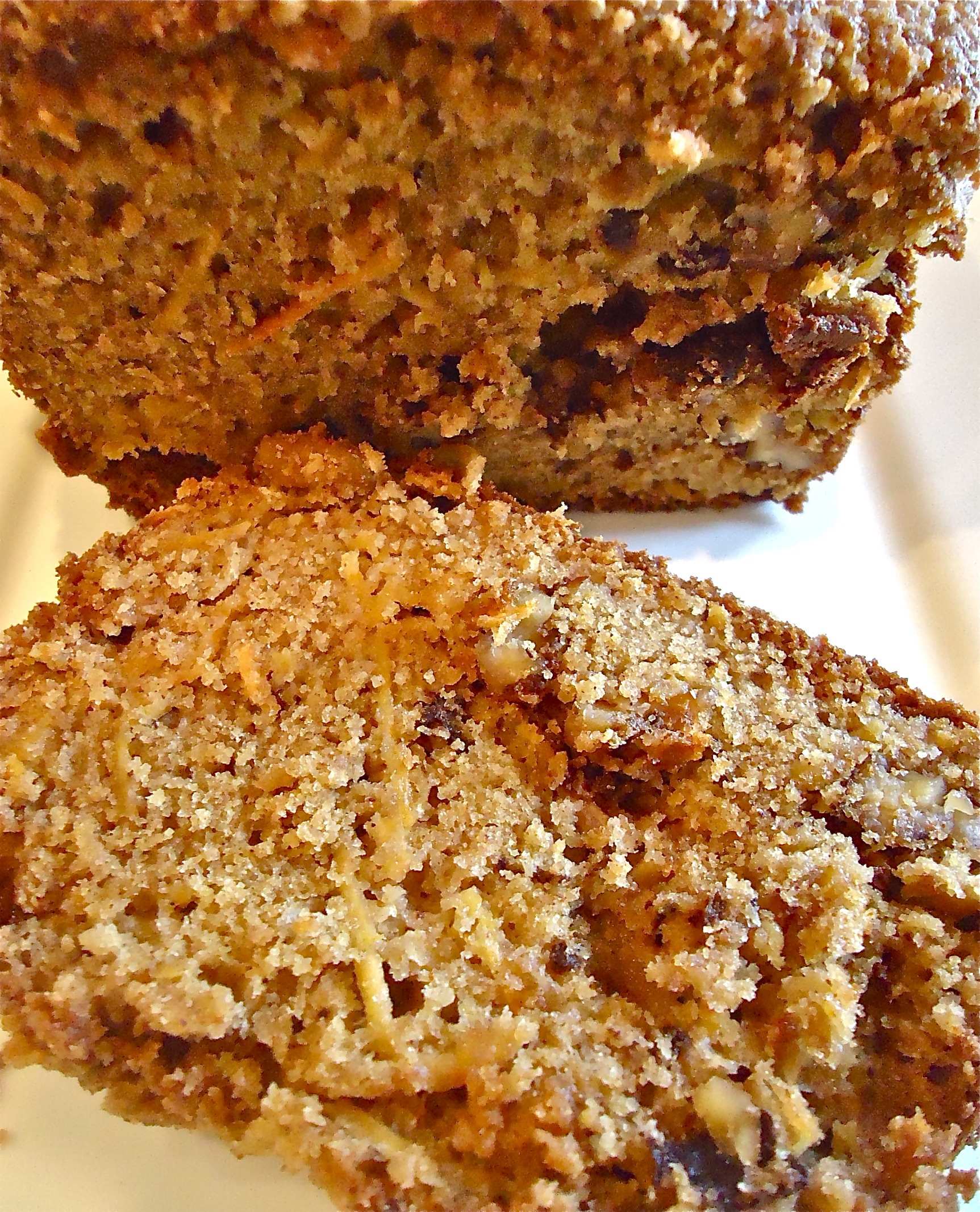
Rutabaga, rutabaga, where for art thou…my rutabaga?

For the last couple of weeks I have had an oogly little monster of a vegetable staring at me from across the kitchen island. Purchasing the rutabaga was a whim. I saw a small pile of them displayed upfront and center at my local grocery with a handmade sign exclaiming, “Sale! $.59 lb.!” That got my attention and even though I know that this turnip is a late fall and winter crop, not late spring, I reasoned that for less than a dollar I could have some fun with this root vegetable, plus I actually like them. I’m not kidding.

The most off-putting part of dealing with the rutabaga (also called a swede) is its odor. It does not exude a pleasant smell when being cooked. But the aroma can be camouflaged easily enough by use of other smells – garlic, onion, lemon, and of course, spices like cinnamon, cloves etc. I chose the latter.

A few days ago my tuberous friend sprouted a couple of leafy green spikes so I surmised it was either cook it up somehow or stick it back in the ground to eat another day. This time I chose the former. Deciding how to prepare it was another quandary altogether. I thought about making croquettes or roasting it with other root vegetables, or maybe a soup. But in the end, I settled on a quick bread – using a nice combo of spices and some toasted walnuts in a moist batter.

My Mom cooked up rutabaga a good bit in our household and both of us appreciated it’s unusual flavor. Now my dad and brother did not, so happily we got the rutabaga all to ourselves. She just cooked it into a mash of sorts, with some butter and a dash of salt. It is one food that does not taste like it smells after it’s cooked – to me the taste, when simply prepared, is rich and earthy and clean.

And believe it or not, that one rutabaga I used in this recipe provided enough shredded pulp for both the loaf of bread and about 2 cups of cooked puree. I guess I should add ‘economical’ to the rutabaga résumé.

My friend the rutabaga…

The rutagaba is not as difficult to peel as say, a jicama.

Shred the rutabaga with a grater, mandolin or a food processor.

Mix together all the wet ingredients: eggs, oil, buttermilk, applesauce, and vanilla extract. You can use a whisk or a mixer.
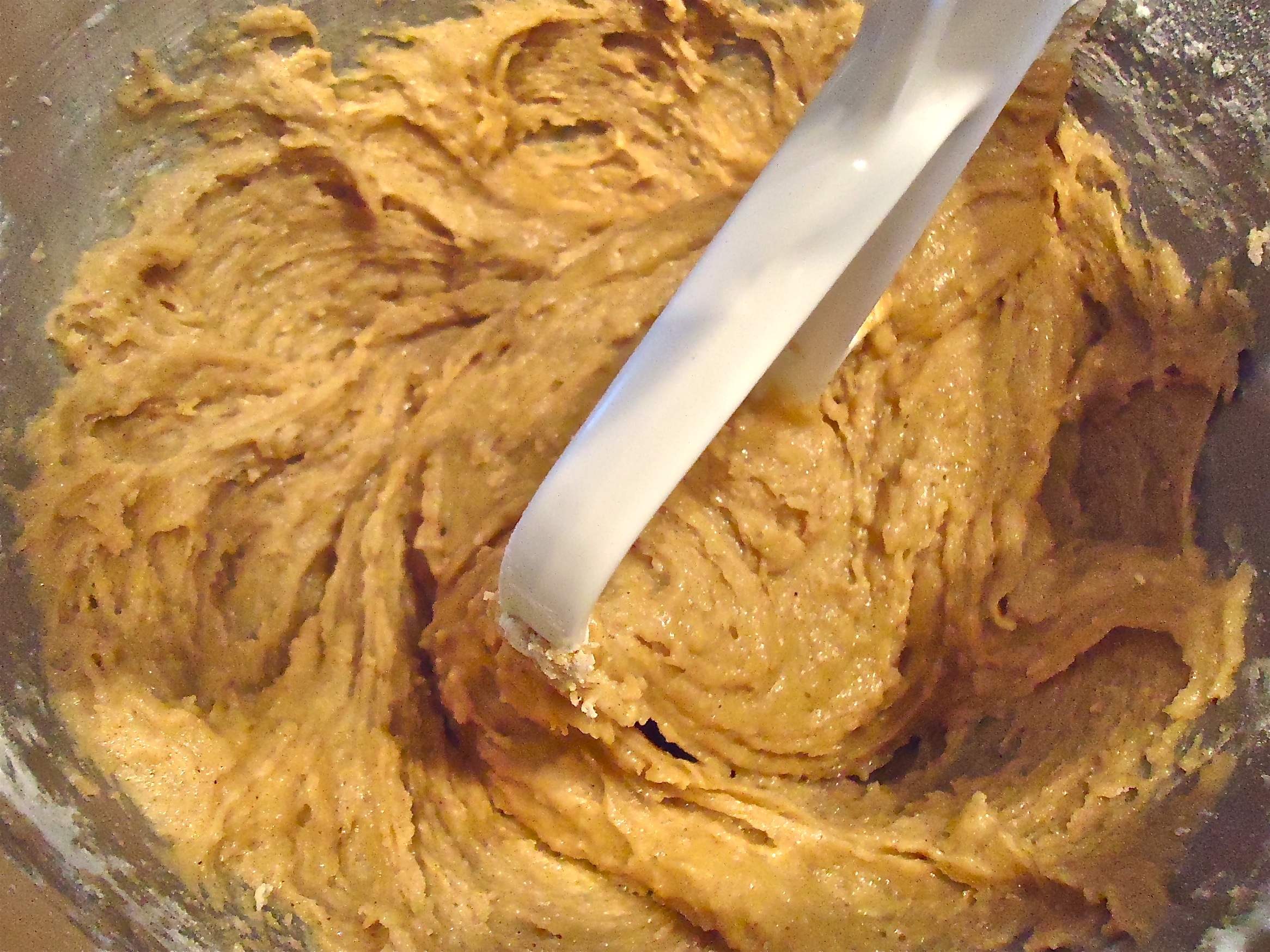
Add the sugar and the dry ingredients into the batter – which you have sifted together already. It will be pretty thick.

Stir in the rutabaga.

Mix in the toasted walnuts.

Make a typical streusel-type topping with butter, sugar, and flour plus some cinnamon. I like demera sugar (and it’s molasses overtones), especially when it’s on sale!
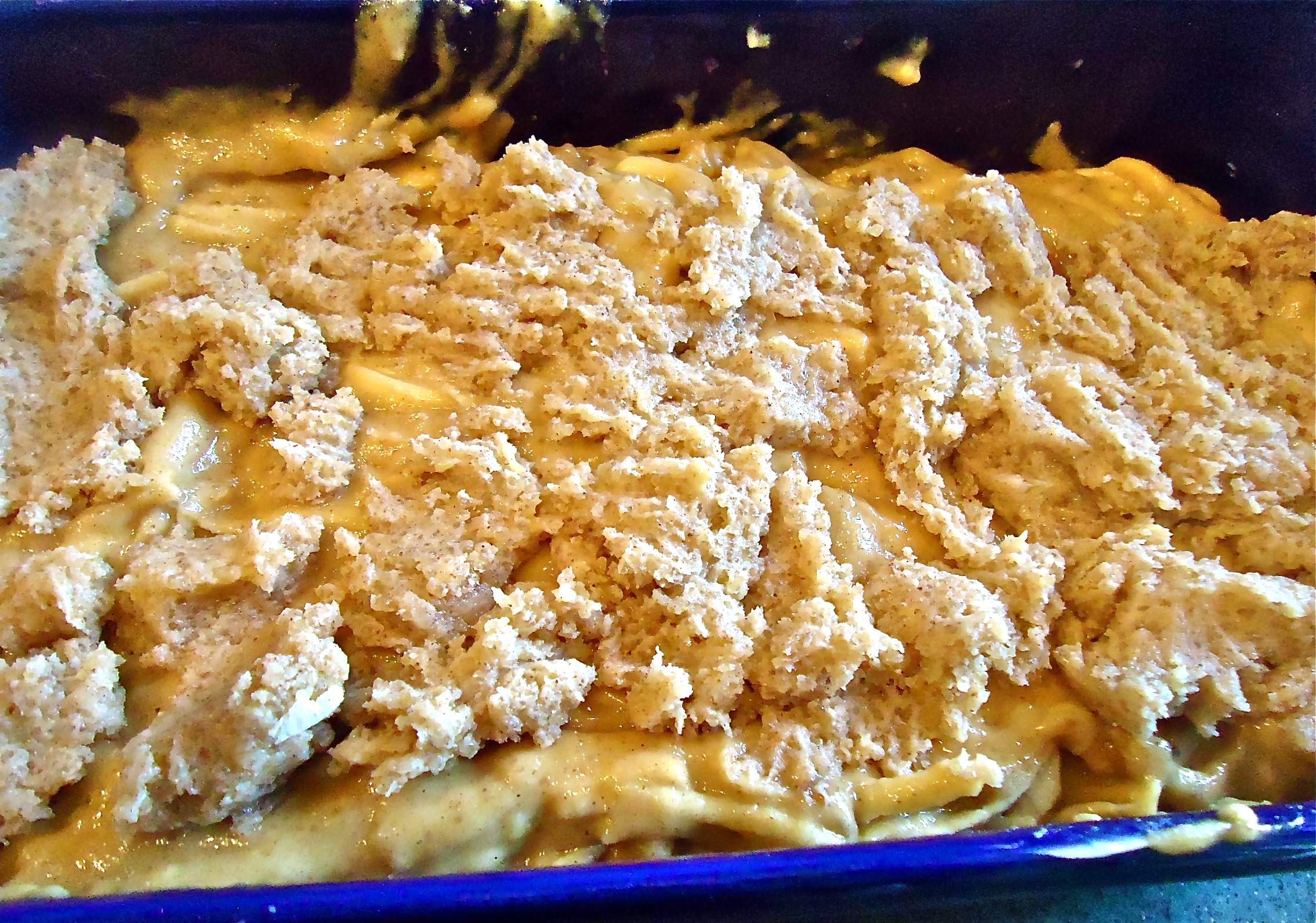
Drop the streusel topping onto the rutabaga batter.

Remove the bread form the oven and allow to cool in the pan for about 10 minutes. Then release onto a rack to finish cooling. When completely cool, store in an air tight container or covered with plastic wrap. Delicious for breakfast with a hot cup of coffee!

Rutabaga Walnut Spice Bread 

  • 2 cups shredded rutabaga
  • 2/3 cup toasted chopped walnuts
  • 2 eggs
  • ½ cup applesauce
  • 2 cups flour (combination of 1 cup all purpose and 1 cup white whole wheat)
  • ¼ cup all purpose flour
  • 1 tsp. baking soda
  • ½ tsp. baking powder
  • 1 tsp. salt
  • 1 tsp.+ ground cinnamon
  • ½ tsp. ground coriander
  • ¼ tsp. ground cloves
  • ½ cup vegetable oil (canola or just vegetable)
  • 2 tbl. buttermilk
  • 2 tbl. butter, softened
  • 2 tsp. vanilla extract
  • 1 cup + ¼ cup demera sugar (or brown sugar, packed)

Preheat oven to 350 degrees. Lightly oil or grease a loaf pan. Sift together the flour, salt, baking powder, baking soda, 1 tsp. cinnamon, the cloves and coriander. Set aside. In a large bowl beat the eggs with the applesauce, buttermilk, vanilla extract and oil until eggs are well incorporated. Mix in the sugar, other dry ingredients and the rutagaba. Stir in the walnuts. Pour into the prepared loaf pan.

In a small bowl mix the butter, ¼ cup flour and ¼ sugar with a fork. Sprinkle in some ground cinnamon – perhaps ¼ teaspoon. Drop this in small pieces – about the size of a nickel – over the top of the uncooked bread. Bake until a toothpick inserted in center of the loaf comes out clean, 55 to 60 minutes. Allow to cool in the pan for 10 minutes and then invert onto a rack to finish cooling. Slice and serve.

Rolling in the deep: luscious, comfy custard

When cooking is your hobby and food a passion, epiphanies occur often. I’ve had a fare share of epiphanies throughout by life with the crux usually involving food, somehow. Understanding that most kids in this country did not have a big backyard garden or meals regularly featuring venison, quail or shrimp – provided by their own family members, as I did – was a surprise and an important insight. It’s also a point of guilt for me, when I remember how I begged my mom to buy Chef Boyardee that I had seen on television or tried at one of my school friend’s houses during a “spend the night party”.

I would complain in a whiny tone, “But why does everything we eat have to come from the garden? I want canned food!”,  I would exclaim. My heart sinks a little when I think of this now. I was so very lucky to have parents who not only knew how to raise their own food, but who loved gardening and home cooking and imparted that knowledge and love into their children.

My mom was (and is still) a wonderful home cook, but her claim to fame is her baking and dessert making. A classic dessert that was always to be found in our refrigerator, especially in the summer, was custard. I guess in some parts of the world this would be called ‘boiled custard’ but in our extended family, we just say ‘custard’ and everyone knows what you’re talking about. As I got older and understood a few of those epiphanies, I realized that lots of people had never had the pleasure of this luscious, homemade comfort food. What a shame.

My family eats custard plain, with fresh fruit, as an accompaniment to cakes and pies, as the pudding in banana pudding, and the pièce de résistance, as a base for making homemade peach ice cream! No July 4th holiday was complete at my house without peach ice cream. Since there was an abundance of free labor (5 kids in my family and at least another dozen or so between cousins and neighbors) the hand cranked ice cream churn was placed into production. We really worked for that ice cream but it was worth it!

Under the blazing Carolina sun, we would have the sprinkler set up in the backyard and our bathing suits on. After running through the sprinkler a few times, and we’d go relieve the “churner” at the helm. We’d turn the crank a few times and when the next kid/churner arrived, head back to the sprinkler. Every 20 or 30 minutes we’d add more rock salt and ice. After 3 or 4 hours (yes hours!) of this, the ice cream would go into the freezer for another couple of hours to harden up before being dished out after supper.

Rich and creamy, not too sweet with chunks of fresh SC peaches*, this ice cream was in a word, scrumptious. I think all the work made it that much better too, and when I think about it now, I suppose we did not see it as ‘work’ but as play. For me no store bought ice cream, no matter how decadent, will ever match this taste (and the warm & fuzzy feeling I get remembering those times).

One of my goals this summer is to make some of that peach ice cream with my daughter (and I’ll post on southbyse, of course!) but in the meantime here’s our family recipe for custard. Some folks actually drink custard, but not at our house – this recipe is fairly thick so we always used a spoon.

* South Carolina, the state where I was born and reside today, produces more peaches than any other state in the US. I know you thought that would be Georgia (since it’s motto is “the peach state”), but nope – we’re number one in peaches! In fact, according to the Clemson University extension service, just one grower in SC, Titan, produces more peaches than the entire state of Georgia. How about those apples – err, I mean peaches.

Simple ingredients: Whole milk, fresh eggs, a little sugar and flour and vanilla extract.

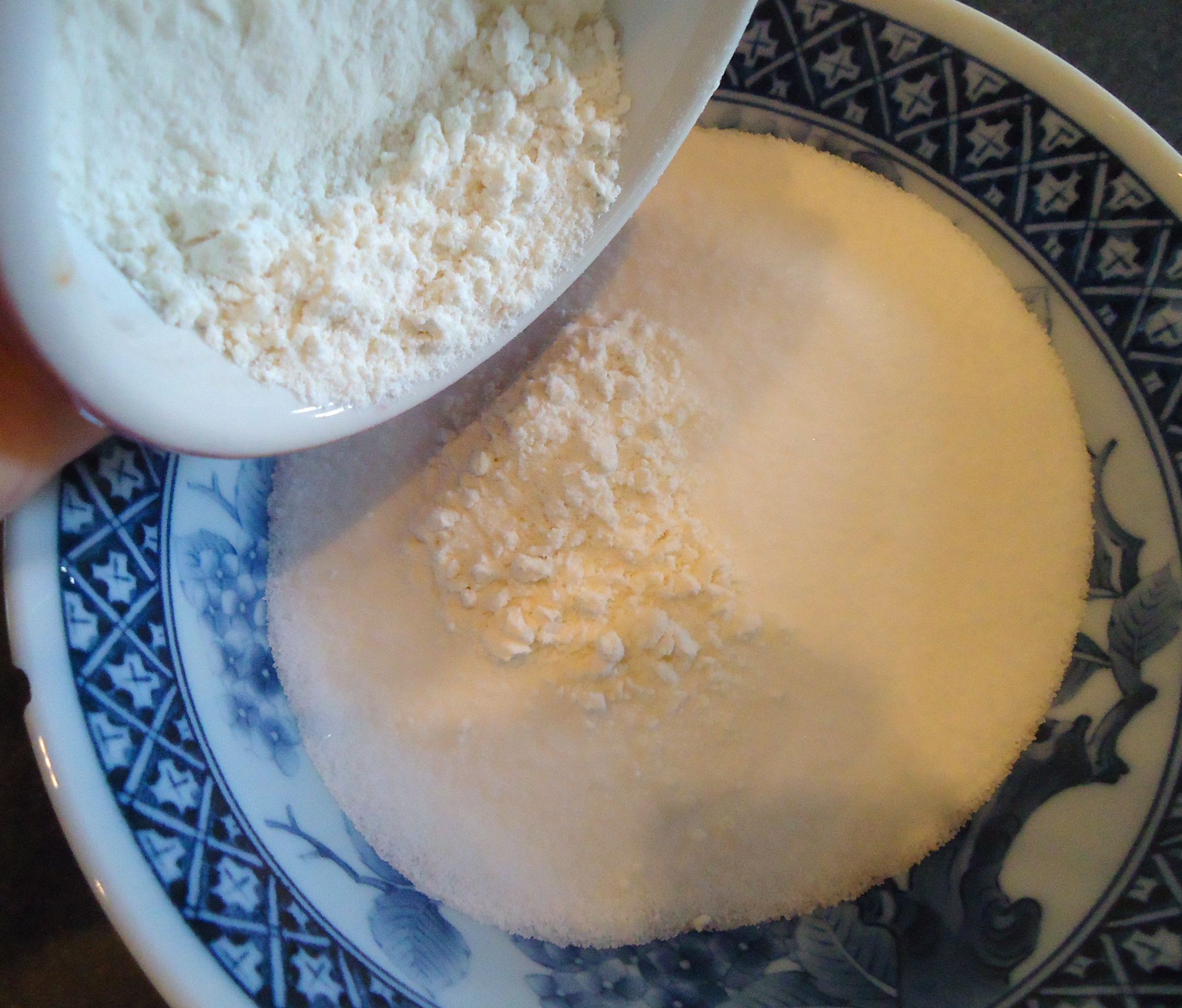
Mix the flour with the sugar. My mother always uses flour in this recipe to insure the custard thickened but don’t over do it. “Flour-ery” custard is blahhhh.

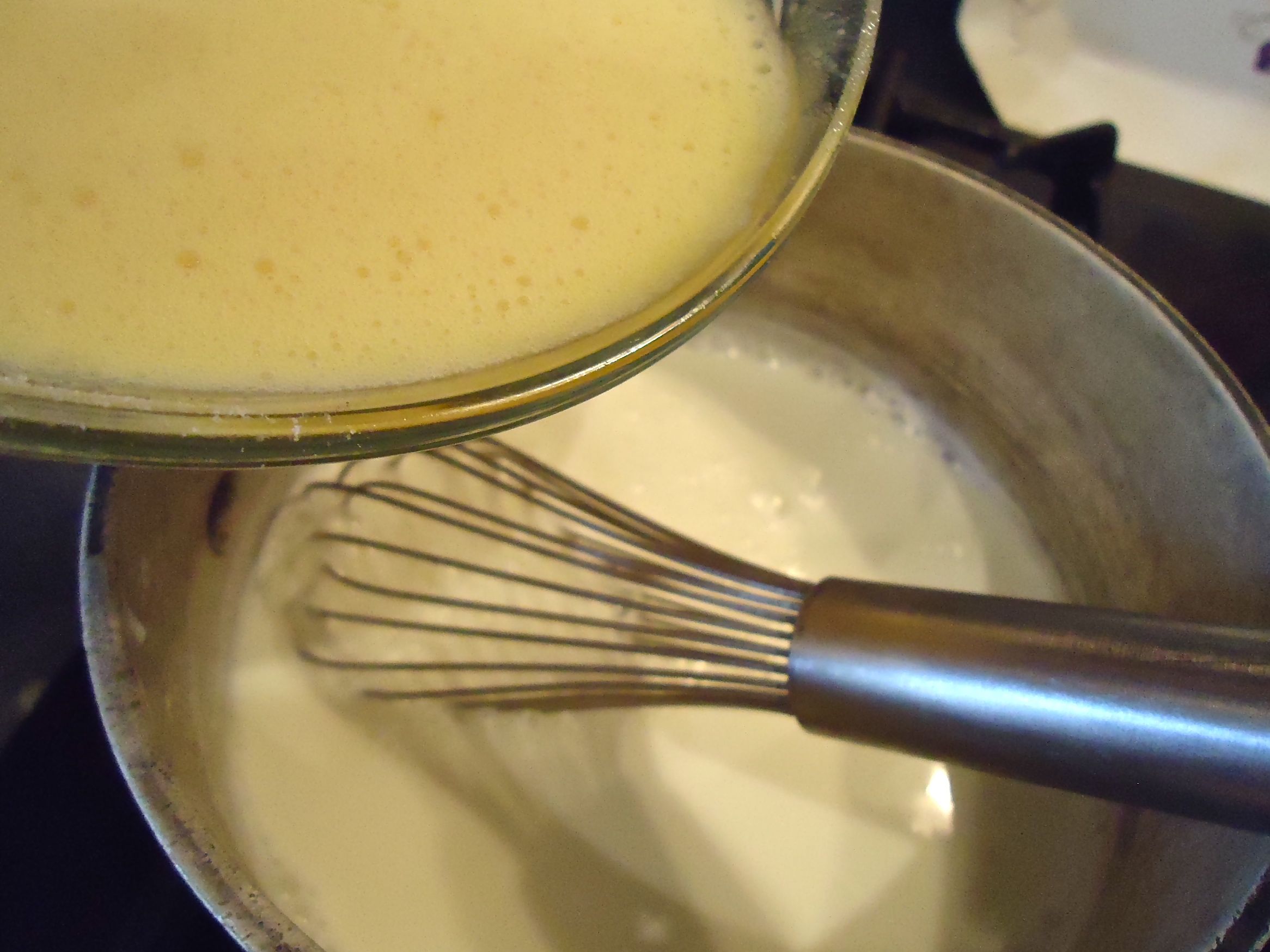
After the milk is scalded, add some of the scalded milk into the egg/sugar mixture and whisk away. You don’t want the eggs to ‘cook’ and end up with scrambled eggs.

After incorporating some of the scalded milk into the egg mixture do the reverse and whisk the egg mixture back into the scalded milk as the milk is reheating on low. Keep whisking as this mixture cooks. I use my ancient Calphalon saucepan but you can use a double boiler or a heavy pan like mine. This pan is so old (and used so often) the anodized finish is gone. It’s like an old friend to me now.

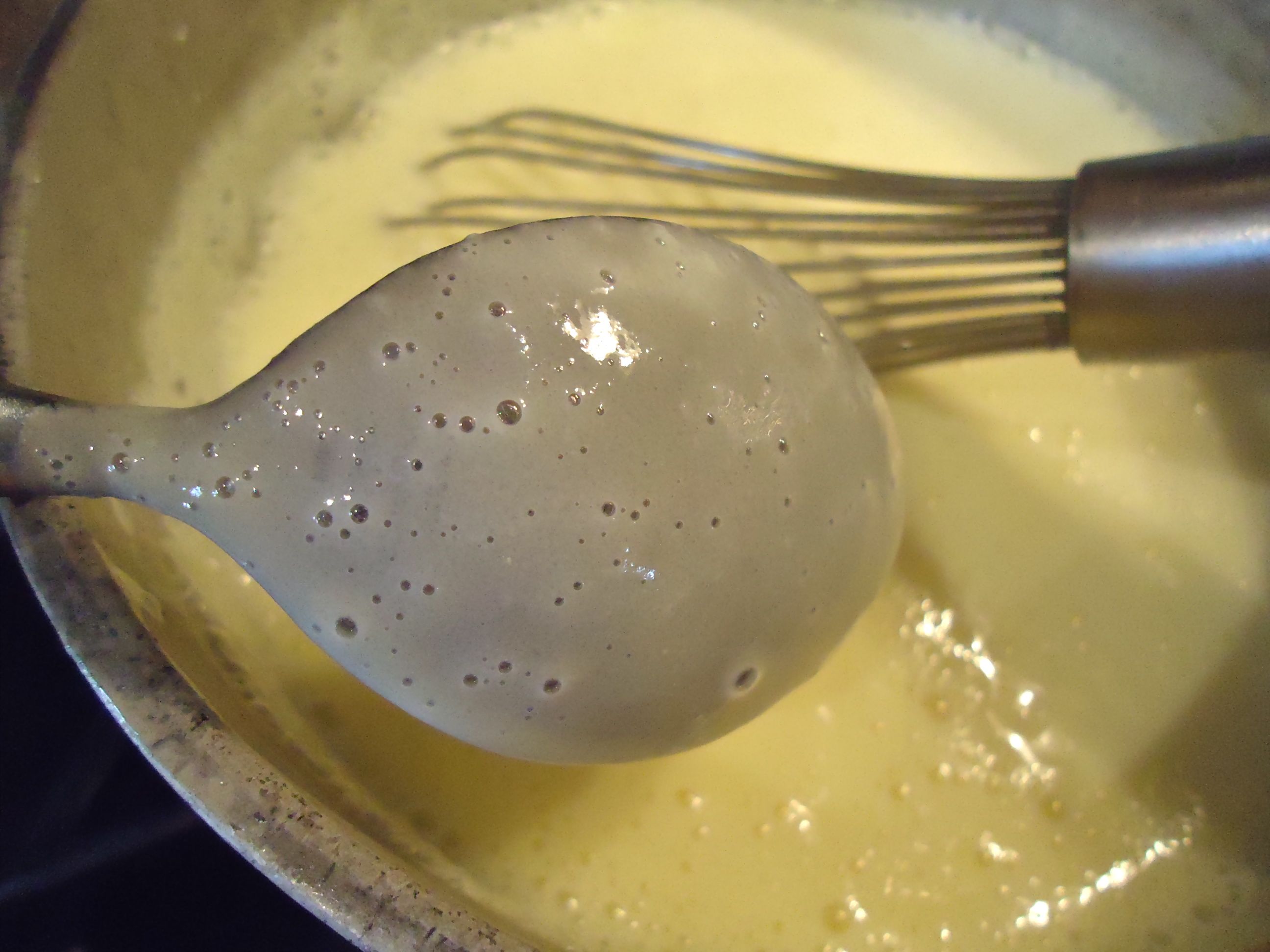
Keep cooking the mixture and stirring or whisking. Do not bring it to a full-on boil but just under a boil. The mixture will start to thicken and when it coats the back of a spoon it’s done. This image shows that it is NOT coating the spoon, yet.

Keep stirring/whisking and the custard will be thickening. Test with a spoon – and yes! This is coating the back of a spoon. It’s ready so remove from direct heat.

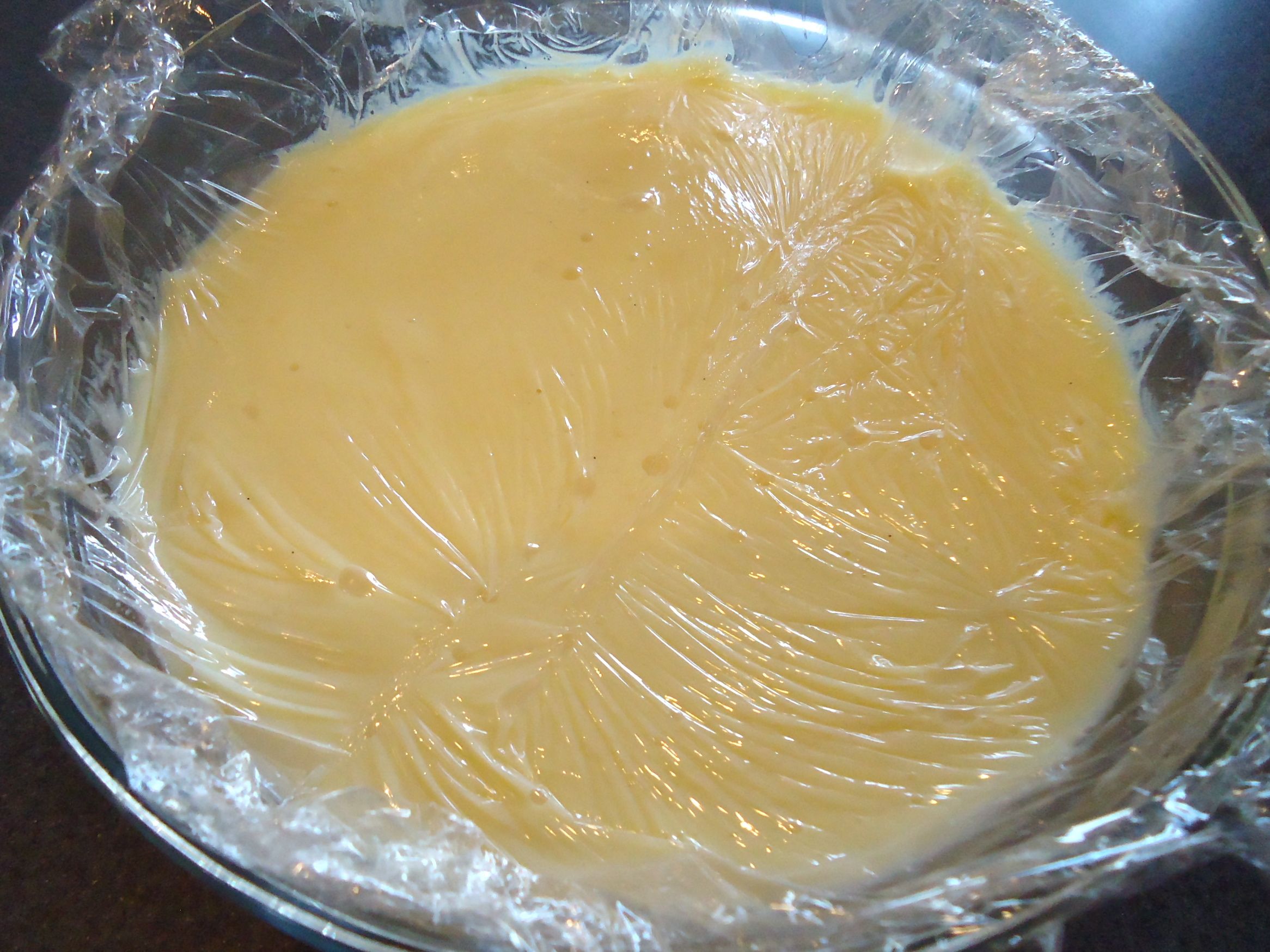
Stir the vanilla extract into the custard and pour into a container. Allow to cool slightly and place a sheet of plastic wrap directly to the top of the custard. This will prevent a ‘skin’ from forming on it. Cover the bowl with more plastic wrap (or a lid) and place in the refrigerator.

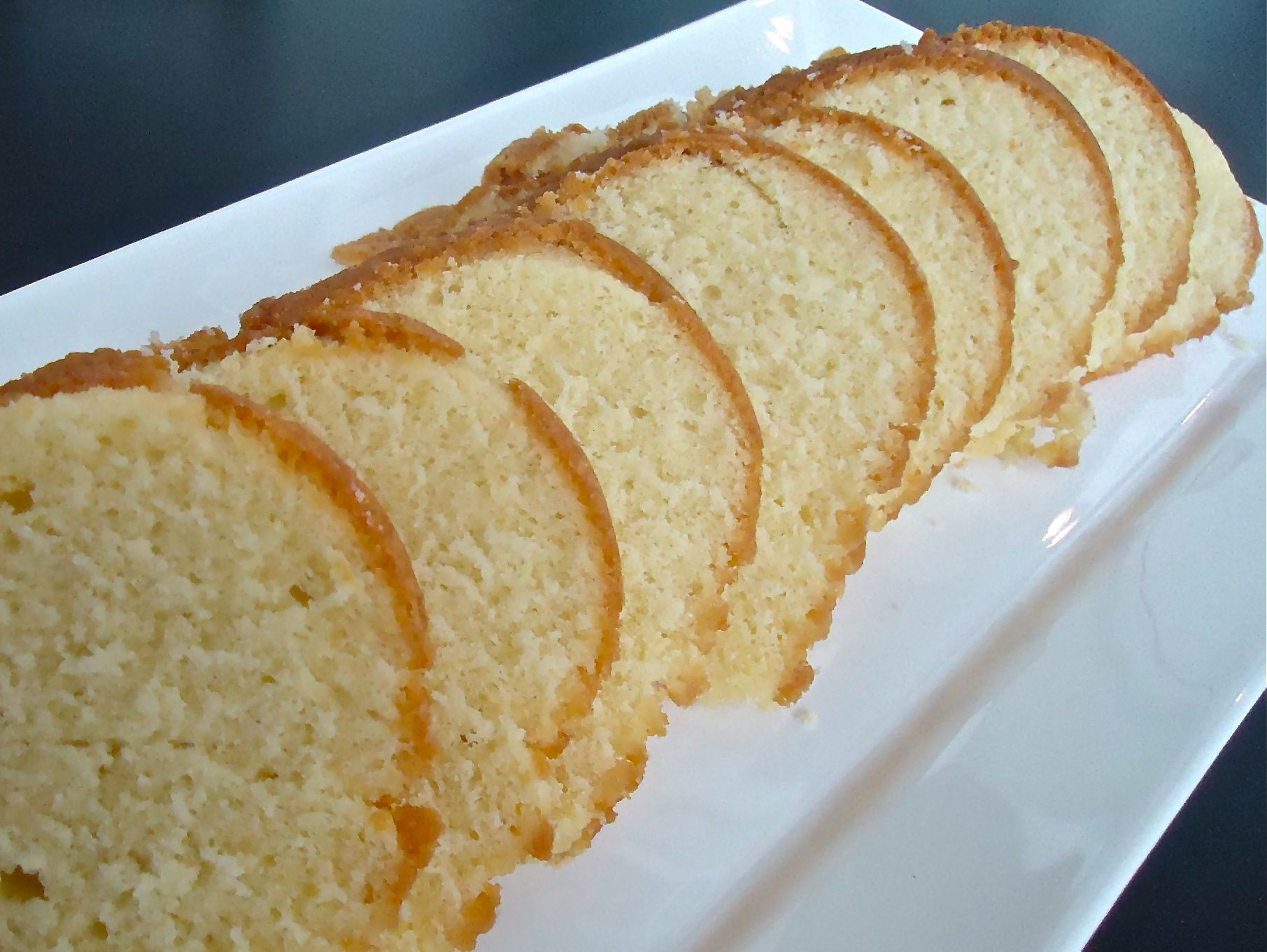
Here is a pound cake I made recently… and what’s that there? Yes, it’s custard (and some peaches too). This custard is versatile and it keeps for several days well covered, in the refrigerator.

Custard

  • 3 large eggs, well beaten
  • ¾ cup sugar
  • 1 quart of whole milk
  • 2 tbl. all-purpose flour
  • 2 tsp. vanilla extract

In a heavy, medium-sized saucepan or top of a double-boiler, scald the milk and allow to cool slightly. In a small bowl mix the sugar and flour. Whisk the sugar/flour mixture into the eggs. Make sure this mixture is well incorporated and smooth. Spoon or scoop out about ¼ cup of the egg mixture and quickly whisk this into the scalded milk. Repeat and mix well.

Place the milk back on the heat and whisk the remaining egg/sugar mixture into the milk as it heats. Keep whisking and heating until the mixture comes almost to a boil and coats a spoon when it is dipped into the hot custard (see image). Remove from the heat and stir in the vanilla extract. *Allow to cool slightly and place in the refrigerator.

Serve on it’s own, with berries or as a cake or pie topping. This is awesome in banana pudding!

*Cover the slightly cooled custard with plastic wrap that touches the top of the custard. This should prevent a “skin” from forming on top.

Field Trip: Feel the (Animal) Love at Riverbanks Zoo & Garden

Well, hello there fella! Mugging for the camera…what a gorgeous animal. Check out those eyelashes. And very sweet natured too.

Back in March my family took a trip to Riverbanks Zoo, which is located in my hometown of Columbia, SC. I’ve spent many a fun morning or afternoon at this wonderful park but I’ll admit it’s been awhile since my last visit – at least 12 years. And while I wasn’t sure what to expect exactly, I hoped the experience would be as fun and educational for my 4-year old as it was for me when I was a kid. Needless to say my expectations were exceeded.

Hello Mr. Meerkat!

It should be known that I am an “animal person” in that I am enamored of most all-living creatures. My exceptions are parasites and snakes, although I appreciate them nonetheless. When my child was born I anticipated that she would carry on this trait but one never knows. While my husband does like animals, he does not share my fascination to the same extent, i.e. when I talk longingly of having a mini farm with chickens, a couple of Nubian goats and maybe a horse or two, he rolls his eyes and moves his head back and forth. Not a good sign.

Feeding the giraffes. I don’t know who was more excited my daughter, or me!

So we keep the peace with animal–centric field trips (while providing a learning experience for our daughter). From state-run petting zoos in Alabama to the Georgia Aquarium in Atlanta to Disney’s Animal Kingdom to the ‘ginormous’ Cleveland Zoo we’ve been fortunate to visit some outstanding parks and farms. Fairly close-in to our town are the South Carolina Aquarium and the Middleton Gardens (they have a wonderful colonial-era inspired farmstead), both located in Charleston, SC. Hope to arrange a visit to both this year.

Besides the giraffes, my daughter’s favorite of the day were the flamingos.

Getting back to Riverbanks… This park has grown substantially but is still considered mid-sized which is a great thing I believe, after my recent visit. We arrived early, right after opening time on a Saturday, strolling in straight away through the main gate, touring the exhibits at a leisurely pace, breaking for lunch and finishing up shortly thereafter. As we were leaving we noticed that a substantial line had formed under the warm Carolina sun. We were pleased not to be in that line (but happy the park was busy!)

Taking a decent shot of a penguin is tough. They are so very quick! I barely got a shot of this dude (or dudedress…not sure)

Since the zoo opened in 1974 care has been taken to not “over do it” as we say here in the South. This means that growth has been gradual with the science of caring for the animals and their wellbeing placed ahead of everything else.

I’ll pick the tortoise over the hare any day!

The park has expanded and now includes the Riverbanks Farm, Aquarium Reptile Complex and beautiful botanical gardens that are the envy – and the inspiration – of every master gardener from Greenville to Charleston. There are also a myriad of educational facilities including a 3-D Action Theater, Raptor Clinic and many, many activities geared toward children including camps and school programs.

This is Chaka, the oldest male gorilla. He was very active on this morning.

The park was one of the nation’s first to use realistic non-cage enclosure designs for its exhibits. It has won many awards for everything from its design and architecture to its breeding and conservation programs.

No shirt, no shoes, no problem…I think this is Mike. He looks, and acts, pretty happy to me:)

As you can tell, Riverbanks holds a special place in my heart and I am proud to say that my Mother (who lives in Columbia) has been a supporter and member of the zoo practically since its inception. So, I suppose I get my affinity for all creatures great and small honestly, and I would not want it any other way.

Maybe Hubby will go for the henhouse… if I ask for a Llama first? Insert yield sign here! My feeble attempt at reverse psychology in progress…now where’s that website for The Araucana Club of America?

Okay last shot…baby giraffe eating. I could not resist…my favorite animal-only pic of the day.

Toss it up, baby! Fettucine with shrimp & artichoke

Dinner on the run doesn’t have to be fast-food. It can have all the appearances of a well-thought our meal, tasting and looking very “gourmet” even. I find this especially to be the case with seafood. Something – pretty much anything! – made with seafood can be impressive and for the most part, the simpler the better. Good seafood doesn’t need much in the form of accoutrements. Luckily I live on the coast in an area where we have an abundance of fresh, local seafood delicacies most of the year.

One evening a few weeks back I had all the ingredients in my kitchen to make pasta with shrimp and artichokes. The shrimp are locally caught but I had frozen them in water about 2 months earlier when we had an overabundance. And I’m not bragg’in or anything, but it was time to enjoy them as shrimp season has rolled back around again.

I set them out to thaw and by mid-day they were well on their way, so they finished up de-icing in the refrigerator. I removed the shells lickety-split and I swanny if they didn’t look and smell like they were just pulled from the trawler’s net, i.e. they had no smell and they were firm but glistening with freshness. Aside from this defrosting (and never try to thaw shrimp in a microwave or under warm water. They will get cooked or worse, become host to some unpleasant bacteria) this recipe comes together very quickly once you prepare the roux and cook the pasta. Toss it up, baby!

So I left the sweet Vermouth out of this picture. Sorry! I like Noilly Prat brand in the red bottle.

Here are the raw shrimp (prawns), out of my freezer, cleaned and shelled. Being only a pound they thawed quickly.

Here are the shallot and garlic sautéing in the butter. The beginnings of my roux.

After adding in the flour, pour in the stock and whisk until smooth. I have no idea why I was using this spatula(?) but it worked anyway…

There’s that Vermouth. Cook for a minute or so after adding this so the flavor stays but the alcohol evaporates. My sauce is smooth now too!

In go those shrimp. It will only take a few minutes for them to cook. They turn pink when they are cooked.

In go the peas and the artichoke hearts. Yes, I use frozen peas – fresh would be better – but frozen was what I had on this day. Green peas are so handy to keep in the freezer.

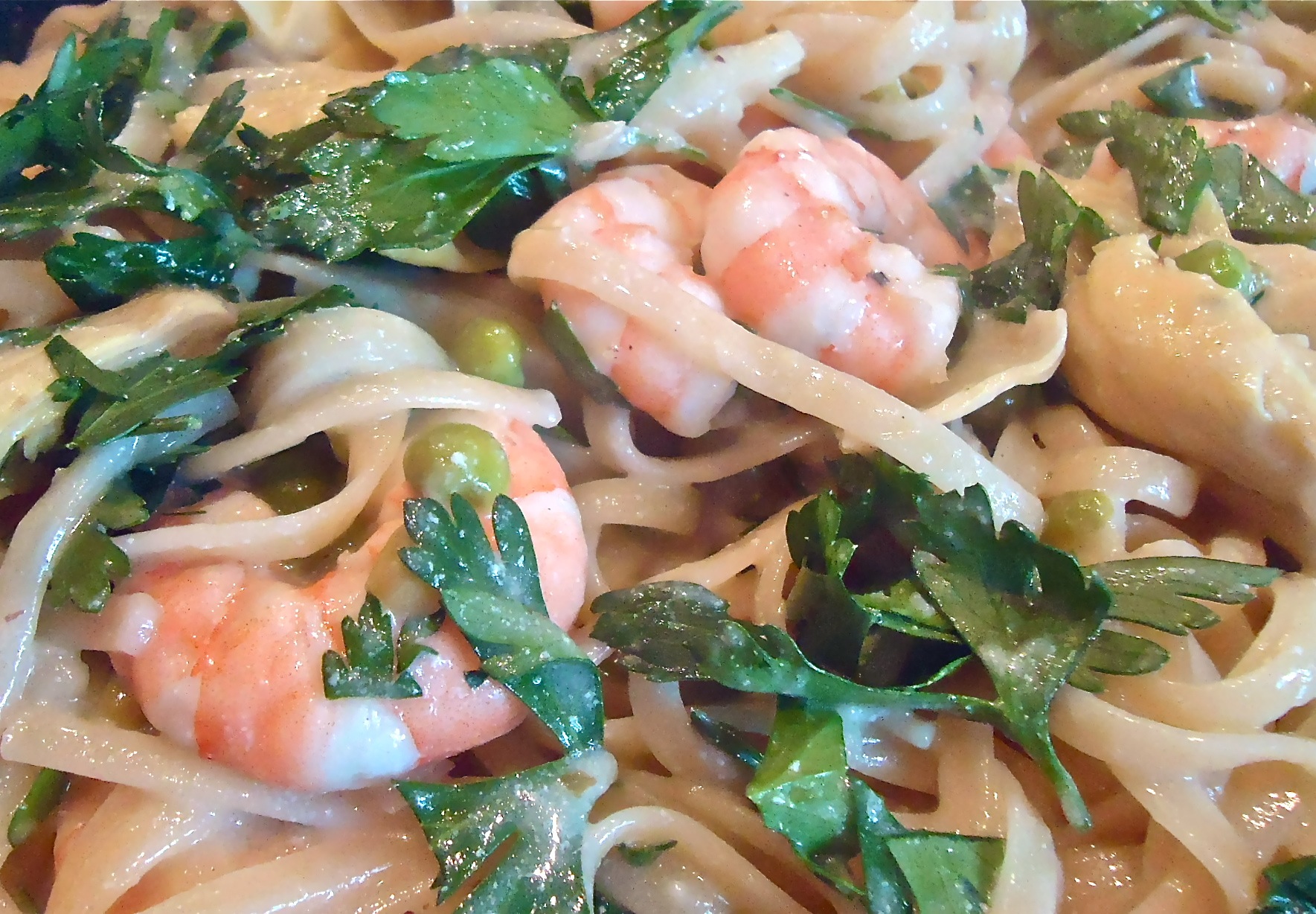
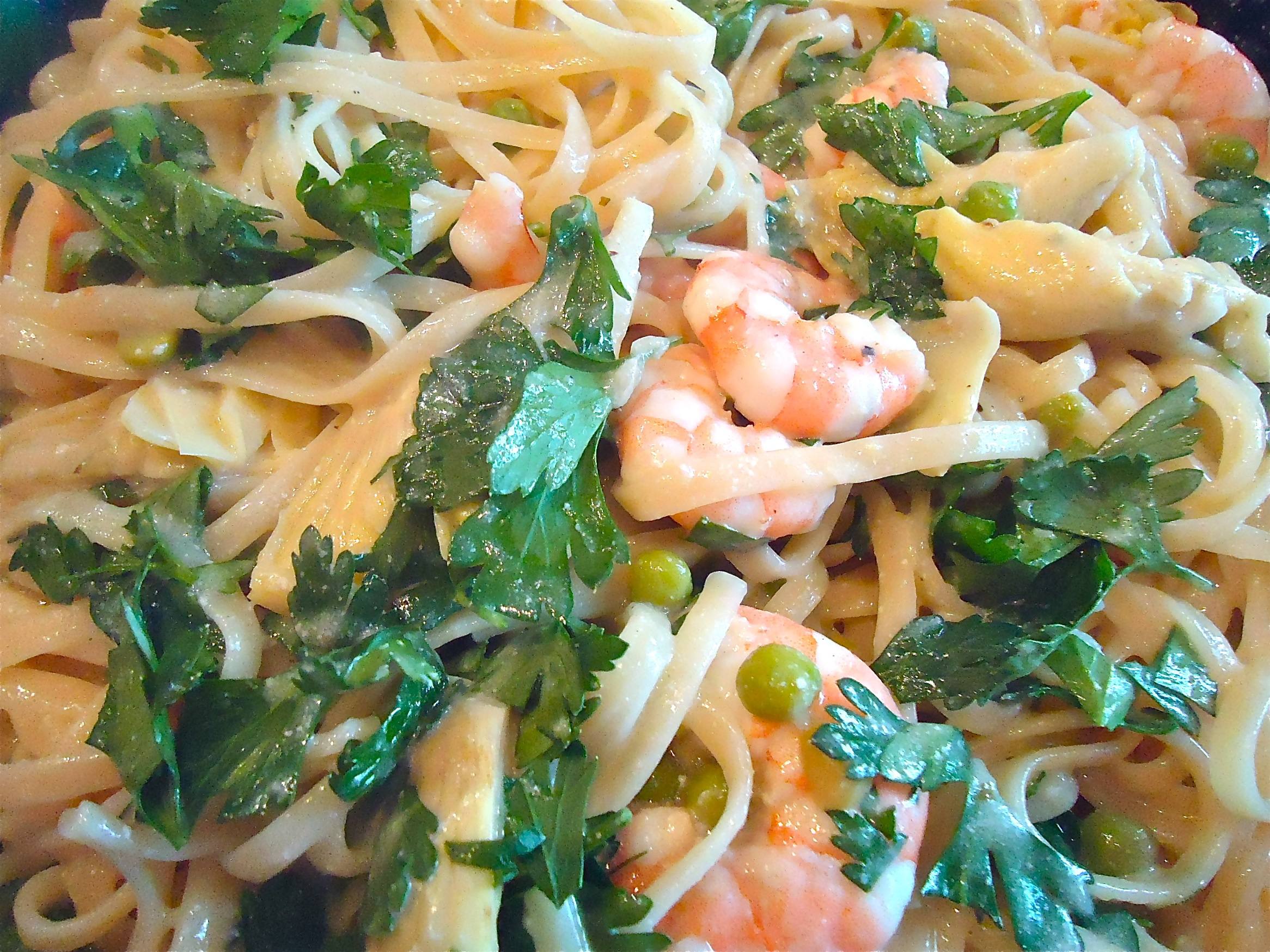
Toss the sauced shrimp and artichoke artichokes with the warm fettucine and fresh chopped parsley. Sprinkle on some Parm if you so desire!

Fettuccine Tossed with Shrimp & Artichoke

  • 1 lb. shrimp, cleaned, shells and tails removed
  • 1 lb. fettuccine
  • 1 small jar artichoke hearts
  • 3 tbl. butter
  • ½ cup Italian flat leaf parsley, washed, dried and chopped
  • 1 shallot, minced
  • 1 garlic cloves, minced or pressed
  • 1 cup small green peas, fresh or frozen
  • 2 tbl. flour
  • 2 cups vegetable broth or stock, warmed
  • ½ cup half & half
  • Juice of 1 lemon
  • 1/4 cup sweet Vermouth (I like Noilly Prat, Red)
  • Salt
  • Pepper, freshly ground if possible

In a large pot begin heating water to a low boil. Melt butter in large sauté pan. Add shallots and garlic and sauté 2 minutes. Stir in the flour and cook until smooth, about 2 minutes. Using a whisk add in the vegetable stock and continue to stir or whisk. Stir in the Vermouth and cook another minute. Stir in the half and half and the juice from the lemon. Reduce heat and cook about 1 more minute. Reduce the heat to as low as possible or set off the heat.

Once the pot of water is heated, cook the fettuccine according to package instructions. Drain the pasta and set aside. You can also keep it warm in a strainer set over warm water if you like.

Begin the heating the sauce mixture again. Just before it begins to bubble add the shrimp, the artichokes (don’t drain) and the peas to the mixture. Cook for about 4-5 minutes on medium, stirring occasionally, until the shrimp are pinkish and cooked. Add salt and pepper to taste. Toss with the cooked fettuccine and the flat leaf parsley in a very large, warmed serving bowl. Serve with grated Parmesan, if desired.

Warning: Calories on board! Stuffed banana peppers make your grill sizzle.

Okay so this is fair warning…if you are on a diet…if you are a vegetarian…if you avoid pork. What! Now pretend you hear squealing brakes and see wheels skidding to a stop. Who in their right mind would avoid pork? Well, let me tell you…

I know a few people and that’s okay by me – for religious reasons, for health reasons, for (ahem) “I’ve never had really well prepared pork so why all the fuss” people. But today’s recipe is not for any of those people. This recipe is extra special because it is my brother’s recipe, because it uses fresh local peppers, because it uses only 3 ingredients (4 if you count toothpicks, ha-ha) and because it is so darn good!

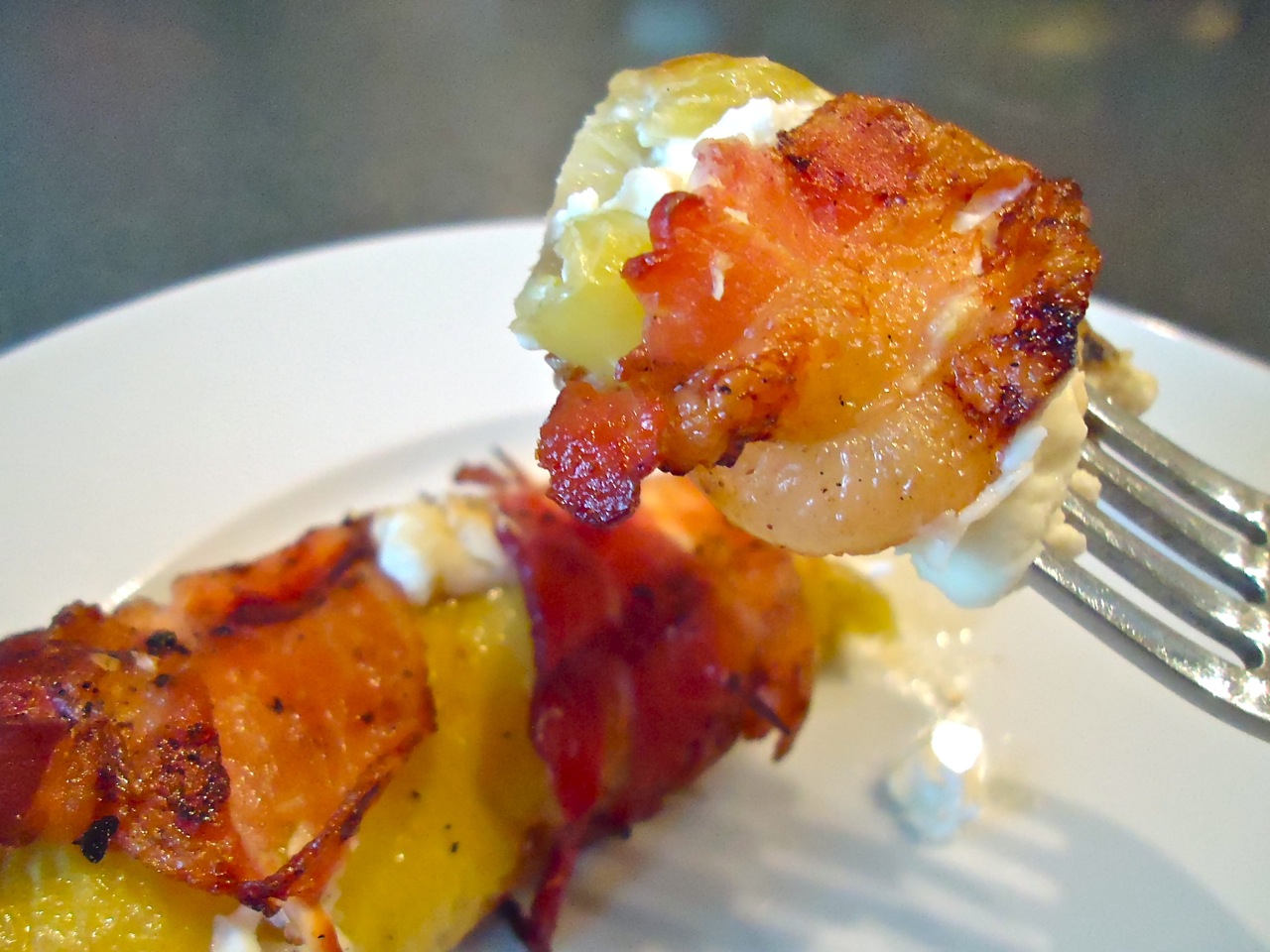
If the picture above didn’t reel you in like a catfish to a hunk of old pork rind, then STOP because “there is something wrong with you, son” – as local restaurateur and friend Hugh Lockman would say. This recipe is not for those on a diet – so stop reading this post immediately if this means you. Well, unless you think 205 calories is not too caloric, well then, you’re approved to proceed.

What with cream cheese AND bacon?!? I know what you’re thinking but my 100% non-scientific method of calculation gives me a number of approximately 205 calories and 10 grams of fat in one of these beauties. Have smaller peppers? Then can reduce the calorie and fat number per stuffed pepper accordingly. The peppers themselves have no fat but do contain copious dietary fiber as well as vitamins A, C and E, folate, niacin, calcium and potassium. And home grown or farmers market fresh? Buckle your seat belt ‘cause those exceed the taste limit in my book.

These are favorites of my hubby, and me too. We wait all winter and most of the spring for the new crop of sweet banana peppers to arrive at the farmers market. We even set out our own plants (see previous post) in the hope of having plenty to use specifically for this recipe during the summer.

While you can certainly use hot banana peppers, we prefer mild peppers with plenty of pepper flavor, but no real heat at my house. These are very popular at summer cookouts at the beach house, at the lake, at home. And special thanks to my brother John. His recipe has brought much grilling happiness to our table, and now hopefully to yours too.

The ingredients list is minimal but the flavor is maximum!

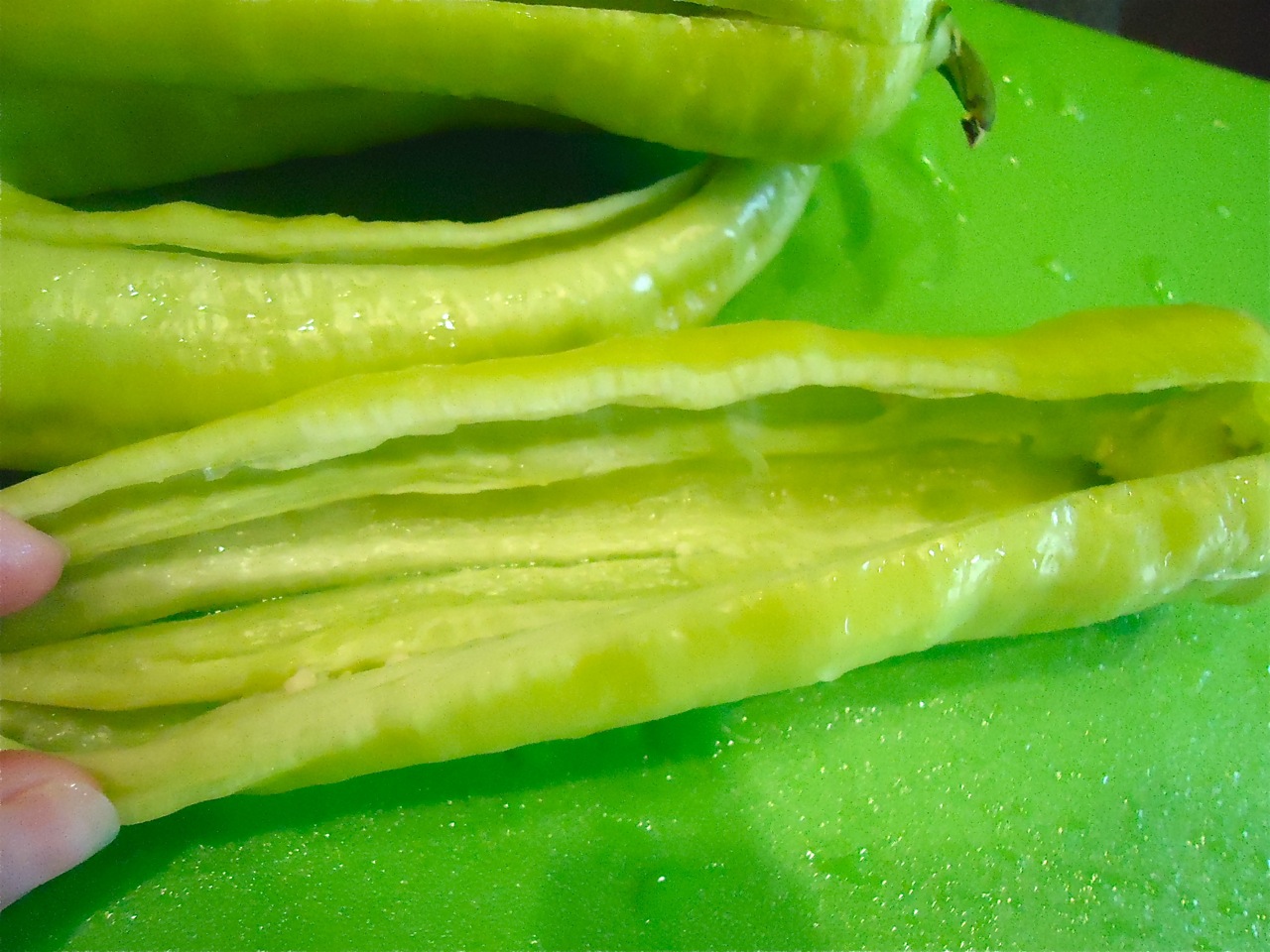
Peak inside the pepper. You need to remove the seeds and that stringy flesh they are attached to.

This is how the peppers should look after being cleaned.

Pepper stuffed with cream cheese.

Around and around we go with the bacon. Secure with toothpicks. I try to stick the toothpick through the meat of the bacon, rather than the fat.

Ready for the freezer. The peppers came be made up to this point and stored in the freezer, for up to a day. They need to freeze at least 1 hour anyway.

Here they go onto a sizzling grill. The cooking time depends upon your grill, i.e. how hot it gets and how evenly the heat is distributed. The best way to find out is by giving the recipe a try!

These peppers are almost done! Looks like I lost a toothpick. Oh well, I call ‘cooks treat’!

Ready for the dinner table. The combo of smoky bacon and roasted peppers smells so delicious… and only 205 calories! I don’t feel too guilty.

Stuffed Banana Peppers

  • 6 large (6”) sweet banana peppers
  • 12 oz. light cream cheese (about 1 ½ packages)
  • 6 pieces bacon (I use low sodium and nitrite free whenever possible)

Wash and dry the peppers. Split each pepper down the center along the long side, careful to not cut through to the other side. Clean out all the seeds and the stringy part inside. Wash and dry the insides. Stuff each pepper with the cream cheese – about 2 oz per pepper – smoothing to cover the entire length of the pepper. Once you’ve filled all the peppers, wrap 1 piece of bacon around each and secure with toothpicks. I usually use 2 each for medium peppers and 3 for these large ones.

Place stuffed peppers on a platter or baking dish, cover with plastic wrap and place in the freeze. Can be made up to this point up to one day ahead. Freeze at least 1 hour. Fire up your grill and place the frozen peppers on the grill. Watch them carefully and rotate to cook the bacon as evenly as possible, but avoid flipping them around too much. Once the bacon is cooked – after about 10-15 minutes – remove from the grill and serve immediately.

Field Trip: Fly away with me to the Coastal Discovery Museum

The flower of the Passion Fruit Vine (Passiflora incarnata), known locally as Maypop, is at once both strikingly unusual and lovely. The vines grow wild all around the Lowcountry and butterflies love them!

On Hilton Head Island, just a quick 45-minute drive from my home, is the Coastal Discovery Museum. The museum has been in existence for many years, having lived sort of a gypsy life moving from location to location until 2007 when it found a permanent home on the grounds of town-owned Honey Horn Plantation.

Honey Horn was a real, working plantation and while most folks around here sort of wince these days at the word, “plantation”, it denotes a time and a place that I think for all the right reasons we should not forget. As George Santayana wrote, “Those who cannot remember the past are condemned to repeat it.” Remembering the past, good and bad, can be cathartic especially when it leads to a learning experience applicable to the present and the future.

This fellow was kind enough to be still while I took his picture.

However, this visit to Honey Horn centers on the Coastal Discovery Museum and specifically the butterfly enclosure. It’s hatching time right now and if you find yourself in the area it’s worth a stop to catch the monarchs and other species in various stages of their lifecycle. The enclosure is surrounded by lots of pretty butterfly and bee loving plants too. It’s a serene way to spend a half hour and it’s free*.

The thoughtful folks at the museum have a nice little set up to encounter butterfly eggs, caterpillars, and chrysalis. And if you are lucky, witness a chrysalis evolve into an adult butterfly -as I did!

While you’re there, be sure to check out inside the museum – you can self-tour in about another 45 minutes. There are very good exhibits on the history of the Island and surrounding Lowcountry including the Native Islanders or Gullah. For the planners, there are also set talks and walks covering subjects like The Civil War era on the Island, a salt marsh discovery (wonderful for kids new to the Lowcountry environment) and special programs/events happening throughout the year. The Evening Turtle Talk & Walk off-site at the beach would be of particular interest to our family.

The Magnolia flower…in bloom now in the Lowcountry… need I say more?

For instance, last weekend was the annual Kiwanis Rib Burn Off. I was invited to be a judge and jumped at the chance – it was both educational and delicious! After sampling all those rib and barbeque entries (professional and amateur) I realized two things – I love barbeque more than ever and I need to work on my own barbeque recipes. Inspiration is a wonderful thing!

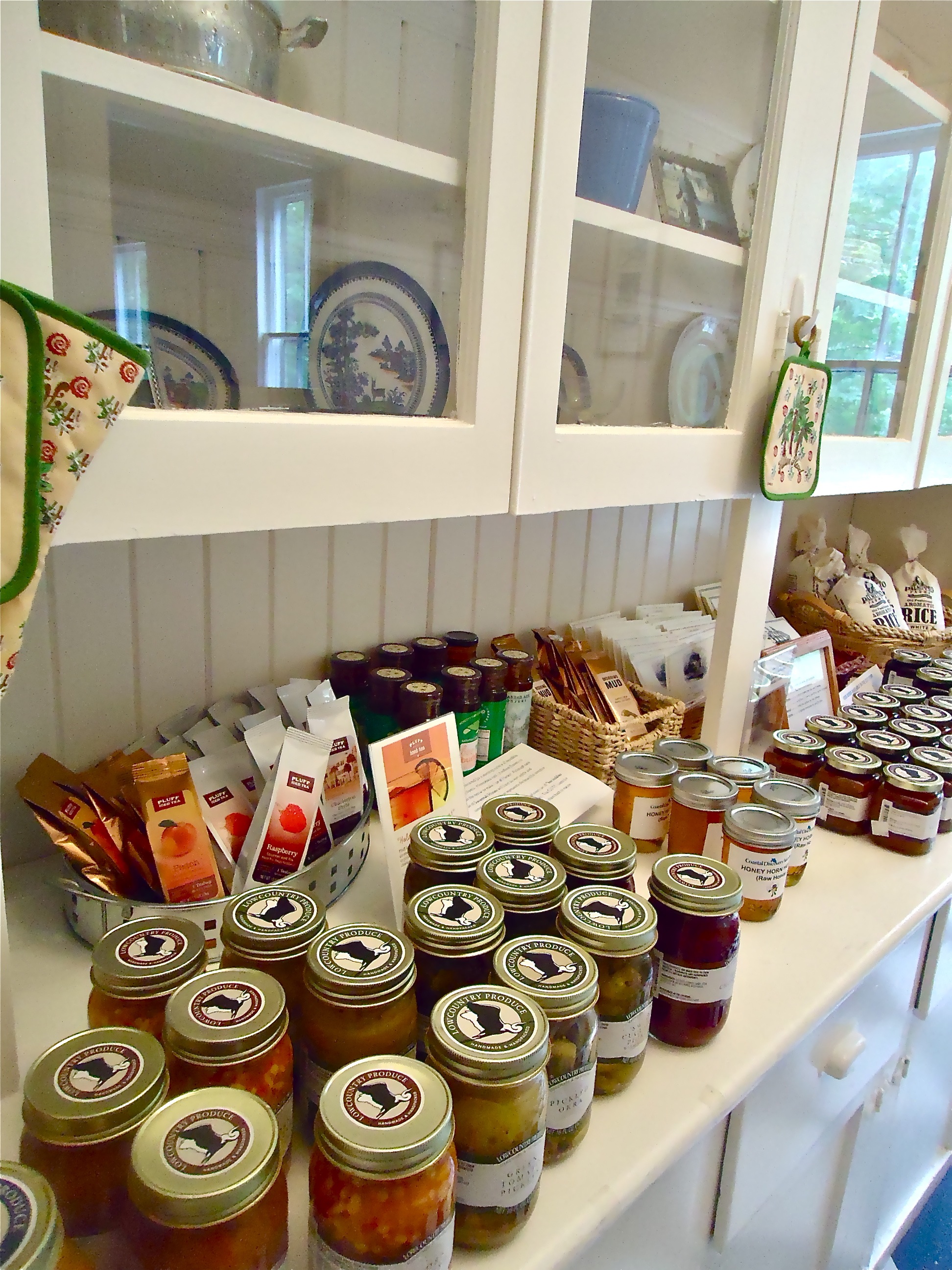
Inside the museum there are goodies for sale (of course I found those!) and informative exhibits about the local history including the Gullah or native Islanders. They also have special exhibits that change throughout the year- including sculpture, paintings, high-end crafts and last I visited – some very nice photography.

The Coastal Discovery Museum also has a child and parent friendly ‘kid zone’ set aside for learning about the history and natural history of the island. It is set up for interaction so hands-on is not only okay but encouraged. They even offer  scavenger hunts that allows children, with a scavenger hunt guide, to explore Historic Honey Horn and find

The cottage-style main building of the museum is a nice, cool respite from a warm Lowcountry summer afternoon.
Photo: Discover South Carolina.

items related to the cultural heritage and natural history of the property. As my 4-year old says, “very cool”! No doubt we’ll be making another visit to the CDM very soon – hope to see you there!

*While the museum and its attraction are technically free, they do kindly ask for donations.

Quest for the Best: Tea Brined Roast Chicken

Tea Brined Roast Chicken.

Roasted chicken is one of those dishes that while very popular – both prepared and eaten everyday by many – has a certain mystique about it. In Mastering the Art of French Cooking, Volume One, Julia (and if you have to ask who this is, well shame on you!) states, “you can always judge the quality of a cook or a restaurant by roast chicken.” Her exceptionally detailed recipe, with it’s trussing and endless basting is wonderful and for the novice home cook, will guide you toward the epitome of poultry perfection.

Reading through her description of how to know when the chicken is done; “a sudden rain of sputters in the oven, a swelling of the breast and slight puff of the skin…” I can hear in my head her breathy, high-pitched voice and this makes me smile. Julia and I go back a long way you see, and her television show and cookbooks inspired me probably as much as my own mother. But that’s a story for another post. Right now, I’m all about the chicken and in particular, tea brined chicken.

A few years back I roasted a tea brined turkey for Thanksgiving and in a word, it was fantastic. I figured this technique would work for any kind of poultry and happily it makes roasting the juiciest, most flavorful chicken at home easy – without all that trussing and basting (sorry Julia!)

I brine my bird between 20 and 24 hours, however a little less ‘brine time’ will work as well and would be advantageous if the chicken is small. I would estimate that a 2 ½-3 lb. chicken should only brine 10- 12 hours. Leftover tea brined chicken makes splendid chicken salad too!

The ingredients. Use whatever fresh herbs you have available.

I use iced tea-making tea bags, however you can use loose tea – just strain the leaves. The brine should not become bitter.

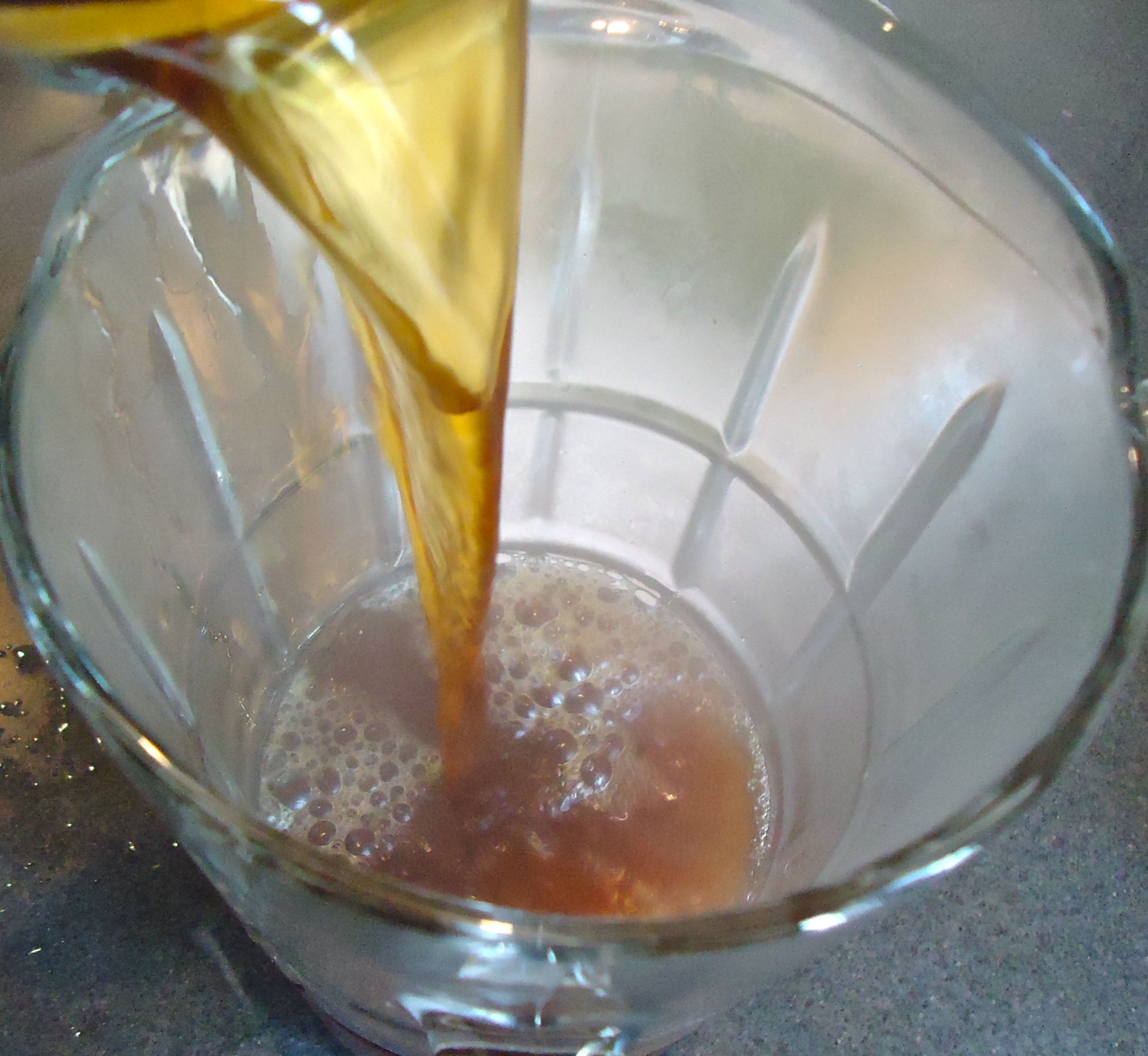
The tea has steeped for about 3 minutes and then remove the tea bags.

Mix the hot tea with the salt/sugar mixture. Stir.

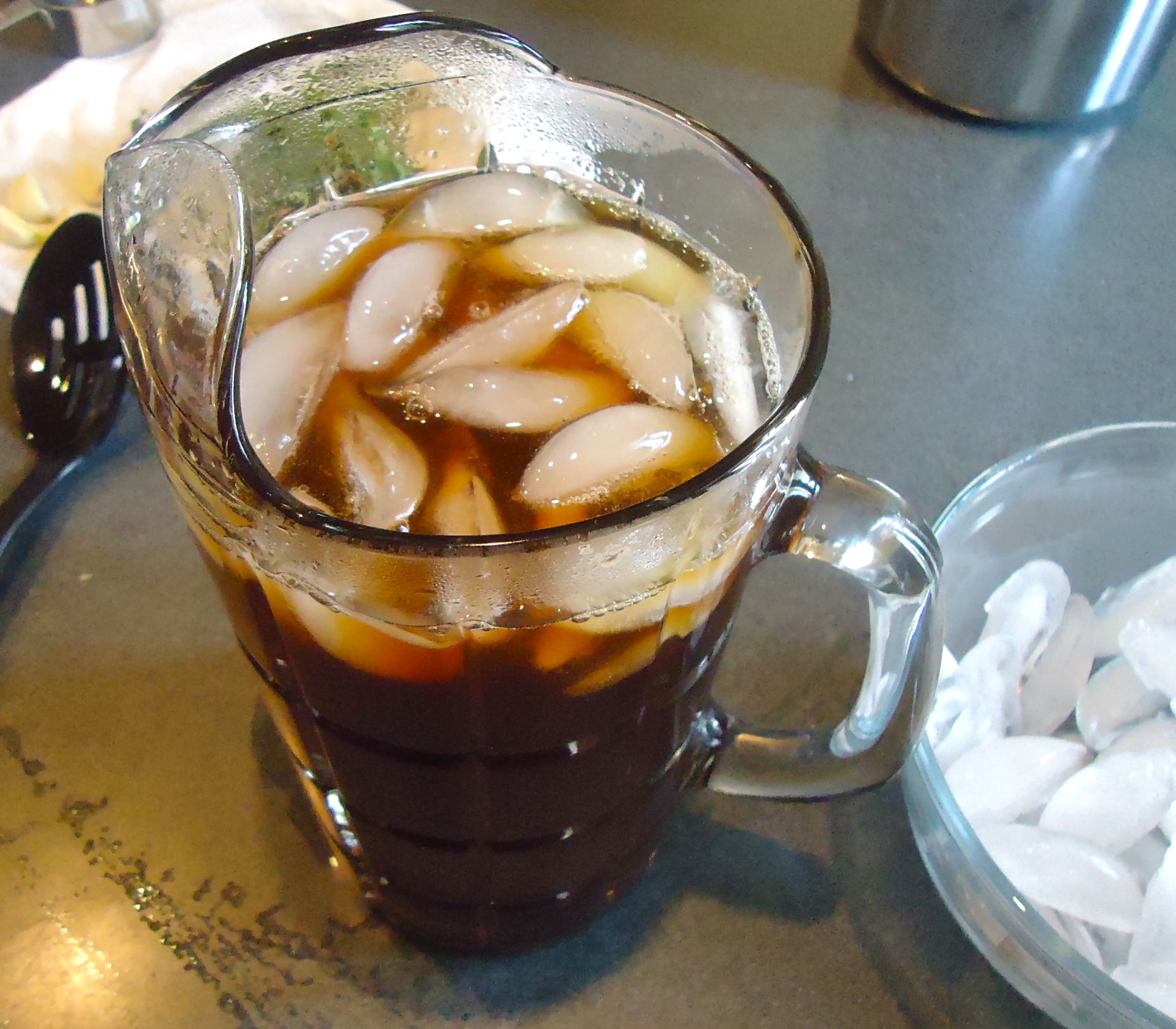
Cool down the tea mixture with ice. At this point you could store the brine in the refrigerator if you like.

Place the herbs and the garlic in the bag and then add the brine.

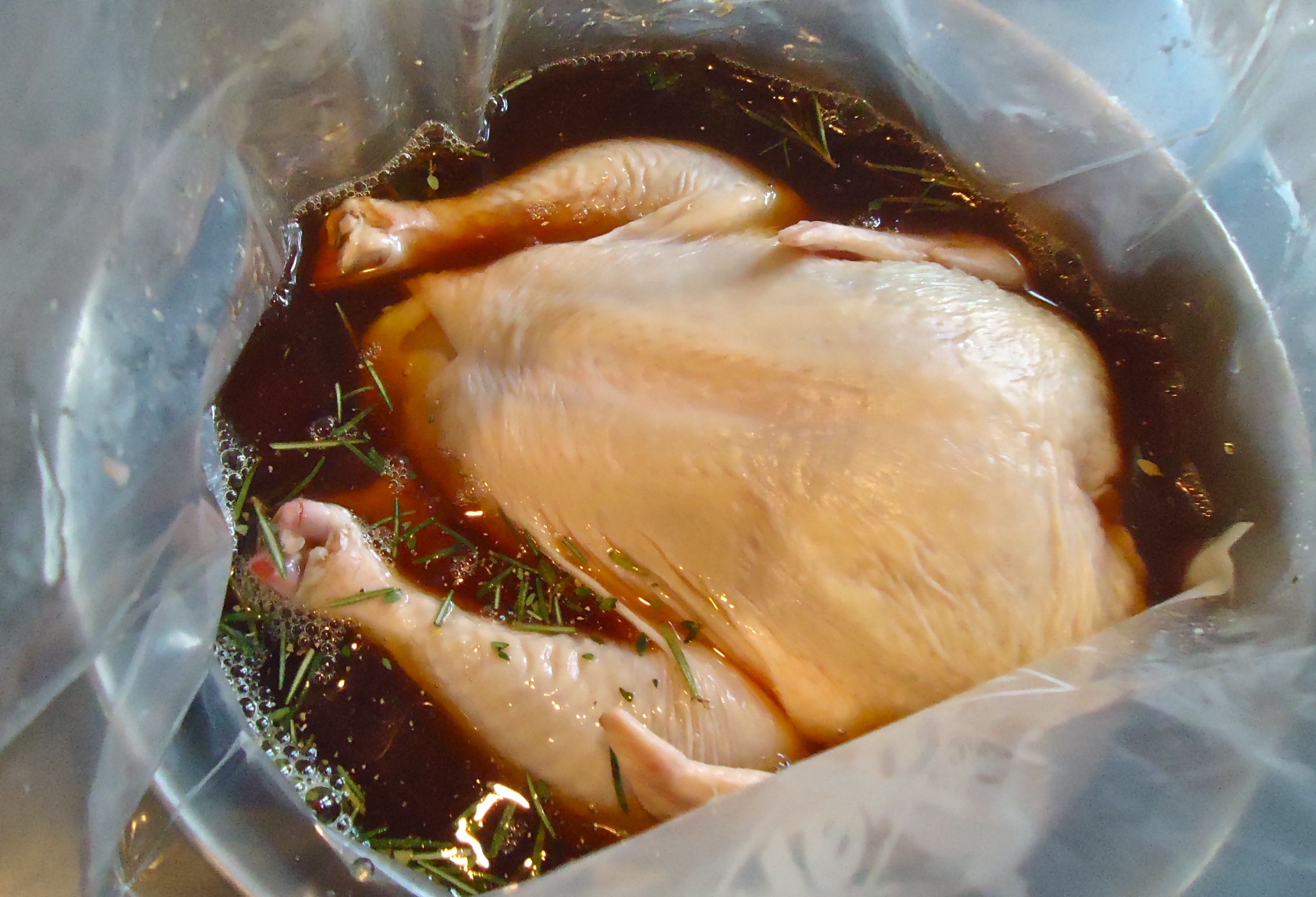
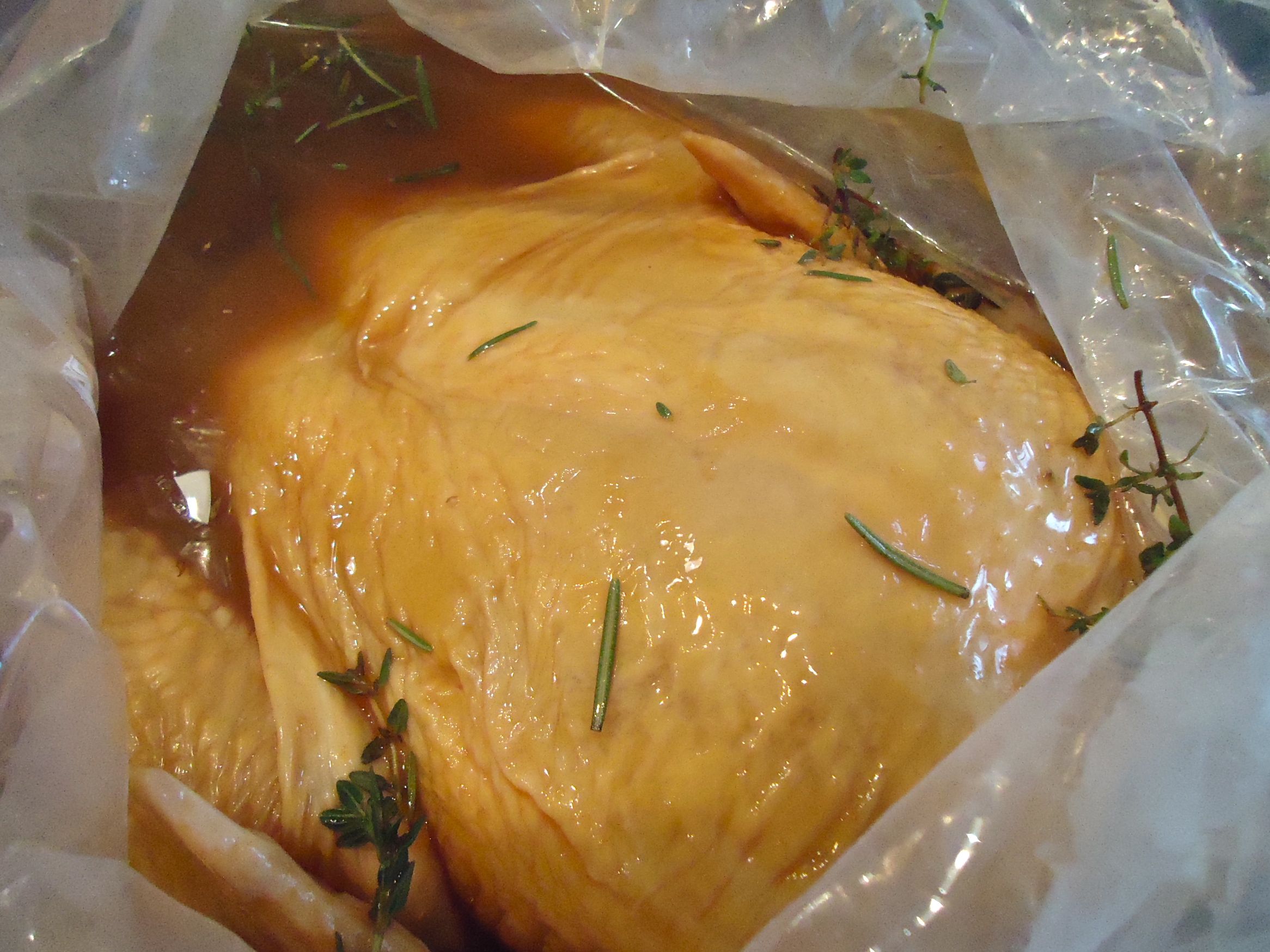
Place the chicken in the brine and zip up the bag. I place the bagged chicken inside a large bowl, just in case there’s a leak…then place in the refrigerator. Let the brining begin!

After brining about 24 hours the chicken takes on the color of tea. Roasting time!

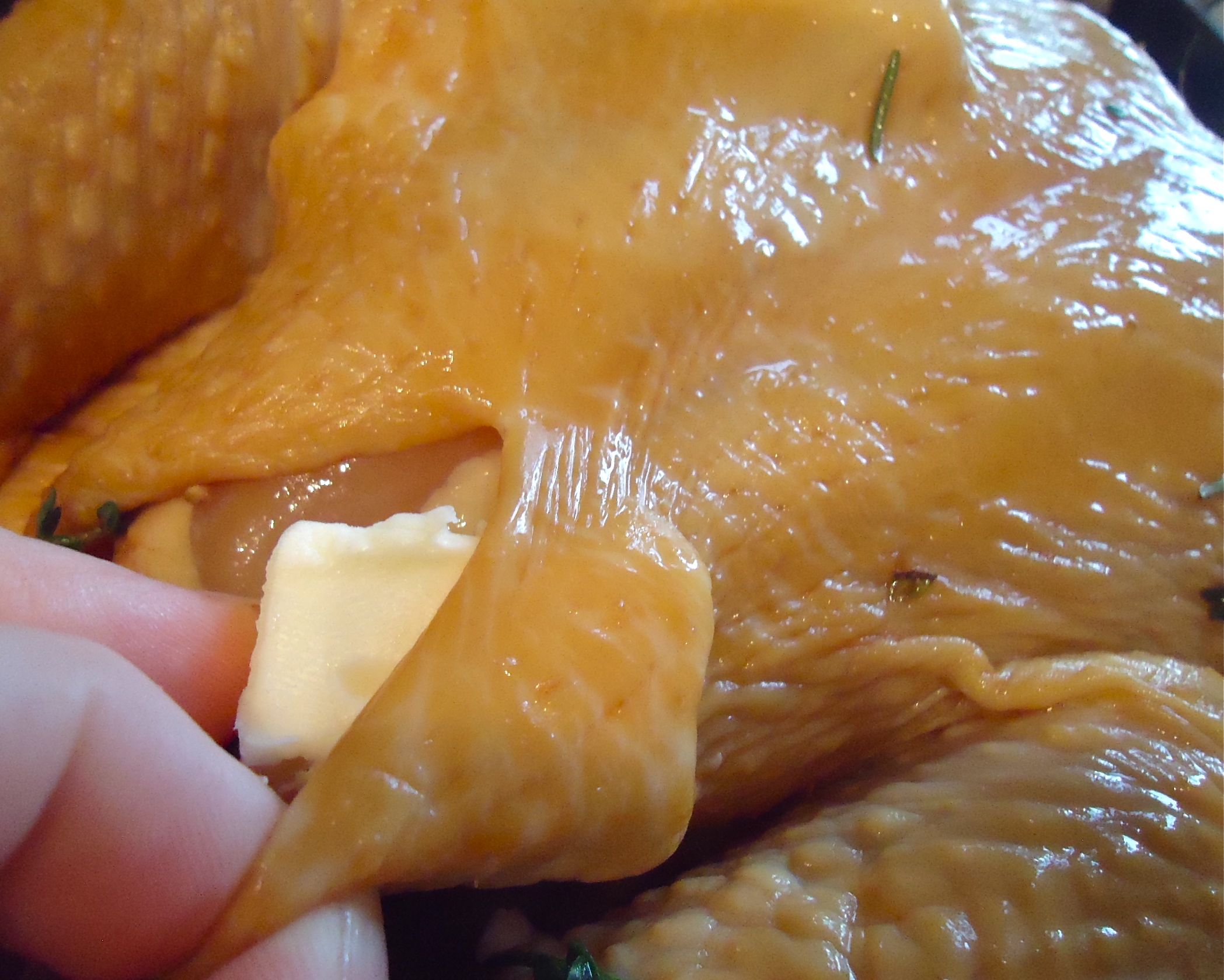
Place a little butter in the pockets between the breast meat and the skin, on both sides and then a couple of bits go inside the cavity. I did not bother to truss this bird but you can, if you like.

Juicy chicken goodness! Brining works it’s magic by increasing the moisture holding capacity of the meat. Salt changes the structure of the muscle tissue (meat) which allows it to swell, absorbing water and flavorings and resulting in a very tender and juicy bird. The tea gives the bird a great color too!

Tea Brined Chicken

  • (1) 4 – 4-½ lb. whole chicken, trimmed of excess fat, washed and dried
  • 8 regular size tea bags or 2 family size tea bags
  • 1/3 cup kosher salt
  • 1/3 cup brown sugar
  • water
  • various fresh herbs (rosemary, thyme & oregano is a good combination)
  • 3-4 whole garlic cloves, sliced in half
  • 2-3 Tbl. butter
  • Pepper, preferably fresh ground

Make the tea: Heat about 4 cups of water in a pot with a lid. Bring to a low boil, add tea bags, and remove from heat and cover. Allow to steep 3 minutes. Remove tea bags, squeezing them gently. Discard the used tea bags. In a large pitcher or bowl add the salt and sugar. Pour tea over this and stir well. Add 2-3 cups of ice and stir. Allow to cool to room temperature and place in the refrigerator to cool.

In an extra large plastic bag (that zips securely closed) add the herbs and the garlic and pour in the tea. Then place the chicken in the bag and secure. Place the chicken (you can place the bag in another bowl or pan just in case of leaks) in the refrigerator.

The chicken will remain in the refrigerator for up to 24 hours but at least 12 hours for a 4 lb. bird. Turn the chicken over 2-3 times in the course of the entire marinating time so the brine is sure to reach the chicken evenly.

When ready to roast heat oven to 425 degrees. Prepare your roasting pan by placing the rack inside it and greasing the rack lightly with oil and a brush or use a spray oil. Cut the butter into smaller pieces, 5 or 6. Remove the chicken from the brine and place breast side up on the rack. Discard the brine. Slide 1-2 pieces of the butter between one side of the breast meat and the skin and do the same on the other side. Place the last bit or two of butter inside the chicken cavity. Sprinkle the breast, legs, etc. of the chicken lightly with pepper.

Roast the chicken in the oven for 10 minutes at 425 degrees. Reduce the oven heat to 350 degrees and continue to roast until the juices run clear – about 45 minutes and/or the internal temperature registers 160-170 degrees in the thickest area. (Poke the thermometer into the thigh just above the leg). You will want to check the bird after about 20-25 minutes into the roasting (at 350 degrees) for desired brownness. The tea will give the bird a wonderful color but it can get too brown too fast. So check and when browned to your liking, just place a piece of foil very loosely as a tent over the bird. This will stop the browning, more or less.

Once the chicken is done, remove from the oven and allow to rest (under the tent) for about 5-10 minutes. Carve as per usual.

Great expectations, meet my mama’s poundcake!

Browsing through some of my old cooking magazines for inspiration, I became increasingly aware that tastes have quite literally changed over the last 20 years or so. Ingredients and techniques that I thought were exotic and unusual (raspberry vinegar and foods wrapped into ‘purses’ or bundled together) now seem over the top AND staid. Curious. I will admit that I have and still do love some food fads – like artisanal cheese and the current bacon infatuation.

Hey, I am Southern… so the love of the pig (and all it’s piggy parts) have always been a constant in my life. But today I’m not writing about pork, but rather the “other” P-word. Born in the 18th century kitchen and revered since time immortal (or at least since the first days of even oven temperature), famed as the traditional wedding cake, and the best loved dessert on the southern sideboard – the pound cake.

For as much as tastes change and fads come and go, I know this much is true: a good pound cake never goes out of style and is always in high demand. My mother’s pound cake is quite possibly – and according to my daddy, most definitely – the best pound cake, ever. Period. The end. It is the item most requested at any family potluck or social gathering at which my Mother is expected to attend. And see that I specified “item”, not just food, but anything from beverages (adult and otherwise) to the main dish.

Luckily, I happen to not only have access to the recipe, but was taught by my mother the techniques employed in creating this cake since I was knee-high to a grasshopper. In as much as it is very important to use quality ingredients, it is essential to follow the mixing techniques. This cake uses no chemical leaveners. The cake rises due to mechanical leaveners – chiefly “creaming” the butter and sugar and incorporating the eggs into the batter one at a time, beating well after each.

This cake has only 6 ingredients so yes, the better the butter, the cream, the eggs and the flour, the better the pound cake. This is one time that I do use salted butter too. I usually serve this cake plain but have been known to spoon on some homemade vanilla custard and in-season fruit from time to time.

Before I finish, I do have a word of warning: Once you try this pound cake you will forever more compare all other pound cakes to this one. This may bring some disappointment into your life, since once you’ve have the best, nothing else can match it. I’ll add too, that with high caloric intake there will be high expectations – this recipe will not disappoint on either count. Just go for an after-dinner stroll… and have another piece!

Sift some flour once and then measure out exactly 3 level cups.

Yes, I said sift 3 times!

This fabulous cake has only 6 ingredients and no “chemical leavening agents”.

Grease and flour the pan, even one with a non-stick surface.

Tip of the day: Save your wrappers! Instead of tossing out butter wrappers into the trash, place in a plastic bag and toss into the freezer. You never know when you may need to butter a casserole dish!

In this recipe creaming the butter with the sugar is as important as sifting the flour 3 times. I usually start by whipping up the butter first.

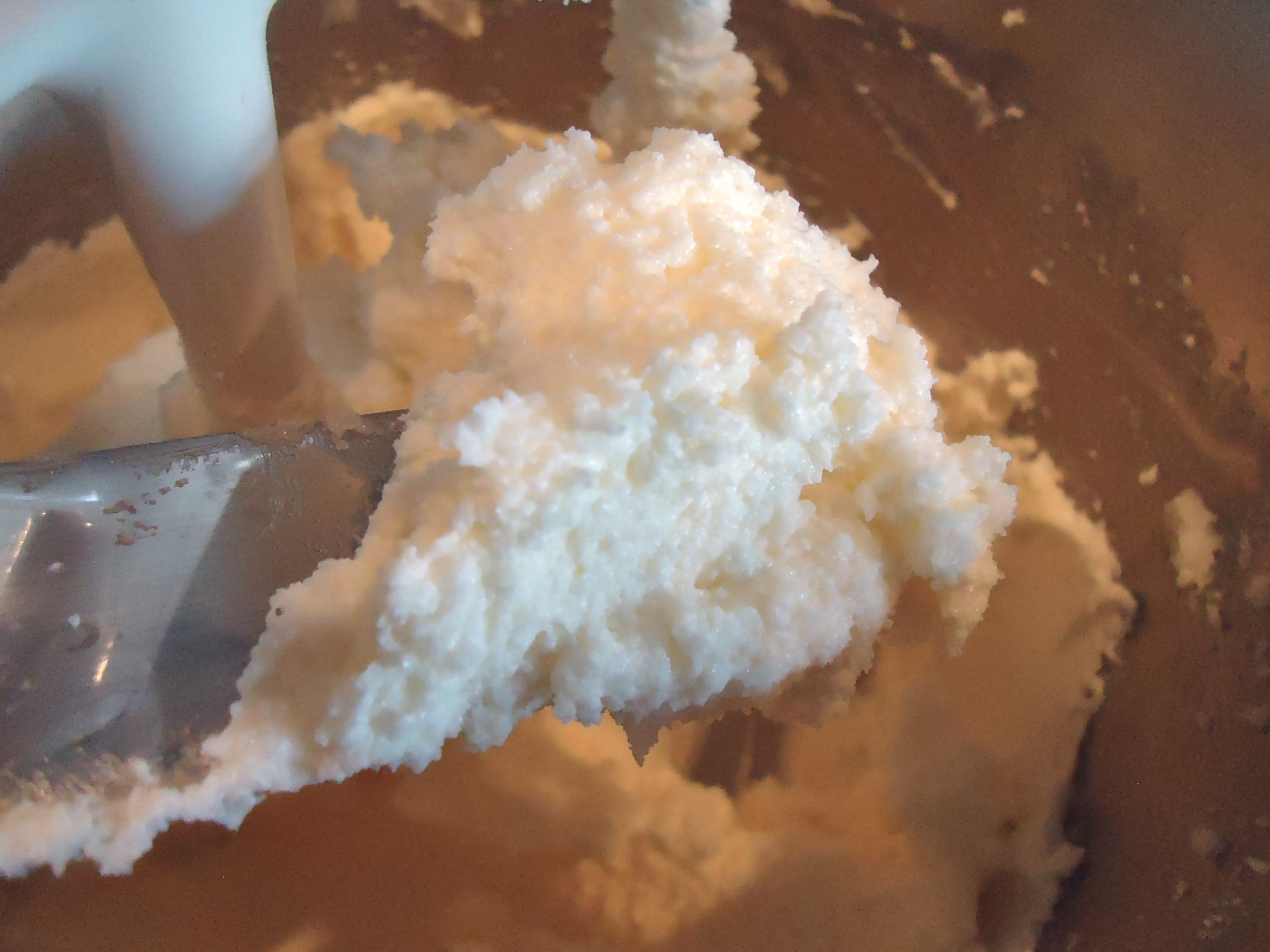
Creaming the butter and sugar is the leavening agent in this cake recipe. This is after only 1 minute of creaming, a long way to go!

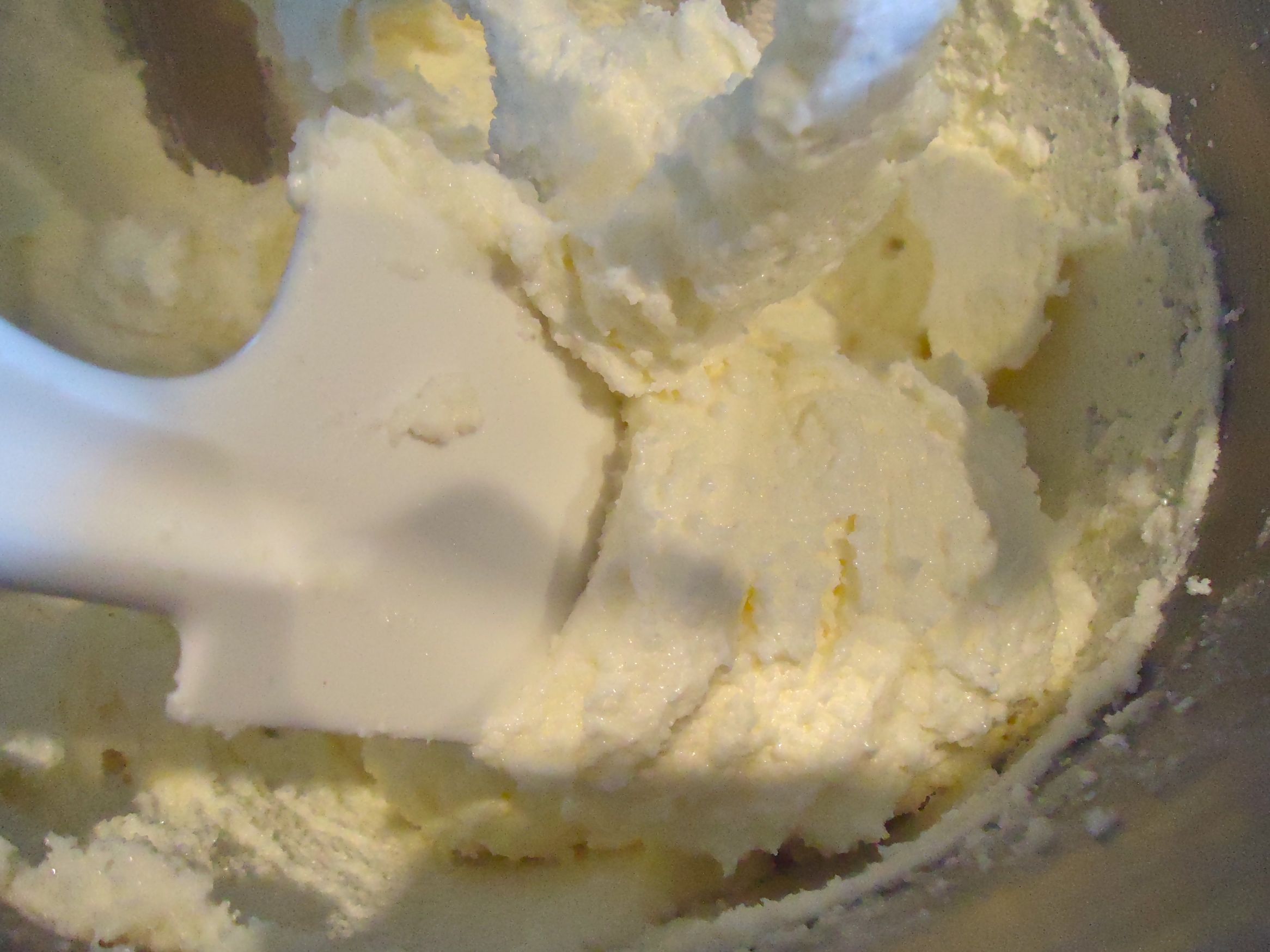
At 3 minutes the mixture is still crumbly and not light. With my KitchenAid mixer I use the No. 4 speed setting.

After 8 minutes the sugar and butter are much lighter and we’re almost there!

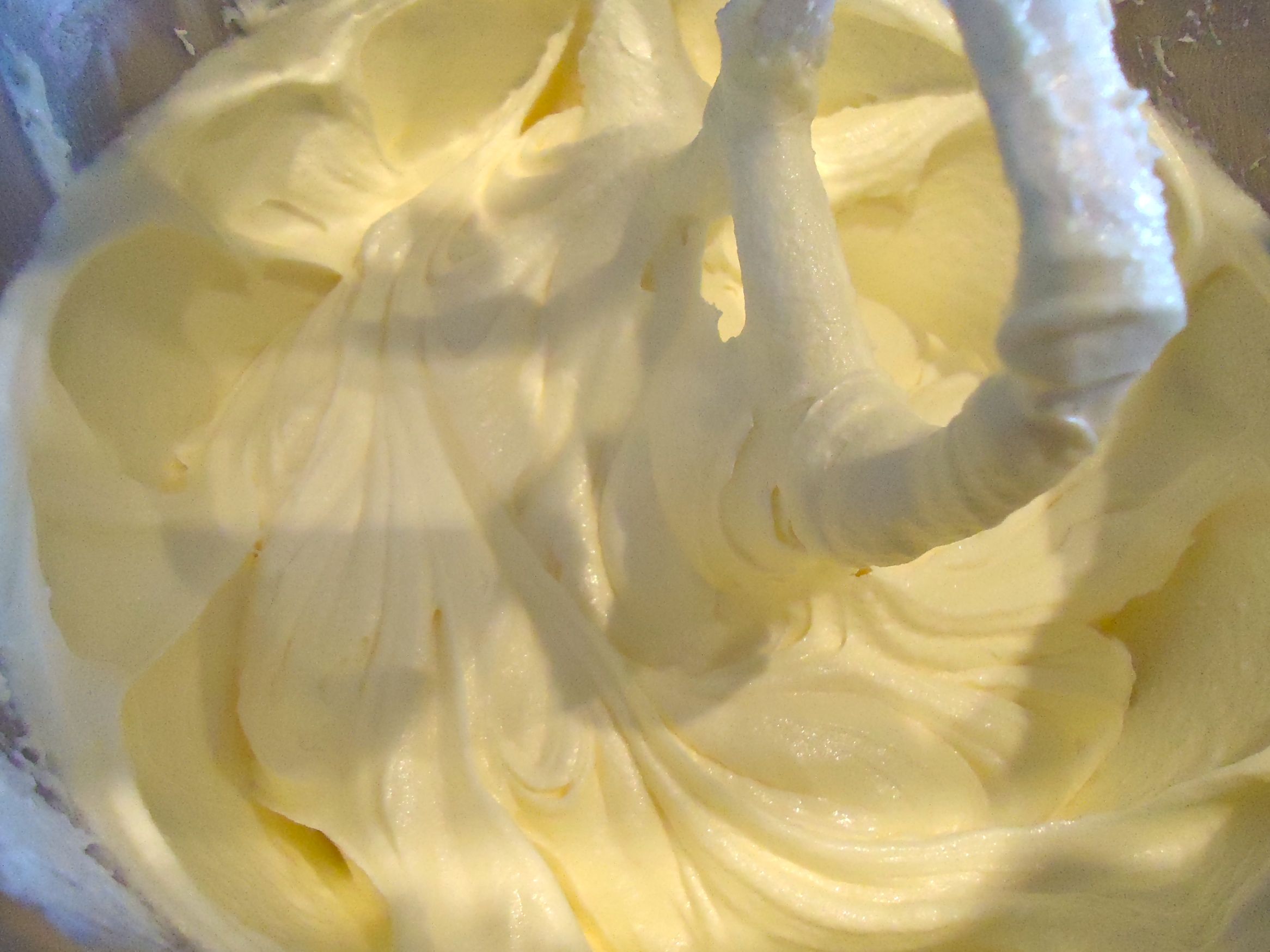
After 10 minutes, the sugar/butter mixture is light, creamy with only a hint of sugar granules.

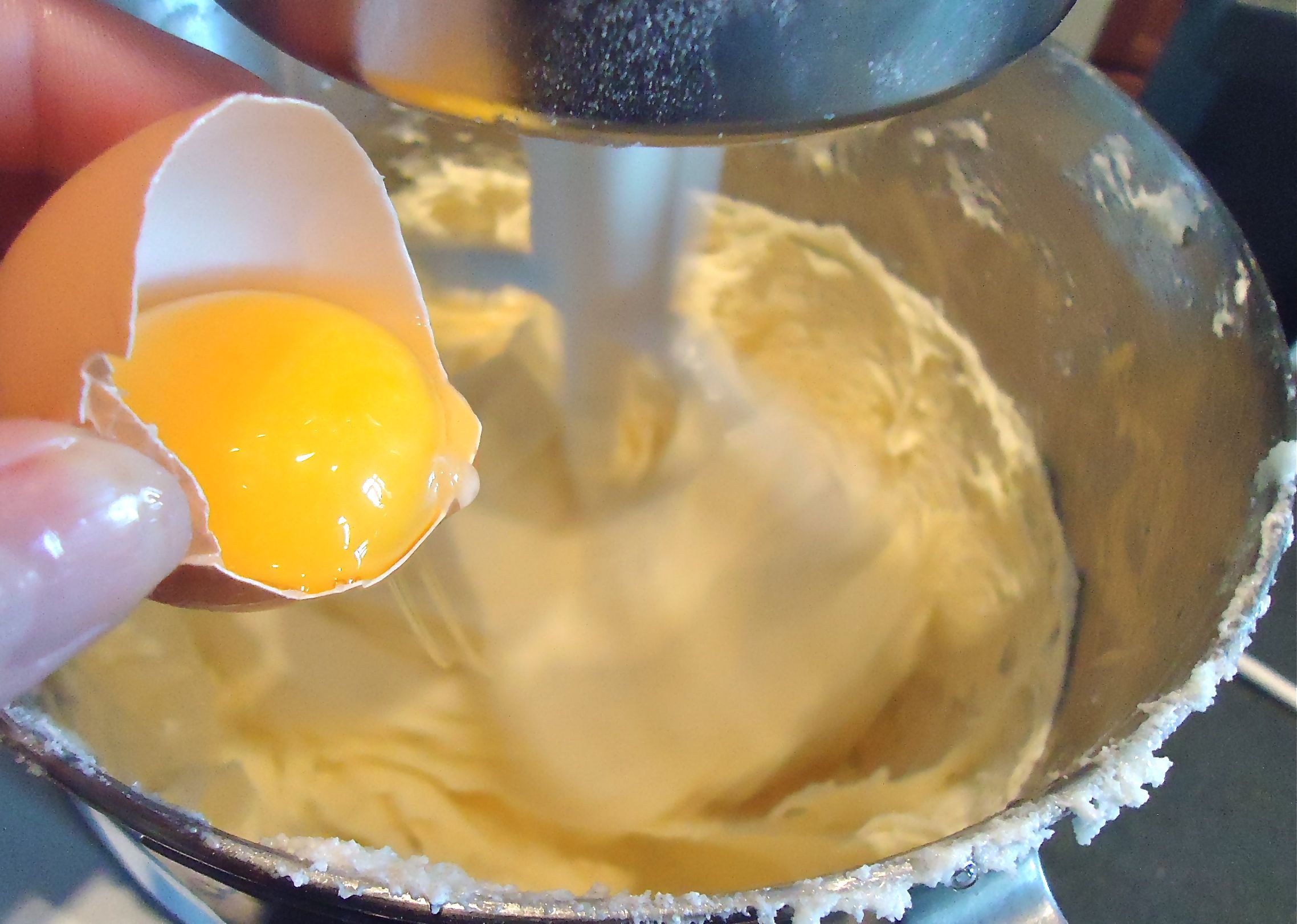
Next add in the eggs ONE AT A TIME. Beat well and I mean really well after each. With my mixer I mix at the No. 4 speed setting for about 60 seconds after each egg. I also scrape down the sides of the bowl after every second egg too.

After the addition of all the eggs. Very creamy.

After you alternately add the flour and cream (begin and end with the flour), mix in the vanilla extract. Sometimes my mother uses almond extract instead.

The finished batter, ready for the pan. I thought this image was sort of pretty in an industrial chic meets the bakery sort of way.

Batter up! Yes, I am a little messy but it can be difficult to pour batter and take a photo at the same time.

After 90 minutes, the cake is ready to be pulled from the oven. Allow to rest on a rack for 10 minutes or so and then turn onto a serving plate. You may need to cut away some of the crust in the center first, though, especially if your cake pan is smallish like mine. I think I need a new tube pan!

Pound cake with homemade vanilla custard and fresh peaches. Hello summer!

Pound Cake

  • 1 cup butter (salted)
  • 3 cups sugar
  • 3 cups all-purpose flour – sifted 3 times (*see below)
  • 6 large eggs
  • ½ pint whipping cream
  • 2 tsp. vanilla extract

Preheat oven to 300 degrees. Butter and flour a tube or Bundt pan.

In a large mixing bowl cream the butter and sugar. It should be light and fluffy. It will take about 10 minutes at medium speed in a heavy-duty mixer. Be sure to scrape down the sides during this process at least once. Add eggs, one at time, beating well after each addition. Scrape down bowl after every second egg.

After all eggs have been added, mix in the flour (in 4ths) alternately with the whipping cream (in 3rds) – beginning and ending with the flour. Scrape down the bowl, if necessary. Mix in the vanilla extract and pour batter into prepared pan. Bake in a preheated 300 degree oven for 1 ½ hours. Cool cake on a rack for about 10 minutes and turn out onto a serving platter. Allow to cool completely before covering.

* Sift at least 3 cups of flour once. Then accurately measure 3 cups of flour out of the first batch and sift twice more.

Make-It-Yourself Vanilla Extract

I like to bake so I use a lot of vanilla extract. My favorite extract is sold by Penzeys Spices and they offer both single and double strength as well as vanilla beans and sugar. However, I found that I could make a decent and economical vanilla extract myself.

As usual, the quality of the ingredients determines the quality of the end result – in this case extract. I use Madagascar beans and good quality rum such as Appleton, a smooth and rich Jamaican brand I discovered years ago. I find that the rum flavor works well with the vanilla naturally – they sort of melt right into each other. And the alcohol burns right out so don’t worry about your cookies and baked goods containing alcohol. I think some people use vodka and having tried that I think the rum is better. However, do not use spiced rum unless you want a strong, spicy rum flavor.

I use a smallish glass jar (4 oz., ½ cup size) with one bean. Simply split open the bean, scrape out the insides (these are seeds) and add to the jar. I throw in the leftover bean “skin” too. Then fill the bottle with rum, seal the lid tight and give it a good shake. Allow to sit and soak for at least 24 hours. Anytime I walk by it within that first 24 hours I’ll give it a little shake. Then use at will – ‘cause you’ve got extract people!

The ‘ingredients’: vanilla bean and rum plus a sharp knife, cutting board and glass jar.

Snip the end of the bean and split it right up the center.

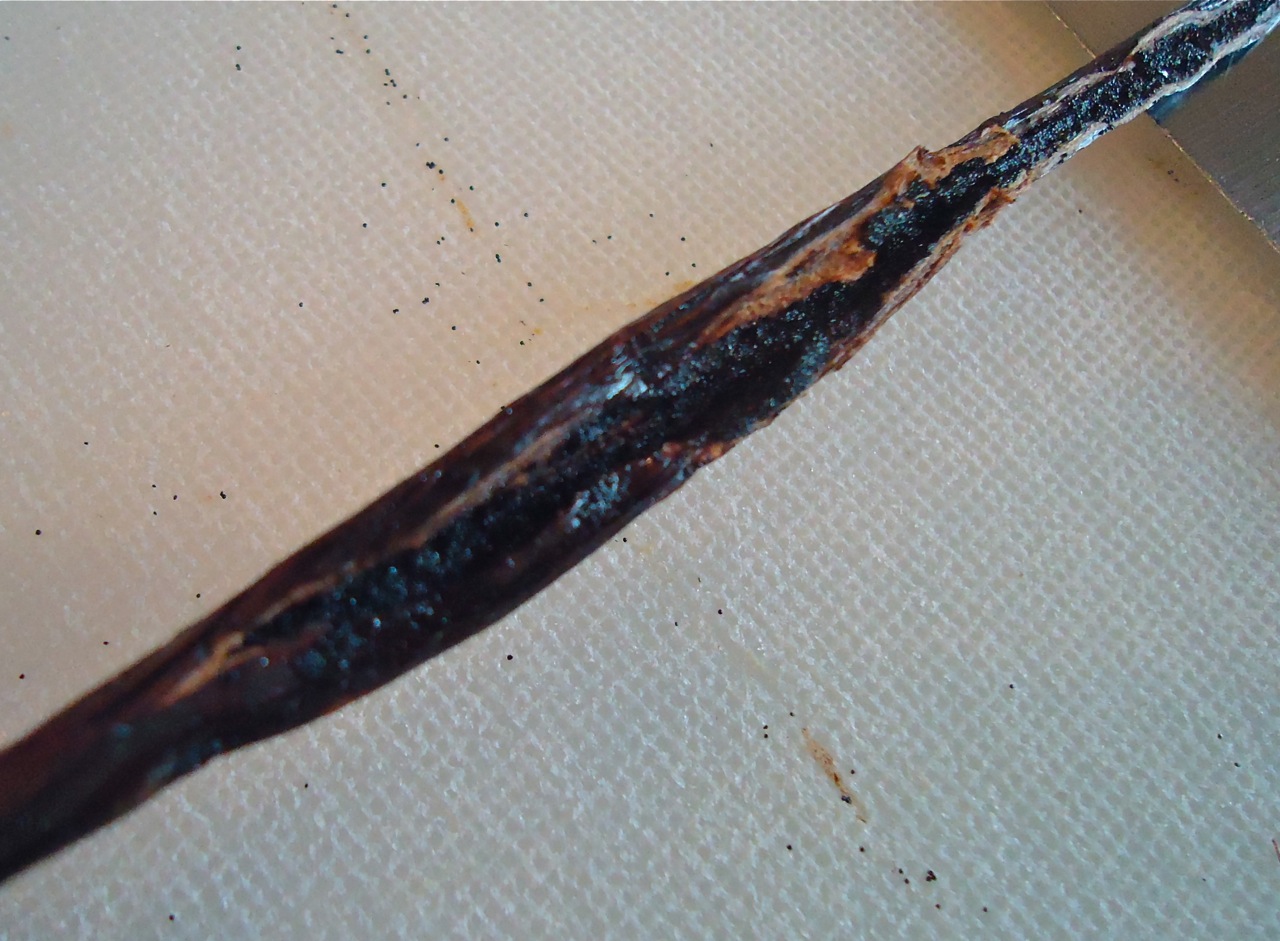
The ‘innards’ of the bean – these are the seeds and are the most flavorful part of the vanilla bean.

The vanilla bean seeds get their closeup…at least it smells really great!

Place the seeds and the leftover bean skin in the jar, and…

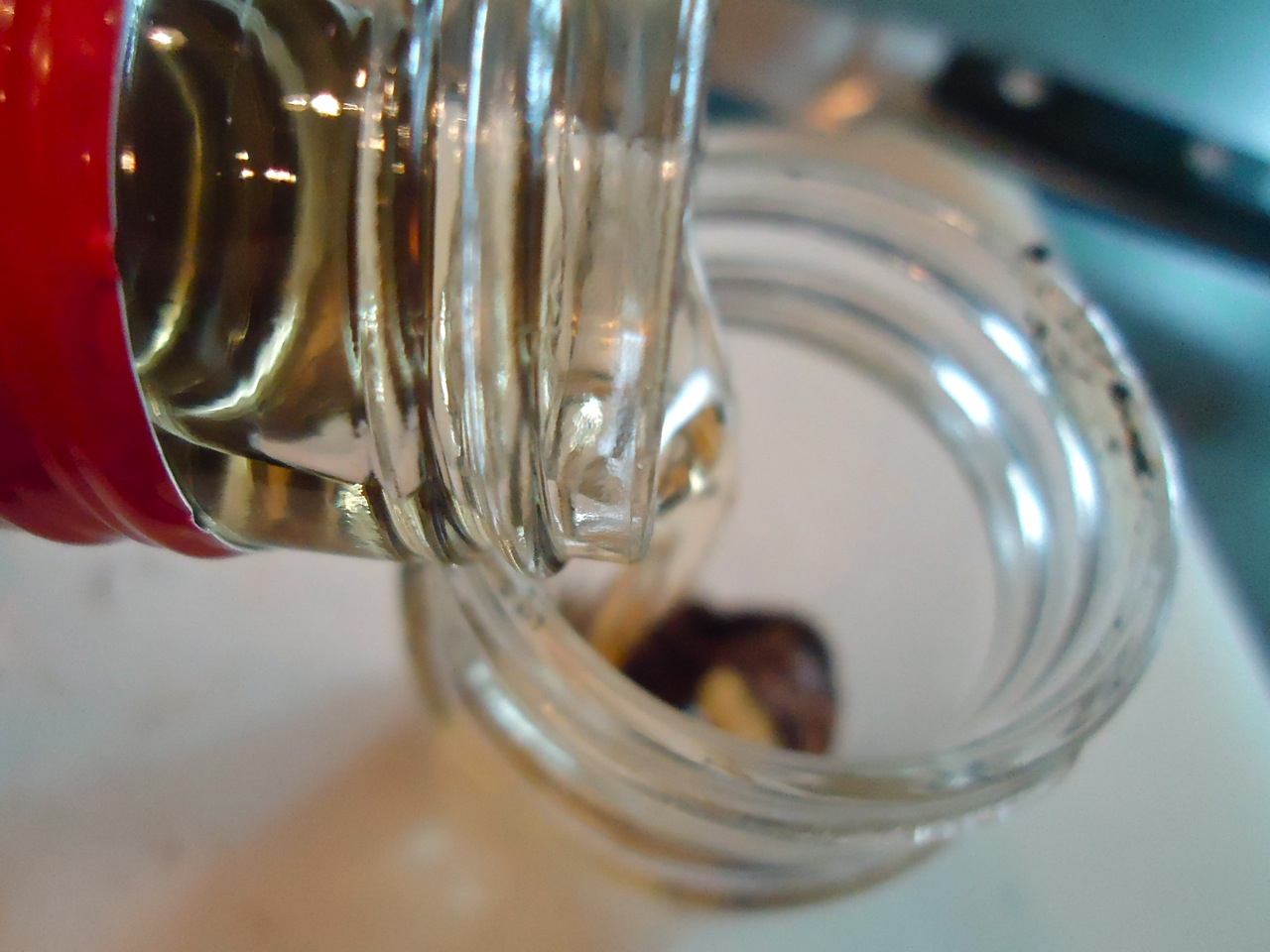
…pour the rum in.

Close the lid tightly and skake it up, baby!

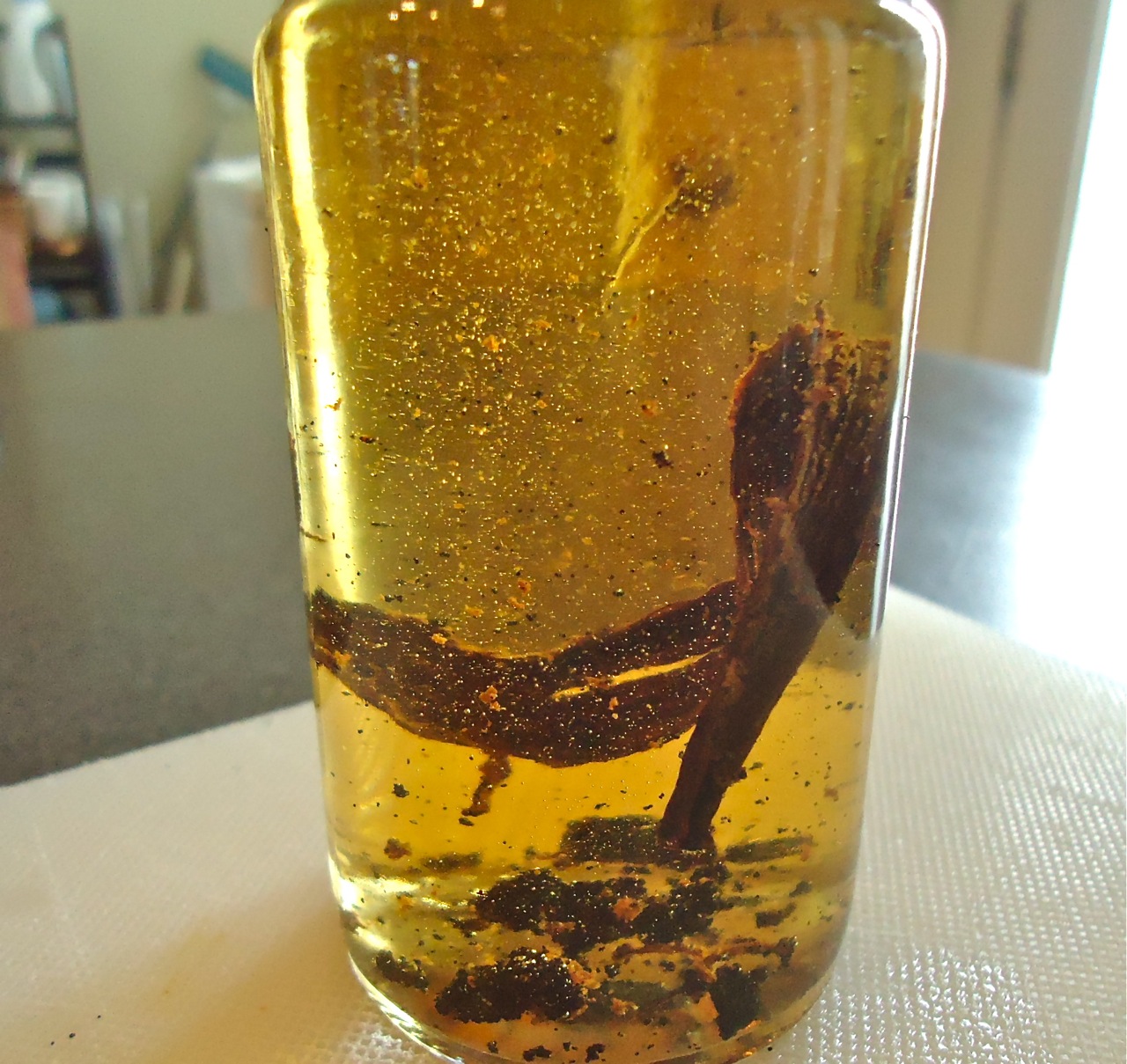
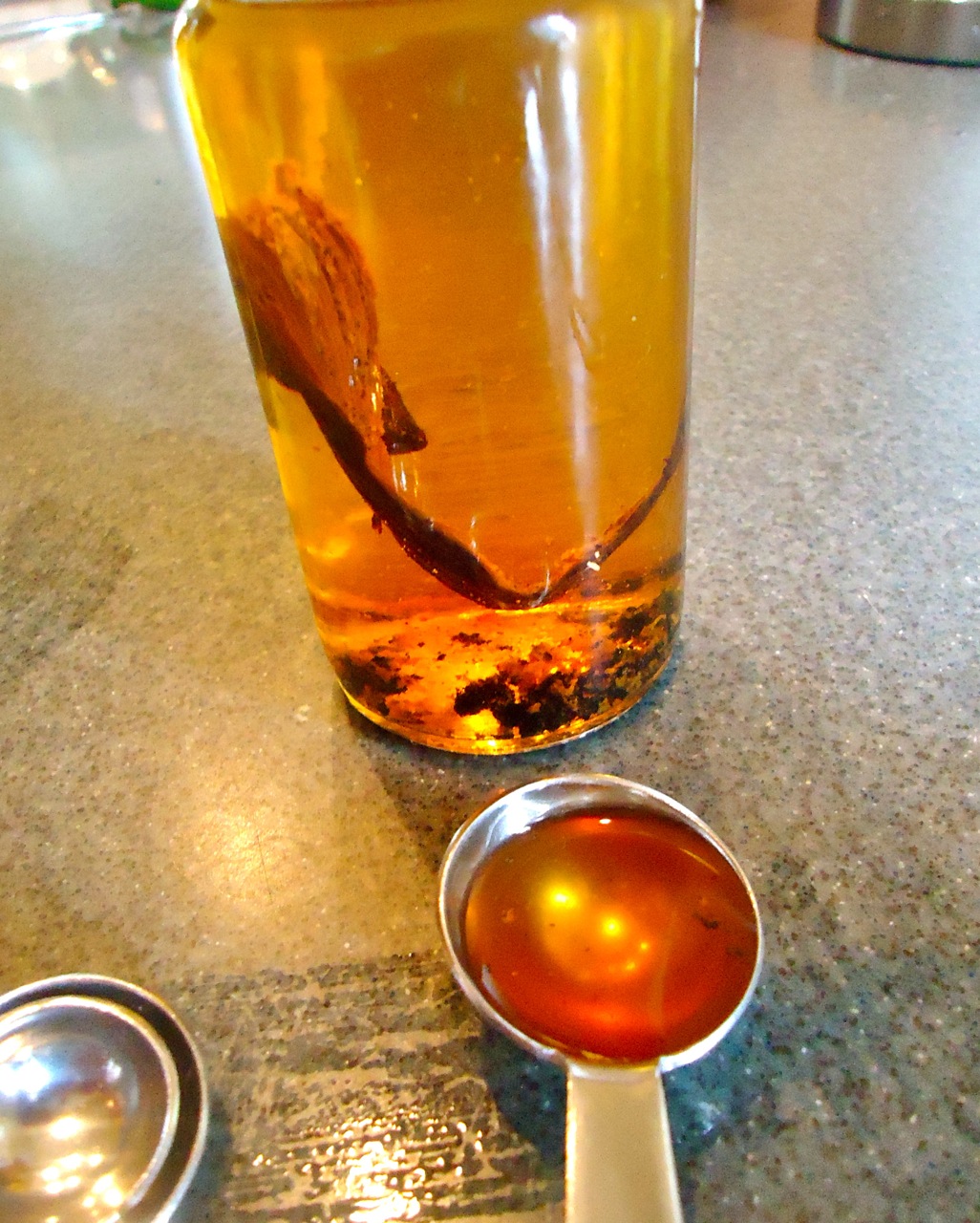
After a day of soaking up the vanilla bean flavor, you will have extract. Use at will! I never strain it either as I love seeing the tiny seeds in my baked goods, custards and homemade ice cream.

Frustration turns to temptation with summer vegetable hash.

Can you imagine anything any better than crispy fresh corn, peppers and squash? Our 4-year old loves this side dish, as do her parents!

Oh boy can I tell it’s Monday. After taking last Friday off for a long mother’s day weekend I planned on posting a wonderful recipe I have for old-fashioned cottage cheese dill rolls today. Nicely browned outside and soft on the inside, these rolls are fairly easy to prepare and smell awesome coming out of the oven; a balanced, soothing way to start any week. Well, unless you can’t access the images and spend 3 hours making various attempts at a work around…augh.

Needless to say, instead I’m off in a new direction…a summer direction. This side dish is also very easy, pretty and delicious to the palate. In my town, local vegetables are starting to come into season (yes, early I know) so in honor of the soon to be harvested crop of sweet corn, bell peppers and squash I give you my vegetable hash recipe. It’s my go-to summer side and compliments all kinds of grilled proteins including fish, chicken and beef. I served it last weekend with a nice citrus grilled salmon fillet. If you’d rather leave out the dairy just use a little more olive oil and no light cream, tastes just as great.

I’d say the key with this is to use very fresh veggies and try to get everything cut into the same small chop. Yes, it is worth it to use fresh corn and cut it off the cob yourself!

Straight forward ingredients – again the key is to use fresh vegetables, hopefully locally grown.

Cutting corn off the cob is easy peasy – sharp knife, steady hand and shallow bowl to catch the occasional flying kernel.

Sweet bell peppers bathed in olive oil and butter.

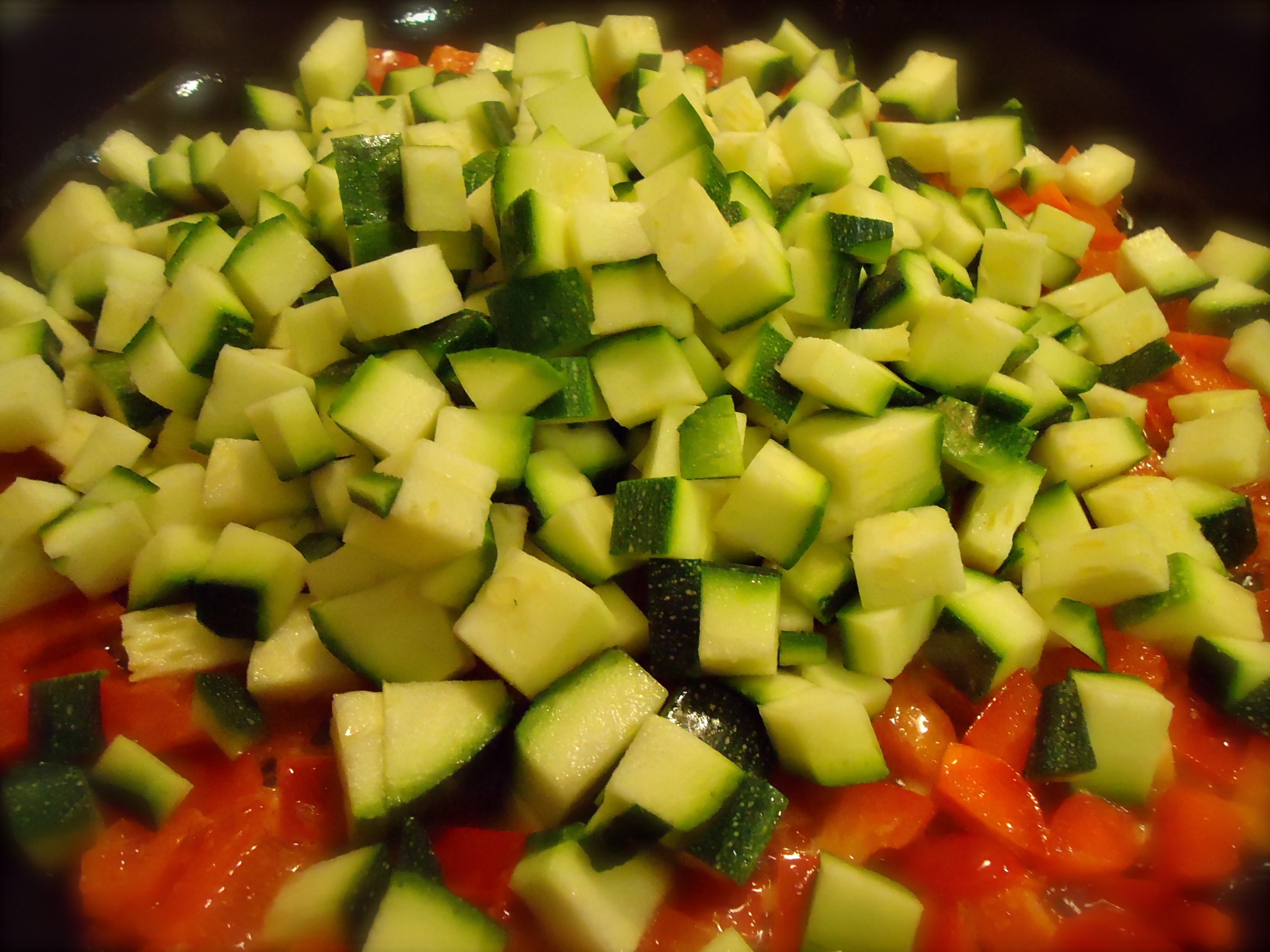
Zucchini time!

Here comes the…corn. I love all the color!

Season with the pasta sprinkle or herbs de provence and the pepper. Salt is optional – many times I add no additional salt!

Summer Vegetable Hash

  • 2 ½ cups fresh corn (about 3 large ears)
  • 3 cups diced zucchini squash (about 2 large zucchini)
  • 1 cup diced bell pepper (1 large)
  • 2 tbl. extra virgin olive oil
  • ¼ tsp. fresh ground pepper
  • 2 tbl. unsalted butter
  • 1 ½ tsp. Penzey’s Pasta Sprinkle OR Herbs de Provence
  • 1-2 tbl. light cream (half & half)
  • Salt, optional –  to taste

Melt butter with the olive oil in a large sauté pan. Bring the heat up and add the bell pepper, cook 1-2 minutes, stirring occasionally. Add zucchini and cook 3 more minutes and then add the corn, cooking 2-3 more minutes. Stir again. Sprinkle with seasonings and turn down heat. Stir in the light cream just before serving. Makes 4 cups of “hash” enough for 8 servings.

Sometimes you can teach an old dog new tricks!

So this post is about my husband. And before I get accused of calling him “old” or referring to him as a dog, I will state that he is 6 years younger than me and I absolutely adore dogs.

My husband and I had somewhat different childhoods, much of mine revolved around living out in the sticks and his, in the suburbs. I spent my summers making mud pies, learning how to fish with a rod and reel, and going to vacation Bible school. He spent his in the local soccer league, playing Ms. Pacman and water skiing.

And our personalities were and are quite different. My husband was a social butterfly, apparently, while I was a wallflower, content to fade to the background. Nevertheless, my quietly observant ways have served me well and make me a better writer now, I believe.

I also know about a few things that may seem a bit oddball. I can make a flower arrangement – and a pretty one at that – of and in just about anything. I can bait a hook, clean the fish that I catch and serve it up meuniere style – just pass me the butter and lemon. I know that a 1971 VW Beetle does not need radiator fluid – because it has an air-cooled engine – thus no radiator. I not only know what “topdressing” is (and it does not go on a salad) but also why one does it, and I know the proper way to catch Atlantic blue crabs… by hand off a dock.

All these things constantly surprise my dear husband and he calls me his “Renaissance woman”, which I take as a compliment. We joke that I could get all the most arcane questions on Jeopardy correct, well, if I did not hyperventilate and pass out first. And I could be tremendous on “The Amazing Race”, except I would never, ever do any of those stunts – afraid of heights, sorry!

My husband’s effervescent personality has served him well too. His success in business is due to a good mind, quick wit and friendly demeanor. So what he may be lacking in “MacGyver” skills is more than made up in his clever repartee or his dead-on Charles Nelson Reilly impersonation. And if you don’t know who Charles Nelson Reilly is, then I am truly sorry for you, so go watch some reruns of Match Game…now!

Since we’ve moved back to the coast I have been itching to get out and do some crabbing. There is no better feeling of satisfaction (and appreciation) than catching your own dinner, unless it’s growing it. This is something my husband and I would like to instill in our daughter. We planted our little container garden already, but we haven’t gotten our girl out to teach her some fishing skills, well until 2 weeks ago, when we were at Edisto Island.

I learned to crab a long time ago, at the Garden City, SC beach house owned by my aunt and uncle. The house was red and wooden and rickety, and featured two huge screened porches – one in front and one in back and no central air conditioning. All the kids slept on mattresses and cots on the porches, with the surf a constant but reassuring crush of sound, breeze and salty air.

Garden City was a spit of land – maybe ¼ mile wide and 1 mile long harboring a pavilion with a huge, old-fashioned wooden pier, an ice cream shop and one restaurant – the quintessential Carolina family beach. It was a childhood paradise, lost when Hurricane Hugo visited in 1989.

Luckily, my parents and extended family didn’t lose their minds over something like a ‘lil ole hurricane and a new Edisto Beach pad (circa 1970’s) became our coastal getaway. So that’s where we find our crabbing adventure these days. But yes, my 4 year old has never been crabbing – but alas, neither had my 41 year old!

The day before our beach weekend I spent an extra $7.50 buying a flimsy metal trap, some twine and extra sinker weights. We were going to partake in some surf crabbing (as opposed to dock crabbing but that’s for another post).

Hubby came home and saw this sitting on the sofa and asked, “What’s that thing on the sofa?”

“Oh, it’s a crab trap so we can show girly girl how to crab this weekend,” I said. “It’s a Lowcountry tradition, you know.”

“I know,” He replied. “But you’ll be the one showing her how.”

However, once we got to the beach things took a different turn. With confidence, Hubby set out into the murky, knee-deep inlet with a weighted, wire hand-pulled crab trap filled with the stinky crab-loving breakfast of champions – chicken necks. These had been purposely left out on the back porch overnight to “ripen” and that was an understatement. I clamped those stinkers into the trap. “That’s how you do it,” I said, wringing my hands in the surf to remove the residual slime and smell.

My husband slowly set the trap down and unwound the cord tethering him to the device. Backing up he asked, “Isn’t this the end of the beach where the sharks hang out – the shark hole?” Raising my eyebrow, I gave a quick nod and then instructions to “let the pot sit for awhile” as I ambled down the beach, excited daughter in tow, to look for seashells. My husband offered a slightly worried smile and waved me away with his free hand.

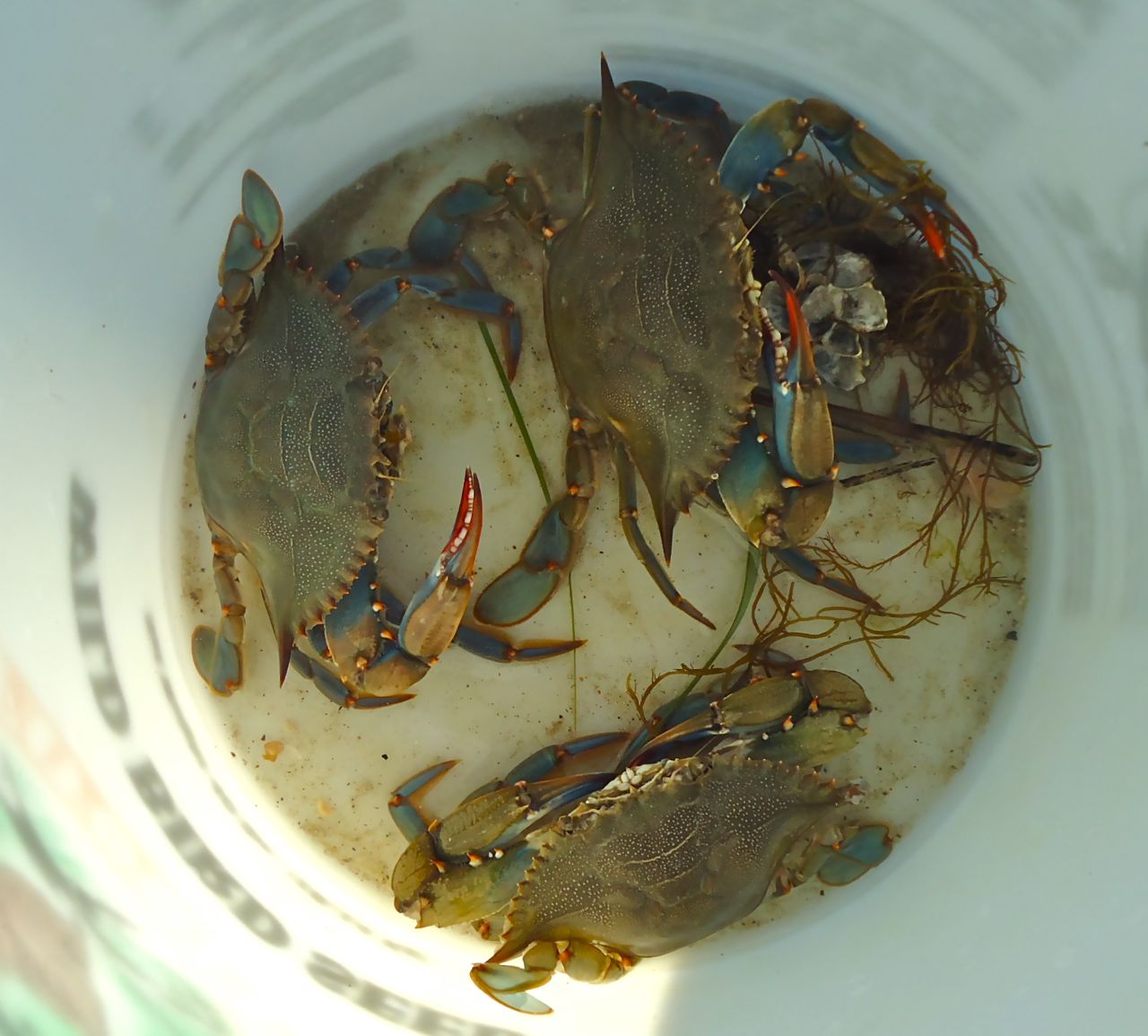
Three little crabs in a bucket…this was their lucky day as we turned them loose but… we’ll be back!

A few minutes later I saw him pull up the pot and – nothing. He lowered it back and started the process all over again. A powerboat glided by and a dolphin pod came up for air across the waterway.

Then I heard, “Got one! I got one!” We ran over and sure enough there was a glistening blue crab all feisty, pinchers at the ready for a fight. We flipped the fellow into our bucket. “Want me to take over?” I asked, knowing that in the past Hubby wasn’t too keen on the whole fishing and crabbing idea. “No way! I think I can catch a bunch more!”

I nodded ‘okay” but on the inside I was bursting with happiness. “Yes!” I thought. ‘Another one bites the dust’… hooked on crabbing and the salty air and all the wonderfully quirky things our Lowcountry life has to offer. Hubby hadn’t smiled and laughed like that in awhile. Plus, next time, he’ll be baiting that trap!

Red, red rice oh you taste so fine…

Okay, now for something totally different. Well, if you’re not from South Carolina that is.

There are a few dishes that I always associate with barbeque* (and by barbeque I mean some type of pork  that has been slow, and I mean s-l-o-w roasted, and served with a slather of vinegary sauce). This would be potato salad, coleslaw and red rice. Before I get away on a tangent about barbeque I will stop and state that I plan on devoting several posts to barbeque but for the moment this one is about red rice…

As far as I know, red rice is very specific to the Lowcountry of South Carolina. I have seen it referred to as “Savannah red rice”, which geography speaking is the southern most point in the area known as the Lowcountry. My mother made lots of rice dishes as my dad was a child of the most eastern outskirts of the Lowcountry, above and to the east of Charleston, Williamsburg County, SC. It’s really closer to Myrtle Beach, if you are familiar. Red rice was and is my favorite rice dish.

This area was known for growing rice back in the day (the 1700’s up until the Civil War) and for its very fine pit roasted whole hog barbeque. Even now, this barbeque technique is referred to as Williamsburg County style, at least among those ‘in the know’, and it’s the way I learned to cook barbeque. Side note: I recently saw Rodney Scott and family of Scott’s Bar-b-que on Andrew Zimmern’s Travel Channel show, Bizarre Foods America. Scott’s is located in Hemingway, SC (Williamsburg County) and yes, he uses the same technique and you can see some of it here. He knows what he is doing.

Okay, so that was the tangent I was hoping to avoid…knew that would happen. Another ingredient that is so prevalent along the coast here (and grown commercially too) is the tomato. We have wonderful tomato-growing soil. Red rice is the child of all these things, well sort of, if you count bacon in place of the barbeque. My mother also makes red rice when she bakes ham and you can make a delicious one-dish meal by adding chopped ham to red rice leftovers.

I used brown rice in this recipe as well as lots of bell pepper and a good vegetable broth replaces plain water. Yes, I do use bacon (good quality is best). There’s really no substitute for that pig… Oink, oink!

* I have always spelled barbeque with a “q” instead of a “c”. According to the Merriam-Webster Dictionary both barbecue AND barbeque are acceptable spellings. Since barbeque was originally created along the SC/NC coasts, the SC Barbeque Association uses the “q” spelling, and with the letter “q” being too underutilized in my opinion, I’m sticking with the “q”…thank you!

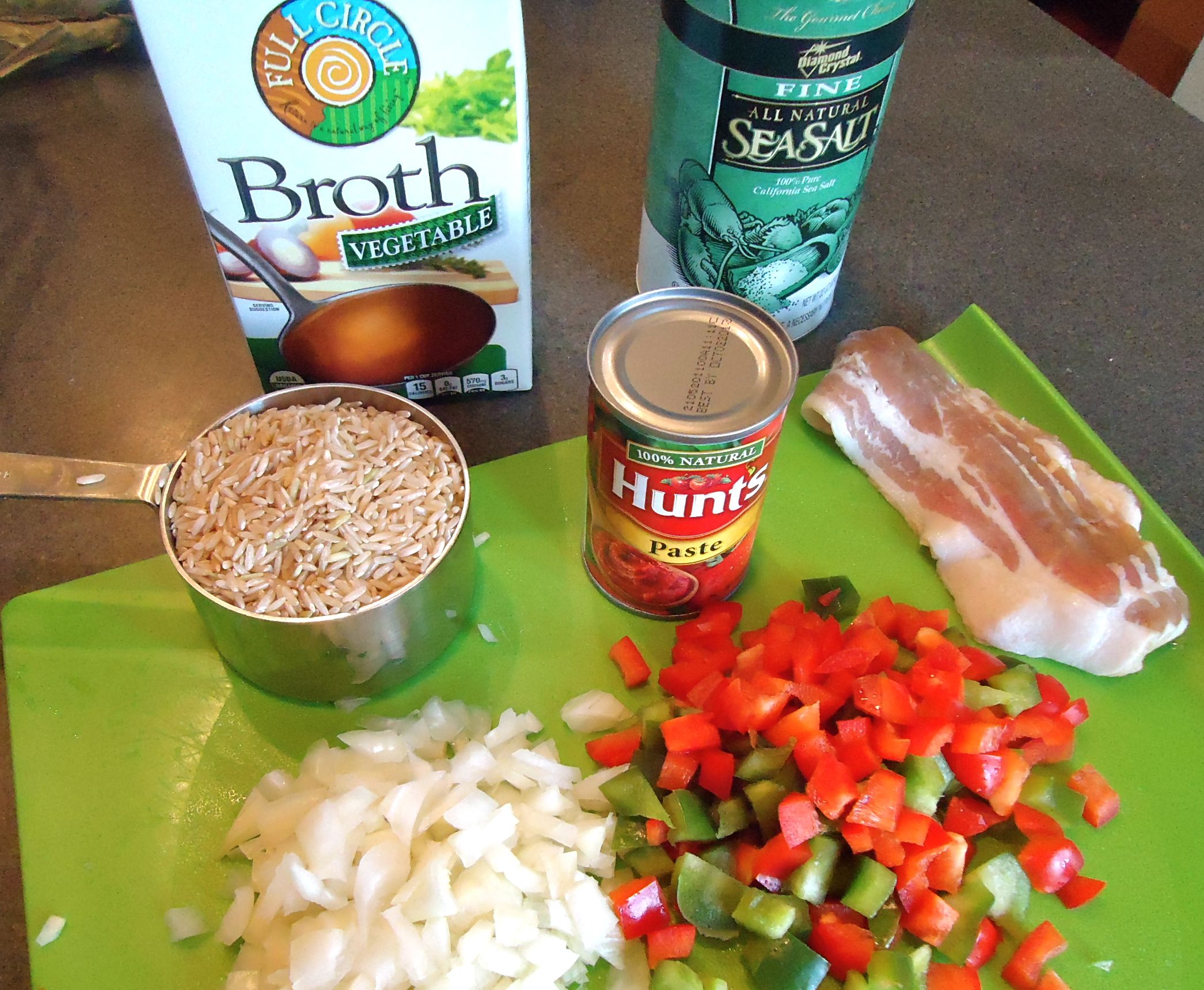
Ingredients for red rice are simple but the flavor is complex.

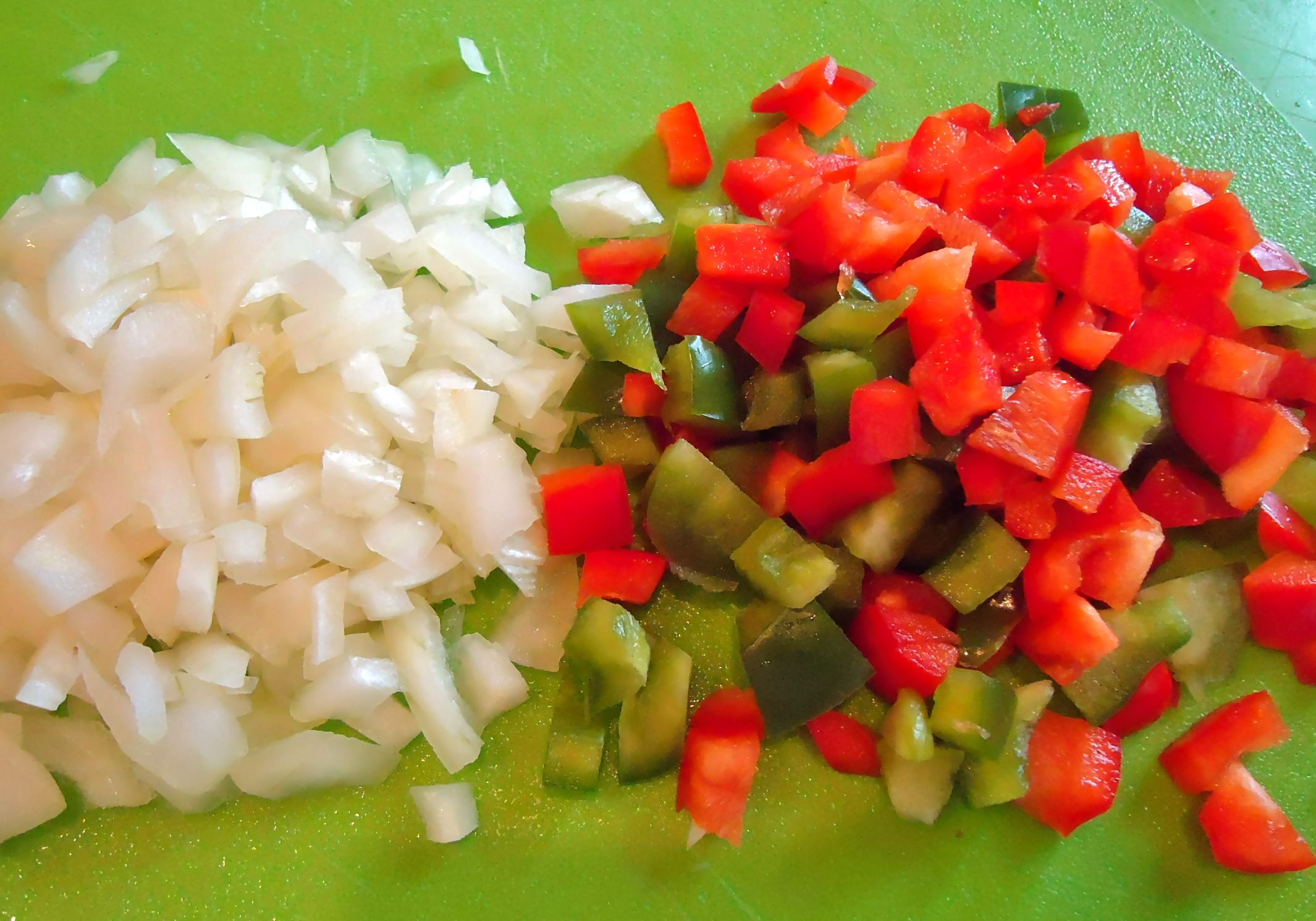
The onion and bell pepper should be cut into a medium chop and be about the same size.

Yes this is bacon – regular bacon will do. If you can resist nibbling, the cooked and crumbled bacon is great on top of the red rice. Unfortunately I was weakened by my love of bacon and so there was none left for this batch…

Saute the veggies in 1 tablespoon of the bacon drippings until just tender.

Mix the warm broth and the tomato paste together.

All the ingredients bubbling to a low boil. Pop on the lid, turn the heat to a low simmer and wait…

…and here’s the tricky part. Does not look too appetizing at the moment, does it? Resist the urge to stir it up now. If the liquid has been absorbed, remove from the heat, remove the lid and let it sit for a few minutes. Then…

Fluff with a fork. Here you have red rice. It will be a creamy and a little sticky. I like the brown rice as it really absorbs the tomato flavor plus it’s better for you!

Red Rice

  • 1 heaping cup brown rice (or 1 1/3 cups white extra long grain rice)
  • 2/3 cup sweet bell pepper, medium chop
  • 2/3 cup onion, medium chop
  • 3 slices bacon
  • 2 cups vegetable stock or broth, preferably low sodium
  • 1 can tomato paste
  • ½ tsp. salt
  • hot sauce, optional

In a saucepan fry the bacon until crisp and remove all but 1 Tbl. of the bacon fat. Set the bacon aside to drain for later use. Saute the peppers and the onion in the bacon fat until just tender – about 3 minutes. Set aside.

Warm the broth and whisk or stir in the tomato paste. In a heavy bottom pot (that has a lid) pour the broth/tomato mixture and heat to a boil. Mix in the rice, the vegetables, and the salt and stir. Turn down the heat and cover with lid. Simmer on a low heat for about 40-45 minutes or until all liquid is absorbed. You can do this by tilting the pot to the side and see if any liquid is still in the bottom of the pot.

When you are reasonably assured all liquid has been absorbed, remove the lid and allow to sit for about 5 minutes off the heat. Then carefully fluff with a fork. The rice will be tender and slightly creamy. Serve immediately with crumbled bacon on top and hot sauce on the side, if desired. Serves 4-6.